
Imagine slipping into the warm, dark Pacific Ocean, your dive light cutting through the deep blue. Suddenly, a massive shadow materializes out of the darkness, transforming into a majestic giant that glides just inches above you with impossible grace. This is the heart of the Kona manta ray night dive—a true bucket-list experience that pulls divers and snorkelers from all over the world to the Big Island.
What Makes the Kona Manta Ray Dive So Special
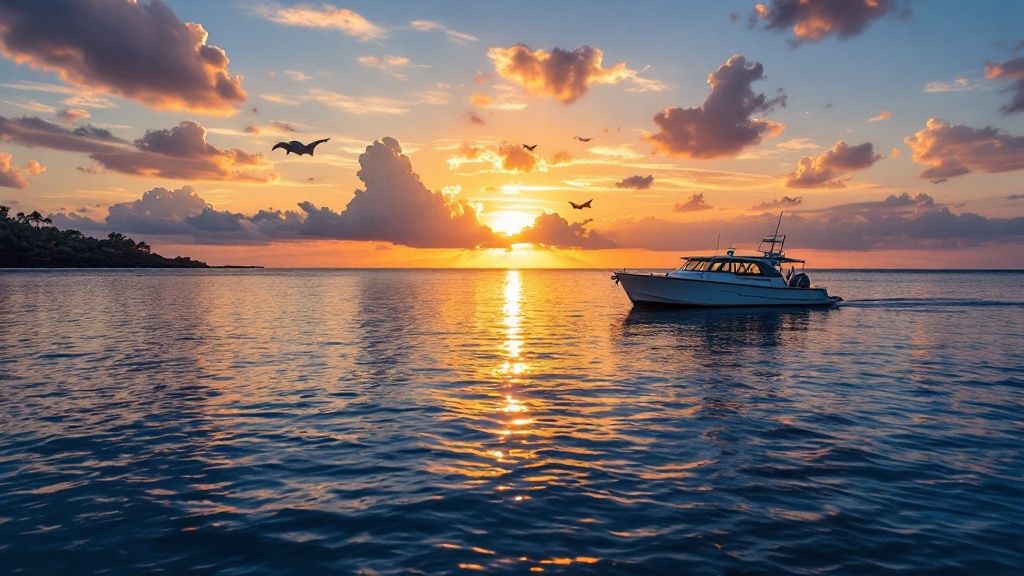
The world-famous manta ray dive Kona offers is rightfully called one of the planet's most memorable underwater encounters. Sure, you can spot mantas in other incredible places like the Maldives or the Great Barrier Reef, but those are usually fleeting glimpses at "cleaning stations."
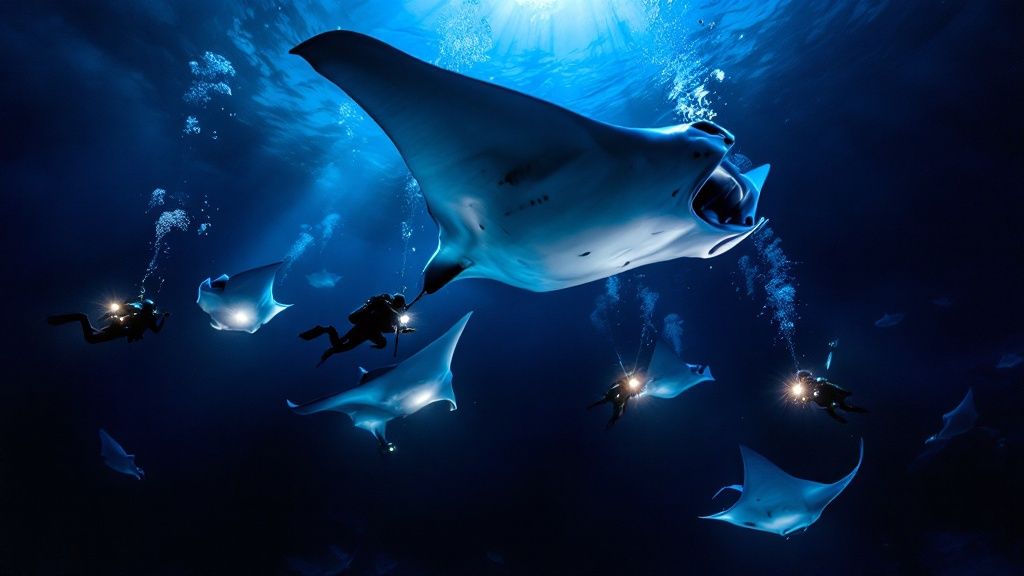
What happens in Kona is entirely different. It’s a full-blown nightly feeding ritual. Dive operators set up powerful lights that attract dense clouds of plankton, the mantas' favorite meal. This creates an underwater buffet, drawing in these gentle giants for what can only be described as a mesmerizing "manta ballet."
An Unforgettable Underwater Ballet
Here’s how it works: divers settle on the sandy ocean floor in a circle, all pointing their lights up to create a massive column of light. Snorkelers do the same from the surface, holding onto a raft with lights pointing down. This convergence of light and plankton is the dinner bell, and the mantas waste no time.
They swoop, glide, and perform effortless barrel rolls, sometimes coming so close you could almost touch them (but don't!). It's a completely unique experience.
- It’s reliable. Thanks to a resident population of manta rays and well-established feeding sites, the sighting success rate is consistently over 90% year-round. It's as close to a guarantee as you can get in the wild.
- It's up close and personal. Unlike a lot of wildlife encounters, this dive allows for incredibly close interactions that are completely safe and non-invasive for the animals.
- Anyone can do it. The dive is perfect for certified divers of all experience levels. And for non-divers, the snorkeling option means the whole family can share in the adventure.
Kona's Premier Manta Ray Dive Sites
This incredible spectacle has turned the Kona Coast into a global hotspot, bringing in around 80,000 people every year for manta ray tours. The two main sites, Manta Village and Manta Heaven, each offer something a little different.
Manta Village is known for its calmer, shallower waters, making it ideal for beginners. Manta Heaven, on the other hand, is a bit deeper with stronger currents, often appealing to more seasoned divers looking for a different kind of photographic challenge.
"Diving with mantas is one of the most satisfying things a person can do in the water. It’s impossible to describe the feeling of watching a massive fish the shape of a stealth bomber coming into vision."
This profound connection is what elevates the manta ray dive Kona provides from just another activity to a truly life-changing event. Top-tier operators like Kona Honu Divers have perfected creating a safe, responsible, and absolutely awe-inspiring environment for this magical encounter. They make sure every dive respects the mantas and their habitat, which is crucial for ensuring this incredible tradition continues.
Ready to see the magic for yourself? Booking a spot on one of the best manta ray dive tours is your first step toward an adventure you'll never forget.
Choosing the Best Manta Ray Dive Operator
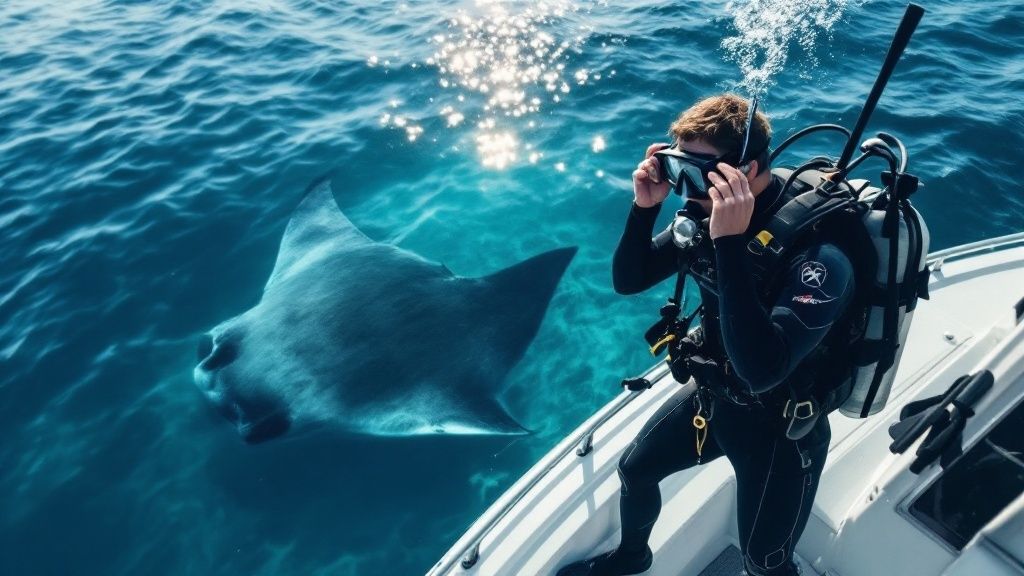
When it comes to your manta ray dive Kona adventure, the single most important decision you'll make happens before you even get on the boat: choosing your dive operator. This one choice has a massive impact on your safety, your comfort, and the overall quality of your underwater encounter.
A top-notch operator doesn’t just shuttle you out to a dive site. They create a memorable, educational, and respectful experience from the moment you check in to the moment you’re back on shore. With so many companies to choose from, you need to look past the slick websites and zero in on what really matters.
Your top priority should always be safety. That means looking for a company with a stellar safety record, highly experienced dive guides, and boats and gear that are clearly well-maintained. After that, look for a deep-seated commitment to conservation. The Kona manta ray population is a unique treasure, and the best operators are fiercely dedicated to protecting it. They follow strict guidelines to ensure every interaction is safe for the animals.
What to Look For in a Top-Tier Operator
As you start comparing companies for your manta ray dive, a few key things really separate the great operators from the merely good ones.
- Small Group Sizes: This is a huge one. A smaller diver-to-guide ratio means you get more personal attention, and you won’t feel like you’re in a crowd underwater. It creates a much more intimate, personal experience with the mantas.
- Thorough Pre-Dive Briefings: A detailed briefing is the hallmark of a professional crew. Your guide should cover all the safety procedures, what you can expect during the dive, and—most importantly—the rules for interacting with the mantas respectfully.
- An Experienced Crew: Look for operators whose crew members are not just certified, but are genuinely passionate about Kona's marine ecosystem. Their knowledge and enthusiasm can turn a good dive into an unforgettable one.
Kona Honu Divers is a perfect example of an operator that nails all of these points. Their reputation has been built over years of providing exceptionally safe, educational, and breathtaking manta ray experiences, which is why their guest reviews are consistently outstanding.
The Importance of the Manta Ray Green List
One of the easiest ways to find an ethical operator is to see which ones were approved members of the Manta Ray Green List. While the program itself was discontinued in 2023, the operators who consistently met its demanding standards are the ones who continue to lead with those same principles today.
The Green List was created to recognize Hawaii tourism operators who were truly committed to sustainable and responsible manta ray tours. Choosing a company that followed these guidelines helps guarantee that your dive supports the long-term health of the manta population.
These standards were all about minimizing human impact on the mantas and their environment. Operators on the list committed to specific protocols, like using proper lighting techniques, enforcing a strict "no-touch" policy, and educating all their guests on responsible behavior. By supporting these companies, you’re actively participating in conservation.
Making an Informed Decision
At the end of the day, the best operator for your manta ray dive Kona experience will be the one that aligns with your own values of safety and environmental responsibility. Take your time. Read through recent reviews, call and ask about their group sizes, and inquire about their conservation practices. A little bit of research upfront goes a long way toward ensuring your adventure is not only incredible but also helps preserve these magnificent animals for years to come.
For a deeper dive into this topic, check out our complete guide on how to choose a Kona dive shop.
Ready to book an unforgettable—and responsible—manta ray dive? Choosing a top-rated operator is your first and most important step.
How to Prepare for Your Manta Ray Dive
A little bit of planning goes a long way when you’re getting ready for your manta ray dive in Kona. Getting a few things sorted out beforehand is the key to a seamless, safe, and truly mind-blowing experience. Think of this as your pre-flight checklist for one of the world's greatest underwater shows.
First things first: book your tour well in advance. This isn't just another tourist activity; it’s one of the Big Island's most sought-after experiences. The best operators—especially those with smaller, more intimate group sizes—fill up fast, sometimes weeks ahead of time.
Here's a pro tip: schedule your manta dive for early in your trip. Why? On the rare night the mantas decide not to show, most reputable companies will offer a free rebooking. Having a few buffer days gives you the flexibility to take them up on that offer without derailing your vacation plans.
What to Expect and What to Bring
Once you're booked, the process is pretty simple. You'll typically meet the crew at the harbor, get fitted for your gear, and listen to a thorough safety briefing before heading out.
The boat ride to the dive site is usually quick, but don’t underestimate the chill on the return trip. You'll be wet, it's nighttime, and the breeze can feel surprisingly cold.
Any professional operator, like us here at Kona Honu Divers, will have all the essential scuba equipment ready for you:
- Tanks and weights
- A well-maintained BCD
- Regulator with an integrated computer
- A warm wetsuit (usually 5mm thick)
- A powerful dive light to attract the plankton
While all the provided gear is top-notch, many seasoned divers feel more comfortable bringing a couple of personal items. A mask that you know fits your face perfectly can be a trip-saver, preventing those annoying little leaks. And if you have an underwater camera, this is its moment to shine!
Beyond that, just bring a towel and a warm, dry sweatshirt or jacket for the boat ride back to shore. For a deeper dive into gear, check out our guide on the gear you will need for your Kona diving adventure.
Choosing Your Manta Dive Site
Kona is lucky enough to have two premier manta ray feeding sites, and while both are incredible, they offer slightly different experiences. Knowing the difference can help you pick the one that best suits your comfort and skill level.
Before we compare, it’s important to know that you can't really make a "wrong" choice here. Both sites are phenomenal and your dive operator will ultimately pick the best location based on the conditions for that specific evening.
Here's a quick look at how Kona's two main manta sites stack up against each other.
Kona Manta Ray Dive Sites Compared
| Feature | Manta Village (Kaukalaelae Point) | Manta Heaven (Garden Eel Cove) |
|---|---|---|
| Location | Just offshore from the Sheraton Keauhou Bay Resort | North of Kailua-Kona, near the airport |
| Average Depth | 25-35 feet (7-11 meters) | 30-45 feet (9-14 meters) |
| Bottom Topography | Mostly a flat, sandy bottom | Volcanic rock formations and sand channels |
| Conditions | Generally calmer and more protected from swell | Can sometimes have stronger currents |
| Boat Ride | Very short ride from Keauhou Bay | A slightly longer ride from Honokohau Harbor |
| Best For | New divers and anyone prone to seasickness | All experience levels, great for photographers |
Manta Village is the original site and its southern location means a super short boat ride, which is a huge plus if you get seasick. Its shallower, sandy bottom is perfect for new divers or anyone who just wants a more relaxed environment.
Manta Heaven, up north, is a bit deeper and has more rugged, volcanic terrain. While both spots boast success rates often over 90%, Manta Heaven is legendary for sometimes attracting massive groups of mantas.
The bottom line? The choice often comes down to logistics and personal preference. Both locations deliver the same magical, up-close encounters that make this a true bucket-list dive.
No matter which site you visit, the setup is the same. We create a "campfire" of light by having divers gather in a circle and point their beams upward. This attracts a massive cloud of plankton, which in turn brings the giant, graceful mantas in for their nightly feast.
Getting to Know Kona’s Manta Rays: Science and Conservation
The Kona manta ray dive kona is more than just an incredible show—it's a window into the lives of a uniquely well-studied and protected population of these gentle giants. This isn't some chance encounter. The nightly gathering is a predictable phenomenon, born from a perfect storm of local geography, manta biology, and the dedicated, responsible practices of the dive community.
When you understand the science at play, the whole experience becomes even more profound. The Kona coast is defined by steep, underwater volcanic slopes that create the ideal conditions for nutrient-rich upwellings. This constant churn brings a dense supply of zooplankton—the manta's favorite food—to the surface.
This reliable, all-you-can-eat plankton buffet is precisely why Kona is home to a resident population of manta rays. They don’t need to migrate for food because they have everything they need right here. That consistency is the secret behind the remarkably high success rate for manta sightings all year long.
The Science of Identification
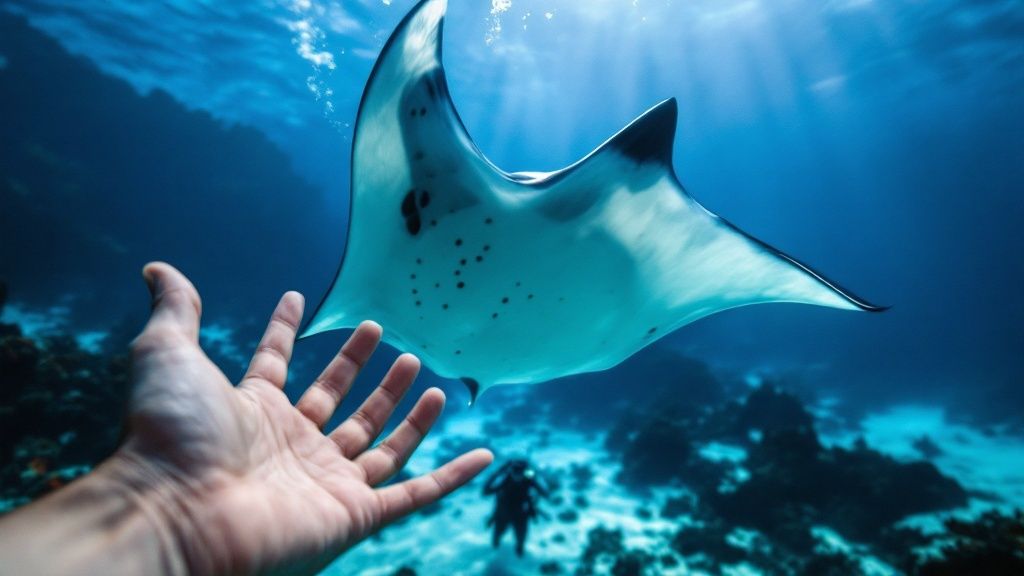
One of the most amazing things about Kona's mantas is that we know them as individuals. Every single manta ray has a unique pattern of black spots on its white belly, just like a human fingerprint. These natural markings allow researchers, dive guides, and even sharp-eyed tourists to identify specific animals.
A fantastic citizen science project has been using this photo-ID method to track Kona's mantas since 1991. This incredible effort has built a detailed catalog of over 330 individual mantas, including both reef mantas (Mobula alfredi) and the larger giant oceanic mantas (Mobula birostris). The database now contains records of nearly 6,000 encounters, giving scientists priceless data on their behavior, social structures, and life cycles. You can learn more about this long-term manta ray study and the incredible work being done.
This ongoing research means we know these animals by name. On your dive, you might meet local celebrities like "Big Bertha," one of the area's matriarchs, or "Lefty," who is easily recognized by a partially missing pectoral fin. Knowing their stories transforms the dive from simply watching wildlife into a personal encounter with familiar faces.
How Sustainable Tourism Protects the Mantas
The nightly manta dive is a powerful, real-world example of how tourism can be a force for conservation. The economic value of a living manta ray to the local community far surpasses any other alternative, creating a powerful incentive to protect them and their fragile marine habitat. It’s fostered a deep culture of stewardship among Kona's dive operators.
When you join a professionally guided manta ray dive kona tour, you're not just a tourist. You are directly contributing to the local economy and supporting the very conservation efforts that make this experience possible.
At the heart of this success story are the responsible operators who follow a strict set of guidelines. These rules are designed to ensure every interaction is safe and stress-free for the mantas.
- Hands-Off Policy: The number one rule is no touching. Your guide will stress this. Touching a manta can strip away its protective mucus coating, leaving it vulnerable to dangerous skin infections.
- Passive Interaction: We let the mantas call the shots. Divers and snorkelers stay in a designated area, allowing the animals to swim and feed around them without being chased or crowded.
- Smart Lighting: Dive lights are always pointed up toward the surface. This attracts the plankton into a column of light, creating the "buffet" without shining bright lights directly into the mantas' eyes.
Choosing a dive operator that lives by these rules is absolutely critical. It guarantees your adventure is not only unforgettable but also ethical and sustainable. When you book your manta ray dive tour, you become part of a community committed to preserving one of the ocean's greatest wonders for generations to come.
Manta Dive Safety and Best Practices
To keep Kona's world-famous manta ray dive a magical and safe experience for everyone—divers and mantas included—we all need to be on the same page. These aren't just suggestions; they're essential rules for protecting these incredible animals and making sure the encounter is respectful and low-impact.
The entire experience is built around passive observation. Think of it this way: we're guests in the mantas' underwater dining room. Our job is to sit back and watch the show unfold without getting in the way. That means listening carefully to your dive crew and sticking to the plan.
The Rules of Engagement
The most important rule is also the simplest: Do not touch the manta rays. Ever. Their skin is covered in a protective mucus layer that acts as a shield against bacteria and infection. When you touch them, you strip that coating away, leaving them vulnerable. It can be tempting when they glide right over you, but you have to resist.
Your position in the water is just as important. The plan is for all divers to stay put on the sandy or rubble seafloor. This creates a predictable space for the mantas to swoop and feed. It’s absolutely critical that you don't swim up into the water column or chase after them for a better photo. Be patient, and let them come to you.
The setup is often called the "campfire," and for good reason:
- Divers settle in a loose circle on the bottom.
- Everyone shines their dive light straight up, toward the surface.
- This creates a massive column of light that attracts plankton, basically setting the dinner table for the mantas.
This method works beautifully because it draws the mantas in without blasting bright lights into their sensitive eyes. It's a much more natural and comfortable way for them to feed. To learn more about being a mindful diver, you can check out our guide on considerate diver etiquette.
Managing Yourself in a Unique Dive Environment
A night dive like this, with so much going on, demands excellent buoyancy control. You'll be close to other divers in the dark, and staying neutrally buoyant is the only way to avoid stirring up sand or accidentally bumping into someone. Take a minute at the surface before you go down to make sure you're weighted correctly.
Pro-Tip: Your exhaust bubbles can be startling to the mantas. As one approaches, try to time your breathing or simply tilt your head to the side. This directs your bubbles away from their path and is a small adjustment that makes a big difference.
Gear management is also a bigger deal in the dark. Make sure your gauges, camera, and any other equipment are clipped securely to your BCD. You don't want anything dangling where it could snag on the reef or startle a manta. Know where everything is by feel so you aren't fumbling around when you need something.
Listen to Your Guide and Communicate Clearly
Your dive guide is your lifeline in the water. They know this dive site and manta behavior inside and out. Pay close attention during the pre-dive briefing and follow their instructions to the letter once you're down there.
They'll use specific light signals and hand gestures to communicate, so make sure you know what they mean. Recognizing the signal for "manta" or "stay down" is key to a smooth, safe dive. Always stick with your group and keep your guide in sight.
By following these best practices, you're doing more than just keeping yourself safe—you're playing an active role in conserving Kona's beloved manta ray population. Your responsible actions help ensure this incredible encounter will be around to inspire divers for generations to come.
Don’t Stop at the Mantas: More Incredible Kona Dives
The manta ray night dive is an absolute must-do in Kona, a truly unforgettable encounter. But trust me, that incredible experience is just scratching the surface of what the Big Island has to offer beneath the waves. The same volcanic forces that created the perfect manta feeding grounds have also carved out a breathtaking underwater world full of dramatic landscapes you won't find anywhere else.
Once you’ve seen the famous manta ballet, you'll be itching to see what else is out there. Kona’s coastline is a diver's playground, packed with healthy coral reefs, mind-bending lava tubes, and marine life that is unique to Hawaii. The water is almost always crystal clear and warm, making every dive a chance to soak in the stunning topography and vibrant sea creatures.
The Surreal Kona Blackwater Dive
If you're looking for something completely different—something genuinely otherworldly—you have to try the Kona Blackwater Dive. This isn't your typical reef dive. It’s a drift dive over thousands of feet of open ocean, in the dead of night. Tethered to the boat, you'll hang suspended in the deep, watching one of the planet's largest migrations unfold as bizarre, bioluminescent creatures rise from the abyss.
You'll come face-to-face with larval fish, shimmering squids, and jellies that look like they belong in a sci-fi movie. It’s a humbling, almost psychedelic experience that feels less like diving and more like floating through deep space.
Pushing Your Limits: Advanced and Daytime Dives
For those with a few more dives in their logbook, Kona offers plenty of challenges. The coast is peppered with incredible advanced dive sites that will test your skills, from deep pinnacles and dramatic archways to intricate lava tube swim-throughs. These deeper, more rugged sites are often where you’ll find the bigger animals—sharks, eagle rays, and huge schools of jacks.
And let's not forget the daytime diving! The sunlit reefs are just as spectacular. Standard Kona diving tours will guide you through thriving coral gardens absolutely bursting with endemic Hawaiian fish, like the colorful saddle wrasse and the stunning masked angelfish. You’ll get to explore ancient lava flows that are now completely encrusted with life, spotting green sea turtles, moray eels, and octopus hiding in the crevices.
Marine tourism isn't just fun; it's a critical part of the Big Island's economy. The manta ray night dive alone generates over $2.5 million for the local community each year. This is a huge piece of a tourism industry that brings nearly 4 million people to the state annually. It's a powerful reminder of why we need to protect these waters, especially since 85% of all U.S. coral reefs are right here in Hawaii. You can learn more about the economic and ecological impact here.
From the deep, inky blackness of a blackwater dive to the sun-drenched shallow reefs, Kona offers a truly staggering variety of underwater adventures. Every single dive here gives you a new reason to fall in love with this volcanic paradise.
Your Manta Ray Dive Questions, Answered
It's natural to have a few questions before you commit to a once-in-a-lifetime adventure like this. We get it. Here are some of the most common things people ask before booking their manta ray dive in Kona.
When is the Best Time of Year to Go?
Good news: any time is a great time! Kona is home to a resident population of manta rays, which means they stick around all year long. They're not migrating, just showing up for their nightly plankton feast.
Because of this, sighting success rates stay incredibly high, consistently over 90%, no matter when you visit.
What About Getting Cold on a Night Dive?
The water here is pretty comfortable, but after 45 minutes in the ocean at night, you'll feel a chill. Don't worry, any good dive operator will kit you out with a proper wetsuit, usually a 5mm one, to keep you warm and toasty underwater.
The real chill comes on the boat ride back to the harbor. My pro-tip? Always bring a warm, dry sweatshirt or a windbreaker to throw on as soon as you get out of the water. You'll be glad you did.
What if We Don't See Any Manta Rays?
It's rare, but we are dealing with wild animals, so it's not impossible. That’s why most reputable dive charters have what's called a "manta guarantee."
If you happen to be on one of those very unlucky tours where the mantas don't show, you can almost always re-book for another night on the house. This is exactly why I tell everyone to schedule their manta dive early in their vacation—it gives you a backup plan just in case.
Is This Dive Actually Safe?
Absolutely. Manta rays are often called "gentle giants," and for good reason. They are completely harmless to humans.
Unlike their stingray cousins, mantas don't have stingers or barbs. They're just big, graceful filter feeders focused on one thing: plankton. As long as you listen to your dive guide and follow the briefing, you'll have an incredibly safe and respectful encounter.
Ready to see these magnificent creatures up close?
Booking with Kona Honu Divers gets you a spot with one of the most experienced and respected crews on the Big Island. They'll make sure your adventure is safe, educational, and absolutely breathtaking. Don't miss your chance to join one of the best manta ray dive tours in the entire world.