
Picture this: you're floating in the warm, dark waters of the Pacific off the Kona coast. Suddenly, giant, graceful shadows emerge from the deep, gliding and swooping through the beams of light. This is the manta ray dive in Kona, an incredible, otherworldly ballet where majestic manta rays perform barrel rolls just inches from your face. There's a reason Kona, Hawaii is considered the world's most reliable place to see them.
Experience the Magic of the Kona Manta Ray Dive
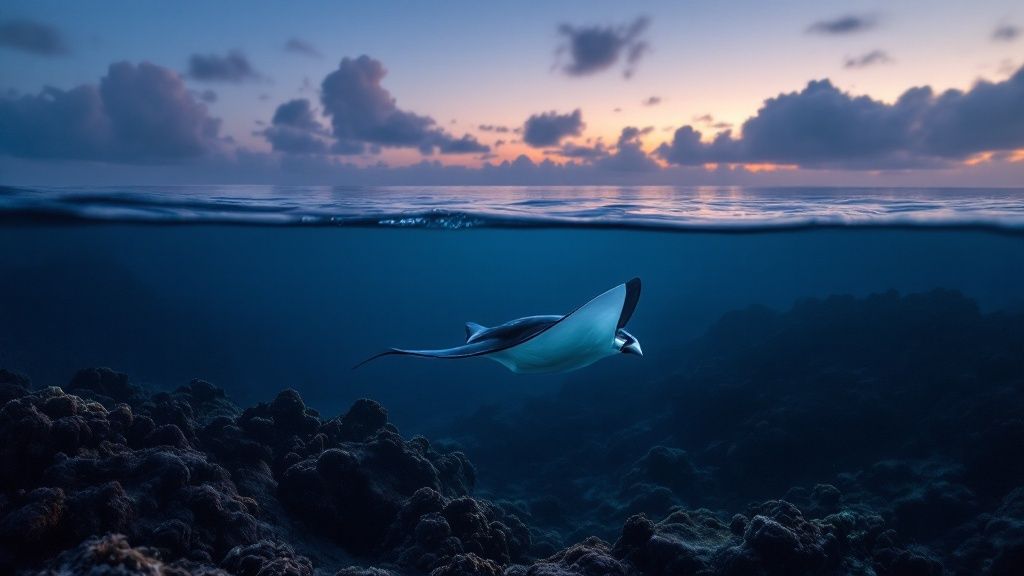
This guide is your complete roadmap to that absolute bucket-list experience. We'll walk through everything you need to know to plan your adventure, from the best way to watch the show to what makes this specific corner of the Big Island so special for these gentle giants.
If you're ready to see this spectacle for yourself, Kona Honu Divers offers an exceptional tour designed to create a memory you'll never forget. The experience consistently leaves our guests speechless, and their reviews really say it all.
What to Expect on Your Dive
The Kona manta ray dive isn't a passive experience; it's an immersive light show choreographed by Mother Nature herself. Over the years, local operators have perfected a system to create what we affectionately call the "manta campfire."
We use powerful, submerged lights to attract plankton, the manta rays' favorite meal. This creates a concentrated, all-you-can-eat buffet that reliably draws the mantas in for their nightly feeding. You'll be positioned right in the middle of the action—either on the ocean floor as a diver or floating on the surface as a snorkeler—as these massive creatures perform their acrobatics all around you.
Manta ray tourism has become a huge part of Kona's culture and economy, with an estimated 80,000 visitors joining a night snorkel or scuba tour every single year. This incredible demand has made the Kona manta experience one of the most important attractions in the region, supporting local businesses and conservation efforts. You can get more insights into the Kona manta dive experience on our main page.
This is so much more than just a dive; it's a genuine connection with one of the ocean's most intelligent and graceful animals in their own world. The feeling of a 12-foot wingspan gliding effortlessly right over your head is something you will carry with you forever.
Ready to book this once-in-a-lifetime adventure? Secure your spot with Kona's top-rated and most experienced dive operator.
Why Kona Is the World Capital for Manta Encounters
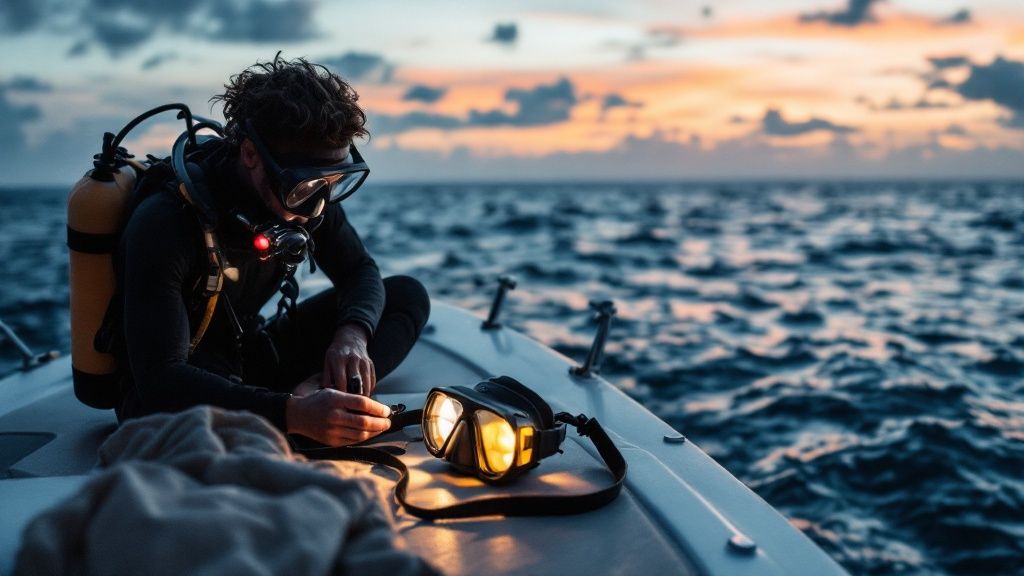
So, what makes Kona, Hawaii the absolute best place on Earth to see manta rays? It’s not just luck. It's a fantastic combination of unique geography and a bit of human ingenuity. The Big Island’s volcanic coastline created the perfect underwater setup, with natural bays and ledges that serve as prime feeding grounds for these gentle giants.
For decades, we've built on this natural advantage with a brilliantly simple idea: the underwater "campfire." Dive operators head to specific spots, anchor up, and shine powerful lights down into the water. These lights act like a magnet for microscopic plankton, which is the mantas' favorite food.
This nightly buffet draws them in from all over, creating an incredibly reliable and stunning spectacle at famous sites like "Manta Village" and "Manta Heaven." The mantas have figured it out—lights mean an easy dinner, so they come back night after night.
A Legacy of Research and Conservation
The nightly show is amazing, but there’s a deeper story here. Kona is home to one of the most studied and protected manta populations anywhere in the world. Years of responsible, eco-conscious tourism have helped create a thriving and healthy community of resident rays.
In fact, since 2009, systematic tracking of manta sightings along the Kona Coast has proven this is one of the most dependable locations for seeing them up close. Research shows a staggering 80-90% success rate for sightings at the two main sites. We’re talking thousands of encounters logged every single year.
This dedication to research and passive observation—meaning we never touch or chase the mantas—has made the manta ray dive in Kona the gold standard for sustainable marine wildlife interaction.
This commitment ensures the manta population stays healthy, allowing visitors to experience this magic for generations to come. It’s a conservation model that has inspired marine tourism around the globe. While Kona stands out, it's part of a world of incredible marine experiences, including other amazing spots like Ningaloo Reef in Western Australia.
When you join a manta ray dive in Kona, you're not just a tourist. You become part of a successful conservation story that’s been unfolding for decades. Ready to see what all the fuss is about?
Choosing Your Adventure: Scuba Diving or Snorkeling
So, how do you want to experience the legendary manta ray ballet? When you head out for a manta ray tour in Kona, you get to pick from two incredible, front-row seats: watching from the ocean floor as a scuba diver, or floating right on the surface as a snorkeler.
Both give you a spectacular view of the action, but they are completely different experiences. The right choice for you really boils down to your comfort in the water, whether you're a certified diver, and what kind of memory you want to take home.
The Scuba Diver's Perspective
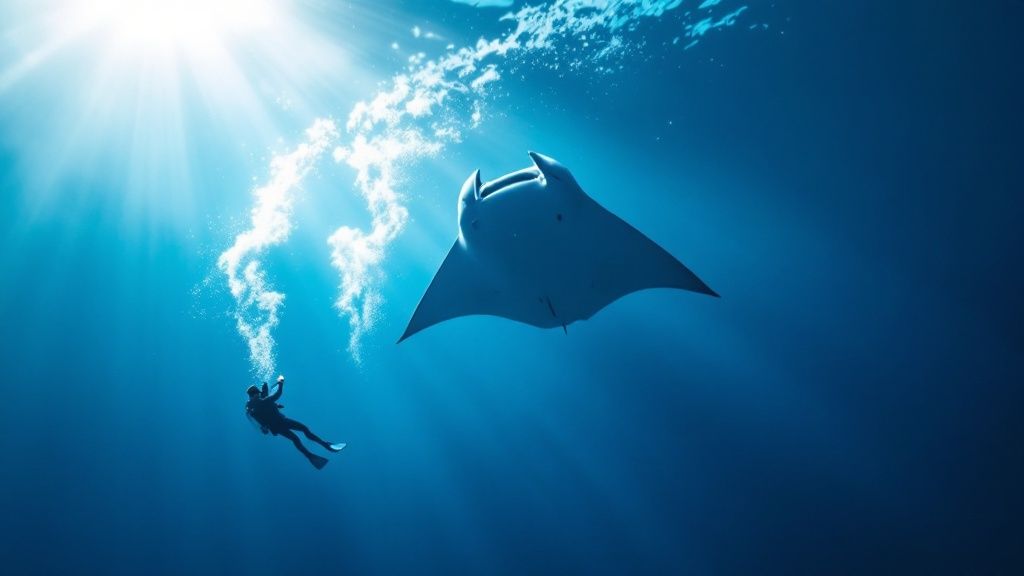
For certified divers, this is about total immersion. After a quick boat ride out to the dive site, you'll descend with your guide and settle onto a sandy patch about 30-40 feet down. From there, you just kneel, point your powerful dive light toward the surface, and wait for the magic to unfold.
It’s hard to describe the feeling of a giant, graceful shadow barrel-rolling just inches over your head. You get to see the full, magnificent wingspan and the unique spot patterns on their bellies. It's a peaceful, almost meditative experience that makes you feel like you're truly a guest in their world.
The view from below is simply breathtaking. You see the sheer scale and grace of the mantas as they perform their hypnotic dance, perfectly silhouetted by the lights from the snorkelers above.
The Snorkeler's View From Above
Not a certified diver? No problem. The snorkeling view is every bit as thrilling. We provide snorkelers with custom-made light boards to hold onto. These boards float effortlessly on the surface, shining bright beams of light down into the water to attract the plankton that mantas love.
You'll float comfortably at the surface, looking down as these gentle giants swoop up from the dark water to feed just a few feet below you. It’s an up-close and personal view of the feeding frenzy, and it's a fantastic adventure for all ages and swimming abilities.
If you're leaning toward this option, you can learn all about it in our complete guide to snorkeling with manta rays in Kona.
Manta Ray Dive vs Snorkel Experience
Still on the fence? This side-by-side comparison should help you decide which adventure is the perfect fit for you.
| Feature | Scuba Diving | Snorkeling |
|---|---|---|
| Perspective | Bottom-up view; mantas swim directly overhead. | Top-down view; mantas feed right below you. |
| Depth | 30-40 feet on the ocean floor. | Floating on the surface. |
| Certification | Open Water certification is required. | No certification is needed; all are welcome. |
| Best For | Certified divers wanting an immersive, serene encounter. | Families, non-divers, and those seeking high-energy action. |
Ultimately, there’s no wrong choice here. Whether you’re looking up from the seafloor or down from the surface, the Kona manta ray experience is something you’ll never forget. Both options are available on our manta ray dive and snorkel tours, so everyone has a chance to witness the magic.
How to Prepare for Your Manta Ray Night Dive
A little bit of prep work can elevate a great night on the water into a truly magical one. To make sure your manta ray dive in Kona is as comfortable and memorable as possible, it pays to think ahead. Your checklist should cover everything from what to wear to what to expect from this incredible wild animal encounter.
One of the best tips I can give is to bring warm, dry layers to change into after the dive. Even on a balmy Hawaiian evening, the boat ride back to shore can feel surprisingly chilly once you’re wet. A towel and a good windbreaker or sweatshirt will make all the difference. Also, don't forget the reef-safe sunscreen before you head out—that late afternoon sun can still pack a punch.
Onboard Briefing and Safety Rules
Before anyone gets in the water, your guide will walk you through a detailed boat briefing. It's really important to listen closely here, as they'll cover the plan for the evening and the crucial safety rules. It's never a bad idea to brush up on general snorkeling safety tips beforehand, too.
The absolute number one rule for interacting with the mantas is passive observation. This is a strict, no-touching policy, and it's in place to protect both you and these gentle giants. Manta rays have a special mucous coating on their skin that acts as a barrier against infection, and our touch can damage it. Our goal is to be quiet, respectful spectators in their world, letting them come to us if they choose.
It's also important to manage your expectations. While sightings are incredibly reliable here, remember these are wild animals operating on their own schedule. Come with a sense of wonder and patience, and you'll be ready for whatever the ocean decides to share with you.
Gear, Seasickness, and Other Night Dives
Thinking of capturing the moment? Make sure your camera is ready for low-light conditions. A GoPro or another type of underwater camera paired with a solid video light will give you the best chance at getting stunning footage. For a deeper dive into equipment, check out our guide on the gear you will need for your Kona diving adventure.
If you’re someone who gets a little queasy on the water, it’s always smart to take any seasickness remedies before leaving the harbor.
For many, the manta dive ignites a new passion for seeing the ocean after dark. If that's you, you're in luck! Kona offers other amazing night dives, like the truly surreal Kona Blackwater Dive. On that trip, you drift over deep ocean water and watch as a whole different world of bizarre and beautiful creatures rises from the abyss.
Meet the Stars of the Show: Kona’s Resident Mantas
When you go on a manta ray dive in Kona, you're not just seeing a random fish swim by. You're actually being introduced to a whole cast of local celebrities, each with its own name, personality, and life story.
This isn't just a wildlife encounter; it’s more like a personal meet-and-greet with some of the most intelligent and gentle giants in the ocean.
So, how do we tell them apart? It all comes down to the unique pattern of black spots on their white bellies. Think of it like a human fingerprint—no two mantas have the same spots. For decades now, a dedicated community of researchers, dive guides, and even guests like you have been snapping photos of these belly patterns and uploading them to a massive database.
Thanks to this incredible citizen science effort, Kona’s manta ray population is one of the most studied and well-understood on the entire planet.
A Community of Identified Individuals
It all started back in 1991 with the very first identified manta, a local legend named "Lefty" who is easily recognized by his damaged left cephalic fin. Since then, the catalog has absolutely exploded. We now know of over 330 unique individuals, including both the common reef mantas (Mobula alfredi) and their much larger cousins, the giant oceanic mantas (Mobula birostris).
The level of detail is just astonishing. For many of the regular mantas, we know their age, their sighting history, and even their relationships with other rays. It adds an incredible layer of depth to every single dive.
This amazing research is powered by a community database that has logged nearly 6,000 encounters and over 28,500 individual manta sightings in just 14 years. You can discover more about this amazing project and even try to identify a manta from your own photos. It's a fantastic example of how tourism, when done right, can directly fuel marine conservation and scientific discovery.
On your trip with us, your guide might point out famous residents like "Big Bertha," "Sugar Ray," or "Melai-na." Knowing their names and hearing their stories makes the manta ray dive in Kona feel less like an observation and more like a reunion with old friends you're just meeting for the first time.
Are you ready to meet these underwater celebrities in person?
Why Choose Kona Honu Divers for Your Manta Tour
Let's be honest, picking the right operator for a manta ray dive in Kona can make or break your entire experience. It's the most critical decision you'll make. Here at Kona Honu Divers, we've built our reputation on three things: an absolute commitment to safety, a genuine passion for conservation, and making sure every single guest has an unforgettable night.
We don’t believe in packing our boats. Our philosophy is simple: keep the groups small. This isn't just about comfort; it's about connection. With a smaller group, our expert guides can give you personalized attention, share fascinating stories about the mantas, and answer all your questions. You're not just another person on a tour; you're part of an intimate ocean adventure.
Experience the Difference
From the moment you step onto one of our boats, you'll feel it. Our vessels are modern, comfortable, and maintained to the highest standards, ensuring a smooth ride out to the site. We also provide top-of-the-line rental gear because we know that reliable, well-serviced equipment is non-negotiable for a safe and enjoyable dive.
More importantly, we put the mantas first. Always. We strictly adhere to passive observation guidelines, which means we create an environment where the mantas can behave naturally without being disturbed. Our goal is to protect these incredible animals for generations to come. If you want to dive deeper into our mission and ethos, see why people often call us the best dive shop in Kona.
We're here to facilitate a safe, respectful, and truly magical encounter with Kona's manta rays. For us, this is more than just a business—it's a passion we can't wait to share with you.
Of course, you don't have to take our word for it. The best measure of our success is the feedback from our guests. See what fellow divers and snorkelers have to say about their adventures with our crew.
Your Manta Ray Dive Questions, Answered
Planning for a once-in-a-lifetime experience like this always brings up a few questions. Let's walk through some of the most common ones we hear from our guests so you can feel completely ready for your adventure.
Just How Safe Is the Kona Manta Ray Dive?
It's incredibly safe. Think of manta rays as the gentle giants of the ocean—they're massive, but they’re also filter feeders with absolutely no teeth, barbs, or stingers. Their only interest is in the plankton, not the people watching them.
When you go with a professional crew like ours at Kona Honu Divers, your safety is paramount. We enforce strict passive observation rules (no touching!), which keeps both you and the mantas protected. Our certified guides are in the water with you every step of the way, making sure the experience is as secure as it is breathtaking.
When Is the Best Time of Year to See Mantas in Kona?
Here's the great news: any time is a good time! The Kona manta ray population lives here year-round; they don't migrate. This means we have an exceptionally high success rate, often over 80-90%, no matter the month.
While the ocean can sometimes be a little calmer in the summer months (April through October), the manta sightings are remarkably consistent all year. The best time to go is truly whenever you can get to the Big Island.
Do I Need to Be a Certified Diver to See the Mantas?
Not at all! This is an experience we’ve designed for everyone to enjoy. While certified scuba divers get an amazing perspective from the ocean floor, snorkelers have an equally spectacular view from the surface.
Snorkelers hang onto a custom-built, floating light board. The powerful lights draw in the plankton, which brings the mantas right up to the surface to feed, often just inches below you. You get a front-row seat to the ballet, no certification required.
What Happens If We Don’t See Any Manta Rays?
While sightings are extremely reliable, we are dealing with wild animals, so an appearance can never be 100% guaranteed. That’s why customer-focused operators like Kona Honu Divers have what’s often called a "manta guarantee."
It's our promise to you. If your group doesn't see a single manta, you can join us again on another night for free (on a space-available basis). It's always best to confirm the specifics when you book your manta ray dive tour.