
Picture this: you're floating weightlessly in the warm, dark Pacific off the Kona coast. Suddenly, a shadow emerges from the deep, growing larger until a majestic manta ray with a massive wingspan glides inches above your head. It's a surreal, silent ballet, and it's an experience more accessible than you might imagine. This is your front-row seat to one of the most incredible wildlife encounters on Earth.
Experience the Unforgettable Kona Manta Ray Dive
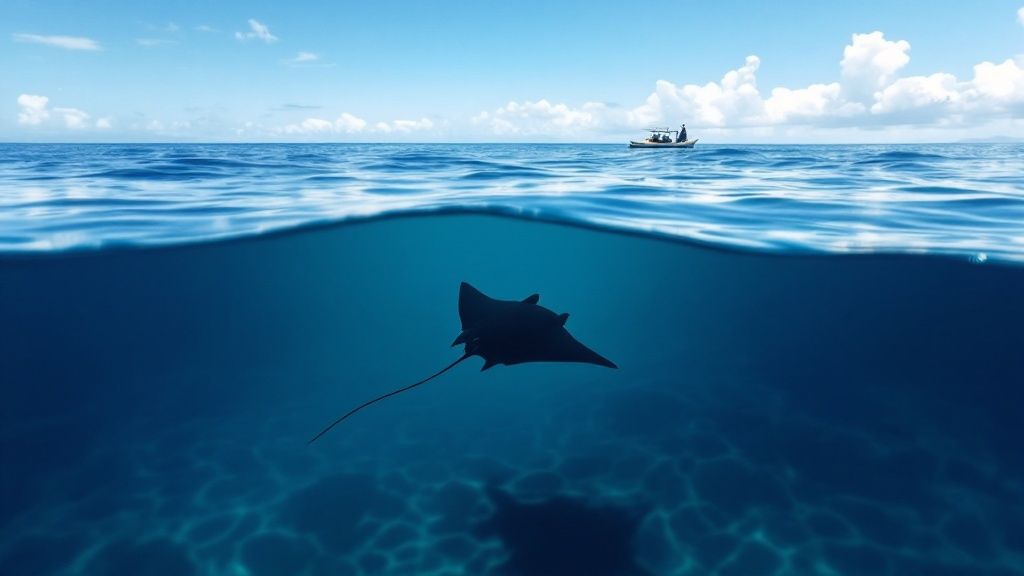
The manta ray dive kona experience is consistently rated one of the best night dives in the world, and for good reason. It's not just a dive; it's a performance. You become a quiet observer in an underwater amphitheater as these gentle giants put on an acrobatic feeding display.
The secret to Kona's reliable manta sightings is actually pretty simple. After sunset, dive operators head to well-established sites and submerge powerful lights. For scuba divers, these lights often sit on the ocean floor, creating a column of light pointing up. For snorkelers, they're attached to a central float.
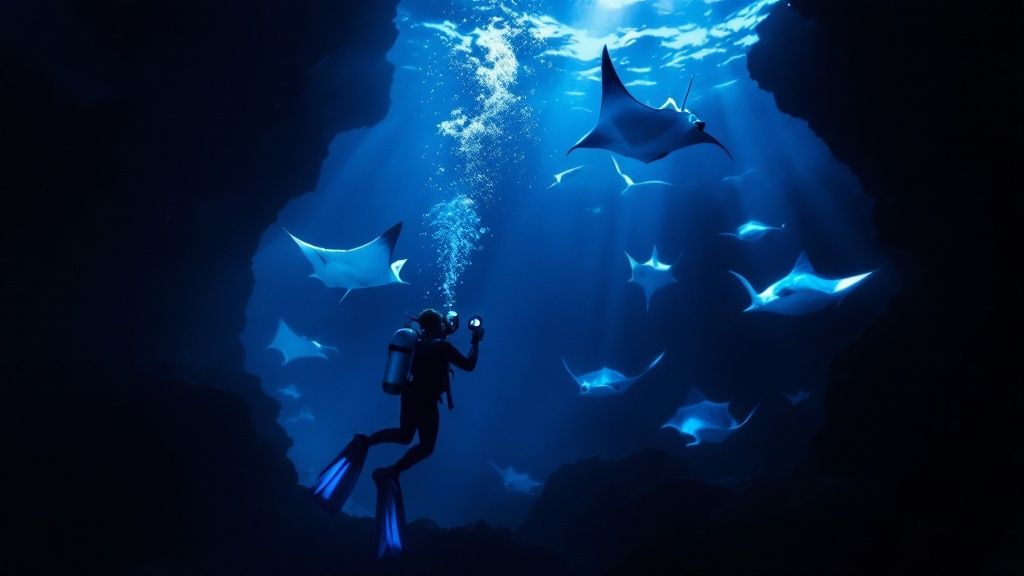
This underwater "campfire" attracts swarms of plankton, the mantas' favorite meal. The mantas, which are incredibly intelligent and creatures of habit, know exactly where to find this nightly buffet. They swoop in, performing graceful barrel rolls through the beams of light to scoop up the plankton, often coming breathtakingly close to the viewers.
Why Is This Kona Dive So Special?
You can see manta rays in other places, sure, but the Kona experience is truly in a class of its own. Most manta encounters around the globe happen at "cleaning stations," where the rays hover while smaller fish pick parasites off their skin. It's neat, but it's a passive event.
In contrast, the manta ray dive kona is all about their dynamic, active feeding behavior. It’s a spectacle of motion and grace that you just don't see anywhere else.
Every year, around 80,000 people travel to the Kona Coast to witness this phenomenon at two main sites, affectionately known as Manta Village and Manta Heaven. The best time for calm seas is generally between April and October, when the water is a balmy 75 to 80°F—perfect for both the divers and the mantas. You can get more details about the dive's popularity in this helpful article on konahonudivers.com.
This consistent gathering of mantas has cemented Kona's reputation as the world's most reliable destination for this kind of encounter. The best operators have perfected a system that is safe and awe-inspiring for guests while being non-intrusive for the rays.
Choosing a responsible operator isn't just a good idea—it's essential. The top companies prioritize the well-being of the mantas, following strict guidelines to ensure these gentle giants are protected and respected during every interaction.
When you're ready to book, look for an operator with a solid history of safety, education, and conservation. Kona Honu Divers is a premier company known for its experienced crew and dedication to sustainable marine tourism. Their guides don't just take you for a swim; they give you a comprehensive briefing so you understand how to be a passive, respectful observer.
That kind of expertise is what turns a great dive into a genuinely unforgettable adventure. By picking a top-tier operator, you're not just booking a tour; you're actively supporting the preservation of Kona's incredible marine ecosystem. If you’re ready for this once-in-a-lifetime encounter, you can book your manta ray dive tour and get ready for an amazing night.
Choosing Your View: Dive or Snorkel?
So, you're ready to see the world-famous manta rays of Kona. The first big decision you'll make is how you want to experience the show. You’ve got two fantastic options, and honestly, there's no wrong answer. Both diving and snorkeling offer a front-row seat to the action, but from completely different perspectives.
Your choice really boils down to your comfort level, certification, and the kind of view you're hoping for.
The Diver's Perspective: Up Close and Personal
If you’re a certified scuba diver, this is your chance for a truly immersive encounter. You’ll descend with your guide to a sandy patch on the ocean floor, usually around 25-35 feet deep. Once you're settled in, you’ll point your dive light straight up, creating a column of light that acts like a dinner bell for plankton.
And where the plankton go, the mantas follow.
From this vantage point, it’s like being in the front row of an underwater theater. The mantas perform a beautiful, silent ballet, gliding and barrel-rolling right over your head—sometimes just inches away. It’s a stable, awe-inspiring view that makes you feel like you've been invited into their world.
The Snorkeler's Perspective: A View from Above
Not a diver? No problem. The snorkeling experience is every bit as magical. You’ll be at the surface, holding onto a custom-built, high-powered light board. These aren't your average pool floats; they are large, stable, and designed to give you a comfortable and secure platform.
Floating on your stomach, you'll look down through your mask as the board's lights illuminate the water below. Just like the divers' lights, this glow attracts a massive cloud of plankton, drawing the mantas right up to the surface to feed. Watching these gentle giants emerge from the darkness and glide just feet beneath you is an experience that will stick with you forever.
Want a more detailed look at the snorkeling side of things? We've put together a full guide on how to snorkel with manta rays in Kona.
One of the best things about the Kona manta experience is that most boats—including ours—can take both divers and snorkelers out together. This is a game-changer for families or groups with mixed experience levels. Everyone gets to be part of the same incredible adventure.
Still weighing your options? This side-by-side comparison should help you decide which experience is the right fit for you.
Manta Ray Dive vs. Manta Ray Snorkel: A Quick Comparison
| Feature | Scuba Diving | Snorkeling |
|---|---|---|
| Perspective | Bottom-up view, watching mantas glide overhead. | Top-down view, looking down as mantas feed below. |
| Proximity | Potentially inches away as mantas swoop near the lights. | Very close, but typically a few feet of separation. |
| Requirements | Scuba certification required (Open Water or higher). | No certification needed; just be comfortable in the water. |
| Experience | Immersive, stationary experience on the ocean floor. | Floating comfortably on the surface holding a light board. |
| Best For | Certified divers who want the most up-close view possible. | Non-divers, families, and anyone who prefers the surface. |
In the end, whether you choose to dive down or float on top, you're in for an unforgettable night. The most important thing is to pick the option that feels right for you. Both give you a safe and respectful way to witness one of nature's greatest shows.
Ready to book your spot? You can reserve your 2-Tank Manta Dive or Snorkel adventure right now and get ready for the experience of a lifetime.
What to Expect on Your Manta Ray Tour
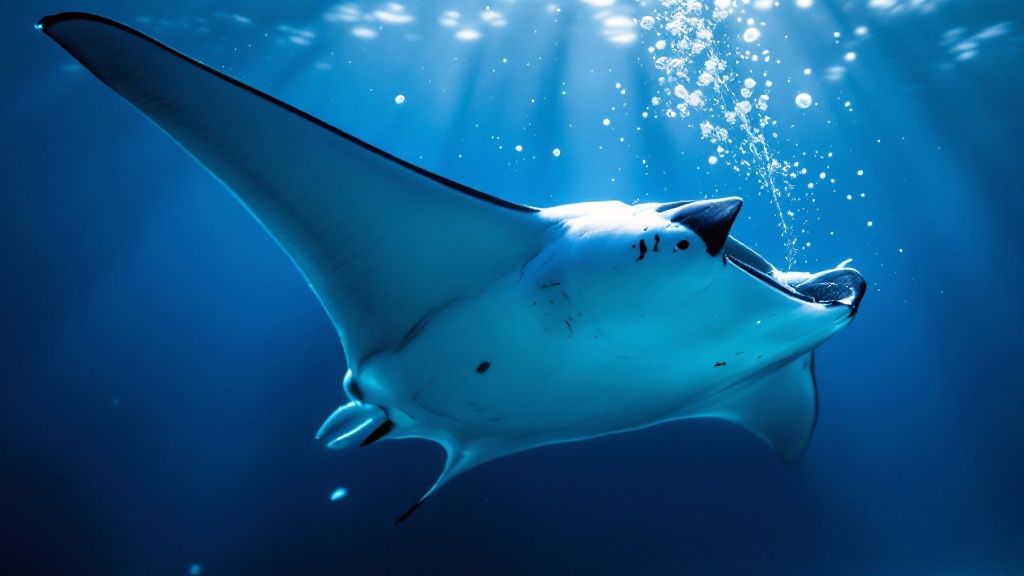
Knowing exactly what your manta ray dive kona adventure will feel like, from start to finish, can turn any pre-trip jitters into pure excitement. So let's walk through the entire experience. This way, you’ll feel like a seasoned pro before you even step on the boat.
The magic really starts at the harbor in the late afternoon. There’s a buzz of anticipation as you get checked in, meet your fellow divers, and get your gear sorted. It's a great time to just soak in the atmosphere as everyone gets ready for one of the world's most incredible underwater encounters.
Before you go anywhere, the crew will gather everyone for a thorough briefing. This isn’t just a dry list of rules; it's a fantastic introduction to the gentle giants you’re about to meet. You’ll learn about their biology, why they gather in Kona, and—most importantly—how to interact with them safely and respectfully. The number one rule? Never touch the mantas, as it can harm the delicate protective coating on their skin.
The Journey to the Dive Site
With the briefing done, it's time to board the boat and head out. Honestly, the ride itself is a highlight. As you cruise along the stunning Kona coast, the sun starts to set, painting the sky with incredible shades of orange and pink. It's the perfect, calming prelude to the thrilling night ahead.
This sunset cruise is your chance to ask the crew any last-minute questions, give your gear one final check, and just enjoy the beauty of a Hawaiian evening on the water.
As twilight fades, the boat will moor up at the dive site. Your guide will give one last rundown, going over the plan for getting in the water and finding your spot. Whether you’re diving or snorkeling, the crew makes sure everyone feels confident and ready for the main event.
The Underwater Spectacle
Taking that first plunge into the dark ocean is always a thrill, but any nerves you have will vanish instantly. Down below, a circle of powerful lights creates a glowing "campfire" on the ocean floor. This light illuminates the entire area and, more importantly, attracts the plankton the mantas come here to eat.
If you're a diver, you'll descend to the sandy bottom and find a spot around this circle of light, looking up in anticipation. For snorkelers, you'll hang onto a custom-built light board that floats on the surface, which draws the mantas right up to you.
The moment the first manta ray appears is something you will never forget. They emerge from the darkness like silent gliders, moving with an effortless grace that defies their size. Some have wingspans stretching over 12 feet, but it's their gentle, curious nature that truly leaves a mark.
What follows is an underwater ballet. The mantas perform barrel rolls and elegant loops, filtering plankton from the water just inches above your head. It is a profoundly humbling experience to be that close to such a magnificent wild animal. The only sounds are the rhythmic hiss of your regulator and the quiet gasps of awe from your fellow divers.
You'll spend about 30-45 minutes completely mesmerized before your guide signals that it's time to head up.
The Cozy Ride Home
Back on the boat, the experience isn't quite over. The crew is there to help you out of your gear and usually has warm towels, hot chocolate, and snacks waiting—a perfect comfort after a night dive.
The ride back to the harbor is filled with energy and excitement as everyone shares their favorite moments. This post-dive camaraderie is the perfect way to cap off an unforgettable evening. You’ll head home not just with incredible memories, but with a deep appreciation for these gentle giants.
Booking one of these amazing manta ray dive tours is your ticket to this entire incredible journey.
Diving with Respect for Kona’s Manta Rays
Jumping in the water for a manta ray dive kona tour is far more than just another bucket-list adventure. You're stepping into the world of a protected, cherished species that holds a special place in Hawaii's culture and ecosystem.
These incredible animals aren't just a tourist attraction. To many in Hawaiian tradition, they are revered as ʻaumākua, or ancestral guardians. Understanding their significance is the first step toward having a truly meaningful and sustainable encounter. When we choose to be passive observers, we're doing our part to ensure these gentle giants can thrive here for generations to come.
The Golden Rules of Manta Ray Interaction
The long-term health of Kona's world-famous manta encounters hinges on every single person following a few simple but non-negotiable guidelines. These rules are in place to protect both you and the mantas, making sure the experience is safe and positive for everyone involved.
If there's one thing to remember, it's this: no touching. Manta rays have a delicate mucous layer on their skin that acts as a shield against harmful bacteria. Even a light touch can strip away this protective coating, leaving them vulnerable to dangerous infections.
To keep the mantas safe, stick to these core rules of engagement:
- Observe, Don't Interact: It can be tempting to reach out when they glide by, but you must resist. Let the mantas control the entire encounter. If one comes close, just stay still and soak in the incredible moment.
- Never Give Chase: Chasing or pursuing a manta ray causes them stress. It can scare them away from the very plankton-rich light they came to feed in, disrupting their natural behavior.
- Hold Your Position: If you're diving, stay on or very near the sandy bottom. If you're snorkeling, stay flat on the surface. This creates a clear, predictable "water column" for the mantas to maneuver through safely as they feed.
Following these guidelines is the foundation of being a considerate visitor. For a deeper dive into underwater etiquette, our guide on being a responsible and considerate diver has even more great information.
Understanding Kona's Manta Population
The manta rays you'll meet in Kona are part of a well-studied local population. The waters here are home to two distinct species: the reef manta ray (Mobula alfredi), which has an average wingspan of up to 14 feet, and the much larger oceanic manta ray (Mobula birostris), which can reach a staggering wingspan of up to 22 feet!
Despite their massive size, they are completely harmless to humans—they have no barbs, stingers, or teeth. Both species are listed as vulnerable or endangered by the International Union for Conservation of Nature (IUCN), facing threats like overfishing and habitat loss. This makes responsible tourism more critical than ever.
The encounters here in Kona give people a unique chance to connect with these animals, building a powerful appreciation that fuels the desire to protect them worldwide.
Researchers in Kona identify individual manta rays by the unique spot patterns on their bellies, which are as distinct as a human fingerprint. This non-invasive tracking method has allowed them to name over 330 individual mantas and collect priceless data on their behavior, migration, and life cycles.
When you book with an eco-conscious operator, you become a direct supporter of this sustainable model. Reputable companies are committed to educating their guests and strictly enforcing the passive observation rules, turning every single tour into an opportunity for conservation. Your participation proves that these animals are worth so much more alive and wild than they are anywhere else.
When you're ready for this incredible, respectful encounter, you can reserve your spot on a manta ray dive tour and join a community dedicated to protecting these gentle giants.
Exploring More Epic Big Island Dives
The Kona manta ray dive is the headliner, no doubt about it. It's the experience that draws divers from all corners of the globe, and for good reason. But here's a little secret from those of us who spend our lives in these waters: it's just the beginning.
Think of the manta dive as your spectacular opening act. Once you've seen that incredible underwater ballet, a whole world of unique Kona diving opens up. From drifting in the deep open ocean on a blackwater dive to navigating ancient lava tubes, there’s always another adventure waiting. Adding a few extra dive days to your trip can take it from great to unforgettable.
The Thrill of the Kona Blackwater Dive
If you thought the manta dive was a unique night out, wait until you try this. The Kona blackwater dive is a completely different beast—a truly mind-bending experience for the adventurous. We take you miles offshore, tether you to the boat, and let you drift in the deep, dark ocean to witness one of the planet's largest daily migrations.
Every single night, a universe of strange and beautiful creatures rises from the abyss to feed near the surface. You're floating in the middle of it all, surrounded by tiny, bizarre larval fish, glowing jellies, and alien-like cephalopods. It's an experience that feels like you're diving in outer space.
Advanced Diving Opportunities Abound
For more experienced divers looking for a challenge, Kona’s coastline is an absolute playground. The island's volcanic past has left behind a dramatic underwater landscape filled with lava tubes, massive arches, and deep-water pinnacles that are magnets for marine life. Exploring these advanced dive sites shows you a wilder side of Hawaii.
Picture yourself swimming through an ancient lava tube as sunlight streams through cracks in the ceiling, or descending a sheer wall covered in rare corals. These are the dives where you’re more likely to run into bigger pelagic species—sharks, eagle rays, and maybe even a pod of dolphins passing by.
The Big Island’s geology is what makes its diving so unique. The same volcanic activity that formed the islands has created an underwater world of caves, arches, and canyons that you won’t find anywhere else. Each site tells a story of the island's fiery past.
A World of Diving Tours for Every Level
Don't have a logbook full of deep dives? No problem. The dive community here is welcoming to everyone, from brand-new divers to seasoned pros. If you're looking for another classic Kona experience, you can't go wrong with a Captain Cook Tour, known for its stunningly clear water and vibrant coral gardens.
Ultimately, the manta ray dive is the perfect gateway. It hooks you, and then you discover the incredible variety of other diving tours available. Your adventure doesn't have to stop with the mantas—it can be the start of something much bigger.
Your Kona Manta Ray Dive Questions, Answered
Alright, let's talk about the details. Planning a dive like this always brings up a few questions, and getting clear answers is the best way to feel confident and ready. We've been doing this for a long time, so we've heard them all. Here’s a rundown of what people usually ask before they take the plunge.
When Is the Best Time of Year to Go?
This is easily the most common question, and I've got great news: you can see manta rays in Kona any night of the year. Our local population doesn't migrate, so the show goes on 365 days a year.
That said, if you're looking for the absolute best conditions, the summer months from April to October are tough to beat. The ocean is typically flatter and the water is warmer, making the whole experience just a bit more comfortable. Winter can bring bigger swells, but the tours still run reliably, and the mantas always show up for dinner.
For a deeper dive into what to expect each season, check out our guide on the best time of year to see manta rays in Kona.
Is the Manta Ray Dive Safe for Beginners?
Absolutely. This experience is designed to be accessible and safe for everyone, even newly certified divers.
The main dive site is in a protected, shallow bay, with depths typically around 25-35 feet. What really makes it beginner-friendly is that you aren't swimming around in the dark. Instead, you'll be stationary on the sandy bottom, watching the show happen above you. No complex navigation needed.
Snorkelers are just as safe. You'll hold onto a custom-built float board at the surface, so you’re always stable and secure. Every tour starts with a detailed briefing, and the guides are experts at managing groups with mixed experience levels. If you've got your Open Water certification, you're more than prepared.
Are Manta Ray Sightings Guaranteed?
Nature is unpredictable, so a 100% guarantee is never possible with wild animals. But the Kona manta ray dive is about as close as you can get. The success rate is incredibly high—consistently over 90%. The dive sites are established feeding grounds, and the mantas have been visiting them like clockwork for decades.
On that very rare night when the mantas decide to dine elsewhere, most reputable companies (including Kona Honu Divers) offer a "manta guarantee." This usually means you can come back and try again on another night for free. It’s a great policy, so just be sure to ask about it when you book your tour.
The consistency of these encounters has fueled incredible research. Since 1991, scientists have identified and cataloged over 330 individual mantas here by their unique spot patterns. This long-term data is crucial for understanding and protecting these gentle giants.
What Should I Bring on the Tour?
Packing is pretty straightforward since the dive operators provide all the essential scuba or snorkel gear. Still, a few small things can make a big difference in your comfort.
Here's what I always recommend bringing:
- A towel and warm, dry clothes. Getting out of a wetsuit and into something cozy for the boat ride back is a game-changer.
- Reusable water bottle. Hydration is key.
- Seasickness medication. If you're even slightly prone to motion sickness, take it beforehand. Better safe than sorry!
The best operators, like Kona Honu Divers, usually have hot chocolate and snacks waiting for you on the boat. It’s the perfect way to warm up and share stories about what you just saw.