
Picture this: you’re sinking into the warm, inky blackness of the Pacific Ocean at night. Your dive light cuts a path through the dark water. Then, out of nowhere, a colossal, winged shadow glides just above you. It's a manta ray, with a 12-foot wingspan, performing a silent, graceful ballet. This is the world-renowned manta ray dive in Kona, and it's so consistently amazing that many call it the single best place on Earth for this encounter.
Why the Kona Manta Ray Dive Is a Bucket-List Experience
So, what makes the Kona coast the undisputed global hotspot for manta rays? It really comes down to a perfect storm of geography and biology. The island's unique underwater volcanic slopes and predictable ocean currents create a nightly all-you-can-eat buffet of plankton, which is exactly what mantas love to eat.
This dependable food supply has turned a few special spots into natural dining rooms for these gentle giants. For decades, local dive operators have set up designated viewing areas, shining powerful lights up from the seafloor. These lights attract massive clouds of plankton, which in turn rings the dinner bell for hungry mantas.
It's an incredible symbiosis. The lights concentrate the food for the mantas, and the mantas put on an unforgettable show for divers. You just settle down on the sandy bottom, look up, and watch the magic unfold inches from your face.
A Reliable Natural Wonder
Unlike so many wildlife encounters that hinge on pure luck, the manta ray dive Kona is incredibly reliable. Research has shown that the probability of seeing mantas here is exceptionally high, which is why it’s become a major hub for both tourism and marine science. In fact, data collected over many years confirms an 80-90% success rate for sightings.
That staggering consistency brings around 80,000 people to the Big Island every year just for this adventure. Dive sites like "Manta Village" and "Manta Heaven" are such established feeding grounds that seeing multiple mantas on a single dive isn't just possible—it's common. You can learn more about why Kona is the top destination for manta encounters.
This is what makes the Kona dive a true bucket-list item for divers around the globe. If you're ready to experience it for yourself, Kona Honu Divers runs world-class trips with expert guides who are passionate about your safety and the well-being of the mantas. Check out their manta ray dive tours page for details and booking.
Meet Kona’s Gentle Giants of the Sea
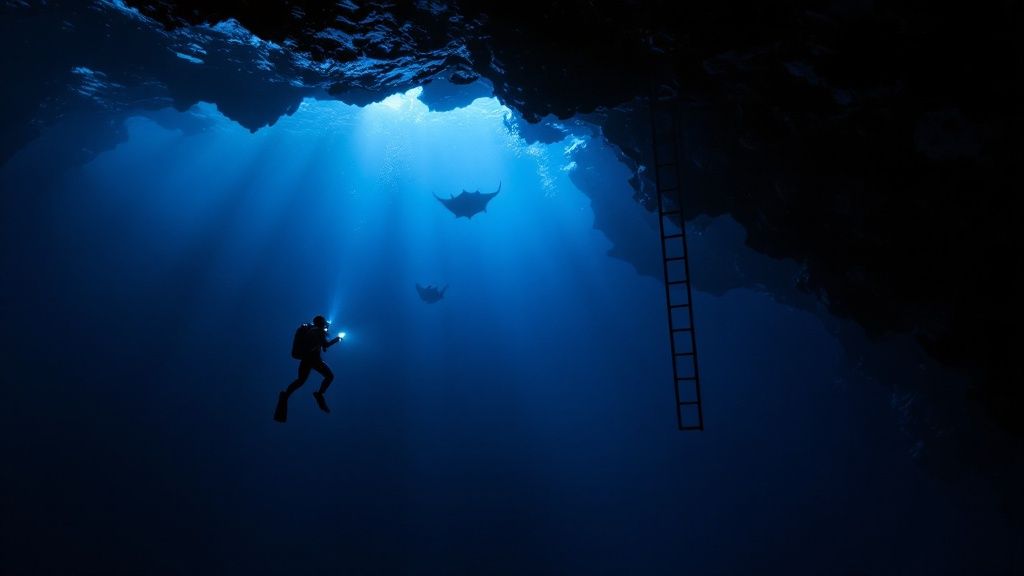
Before you jump into the water, let's talk about the incredible animals you're about to meet. The most common question I get is, "Are they dangerous?" The answer is a resounding no. Manta rays are incredibly gentle and pose absolutely no threat to people.
Unlike their stingray cousins, mantas are completely harmless. They have no teeth, no stingers, and no barbs. They're filter feeders, spending their time scooping up microscopic organisms like plankton. Think of them as the humpback whales of the ray family—massive, majestic, and completely focused on their tiny meals. They might get curious, but they are never aggressive.
It's this gentle nature that makes the manta ray dive Kona such a powerful and safe experience. You get to be inches away from a huge wild animal without a shred of fear, allowing you to just soak in the moment.
The Stars of the Show
The Kona coast is a hotspot for two types of manta rays, and you could see either one on your trip. It helps to know who you're looking at.
- Reef Manta Rays (Mobula alfredi): These are the regulars, the "locals" of the reef. They're the ones we see most often, with a wingspan that can reach up to 14 feet. They're known for being social and genuinely curious about the divers.
- Oceanic Manta Rays (Mobula birostris): These are the big-leaguers, the world travelers just passing through. They are enormous, with a potential wingspan of over 22 feet. Spotting one is a rare and truly breathtaking moment.
No matter which species shows up, their feeding behavior is what makes the night magical. Our dive lights attract plankton, creating a thick, glowing buffet right in front of you. The mantas glide in and perform these beautiful, acrobatic barrel rolls, scooping up mouthfuls of food with their cavernous mouths. It's an underwater spectacle often called the "manta ballet." If you want to dive deeper, you can learn more about Kona's amazing manta ray populations and what makes them so special.
This feeding ritual is the heart of the experience. Watching these enormous creatures perform their nightly dance transforms the dive from a simple observation into a deeply moving connection with the natural world.
Honestly, it’s an unforgettable encounter. Having these gentle giants glide just inches over your head is a memory that will stick with you forever.
When to Plan Your Manta Ray Dive
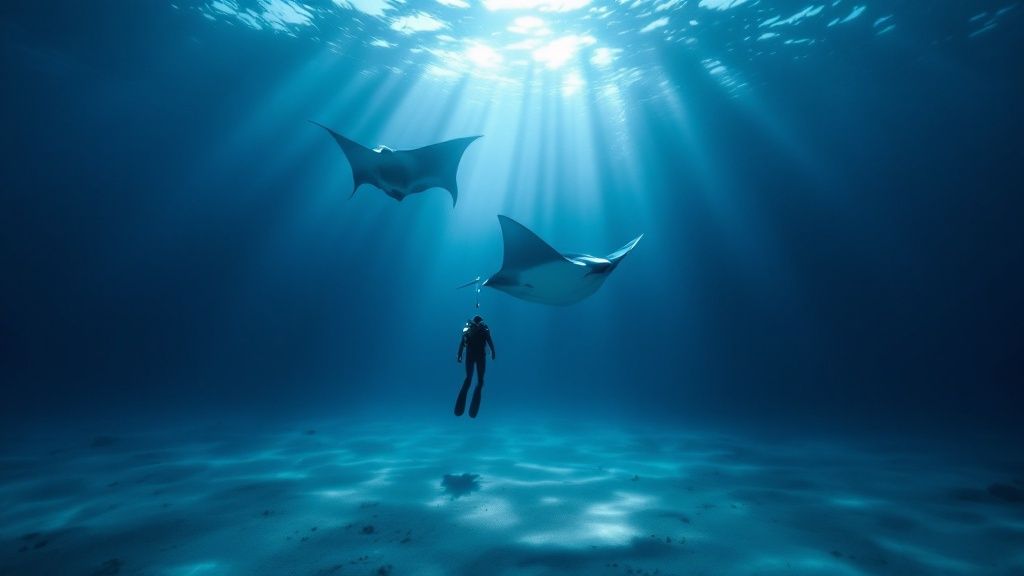
Here's the great news: there’s really no bad time to book a manta ray dive in Kona. These gentle giants are residents, not tourists, meaning the local population hangs out here year-round. Sightings are incredibly consistent no matter when you visit.
That said, a few subtle differences throughout the year might help you pick the perfect window for your trip.
Water Temperature and Visitor Seasons
The most noticeable change from season to season is the water temperature. From April to October, during peak visitor season, the Pacific warms up to a comfortable 77-80°F (25-27°C).
In the slightly quieter months from November to March, the water cools down a bit to 74-76°F (23-24°C). The mantas don't seem to notice the difference, but if you tend to get chilly, you might prefer the warmer summer months.
Pro Tip: Some seasoned divers swear by booking their trip around the new moon. The theory is that the darker sky makes the dive lights an even more powerful magnet for plankton, which could lead to a bigger manta turnout. It's not a guarantee, but it’s a cool little trick to consider.
To help you visualize the year at a glance, here’s a quick breakdown of what to expect.
Kona Manta Ray Dive Season Overview
| Season | Water Temperature | Manta Sightings | Visitor Traffic |
|---|---|---|---|
| Spring (Apr-Jun) | 77-79°F | Excellent & Consistent | Moderate to High |
| Summer (Jul-Oct) | 78-80°F | Excellent & Consistent | High |
| Fall (Nov-Dec) | 76-78°F | Excellent & Consistent | Moderate |
| Winter (Jan-Mar) | 74-76°F | Excellent & Consistent | High (Whale Season) |
Ultimately, manta activity remains fantastic all year. The biggest factors for you will likely be water temp and how busy the island is.
Choosing Your Dive Site
Kona boasts two world-famous spots for the manta ray night dive, and each has its own personality. Dive operators are pros at picking the best site based on the nightly conditions, but it helps to know what makes each one special.
- Manta Village (Kaukalaelae Point): This is the original, legendary spot just south of Keauhou Bay. It’s a bit shallower, with divers settling onto a sandy bottom around 35 feet. Its protected location often means calmer waters, making it a fantastic and accessible choice for all skill levels.
- Manta Heaven (Garden Eel Cove): Found further north near the airport, this site is a little deeper, with the main viewing area around 40-45 feet. It can occasionally have a bit more current, but it’s also known for hosting huge numbers of mantas. It's an absolutely thrilling dive.
You really can't go wrong with either location—both deliver jaw-dropping, close-up encounters. The final call usually depends on where the mantas have been most active and what the ocean is doing that day. If you want to dive deeper into the specifics, check out our guide on the best time of year to see manta rays in Kona.
The bottom line? The best time to plan your dive is simply when you can get here. The mantas are always ready to put on a show, and it’s a spectacle you won't forget.
What to Expect on Your Night Dive Adventure
Your manta ray dive kona experience doesn't just start when you get in the water—it begins the moment you arrive at the harbor. You can feel the buzz of excitement as you meet the crew and other divers. Guides from a top-notch outfit like Kona Honu Divers will gather everyone for a thorough pre-dive briefing, setting the stage for the night ahead.
This isn't just about ticking boxes. It’s where you get the inside scoop on how the dive works, learn the crucial safety protocols for diving after dark, and understand how to be a respectful guest in the mantas' world. The crew’s job is to make you feel confident and comfortable, and they're always ready to answer any last-minute questions.
The Sunset Voyage
With everyone briefed and geared up, the boat pushes off from the dock and heads for the dive site. This trip out is an experience in itself. Cruising along the beautiful Kona coast while the sun sinks toward the ocean is pure magic—the sky explodes in a watercolor of oranges, pinks, and purples.
It’s a calm, beautiful ride that gives you a chance to just relax and take it all in. The crew might point out local landmarks or share a few stories about the area's marine life. Think of it as the quiet opening act before the main event. If you're wondering what to pack, check out our guide on the gear you will need for your Kona diving adventure.
The Underwater Theater
As the last bit of daylight disappears, it's time for final gear checks before taking a giant stride into the warm Pacific waters. You'll descend together with your group, following the divemaster down to a sandy patch on the ocean floor, usually around 30-40 feet deep.
Once everyone is in position, the guides flip the switch on a powerful set of lights arranged in the middle of the group. We call it the "campfire."
This circle of light is the dinner table. It illuminates a massive column of water, attracting a thick cloud of plankton. In the darkness beyond the lights, you'll begin to see massive, shadowy figures circling—the mantas are arriving for their nightly feast.
Slowly at first, then more boldly, they glide into the light. You’ll watch them perform these incredible, acrobatic barrel rolls, sometimes just inches from your mask, with their huge mouths open to scoop up the plankton. The only sounds are the rhythmic hiss of your regulator and the muffled gasps of amazement from the divers around you. You just kneel on the sand, a silent audience member in their otherworldly ballet.
This is so much more than just observing animals. You are completely immersed in their environment, a guest at their dinner party. The immense size and effortless grace of these gentle giants create a memory that will stick with you forever. When it's time to surface under a sky full of stars, you'll know you’ve just been part of one of the planet’s greatest natural spectacles.
How to Be a Responsible Manta Observer
Diving with manta rays in Kona is an absolute privilege, but it’s a two-way street. We're guests in their world, and how we act has a direct impact on these incredible animals. Think of yourself as an ambassador for the ocean.
Your guide will give you a full rundown on "Manta Etiquette," but it all boils down to one simple idea: be a passive observer. Find your spot on the sand, get comfortable, and stay as still as you can. The less you move and kick up sand, the more comfortable the mantas will be.
The single most important rule? Never, ever touch a manta ray. It’s tempting, I know, especially when they glide right over you. But their skin is covered in a delicate mucus layer that protects them from infection.
Imagine that slime coat as a combination of a waterproof jacket and an invisible shield. When you touch them, you're essentially rubbing off that protection, leaving them wide open to harmful bacteria. It's a small action from us that can have huge consequences for them.
By simply keeping your hands to yourself, you are actively helping to keep Kona’s manta population healthy. For a deeper dive into best practices, check out our guide on being a responsible and considerate diver.
Your Role in Conservation
What’s really cool is that just by being a good observer, you’re plugging into a massive conservation success story. The Kona mantas are one of the most studied populations on the planet, and every dive adds to what we know.
Since 1991, local researchers have been identifying individual mantas by photographing the unique spot patterns on their undersides. These patterns are like a fingerprint, and they allow scientists to recognize and track specific animals for years. This incredible photo-ID project has built a database that helps experts understand manta movements, population health, and social structures. The catalog now includes over 330 distinct individuals, all thanks to tens of thousands of sightings. Discover more insights about this groundbreaking research on Outrigger.com.
When you dive with a responsible operator like Kona Honu Divers, you become part of this effort. You’re not just a tourist taking a tour; you're supporting a sustainable ecotourism model that puts the mantas first. You're helping ensure that this magical experience will be around for generations to come.
Common Questions About the Manta Ray Dive
It's totally normal to have a few questions buzzing around your head before booking an adventure like the manta ray dive in Kona. A little bit of planning goes a long way in making sure you feel ready for this incredible experience. Let's tackle some of the most common things people ask.
Do I Need to Be Scuba Certified to See the Manta Rays?
For the actual dive, yes, you absolutely need to be a certified scuba diver. All operators will require proof of at least an Open Water certification, so make sure to bring your card along.
But what if you're not a diver? Don't worry, you can still be part of the magic! Just about every company, including Kona Honu Divers, offers a snorkeling option. You'll get to float right on the surface and watch the show from above as the mantas swoop and glide through the light beams. The view from the top is genuinely just as breathtaking.
Is the Manta Ray Night Dive Dangerous?
This is a big one, and the short answer is no, it's considered very safe. The manta rays themselves are completely harmless. People often call them "gentle giants," and it's true—they have no teeth, no stingers, and no barbs. They are simply not a threat to humans.
The real safety considerations come from the fact that it's a night dive. That’s why going with a professional, experienced crew is so important. They’ll give you a thorough briefing and make sure everything runs smoothly.
- It’s a Shallow Dive: The whole experience happens in relatively shallow water, usually around 25-40 feet.
- You Stay Put: For most of the dive, you’ll be stationary on the sandy bottom, which minimizes the chances of bumping into anything.
- You're Guided by Experts: You’re under the direct supervision of professional guides who know the site, the animals, and the safety procedures like the back of their hand.
As long as you listen to your divemaster and follow standard safe diving practices, you're in for a very low-risk and incredibly high-reward adventure.
What Should I Bring on the Tour?
The dive operator provides all the heavy lifting—tanks, weights, BCD, regulators, and dive lights are all included. Your job is to bring the personal items that will make your trip more comfortable.
Here’s a good checklist:
- Your scuba certification card (don't forget this!)
- A towel to dry off
- A warm jacket or hoodie for the boat ride home—it can get chilly
- Any personal dive gear you love, like your own mask or computer
- A reusable water bottle to stay hydrated
- An underwater camera, because you’ll definitely want pictures
A Quick Tip: If you're someone who gets motion sickness, it's a smart move to take something for it before you get on the boat (with your doctor's okay, of course). The ride is usually calm, but it's always better to be prepared just in case.
Are There Other Unique Night Dives in Kona?
Oh, absolutely! While the manta dive gets all the fame, Kona is also a world-renowned destination for its black water night dive. This is a completely different kind of thrill and is geared toward more experienced diving opportunities.
Instead of hanging out on the reef, you drift in the deep, open ocean at night, safely tethered to the boat. You'll witness a mind-bending parade of tiny, bioluminescent creatures and strange larval-stage animals that migrate up from the deep after sunset. If you’ve done the manta dive and are hungry for another unforgettable night adventure, the Kona black water dive is a must-do.
Ready to book your own unforgettable adventure? At Kona Honu Divers, we offer world-class manta ray night dives that are safe, responsible, and absolutely magical.
You can book your adventure on our manta ray dive tours page.