
Imagine floating in the dark, warm waters of the Pacific. Suddenly, a graceful shadow with a wingspan of up to 16 feet glides effortlessly over you. This isn't a scene from a movie; it's the world-famous manta ray night dive in Kona, a truly breathtaking underwater ballet that has become a must-do for travelers from all over the world. It’s more than just a dive—it's a magical, almost spiritual connection with one of the ocean's most majestic creatures.
What Makes the Kona Manta Ray Dive So Special?
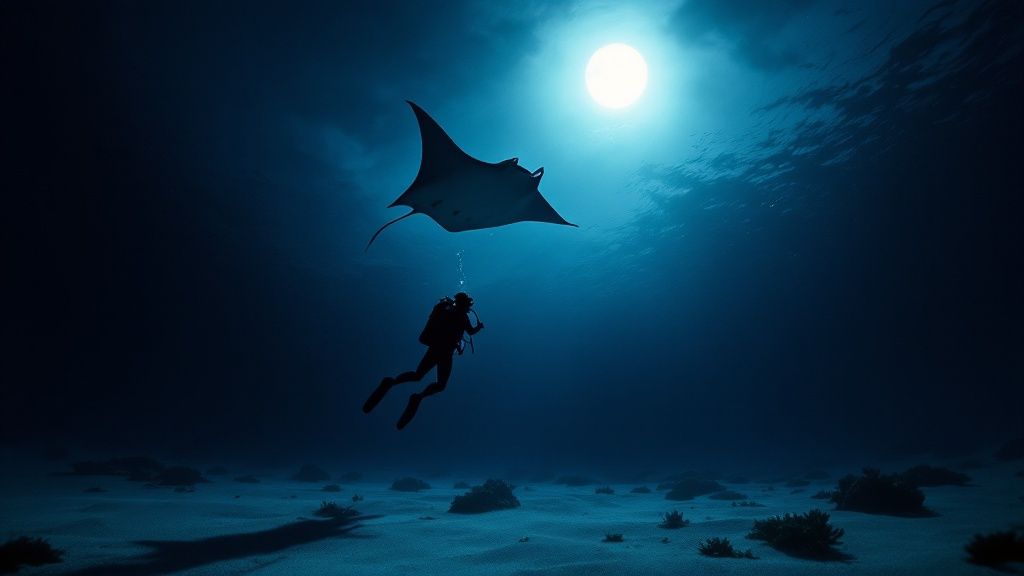
The Kona manta ray dive isn't just another underwater tour; it’s a globally recognized phenomenon. What truly sets it apart from other wildlife encounters is how incredibly reliable it is. Unlike so many other places where seeing a manta is pure luck, Kona's coast offers a spectacular show almost every single night.
This consistency comes down to a fascinating, symbiotic relationship between light, food, and the mantas. The whole operation works by shining powerful lights into the water, which attracts swarms of microscopic plankton—the manta rays' favorite meal. As the plankton gather in the bright beams, the mantas show up for an all-you-can-eat buffet, performing graceful somersaults and barrel rolls right in front of you.
An Unforgettable and Dependable Encounter
The sheer number of people who experience this is staggering. Each year, about 80,000 people join manta ray tours along the Kona Coast, all drawn by the near-guarantee of seeing these gentle giants up close.
The best time to go is usually from April to October when the water is a comfortable 75–80°F. On a typical night, it's not uncommon to see an average of 8 to 12 mantas. You can find out even more about what makes the manta dive a must-do activity in our detailed guide.
This incredible spectacle happens consistently at two main sites: "Manta Village" and "Manta Heaven." Over the years, these spots have become natural feeding stations where the local, non-migratory manta population knows a good meal is waiting. It transforms the dive from a hopeful search into a front-row seat at a nightly feast.
The feeling of a massive manta ray gliding inches above your head, its enormous mouth wide open as it feeds in the light, is something words can't fully capture. It's a moment of pure, unadulterated awe that connects you directly to the wild beauty of the ocean.
It's More Than Just a Dive
The magic of the Kona manta ray experience is that it’s open to almost everyone, not just certified scuba divers. Most tour operators offer snorkeling options, which let you float on the surface and watch the underwater show from above. This makes it a perfect adventure for families, couples, and solo travelers, no matter their experience level.
Whether you're settled on the ocean floor looking up or floating on the surface looking down, the experience is equally profound. It’s a chance to witness a thriving marine ecosystem in action and create a memory that will stick with you for a lifetime.
Choosing the Right Dive Site for Your Adventure
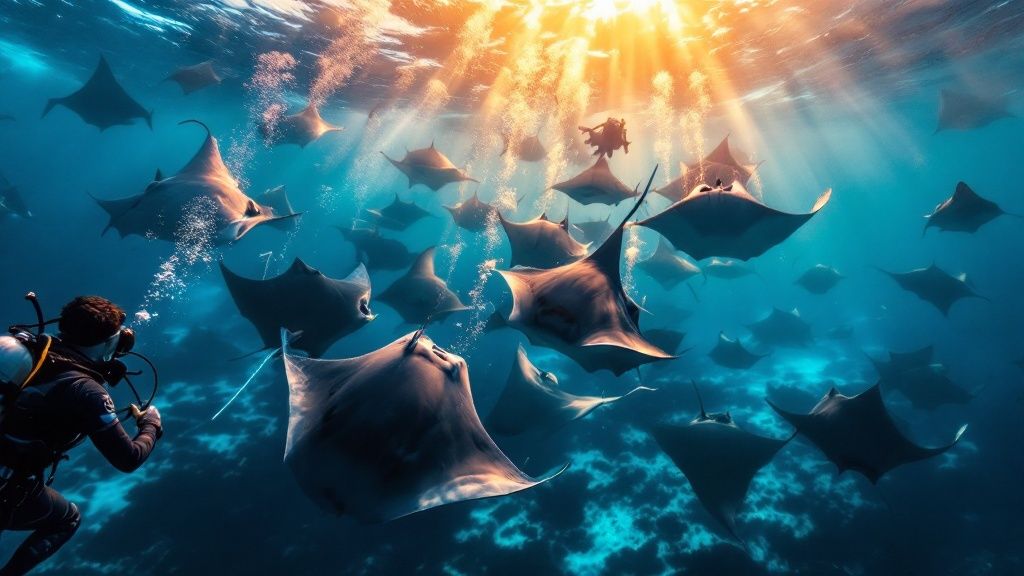
When you're gearing up for a manta ray dive in Kona, one of the first things you'll decide is where to go. Kona has two world-famous spots, and while both deliver jaw-dropping encounters, they offer very different experiences. Knowing the difference is the key to picking the perfect adventure for your skill level and what you hope to see.
The two main locations are affectionately known as "Manta Village" and "Manta Heaven." Each has its own vibe, depth, and unique conditions that will shape your dive, influencing everything from the boat ride out to the underwater scenery.
Manta Village: The Original Classic
Just off Keauhou Bay, Manta Village is the OG—the original and most legendary site for the Kona manta ray dive. This spot is famous for being incredibly accessible and usually quite protected from the elements, which makes it a fantastic choice for divers and snorkelers of all stripes.
The dive site itself is on the shallower side, typically around 35 to 40 feet, with a sandy bottom that feels like an underwater amphitheater. This setup is perfect for newly certified divers or anyone who prefers a more relaxed dive profile. Plus, the quick boat ride from Keauhou Harbor is a huge bonus if you're worried about seasickness.
After decades of nightly visits, the mantas here are completely used to the lights and divers. That comfort often leads to incredibly close and reliable fly-bys.
Manta Heaven: A Deeper Experience
Head a bit further north, up by the Kona airport, and you'll find Manta Heaven, also known as Garden Eel Cove. This site offers a different flavor of adventure that often clicks with more seasoned divers. The conditions here can be a little more unpredictable, and the dive itself is a touch deeper than at Manta Village.
While the sightings are still incredibly consistent, the whole environment at Manta Heaven feels a little wilder. It has a reputation for occasionally attracting massive aggregations of mantas, creating a swirling ballet that will leave you speechless. The underwater terrain is also different, with more volcanic rock formations adding another layer of visual interest.
Wondering if one time of year is better than another? You can dive deep into the seasonal patterns by reading our guide on the best time of year to see manta rays in Kona.
Kona Manta Ray Dive Site Comparison
So, how do you choose? It really boils down to your personal comfort in the water and the kind of night you're envisioning. To make it easier, here’s a quick side-by-side look at what makes each location unique.
| Feature | Manta Village (Kaukalaelae Point) | Manta Heaven (Garden Eel Cove) |
|---|---|---|
| Location | South of Kona, near Keauhou Bay | North of Kona, near the airport |
| Depth | Shallower (35-40 feet) | Slightly deeper (40-50 feet) |
| Bottom | Primarily sandy | Volcanic rock and coral rubble |
| Conditions | Generally calm and protected | Can be more variable with currents |
| Best For | All skill levels, snorkelers, new divers | Divers with more experience |
| Boat Ride | Shorter from Keauhou Harbor | Longer from Honokohau Harbor |
| Crowds | Can be busy due to popularity | Also popular, but may feel less contained |
Honestly, you can't make a bad choice here. Both Manta Village and Manta Heaven are certified "Manta Ray Green List" locations. This certification is a guarantee that your tour operator follows the highest standards for safe, sustainable, and respectful interactions. Your decision just comes down to what kind of adventure you're hungry for.
How to Select the Best Manta Ray Tour Operator
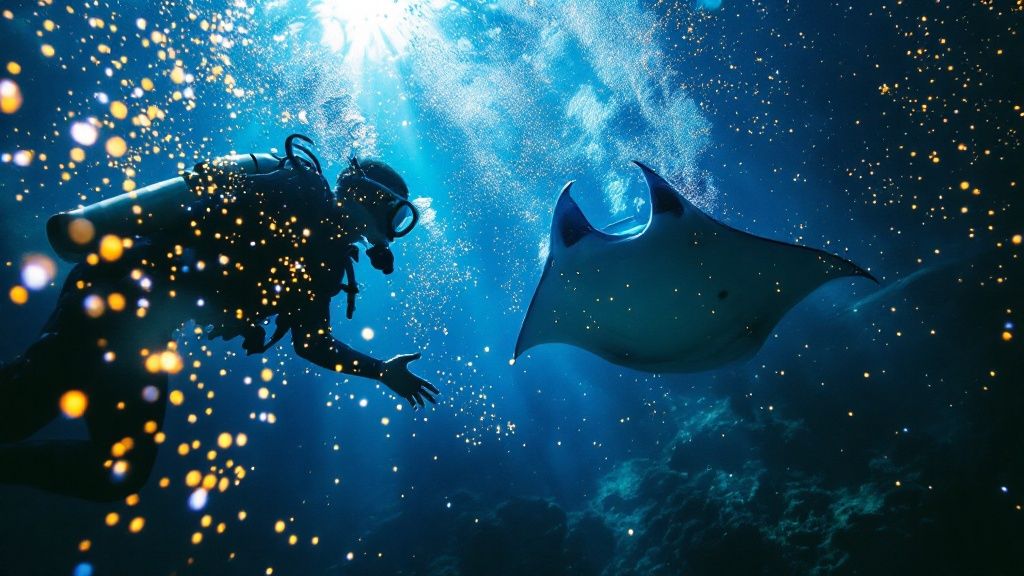
When it comes to your manta ray dive in Kona, picking the right tour operator is the single most important decision you'll make. A great operator does more than just get you to the right spot—they're responsible for your safety, the quality of your experience, and the well-being of the mantas themselves.
The difference between a good trip and a truly unforgettable one almost always boils down to the crew. From the moment you step on the boat, you should feel their expertise, see the quality of their gear, and sense their genuine passion for marine conservation. This choice is what shapes your entire underwater adventure.
Prioritizing Safety and Small Group Sizes
First and foremost, think safety. Any reputable operator will have an experienced, certified crew, a well-maintained boat, and top-notch rental gear. Don't be shy about asking about their safety procedures, emergency plans, and the experience level of their divemasters.
Beyond that, the size of your group makes a world of difference. Smaller groups mean less crowding in the water and a much more personal experience with more one-on-one attention from your guide. It keeps the dive site from turning into an underwater stadium and allows for a more intimate, respectful encounter with the mantas.
Look for Manta Ray Green List Certification
A key sign of an ethical and responsible operator is their commitment to the principles of the Manta Ray Green List. While the official list itself was discontinued, its standards for sustainable and non-invasive viewing practices live on through dedicated operators. These are the crews trained to run tours that put the mantas' welfare first.
These guidelines are absolutely crucial for protecting the local manta population. They ensure operators avoid behaviors that could stress or harm the animals, like encouraging touching, chasing, or blocking their feeding paths. When you choose a company that follows these standards, you're supporting the long-term health of this incredible ecosystem.
Operators like Kona Honu Divers are well-known for their experienced crew and strict adherence to these ethical standards. They work hard to deliver a tour that is as responsible as it is breathtaking. You can learn more about their specific manta ray dive tours here.
Why Ethical Practices Matter
These standards aren't just a random set of rules; they're built on decades of research into the local manta population. Much of this research is driven by citizen science, using the unique spot patterns on each manta's belly to identify and track individuals over time. Since 1991, this incredible effort has identified over 330 individual mantas and recorded nearly 28,500 sightings. Learn more about the fascinating research behind Kona's manta population.
By following ethical guidelines, tour operators help protect these well-known and beloved underwater residents, making sure they continue to thrive and enchant visitors for generations to come. Your choice of operator is a direct vote for conservation.
Getting Ready for Your Kona Manta Ray Dive
A little bit of prep work can be the difference between a good dive and an absolutely epic one. When you're about to experience the manta ray dive in Kona, the last thing you want to worry about is being cold or forgetting your camera.
Thinking ahead means you can just relax and soak it all in. Your dive operator handles the heavy lifting, but a few personal items will make your trip much more comfortable, especially on that chilly boat ride back to the harbor after dark.
Your Pre-Dive Checklist
Here’s a simple checklist to make sure you’ve got everything covered. Pack these, and you’ll be all set.
- Dry Towel & Warm Clothes: This is non-negotiable. You’ll be so happy you brought a towel and a sweatshirt or windbreaker for the cool ride back to shore.
- Reusable Water Bottle: Diving is dehydrating! Bring a water bottle and make sure you're sipping from it before and after you get in the water.
- Reef-Safe Sunscreen: If your trip includes an afternoon dive before the main event, make sure you're lathered up with sunscreen that won’t harm Hawaii’s delicate corals.
- Personal Dive Gear: The rental gear is usually top-notch, but if you have your own mask that fits perfectly or a comfy wetsuit, feel free to bring it along.
- Underwater Camera: You’re going to want photos of this! Charge up your GoPro or camera, and double-check that your memory card has plenty of space.
Health and Wellness on Dive Day
How you feel physically has a huge impact on your dive. Showing up well-rested and hydrated helps you stay comfortable and alert underwater. I always tell divers to skip any alcohol on the day of their dive—it dehydrates you and can impair your judgment. A good night’s sleep beforehand is one of the best things you can do.
Pro-Tip for Seasickness: If you even think you might get seasick, take medication beforehand. Some over-the-counter options need to be taken an hour or two before the boat leaves the dock to actually work, so read the directions and plan ahead.
What to Expect Mentally
Knowing the plan is the best way to calm any pre-dive jitters. Your dive crew will give you a detailed briefing covering everything from safety signals to how the dive will run. They’ll also go over the rules for interacting with the mantas, which is all about keeping you and these amazing animals safe. Pay close attention—it’s important stuff.
The experience itself is beautifully simple. You won’t be swimming around. Instead, you'll be settled on the seafloor (or floating at the surface for snorkelers), looking up as the mantas perform their ballet above you. Your only job is to stay calm, breathe easy, and take it all in.
Once you’ve prepped your gear, your body, and your mind, you're officially ready for an incredible manta ray dive in Kona. All that's left to do is get excited
Underwater Safety and Manta Ray Etiquette
Swimming with giant, wild animals like manta rays is an incredible privilege, and it comes with a responsibility to respect their world. The single most important rule on a manta ray dive in Kona is simple: passive observation. Just look, but never, ever touch. This one principle is the bedrock of a safe and ethical encounter, and it’s what keeps these amazing creatures safe.
Following these guidelines isn't just about ticking boxes; it's about creating a truly magical experience. When we act as calm, quiet observers, the mantas feel comfortable and secure. This often means they'll come closer, giving you a much better, more natural show. Your behavior has a direct impact on the dive for everyone in the water and, more importantly, on the health of the manta population itself.
The Golden Rule: Do Not Touch
Manta rays have a secret weapon: a thin, slimy mucus coating that protects their skin. Think of it as their immune system. This coating is their first line of defense against nasty bacteria and infections in the ocean.
When a person touches a manta ray, even with a gentle brush of a finger, it can wipe off this vital protective layer. This leaves the manta vulnerable to disease. That’s why your dive guide will be crystal clear about the rules: no chasing, no blocking their path, and absolutely no physical contact.
The idea is to become part of the scenery. Find your spot, get comfortable, and let the mantas do their thing. When you're still and calm, you get a front-row seat to one of the greatest shows on Earth. For a deeper look into this, check out our guide on being a considerate diver.
Creating the "Campfire of Light"
To draw the mantas in, all the dive groups have to work together. It’s a beautifully coordinated effort. Divers settle on the sandy bottom, arranging themselves in a big circle or semi-circle. We call this the "campfire."
Once in position, everyone points their dive lights straight up into the water. This focused beam of light does two brilliant things:
- It attracts plankton, which is the mantas' favorite food, creating a concentrated buffet for them.
- It creates a safe, open arena for the mantas to swoop and glide overhead without bumping into anyone.
Holding your spot is crucial. For snorkelers, the concept is the same but from above. You'll hold onto a floating board or raft that has lights pointing down, creating a ceiling of light. This teamwork is what makes the whole encounter so predictable and safe for both the mantas and the humans.
The manta ray dive is a perfect example of how ecotourism can support conservation. Responsible practices aren't just suggested; they are absolutely essential for the long-term survival of this experience and the animals we love.
Communication and Safety Procedures
You can't exactly talk underwater, so clear hand signals are everything. Your dive guide will walk you through the essential signals during the briefing before you even get in the water. Pay close attention! This is how you'll communicate if you have a problem, ask a question, or just point out something cool. You’ll definitely review signals like "OK," "problem," "go up," and "go down."
The manta ray dive in Kona is more than just a thrilling adventure; it's a conservation success story. Hawaii recognized how special these animals are and passed a law back in 2009 making it illegal to knowingly harm or capture manta rays in state waters. This legal protection, combined with the watchful eye of responsible dive operators, is what helps ensure these gentle giants will be around for generations to come.
Sticking to these simple etiquette and safety rules is what keeps the Kona manta ray dive a sustainable, awe-inspiring experience that puts the magnificent creatures we're there to see first.
Tips For Capturing Stunning Underwater Photos
The Kona manta night dive throws a lot at you: low light, fast-moving subjects, and drifting particles in every frame. Yet that same mystique is what makes each shot so rewarding. With a few adjustments, even a beginner can walk away with portfolio-worthy images.
Underwater photography often battles backscatter—that “snowstorm” effect when your flash or video light illuminates tiny particles between you and the manta. The cure is simple: move your strobe or video light off-camera and angle it toward the manta from the side.
“Position your light off-axis to minimize backscatter and emphasize the manta’s silhouette.”
Essential Camera Settings
Balancing sensitivity, depth of field, and motion freeze is crucial on a night dive.
- ISO 800–1600: Bright enough for low light but watch for grain if you push higher.
- Aperture f/2.8–f/4: Wide open to let in more light and create a shallow depth of field.
- Shutter Speed 1/125th Or Faster: Freeze the mantas’ graceful turns without blur.
Think of these as starting points; tweak them on the fly based on water clarity and your proximity to the mantas.
Lighting And Composition
A strong light source can turn a flat scene into something otherworldly. Avoid pointing your light directly at the manta’s brightest white belly to prevent overexposure.
- Shoot from below to capture the manta’s wing span against the inky water backdrop.
- Frame fellow divers or surface lights in the background to convey scale and atmosphere.
“Framing a manta against a faint glow above transforms a simple shot into an underwater story.”
Getting Great GoPro Footage
You don’t need a multi-thousand-dollar rig to capture pro-level video. Mount your GoPro on a dual-handle tray for rock-steady shots and attach a reliable video light to restore lost color.
- Trays with two handles provide stability and smoother pans.
- A powerful light brings back the vibrant blues and grays you actually saw.
Follow these tips, and you won’t just bring home memories—you’ll share an entire underwater saga.
Your Manta Dive Questions Answered
Planning your trip to see the Kona manta rays is exciting, but it's totally normal to have questions. This isn't your average dive, after all. It’s a one-of-a-kind experience, and a little bit of knowledge beforehand can make all the difference.
We've pulled together the most common questions we get from guests. Our goal is to clear everything up so you can stop worrying about the details and start getting excited for an unforgettable night.
Do I Have to Be a Certified Scuba Diver?
This is probably the number one question we hear, and the answer is a big, clear NO! You don't need any scuba certification to see this incredible underwater ballet. That's one of the best parts—it's open to almost everyone.
Every quality operator, including us at Kona Honu Divers, runs a snorkeling option alongside the dive. Snorkelers hang out on the surface, holding onto a big, custom-built float with bright lights pointing down. These lights attract the plankton, which in turn brings the mantas right up to you for dinner. The view from the top is absolutely spectacular.
This setup is perfect for families, couples with different experience levels, or anyone who just isn't a certified diver. It’s all about what you're comfortable with, not what certification card you carry.
Is the Manta Ray Dive Actually Safe?
Yes, absolutely. When you go with a professional and reputable company, the Kona manta ray dive is incredibly safe. Your safety is always the top priority, from the moment you step on the boat until you're back on shore. The crews are seasoned pros who know these waters inside and out.
And let's not forget about the stars of the show themselves.
Manta rays are called "gentle giants" for a good reason. They are completely harmless. They have no teeth, no stingers, and no barbs like their stingray cousins. If they get nervous, their only move is to simply swim away.
All the safety measures you'll see are standard for any water activity—clear briefings, good equipment, and watchful guides. Just listen to the crew, follow their lead, and you'll be in great hands.
When Is the Best Time of Year to Go?
Here’s some great news: you can see the manta rays in Kona all year long. The local population doesn't migrate; they live here year-round and show up for their nightly plankton buffet with amazing regularity, no matter the season.
That being said, the ocean conditions can change a bit throughout the year.
- Peak Season (April – October): This is when you'll typically find the calmest seas and warmest water. If you're worried about getting seasick, this is an ideal time to book.
- Off-Season (November – March): The water might be a little cooler and the surface a bit choppier on some nights, but the manta sightings are just as fantastic.
Bottom line? There's really no bad time to book. The mantas are here, and they're ready to put on a show whenever you are.
Will I for Sure See Manta Rays?
While no one can 100% guarantee a wildlife sighting, the Kona manta dive is about as close as you can get. The success rate is incredibly high—most operators report seeing mantas well over 90% of the time. The mantas have been coming to these specific sites for decades; they know where the lights and the food are.
On the very rare night that the mantas decide to be shy, most companies have your back. They'll usually offer to book you on another night for free or for a steep discount. This is a great reason to schedule your manta dive early in your vacation, giving you a backup night just in case.
Ready to see this unbelievable underwater show for yourself? Kona Honu Divers provides world-class, safe, and ethical manta ray tours for both divers and snorkelers. Our experienced crew is dedicated to giving you a night you'll talk about for years to come.
Learn more about our 2-Tank Manta Dive & Snorkel tours and book your spot for one of the most magical wildlife encounters on the planet.