
You're probably here because you've seen the videos, heard the stories, and now you're trying to decide whether the manta ray dive Kona experience is really worth building part of your trip around. Short answer: yes, if you choose the right format, the right site, and go in knowing how the night works.
What often surprises isn't just the size of the mantas. It's how organized the whole encounter feels once you're in the water. The lights go down, the plankton gathers, everyone settles into position, and then these huge animals move through the beam with total control. It feels wild, but not chaotic.
The other thing people get wrong is assuming all manta tours are basically the same. They aren't. Site choice matters. Briefing quality matters. Whether you're diving or snorkeling matters. If you're nervous, that matters too. Good preparation turns this from a stressful night activity into one of the most memorable hours you'll spend in Hawaii.
An Unforgettable Night Awaits
The boat ride out is usually when it hits you. The shoreline lights start to look smaller, the sky goes dark, and everyone gets a little quieter. Even experienced divers do that. There's anticipation because night water always feels different, and because you know something unusual is about to happen.
Then the crew sets the light station and the ocean changes character. Instead of darkness feeling empty, it becomes focused. The beam creates a stage, and the first sign of action is often just a pale shape passing through the edge of the light before the whole animal sweeps into view.
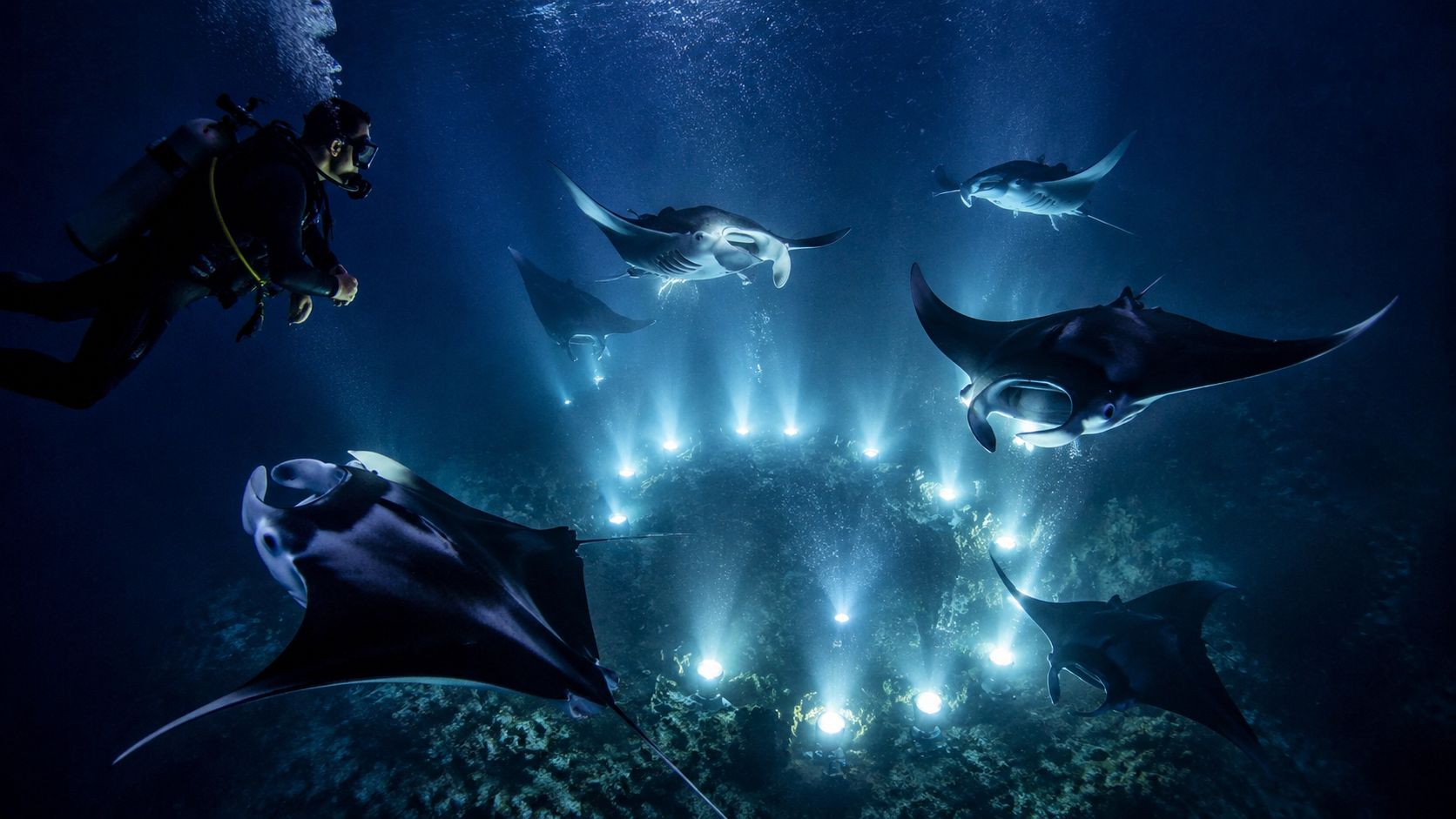
If you've been looking at options for a Kona manta ray night swim, that visual is what people are chasing. Not speed. Not adrenaline. It's the moment a manta glides through the glow and banks overhead with the kind of control that makes everyone stop fidgeting and just watch.
What the moment feels like
For divers, the show happens above you. For snorkelers, it happens below. Either way, the sense of scale is hard to appreciate until you're there. These aren't quick fish flashes. A manta can fill your field of view, turn back into the light, and come through again.
A lot of first-timers expect fear. Most feel awe instead.
Practical rule: If you can stay still and let the animals control the distance, the encounter gets better fast.
Who this works well for
The manta experience fits more people than many ocean activities do.
- Certified divers: You get the dramatic bottom-up perspective and the calm of staying planted on the seafloor.
- Non-divers: Night snorkeling gives you a front-row surface view without needing scuba certification.
- Families and mixed groups: One person can dive while another snorkels, and both still share the same event afterward.
- Travelers who don't love intense adventure sports: This is active, but it isn't a race or a hard swim when it's run properly.
What doesn't work is showing up with the wrong mindset. If you expect to chase wildlife, you'll be disappointed. If you show up ready to be still, listen, and watch, this night tends to stay with you for years.
Why Kona is the World Capital for Manta Rays
Kona stands apart because the encounter is reliable, not random. In many places, seeing mantas is possible. On the Kona Coast, it's built into the local rhythm of the water, the lights, and a resident population that regularly uses these feeding areas.
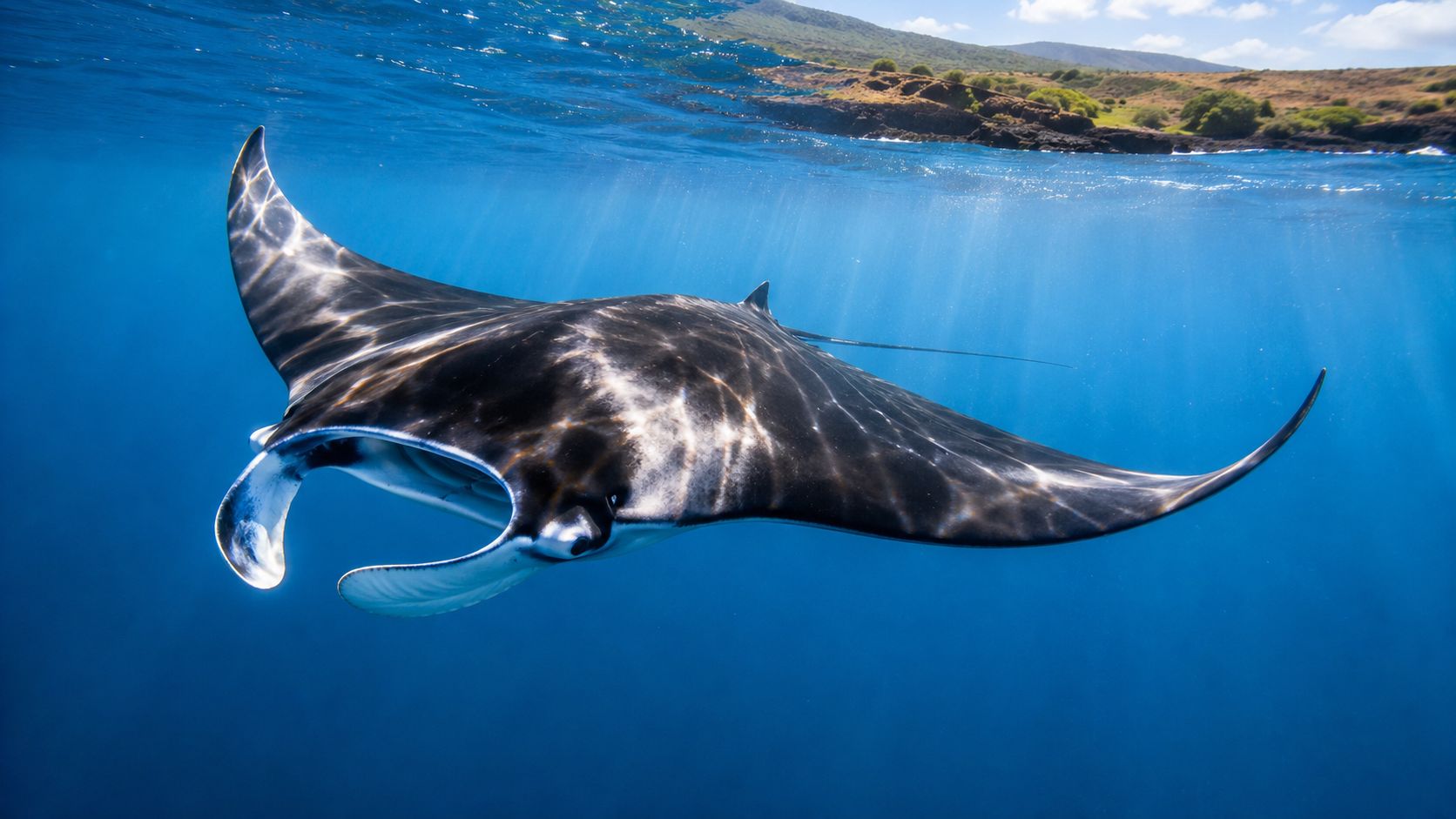
The strongest argument is the consistency. The Kona Coast of Hawaii's Big Island hosts one of the most reliable manta ray encounters globally, with data collected over years revealing a sighting success rate between 80% and 90% regardless of the season according to this Kona manta sighting guide.
That level of regularity is why so many divers who already have full logbooks still put this trip high on their list. If you want context on the broader underwater scene, what's unique about diving in Kona comes down to exactly this kind of dependable marine behavior.
Why the system works
The feeding setup is simple in principle. Light attracts plankton. Plankton attracts manta rays. The operation is designed around that cause and effect, not around trying to force an encounter.
Kona also benefits from a resident reef manta population of over 200 individuals, which makes the experience much more dependable than destinations where mantas are only seasonal passersby. These are Mobula alfredi, and some reach wingspans up to 14 feet.
Why this matters beyond one night dive
This isn't just a cool tour. It's a major part of the coast's identity. The manta experience draws about 80,000 visitors annually and generates over $4 million in annual revenue for the Big Island tourism economy, as described in this overview of the Big Island manta ray dive.
A wildlife encounter becomes world-class when local operators can repeat it responsibly without turning it into a circus.
That's what Kona got right. The mantas are wild animals, not guaranteed performers, but the region has one of the rare marine setups where human observation and natural feeding behavior line up consistently. That's why the manta ray dive Kona reputation has lasted instead of fading like a travel trend.
What to Expect on Your Manta Ray Adventure
You step off the boat into dark water, hear your own breathing for a minute, and then a white belly the size of a coffee table rolls through the light above you. That first pass gets people every time.
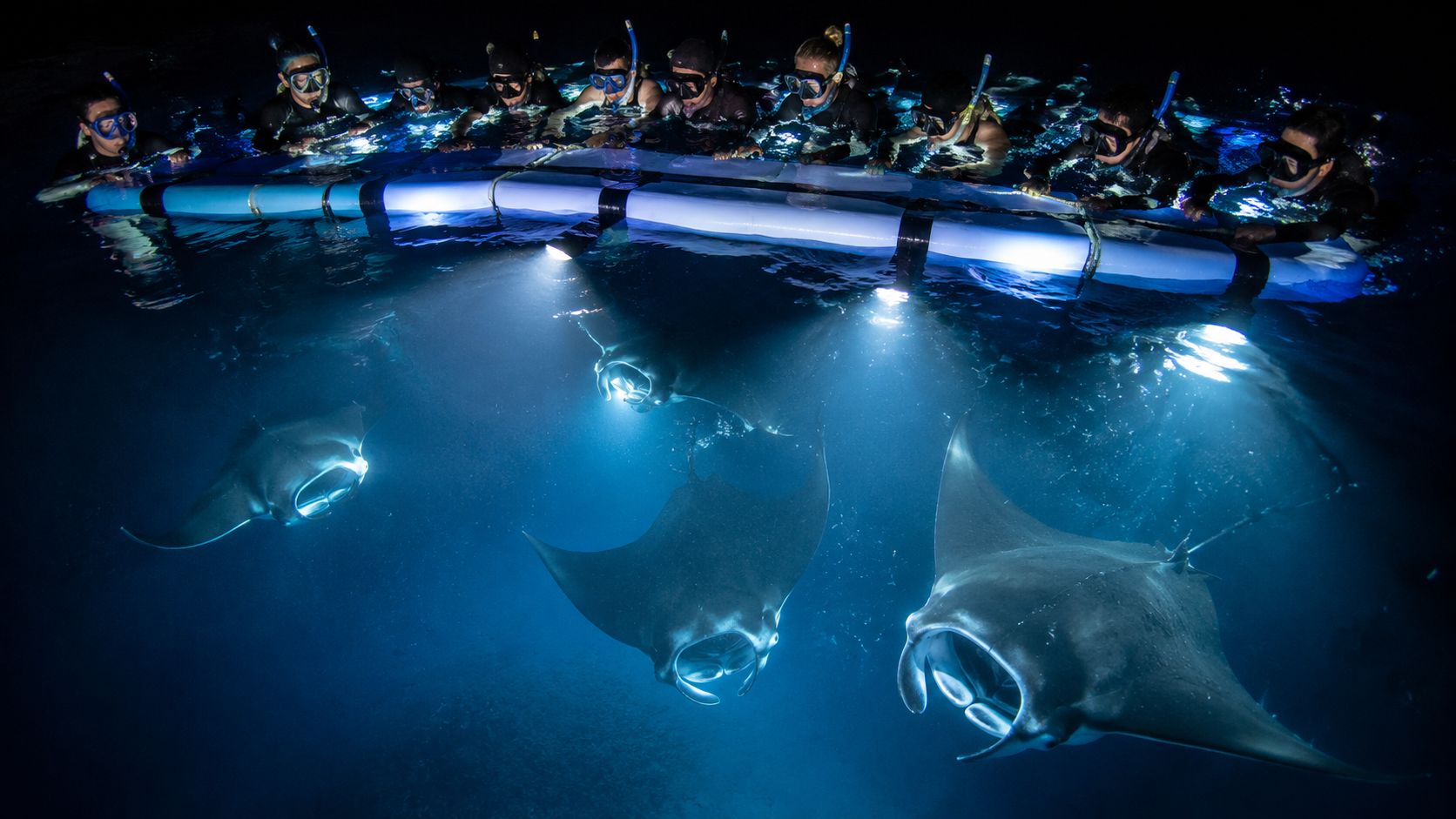
A good manta trip is structured on purpose. Divers settle on the bottom in a fixed viewing area and keep their lights aimed up into the water column. Snorkelers stay at the surface with a float or light board and watch the mantas rise beneath them. If you are comparing surface options, snorkeling with manta rays in Kona uses that same top-and-bottom layout.
That setup matters because the mantas need room to feed. The more disciplined the group is, the better the passes usually are.
How the evening usually unfolds
The first part is straightforward. You check in, get fitted, and listen to the briefing. Pay attention here, especially if you are new to night diving or feeling a little tense. Guests who know exactly where to put their body in the water relax much faster once the lights go on.
The boat ride gives you a few useful minutes. Clear your mask, settle your breathing, and tell the crew if you are cold, anxious, or prone to seasickness. We can usually help before a small problem turns into a bad night.
Once on site, the crew sets the light pattern and organizes entries. Divers descend, find their place, and stay put. Snorkelers hold position at the surface and look down into the beam. Then the waiting starts, which is usually shorter than people expect.
What the experience feels like underwater
This is not a reef cruise. It is a stationary wildlife watch.
For divers, the job is simple. Kneel or hover low where your guide places you, keep your fins quiet, and look up. For snorkelers, the job is even simpler. Hold the float, keep your face in the water, and let the mantas come to you.
Anxious first-timers often do better than confident guests because they listen closely and move less. That is a real advantage on a manta night dive. Calm bodies make a calmer water column.
Small habits that improve the encounter
A few things consistently help:
- Slow breathing
- Minimal fin movement
- Hands tucked in
- Eyes on the light column
- Following your guide's placement the first time
A few things work against you:
- Swimming around to chase a better angle
- Flashing lights off to the side
- Popping up and down in the water column
- Treating the site like an explore-at-will night dive
Stay in position. Mantas are far more likely to make close, clean passes when the group holds still and gives them a predictable lane.
If you are trying to decide between joining as a diver or snorkeler, the manta ray dive and snorkel trip page gives a clear picture of how operators run both versions of the trip.
One practical note from years of watching guests at this site. People worry too much about getting the perfect spot and not enough about being comfortable. A warm core, a mask that fits, and a calm briefing matter more than trying to outguess the mantas. When those basics are handled well, the night feels a lot less intimidating and a lot more magical.
The Superior Choice Garden Eel Cove
If you only remember one site name, make it Garden Eel Cove. This is the location I'd point people toward when they want the strongest overall setup for a manta night.
The reason is straightforward. Garden Eel Cove, also known as Manta Heaven, is the superior location for the manta ray night dive due to its protected bay environment and viewing depth of approximately 35 feet (10 meters) under calm conditions, versus the shallower 30 feet found at Manta Village, according to this site comparison of Kona manta locations.
Why the site feels better in practice
“Protected” sounds like brochure language until you've been at enough night sites to know the difference. In a protected bay, entries tend to feel calmer, surface time is more comfortable, and the whole group settles in faster. That matters a lot for snorkelers and anxious first-timers.
The viewing geometry also helps. A little more depth in the viewing zone gives the mantas room to bank, loop, and pass cleanly through the light column. You get more elegant movement and less congestion.
Better for more than one type of guest
Garden Eel Cove is a better all-around choice because it serves different comfort levels at once.
| Guest type | Why Garden Eel Cove suits them |
|---|---|
| First-time snorkelers | The protected setting usually feels less exposed at the surface |
| Certified divers | The deeper viewing area creates a stronger bottom-up perspective |
| Photographers | The staging often gives cleaner passes through the light |
| Mixed family groups | Calmer conditions help keep the whole outing manageable |
There's another advantage people overlook. The reef backdrop is more interesting. Even though the mantas are the headline, the surrounding environment shapes the mood of the dive. Cleaner staging, better positioning, and a more comfortable water column make Garden Eel Cove the smarter call when you have a choice.
Safety Certifications and Being a Manta Guardian
The safest manta dives are the quiet ones. Guests settle onto the bottom where the guide places them, lights point up, bubbles rise, and the mantas do the rest. That low-impact setup is what makes this experience work so well at Garden Eel Cove, especially for divers who feel a little tension before their first night entry and for snorkelers who want clear, simple instructions at the surface.
For scuba divers, operators typically want Open Water certification and recent diving experience. The bigger point is practical, not bureaucratic. If buoyancy, mask clearing, or staying calm in low light still takes a lot of effort, a manta night can feel busy fast. Divers who want more control before doing specialty night dives often benefit from Rescue Diver certification in Kona, because it sharpens awareness, positioning, and problem-solving under stress.
The animal rules are straightforward, and good crews repeat them every trip because they matter.
- Do not touch the mantas. Their skin has a protective mucus coating that should never be disturbed.
- Do not chase, grab, or intercept them. Mantas need room to feed and change direction.
- Stay in your assigned spot. On dive trips that usually means a stable area of sand or rubble, not wandering over the reef.
- Keep fins, gauges, and cameras under control. Loose movement is what damages habitat and distracts the group.
- Be honest about your comfort level. A short conversation on the boat solves problems earlier than a stressed descent in the dark.
That last point matters more than people expect.
Anxious first-timers often assume the crew wants them to stay quiet and push through. Good manta crews want the opposite. Speak up early. Ask where you will descend, how long you will stay down, what the hand signals are, and what to do if you want to end the dive. The strongest divers on these trips are rarely the boldest ones. They are the ones who listen well, hold position, and keep the experience calm for everyone around them.
Snorkelers have a different job, but the same wildlife ethic applies. Hold the light board as instructed, keep your body flat and relaxed, and resist the urge to kick after a manta when one passes close. Garden Eel Cove tends to suit nervous snorkelers well because the operation is usually orderly and the briefing can be kept very specific. You know where to be, what to hold, and what success looks like.
Kona Honu Divers runs manta tours, training, and other charter options on the Big Island.
Check AvailabilityPlanning Your Trip What to Bring and When to Go
The nice part about planning a manta night is that you don't need a complicated packing strategy. You need the right small things, and you need them at the right time.
Kona is a year-round diving destination, and if you're planning more water time around your manta evening, this guide to diving Kona on the Big Island helps frame the broader trip. For the manta outing itself, preparation is less about quantity and more about comfort after sunset.
What to bring
Use a short checklist and keep it simple.
- Swimsuit: Wear it under your clothes so check-in is easier.
- Towel: A basic one is fine. You'll want it fast after getting out of the water.
- Warm layer: A sweatshirt, hoodie, or light jacket matters more than people think on the ride back.
- Reusable water bottle: Hydration helps comfort before and after the trip.
- If you shoot photos: Bring a setup that handles low light well and don't rely on a harsh internal flash.
If seasickness is part of your life
Even people who feel fine while moving can get uncomfortable when the boat stops and rocks at anchor. If you know you're prone to motion issues, prepare before departure instead of trying to solve it mid-trip.
Options people commonly use include the Ship-EEZ Seasickness Patch, Dramamine pills, Bonine pills, Sea Band wristbands, and Ginger chews.
Bring the warm layer even if the day was hot. The ride in after a night snorkel or dive is when people wish they had it.
What doesn't help is overpacking bulky extras you'll never use. Keep your hands free, listen during briefing, and show up ready to get in the water without a lot of fuss.
Your Questions Answered
The most common questions aren't really about mantas. They're about comfort, nerves, and what happens if the night doesn't go exactly as hoped.
I'm anxious about being in dark water
That's common, and it's more common than most visitors realize. Recent studies show that 35% of recreational divers report heightened anxiety during night dives due to sensory deprivation and unknown visual stimuli, according to this discussion of anxiety and preparation for manta diving.
If that sounds like you, say so before the boat leaves. Good crews can explain the sequence more clearly, help you choose the right place in the group, and give you a more realistic expectation of what the darkness feels like once the lights are set. Anxiety usually spikes before entry, not after you're settled and watching.
What if I'm a snorkeler, not a diver
That's completely normal for this activity. Many guests are more comfortable staying on the surface, and the surface view is excellent when you're on the light board and looking down into the feeding column.
What matters most isn't whether you scuba dive. It's whether you can stay calm, keep your body position stable, and follow the crew's instructions.
What if no mantas show up
These are wild animals, so no one should promise a sighting every single night. Good operators are honest about that. Some offer a return policy or adapt the evening based on conditions, so it's worth checking the details before booking.
A practical move is booking the manta tour earlier in your trip rather than on your last night. That gives you options if weather changes or if you decide you want to go again.
Can families and mixed groups do this together
Yes, and that's one reason the outing is so popular. Divers and snorkelers can often take part in the same overall experience while getting different perspectives. It also works well for celebrations because some people want the full scuba version and others want a more approachable surface experience.
The best nights are usually the ones where everyone chooses the format that fits their comfort level, rather than pushing into the more demanding option just to say they did it.
If you want a practical place to start, Kona Honu Divers offers manta dive and snorkel options along with regular Kona scuba charters, so you can match the night to your certification level, comfort in the water, and the kind of trip you want to build on the Big Island.