
Imagine floating in the warm, dark Pacific. Suddenly, giant, gentle shadows glide effortlessly just above you, their immense wingspans silhouetted against otherworldly beams of light. This isn't a scene from a movie; it's the real-life magic of the Kona manta ray dive, one of the most reliable and breathtaking wildlife encounters on the entire planet.
Your Essential Guide to the Kona Manta Ray Night Dive
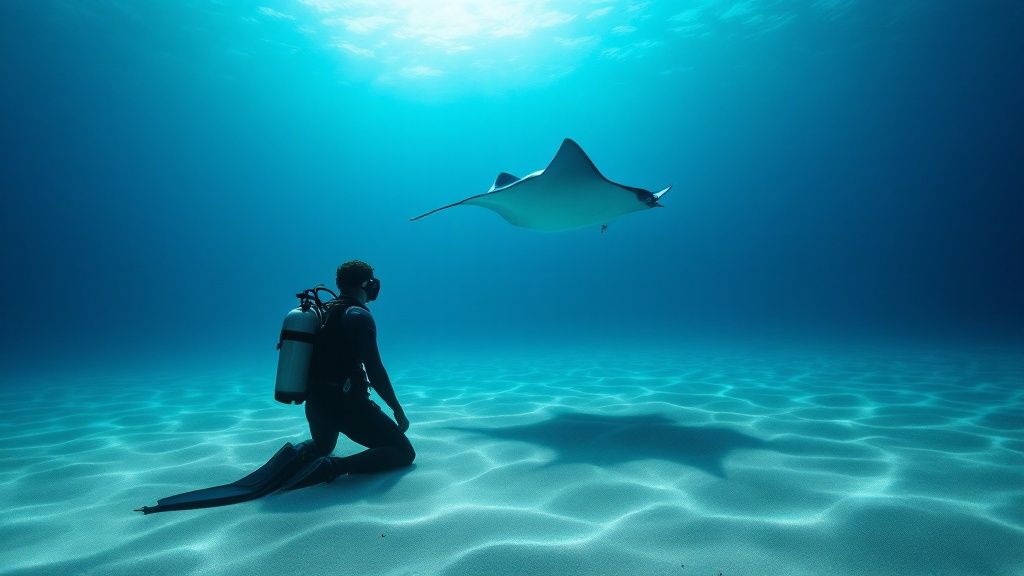
This guide is your complete playbook for planning this incredible, once-in-a-lifetime adventure. We'll dive into why Kona is the world's most consistent place to see manta rays, what makes this nightly ballet happen, and how you can join in safely and ethically.
The Kona coast of the Big Island is home to a resident population of over 250 identified reef manta rays (Mobula alfredi). These graceful giants aren't migratory; they live here year-round, which means any time is a great time to visit. The real secret behind the famous Kona manta ray dive is a perfect storm of biology and a little human ingenuity.
Why This Dive is So Reliable
It all started decades ago. Lights from coastal hotels, and later from dive boats, began attracting massive swarms of plankton—the manta rays' favorite meal. It didn't take long for the mantas to learn that light equals an all-you-can-eat buffet.
Today, dive operators have perfected this by setting up "underwater campfires"—powerful lights placed on the ocean floor that draw in plankton. This reliable food source brings the mantas in almost every single night, resulting in an astonishing 85-90% sighting success rate. This consistency is what truly sets Kona apart from other manta destinations around the globe, where sightings are often seasonal and far less predictable.
You can get a deeper look at what to expect on a manta ray night dive in Kailua-Kona right here.
An Experience for Everyone
One of the best parts of this adventure is just how accessible it is. You don't have to be an expert diver to witness the show.
- Scuba Divers: If you're certified, you'll get to settle right on the ocean floor, usually at a comfortable depth of 30-40 feet. From there, you get a front-row seat as the mantas perform their acrobatic feeding ballet directly overhead.
- Snorkelers: Not a diver? No problem. You'll float on the surface, holding onto a specially designed light board. This board attracts plankton from above, giving you a stunning bird's-eye view of the entire spectacle.
No matter which option you choose, you'll be just inches away from these gentle giants. This guide will walk you through everything you need to know, from picking the perfect dive site to choosing a top-tier operator. Get ready to experience the underwater ballet that makes the Big Island famous.
To get you started, here are the key details for planning your Kona manta ray dive adventure.
Kona Manta Ray Dive At a Glance
| Aspect | Details |
|---|---|
| Best Time to Go | Year-round, with peak conditions from April to October. |
| Sighting Success Rate | Consistently high, typically between 85-90%. |
| Average Water Temp | 75°F – 80°F (24°C – 27°C). |
| Typical Dive Depth | 30-40 feet, accessible for both divers and snorkelers. |
| Manta Wingspan | Can exceed an incredible 12 feet (3.7 meters). |
With these numbers in mind, you can see why this experience is so popular. It's warm, accessible, and incredibly reliable.
The Science Behind the Manta Ray Spectacle
What makes the manta ray dive Kona so consistently magical? It’s not just dumb luck; it’s a perfect storm of marine biology and a little bit of human ingenuity that sets the stage for one of the world's most reliable wildlife encounters.
The whole performance starts with the ocean itself. The Kona coast is bathed in nutrient-rich currents, creating a massive, floating buffet of zooplankton—the tiny organisms that manta rays live on. This constant food supply is exactly why a healthy, resident population of mantas sticks around all year.
The Underwater Campfire Effect
While the plankton is always there, the real secret to the nightly gathering is what we call the "underwater campfire." Manta rays are smart, and for decades, they learned that the lights from coastal hotels shining on the water meant an easy meal was nearby.
Dive operators brilliantly took that concept and ran with it. During a night dive, powerful, eco-friendly lights are placed on the ocean floor. Just like moths to a flame, these lights attract enormous clouds of plankton, concentrating the mantas' food into one predictable spot. It creates an irresistible beacon for any manta in the area.
This simple but incredibly effective method is the cornerstone of the Kona experience. By creating a reliable feeding station, operators can offer an encounter that feels completely wild yet happens with astonishing regularity.
This predictable, yet entirely natural, behavior is what makes Kona unlike any other wildlife experience on the planet. On any given night, you have an incredible 85% to 90% chance of seeing these gentle giants.
An Unforgettable Show for Everyone
The best part about this unique setup is that it makes the experience accessible to almost everyone, no matter their comfort level in the water. The lights create a well-defined "stage" where all the action happens.
- For Divers: Certified divers get a front-row seat. You'll settle on the sandy bottom, somewhere between 30 and 40 feet, and shine your dive lights upward. This creates a column of light that draws in the plankton, and the mantas perform their graceful, looping barrel rolls just inches above your head.
- For Snorkelers: If you're snorkeling, you'll float on the surface holding onto a custom-built raft. This raft has bright lights that shine down into the water, bringing the plankton—and the mantas—right up to the surface for a spectacular bird's-eye view.
Because all the action is focused around the lights, both divers and snorkelers get equally breathtaking views of the feeding frenzy. The mantas, some with wingspans stretching over 12 feet, glide effortlessly between the two groups, completely unbothered by their audience.
The reliability of this encounter is a huge reason why the manta ray dive Kona is a bucket-list item for ocean lovers. The timing of your visit can also play a role, and you can learn more about the best time of year to see manta rays in Kona to plan your trip perfectly.
Ready to see this natural wonder for yourself?
How to Choose Your Manta Ray Dive Site
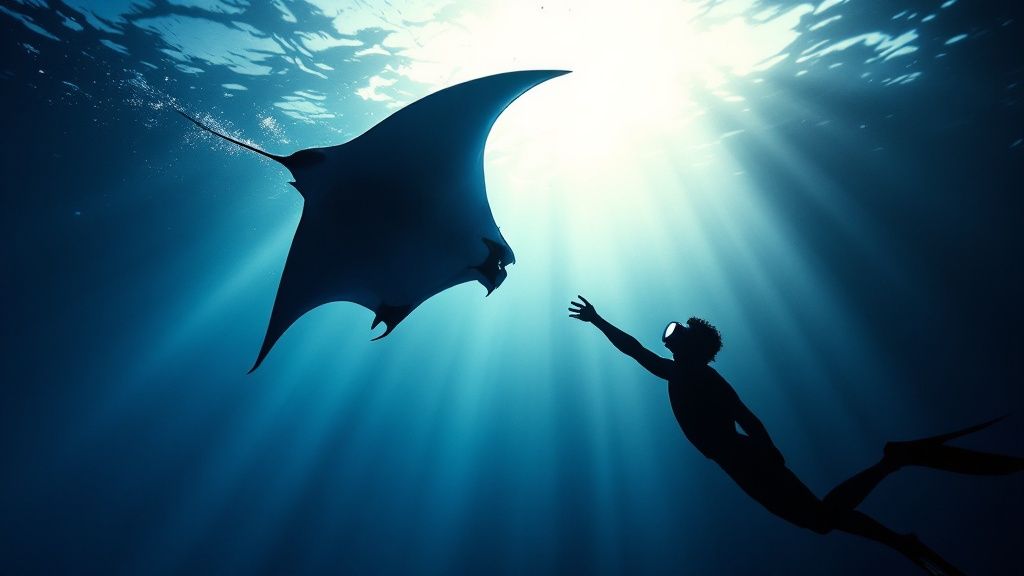
Alright, so you’re ready to plan your manta ray dive in Kona. One of the first things you'll need to figure out is where you're going to get in the water. The Big Island is lucky enough to have two incredible, world-famous spots where mantas reliably show up for dinner every night.
Both sites offer an absolutely spectacular show, but they each have their own personality. Knowing the subtle differences between them is key to picking the perfect underwater stage for your adventure. It really boils down to your comfort level, whether you plan to dive or snorkel, and the kind of vibe you're looking for.
Manta Village: The Original Manta Hotspot
This is the classic, the OG, the place that started it all. Located in Keauhou Bay, about seven miles south of Kailua-Kona, Manta Village has a reputation built on decades of consistent manta sightings. The story goes that the lights from the old Kona Surf Hotel first attracted the plankton, and the mantas weren't far behind.
The conditions here are typically a dream—calm, protected, and relatively shallow with a sandy bottom sitting at around 25-35 feet. This makes it a fantastic choice for a lot of people:
- First-Time Night Divers: If you're new to diving after dark, the mellow, shallow environment is much less intimidating.
- Snorkelers: Because it's not too deep, the action is closer to the surface, giving snorkelers a front-row seat from above.
- Families: The gentle nature and easy access make it a go-to for groups with different ages and skill levels.
While you can never guarantee nature, the consistency at Manta Village is legendary. It’s the dependable choice for a classic manta ray dive Kona experience.
Manta Heaven: A Deeper, More Dynamic Arena
Just north of Kona, near the airport, you'll find Manta Heaven (also known as Garden Eel Cove). This spot offers a slightly different flavor of adventure. It's a bit deeper, with divers usually setting up anywhere from 35-45 feet, and it can sometimes get a little more surge or current than its southern counterpart.
Because of this, Manta Heaven tends to draw a slightly more experienced crowd. It's a huge favorite among divers who have a few more logbook entries and especially those trying to capture that perfect image.
The underwater landscape at Manta Heaven, combined with often crystal-clear water, creates a stunning, dramatic backdrop for the mantas' ballet. It's a magnet for underwater photographers and videographers looking for those jaw-dropping shots.
While both locations are incredible, Manta Heaven sometimes plays host to massive congregations of mantas all at once. For those comfortable with the slightly more challenging conditions, the payoff can be a truly mind-blowing spectacle.
Deciding on the Best Season
Here’s one of the best parts about the manta ray dive Kona: it’s a phenomenal, year-round show. The local manta population sticks around all year, so there’s never really an “off-season.” That said, the ocean conditions do shift a bit between winter and summer.
The peak season generally runs from April to October. During these warmer months, the ocean tends to be calmer, and the water is a balmy 75°F to 80°F (about 24-27°C). These perfect conditions can also trigger bigger plankton blooms, which can mean even more mantas showing up for the buffet.
With around 80,000 people coming to see them each year, it's clear Kona is the global capital for manta ecotourism. You can get more great info about Kona's premier manta dive sites on konahonudivers.com.
Ultimately, you can't make a bad choice here. Both Manta Village and Manta Heaven offer a chance for a life-changing encounter. Your decision just comes down to matching the site's unique character to your own personal style of adventure.
Choosing the Right Manta Ray Dive Operator
This is probably the single most important decision you'll make for your manta trip. Picking the right dive operator in Kona isn't just about getting a good deal—it’s about your safety, the quality of your experience, and the well-being of the very animals you’ve traveled so far to see.
A truly great company does way more than just ferry you out to the dive site. They create a safe, educational, and deeply respectful encounter.
The best outfits are all-in on marine conservation. They follow strict, self-imposed standards to make sure every interaction is passive. This means no touching, chasing, or blocking the mantas' path. It’s a huge deal because their skin has a delicate mucous coating that protects them from infection, and touching it can cause serious harm.
When you're doing your research, look for the companies that put safety and manta preservation at the absolute top of their list. A great operator will turn a simple dive into something truly meaningful, leaving you with a profound appreciation for these gentle giants.
What to Look For in a Top-Notch Operator
Not all dive charters are the same. To make sure you have an unforgettable—and ethical—adventure, keep an eye out for a few key signs of a quality operation.
- Small Groups: Smaller groups mean a more personal, intimate experience and less stress on the environment. It also allows the guides to keep a better eye on everyone and ensures the mantas aren't overwhelmed by a massive crowd.
- A Knowledgeable Crew: Your guides should be passionate experts. The best ones give detailed, interesting briefings about manta biology, their behavior, and why conservation is so critical.
- Well-Maintained Boats and Gear: Safety starts with good equipment. Look for operators with modern, well-kept boats that are clean and spacious. Their rental gear should look reliable and serviced, not old and worn out.
- Real Commitment to Conservation: Does the operator talk about local conservation efforts? Do they contribute to research? A company that’s genuinely invested in the local ecosystem is one you can trust.
An operator's real goal should be to forge a connection between you and the marine world, not just tick an item off your bucket list. You should be able to see their dedication to the animals in everything they do.
Finding an operator that checks all these boxes is key. For a really deep dive on this, check out our guide on how to choose a Kona dive shop.
Why We Stand Behind Kona Honu Divers
When it comes to a manta ray dive Kona experience that nails all of the above, we proudly recommend Kona Honu Divers. They've built their reputation on a rock-solid commitment to safety, education, and the preservation of Kona's precious manta population.
Their crew is incredibly experienced and gives some of the best briefings you'll find, making sure every single person understands how to interact with the mantas respectfully. With their focus on small groups and top-of-the-line equipment, they create a comfortable and secure environment for both divers and snorkelers.
But don't just take our word for it. Hearing from past guests really shows how dedicated they are to providing a world-class adventure.
When you're ready to book your manta ray adventure with Kona Honu Divers, you can feel good knowing you've picked a team that truly cares about your safety and the health of the incredible marine life you're about to meet.
How Your Dive Helps Manta Ray Conservation
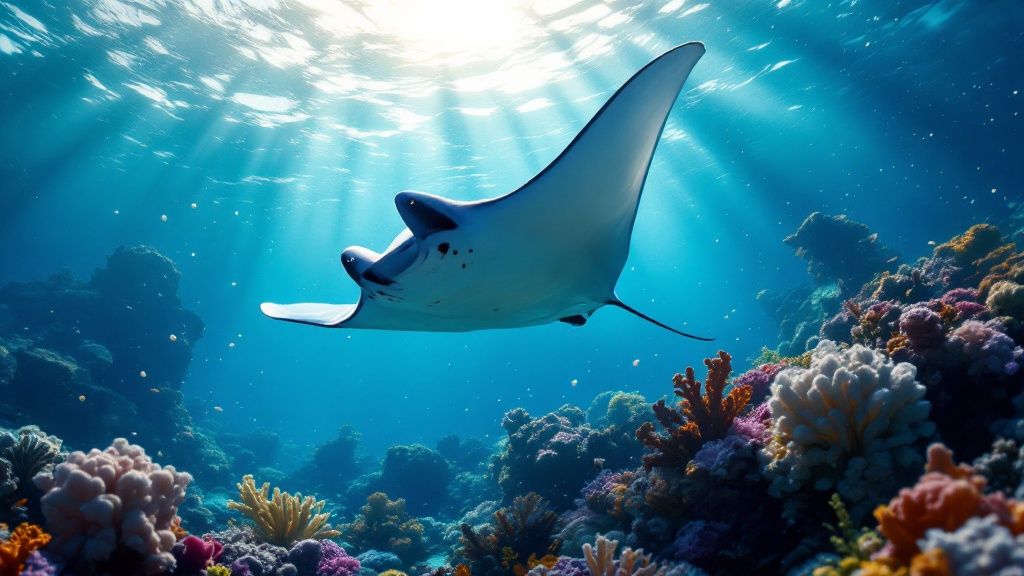
Your manta ray dive in Kona is so much more than just a spectacular show. It's a chance to actively participate in the conservation of these beautiful, vulnerable animals. Just by showing up and following a few simple rules, you become a guardian of the reef, helping ensure these gentle giants continue to thrive for years to come.
The single biggest thing you can do on your dive is practice passive interaction. This is the golden rule of manta encounters. Any responsible operator will brief you on these guidelines before you hit the water, as they are absolutely critical to protecting the mantas' health and well-being. Your job is to simply be a respectful observer.
The Rules of Passive Interaction
To keep the experience positive and safe for everyone—mantas included—every diver and snorkeler needs to follow a simple code of conduct. For ethical operators, these rules are non-negotiable.
- No Touching: Manta rays are covered in a delicate, protective mucus layer that acts as their shield against infection. Touching them strips this layer away, leaving them wide open to disease.
- No Chasing: Never, ever pursue a manta ray. Let them come to you. Chasing a manta causes stress and can scare them away from the very feeding grounds they depend on.
- Don't Block Their Path: Always give the mantas a clear path to swim and feed. Think of them as acrobats in flight; your job is to stay put and enjoy the show from your spot, well out of their way.
You Are Now a Citizen Scientist
It doesn't stop with just watching. Your dive also gives you the chance to become a citizen scientist. Every single manta ray has a unique pattern of black spots on its belly, just like a human fingerprint. These distinct markings allow researchers to identify, name, and track individual mantas throughout their lives. This is where you—and your camera—come in.
The photos and videos you capture are incredibly valuable. A clear shot of a manta’s underside can be contributed to a massive global database. This incredible collaboration between scientists and divers in Kona started back in 1991 and has helped build one of the world's most comprehensive manta ray databases.
So far, researchers and citizen scientists have cataloged over 330 individual manta rays right here in Kona. In the last 14 years alone, they've documented nearly 28,500 sightings! You can check out all of this amazing data and even submit your own sightings at MantaRays.info.
By contributing your photos, you're providing vital data points that help scientists understand population dynamics, migration patterns, and the overall health of Kona's manta ray community.
Understanding the broader principles of environmental stewardship is key for anyone who cares about marine life. When you pick an eco-conscious operator and contribute your sightings, you're turning your vacation into a truly meaningful act of conservation. You can find out more about why you should go on a manta ray dive in Kona in our detailed guide.
Your participation directly helps protect Kona’s majestic mantas, ensuring this magical underwater ballet continues for many years to come.
Don’t Stop at the Mantas: More Dives on The Big Island
The world-famous **manta ray dive in Kona** is an absolute must-do, the star of the Big Island’s underwater show. But here’s a little secret from those of us who live and breathe this stuff: it’s just the beginning. For divers looking to fill their logbooks, the Kona coast is a playground of world-class sites that show off Hawaii’s wild volcanic geology and ridiculously vibrant marine life.
After the magic of the manta ballet, a lot of divers get a taste for nighttime adventure and ask, "What's next?" The answer is always the legendary Kona Blackwater Dive. Let me be clear: this is not your typical reef dive. You're taken miles offshore, suspended over thousands of feet of deep, dark ocean, witnessing a nightly migration of bizarre and beautiful bioluminescent creatures rising from the abyss. It's often described as floating through outer space, and honestly, that's not far off.
Advanced Daytime Adventures
Beyond the incredible night dives, Kona’s sunlit reefs are just begging to be explored. The island’s volcanic past has left behind a dramatic underwater landscape—we're talking massive lava tubes you can swim through, towering arches, and pristine coral gardens just teeming with life.
For experienced divers, this is where it gets really good. We run advanced dive tours that head to the more remote and challenging sites, far from the usual crowds. These are the spots where you get to see some of the bigger marine animals that call Kona home, like sharks, majestic eagle rays, and huge schools of fish.
The sheer variety of diving here is what blows people away. One day you can be gliding through a cathedral-like lava tube, and the next, you're watching alien-like creatures pulse with light in the deep ocean. It’s what makes the Big Island a complete diving destination, not just a one-trick pony.
A Full Itinerary of Underwater Exploration
Whether you’re looking to add another mind-blowing night dive to your trip or want to spend your days exploring sun-drenched reefs, you won't run out of options. From deep-water pinnacles to shallow, colorful coral gardens, there is truly something for every skill level. Take a look at all the scuba diving tours in Kona to plan a dive vacation that's as varied as it is unforgettable.
While the manta dive is a massive highlight, it’s just one of many unique encounters the Big Island offers. For a completely different vibe, you can explore the historic beauty and amazing reefs on Captain Cook snorkeling tours. And if you're curious about how this whole manta phenomenon started, you can read up on the history of the Big Island manta ray night dive.
No matter what you choose, your adventure doesn't have to end when the mantas swim away. The waters of Kona are calling, and there's so much more to see.
Your Kona Manta Ray Dive Questions Answered
Planning your first **manta ray dive in Kona** is exciting, but it’s natural to have a few questions bubble up. To make sure you feel totally ready for this incredible adventure, here are some straightforward answers to the things we get asked most often.
Do I Need to Be a Certified Diver to See the Mantas?
Not at all! The beauty of the Kona manta ray experience is that it’s designed for everyone. If you’re not a certified diver, you can join as a snorkeler. You’ll hold onto a custom-made flotation board on the surface, which is rigged with powerful lights. These lights act like a magnet for plankton, drawing the mantas right up to you for a spectacular bird's-eye view of the action.
If you are a certified diver, you get a completely different perspective. You'll settle on the ocean floor, usually around 30-40 feet, and watch the show from below. It's an amazing vantage point to see the mantas perform their graceful, looping ballet right above your head. Both snorkeling and diving offer unforgettable, up-close encounters.
Is the Manta Ray Night Dive Safe?
Absolutely. When you go with a professional, reputable operator like Kona Honu Divers, the dive is extremely safe. Manta rays are true gentle giants; they have no teeth, no stingers, and no barbs, so they pose zero threat to humans. They’re just there for the plankton buffet.
The safety protocols are all about standard water practices. Your operator will give you a detailed briefing before you get in, provide high-quality gear, and have expert guides in the water with you the entire time. Their job is to ensure you feel secure and comfortable from start to finish.
What Should I Bring on My Manta Ray Tour?
Keep it simple. Your tour operator provides all the essential gear you’ll need—wetsuit, mask, snorkel, fins, and any scuba equipment.
You just need to pack:
- A towel
- A warm, dry change of clothes for after the dive (you'll thank yourself later!)
- Any personal items you might need
- An underwater camera is always a great idea to capture the magic.
What Happens If We Don't See Any Manta Rays?
This is a great question. While sightings are incredibly reliable—we're talking a 90% success rate on most nights—mantas are wild animals, and nature doesn't offer guarantees. The best operators know this.
Many companies, including Kona Honu Divers, offer what’s known as a "manta guarantee." If your tour is one of the rare ones where no mantas show up, you can typically come back for another trip, free of charge, depending on availability. It's always smart to confirm the specific policy when you book. For even more detail, you can check out these frequently asked questions about manta ray encounters.
Ready to witness this unforgettable underwater ballet for yourself? Kona Honu Divers offers world-class manta ray dive tours led by an expert crew that’s as passionate about your safety as they are about the mantas' well-being.