
Picture this: you're descending into the warm, twilight waters off Hawaii's Big Island, about to be surrounded by gentle giants of the sea. The Kona manta ray night dive isn't just a dive; it's an underwater ballet that has rightfully earned its reputation as one of the most incredible night dives on the planet.
Experience the Kona Manta Ray Night Dive
The Kona Coast is famous for a lot of things, but for divers, it's the undisputed best place in the world for reliable manta ray encounters. Forget other spots where a sighting is a roll of the dice. Here in Kona, you get a front-row seat to a mesmerizing natural phenomenon, night after night.
So, what’s the secret? It all starts when powerful lights are placed on the ocean floor, creating what we affectionately call an "underwater campfire." This light acts like a massive bug zapper for plankton, the manta rays' favorite meal, turning the whole area into a brightly lit, all-you-can-eat buffet.
An Unforgettable Underwater Ballet
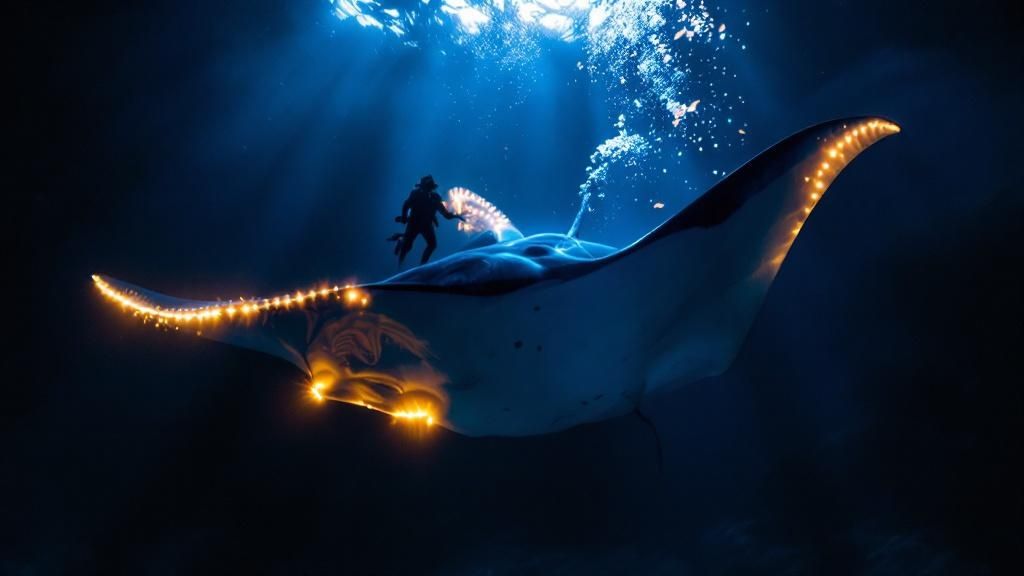
Once you settle in on the sandy bottom, the real show begins. Graceful shadows start to emerge from the darkness, gliding effortlessly through the light beams. You’ll be spellbound as giant mantas, some with wingspans stretching over 12 feet, perform barrel rolls and somersaults just inches above your head.
What's truly wild is how consistent this experience is. The Kona Coast is home to a stable population of over 450 identified manta rays, and tours here boast an incredible 85-90% sighting success rate—a number that’s practically unheard of anywhere else. Divers typically get a good 45 to 60 minutes in the water, often watching 8 to 12 different mantas on a single dive. Find out more about what makes the Kailua-Kona manta dive so legendary.
This guide will walk you through everything you need to know to get in on this adventure, from booking the best tours to understanding the simple rules that help protect these magnificent animals. Get ready for an experience you'll be talking about for years to come.
What to Expect on Your Manta Ray Dive
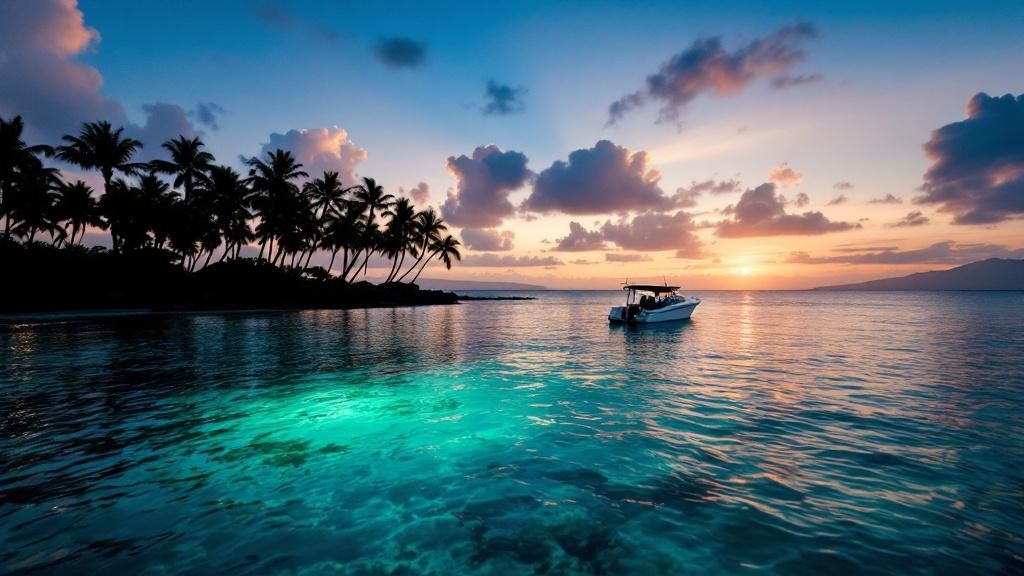
Your whole adventure kicks off at the harbor. This is where you'll link up with the crew, get the lay of the land with a full safety briefing, and start feeling that buzz of excitement. The real magic begins as the boat pulls away from the dock, cruising out to the dive site just as a classic Kona sunset paints the sky.
Once the boat anchors, the crew springs into action to set the stage. They'll drop a ring of powerful, upward-facing lights onto the ocean floor, creating what we affectionately call an "underwater campfire." This bright beacon is the secret sauce—it draws in colossal clouds of plankton, which just so happens to be a manta ray's favorite meal.
The Underwater Ballet Begins
With the buffet officially open, it's your turn to join the party. You'll descend to a designated spot on the sandy bottom, find a comfortable position, and aim your own dive light straight up to add to the glow. Then, you wait.
And honestly, you usually don't have to wait very long. Soon, a graceful shadow emerges from the deep blue, then another, and another.
You're not just a diver anymore; you're a front-row spectator at one of nature's most unbelievable shows. Giant manta rays, some with wingspans stretching over 12 feet, will glide, swoop, and perform effortless barrel rolls just inches above your head as they feast on the plankton.
It's a silent, mesmerizing ballet that photos and videos just can't do justice. The sheer size and elegance of these creatures will leave you breathless. For an even more detailed play-by-play, check out our post on what it’s like to go on the manta ray dive in Kona, Hawaii.
After about 45 minutes of pure awe, it's time to head back to the boat. The night wraps up with hot chocolate, snacks, and trading stories with your fellow divers, all of you still glowing from one of the most unique underwater encounters on the planet.
How to Choose the Best Manta Ray Dive Operator
Let's be real: picking the right company for your manta ray dive in Kona is the single most important call you'll make. The operator you go with sets the tone for everything—your safety, the quality of the dive, and whether the encounter is handled ethically. A great company can turn a good dive into a life-changing memory. A bad one? It can leave you with a story of disappointment.
When you're looking at your options, make sure they are upfront about their safety protocols and have a solid reputation backed by years of happy divers. Small group sizes are another huge plus. This is what keeps the experience personal and prevents you from feeling like you're in an underwater crowd, giving you the space to truly soak in the manta ballet.
Commitment to Conservation
For us, this is the big one. You want an operator with a genuine, deep-seated commitment to manta conservation. The best companies are run by people who are truly passionate about protecting these gentle giants. They follow strict guidelines to make sure every dive is non-invasive and sustainable.
That means you'll get a thorough briefing on passive observation—no touching, no chasing, and absolutely no blocking the mantas' path.
We confidently send divers to Kona Honu Divers for their manta ray dive tour. They're a top-rated operator known for a crew that's both experienced and passionate, comfortable boats, and an unwavering focus on doing things the right way. Their whole operation is built around making sure the well-being of the mantas always comes first.
But you don't have to take our word for it—see what other divers have to say about their experience.
When you choose a responsible operator, you're doing more than just booking a tour. You're casting a vote for the preservation of this incredible natural wonder. To see how the local shops compare, check out this guide ranking the top 10 Kona diving companies.
Ready to book your adventure with a trusted leader in manta conservation?
Finding the Best Time for Your Manta Dive

One of the best things about planning a manta ray dive in Kona is that you can do it pretty much any time of year. Unlike a lot of wildlife encounters that are strictly seasonal, Kona is home to a stable, resident manta ray population. These guys stick around and feed in the same spots night after night.
That means no matter which month you visit, you’ve got an excellent shot at seeing an incredible show.
Of course, while the mantas are always here, the ocean conditions do change a bit with the seasons.
- Summer Months (May-September): This is when we typically see calmer, flatter seas. The boat rides are usually exceptionally smooth.
- Winter Months (October-April): Winter can bring larger ocean swells. It’s nothing to worry about, though—our dive operators are experts at navigating these conditions safely.
Why Nighttime is Showtime
The real secret to this experience isn't the month you pick, but the time of day. All the magic happens after the sun goes down.
Once it gets dark, we use powerful lights to light up the water. This attracts swarms of plankton, creating a concentrated all-you-can-eat buffet that draws the mantas in for their famous underwater ballet.
While you might get lucky and spot a manta during a day dive, the night dive is a far more dramatic and reliable encounter. The focused light show makes the feeding frenzy a near-nightly event.
To help you plan, here's a quick look at what you can expect throughout the year.
Kona Manta Ray Dive Seasonality and Conditions
| Season | Ocean Conditions | Manta Sightings | Booking Recommendation |
|---|---|---|---|
| Spring (Mar-May) | Generally calm, warming water. | Excellent and consistent. | Book a few weeks ahead, especially around spring break. |
| Summer (Jun-Aug) | Warmest water, flattest seas. | Excellent. Manta activity is very reliable. | Peak season. Book 1-2 months in advance if possible. |
| Fall (Sep-Nov) | Water is still warm, conditions are great. | Excellent. September is a fantastic, less crowded month. | Good availability, but still wise to book ahead. |
| Winter (Dec-Feb) | Can have larger swells, slightly cooler water. | Excellent. The mantas don't mind the waves! | Holiday season is very busy. Book 2-3 months out. |
No matter the season, the manta sightings remain consistently high. The main variable is just the ocean surface conditions.
Because this is one of Hawaii’s most sought-after experiences, we highly recommend booking your tour well in advance. This is especially true if you plan to visit during peak travel times like summer vacation or winter holidays.
Securing your spot early means you won't miss out on this unforgettable adventure. For a deeper look into the seasonal details, you can learn more about what is the best time of year to see manta rays in Kona.
Getting Ready for Your Manta Adventure
A little bit of prep work goes a long way toward making sure your attention stays right where it belongs: on that unbelievable underwater ballet. The best part? You don't need any fancy certifications for this dive. If you've got your basic Open Water Diver certification, you're good to go for this shallow, stationary experience.
When you're packing your dive bag, keep it simple. Toss in your swimsuit, a towel, and definitely something warm and dry to pull on for the boat ride home. You'd be surprised how quickly you can get chilled after a night dive, even with Hawaii's balmy air.
What to Bring and What to Leave Behind
Your dive operator has you covered with all the essential scuba gear, so there’s no need to drag your own equipment across the ocean. They’ll typically provide:
- A wetsuit that fits you properly (for warmth!)
- Buoyancy Control Device (BCD) and regulator set
- Mask, fins, and the right amount of weight
- A high-powered dive light to attract all that tasty plankton
Quick tip from years of experience: If you're even a little prone to seasickness, grab some non-drowsy motion sickness medicine and take it an hour or two before the boat leaves. That tiny step can be the difference between a great trip and a miserable one.
While the manta ray dive kona is an absolute must-do, don't forget the Big Island is packed with other incredible scuba diving tours. For those certified advanced divers looking for a totally different kind of thrill, the Kona Blackwater Dive is an experience you will never forget. You'll drift in the deep, dark open ocean, watching some of the most bizarre and beautiful creatures rise up from the depths. It’s the perfect, mind-blowing follow-up to your manta adventure.
Practicing Safe and Ethical Manta Interaction
The entire Kona manta ray experience is built on one simple foundation: a deep respect for these incredible animals and their home. The golden rule here is passive observation. You're a guest in their world, and it's a privilege to be there.
For divers, this means finding a spot on the sandy bottom, aiming your light straight up, and letting the magic happen above you. Snorkelers do the same, holding onto a specially designed light board on the surface. For everyone, it means a strict "no-touch" policy.
The Importance of Hands-Off Encounters
As tempting as it might be, touching a manta ray is a huge no-no. It can strip off their protective slime coat, which is their primary defense against harmful bacteria and infections. You also have to resist the urge to chase them or swim into their path. Doing so stresses them out and interrupts their natural feeding behavior.
Following these simple guidelines is about more than just a single dive; it's about making sure this world-class encounter is sustainable for generations of divers—and mantas—to come. Lessons learned from other amazing wildlife experiences, like ethical whale shark encounters, have helped shape these best practices.
The best operators are passionate champions of these standards, which also support ongoing research to better understand Kona's unique manta population. Believe it or not, researchers and citizen scientists have been using the distinct spot patterns on the mantas' bellies to identify individuals since 1991.
This incredible effort has helped identify over 330 individual mantas, creating a massive database that plays a crucial role in protecting them.
When you choose an ethical tour, you're not just a tourist; you become a partner in conservation. You can dive deeper into why you should go on a manta ray dive in Kona in our detailed guide.
Got Questions About the Kona Manta Ray Dive? We’ve Got Answers.
If you're gearing up for this incredible adventure, you probably have a few questions. We get it. We've put together some answers to the most common things people ask, so you can plan your trip and feel totally ready for what's in store.
Do I Need to Be an Experienced Diver?
Absolutely not! That's one of the best parts. This dive is perfect for divers of all skill levels, from fresh-faced beginners to seasoned pros.
It's a nice and easy shallow dive, typically around 30-40 feet, where you'll be stationary on the sandy bottom just watching the show. As long as you have a valid Open Water certification, you're good to go.
Is the Manta Ray Dive Safe?
Yes, it's a very safe experience, especially when you go with a professional, reputable dive operator who knows these waters. Manta rays themselves are gentle giants—they're totally harmless, with no teeth, stingers, or barbs to worry about.
The main focus is on standard scuba safety, which your guide will cover in detail during the pre-dive briefing.
The biggest rule, for both your safety and the mantas' well-being, is to never touch them. Just kick back and observe. This keeps their protective slime coat intact, which is crucial for their health.
Can Snorkelers Get in on the Action, Too?
Of course! Most tours welcome both divers and snorkelers, making it a great trip for mixed groups. Snorkelers float comfortably on the surface, holding onto a custom light board that attracts the plankton.
From that vantage point, you get an absolutely amazing view of the mantas barrel-rolling and feeding just a few feet below you. It's a completely different perspective, and just as breathtaking.
Whether you're planning to dive or snorkel, you can book an unforgettable encounter with Kona Honu Divers. They run fantastic manta ray dive and snorkel tours that cater to everyone.