
Imagine the ocean floor, bathed in a soft glow under the Hawaiian night sky. Suddenly, a giant, winged creature glides effortlessly through the light, a silent dancer in an underwater ballet. This isn't a scene from a documentary; it's the world-famous manta ray dive in Kona, a truly life-changing experience. The Big Island's unique underwater topography and nutrient-rich waters have created the perfect stage for one of nature's most spectacular performances.
Divers and snorkelers from around the globe flock here for a near-guaranteed encounter with these gentle giants, whose wingspans can exceed 15 feet. But not all manta encounters are created equal. From the classic 'campfire' experience to specialized photography workshops and intimate private charters, there are multiple ways to witness this phenomenon. This guide will explore the top 6 ways to experience the Kona manta ray dive, providing a deep dive into the logistics, what to expect, and how to choose the perfect adventure for your skill level and travel style.
We'll cover everything from the best dive sites and what makes them unique to the marine biology behind the gathering and the crucial conservation efforts that protect these magnificent animals. Whether you are a first-time snorkeler or an experienced scuba diver, this comprehensive list will provide actionable insights to plan an unforgettable night in the water with Kona's majestic manta rays. Get ready to book the adventure of a lifetime.
1. The Classic Night Dive: Manta Ray Village
When you picture the world-famous Kona manta ray dive, you are likely imagining Manta Ray Village. Located just south of Kailua-Kona in Keauhou Bay, this is the original, most reliable, and most celebrated site for manta ray encounters on the planet. Its reputation is built on decades of consistent, breathtaking interactions, making it the definitive experience for first-time visitors and seasoned divers alike.
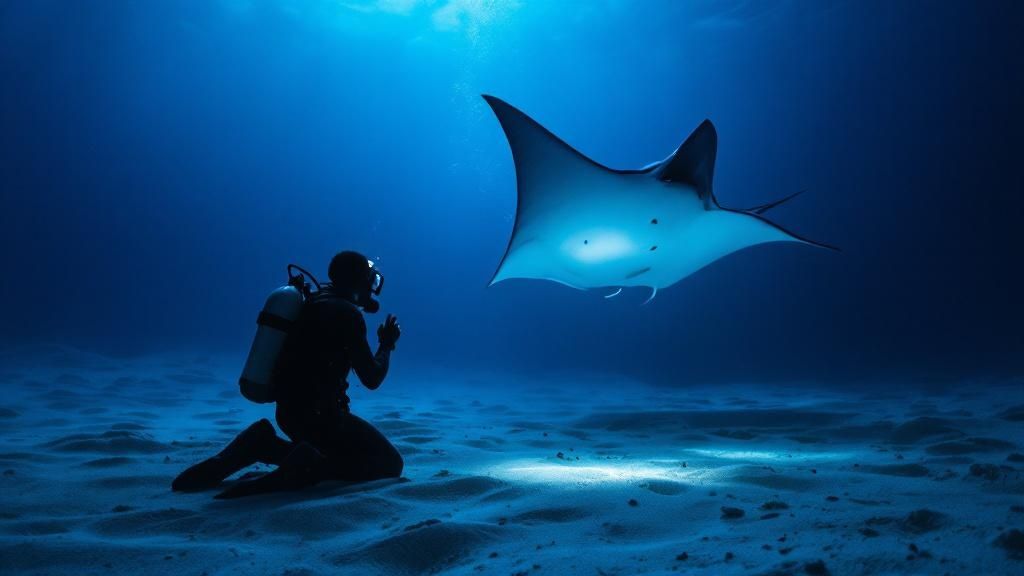
The concept is brilliantly simple. Dive operators carefully place powerful, eco-friendly lights on the sandy ocean floor at a depth of about 35 feet (10 meters). This light source, often called the "campfire," attracts a dense cloud of plankton, the primary food for reef manta rays. Certified divers then descend and settle in a designated area around the lights, looking up as the main event begins.
How It Works: The Underwater Ballet
What unfolds is nothing short of magical. Giant manta rays, with wingspans that can exceed 12 feet, glide effortlessly out of the darkness. They swoop and soar just inches above your head, performing graceful barrel rolls as they filter-feed on the concentrated plankton. It's common for a dozen or more mantas to appear during a single dive, creating a mesmerizing, silent ballet. This proximity allows you to appreciate their sheer scale, intelligence, and gentle nature in a way few wildlife encounters can match.
Key Insight: Manta Ray Village isn't just a dive site; it's a well-managed ecosystem interaction. The site was pioneered in the 1980s by operators like Jack's Diving Locker and has since become a model for sustainable marine tourism, with strict guidelines to protect these majestic animals.
Why This Experience is Unbeatable
This location offers an unparalleled chance to witness one of nature's greatest spectacles. Because of its long history and protected status, the mantas are accustomed to the lights and divers, leading to incredibly reliable sightings. Premier operators like Kona Honu Divers report success rates exceeding 95%, meaning your chances of an unforgettable encounter are exceptionally high. The experience has been featured in countless documentaries, including those by National Geographic, solidifying its status as a bucket-list dive. You can find more details on this classic manta ray dive tour and book your adventure.
Actionable Tips for a Perfect Dive
To ensure a safe and memorable experience at Manta Ray Village, follow these best practices:
- Choose a Reputable Operator: Book with a Manta Ray Green Listed operator like Kona Honu Divers. They adhere to strict standards for manta interaction, ensuring the animals' well-being. They also provide comprehensive briefings on proper conduct.
- Master Your Buoyancy: Practice neutral buoyancy before the dive. You will be stationary on the ocean floor, and maintaining your position without stirring up sand is crucial for visibility and the comfort of others.
- Respect the Wildlife: Never touch, chase, or block a manta ray's path. Let them approach you. The best interactions happen when you remain calm and still, becoming part of the environment.
- Lighting Etiquette: If you bring an underwater camera or flashlight, consider using a red filter. Red light is less disruptive to the plankton and the mantas' natural behavior.
2. Manta Heaven: The Deeper, Intimate Encounter
While Manta Ray Village is the classic headliner, Manta Heaven offers a distinctly different, often more intimate, experience for a manta ray dive in Kona. Located further north, just offshore from the Kona International Airport and near a site known as Garden Eel Cove, this location serves as a crucial alternative when conditions, like a strong southern swell, make the primary site inaccessible. It’s more than just a backup; it’s a premier destination in its own right, known for its unique topography and different style of manta interactions.
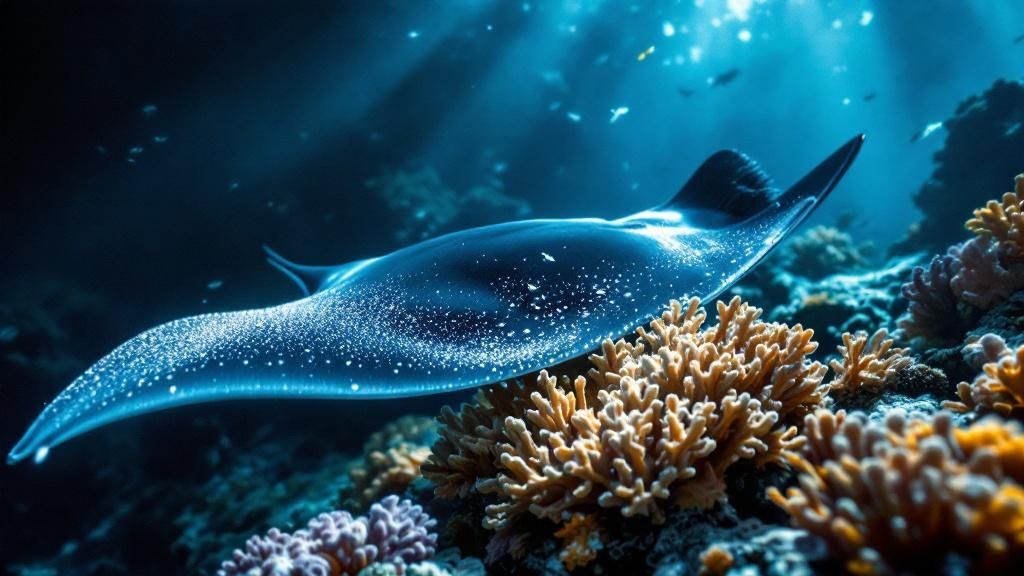
The setup is similar to Manta Ray Village: powerful lights are placed on the ocean floor to create a plankton-rich buffet. However, Manta Heaven features a deeper profile, with divers typically settling on a sandy bottom at around 40-45 feet (12-14 meters). This slightly greater depth can attract different individual mantas and often results in fewer boats and smaller groups, creating a more personal and serene atmosphere for a world-class wildlife encounter.
How It Works: A Stage for Natural Behaviors
At Manta Heaven, the show is just as spectacular, but the stage feels bigger. The mantas glide in from the deeper, darker water, performing their incredible feeding acrobatics against the vast backdrop of the open ocean. Because this site also functions as a natural cleaning station, divers may witness a wider range of behaviors beyond just feeding. Mantas might hover patiently over coral heads, allowing smaller cleaner fish to remove parasites. This dual-purpose nature of the site, featured in renowned series like the BBC’s Blue Planet, offers a fascinating glimpse into the mantas' daily lives.
Key Insight: Manta Heaven's reliability as a secondary site ensures that Kona's manta ray diving is a year-round activity. Operators like Neptune Charlies use it as their primary location, while others such as Sandwich Isle Divers frequent it, highlighting its consistency and value as a top-tier dive site.
Why This Experience is Unforgettable
This site's appeal lies in its potential for quieter, more personal encounters. With fewer crowds, you often have an unobstructed, front-row seat to the action. The slightly deeper setting can also feel more dramatic, as the colossal rays materialize from the surrounding darkness. While sightings can sometimes take a little longer to develop, the patience is rewarded with close passes and awe-inspiring displays. For more experienced divers, the deeper profile presents a welcome opportunity to refine their skills while enjoying one of nature's greatest shows. Dive operators offer amazing 2-tank manta dive tours that may visit this very site.
Actionable Tips for a Perfect Dive
To make the most of your adventure at Manta Heaven, consider these specific tips:
- Confirm the Location: Always ask your dive operator which site they plan to visit. If you have a preference, inquire if they can accommodate it, though the final decision is always based on safety and conditions.
- Bring Adequate Light: The deeper, darker water at this site means a powerful primary dive light is even more beneficial for spotting mantas as they approach from the periphery.
- Refine Advanced Buoyancy: The deeper profile requires excellent buoyancy control. Being able to remain perfectly still and neutral on the bottom is key to not disturbing the environment and getting the best views.
- Be Patient and Observant: The action here can build slowly. Settle in, relax, and keep your eyes peeled on the darkness around the light "campfire." The payoff is well worth the wait.
3. The Snorkel Experience: A Breathtaking Surface View
You don’t need a scuba certification to witness the awe-inspiring Kona manta ray ballet. The snorkel experience offers an equally magical encounter from the surface, making this world-class spectacle accessible to everyone, regardless of age or swimming ability. It's an ideal choice for families, non-divers, or anyone who prefers to stay at the top of the water column while still getting an unforgettable, up-close view.
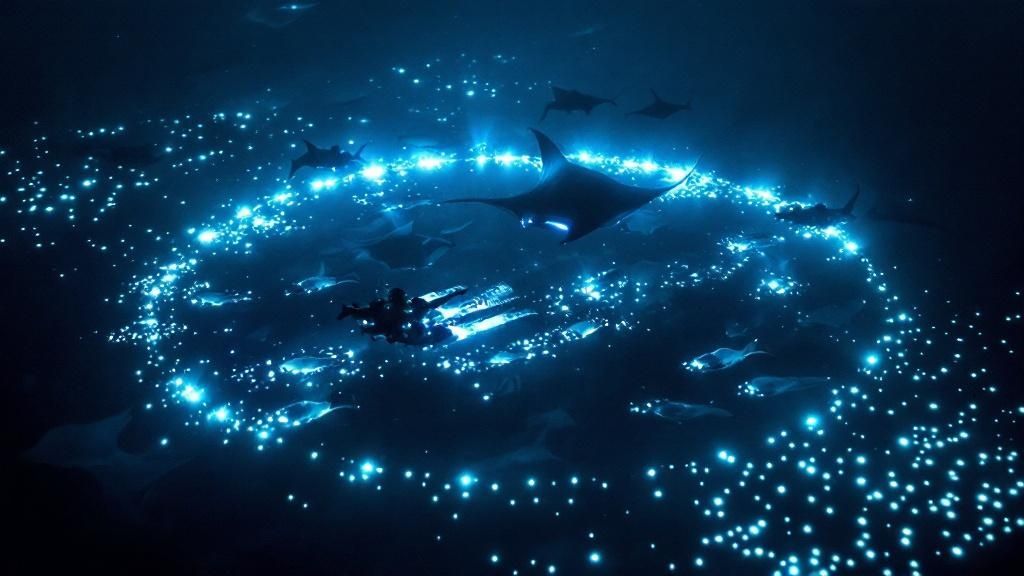
The setup is ingeniously designed for maximum interaction. Snorkelers float on the surface, often holding onto a large, custom-made flotation board equipped with high-intensity, downward-pointing lights. This collection of lights creates a massive "campfire" of illuminated plankton right at the surface, drawing the giant manta rays up from the depths to feed.
How It Works: The View from Above
From this vantage point, you get a front-row seat to the graceful performance happening just feet below you. The manta rays, with their impressive wingspans, glide into the light, performing elegant barrel rolls and somersaults as they scoop up mouthfuls of plankton. Watching these gentle giants feed directly beneath you is a mesmerizing and profound experience. The lights on the board brilliantly illuminate their patterned undersides, allowing you to clearly see their unique spot patterns, which are like fingerprints used for identification.
Key Insight: The snorkel experience is not a lesser version of the dive; it's a completely different and equally stunning perspective. Because snorkelers create the light source at the surface, mantas often feed closer to snorkelers than to divers below, resulting in incredibly intimate and breathtaking encounters.
Why This Experience is Unbeatable
This option removes barriers, allowing entire families and groups with mixed experience levels to share the magic together. Reputable operators like Sea Quest Hawaii and Fair Wind Cruises have perfected this excursion, ensuring it is safe, comfortable, and highly reliable. The flotation boards provide stability, so even novice swimmers can relax and enjoy the show without worry. It offers all the spectacle of the famous manta ray dive kona with the simplicity and accessibility of snorkeling. To delve deeper into the surface experience, read about the magic of manta ray night snorkeling.
Actionable Tips for a Perfect Snorkel
To maximize your comfort and enjoyment during the manta ray snorkel, keep these tips in mind:
- Choose a Small Group: Opting for an operator with smaller groups, like Manta Ray Dives of Hawaii, often leads to a more personal experience and more space on the flotation board.
- Prevent Motion Sickness: The boat will be anchored at the site for an extended period. If you are prone to seasickness, take medication beforehand as recommended by the manufacturer.
- Stay Calm and Horizontal: Once in the water, hold onto the board and keep your body as flat and still as possible. Kicking can scare the mantas and stir up sediment.
- Listen to the Briefing: Pay close attention to your guide's instructions. They will cover safety protocols and rules for interacting with the mantas, ensuring both your safety and the animals' well-being.
4. Manta Ray Research Dive Experience
For those who want to do more than just witness the spectacle, the Manta Ray Research Dive Experience offers a profound connection to marine conservation. This unique opportunity combines the thrill of a Kona manta ray dive with the rewarding work of citizen science. Participants partner with marine biologists and researchers to contribute directly to the understanding and protection of these incredible animals, transforming a recreational dive into a meaningful scientific endeavor.
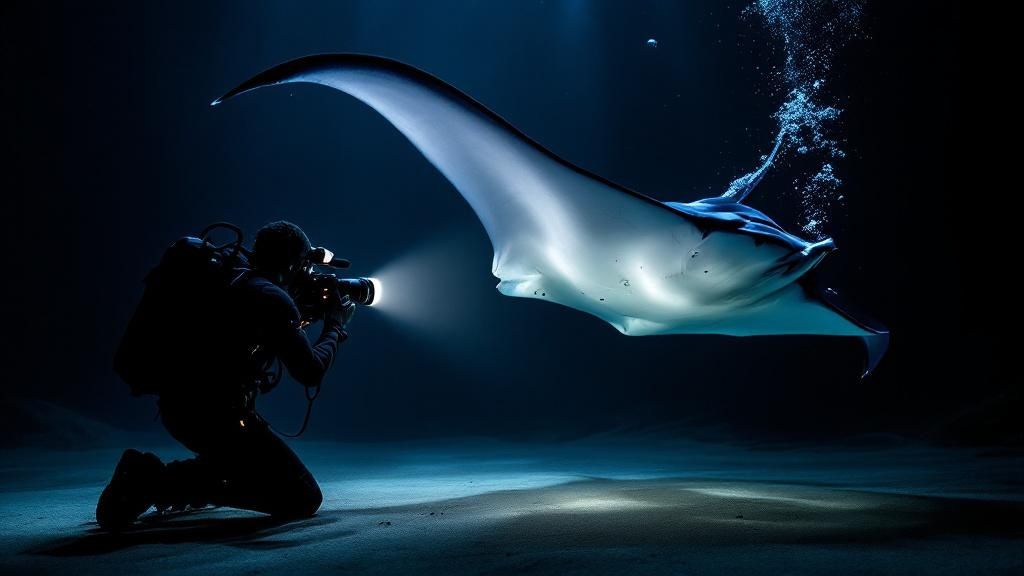
This experience goes beyond the standard night dive. Working alongside experts from organizations like the Manta Pacific Research Foundation, divers are trained to assist with critical data collection. The primary task is often photo-identification, where divers take pictures of the mantas' unique spot patterns on their ventral (belly) side. These patterns are like fingerprints, allowing scientists to identify and track individual rays over time, gathering data on their population size, migration patterns, and life history.
How It Works: Diving with a Purpose
During a research dive, you'll receive a detailed briefing on manta ray biology, conservation issues, and the specific data collection protocols for the day. Once in the water, your focus shifts from passive observation to active participation. You'll be tasked with capturing clear, usable photographs of the mantas' ventral surfaces. Back on the boat, you may help upload these images to a global database, like Manta Matcher, and learn how to identify individuals. It’s an immersive educational experience that provides a deeper appreciation for the animals you encounter.
Key Insight: This type of citizen science is invaluable. Organizations like the Manta Pacific Research Foundation, pioneered by experts like Dr. Andrea Marshall ("Queen of Mantas"), rely on data from divers to build comprehensive profiles of manta populations. Your participation directly contributes to long-term conservation strategies.
Why This Experience is Unbeatable
This is the ultimate manta ray dive Kona experience for the passionate diver who wants to give back. It provides unparalleled access to marine science experts and a behind-the-scenes look at real-world conservation. Instead of just a fleeting encounter, you become part of the mantas' story, helping to ensure their survival for future generations. The skills and knowledge you gain are not only fascinating but also make you a more aware and responsible ocean steward.
Actionable Tips for a Perfect Dive
To make the most of this specialized dive, come prepared to contribute:
- Book Far in Advance: These programs have extremely limited spots and are in high demand. Plan your trip and reserve your place well ahead of time.
- Refine Your Skills: Excellent buoyancy control is non-negotiable. You'll need to hold steady to capture clear photos without disturbing the animals or the environment. Consider taking a specialty course to hone your skills by learning more about scuba classes on konahonudivers.com.
- Bring the Right Gear: A good underwater camera with a strobe is essential. Practice using it beforehand so you can confidently capture ID shots.
- Study Before You Go: Familiarize yourself with basic manta ray identification techniques. Understanding what makes a good ID photo will make your contribution far more valuable.
5. Private Charter Manta Ray Diving
For those seeking the ultimate personalized and intimate underwater encounter, a private charter for your manta ray dive in Kona is the pinnacle of luxury and exclusivity. Instead of joining a larger group, you can book an entire boat for just your family, friends, or a partner. This bespoke experience allows for complete control over the itinerary, timing, and overall atmosphere, transforming a fantastic dive into a truly once-in-a-lifetime private event.
This option moves beyond the standard tour format. A private charter means the dive plan is built around your group's skill level, interests, and schedule. The crew, including a dedicated captain and divemaster, focuses solely on your party's safety and enjoyment. This often includes premium amenities, flexible departure times to catch the perfect sunset, and the ability to choose a less-crowded dive site, if conditions permit.
How It Works: Your Exclusive Underwater Theater
On a private charter, the experience is curated from start to finish. You’ll work with the operator to plan the ideal evening. This might include a sunset cruise before the dive, special food and beverage requests, or even combining the manta dive with another activity like a twilight snorkel. Once at the site, your private divemaster provides an in-depth briefing tailored specifically to your group. The entire dive is paced to your comfort, ensuring ample bottom time without the pressure of a larger tour schedule. This level of personalized attention makes it ideal for families with mixed skill levels, photographers needing more space, or couples celebrating a special occasion.
Key Insight: Private charters offer unparalleled flexibility. Operators like Kona Diving Company or Pacific Rim Divers can often adjust their plans based on real-time conditions or even pivot to alternate dive sites to increase the chances of a spectacular encounter away from the main crowds.
Why This Experience is Unbeatable
A private charter offers an exclusive front-row seat to the manta ray spectacle. The primary benefit is intimacy; you share this magical moment with only your chosen companions, creating a much deeper and more personal connection with the wildlife. There’s no jostling for the best viewing spot or feeling rushed. It's also the perfect solution for certified divers who want a more advanced profile or for those who simply prefer the comfort and service of a dedicated crew. Many luxury resorts in Kona partner with top-tier operators to arrange these custom, high-end excursions for their guests. You can learn more about arranging a private manta ray dive for your group.
Actionable Tips for a Perfect Dive
To get the most out of your exclusive charter, consider these recommendations:
- Communicate Your Goals: Be clear with the charter company about what you want. Whether it's photography, a romantic setting, or a family-friendly pace, they can customize the trip to meet your expectations.
- Book Well in Advance: Private charters are limited and highly sought after, especially during peak season. Secure your date as early as possible to avoid disappointment.
- Request a Photo/Video Package: Many private charters offer professional underwater photography services. This is a fantastic way to capture high-quality memories without being distracted by your own camera.
- Inquire About Flexibility: Ask about backup plans for weather or low manta activity. A great charter company will have contingency sites and a transparent policy.
6. Manta Ray Photography Workshop Dives
For those who want to not just witness the magic but capture it forever, a specialized Manta Ray Photography Workshop Dive offers the ultimate experience. This option elevates the standard manta ray dive in Kona by combining the incredible wildlife encounter with expert instruction from professional underwater photographers. It’s designed for everyone from aspiring photographers with a new camera to seasoned pros looking to perfect their low-light, wide-angle techniques.
These workshops go beyond a simple dive briefing. They typically include pre-dive seminars covering essential topics like camera settings for night diving, strobe positioning to minimize backscatter, and composition strategies for capturing the mantas' graceful movements. Once in the water, instructors provide real-time guidance, helping you adjust your technique to nail that perfect shot of a manta gliding through the plankton-rich beams of light.
How It Works: Capturing the Underwater Ballet
Instead of just observing, you become a student of the art. The dive unfolds much like the classic night dive, with lights attracting plankton and mantas. However, your focus is on translating this breathtaking scene into a stunning image. The instructors, often renowned photographers themselves, help you anticipate manta behavior, position yourself for the best angles, and manage the technical challenges of shooting in a dark, dynamic environment. The small group sizes ensure personalized attention, allowing you to ask questions and receive immediate feedback.
Key Insight: These workshops are less about just taking pictures and more about learning the art of storytelling through your lens. The goal is to capture the emotion and scale of the encounter, a skill that requires understanding both your camera and the marine life you are photographing.
Why This Experience is Unbeatable
A photography workshop transforms your manta ray dive into a focused, skill-building adventure. You leave not only with incredible memories but also with a portfolio of high-quality images and a new level of confidence in your underwater photography. Learning from pros who have spent years mastering this specific shot accelerates your learning curve immensely. Operators and specialized tours, sometimes featuring renowned photographers like Wayne Levin or National Geographic contributors, provide a structured environment dedicated to achieving photographic excellence. This unique combination of education and adventure makes the manta ray dive Kona experience even more rewarding.
Actionable Tips for a Perfect Photo Dive
To make the most of your photography workshop, preparation is key:
- Know Your Gear: Practice assembling and operating your camera rig on land until it becomes second nature. Fumbling with settings underwater is a surefire way to miss the shot.
- Buoyancy is Paramount: Before you can focus on photography, your buoyancy must be flawless. You need to be able to hover effortlessly, remaining perfectly still to avoid kicking up sand and to frame your shots.
- Pack Redundancies: Bring backup batteries, memory cards, and O-rings. There’s nothing worse than having your equipment fail mid-dive during the encounter of a lifetime.
- Use Red Focus Lights: A red-filtered focus light is less disruptive to the mantas and other marine life. This allows you to achieve sharp focus without disturbing the natural behavior you’re trying to capture.
Manta Ray Dive Kona: 6-Option Comparison
| Experience | Implementation Complexity 🔄 | Resource Requirements ⚡ | Expected Outcomes 📊 | Ideal Use Cases 💡 | Key Advantages ⭐ |
|---|---|---|---|---|---|
| Manta Ray Village Night Dive | Moderate (boat access, night dive) | Standard dive gear, underwater lights | High encounter rate (90%+) with mantas | Open Water certified divers seeking reliable manta encounters | Highest success rate, shallow depth, year-round conditions |
| Manta Heaven Night Dive | Moderate-High (deeper, advanced skills) | Advanced dive gear, powerful lights | Medium encounter rate (70-80%), cleaning behavior witnessed | Advanced divers wanting less crowded, natural setting | Less crowded, cleaning station observation, better photography |
| Manta Ray Snorkel Experience | Low (surface snorkel) | Snorkel gear, flotation devices | Surface manta encounters, suitable for all ages | Non-divers or families wanting manta experience without certification | No certification needed, family friendly, less expensive |
| Manta Ray Research Dive | High (scientific, multi-dive) | Advanced dive gear, cameras, research tools | Educational, contribute to research, multiple encounters | Divers seeking conservation involvement and learning | Scientific contribution, expert interaction, meaningful experience |
| Private Charter Manta Dive | High (customized, exclusive) | Private boat, personalized guides | Intimate, flexible manta encounters | Groups or couples wanting exclusive, tailored dive trips | Personalized, no crowds, flexible schedule, extra activities |
| Manta Ray Photography Workshop | High (equipment-intensive) | Specialized photography gear, expert instructors | High-quality manta photos, photography skills gained | Underwater photographers focusing on manta night photography | Professional instruction, specialized equipment, portfolio building |
Planning Your Unforgettable Kona Manta Dive
Your journey into the world of Kona’s manta rays has just begun. Having explored the nuances of different dive sites like Manta Village and Manta Heaven, the unique options available from snorkeling to private charters, and the specialized experiences like photography workshops, you are now equipped with the knowledge to make your dream encounter a reality. The key takeaway is that the Kona manta ray night dive is not a one-size-fits-all adventure; it's a deeply personal experience that can be tailored to your skill level, interests, and aspirations.
The distinction between a good dive and an extraordinary one often lies in the details. It's about understanding the seasonal variations that affect manta numbers, choosing the right gear for a comfortable and safe night dive, and selecting an operator whose philosophy aligns with marine conservation. By considering these factors, you transform a simple tourist activity into a meaningful interaction with the marine ecosystem. You move from being a passive observer to an informed participant, fully appreciating the delicate ballet unfolding before you.
Actionable Next Steps for Your Manta Encounter
To transition from planning to action, here are your immediate next steps:
- Assess Your Goals: Are you a photographer seeking the perfect shot, a new diver building confidence, or a snorkeler wanting a surface-level spectacle? Your personal objective will guide you to the right type of tour, whether it's a standard two-tank dive, a dedicated photography workshop, or a snorkel-only trip.
- Select Your Ideal Time: While Kona offers year-round manta sightings, consider factors like plankton blooms and peak tourist seasons. Booking your trip during the shoulder seasons (spring or fall) can often provide a great balance of excellent viewing conditions and fewer crowds.
- Choose a Reputable Operator: This is the most critical decision. Look for companies with a strong safety record, experienced guides who are passionate about marine biology, and a genuine commitment to the Manta Ray Green List standards. An operator like Kona Honu Divers not only provides a safe and well-organized trip but also enriches your experience with educational insights. Their focus on sustainable practices ensures these magnificent creatures are protected for future generations.
Why This Preparation Matters
Mastering these planning stages is valuable because it directly impacts the quality and sustainability of your adventure. A well-planned manta ray dive in Kona minimizes stress and maximizes enjoyment, allowing you to be fully present in the moment. When a six-foot manta ray glides inches above your head, its massive fins creating a silent, powerful current, you won't be worrying about your equipment or the crowd; you'll be completely mesmerized. This preparation ensures your encounter is respectful to the mantas, contributing positively to the local ecotourism that helps protect them.
The Kona manta ray dive is more than just an item on a bucket list; it's a profound connection to the ocean's gentle giants. It's a humbling reminder of the vast, beautiful world that lies just beneath the surface. As you ascend from the darkness, surrounded by the bioluminescent glow and the fading silhouettes of the mantas, you’ll carry with you a memory etched not just in your mind, but in your soul. Prepare well, dive responsibly, and get ready for an experience that will redefine your understanding of marine magic.
Ready to witness this underwater ballet for yourself? With their award-winning service and unwavering commitment to safety and sustainability, Kona Honu Divers offers the premier manta ray dive in Kona, ensuring your adventure is both breathtaking and responsible. Secure your spot on their acclaimed 2-Tank Manta Dive & Snorkel Tour and prepare for the night of a lifetime.