
Picture this: you're floating in the warm, dark Pacific Ocean. Giant, shadowy figures with wingspans wider than a car glide and barrel-roll just inches from your face. This isn't some wild dream—it's the world-famous manta ray dive in Kona, an experience so consistently mind-blowing it's considered one of the best night dives on the planet.
What Makes the Kona Manta Ray Dive So Famous
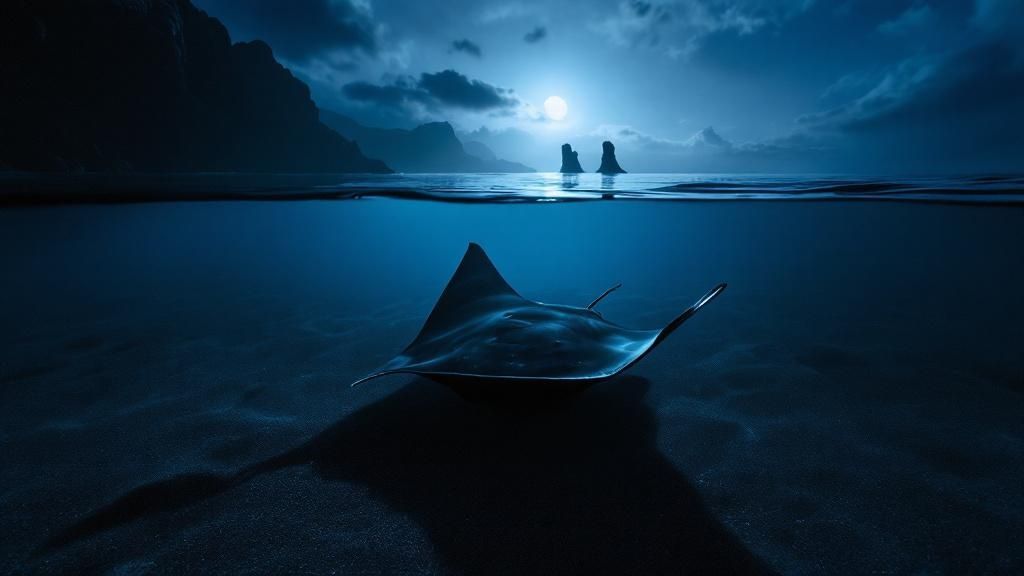
The Kona coast of the Big Island isn't just another spot on the map; it's a world-renowned stage for one of nature's most incredible performances. What makes this underwater ballet so special is a unique blend of ecology and easy access you just won't find anywhere else.
The whole thing is built on a simple, almost genius concept: light attracts plankton, and plankton attracts manta rays. For decades, these gentle giants have learned to associate the glow of dive lights with an all-you-can-eat buffet. This conditioning has created an unbelievably reliable encounter. While other wildlife viewings are a roll of the dice, the Kona manta ray dive has a success rate of over 85-90%. It’s pretty much a bucket-list guarantee.
The Perfect Underwater Theater
Kona's physical environment plays a huge part in this nightly show. The dive sites are fairly shallow, typically between 30 and 40 feet, which is fantastic because it means both certified scuba divers and snorkelers can get in on the action. This accessibility opens the door for almost everyone to see the magic up close.
The Kona Coast is a world-leading ecotourism destination, drawing approximately 80,000 visitors annually who take part in manta ray tours.
Even better, the local manta population isn't just passing through—they're residents. An estimated 450 individual manta rays call these waters home year-round. This is the key ingredient that makes the experience so dependable. Tour operators can practically guarantee an unforgettable show because the stars of the performance never leave town. You can get more details on timing your trip by checking out what is the best time of year to see manta rays in Kona.
Choosing Your Guide for This Unforgettable Night
With such a precious natural resource, picking the right guide is everything. A top-tier operator isn't just about keeping you safe; they also respect the marine environment and the well-being of the mantas. Companies like Kona Honu Divers have earned a stellar reputation for running safe, ethical, and truly awe-inspiring tours. Their experienced crews know the delicate balance needed to make this interaction happen without disturbing the animals.
Ultimately, the fame of the manta ray dive in Kona boils down to a perfect storm of factors: a massive resident manta population, ideal underwater geography, and a symbiotic relationship with professional tour operators. This combination ensures that almost every single night, a breathtaking underwater ballet unfolds just off the coast, waiting for you to grab a front-row seat.
Kona’s Premier Manta Ray Dive Sites: Where the Magic Happens
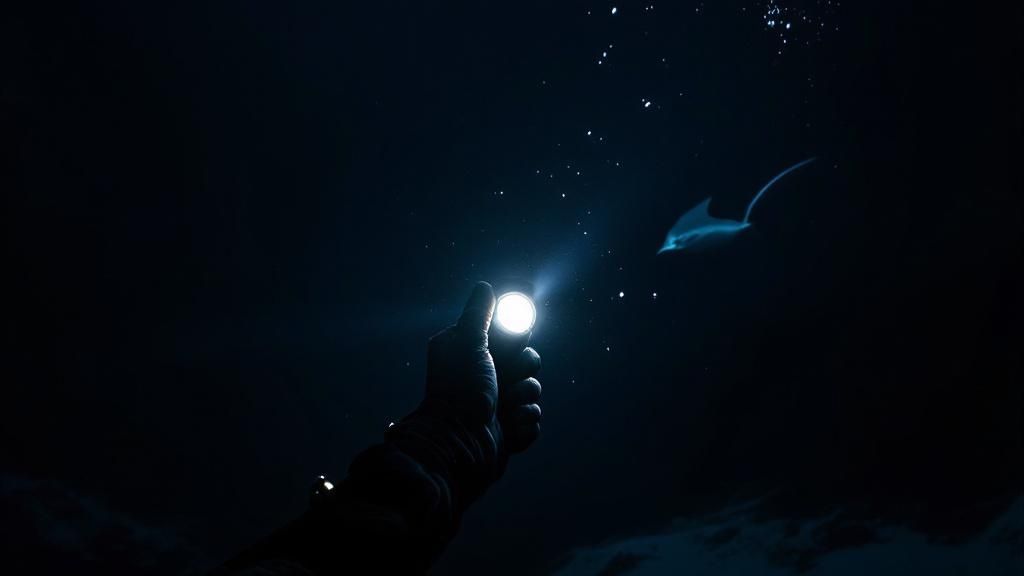
When you're getting ready for a manta ray dive in Kona, think of it like picking your seat for an epic concert. Every spot offers a slightly different view of the show. While all the sites are incredible, the two main "stages" for this nightly spectacle have earned their own reputations: Manta Village and Manta Heaven.
Each spot has its own vibe and knowing the difference helps you know what to expect. Your dive operator will usually make the final call based on the ocean's mood that day, but a little inside knowledge goes a long way.
Manta Village: The Calm Ballroom
Just down by Keauhou Bay, you'll find Manta Village. This is the OG, the spot where the Kona manta ray dive first became legendary. We call it the grand ballroom because it's got a nice, flat sandy bottom at a relatively shallow depth.
It's known for being calm and predictable, which makes it a fantastic choice if you're a first-time night diver or feeling a bit nervous. The setup is genius in its simplicity: dive lights get placed on the seafloor to create an "underwater campfire," and divers kneel in a circle looking up as the mantas swoop in to feed above.
The consistent, mellow conditions and high success rate at Manta Village make it a super reliable option. On a typical night, you can expect to see anywhere from 4 to 12 mantas putting on their silent, mesmerizing ballet.
Manta Heaven: The Dynamic Arena
A bit north of Kona, close to the airport, is Manta Heaven. By day, it's known as Garden Eel Cove. The experience here is a little more dynamic and rugged. Instead of a smooth sandy floor, you've got more of a reef structure to work with.
So what's the difference?
- A Little Deeper: The site is a bit deeper than Manta Village, which can sometimes draw in even larger groups of mantas.
- Potential for Current: Manta Heaven can get a bit more current, making it a better fit for divers who feel confident and comfortable in their fins.
- Different Setup: The reef bottom means the light setup might be arranged a bit differently, but the mission is always the same: create a giant beacon for plankton.
How the Captains Choose a Site
Ultimately, the pros make the call. The boat captains and dive crew are constantly checking ocean conditions, listening to recent manta sighting reports, and prioritizing safety above all else. They'll pick the stage that promises the best performance for that specific evening.
No matter where you end up, whether it's the serene ballroom of Manta Village or the energetic arena of Manta Heaven, you're in for a night you'll never forget. Both sites are vital parts of the incredible ecosystem that makes scuba diving on the Big Island of Hawaii a truly world-class adventure.
Getting Ready for Your Manta Adventure
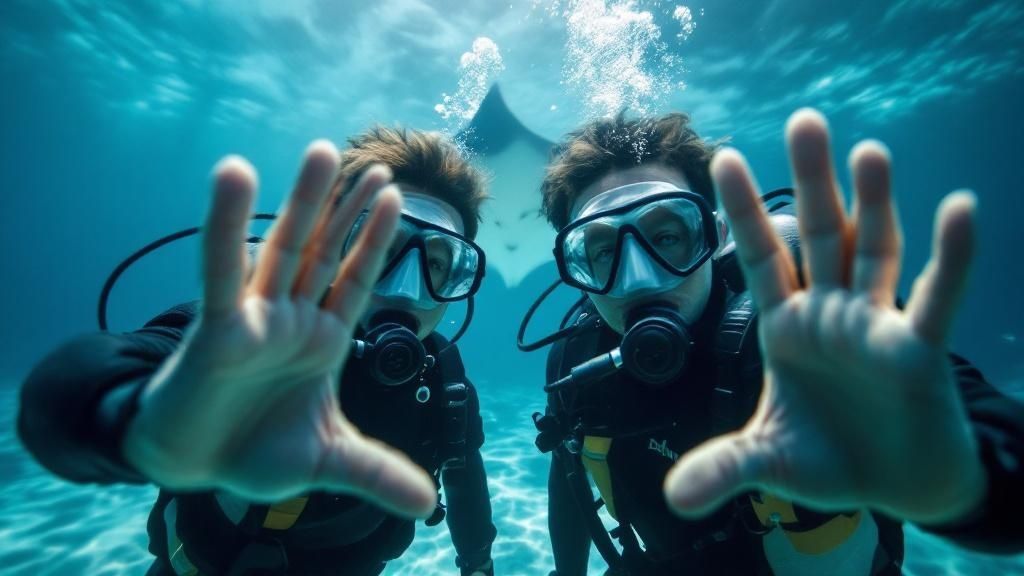
A little bit of prep work is the secret to turning a great manta ray dive into a truly unforgettable one. When you know what to bring, you can stop sweating the small stuff and just soak in every incredible moment.
Think of it like a pre-flight check before launching into an otherworldly underwater experience. I can't stress enough how much a simple checklist helps make sure everything goes smoothly. In any professional operation, from diving to aviation, the importance of using comprehensive checklists in operations is key to safety and success.
So, let's walk through exactly what you need.
Manta Ray Dive Preparation Checklist
I've put together this quick-reference table to help you pack. It covers the essentials you absolutely need and a few other things that are just nice to have. Don't leave home without running through this list!
| Item Category | Essential Items | Optional but Recommended |
|---|---|---|
| Clothing & Comfort | Swimsuit (wear it there!), Dry Towel, Warm Change of Clothes (hoodie/jacket), Hat or Beanie | Flip-flops or sandals |
| Personal Items | Reef-safe Sunscreen (for day trips), Reusable Water Bottle, Necessary Personal Medications | Seasickness Medication (if needed), Hair ties for long hair |
| Gear & Tech | Underwater Camera (if you own one), Extra Batteries/Memory Card | Go-Pro or Action Cam with mount |
Having these items ready means you'll be comfortable before, during, and after your time in the water, letting you focus on the main event—the mantas!
Dress for Success: In and Out of the Water
Your comfort is everything, especially on a night dive. The Pacific waters are warm, but the air can feel pretty chilly once you're back on the boat. Packing the right clothes makes a massive difference.
The easiest approach? Arrive at the boat with your swimsuit already on under your street clothes.
After the dive, you'll be so glad you brought a warm, fluffy towel and a hoodie or windbreaker for the ride back to the harbor. It’s all about making that transition from the magical underwater world back to the real world as cozy as possible.
A Few Pre-Dive Tips
A couple of simple steps before you even leave for the harbor can help you feel your best in the water. First, stay hydrated! Drink plenty of water throughout the day. That said, try to avoid a huge, heavy meal right before you board the boat—a light stomach is a happy stomach on the water.
If you know you’re prone to seasickness, take your medication well before the boat departs. Most remedies need about an hour to kick in, so check the instructions. Getting these little things out of the way lets you focus completely on the gentle giants gliding around you.
Capturing the Magic: Underwater Photography
Bringing a camera is a fantastic way to remember your manta ray dive in Kona, but shooting underwater at night has its own learning curve. The best tip I can give you is to let the tour operator's powerful lights do the heavy lifting for you.
Remember, your main job is to be a respectful observer. Let the mantas come to you. Avoid sudden movements or using a bright, direct flash that could startle them or disrupt their natural feeding.
Dial in your camera settings before you even get wet. A wide-angle lens is your best friend here, and don't be afraid to bump up your ISO to let more light in. Above all, hold steady and be patient. Let the mantas swim into your frame for those truly spectacular, frame-worthy shots.
How to Be a Good Guest in the Manta’s World
To make sure the legendary manta ray dive in Kona sticks around for everyone to enjoy, we have to act like good guests in their home. This all comes down to a few golden rules of “manta etiquette,” designed to keep both you and these incredible animals safe.
When you follow these guidelines, you're not just a tourist anymore. You become a temporary guardian of this special place. The whole experience is built on mutual respect, and your guide will be right there with you to make sure everything runs smoothly and safely for the entire group.
The Golden Rule: Look, Don't Touch
The number one rule is as simple as it gets, and it's absolutely non-negotiable: do not touch the manta rays. These gentle giants are covered in a delicate, slimy coating that acts like their immune system. Touching them can strip away this protective layer, leaving them wide open to nasty bacteria and infections.
This is a hands-off experience. You’re here to watch them do their thing naturally. The best, most mind-blowing show happens when you stay still and let them run the encounter.
Your guide will show you exactly where to go—usually kneeling on the sand for divers or holding onto a float board for snorkelers. Just hang out in your spot and let the mantas put on their graceful ballet around you.
Why Their Behavior Matters
A little insight into manta behavior makes these rules click. The mantas aren't there to play with us; they're there for dinner. They've learned over the years to associate the bright lights from the tour boats with a concentrated buffet of plankton. It's this conditioned behavior that makes the Kona encounter so reliable night after night.
Years of research and tracking have given us a fascinating look into their lives. Since 1991, researchers have logged nearly 28,500 manta ray sightings right here in Kona, building one of the biggest population databases on the planet. This data has shown us that some individuals, like a well-known manta named "Loulou Ray," travel up to 42 miles between their favorite feeding spots—a much bigger home range than anyone expected. When you follow the rules, you help researchers continue this vital work and ensure the mantas feel safe enough to keep coming back. You can learn more about their incredible journeys on the Big Island.
Your Role as a Guardian
It all boils down to a few simple but critical actions that keep the Kona manta dive sustainable, ethical, and absolutely magical. Here’s a quick rundown of your job for the night:
- Observe Only: Don't even think about touching, chasing, or trying to ride a manta. Just watch.
- Hold Your Position: Divers stay low on the bottom, and snorkelers stay flat on the surface. This keeps the water column wide open for the mantas to do their acrobatics.
- Lights On Target: Divers, shine your lights straight up. Snorkelers, shine yours straight down. This creates that irresistible "campfire" of plankton that draws them in.
By being a quiet, respectful observer, you're playing a direct part in protecting this one-of-a-kind marine spectacle for years to come.
Exploring More of Kona’s Underwater World
The manta ray dive in Kona is an absolute showstopper, but trust me, it's just the opening act for everything scuba diving the Big Island has to offer. For divers still buzzing from the manta encounter and hungry for more, Kona’s volcanic underwater landscapes are a playground of unique adventures.
After watching those gentle giants glide by, a lot of divers ask, "What's next?" The answer is pretty thrilling and takes you into an entirely different realm of night diving.
The Legendary Kona Blackwater Dive
Picture this: you're drifting in the vast, open ocean, miles from shore, suspended over thousands of feet of inky-black water. This is the Kona blackwater dive, and it's a surreal experience that feels more like floating through outer space than swimming. Instead of reefs, you’re greeted by bizarre and beautiful creatures migrating from the deep abyss toward the surface, all under the cover of darkness.
On a blackwater dive, you'll meet critters that look like they're straight out of a sci-fi movie—translucent squids, strange larval fish, and pulsating jellies. It’s an underwater safari for the weird and wonderful.
This is a must-do for any adventurous spirit looking for something completely out of the ordinary. It's an experience that couldn't be more different from the manta dive, and it truly showcases the sheer diversity of Kona's marine nightlife. You can get the full scoop on this one-of-a-kind adventure on our Blackwater Dive tour page.
Advanced Adventures for Experienced Divers
For those who love a challenge and have the certs to back it up, Kona absolutely delivers. The island’s volcanic origins have sculpted a dramatic underwater world filled with ancient lava tubes, sheer walls, and deep-water pinnacles that are a blast to explore.
Our advanced dive tours are specifically designed to take you into these exhilarating environments. You'll get the chance to navigate complex structures and see marine life that you'll only find in deeper waters. From intricate lava formations to stunning coral gardens, there is always another world to discover. And for those who prefer to gear up and go right from the beach, don't miss our guide on the best shore diving sites in Kona.
The manta ray dive is an unforgettable peak experience, no doubt. But it’s the incredible variety of world-class diving that makes Kona a premier destination you’ll want to come back to again and again.
Your Manta Ray Dive Questions Answered
It's totally normal to have a few questions buzzing around in your head before a big adventure like this. We get it. That's why we've put together the most common questions we hear about the manta ray dive in Kona, giving you straight-up answers so you can feel 100% ready for the experience of a lifetime.
When Is the Best Time of Year to See Manta Rays in Kona?
Here’s the great news: any time is a good time! The manta rays along the Kona coast are residents, not tourists. They don't migrate, which means you can find them here year-round.
While many people think of April through October as the "peak" season—mostly because the ocean is calmer and the water is a bit warmer—the truth is, the mantas show up consistently all year long. With a sighting success rate of over 85%, your chances for an absolutely incredible encounter are fantastic no matter when you book your trip.
Do I Need to Be a Certified Diver?
Nope, not at all! You absolutely do not need a scuba certification to witness this underwater ballet. Snorkeling is an equally amazing way to see the mantas, and it's incredibly popular.
Snorkelers hang onto a custom-made float board that has bright lights shining down into the ocean. These lights are like a dinner bell, attracting plankton. The mantas then glide right up to the surface to feed, giving you a spectacular, top-down view of the whole show.
Is the Manta Ray Night Dive Safe?
Yes, it's a very safe experience, provided you go with a professional and reputable tour operator like Kona Honu Divers. Safety is always the top priority.
Every tour kicks off with a detailed safety briefing, and you'll have certified divemasters or instructors in the water with you the entire time. As for the mantas themselves? They're true gentle giants. They are completely harmless to people—they don't have teeth, stingers, or barbs.
How Close Will the Manta Rays Get?
Get ready to have your mind blown—the mantas often get within inches of you. They are completely absorbed in feeding on the plankton concentrated in the light beams, so they'll swoop, roll, and glide all around you with incredible grace.
Your guides will instruct you to just be a still, passive observer. This simple rule lets the mantas control the entire interaction, making for a truly magical and non-intrusive encounter. For a deeper dive into what to expect, check out our comprehensive guide to the manta ray night dive in Kona.
Ready to experience this unforgettable underwater ballet for yourself? Kona Honu Divers offers a world-class, safe, and breathtaking manta ray dive tour that will leave you with memories to last a lifetime.