
The manta ray dive in Kona is hands down one of the best night dives on the planet. I’m not just saying that; it’s a world-renowned experience for a reason. You get an almost guaranteed, up-close-and-personal encounter with giant, gentle manta rays. How? It's a clever setup: dive operators sink powerful lights to the ocean floor, creating an "underwater campfire" that attracts swarms of plankton. This, in turn, draws in the mantas for a feeding frenzy that looks more like a choreographed ballet.
What Makes the Kona Manta Ray Dive a Must-Do Experience
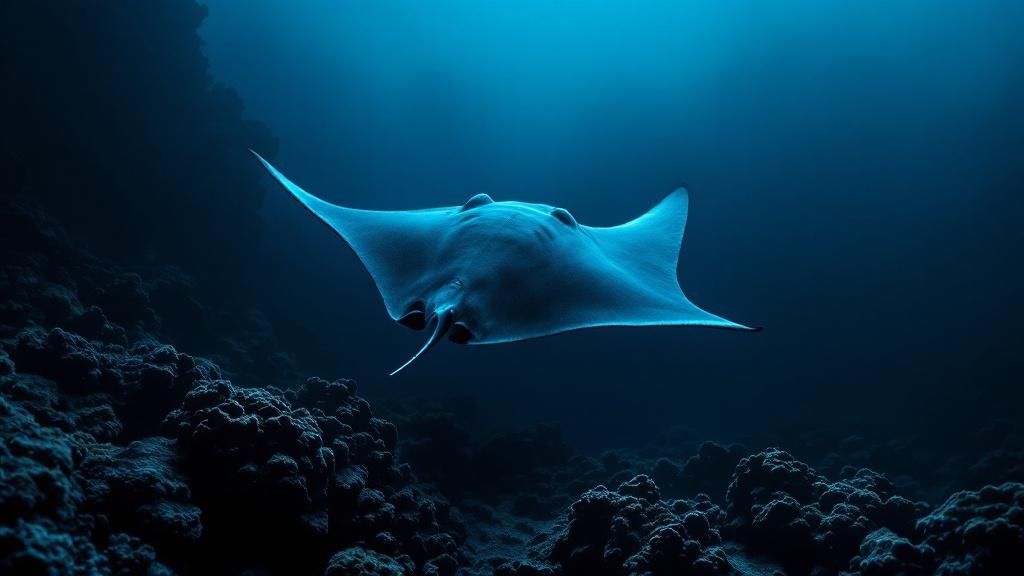
Picture this: you're floating weightlessly in the dark, warm waters just off the Kona coast. Below you, powerful beams of light slice through the night, illuminating a swirling cloud of tiny sea creatures. Then, out of the blackness, a huge, graceful shadow emerges, soaring effortlessly through the light. That's the magic of the world-famous Kona manta ray dive—an experience that feels totally surreal.
This isn’t just another dive; it’s a true spectacle. People often describe it as a silent, underwater ballet. You'll watch magnificent manta rays, some with wingspans stretching up to 16 feet, perform barrel rolls and somersaults right in front of you as they feast on the plankton. It’s an immersive, peaceful, and honestly, a deeply moving encounter with one of the ocean's most intelligent gentle giants.
An Unforgettable Underwater Spectacle
So, what makes this adventure so special? Unlike a lot of wildlife encounters that hinge on pure luck, the manta ray dive in Kona is incredibly reliable. Dive sites are typically in shallow waters, around 30 to 40 feet, which makes them perfect for both scuba divers and snorkelers. Because the plankton predictably gathers around the lights, the tour boasts an amazing 85-90% sighting success rate all year long.
This reliability has put Kona on the map, turning it into the global destination for this specific adventure. Thousands of people fly here every year just to witness it firsthand. It's that combination of easy access, high success rates, and the sheer awe of the experience that cements its reputation. You can read more about why you should go on a manta ray dive in Kona in our detailed guide.
This isn't just watching marine life from a distance; it's like being invited to their dinner table. The closeness and grace of the mantas create a connection that sticks with you long after you've dried off.
Ready to see this incredible underwater show for yourself? A manta ray dive is an experience you will remember for the rest of your life.
Meeting Kona’s Famous Gentle Giants
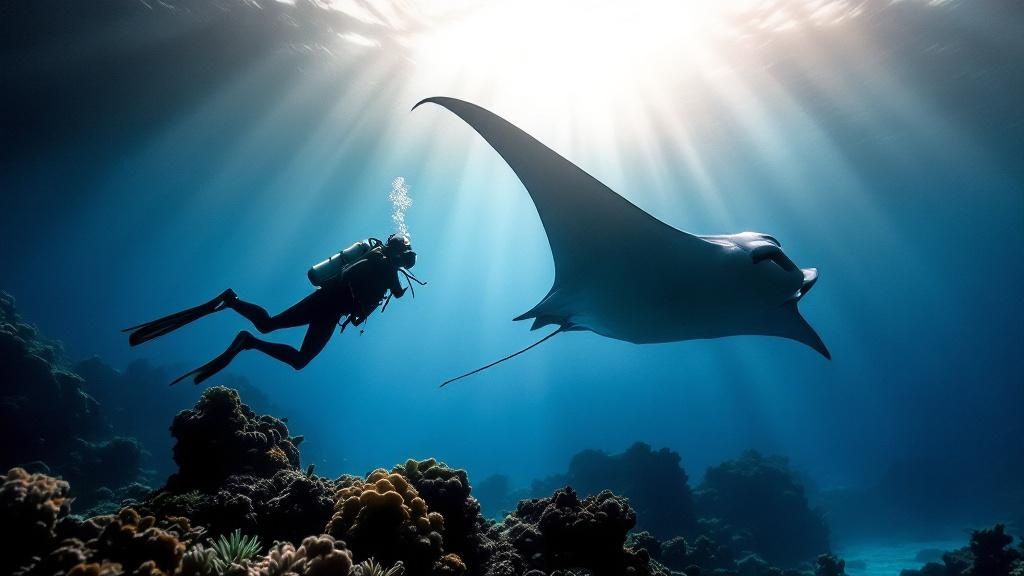
The incredible creatures you’ll meet on a manta ray dive in Kona are resident reef mantas, known scientifically as Mobula alfredi. They aren't just tourists passing through; this is a local population that sticks around the Kona coast all year. That's what makes this one of the most reliable places on the entire planet to see them.
Don't let their size fool you. With wingspans stretching over 16 feet, they look imposing, but these guys are the definition of gentle giants. It’s a common mix-up to think they’re like their distant cousins, the stingrays, but manta rays are totally harmless to people. They have no stinger and are only interested in one thing: their dinner of microscopic plankton.
The Graceful Filter Feeders
Manta rays are what we call filter feeders. They glide through the ocean with their huge mouths wide open, scooping up massive amounts of tiny zooplankton. Think of them as the ocean's version of majestic, winged whales, gracefully sifting their food from the water. That feeding behavior is exactly why the Kona night dive is so epic—they show up for the plankton, not for us.
Their movements are slow, hypnotic, and almost ballet-like. You’ll watch them perform effortless barrel rolls and somersaults, looping through the beams of light to get as much plankton as possible. Seeing this serene dance up close washes away any nerves and leaves you with nothing but pure awe.
Every Manta Has a Name
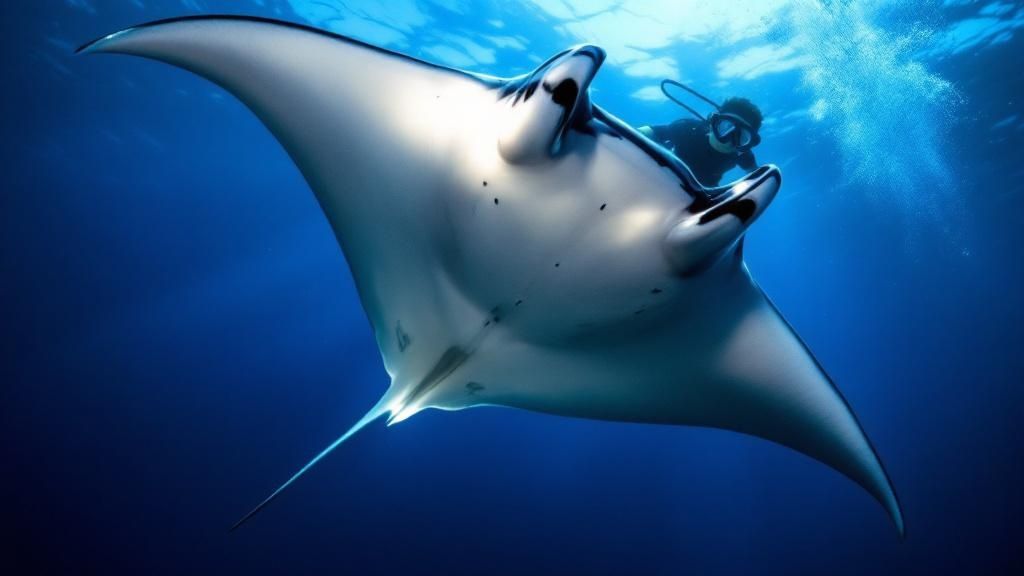
What really makes the Kona manta dive special, turning it from just a wildlife sighting into a personal encounter, is that you can actually recognize individual mantas. Each one has a unique pattern of black spots on its white belly, kind of like a fingerprint. Seriously, no two are the same.
This one-of-a-kind trait allows researchers, dive guides, and even guests like you to identify and track specific mantas. Over the years, many of Kona's regulars have been given names, creating a real bond between the community and these amazing animals.
This personal touch adds a whole other layer to the experience. You’re not just seeing a manta ray; you might be meeting one of Kona's local celebrities.
Meet Lefty, a Local Legend
One of the most famous residents is a manta named "Lefty," who is easy to spot because of a damaged left cephalic fin. The whole idea of identifying mantas by their spot patterns started back in 1991, and Lefty was the very first one to be officially cataloged. That kicked off a long-term research project that has made Kona's manta population one of the most studied in the world.
Since then, a dedicated citizen science program has been key to tracking these animals. Over a 14-year period, this massive effort has documented nearly 6,000 encounters and over 28,500 sightings, leading to the identification of more than 330 individual manta rays. You can dive deeper into this incredible research on how manta rays are tracked in Hawaii.
When you join a manta ray dive, you're becoming part of this story. By choosing a responsible operator, you contribute to a legacy of observation and conservation that helps protect these gentle giants for everyone to enjoy.
Your Manta Ray Adventure from Start to Finish
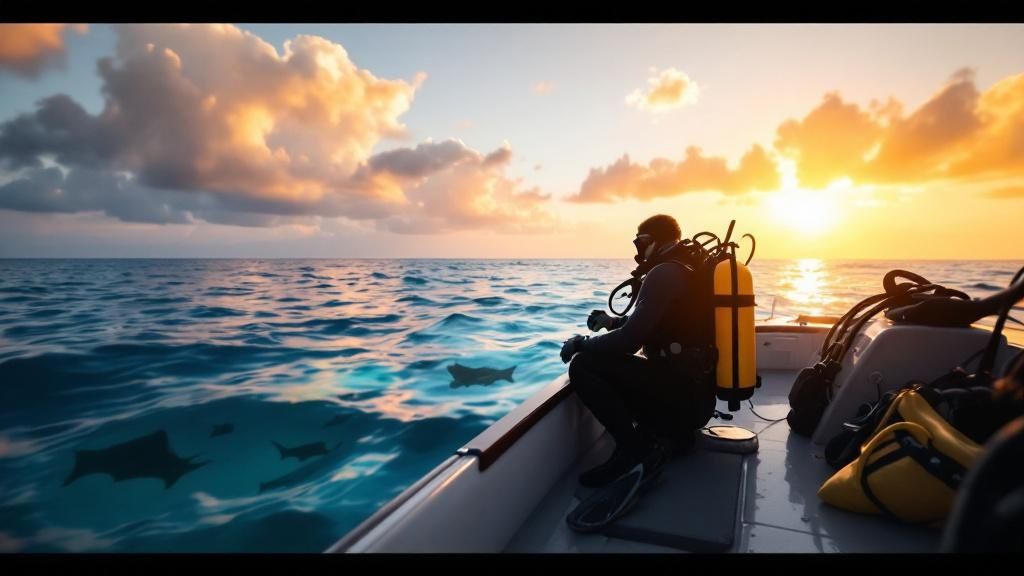
So, what’s it really like to go on a manta ray dive in Kona? Let's walk through the whole thing, from the moment you step on the boat to when you’re back on shore, buzzing with what you just saw. The entire tour is set up to build the excitement while making sure you feel totally safe and ready for the main event.
Your trip usually kicks off in the late afternoon. You’ll hop aboard a custom-built dive boat, meet the crew, and feel the energy in the air as you pull away from the harbor.
The boat ride out is an experience in itself. As you cruise the stunning Kona coast, the sun starts to dip, lighting up the sky in incredible shades of orange, pink, and purple. It’s the perfect, peaceful start to a wild night, giving you epic views and a chance to just chill before the magic happens.
Gearing Up for the Night Dive
Once twilight hits and the last bit of color fades, the crew gathers everyone for a detailed safety briefing. This is a super important step that helps everyone relax, whether you're a seasoned diver or a first-time snorkeler. They'll go over everything—how to get in and out of the water, and especially the rules for passively observing the mantas.
Then, it's time to gear up. The crew helps everyone with wetsuits, masks, and fins. If you're diving, you'll prep your tanks and regulators. Snorkelers get set up with their custom light board. You can feel the anticipation building as the ocean gets completely dark, setting the stage. To see all the details, you can learn more about the Kona manta ray night dive experience.
The Underwater Light Show Begins
Once everyone is set, the moment you’ve been waiting for arrives: the underwater lights flick on. These powerful beams slice through the dark, creating a glowing "campfire" on the ocean floor. Almost immediately, this light starts to attract clouds of microscopic plankton—the mantas' favorite meal.
It’s like ringing the dinner bell. Before long, a graceful shadow appears at the edge of the light, then another, and another. The manta rays glide into the illuminated circle to feast, and the underwater ballet you came for begins right in front of your face.
The whole experience is designed for incredible views, whether you're diving below or snorkeling on the surface. Each spot offers a unique and equally spectacular angle on the manta feeding frenzy.
- For Divers: You’ll descend to the sandy bottom, usually around 30-40 feet, and find a spot around the "campfire." From there, you just look up as the massive mantas soar, somersault, and barrel roll only feet above your head.
- For Snorkelers: You'll float on the surface, holding onto a specially designed light board. This board shines light down, drawing the plankton—and the mantas—right up to you. They often glide just inches below the surface, giving you an unbeatable top-down view of their graceful dance.
With top-rated operators like Kona Honu Divers, your safety and comfort come first, so you can just soak in the wonder of it all. The guides are in the water with you the whole time, making sure everything goes smoothly.
After about 45 minutes of pure awe, you’ll head back to the boat for a warm rinse, some snacks, and a relaxing cruise back to the harbor, replaying the incredible encounter in your mind.
How to Choose a Responsible Manta Ray Tour Operator
Let’s be honest, picking the right operator for your manta ray dive in Kona is the single most important decision you'll make for this trip. It’s not just about finding a deal. It's about your safety, the quality of the experience, and most importantly, protecting the very animals you came all this way to see.
The right company can turn a good dive into a truly unforgettable, ethical encounter that you'll be talking about for years.
With the manta dive’s popularity, you’ve got options. But they are definitely not all created equal. A top-notch, responsible tour puts the well-being of the manta rays and its guests above everything else. This means they follow strict interaction guidelines, give thorough safety briefings, and hire a crew that genuinely cares about marine conservation. Your choice makes a real difference in keeping this incredible natural wonder sustainable for the future.
The Gold Standard: Manta Ray Green List Approval
One of the quickest ways to spot a quality operator is to check if they're on the Manta Ray Green List. This program is a huge deal. It identifies and certifies companies that operate with the highest standards of safety, education, and conservation.
These aren't just empty promises. Green List operators voluntarily follow a strict code of conduct designed to make sure we don't disturb the mantas' natural feeding behaviors. When you go with one of them, you’re actively supporting sustainable tourism and ensuring your adventure doesn't harm the mantas or their home.
Key Factors for Selecting Your Tour
When you start comparing different companies, a few key things should be on your checklist. These are the details that separate the amazing tours from the just-okay ones, making sure you have a safe, comfortable, and awe-inspiring night.
Here’s what really matters:
- Impeccable Safety Record: Safety is non-negotiable. Look for companies with a long, proven history of safe dives. Their pre-dive briefings should be crystal clear, leaving you feeling confident and ready.
- Experienced and Passionate Guides: A great guide can completely change the experience. They don't just keep you safe; they bring the dive to life by sharing incredible facts about manta behavior and the whole ecosystem.
- High-Quality Boats and Gear: Trust me, a comfy, well-kept boat makes a world of difference—especially one with a hot shower for after the dive! You also want reliable, top-of-the-line rental gear so you're not fiddling with it in the water.
- Commitment to Small Group Sizes: Nothing kills the magic faster than being overcrowded. Operators who keep their groups small offer a much more personal and respectful experience, for both you and the mantas.
Sorting through all the options can feel overwhelming. To make it easier, we put together a quick checklist to help you evaluate and compare operators.
Evaluating Manta Ray Dive Operators: What to Look For
Use this checklist to choose the best and most responsible manta ray dive operator for your adventure.
| Feature | Why It Matters | What Kona Honu Divers Offers |
|---|---|---|
| Manta Ray Green List Certified | This is the highest endorsement for sustainable and ethical manta interactions. It means the operator follows strict conservation and safety protocols. | Yes, we are a proud Green List certified operator, committed to protecting Kona's mantas. |
| Experienced, Certified Guides | Knowledgeable guides ensure your safety and enrich the experience with fascinating insights into manta behavior and the local marine environment. | Our guides are all highly experienced, certified PADI professionals with a deep passion for marine conservation. |
| Small Group Policy | Smaller groups mean a more personal, less crowded, and more respectful encounter for both divers and the manta rays. | We cap our group sizes to ensure an intimate and high-quality experience for everyone on board. |
| Comprehensive Safety Briefing | A thorough briefing prepares you for everything, making you feel confident and secure before you even hit the water. | We provide detailed pre-dive briefings covering all safety procedures and manta interaction guidelines. |
| High-Quality Equipment | Well-maintained gear is crucial for safety and comfort. This includes everything from wetsuits and regulators to the boat itself. | We offer top-of-the-line, regularly serviced rental gear and operate modern, comfortable dive boats with hot showers. |
| Stellar Guest Reviews | What other divers say is a powerful indicator of an operator's professionalism, service quality, and overall experience. | We consistently receive 5-star reviews highlighting our professional crew, excellent service, and unforgettable dives. |
Choosing an operator that checks all these boxes, like Kona Honu Divers, doesn't just guarantee you a better trip—it means your tourism dollars are supporting companies that do things the right way.
Ready to book an ethical and unforgettable adventure? You can explore the premier manta ray dive tour with a trusted, Green List-approved operator right here.
Why Protecting Kona’s Manta Rays Matters
Going on a manta ray dive in Kona is so much more than just ticking something off your bucket list. You’re actually stepping into the middle of a powerful, delicate conservation story. This isn't just an incredible show nature puts on; it's a direct connection to a fragile ecosystem and a real-life example of what happens when a community truly commits to protecting its own.
Suddenly, the experience shifts from a simple tourist activity to a profound conservation success story that you get to be a part of. When you understand the deeper story here—both environmentally and culturally—it brings a whole new level of respect to your dive, making it that much more unforgettable.
A Sanctuary in a Vulnerable World
Out in the wider world, manta rays are in serious trouble. They’re hunted for their gill plates, accidentally caught in huge commercial fishing nets, and losing the habitats they need to survive. Add in their slow growth and low birth rates, and you can see why their populations are at risk across the globe.
But Hawaii is a different story. It's a genuine bright spot. The state has created a true sanctuary for these gentle giants. Back in 2009, protective laws were passed that made it illegal to capture or kill manta rays in state waters. That legal shield has allowed Kona's resident manta population to absolutely flourish, turning our local waters into a safe haven where they can feed and live without being harmed. You can learn more about what you should know before your manta ray dive in Kona in our big guide.
Your Dive Makes a Difference
Here’s the best part: by choosing to dive with a responsible operator, you are directly helping to preserve this amazing ecosystem. The economic impact is huge. Night dive operations focused on the mantas bring in more than $2.5 million every year for the local community. This model of sustainable tourism creates a massive incentive for conservation, proving that these animals are worth so much more alive and thriving right here. You can dig into the details on manta ray conservation efforts to see the full picture.
When you book a tour, you're not just buying a ticket; you're casting a vote for a future where both the local economy and the marine environment can flourish together.
It's this beautiful synergy between tourism and conservation that makes the Kona manta ray dive a world-class example of how to do wildlife interaction the right way.
The Cultural Significance of Hāhālua
The importance of the manta ray, or ‘hāhālua’ in Hawaiian, adds a whole other layer of meaning to the dive. In Hawaiian culture, all life is seen as interconnected, and the hāhālua is a respected and powerful creature of the sea. It shows up in traditional chants and stories, often as a symbol of grace and strength.
Knowing this cultural context helps build a deeper respect for the animals you're about to meet. It’s a powerful reminder that we're just guests in their world, observing a creature that holds a special place in the heart of Hawaiian heritage. This perspective changes the dive from a simple spectacle into a truly respectful and awe-inspiring encounter.
Choosing a trusted, Green List-approved operator like Kona Honu Divers ensures your adventure is both unforgettable and ethical.
More Ways to Explore Kona’s Underwater World
Look, the world-famous manta ray dive in Kona gets all the headlines, and for good reason. It's spectacular. But it's just the tip of the iceberg of what scuba diving the Big Island has to offer divers.
Once you’ve witnessed the manta ballet, you'll be itching for more, and trust me, Kona delivers. Your adventure doesn't stop when the mantas glide away. From bizarre deep-water critters to sunlit lava tubes, this is your chance to see a totally different side of Hawaii's underwater world.
The Surreal Kona Blackwater Dive
If you're looking for something truly out-there, the Kona blackwater dive is it. This isn't your average night dive. You're drifting miles offshore, suspended over thousands of feet of inky black water, watching one of the planet's greatest migrations happen right in front of your mask.
Every night, tiny, strange, and often glowing creatures rise from the abyss to feed near the surface. You'll see things that look like they're straight out of a sci-fi movie. For experienced divers and photographers, it's a challenge and an experience you'll never forget. Ready to dive into the deep? You can learn more about this unique Kona Blackwater Dive tour.
Vibrant Daytime Dives and Lava Tubes
Don't let the night dives have all the fun. Kona's daytime diving is absolutely world-class. The water is clear, calm, and packed with life. We're talking vibrant coral reefs, Hawaiian green sea turtles (honu), clouds of colorful fish, and the occasional eagle ray gliding by.
The real magic is the topography. Ancient lava flows created an underwater playground of arches, caverns, and swim-throughs. Exploring an old lava tube is like swimming through a submerged cathedral as beams of sunlight cut through the darkness. Kona Honu Divers runs a bunch of incredible Kona diving tours that will get you to all the best spots.
Pushing the Limits with Advanced Diving
Got your advanced certification and looking for a bigger thrill? Kona's got you covered. The deep offshore pinnacles and more remote sites are where the big stuff hangs out. We're talking sharks, massive schools of jacks, and if you're really lucky, maybe even a whale shark.
These advanced charters get you away from the crowds to sites that feel truly wild and unexplored. If you’re an experienced diver ready to see what lies in the deep, check out the premium advanced dive trips on offer.
Common Questions About the Manta Ray Dive
Let's clear up some of the most common questions people have before they head out for the manta ray dive in Kona. Getting these details handled now means you can just relax and get excited for the main event.
Can I Still See the Mantas if I Can't Scuba Dive?
You bet! In fact, snorkelers often get a front-row seat that’s just as good, if not better. You'll hang onto a specially designed light board that floats on the surface, shining big beams of light down into the dark water.
This light acts like a magnet for plankton, and the mantas swim right up to the surface to feed, sometimes just inches away from you. It’s an incredible, safe, and super comfortable way to see the show without needing a dive certification.
When Is the Best Time of Year to See Manta Rays in Kona?
Here's the great news: literally any time is a good time. The manta ray population here in Kona sticks around all year—they don’t migrate. Because the plankton they love to eat is always available, the chances of seeing them are sky-high year-round.
We're talking a success rate of 90% or more, no matter which month you visit. There’s really no "off-season" for mantas in Kona, making it one of the most reliable wildlife encounters on the planet.
Choosing a solid, reputable operator is the key. On the very rare night the mantas decide not to show, most top-notch companies like Kona Honu Divers will let you come back another night for free.
What Do I Need to Bring for the Tour?
Honestly, not much. Any good tour operator will have all the main gear covered—wetsuit, mask, fins, and either a snorkel or full scuba setup. You just need to handle the personal stuff.
You should bring:
- A towel to dry off with.
- Something warm and dry to change into for the boat ride home. Trust me, you'll want it.
- Any personal necessities.
- An underwater camera is great, but don't get so caught up in filming that you forget to just soak it all in!
A quick tip: if you even think you might get seasick, take something for it before you get on the boat. It's always better to be safe than sorry.
Is the Dive Harmful to the Manta Rays?
It's not, as long as you go with a responsible, certified operator. Companies on the "Manta Ray Green List" are serious about following a strict set of rules for passive observation. This is all about keeping the mantas safe and happy.
The golden rules are simple: no touching, no chasing, and staying in your designated spot so you don't interfere with their feeding. Touching a manta can rub off their protective slime coat, which is like their immune system. Going with a certified operator for your Kona manta ray dive tour means you're supporting the conservation of these amazing animals.
At Kona Honu Divers, we're all about creating an unforgettable encounter with Kona's gentle giants—one that's safe for both you and the mantas.