
Picture this: massive, gentle creatures gliding silently through the inky blackness, their graceful movements like an underwater ballet lit only by dive lights. This is the pure magic of the manta ray dive in Kona, an experience that consistently tops lists of the world's best night dives. For so many people, it's the absolute highlight of their trip to Hawaii's Big Island.
Why Kona Is the World’s Premier Manta Ray Destination
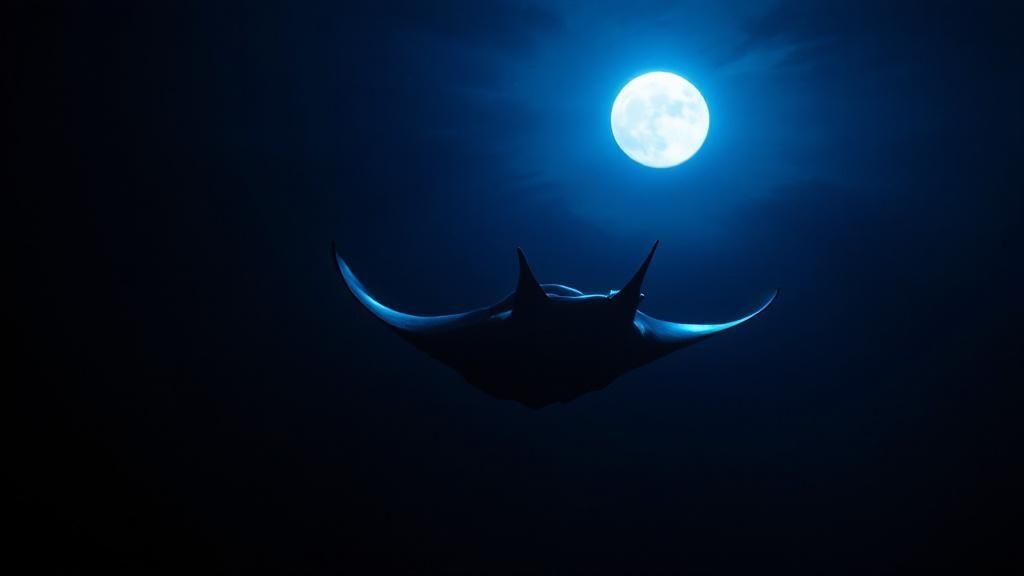
So what makes Kona the global epicenter for manta ray encounters? It really comes down to a perfect storm of reliable sightings, easy-to-reach dive sites, and the sheer spectacle of it all. While other places might have you hoping for a chance encounter at a "cleaning station," Kona is more like a massive, open-invitation underwater buffet.
The local dive operators have figured out a system that’s a win-win for both divers and the mantas. They shine incredibly bright lights into the water, which draws in huge clouds of plankton—the mantas' favorite meal. The rays, knowing a free feast when they see one, show up almost every night. They perform these breathtaking barrel rolls and swooping glides, sometimes just inches away from the divers and snorkelers watching in awe.
Kona's Famous Manta Hotspots
Two spots, in particular, have become legendary in the diving community for this nightly performance: Manta Village and Manta Heaven.
- Manta Village (Keauhou Bay): This is the original site. It's known for its calmer, shallower water, which makes it a fantastic choice for divers and snorkelers of all experience levels.
- Manta Heaven (Keahole Point): You'll find this site up near the airport. It's often a bit deeper and can attract bigger groups of mantas, sometimes making for an even more dynamic and action-packed show.
The Kona Coast has become so famous for this that it draws around 80,000 snorkelers and divers every single year, all coming for a chance to see this natural wonder. This incredible draw has cemented Kona's status as a world-leading destination for sustainable marine tourism. It’s one of the few places on Earth where you can reliably expect to see 8 to 12 mantas on any given night. You can find out more about what makes Kona's manta ray dive so unique.
This is so much more than just a dive; it’s a front-row seat to one of nature’s most elegant and awe-inspiring performances. Ready to see it for yourself?
Choosing the Best Time and Location for Your Dive
Timing is everything when you're planning an unforgettable manta ray dive in Kona. The good news? The mantas you’ll meet are locals. They don’t migrate, so they hang out in Kona’s waters all year long. That means any month can be a great month to dive with them.
That said, certain factors can turn a great dive into a truly spectacular show. Plankton—their favorite meal—can be more abundant at certain times, drawing in more mantas. The water is also warmest from April to October, hovering between a comfortable 75 to 80°F, which often lines up with periods of higher manta activity. If you want to dive deep into the seasonal patterns, check out our guide on the best time of year to see manta rays in Kona.
Manta Village vs. Manta Heaven
Beyond picking the right time of year, your choice of location is probably the biggest decision you'll make. Kona is world-famous for two primary manta ray sites: Manta Village and Manta Heaven. Each offers a completely distinct experience.
Manta Village, nestled in the calm waters of Keauhou Bay, is the original manta ray hangout. It’s relatively shallow and protected, making it a fantastic choice for divers of all skill levels, especially if you're new to night diving. The consistent sightings here have made it a reliable favorite for decades.
On the other hand, there’s Manta Heaven. Located near the Kona Airport at a site also known as Garden Eel Cove, this spot offers a different kind of thrill. The water is often a bit deeper, and the site can attract massive groups of mantas, leading to a much more dynamic, action-packed dive. This location tends to be a hit with more experienced divers who are comfortable with potentially more challenging conditions.
Before we dive deeper, here's a quick comparison to help you see the differences at a glance:
Manta Ray Dive Site Comparison
| Feature | Manta Village (Keauhou Bay) | Manta Heaven (Keahole Point) |
|---|---|---|
| Typical Depth | 25-40 feet (Shallow) | 30-50 feet (Deeper) |
| Conditions | Very calm and protected | Can be more exposed, potential for current |
| Best For | All skill levels, first-time night divers | Intermediate to advanced divers |
| Atmosphere | Reliable, serene, intimate | Dynamic, high-energy, "big show" feel |
| Manta Numbers | Consistent, but often fewer rays | Can attract very large groups |
| Bottom | Sand and coral patches | Sandy bottom with a "campfire" of rocks |
So, what's the takeaway? It really comes down to what you're looking for.
The key difference is the vibe. Manta Village offers a predictably beautiful and serene experience. Manta Heaven, however, can deliver a truly breathtaking spectacle with huge numbers of mantas—an absolute dream for underwater photographers.
Are you hoping for a calm, almost guaranteed encounter? Or are you chasing a more dramatic show with bigger numbers?
Here at Kona Honu Divers, we have years of experience at both locations. We take the guesswork out of it by choosing the best site for the conditions on any given night. Our goal is simple: to maximize your chances of having an incredible, once-in-a-lifetime encounter.
No matter which site you end up visiting, the experience is bound to be magical. Seeing these majestic creatures perform their underwater ballet is something you’ll carry with you forever.
How to Select a Safe and Responsible Dive Operator
The quality of your manta ray dive in Kona hinges almost completely on the company you go with. I can't stress this enough. Choosing the right operator isn't just about booking a spot on a boat; it's about your safety, supporting conservation, and getting an experience that will stick with you for a lifetime.
Frankly, not all operators are created equal, so doing a bit of homework upfront pays off big time. When you start looking into companies, think of yourself as an investigator. A good, reputable operator will be an open book, happy to answer your questions. This is your moment to get a real feel for their professionalism and how much they truly care about their customers and the ocean itself.
Key Questions for Your Dive Operator
Before you pull out your credit card, take a few minutes to ask some pointed questions. Their answers (or lack thereof) will tell you everything you need to know about their standards.
- What’s your guide-to-diver ratio? A smaller group is always better. A ratio like one guide for every six divers means you get more personal attention and a much safer dive.
- How much experience do your guides have at the manta sites? Local knowledge is priceless. A seasoned guide knows manta behavior inside and out and can adjust to changing conditions on the fly to make sure you have an incredible dive.
- What are your safety protocols? Don't be shy about this one. Ask about their emergency plans, the safety gear on board, and how they brief divers before anyone even touches the water.
- Do you follow the Manta Ray Tour Operator Standards? This is a big one. Responsible companies follow strict guidelines designed to protect the mantas, like rules against touching or chasing them.
Choosing an operator that lives and breathes these standards is non-negotiable. A fantastic example of a company that gets it right is Kona Honu Divers. They're known for their top-notch guides, an impeccable safety record, and a genuine, unwavering commitment to manta ray conservation. Their reputation in the Kona community really does speak for itself.
The Bigger Picture of Responsible Tourism
Your choice makes a difference that goes way beyond your own dive. The manta ray tourism industry here in Kona brings in over $2.5 million every year from nearly 80,000 visitors. That money creates a powerful reason to protect these animals, proving that they are worth so much more alive and thriving.
When you spend your money with operators who act as true guardians of the ocean, you're directly helping to protect this amazing ecosystem for years to come. Find out more about Hawaii's manta ray conservation efforts to see the great work being done.
By choosing a dive operator committed to sustainability, you're not just a tourist; you become a partner in conservation. Your decision helps ensure the long-term health of Kona's manta ray population.
Ready to see this incredible underwater ballet with a crew you can trust? Check out the details of a top-tier manta ray dive tour and see for yourself what sets a responsible operator apart from the rest.
Preparing for Your First Manta Ray Night Dive
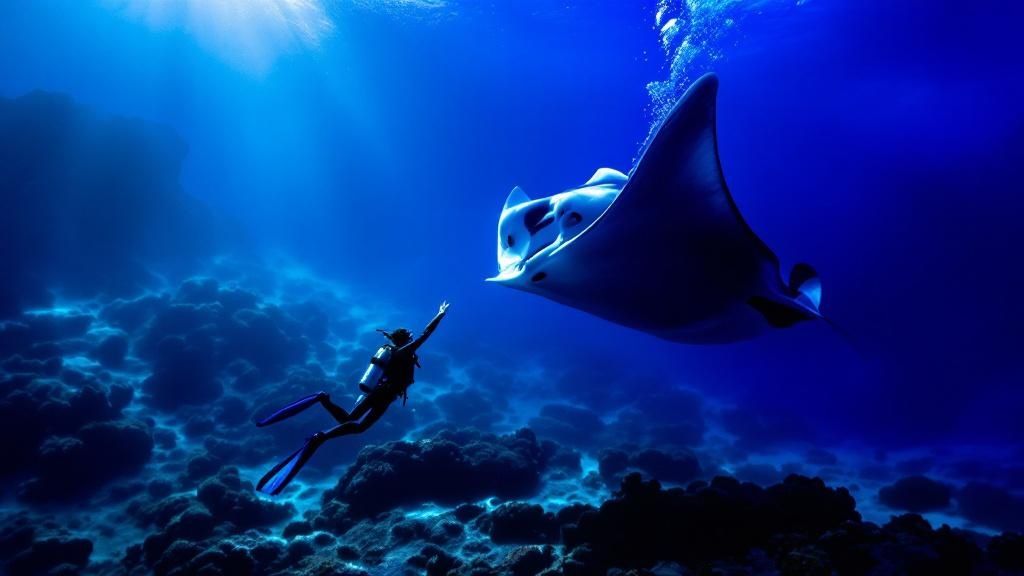
A successful manta ray dive in Kona really begins long before your fins ever touch the water. Solid preparation is what turns a good dive into an absolutely unforgettable, stress-free adventure. When you know what's coming and have the right gear, you can stop worrying and just focus on the incredible underwater ballet about to unfold.
Your evening will kick off with a detailed pre-dive briefing from your guides. This part is crucial, so listen up! You'll learn all about manta ray behavior, the specific safety rules for the dive, and the game plan for the night. After the briefing, it’s a boat ride out to the dive site, usually timed perfectly to get you there right around twilight.
Once the sun dips below the horizon, you'll gear up and make your descent to the sandy ocean floor. The depth is pretty comfortable, typically around 30-40 feet. Down there, you'll see divers getting arranged around a massive, powerful light source that we affectionately call the "campfire." This light is the dinner bell, attracting swarms of plankton and setting the stage for the mantas to arrive.
Essential Gear and Comfort
Your dive operator will handle the heavy stuff like tanks and weights, but there are a few personal items you’ll want to bring to make the experience much more comfortable. The big one is a wetsuit. Even in Hawaii's warm waters, you're going to be sitting pretty still for about 45 minutes at night. A 3mm or 5mm wetsuit is what we strongly recommend to keep the shivers away.
A good dive light is also a must-have, but don't worry—your operator will almost certainly provide this. The lights we use are specifically designed to be pointed straight up, creating that column of light that draws in the plankton. Unless you're a serious photographer with a specific lighting rig, you can leave your personal light at home.
The single most important piece of 'gear' you can bring? A calm and respectful attitude. This whole experience is about passive observation. We let the mantas come to us. By staying still and relaxed on the bottom, you become part of the scenery for their amazing feeding display.
Managing Night Dive Anxiety
For a lot of divers, this might be their first time in the water after dark, and it's totally normal to feel a little nervous. The darkness can feel a bit strange at first, but modern dive lights are incredibly powerful and create a big, well-lit bubble for the group. Just stick close to your guide and your buddy, and remember to take slow, deep breaths.
You're in a controlled environment with seasoned professionals whose number one job is to keep you safe. Trust me, the moment you see that first massive manta ray glide silently overhead, any butterflies you had will disappear and be replaced by pure awe. You can get a full rundown of the manta ray night dive experience and what to expect from beginning to end on our site.
Being prepared is the key that unlocks your ability to fully soak in one of the most magical underwater encounters on Earth.
Your Role in Manta Ray Conservation
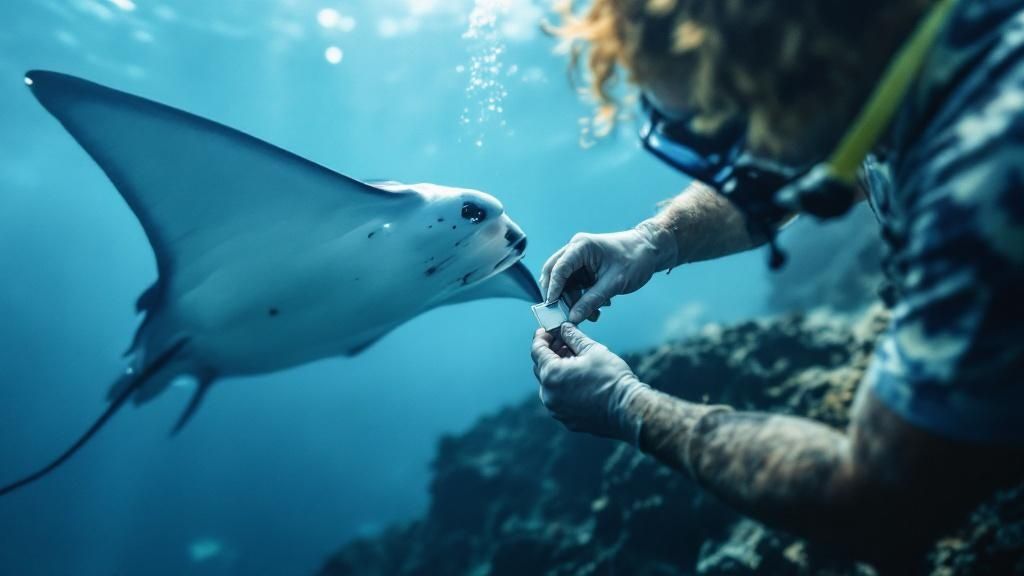
The manta ray dive in Kona isn't just another checklist item for thrill-seekers; it's a real, up-close interaction with a protected species. When you slip into that dark water, you're stepping into their world as a guest. And with that privilege comes a big responsibility to keep their home safe and undisturbed. How you act on this dive has a direct impact on this incredible ecosystem.
The golden rule is passive interaction. It's a simple idea: you become part of the scenery, not an active player in the show. Your job is to find a spot on the sandy bottom, get comfortable, and just watch the magic unfold above you. The mantas are naturally curious, but it's crucial they're the ones who decide to come closer.
The Golden Rules of Manta Ray Interaction
To keep both divers and mantas safe, the dive community here in Hawaii has a strict set of rules. Following them isn't optional—it's what makes this amazing experience sustainable for years to come.
- Observe Only, Never Touch: Manta rays are covered in a protective mucous layer that acts like a shield against infection. Touching them scrapes this off, making them vulnerable to disease.
- No Chasing or Riding: Seriously, don't chase them. Let the mantas control the entire encounter and move freely. Chasing them just makes them feel threatened and stressed.
- Maintain Your Position: As a diver, your place is on or near the ocean floor. This keeps the water column wide open, giving the mantas all the room they need for their beautiful, swirling feeding ballet.
By following these simple guidelines, you transform from a mere spectator into a guardian of the reef. Your respectful behavior ensures that the Kona manta ray dive remains a magical and ethical experience for generations to come.
This commitment to conservation goes well beyond what happens in the water. Local groups and dedicated operators like Kona Honu Divers are deeply involved in ongoing research. Since 2009, an amazing citizen science project has been tracking individual manta rays using their unique belly spot patterns—it's like a fingerprint for each ray. This incredible effort has built a catalog of over 330 identified mantas and logged nearly 28,500 sightings. This data is priceless for understanding their population and behavior.
When you book a tour with a responsible operator, you're directly supporting these vital conservation initiatives. It makes every diver a small but important part of the effort to protect these gentle giants.
Don’t Stop at the Mantas: Exploring Kona’s Other World-Class Dives
Look, the famous manta ray dive in Kona is an absolute must-do, no question. But it’s just the opening act for the underwater adventures the Big Island has to offer. The same incredible coastline that hosts the manta ballet is also home to a spectacular lineup of other world-class dives, and each one shows you a totally different side of Hawaii's marine life.
Think of the manta dive as the headliner. These other dives? They're the incredible encore performances you'll be talking about for years. From bizarre deep-water creatures to epic volcanic landscapes, exploring these other sites adds serious depth to your Kona dive trip.
The Mysterious Kona Blackwater Dive
For a dive that feels less like scuba and more like a trip to another planet, you have to try the Kona Blackwater Dive. You'll drift tethered in the deep, dark ocean miles offshore, watching the weird and wonderful creatures that rise from the abyss every night. We're talking about species you will never see on a reef—translucent squid, alien-like jellies, and bizarre larval fish that look like something out of a sci-fi movie.
Advanced Dives and Lava Tubes
If you're an experienced diver hunting for a challenge, Kona's advanced sites are calling your name. These trips are all about exploring the dramatic underwater landscapes carved by ancient volcanoes, full of stunning lava tubes and massive archways. On these dives, it’s not uncommon to run into sharks, pods of dolphins, and huge schools of fish. Check out our premium advanced dive charters to see what kind of adventure is waiting for you.
Kona’s diverse underwater terrain is what makes it so special. You can have a graceful, silent encounter with giant mantas one night and be navigating a rugged, ancient lava tube the very next morning. Every dive gives you a completely different, but equally breathtaking, view of the island.
From the world-famous manta experience to deep-water explorations, you can discover all the amazing scuba diving tours in Kona we offer. And for those of you with an adventurous spirit who like exploring from the coast, don't miss our guide on the best shore diving sites in Kona, Hawaii.
Common Questions About the Kona Manta Ray Dive
Even after doing all the research, it's totally normal to have a few last-minute questions buzzing around your head before you commit to a manta ray dive in Kona. We get it. Let’s tackle some of the most common things people ask, so you can feel confident and excited about your upcoming adventure.
Do I Need to Be a Certified Diver?
Nope! That's one of the best parts about this whole experience—it’s incredibly accessible. While certified scuba divers get to experience the show from the ocean floor, snorkelers get an equally breathtaking view from the surface.
You’ll hang onto a specially designed floatation board equipped with bright lights. From there, you just watch as the mantas perform their beautiful, swirling ballet just a few feet beneath you.
What Happens If No Mantas Show Up?
Look, these are wild animals, so nobody can offer a 100% guarantee. That said, manta sightings in Kona are unbelievably consistent, with a success rate of over 90% all year long. It’s one of the most reliable wildlife encounters on the planet.
Still, the best operators, including Kona Honu Divers, know that nature sometimes has other plans. Most have a "manta guarantee." If your trip is one of the rare ones where the mantas don't make an appearance, you can usually re-book for another night on the house.
Pro Tip: Always try to book your manta dive early in your vacation. This gives you a nice buffer to reschedule if you happen to get unlucky on your first night out.
Is the Manta Ray Dive Safe?
Absolutely. It’s easy to see their massive size and feel a little intimidated, but manta rays are true gentle giants. They’re filter feeders, dining exclusively on tiny plankton, and they have no teeth, no barbs, and no stingers. They are completely harmless to humans.
The real focus on safety is all about protecting the mantas and their environment. As long as you listen to your guide’s instructions and remember the golden rule—never, ever touch a manta ray—you're ensuring a safe and magical experience for yourself and for the animals.
If you want to dive a bit deeper into what makes this underwater encounter so special, check out our article explaining why you should go on a manta ray dive in Kona. It really breaks down what makes this a must-do, bucket-list adventure.
Ready to book an unforgettable night with Kona's gentle giants?
At Kona Honu Divers, we're committed to providing a safe, ethical, and awe-inspiring adventure. Join our experienced crew for the manta ray night dive of a lifetime. Explore our manta ray dive tours and book your spot today.