
Of all the underwater experiences in the world, few can match the magic of Kona’s manta ray night dive. It's a genuine, up-close encounter with massive, gentle giants, and it happens right here off the Big Island. We’re incredibly lucky; this is one of the most reliable places on the planet to see these animals, with a success rate of over 85%. This isn’t just another dive—it’s a memory you’ll carry with you forever.
A Nighttime Underwater Ballet in Kona
Picture this: you slip into the warm, dark Pacific just as the last glow of sunset disappears. Down below, a circle of powerful lights sits on the ocean floor, creating what we call the "manta campfire." This bright beacon immediately starts attracting swarms of plankton, the microscopic critters that manta rays absolutely love to eat.
Then, the show truly begins.
Huge, ghost-like shapes materialize from the darkness, some with wingspans stretching more than 12 feet across. These are Kona's resident manta rays, and you have a front-row seat to their nightly feast. They glide, swoop, and barrel roll just inches over your head, their enormous mouths open to filter the plankton-rich water. It’s a silent, hypnotic underwater ballet—the heart of the manta ray dive kona experience. The feeling is both otherworldly and deeply personal, creating a moment you won't soon forget.
Why Kona is the Global Manta Capital
So, what makes Kona the undisputed capital for manta encounters? It's all about consistency. The Kona coast is home to one of the world's largest and most studied manta ray populations, with local researchers having identified over 450 individual rays by their unique belly spots. This incredible reliability is thanks to nutrient-rich currents that serve up a dependable, year-round plankton buffet, drawing the mantas to the exact same spots, night after night.
The dive itself is surprisingly accessible, usually taking place in shallow water between 30 and 40 feet deep. It's this perfect mix of rich marine life, easy conditions, and an 85% to 90% success rate that cements Kona's reputation. You can get more great info on Kona's manta population over on the Kona Honu Divers' blog.
This isn't just a tourist dive; it’s a chance to connect with one of the ocean's most magnificent creatures. Whether you're a seasoned diver or trying snorkeling for the first time, seeing this natural wonder is an adventure you simply can't miss. Ready to see the show for yourself? Check out the best manta ray dive tours and book a spot for this incredible night.
Choosing Your Adventure: Dive or Snorkel
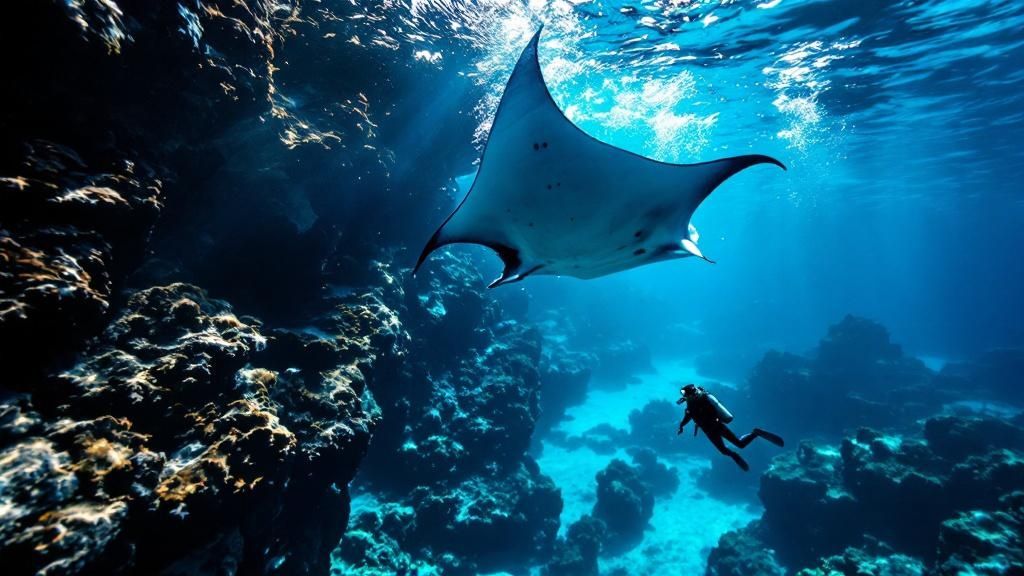
One of the best things about the Kona manta ray experience is just how accessible it is. You don’t need to be a certified scuba diver to witness the nightly underwater ballet. There are two incredible ways to join the show: as a scuba diver on the ocean floor or as a snorkeler floating at the surface. Each offers a unique and equally breathtaking perspective.
So, how do you choose? It really comes down to your comfort level in the water, your certifications, and what kind of view you're hoping for. Both options put you smack in the middle of the action, guaranteeing a memorable encounter with these gentle giants. The only real difference is your vantage point—looking up from below or looking down from above.
The Scuba Diving Experience
For certified divers, the manta ray dive kona offers a truly immersive perspective. It’s the classic way to do it. You’ll descend to a sandy patch on the ocean floor, usually around 30-40 feet, and settle in with other divers at a designated viewing spot. This is what we call the "manta campfire."
From down there, you look straight up as the manta rays glide, swoop, and perform barrel rolls just inches above your head. It’s a humbling, awe-inspiring view, like watching giant, graceful aircraft maneuver in slow motion against a dark sky. You're right there at their level, feeling the full scale of their massive wingspans silhouetted against the surface lights.
You do need to be a certified scuba diver to join this tour. If you’re not certified yet but have your heart set on it, Kona has plenty of excellent courses. Our 2-Tank Manta Ray Dive is a popular choice, combining a beautiful afternoon reef dive with the main event after sunset.
The Snorkeling Experience
Not a diver? No problem at all. The snorkeling experience is just as spectacular and thrilling. You'll be given a custom-built, high-flotation light board to hold onto. These boards shine powerful beams down into the water, attracting the plankton that the mantas feed on. You just float comfortably at the surface and watch the magic unfold right below you.
The mantas swim right up to the lights to feed, often coming just a few feet from the board with their enormous mouths wide open. Honestly, for many people, this view feels even more intimate because the mantas are drawn directly to the light source you're holding onto.
This option is perfect for:
- Families with kids or teens.
- Anyone who isn't scuba certified.
- People who simply prefer to stay at the surface.
The whole thing is incredibly safe and well-managed. You aren't just swimming around freely in the dark. You stay with your group at the light board, which gives you a stable and secure spot to watch the entire show.
Dive vs. Snorkel: A Quick Comparison
Still on the fence? Let's break down the key differences to help you decide. There’s really no wrong choice here—both are amazing. It's just about finding the one that’s right for you.
To help you decide, here's a quick comparison of the two experiences:
Manta Ray Scuba Dive vs Snorkel Experience
| Feature | Scuba Diving | Snorkeling |
|---|---|---|
| Perspective | Looking up from the ocean floor | Looking down from the surface |
| Skill Level | Certified Diver Required | No experience necessary |
| Proximity | Mantas glide inches overhead | Mantas feed feet below |
| Equipment | Full scuba gear (tank, BCD, etc.) | Mask, snorkel, fins |
| Best For | Certified divers wanting an immersive view | All ages, non-divers, families |
Ultimately, whether you choose to dive or snorkel, you are guaranteed a front-row seat to one of the most magnificent wildlife encounters on the planet. Both adventures are offered by top-tier operators like Kona Honu Divers, who ensure a safe, respectful, and unforgettable trip. Ready to explore all your options? Check out their full range of Kona diving tours to find your perfect fit.
What to Expect on Your Manta Ray Tour
Going on a manta ray adventure in Kona is one of the most incredible experiences you can have, but it’s natural to have a few questions. Knowing the flow of the trip beforehand can turn any pre-dive jitters into pure excitement. When you go with a top-notch operator like Kona Honu Divers, you're signing up for a smooth, professional, and unforgettable night from start to finish.
Let's walk through what the whole experience is like.
Your adventure kicks off at the harbor, where you’ll meet the friendly, seasoned crew. After a quick check-in, they’ll gather everyone for a pre-dive briefing. This isn’t just your standard safety checklist; it’s a genuinely fascinating look into the world of manta rays. The guides will cover all the essential safety protocols, explain proper "manta etiquette" for a respectful encounter, and share some amazing facts about the very mantas you’re about to meet. It really sets the stage for a responsible and awe-inspiring trip.
With the briefing done and gear stowed, you’ll head out on a comfortable boat as the Hawaiian sun starts to dip toward the horizon. The ride out to the site is part of the magic. The salt spray, the stunning Kona coastline, and the palpable energy from your fellow adventurers create a real sense of anticipation. The crew uses this time to answer any last-minute questions and make sure everyone feels totally ready.
Gearing Up for the Main Event
As dusk paints the sky in shades of orange and purple, you'll arrive at the manta site. The crew moves with practiced efficiency, helping everyone get into their gear. Whether you’re a diver setting up your BCD and regulator or a snorkeler getting fitted for a mask and fins, the process is seamless.
This is the moment the thrill really hits. You'll take that final step off the boat and slip into the warm, dark Pacific. The feeling is immediate—the muffled sounds of the ocean, the gentle bobbing of the waves, and the incredible glow of the underwater lights creating the "manta campfire" on the seafloor below.
Once you’re in position—settled on the sandy bottom as a diver or holding onto a custom light board as a snorkeler—the real show is about to begin. There's a moment of quiet anticipation as your eyes adjust, scanning the deep blue for the first hint of movement.
The professionalism of the crew is huge here. Your guides are right there in the water with you, making sure everyone is safe, comfortable, and has the best possible view. Their calm presence lets you completely relax and soak it all in.
The Underwater Spectacle and Return Journey
And then, it happens. A massive, graceful shape emerges from the darkness, gliding effortlessly. Then another, and another. The mantas have arrived.
For the next 30 to 45 minutes, you are a spectator at the most breathtaking underwater ballet you can imagine. These gentle giants, with wingspans often stretching over 12 feet, perform barrel rolls and somersaults, swooping inches above the divers and just below the snorkelers to feed on plankton. It's a profoundly moving experience, completely silent except for the sound of your own breathing.
When the show winds down, you’ll head back to the boat, buzzing with awe and adrenaline. The ride back to the harbor under a sky full of stars is a special part of the trip. You'll trade stories and share pictures with new friends, all connected by the wild spectacle you just witnessed. Operators like Kona Honu Divers even provide warm snacks and drinks to make the cruise home that much better. To get an even deeper look at this incredible trip, check out our full guide to the manta ray night dive in Kailua-Kona.
The entire journey—from the informative briefing to the mind-blowing dive and the cozy ride home—is designed to be a five-star experience that’s safe, educational, and something you’ll never, ever forget.
The Science and Conservation Behind the Dive
This dive is so much more than just a cool underwater light show; it’s a living, breathing example of marine science and dedicated conservation in action. When you understand what's really happening beneath the surface, the whole experience transforms. It's not just a thrilling adventure—it's a real connection with one of the ocean’s smartest creatures.
The magic behind the dive is built on a really simple principle: light attracts plankton, and plankton is a manta ray’s favorite meal. For years, lights from the coastline (and now, from tour boats) have created a reliable buffet. This has allowed Kona's local manta population to thrive and given researchers an incredible window into their world.
What’s truly amazing is that every single manta ray has a unique pattern of black spots on its belly, just like a human fingerprint. This is the secret to a massive, long-running citizen science project. By taking photos of these spot patterns, divers, snorkelers, and scientists can identify and track individual mantas, giving them names and following their life stories.
A Legacy of Identification and Research
This whole identification effort officially kicked off back in 1991 with the first documented manta, a male named Lefty who was missing his left cephalic fin. Since then, it has blossomed into a massive database that's absolutely vital for monitoring the health, growth, and behavior of Kona's mantas. When you go on a tour, you're not just a bystander; you're contributing to this legacy.
The amount of data collected is just staggering. Researchers have logged over 6,000 reported encounters and more than 28,500 individual sightings over 14+ years. This has helped identify over 330 unique individuals, including both reef mantas (Mobula alfredi) and the much larger giant oceanic mantas (Mobula birostris). A dataset like this is incredibly rare, making Kona a global hotspot for manta ray research. These efforts are backed by a critical state law passed in 2009 that made it illegal to capture or kill manta rays in Hawaiian waters.
This science is exactly why picking the right tour operator matters so much. Eco-conscious outfits like Kona Honu Divers aren't just taking you for a swim; they are active partners in conservation. They stick to strict guidelines to make sure the mantas are never stressed, contribute their sighting data, and teach every guest how to interact with wildlife respectfully. The reasons to go on a manta ray dive in Kona are about so much more than the thrill—they go straight to the heart of marine preservation.
Your Dive Makes a Difference
Around the world, manta rays are in trouble. They face huge threats from getting tangled in fishing gear and being poached for their gill rakers. Because they reproduce very slowly, they are a vulnerable species, and their populations can decline quickly. But the sustainable ecotourism model here in Kona offers a powerful, positive alternative.
By participating in a manta ray tour, you are directly contributing to their survival. The revenue generated creates a powerful economic incentive to protect these animals and their habitat, demonstrating that a living manta ray is far more valuable than a dead one.
Your tour fee helps support local jobs, fund ongoing research, and strengthen the protective measures already in place. It's tourism being a genuine force for good. When you book a tour, you’re doing more than just buying a ticket to an incredible show—you’re casting a vote for conservation and becoming a guardian of Kona’s most famous underwater residents.
Comparing the Kona Manta Ray Dive Sites
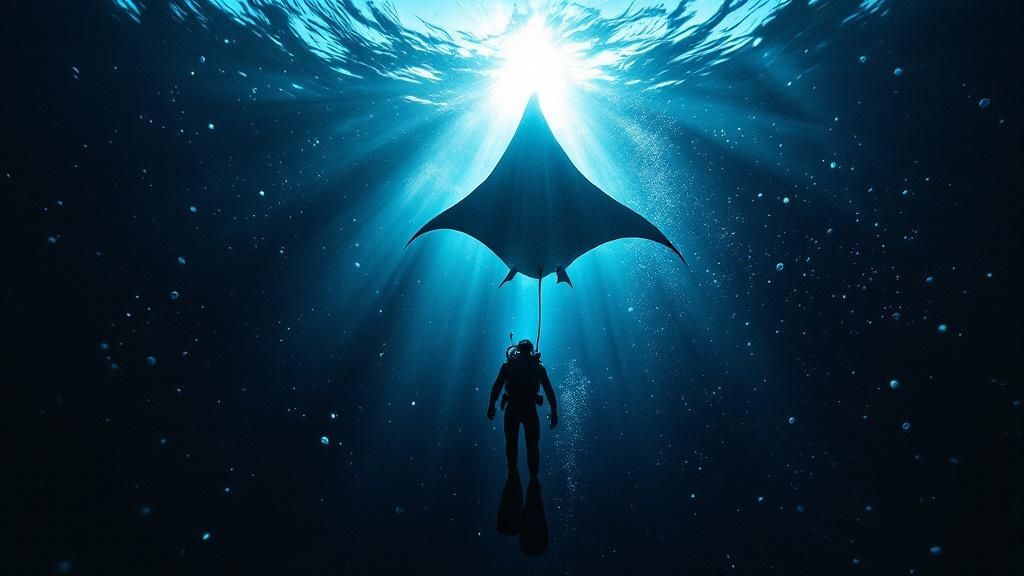
So, you're ready to book your Kona manta ray adventure. That's awesome. You'll quickly find out there are two world-famous spots where all the action happens: Manta Village and Manta Heaven. While both give you an insanely high chance of seeing mantas, each has its own vibe that can totally shape your night.
Knowing the difference helps you understand what to expect and, maybe more importantly, why your guide might pick one site over the other.
The basic idea is the same at both locations—powerful underwater lights create a massive plankton buffet, and the mantas show up for dinner. The final call on where to go often boils down to the ocean conditions for that specific evening, where the mantas have been hanging out lately, and where your tour boat leaves from.
Manta Village (Keauhou Bay)
This is the OG manta spot, often called the "original" site, located right offshore from the Sheraton Kona Resort & Spa. Its reputation is built on being super reliable and easy to get to.
- Calmer Waters: Being in a bay, it’s naturally more sheltered. That usually means calmer water and less current, which is perfect for first-time night divers, snorkelers, or families.
- Shallower Depths: The main viewing area is pretty shallow, typically around 25 to 35 feet. This is a huge confidence booster for new divers and gives snorkelers on the surface a killer, up-close view.
- High Success Rate: Manta Village is incredibly consistent, with a sighting success rate that often tops 95%.
Because it's so dependable and the conditions are generally milder, it’s the go-to for a lot of operators. Plus, if your tour leaves from Keauhou Harbor, it's a really short boat ride. To get a better feel for what makes a tour stand out, check out our breakdown of the top 5 manta ray night dive tours in Kona.
Manta Heaven (Garden Eel Cove)
A bit further north, just off the coast from the Kona airport, is Manta Heaven (you'll also hear it called Garden Eel Cove). It’s a top-tier site with its own distinct personality and a favorite for day dives, too.
This spot can sometimes be a little deeper and might have more of a current than Manta Village, which can be a fun challenge for more seasoned divers. But don't worry, conditions are checked daily, and it's often great for all skill levels. That slightly more dynamic environment can sometimes draw in even more mantas, making for a truly spectacular underwater ballet.
The impact of these sites is huge. Manta ray tourism in Kona brings in about 80,000 people every year, pumping over $2.5 million into the local economy annually. On any given night at either Manta Village or Manta Heaven, it’s totally normal to see 8 to 12 mantas. That's a direct result of the healthy, protected local population, thanks to a state law passed in 2009.
Ultimately, your captain makes the final decision. They live and breathe these waters and will always choose the site that promises the safest, most incredible experience based on that day's conditions and manta activity. Trust them.
No matter where you end up, you’re in for a night you'll never, ever forget.
Explore Other World-Class Kona Dives
The manta ray dive is an absolute showstopper, but for many divers, it's just the first taste of what the Big Island has to offer. Kona's volcanic underwater landscape is a playground packed with unique and thrilling dives that are genuinely world-class. Once you've experienced the manta ballet, you'll be itching to see what other wonders are hiding in the deep blue.
Your next great adventure could be the legendary Kona Blackwater Dive. Imagine this: you're drifting in the dead of night, miles offshore, suspended over thousands of feet of inky black water. This isn't a reef dive. It's an open-ocean, pelagic experience where you witness one of the planet's largest migrations. Bizarre, alien-like creatures and bioluminescent wonders rise from the abyss, putting on a spectacle that very few people ever get to see. This is a true bucket-list dive for anyone craving the extraordinary. You can learn more about it on our Blackwater Dive tour page.
Advanced Dives Through Volcanic Seascapes
For certified divers with a bit more experience, Kona's dramatic topography is a massive draw. The island’s volcanic roots have sculpted an underwater world of breathtaking structures just begging to be explored.
This is where you leave the sandy bottoms behind and start navigating intricate lava tubes, massive swim-through arches, and towering underwater pinnacles teeming with life. These advanced dives offer a completely different kind of thrill—a true sense of discovery as you explore complex formations carved by ancient lava flows.
These sites are often deeper and can present more challenging conditions, which makes them perfect for divers looking to sharpen their skills. You’ll get to explore remote spots that most visitors never lay eyes on. Kona Honu Divers runs specialized trips designed to showcase these incredible environments. If you’re up for the challenge, take a look at our advanced dive tour page for our premium charters.
These diverse options let you build a complete dive vacation that goes way beyond a single experience. The manta dive is rightfully the star of the show, but exploring Kona's other aquatic gems is what makes for a truly unforgettable Big Island adventure. Of course, not every amazing water activity requires a tank; you can also check out the top 10 Kona snorkeling spots to round out your trip.
Your Manta Ray Dive Questions Answered
As you get ready for this incredible adventure, it's totally normal for a few practical questions to pop into your head. Knowing what to expect is a big part of being able to relax and soak it all in. We get these questions all the time, so here are some quick, straightforward answers to help you prepare.
Is the Manta Ray Night Dive Safe for Beginners?
Absolutely. The main manta dive sites are actually quite shallow, usually around 30-40 feet, and they're tucked away in spots that are well-protected from any strong currents. Every reputable operator, including us at Kona Honu Divers, runs a detailed safety briefing and has expert guides right there in the water with you.
If you aren't certified or just feel more comfortable staying up top, the snorkeling option is just as breathtaking and completely safe. You'll hang onto a custom float board, letting you just float effortlessly and watch the underwater ballet from the best seat in the house.
What Is the Best Time of Year to See Manta Rays in Kona?
Honestly, any time is a great time. The Kona manta ray dive is a year-round spectacle with a success rate over 90%. Our local manta population doesn't migrate, so you can count on them being here every single month.
While the sightings are always fantastic, some people prefer the warmer water months from April to October. That said, diving in the winter is just as magical and often comes with the bonus of fewer crowds.
A pro tip from us: try to book your manta tour for early on in your trip. On the very rare night the mantas are a no-show, most companies will let you re-book for free. This gives you a second chance for this amazing experience.
Can I Touch the Manta Rays?
No, and this is a big one. It's absolutely critical that you never touch the manta rays. Our skin has oils that can strip away their protective mucous coating, which is like their immune system. Damaging it leaves them vulnerable to nasty infections.
All responsible tour operators enforce a strict "passive observation" policy. The real magic isn't in touching them, but in letting these gentle giants decide to glide inches above your head. It's an interaction that happens completely on their terms, and it's so much more powerful that way.
What Should I Bring on My Manta Ray Tour?
We've got you covered on all the essential dive or snorkel gear. All you really need to worry about are a few personal items to make your trip more comfortable.
- A swimsuit (it’s easiest to just wear it under your clothes)
- A towel to dry off
- Something warm like a jacket or sweater for the boat ride home
- Motion sickness medicine, if you know you're prone to it
The most important thing to bring is your sense of adventure! To get a real feel for what the night is like, check out our post on what it's like to go on the manta ray dive in Kona.