
Ask any seasoned diver about their most unforgettable underwater moments, and you'll hear the Kona manta ray dive mentioned time and time again. It’s legendary for a reason. This isn't just another dive; it's a world-renowned experience where you get a front-row seat to one of nature's most graceful spectacles. Interested in other diving tours on the Big Island?
The concept is simple but brilliant: operators use powerful underwater lights at night to attract clouds of plankton, and the giant, gentle manta rays show up for an easy meal. For anyone visiting Hawaii's Big Island, it's more than just a tour—it's an absolute bucket-list essential.
What Makes the Kona Manta Ray Dive So Special?
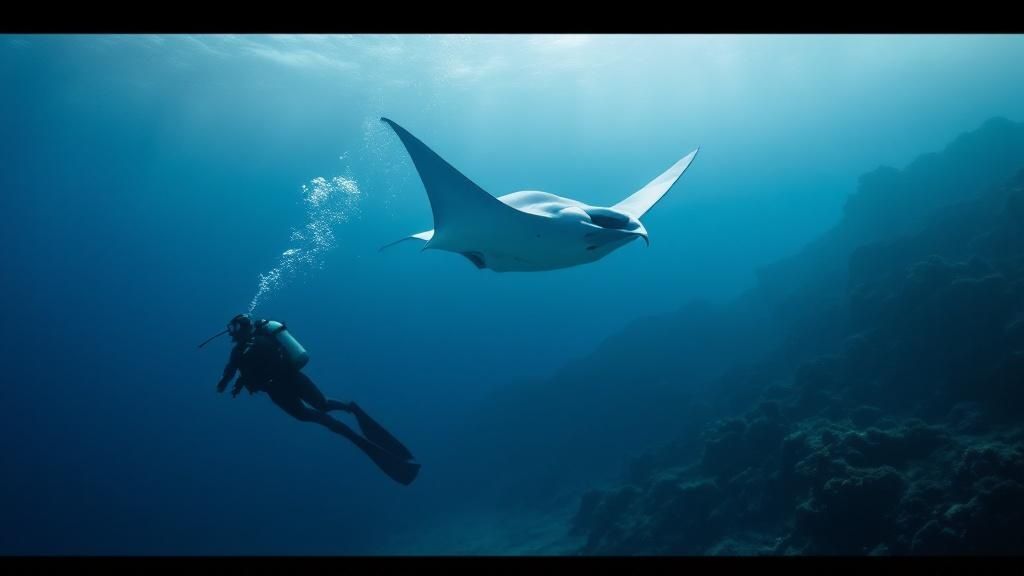
Picture this: you slip into the warm, dark Pacific as the sun sets. Your light cuts through the water, revealing a sandy bottom below. The dive team sets up a "campfire" of light, a beacon that pulls in swarms of microscopic plankton. Then, the magic begins.
Shadowy figures emerge from the deep, gliding effortlessly into the illuminated stage. These are Kona's resident reef manta rays, majestic creatures with wingspans that can reach an incredible 12 feet or more. What follows is nothing short of an underwater ballet. They swoop, glide, and perform mesmerizing somersaults, their huge mouths open to filter the plankton-rich water. It’s a breathtaking, almost surreal performance happening just inches from your mask.
A Uniquely Reliable Encounter
Many wildlife encounters are a roll of the dice, dependent on seasons and migratory luck. Not this one. The manta rays here are year-round residents, which makes the manta ray dive in Kona one of the most dependable wildlife experiences on the planet. Most operators boast sighting success rates of over 90% because we're tapping into a consistent, nightly feeding behavior.
What truly elevates this dive is how we interact with the mantas—or rather, how we don't. The entire experience is built around passive observation, ensuring the animals are never disturbed.
- For divers, this means settling quietly on the sandy ocean floor and pointing your light straight up.
- Snorkelers float on the surface, holding onto a custom light board that shines down.
This two-pronged approach creates a brilliant column of light, a concentrated plankton buffet that the mantas can't resist. This method is the key. It fosters a profound, respectful connection where we become part of their environment without interfering. It's this beautiful blend of reliability and ethical interaction that turns a great dive into a memory that will stick with you for a lifetime.
You can learn more about the specifics of our manta ray night dive in Kailua-Kona and how we prioritize both your safety and an incredible show. You can even book your manta ray dive tour with us.
Choosing Your Ideal Manta Ray Dive Site in Kona
When you start planning your manta ray dive in Kona, one of the first things you'll realize is that you have a choice to make. The Big Island is world-famous for its incredibly reliable manta sightings, but the two main spots where the magic happens offer surprisingly different experiences. Knowing the difference is the key to picking the dive that fits your comfort level and what you're hoping to see.
Your choice boils down to two legendary locations: Manta Village in Keauhou Bay and Manta Heaven near the airport. Think of it as choosing between a cozy, intimate theater and a grand, dynamic concert hall. Both put on an unbelievable show, but the vibe and the action are totally unique. Let's break them down so you can find your perfect match.
Manta Village (Keauhou Bay): The Classic Experience
Manta Village, just a short boat ride south of Kailua-Kona, is the original. This is where the world-famous manta ray night dive was born. It's known for being relatively shallow, with the sandy bottom typically between 25-35 feet, and the bay's natural geography often protects it from the bigger ocean swells.
This protection creates a much calmer environment, making it the go-to spot for first-time night divers, snorkelers, and families who want a gentle introduction to this incredible spectacle.
The whole setup is often called the "manta campfire." Divers settle into a semi-circle on the sand, pointing their lights up to create a massive column of light. This light attracts the plankton, and the mantas swoop in for dinner, often doing graceful barrel rolls right over your head. It’s an absolutely classic and reliable way to experience the magic.
Manta Heaven (Garden Eel Cove): The Photographer's Choice
A bit further north, near the Kona airport, you’ll find Manta Heaven. This spot offers a slightly different, more dynamic kind of adventure. The site is a little deeper, with the action happening around 35-45 feet, and it can sometimes be more exposed to ocean currents.
Because of this, it's a huge favorite among more experienced divers and underwater photographers looking for those epic, wide-angle action shots.
Those currents can change the way the mantas behave. Instead of leisurely somersaults, you might get more "fly-by" action, where the mantas cruise through the light beams in a powerful, linear path. This can lead to some breathtakingly close passes that will get your heart pounding. The two main Kona manta ray dive locations each provide a unique flavor of this amazing encounter, cementing the Big Island's reputation as the best place on the planet for it.
No matter which location you feel is right for you, going with a top-tier operator like Kona Honu Divers is crucial. Their experienced crew knows these sites inside and out and will make sure your trip is safe, respectful, and unforgettable.
Comparing Kona's Manta Ray Dive Sites
To make your decision even easier, here’s a quick side-by-side look at the two primary manta locations.
| Feature | Manta Village (Keauhou Bay) | Manta Heaven (Garden Eel Cove) |
|---|---|---|
| Location | South of Kailua-Kona | North of Kona, near the airport |
| Depth | 25-35 feet (Shallow) | 35-45 feet (Deeper) |
| Conditions | Generally calm and protected | Can have stronger currents |
| Best For | Beginners, snorkelers, families | Experienced divers, photographers |
| Manta Behavior | "Campfire" style with somersaults | "Fly-by" style with close passes |
| Atmosphere | Intimate and predictable | Dynamic and exhilarating |
Ultimately, there's no wrong answer here. Both Manta Village and Manta Heaven deliver a world-class manta ray dive tour that will leave you speechless. It all comes down to the kind of underwater adventure you're looking for.
How to Prepare for Your Manta Ray Night Dive
Getting ready for your manta ray dive is simple, but knowing what’s coming is the key to truly soaking in the magic. This whole experience is built around being safe and responsible, and a little preparation lets you relax and just enjoy the show once you're in the water.
A top-notch operator like Kona Honu Divers takes care of all the heavy lifting. They’ll have all your gear ready to go—high-quality wetsuits, dive equipment, and the powerful underwater lights that make the whole thing possible. Honestly, all you need to think about is bringing a towel, some warm, dry clothes for the boat ride back, and any personal odds and ends.
The Famous 'Manta Campfire' Explained
The secret sauce behind the Kona manta experience is a brilliantly simple setup we call the "manta campfire." It’s a passive way to get an incredible, up-close view without ever bothering the animals. Here's how it works:
- Divers settle down in a group on the sandy ocean floor. From there, they shine their powerful lights straight up toward the surface.
- Snorkelers float up top, holding onto a custom-built raft that also has lights pointing down into the water.
When you put all those light beams together, you get one giant beacon. This light attracts swarms of plankton—the mantas' favorite food—which basically creates a massive, glowing dinner buffet. The mantas then swoop, glide, and barrel roll through this plankton feast while we get a front-row seat. It's the core of what makes the Big Island Manta Ray Night Dive so special and ethical.
This hands-off approach means the mantas are always in charge. We're just guests in their world, watching them do their thing without interrupting their natural feeding behavior. And since your adventure starts and ends on a boat, brushing up on general safe boating practices can make your whole trip smoother and more enjoyable.
Why Your Guide's Briefing is So Important
The most critical part of your prep work happens right there on the boat, just before you hit the water. Your dive guide will walk you through everything, from safety checks to the rules of engagement with the mantas. Listen up, because this part is crucial.
Following your guide's instructions isn't just about safety—it's about respect for the animals and making sure everyone on board has an unforgettable experience. They'll tell you exactly where to go, how to aim your light, and the number one rule: never, ever touch a manta ray.
This briefing turns a boat full of individuals into a coordinated team, all working together to create the perfect, welcoming environment for the mantas. When you listen carefully and follow the plan, you become an active part of what makes this world-famous dive so successful and sustainable.
The Science Behind Kona’s Manta Ray Phenomenon
Ever wondered why the manta ray dive in Kona is so unbelievably consistent? It’s not just a lucky break. It's a perfect storm of geography and biology that turns the Kona coast into a dependable, all-you-can-eat buffet for these gentle giants. The real magic is baked right into the underwater landscape.
The Hawaiian Islands are volcanic, and the Kona coast sits in the "lee," or sheltered side, of the enormous Mauna Loa and Hualālai volcanoes. This unique geography shields the coastline from the powerful trade winds, leaving us with remarkably calm and clear water almost all year long. And those placid conditions are the perfect breeding ground for a crucial ingredient: plankton.
Deep offshore, nutrient-rich currents well up from the abyss, delivering a constant supply of food. This fuels massive, concentrated blooms of zooplankton. For filter-feeding manta rays, this is like having a five-star restaurant that simply never closes. With so much food around, a resident population of reef mantas calls Kona home year-round, meaning they don't have to migrate to find their next meal.
A Living Laboratory
This reliable food source and resident manta population have done more than just create a great dive spot; they’ve transformed the area into a premier destination for marine biologists. The consistent sightings offer an incredible opportunity to study manta ray behavior, their social lives, and their life cycles right in their natural habitat.
The relationship here is powerful. Tourism provides the platform and much-needed funding for research. In turn, scientific discovery deepens our understanding and appreciation of the animals, which leads to better conservation. Every single dive contributes to a massive database that helps us protect these incredible creatures.
This whole natural setup is what leads to one of the most amazing parts of diving here: the ridiculously high success rate. At the main dive sites, the monthly sighting numbers are consistently impressive, with a success rate for encounters hovering around a fantastic 80-90% all year. It's no wonder the plankton buffet attracts not only mantas but also an estimated 80,000 snorkelers and divers every year. You can discover more about the reliability of these encounters here.
Understanding this science is what makes the experience so much more profound. You aren't just watching a random, lucky event; you're seeing a thriving, dynamic ecosystem firing on all cylinders. Learning about the science behind the manta ray in Kona turns a spectacular dive into a genuinely educational adventure.
How Your Dive Supports Manta Ray Conservation
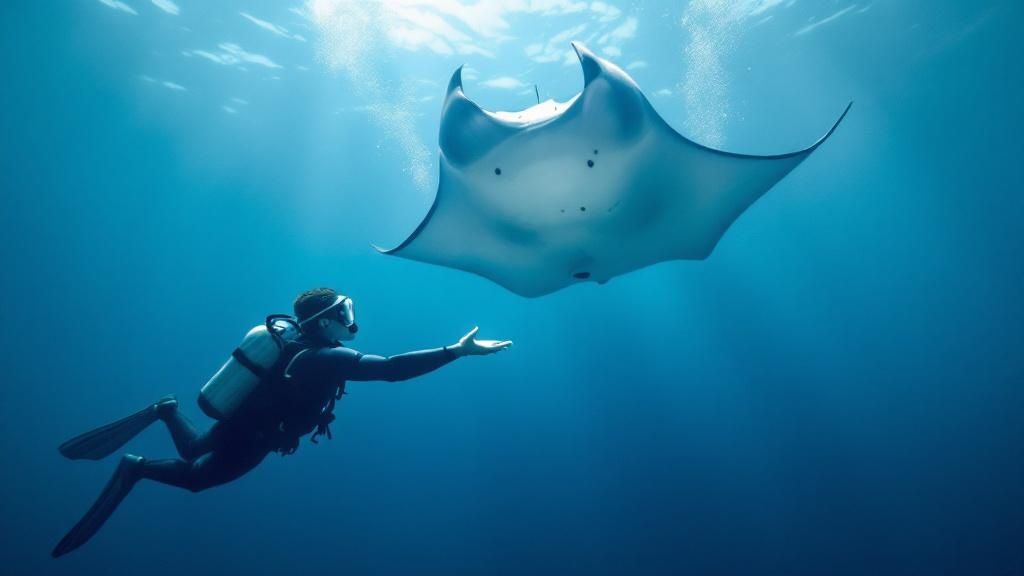
Your manta ray dive in Kona isn't just an incredible underwater show—it’s a chance to directly help protect these amazing animals. When you head out with a reputable crew, you’re stepping into the role of a citizen scientist. It’s a small part, sure, but it’s absolutely vital for keeping Kona's mantas safe for years to come.
How? It all comes down to a really cool identification trick that turns every dive into a data-gathering mission.
Each manta ray has a completely unique pattern of black spots on its white belly. Think of it like a human fingerprint; no two are ever the same. This natural ID card lets researchers and our dive guides photograph, identify, and keep tabs on individual mantas throughout their entire lives. It's a simple idea, but it's been the bedrock of manta research here in Kona for decades.
From a Single Manta to a Massive Database
It all started with one of the first mantas ever identified in Kona, a ray named 'Lefty,' who was easy to spot because of an injury to his cephalic fin. That spark of an idea—that we could reliably track individual rays—ignited a massive research effort. Now, this citizen science project is one of the most successful manta ray databases anywhere on the planet.
Since 1991, the local manta population has been systematically studied using photos and videos from dives just like yours. This amazing effort, powered by dive professionals and their guests, has built a database with nearly 6,000 reported encounters and over 28,500 individual sightings. We now have a catalog of over 330 uniquely identified mantas, which helps us understand their behavior, social lives, and the overall health of their population.
Your Dive Makes a Real Difference
By choosing a responsible, eco-conscious operator, you're actively supporting these critical conservation efforts. The pictures and videos from your tour help update the database, check on the rays' health, and make sure their home stays protected. You can see how this commitment is a core part of the manta ray night dive experience with Kona Honu Divers.
Every dive contributes to a legacy of research. When you witness a manta doing a barrel roll, you're not just a spectator; you're helping to write the next chapter in its life story.
It’s what transforms a thrilling adventure into something truly meaningful. You get to connect directly with the preservation of Kona’s majestic manta rays.
Exploring More Kona Diving Adventures
The legendary manta ray night dive might be the star attraction, but believe me, it’s just the beginning of what Kona’s vibrant underwater world has to offer. Once you’ve witnessed that incredible manta ballet, you’ll realize the Big Island’s coastline is teeming with other amazing dive opportunities just waiting to be explored.
Think of the manta dive as the spectacular opening act. The rest of the show includes everything from otherworldly night dives to exploring ancient volcanic structures, making Kona a complete, world-class dive destination. Working with a full-service operator like us at Kona Honu Divers gives you a backstage pass to this full spectrum of adventure.
From Mantas to Monsters of the Deep
If you're looking for a truly unique thrill, the Kona Blackwater Dive is an absolute must. This isn't your typical reef dive. Far from it.
You'll be miles offshore, tethered to the boat and drifting in the deep, open ocean over thousands of feet of water. As night falls, you get a front-row seat to one of the planet's largest migrations, as bizarre, bioluminescent creatures rise from the abyss. It’s a rare chance to see pelagic life forms that very few people ever lay eyes on.
Advanced Dives and Underwater Landscapes
For more experienced certified divers, Kona is a playground of dramatic underwater topography. The coastline is riddled with incredible lava tubes, stunning arches, and deep pinnacles forged by ancient volcanic eruptions. These structures have since become home to vibrant coral reefs and a huge diversity of marine life.
Exploring these sites on one of our advanced dives offers a completely different kind of challenge and reward. And for those who want to maximize their time in the water and hit multiple sites, dedicated liveaboard diving adventures can be an excellent way to go all-in.
Expanding your skills beyond traditional scuba can also open up totally new ways to experience the ocean. For instance, understanding the principles of breath-holding can make you a more confident and relaxed diver. You can discover the benefits of learning to freedive for scuba divers and add another fantastic dimension to your underwater adventures.
Your Manta Dive Questions, Answered
It's totally normal to have a few questions swirling around, even after you've decided the manta ray night dive is a must-do. This isn't your average boat trip, after all. We've put together answers to the most common queries we get, so you can show up feeling confident and ready for an incredible night.
Is the Manta Ray Dive Safe for a Total Beginner?
You bet it is. The Kona manta ray dive is widely considered one of the safest and most well-managed night dives you can do, making it a perfect introduction for first-timers. Companies like Kona Honu Divers are pros, staffing their boats with experienced guides who give you a thorough briefing before you even touch the water. Plus, they’re right there with you the whole time.
The whole operation is very passive and controlled. If you're diving, you'll find a spot on the sandy bottom and just… watch. Snorkelers get their own custom float to hang onto at the surface. The dive sites themselves are tucked away in protected bays and are relatively shallow, creating a calm and secure environment for everyone.
What’s the Real Difference Between Snorkeling and Diving with Mantas?
Think of it like seeing a concert. You can have amazing seats on the main floor or an incredible view from the balcony—both are fantastic, just different.
- Snorkelers get the "balcony view," floating on the surface and looking down into the cone of light. You get a stunning top-down perspective as the mantas barrel roll and swoop up towards the plankton.
- Divers have the "front-row seats," settled on the ocean floor and looking up. This is a jaw-dropping, immersive view where you'll see the mantas' massive white bellies glide just inches over your head.
While diving puts you a little closer to the action, both options deliver an unforgettable show. The right choice really just boils down to your comfort level in the water and whether you're scuba certified.
What Happens If No Mantas Show Up?
It's a valid concern—these are wild animals, after all. While Kona's success rate is unbelievably high (often over 90%), nature doesn't run on a schedule. That's why the best operators have what's called a "manta guarantee."
This usually means if your tour doesn't encounter a single manta ray, you can come back and try again on another night for free (typically on a space-available basis). It's always smart to confirm the specific policy when you book your manta ray tour.
This is a huge reason we tell people to schedule their manta adventure for early in their vacation. That way, you have a few buffer days to reschedule if you happen to draw the short straw on your first night.
When Is the Best Time of Year to Go?
Here’s the great news: any time is a good time! The Kona manta ray experience is a year-round spectacle. Our local manta population doesn't migrate, and their food source—plankton—is always on the menu.
That said, if you're looking for the absolute most comfortable conditions, the months from April through October typically have the warmest water (75-80°F) and calmest seas. But really, you can't go wrong no matter when you visit.