
Picture this: you’re sinking into the warm, dark Pacific Ocean off the coast of Kona. Suddenly, a giant, graceful creature with a massive wingspan glides past you, moving like an underwater angel. This isn't a dream; it's the world-famous Kona manta ray night dive, an experience so consistently incredible it’s ranked as one of the best night dives on the entire planet.
Experience the Magic of a Kona Manta Ray Dive
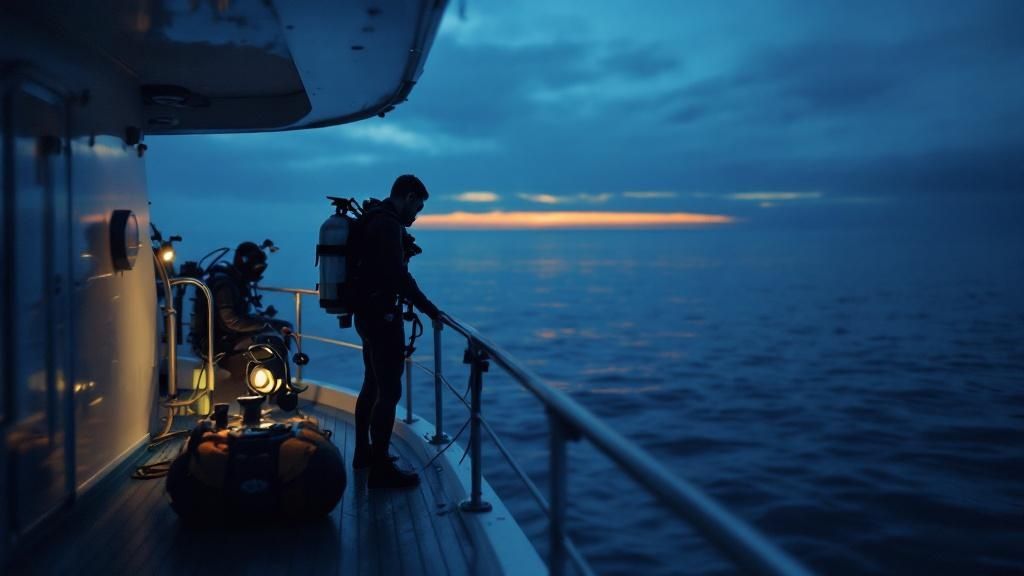
The Kona coast of Hawaii’s Big Island is the perfect storm for manta ray encounters. Thanks to the unique volcanic geography and ocean currents, these waters are packed with plankton—the favorite meal of these gentle giants. It's so reliable, in fact, that tour operators report an 80-90% success rate for sightings. This isn't a lucky break; it's a predictable natural phenomenon you can count on. You can learn more about this unique environment from the experts at Manta Ray Night Snorkel Hawaii.
This incredible consistency has turned the Kona manta ray dive into a true bucket-list adventure. While spotting mantas in other parts of the world often comes down to pure chance, the Kona experience is practically a scheduled performance.
A Premier Underwater Spectacle
We often describe it as an "underwater ballet." As a diver, you'll settle on the sandy ocean floor with a group, all pointing your dive lights up toward the surface. This creates a massive column of light that acts like a magnet for plankton, which in turn rings the dinner bell for the manta rays.
Think of it like an underwater campfire. Your lights are the fire, the plankton are the marshmallows, and the manta rays are the happy campers who show up to feast. The show they put on is simply breathtaking.
For those ready to see this natural wonder firsthand, Kona Honu Divers has built a reputation for offering an exceptional experience. Our expert guides are there to make sure your adventure is safe, respectful to the animals, and absolutely unforgettable.
What to Expect on Your Dive
The most popular trip is a two-tank tour. It's the perfect combo: you get a beautiful reef dive in the late afternoon light, followed by the main event after the sun goes down. You essentially get two completely different, amazing dives in one trip.
To give you a better sense of the experience, here’s a quick rundown of what makes this dive so special.
| Kona Manta Ray Dive At-a-Glance | |
|---|---|
| Aspect | What to Expect |
| The Main Event | Watching giant manta rays (up to 16-foot wingspans) swoop and barrel roll right above you. |
| The Setup | A late-afternoon reef dive followed by the manta ray night dive after sunset. |
| Your Role | Holding your light steady to attract plankton and create the "campfire." |
| Safety & Briefing | A comprehensive briefing on safety and how to interact responsibly with the mantas. |
| The Feeling | Awe, wonder, and a memory that will stick with you for the rest of your life. |
Ultimately, whether you're a seasoned diver or trying snorkeling for the first time, seeing these graceful creatures feeding in the glow of the dive lights is a powerful experience you won't forget.
If you’re ready to book this once-in-a-lifetime trip, you can check out all the details on our premier Manta Ray Dive Tour.
Why Kona is a World-Class Manta Destination
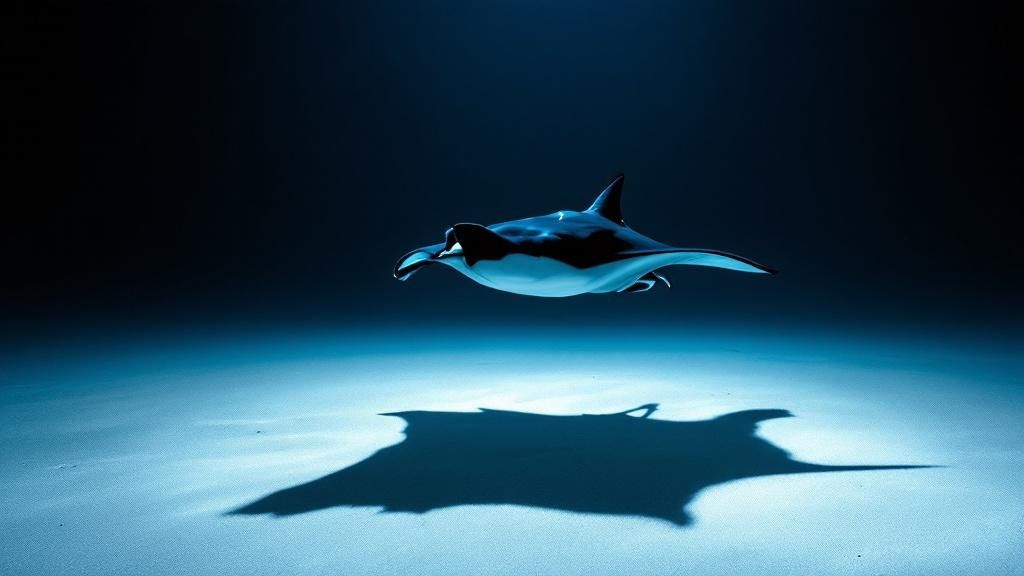
So, what makes the Kona manta ray dive so consistently magical? It’s not just luck. It's a perfect storm of geography, biology, and a happy accident from years ago. The Kona coast’s underwater topography just happens to create the ideal environment for plankton—the tiny organisms that manta rays love to eat.
The whole thing started when a local hotel aimed its lights at the water. This attracted a buffet of plankton, and it didn't take long for the resident mantas to realize these lights signaled an easy dinner. Today, dive operators recreate this phenomenon with what we affectionately call an "underwater campfire." By shining powerful lights up from the seafloor, we create a beacon that draws in plankton, which in turn brings the mantas right to us for an unbelievable feeding frenzy.
The Famous Manta Hotspots
Two main sites near Kona have become legendary for these nightly encounters. Both are just a short boat ride away and offer incredibly reliable opportunities to see these gentle giants up close.
-
Manta Village: Tucked into Keauhou Bay, just south of Kailua-Kona, this is the original spot where it all began. It has an exceptionally high success rate, making it a dependable choice for seeing mantas.
-
Manta Heaven: Located north of town near the airport, this site is famous for attracting huge congregations of mantas. It’s not uncommon to see a dozen or more swooping and gliding through the light beams in a mesmerizing underwater ballet.
Honestly, the choice between them often just comes down to nightly conditions and where the mantas are most active. Either way, you're in for an unforgettable adventure. We dive deeper into what makes this trip so special in our article covering the top reasons to go on a manta ray dive in Kona.
A Legacy of Research and Respect
This incredible nightly gathering isn't just a tourist attraction; it's a living laboratory. For decades, it has fueled a powerful commitment to conservation and research.
Since 1991, local researchers and dedicated dive guides have been photographing the unique spot patterns on the mantas' bellies. Think of it like a fingerprint—no two are alike. This massive citizen science project has helped us identify over 330 individual mantas, giving us priceless information about their life cycles, social structures, and overall population health. This dedication to sustainable, respectful tourism is what ensures Kona’s mantas will continue to grace our waters for generations to come.
How to Prepare for Your Dive
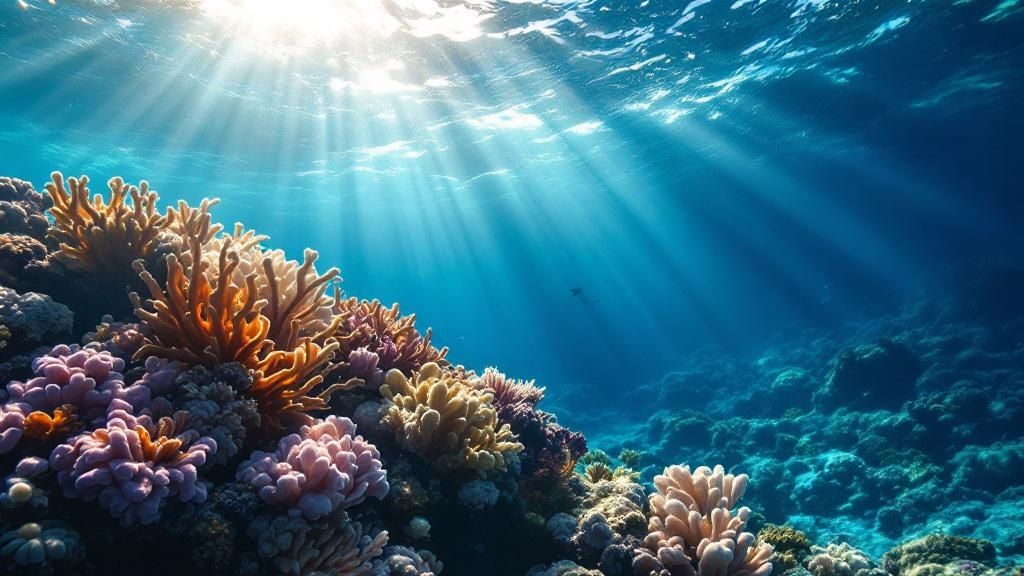
The excitement really builds when you step onto the boat, and a little bit of prep work can make all the difference between a good dive and an unforgettable one. The best part? You don't need a wallet full of advanced certifications for this experience. A standard Open Water certification is your ticket to join the other divers on the seafloor.
This makes the manta ray dive one of the most accessible and incredible adventures for certified divers visiting the Big Island. The dive itself isn't technically tricky. Your main job is to manage your buoyancy, stay put, and enjoy the ballet happening just a few feet above you.
While the dive shop handles all the heavy-duty scuba equipment, you’ll want to pack a small bag with a few personal items to stay comfortable. Think of it as preparing for a cool evening on the water after a warm day in the sun.
What to Bring on the Boat
Packing a few key items will ensure you're comfortable before you hit the water and especially after you get out. Even in tropical Hawaii, the boat ride back to shore can feel surprisingly brisk after a night dive.
Here’s a simple checklist of things you won't want to forget:
- Warm, Dry Clothes: Seriously, don't skip this. A hoodie, sweatshirt, or even a light windbreaker will be your best friend on the ride back. The ocean air feels much cooler once you're wet.
- Towel: You’ll need it to dry off. A compact, quick-dry travel towel is perfect for saving space in your bag.
- Proof of Certification: Your dive card is a must-have. The crew has to verify everyone's certification before the boat can even leave the harbor.
- Reusable Water Bottle: Staying hydrated is always important for diving, and bringing your own bottle is a simple way to help protect the very ocean you're here to enjoy.
The single most important part of your preparation is the pre-dive briefing on the boat. Pay close attention. This isn't just a routine speech; it’s where you'll get the critical ground rules for interacting with the mantas safely and respectfully. Following these guidelines protects both you and these magnificent animals.
Understanding the Two-Tank Adventure
Many people choose the two-tank manta ray dive tour, and it’s popular for a great reason. It’s a fantastic way to get two completely different, yet equally amazing, dives in one evening.
The trip starts with a beautiful late-afternoon reef dive. You'll get to see the reef in a whole new light as the sun starts to dip, casting long, dramatic shadows and bringing out different marine life. It’s the perfect warm-up and a great dive in its own right.
After a surface interval on the boat—usually timed perfectly to watch the sunset—you'll gear up again for the main event. This two-dive structure helps you get reacquainted with your gear and comfortable in the water before the big show begins. For more tips on planning, check out our guide on what you should know about the manta ray dive in Kona.
Your Guide to the Underwater Ballet
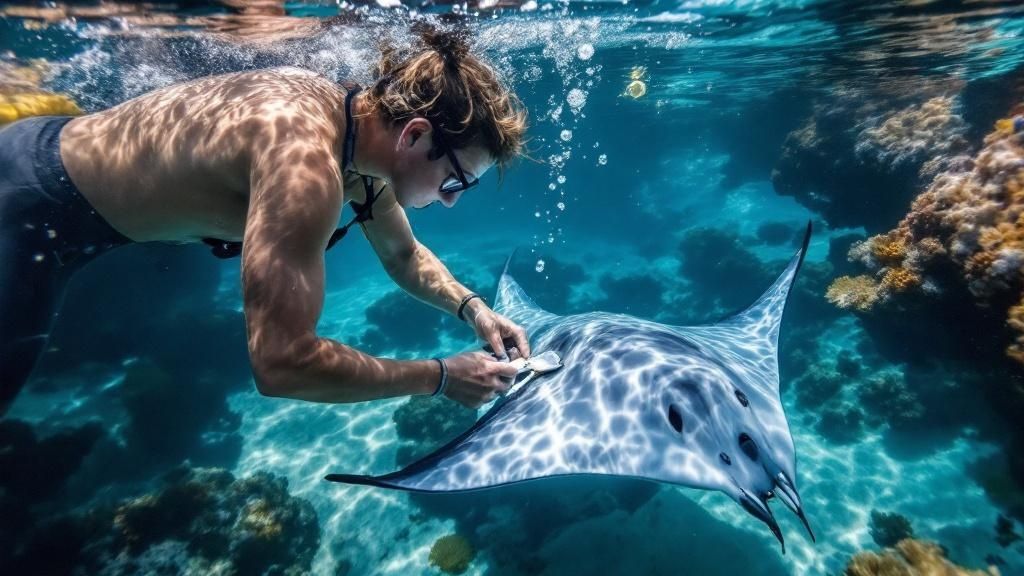
This is it. The moment everything has been building towards. After your boat anchors and the sun dips below the horizon, you'll gear up and step off into the twilight ocean. As you descend, the world transforms. The surface noise fades, replaced by the calm, rhythmic sound of your own breathing, and everything melts into a deep, peaceful blue.
You and the other divers will make your way to a sandy patch on the ocean floor. Following your divemaster's lead, you'll settle into a semi-circle around a powerful, central light source that the locals affectionately call the "campfire." It's a fitting name, as this light is the heart of the entire spectacle.
The Campfire Comes to Life
Once everyone is in position, the real magic begins. You'll switch on your dive light and aim it straight up, creating a brilliant column of light that pierces the dark water. Almost instantly, these beams attract a swirling cloud of plankton—tiny organisms that happen to be a manta ray's favorite food. You've just set the table for the evening's main event.
At first, all you'll see is the shimmering plankton. Then, a shadow emerges from the periphery. A huge, graceful silhouette glides into the light, and your heart will absolutely pound. The first manta has arrived.
Watching a manta ray perform effortless barrel rolls just inches from your face is a feeling that's truly hard to describe. It's like being granted a front-row seat to a secret, underwater circus, with gentle giants the size of small cars as the star performers.
An Unforgettable Performance
Soon, others will follow. More and more mantas swoop into the light, their cavernous mouths wide open to filter the plankton from the water. It’s a completely silent, mesmerizing ballet. They move with a grace that seems impossible for their size, performing somersaults and backflips as they feed.
What's truly breathtaking is just how close they get. A manta with a 12-foot wingspan might glide directly over your head, its white belly so close you could easily reach out and touch it (but of course, you won't). There are no cages or barriers here. It's just you, the open ocean, and these magnificent animals sharing the same space.
The dive itself usually lasts about 45 minutes, but it feels like a dream that ends too soon. When your divemaster finally gives the signal to ascend, you'll surface with a profound sense of wonder and a memory that will stick with you for the rest of your life.
Diving with Respect for Manta Conservation
Getting to share the water with Kona's manta rays is a profound privilege. It’s an experience that comes with a responsibility to be a gracious guest in their world. The entire dive is built around the concept of passive interaction—a simple but powerful set of guidelines that protect these gentle giants and keep this amazing encounter possible for years to come.
The most important rule is crystal clear and non-negotiable: do not touch the manta rays. This isn't just about not startling them; it's a matter of their health. A manta's skin is covered in a delicate mucus coating, which is its first line of defense against bacteria and infections. When you touch them, even lightly, you can strip away that protective slime, leaving them vulnerable to disease. It's like removing a knight's armor right before a joust.
Rules for a Respectful Encounter
Beyond the no-touching rule, a few other key behaviors ensure you're being a good dive buddy to the mantas. Following these simple steps helps create a safe and natural environment for both the animals and the people watching them.
- Hold Your Position: If you're diving, stay on or very near the sandy bottom. Snorkelers should remain on the surface. This keeps the water column wide open, giving the mantas a clear flight path to feed without having to dodge people.
- Keep it Calm: Avoid any sudden, jerky movements. Think slow and deliberate. Big, fast, or aggressive actions can easily spook the mantas and send them gliding away from the light.
- Mind Your Bubbles: As a diver, try not to exhale directly into a manta's face as it swoops in. Let them pass through clear water, not a curtain of bubbles.
The goal is to essentially become part of the underwater scenery. When you stay still and act as a passive observer, the mantas feel secure. They'll carry on with their natural feeding, often getting much closer and giving you a truly breathtaking show.
By sticking to these conservation-minded rules, every single person who participates helps protect the health and future of Kona’s cherished manta ray population. This thoughtful approach is precisely what has made the Big Island manta ray night dive a global benchmark for sustainable marine tourism.
Explore More of Kona’s Underwater World
The manta ray night dive is an experience that will stay with you forever, but it’s really just the beginning of what the Big Island has to offer. Think of it as the incredible opening scene to an even bigger underwater adventure. The volcanic coastline of Kona is packed with a stunning variety of dive sites, each with its own unique character.
So, once you've witnessed the famous manta ballet and are left wondering what could possibly top it, the answer is something completely different but just as mind-blowing.
Journey into the Abyss with a Black Water Dive
Imagine this: you're floating in the pure, inky blackness of the deep open ocean, miles from shore. This isn't a reef dive. This is the legendary Kona black water dive, and it feels less like scuba diving and more like space exploration.
You’ll be safely suspended from a tether, watching as a world of bizarre and beautiful deep-sea creatures makes its nightly vertical migration from the abyss. You'll see things like tiny, translucent squid, jewel-like larval fish, and jellies that look like they were designed for another planet. It’s an absolute must for anyone who wants a dive experience they truly can't get anywhere else.
The manta dive is a grand, brilliantly lit underwater ballet. A black water dive, on the other hand, is like floating through a living galaxy of bizarre and beautiful deep-sea stars.
Advanced Adventures for Experienced Divers
If you're an experienced diver ready to explore more challenging environments, Kona will not disappoint. We've designed our premium advanced dive tours to get you to those remote, untouched sites that most divers never get to see.
These trips take you to the wilder side of Kona’s underwater world. You'll get to explore dramatic volcanic ledges, navigate intricate lava tube swim-throughs, and discover pristine reefs teeming with life, far from the usual crowds.
From the world-famous mantas to the deep-sea aliens of the black water dive, Kona offers a complete and unforgettable scuba diving experience in Hawaii. Beyond the gentle giants, these waters are home to a huge diversity of life, and you might even be curious about some of the other fascinating sea animals found around the globe. Your manta dive is just the start of your adventure here.
Your Manta Ray Dive Questions, Answered
If you're thinking about taking the plunge, you've probably got some questions buzzing around. It's only natural. We've been doing this a long time, so we've pulled together the most common questions we hear from guests to help you feel completely prepared.
Is the Kona Manta Ray Dive Actually Safe?
Yes, absolutely. In all our years of experience, we can tell you this is an incredibly safe and well-managed adventure, especially when you're with a professional crew like ours at Kona Honu Divers. Manta rays have earned their "gentle giant" nickname for a reason. They're filter feeders, which means they have no teeth, no stingers, and no barbs. They are completely harmless to humans.
The whole encounter is carefully choreographed. Our divemasters give a detailed safety briefing before you ever touch the water, making sure everyone understands how to passively observe these magnificent animals. As long as you follow your guide's lead and stick to your spot, you're in for one of the most amazing and safe underwater experiences on the planet.
What if I’m Not a Certified Scuba Diver?
No problem at all! You don't need a scuba certification to have a front-row seat to the show. The experience for snorkelers is just as mind-blowing. We have custom-built, high-powered light boards that you hold onto while floating comfortably on the surface.
These powerful lights create a column of light that attracts the plankton, and the mantas follow right behind. You'll get an incredible bird's-eye view as they glide, barrel-roll, and feed, sometimes just inches below you. It's pure magic, no tank required.
What's the Best Time of Year to See the Mantas?
This is one of the best parts about diving in Kona—any time is a great time! Our local manta ray population sticks around all year long; they don’t migrate. This means we have a consistent chance to see them every single night.
The sighting success rate is consistently above 90%, no matter if you come in January or July. So you can plan your trip for whenever works best for you, without worrying about "manta season."
The biggest factor isn’t the time of year, it's booking your tour early. This is one of the most sought-after experiences on the Big Island, and our boats fill up quickly!
How Can I Book My Manta Ray Tour?
Booking is easy. The best way is to go directly through a trusted operator's website. To make sure you have a safe, unforgettable, and top-rated adventure, you can book your spot right here on the Kona Honu Divers Manta Ray Tour.
We always recommend booking as far in advance as possible to secure your spot. This isn't an experience you want to miss out on—come see what everyone is raving about!