
Picture this: you descend into the warm, dark Pacific just as the sun dips below the horizon. Your dive light cuts a sharp beam through the inky black water. This is the manta ray dive in Kona, an iconic experience that rightly sits at the top of so many bucket lists for divers and ocean lovers around the world. It’s not just another dive—it’s an underwater ballet, with gentle giants performing for a truly spellbound audience.
Why Kona’s Manta Ray Dive is a Global Phenomenon
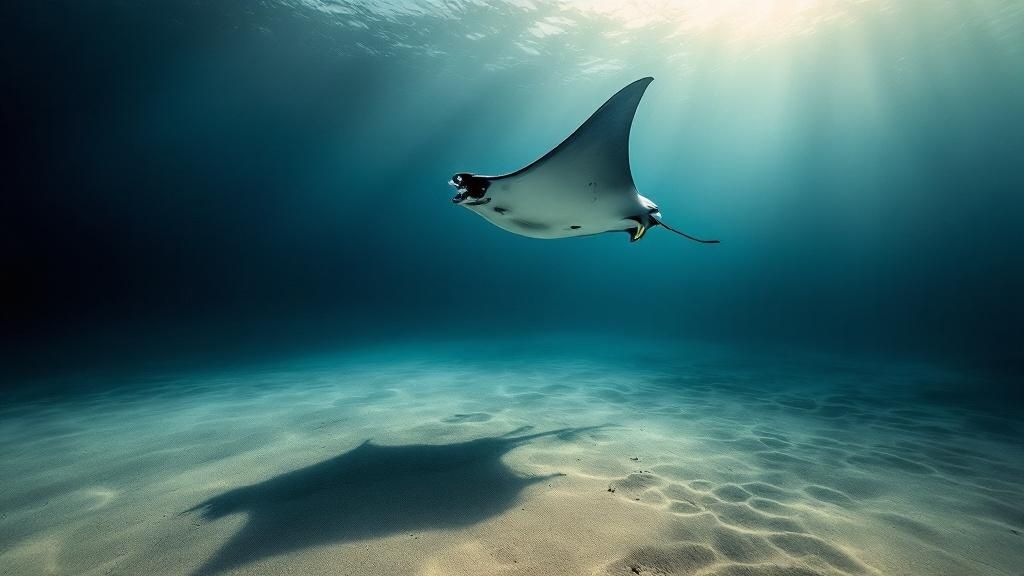
The Kona coast on Hawaii’s Big Island has rightfully earned its place as one of the best spots on the planet for this encounter. This isn't just a happy accident; it's the result of a perfect storm of biology and geography that creates a reliable, almost magical, experience night after night.
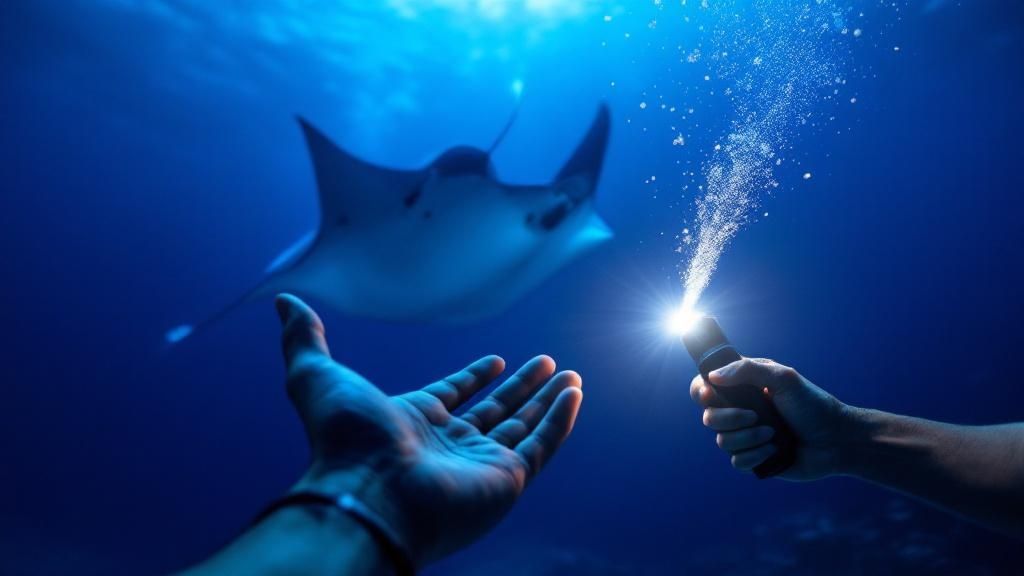
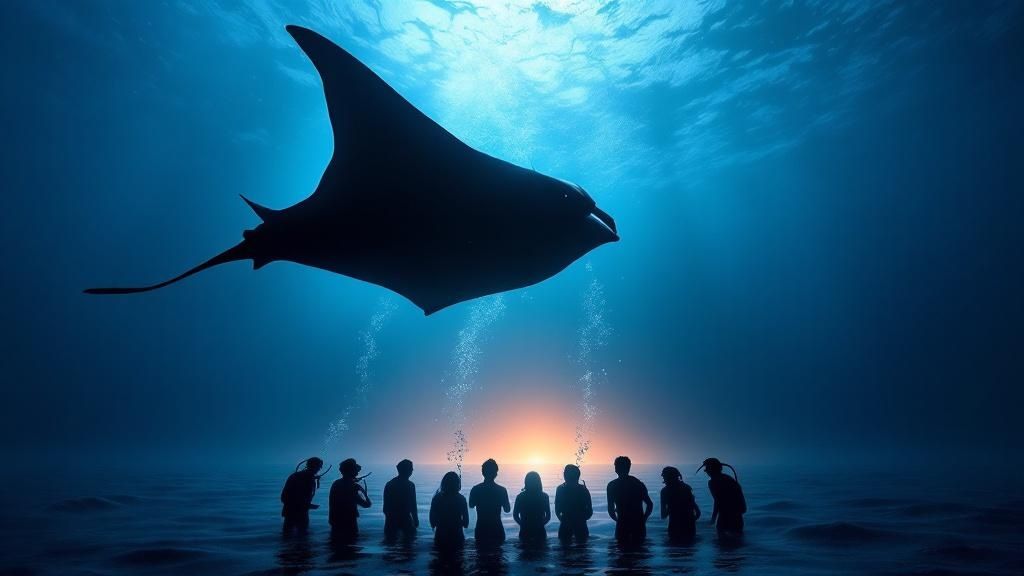
It all starts when you and your group settle on the sandy ocean floor, forming a circle and pointing your powerful dive lights straight up. Think of it like a giant, underwater bug zapper. This collective glow attracts swarms of the ocean's tiniest inhabitants—plankton. Once the plankton cloud is thick enough, the show begins.
Suddenly, graceful manta rays, some with wingspans stretching over 12 feet, emerge from the darkness to feast.
They glide, somersault, and barrel roll just inches above your head, their huge mouths wide open to filter the plankton-rich water. It’s an intimate and mesmerizing performance that feels completely surreal every single time.
It’s this unique feeding behavior, consistently drawn to the lights, that makes the Kona experience so dependable. People come from all over for this. In fact, this one-of-a-kind night dive attracts about 80,000 people every year. The chance of seeing these majestic creatures is incredibly high, with a year-round success rate of 80-90% for both divers and snorkelers. This is all thanks to the area’s nutrient-rich currents that serve up a reliable plankton buffet. You can learn more about these unique conditions and why sightings are so frequent on Manta Ray Night Snorkel Hawaii.
What to Expect on Your Manta Adventure
Your adventure isn't just about what happens underwater. It kicks off with a scenic boat ride along the stunning Kona coast as the sun sets, casting a golden glow over the volcanic landscape. Before you hit the water, your experienced guides will give a thorough pre-dive briefing. They'll cover all the safety protocols and, most importantly, the golden rule of manta encounters: be a passive observer. You are a guest in their dining room.
This deep commitment to responsible ecotourism is what keeps the manta rays safe and comfortable, ensuring this incredible interaction can continue for years to come. Operators like Kona Honu Divers are dedicated to providing a safe, respectful, and truly unforgettable encounter.
If you're ready to see this incredible aquatic performance for yourself, it's time to start planning. The Kona Manta Ray Night Dive is waiting to leave you speechless.
Choosing Your Dive Site: Manta Village or Manta Heaven?
So you’re ready to experience Kona’s world-famous manta ray dive. Awesome! The first big decision you'll make is choosing where to go. You’ll hear two names pop up again and again: Manta Village to the south and Manta Heaven to the north.
While you’ll likely see mantas at either spot, they offer two very different kinds of underwater experiences. Picking the right one for your group really boils down to your comfort level in the water and what kind of adventure you're after.
Manta Village: The Classic Campfire Experience
Often called the "original" manta site, Manta Village is tucked away in Keauhou Bay. It’s known for its reliability and easy-going conditions. The bottom is a shallow, sandy expanse, usually around 25 to 35 feet deep. Its protected location means the water is typically calm and predictable.
I like to think of this dive as sitting around an underwater campfire. Divers get settled in a circle on the sand, point their dive lights up, and create a giant column of light that attracts plankton. The mantas then swoop in to feed, putting on a show right in front of you.
This setup makes Manta Village perfect for:
- First-time night divers.
- Divers of all experience levels, from brand new to very experienced.
- Snorkelers, who can easily watch the ballet from the surface.
Manta Heaven: A Deeper, More Dynamic Dive
Manta Heaven, also known as Garden Eel Cove, is a bit further north, closer to the airport. This site is deeper, with most of the action happening between 35 and 50 feet. It's more exposed, so you might encounter stronger currents, which adds a whole new dimension to the dive.
Because of the depth and potentially stronger currents, Manta Heaven tends to be the favorite for more experienced divers. Underwater photographers also love it here; the dynamic conditions can lead to incredible, up-close passes as the mantas maneuver through the water. It feels less like a stationary show and more like you’re dropping right into their natural feeding grounds.
Key Takeaway: There's no "better" site—only the site that's better for you. Manta Village is all about comfort and consistency, while Manta Heaven offers a more adventurous, in-the-moment experience for confident divers.
Manta Village vs. Manta Heaven at a Glance
To make it even simpler, here’s a quick breakdown to help you decide which stage you want to see the manta show on.
| Feature | Manta Village (Keauhou Bay) | Manta Heaven (Garden Eel Cove) |
|---|---|---|
| Typical Depth | 25-35 feet (Shallow) | 35-50 feet (Deeper) |
| Conditions | Generally calm, protected bay | Can have currents, more dynamic |
| Best For | All skill levels, snorkelers, first-time night divers | Intermediate to advanced divers |
| Experience Feel | A predictable, front-row "show" | An immersive, adventurous encounter |
Ultimately, you can't go wrong. Both locations are frequented by the same incredible Kona mantas.
Data gathered over years shows that the prime time to visit either location is from April to October. The water is a warm 75°F to 80°F, and it's common to see 8 to 12 manta rays on a single trip! For more details on the sites, you can check out the Kona Honu Divers blog.
No matter where you end up, going with a top-notch operator like Kona Honu Divers is crucial. Their crews are experts at reading the conditions at both sites and will get you the best, safest view of the magic.
The only real difference is the backdrop for their breathtaking performance.
Meet Kona’s Famous Manta Ray Residents
When you slip into the warm Kona water for a manta ray dive, you’re not just having a random wildlife encounter. You're actually meeting the locals—a well-known, protected, and celebrated community of gentle giants who call this coastline home. This is so much more than an aquarium show; it's a personal introduction to the stars of one of nature's most incredible performances.
These majestic animals, known as hāhālua, hold a deep cultural significance here in Hawaii. Their presence is so foundational that they are even mentioned in the kumulipo, the ancient Hawaiian creation chant. This cultural reverence adds a profound layer to your dive, turning it from a simple tour into a meaningful interaction with creatures woven into the very fabric of the islands' history.
The whole experience feels like meeting a cast of beloved celebrities. Over the years, local guides and researchers have gotten to know these mantas so well that many have been given names, each one reflecting a unique personality or physical quirk.
How Scientists Tell Them Apart
Believe it or not, Kona is home to one of the most studied manta ray populations on the entire planet. How is this possible? Because every single manta ray has a completely unique pattern of black spots on its white belly. Think of it as a natural fingerprint or a QR code. No two are ever alike.
Since the early 1990s, scientists and dive operators have been snapping photos of these belly patterns to identify and track individual mantas. This ongoing research allows them to monitor the health, growth, and behavior of the population over decades.
This scientific effort means your dive is more than just a sightseeing trip; you're contributing to vital conservation work. The photos and observations gathered from these dives help build a massive database that protects these amazing animals for generations to come.
The Kona coast is home to two distinct manta species: the more common reef manta ray (Mobula alfredi) and the larger, more oceanic giant manta ray (Mobula birostris). Since 1991, researchers have logged thousands of encounters. One database alone contains details from nearly 6,000 individual meetings and over 28,500 total sightings, identifying more than 330 unique mantas in just a 14-year span.
Famous Faces of the Kona Manta Community
After decades of observation, some mantas have become local legends, having been sighted hundreds or even thousands of times. Seeing one of these famous residents on your dive is a truly special treat.
Here are a few of the stars you just might meet:
- Lefty: Instantly recognizable by a cephalic fin that was injured and now curls to the left, Lefty has been a regular at the dive sites for years.
- Big Bertha: As one of the largest and most sighted mantas in Kona, she’s known for her incredibly calm and graceful presence.
- Amanda Ray: A clever play on words for "a manta ray," Amanda is another long-time resident who has delighted thousands of divers.
Spotting one of these famous individuals adds such a personal connection to your dive. It’s the difference between seeing "a" manta ray and seeing "Lefty," an animal with a known history and story. If you're hoping to time your trip for the best chance to see these celebrities, check out our guide on the best time of year to see manta rays in Kona.
Choosing a reputable operator is key to ensuring you're part of a respectful and educational experience. Their knowledgeable guides can often identify the mantas on sight and will be thrilled to share their individual stories with you.
How to Prepare for Your Manta Ray Adventure
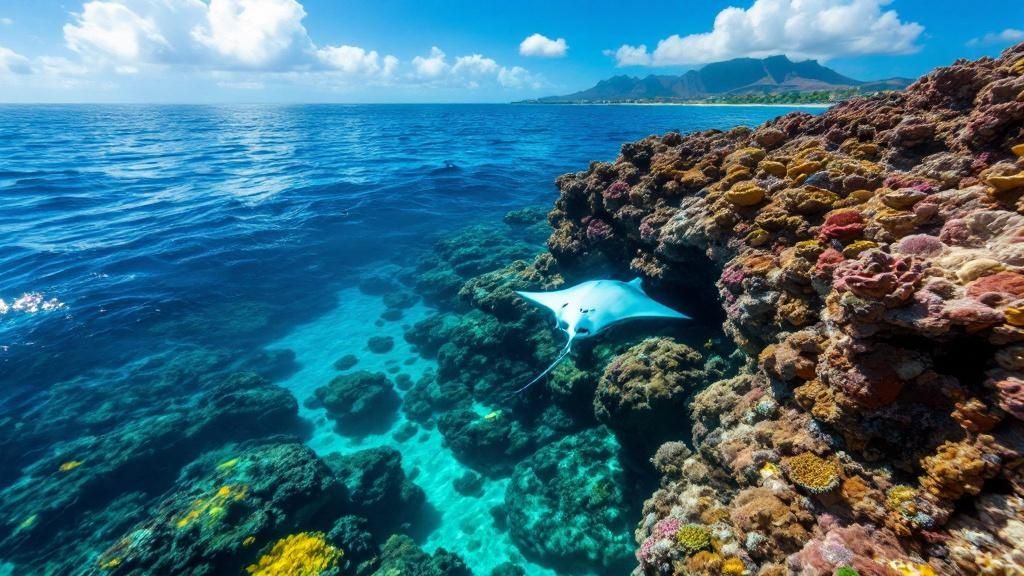
A little bit of prep work can be the difference between a good dive and an absolutely mind-blowing one. When you feel ready and confident, you can truly sink into the moment and absorb the magic of the manta ray dive in Kona without sweating the small stuff. Let's walk through everything you need to know to show up relaxed and ready for an adventure you'll never forget.
Packing for this trip is pretty simple. The main thing to think about is staying comfortable before you get in the water and, just as importantly, after you get out. The boat ride out is often a gorgeous sunset cruise, but it can get surprisingly chilly on the ride back in the dark.
Here's a quick checklist of what you'll want to bring:
- Swimsuit: The easiest thing to do is wear it under your clothes when you head to the marina.
- Towel: A quick-drying one is perfect for toweling off after your dive or snorkel.
- Warm Jacket or Sweatshirt: I can't stress this enough—it's a must-have for the boat ride back. Even on a warm Hawaiian evening, the wind over the water can feel cold once you're wet.
Scuba Certifications and Skill Level
If you're planning to scuba dive with the mantas, you’ll need to be a certified diver. The minimum requirement is an Open Water Diver certification. The dive itself isn't technically difficult; it’s a relatively shallow, stationary dive where you'll settle on the ocean floor.
That said, being comfortable with the basics of night diving is a massive advantage. Good buoyancy control and feeling at ease in the dark will let you relax completely and just focus on the incredible spectacle overhead. If it's been a while since your last dive, think about doing a quick refresher dive first.
The real goal here is to make your manta dive feel effortless. The more comfortable you are with your gear and the low-light environment, the more you can simply sit back and enjoy the show.
Understanding the Rules of Engagement
The single most important part of your preparation is understanding how to interact—or rather, not interact—with the mantas. Every single tour, including the top-notch ones run by operators like Kona Honu Divers, starts with a detailed pre-dive briefing. Listen carefully. This is where they’ll explain the safety protocols and the golden rule of manta encounters.
The core principle is passive observation. Think of it as being a polite guest in their house. This means:
- No Touching: Manta rays have a delicate mucus layer on their skin that protects them. Touching them can strip this away, making them vulnerable to infections.
- No Chasing: Never swim after a manta or try to ride one. Let them come to you; it's a much more powerful experience when they choose to get close.
- Don't Block Their Path: Always give them a clear path to swim. You’re in their underwater dining room, so let them move around freely.
Sticking to these guidelines is what keeps the mantas feeling safe and comfortable, and it's the reason they reliably show up to these sites night after night.
Tips for a Smooth Experience
Just a couple of final tips to make sure your trip goes off without a hitch. If you're someone who gets seasick, it’s a good idea to take medication before you get on the boat. The ride is usually quite smooth, but it's always better to be safe than sorry.
For all you photographers out there, the key is to shoot responsibly. Keep your gear setup minimal, let the mantas come to you for the best shots, and be aware of the other divers so you aren't blocking their view. A little bit of planning goes a long way toward ensuring a safe, smooth, and truly magical manta ray dive.
Explore More World-Class Diving in Kona
The manta ray dive is an absolute must-do, but don't for a second think your underwater adventure ends there. The truth is, the manta ballet is just the opening act for everything the Big Island has to offer. Once you've had that incredible experience, you’ll realize Kona is a world-class diving destination with plenty more secrets to share.
What makes this place so special is its dramatic volcanic past. We’re not diving on typical coral reefs here; we’re exploring an underwater world sculpted by lava flows. Think incredible lava tubes, ancient archways, and sheer underwater cliffs that drop off into the deep blue. This unique geology creates a massive playground for divers of all stripes.
The Thrill of the Kona Blackwater Dive
If the magic of the manta night dive got your adrenaline pumping, then your next trip has to be the Kona Blackwater Dive. This is something else entirely. Picture this: you're drifting miles offshore in the pitch-black, suspended over thousands of feet of water. This isn’t about the reef. It’s about witnessing the largest migration on Earth, as bizarre and beautiful creatures rise from the abyss under the cover of night.
You’ll see things that look like they’re straight out of a sci-fi movie—tiny, translucent organisms and bioluminescent critters creating their own galaxy in the dark. It’s a humbling, mind-blowing experience that gives you a peek into a truly alien world. For a dive that's completely unforgettable, the Kona Blackwater Dive tour is a plunge into the unknown you won't regret.
Advanced Diving and Daytime Exploration
For you experienced divers out there looking for a challenge, Kona truly delivers. The advanced dive sites are legendary. We're talking deeper reefs, complex lava tube systems, and remote pinnacles where you’re more likely to run into bigger pelagic species. The sheer walls and dramatic drop-offs are breathtaking, showcasing the raw power of the island's volcanic origins. These dives require solid skills, but the payoff is huge. You can get on a premium advanced dive trip specifically designed to explore these incredible, deeper sites.
And of course, there's the daytime diving that put Kona on the map in the first place. The sunlit reefs are just bursting with color and life. It's a vibrant ecosystem filled with a wild variety of endemic Hawaiian fish, sleeping whitetip reef sharks, and more sea turtles than you can count. Operators like Kona Honu Divers run fantastic scuba diving tours that showcase the very best of these reefs.
Kona is far more than a one-trick pony. It’s a complete diving destination that invites you to stay longer and explore deeper, with each dive revealing a new facet of its incredible underwater biodiversity.
Whether you're exploring a shallow, sunny reef or navigating a deep lava tube, the adventure here continues long after the mantas have said goodnight. To get a feel for everything available, you can read more about what makes the Big Island such a special place to dive.
Kona Honu Divers is ready to guide you through all these incredible underwater worlds.
Answering Your Kona Manta Ray Dive Questions
So, you're getting ready for one of the planet's most mesmerizing wildlife encounters. It's totally normal to have a few questions swirling around before you take the plunge on your manta ray dive in Kona. Think of this section as a final chat with a seasoned guide, designed to answer all those last-minute queries we hear from divers and snorkelers alike. We want you to feel confident and prepared, so you can just soak in the magic.
What is the Best Time of Year for a Manta Ray Dive in Kona?
This is the best part—there's really no bad time! The manta ray dive in Kona is a phenomenal year-round activity. That’s because our local manta population is resident, meaning they live here full-time and don’t migrate. This gives us an incredible success rate of seeing mantas, typically hovering between 80-90%, no matter which month you visit.
That said, if you're chasing the most comfortable conditions, many people find that April through October is ideal. In these summer months, the ocean tends to be calmer and the water is beautifully warm, usually between 75°F and 80°F (24°C to 27°C). While winter can sometimes bring bigger swells, the main dive sites are tucked into fairly protected bays, keeping the tours reliable. Bottom line: your chances for a jaw-dropping encounter are excellent whenever you decide to come.
What Happens if We Don't See Any Manta Rays?
It’s a fair question. While sightings are incredibly consistent, we are dealing with wild animals, and nature never makes a 100% promise. Reputable operators like Kona Honu Divers get this, and our top priority is making sure you have an amazing experience. That's why we have a "manta guarantee."
So what does that mean? If for some reason the mantas decide not to show up on your tour, we’ll invite you to join us again on another night, free of charge, on a standby basis. It’s always smart to confirm the specific policy details when you book, but this practice shows how confident we are in the high sighting odds and gives you valuable peace of mind.
Should I Choose to Dive or Snorkel with the Mantas?
This is a great question, and the answer is simple: you can't go wrong! Both options offer absolutely breathtaking views of the action. The right choice just comes down to your comfort in the water and the kind of perspective you’re looking for.
- The Dive Experience: If you're a certified scuba diver, this is your ticket to a truly unique vantage point. You'll descend about 35 feet to the sandy seafloor, find a spot, and look up. It's like having front-row seats at an underwater ballet as the mantas swoop, loop, and barrel-roll just inches over your head.
- The Snorkel Experience: For snorkelers, the view is just as thrilling. You'll float comfortably on the surface while holding onto a custom-made light board. These boards shine powerful beams into the water, which attracts the plankton and brings the mantas right up to the surface to feed. It’s a "bird's-eye view" of the entire spectacle.
In the end, everyone gets an unforgettable, up-close encounter with these gentle giants.
Key Insight: The main difference is your position in the water. Divers look up from below, while snorkelers look down from above. Both provide an unforgettable, up-close encounter with Kona's famous manta rays.
Is the Manta Ray Night Dive Safe?
Absolutely. The manta ray night dive is considered very safe, especially when you go with a professional and experienced crew. Dive companies here have spent decades refining the process to create a secure and controlled environment for this incredible adventure.
Safety is the number one priority from the moment you step on the boat. You’ll get a detailed pre-dive briefing covering all safety protocols, the dive plan, and the golden rules of passive observation. In the water, certified divemasters and instructors are with you every step of the way, keeping a close eye on the group to ensure everything runs smoothly.
The dive itself is typically shallow and not physically demanding, which makes it accessible for any certified diver. As long as you listen to your guide and follow their lead, you can relax and trust that you're in very capable hands. If you're still on the fence, you should read our article on why you should go on a manta ray dive in Kona for a little more inspiration.