
Imagine this: you're sinking into the warm, dark Pacific, your flashlight beam slicing through the inky black. Then, out of nowhere, a massive, graceful shadow emerges from the gloom, soaring just inches above you like some kind of underwater angel. That's the heart-stopping, absolutely magical experience of the Kona manta ray dive—a true bucket-list adventure on the Big Island.
Your Unforgettable Kona Manta Ray Night Dive Awaits
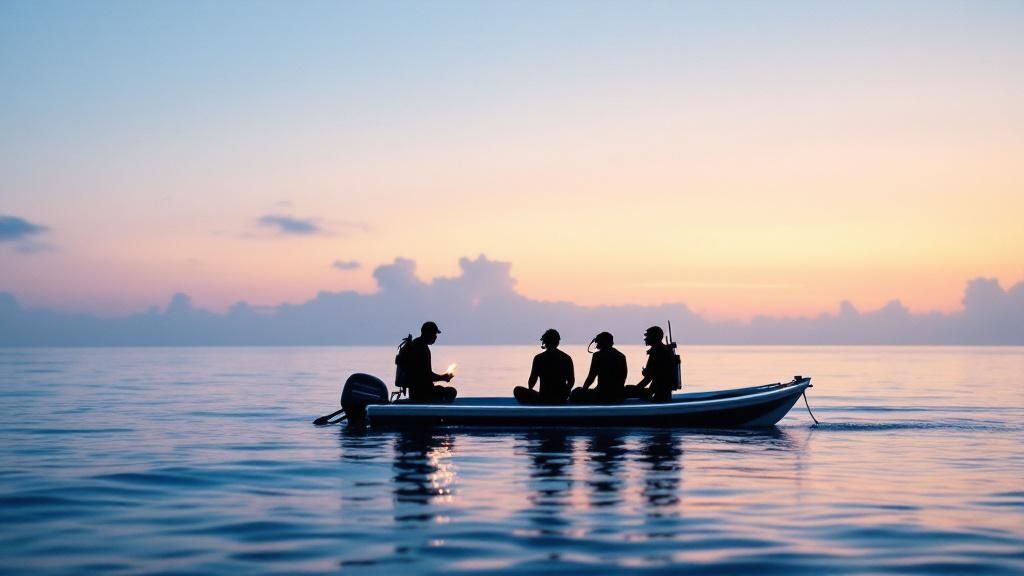
The Kona manta ray dive isn't just another tour; it's an otherworldly underwater ballet. You'll find yourself resting on the sandy ocean floor, looking up as these gentle giants perform breathtaking acrobatics in the glow of the dive lights. With wingspans stretching over 12 feet, they swoop and barrel-roll with an effortless grace, filtering plankton from the water just above your head.
This is easily one of the most reliable and awe-inspiring wildlife encounters on the entire planet. For many people who do it, it's a profoundly moving experience that sparks a lifelong connection to the ocean and its incredible creatures.
Choosing a World-Class Operator
To make this dream happen, you absolutely need a guide you can trust. Kona Honu Divers really stands out from the pack, known for their serious commitment to safety, sustainability, and giving every guest an amazing experience. Their expert crew takes care of every single detail, from the detailed pre-dive briefing to the comfortable boat ride out.
But don't just take our word for it. See what fellow divers are saying about their unforgettable tours.
Their reputation is solid because they create safe, respectful, and truly magical encounters. They always put the well-being of the mantas and the safety of their guests first, which is how they deliver a world-class adventure, night after night.
Your Invitation to the Manta Ballet
The feeling of a giant manta ray gliding silently right over you is something photos and videos just can't capture. It's a sense of pure wonder that sticks with you long after you're back on the boat. Whether you're a seasoned diver or just looking for an incredible snorkeling adventure, this is an opportunity you don't want to miss.
You can learn more about what to expect on the manta ray night dive in Kailua-Kona to get fully prepped for your trip.
Ready to see the show for yourself? It's time to secure your spot for this must-do Hawaiian adventure. This is your chance to join the exclusive audience for one of nature's most dazzling performances. Don't wait—these popular tours fill up fast.
Why Kona Is The World’s Premier Manta Ray Destination
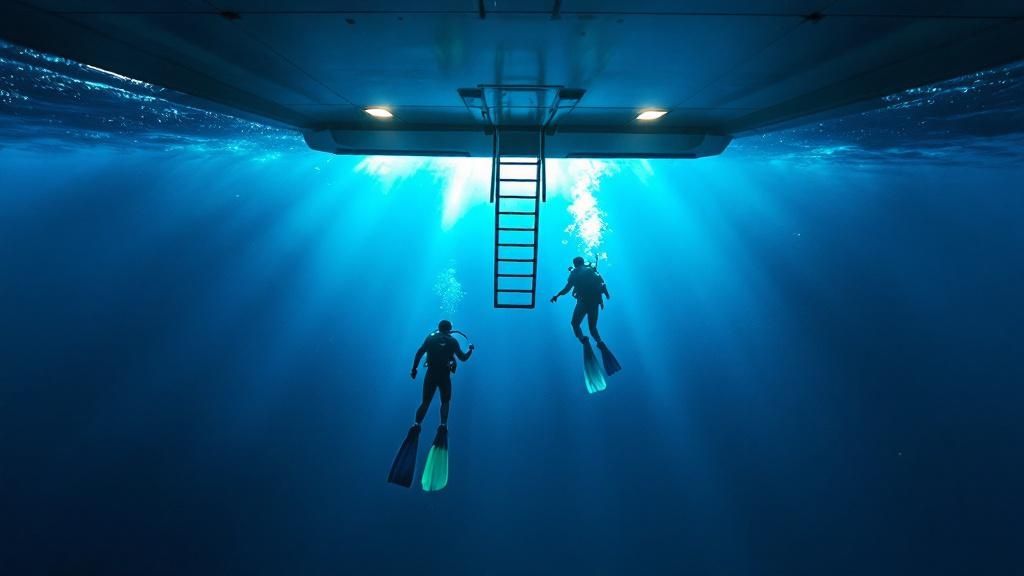
So, what makes Kona the undisputed champion for manta ray encounters? It's not just a lucky break. It's a perfect storm of geology, biology, and even a bit of human history coming together to create the ultimate underwater show. This unique combo makes a manta ray dive in Kona an almost guaranteed spectacle you won't find anywhere else on the planet.
It all starts with the island's foundation. The Kona coast is built on ancient volcanic lava flows, which have sculpted a unique underwater landscape. Instead of sharp cliffs or deep drop-offs, these formations create a gentle, sloping shelf that’s perfect for both marine life and divers. It’s like a custom-built stage for the nightly manta ballet.
The Science Behind the Spectacle
This special underwater geography works hand-in-hand with the local ocean currents to funnel massive amounts of plankton—the microscopic critters manta rays love to eat—into specific areas. Picture a natural buffet line. The currents sweep the plankton along the coast, and the underwater terrain guides it into cozy coves and bays, serving up a reliable feast for the mantas.
This natural phenomenon has turned a few key spots into world-famous feeding stations. Two of the most celebrated are:
- Manta Village: Tucked into Keauhou Bay, this is the original site where people first noticed mantas gathering.
- Manta Heaven: Located a bit further north near the airport, this is another prime hotspot where plankton congregates.
It actually started with hotel lights along the shore attracting the plankton, which then brought in the mantas. It didn't take long for dive operators to realize they could recreate this magic by bringing their own powerful lights, creating a consistent and absolutely breathtaking wildlife experience. The lights draw in the plankton, the mantas follow, and we get a front-row seat to their acrobatic feeding frenzy.
The sheer consistency of these encounters is what really puts Kona in a league of its own. The success rate for seeing manta rays on a professionally guided tour is incredibly high, turning what could be a hopeful wish into a near-certainty.
This reliable natural engine is exactly why the manta ray dive Kona experience is so legendary. People come from all over for this, with around 80,000 visitors a year making the trip just to see the mantas. With a success rate hovering between 80-90%, it's easy to see why Kona, Hawaii is known as the best place in the world for a manta ray night dive.
A Year-Round Phenomenon
One of the most incredible things about this whole setup is that it never stops. Unlike migratory animals that come and go, Kona’s manta rays are permanent residents. They stick around all year because their food source is always on the menu.
That means there’s really no "off-season" for a manta ray dive. While weather and water temps might change a bit, the stars of the show are always here. This year-round reliability gives you amazing flexibility when planning your trip.
You can get the full scoop by checking out our guide on the best time of year to see manta rays in Kona. Ultimately, it’s this perfect blend of predictable nature and stunning beauty that cements Kona's status as the world's go-to spot for seeing these gentle giants up close.
Choosing Your Adventure: Dive Or Snorkel
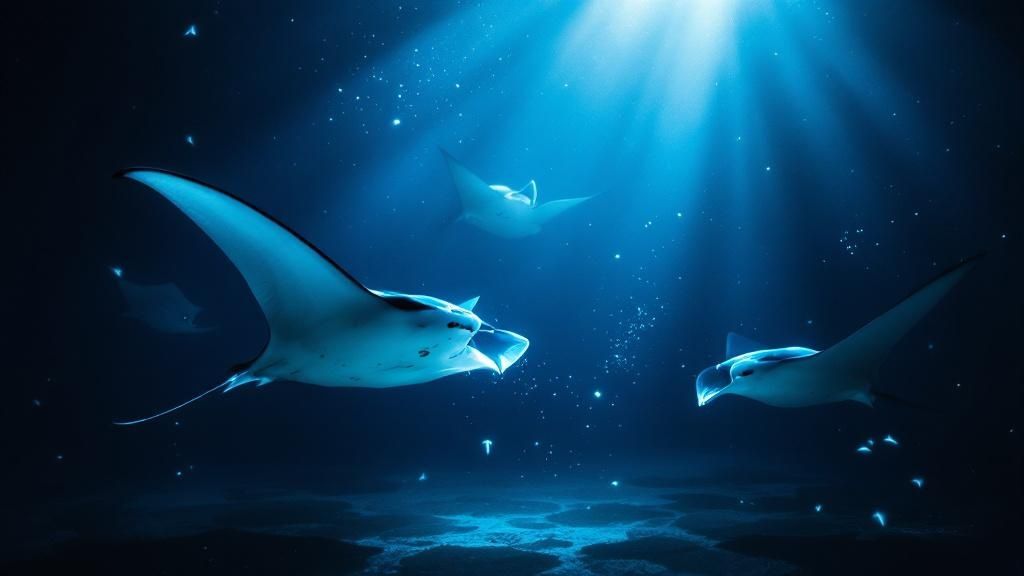
Alright, so how exactly do you want to witness this incredible underwater ballet? The great thing about the manta ray dive Kona experience is that there isn't just one way to do it. You have two fantastic options: you can be fully immersed as a scuba diver, looking up from the ocean floor, or you can float on the surface as a snorkeler, gazing down from above.
Each gives you a completely unique and unforgettable perspective on this natural wonder. Your choice really boils down to your comfort in the water, whether you're a certified diver, and the kind of view you're hoping for.
Let's break down the two adventures to help you decide.
The Scuba Diving Experience: A Front-Row Seat on the Seafloor
For certified scuba divers, this is the ultimate ticket. After descending with your guide, you'll find a nice sandy patch on the ocean floor, usually at a comfortable depth of about 35 feet. From there, you just get settled, point your dive light toward the surface, and wait. That beam of light is what draws in the plankton.
And that’s when the real magic begins. The mantas, lured by the promise of an easy meal, swoop down to perform their acrobatics right over your head. I'm talking barrel rolls, graceful glides, the whole show. There's nothing quite like watching a 12-foot manta ray pass just inches from you. It's a truly humbling experience that gives you an amazing appreciation for their massive size and effortless grace.
The Snorkeling Experience: An Aerial View From the Surface
Don't have a scuba certification? No problem at all. The manta ray snorkel tour is just as thrilling and is open to almost everyone. As a snorkeler, you'll hold onto a large, custom-made floatation board that has powerful lights shining down into the water.
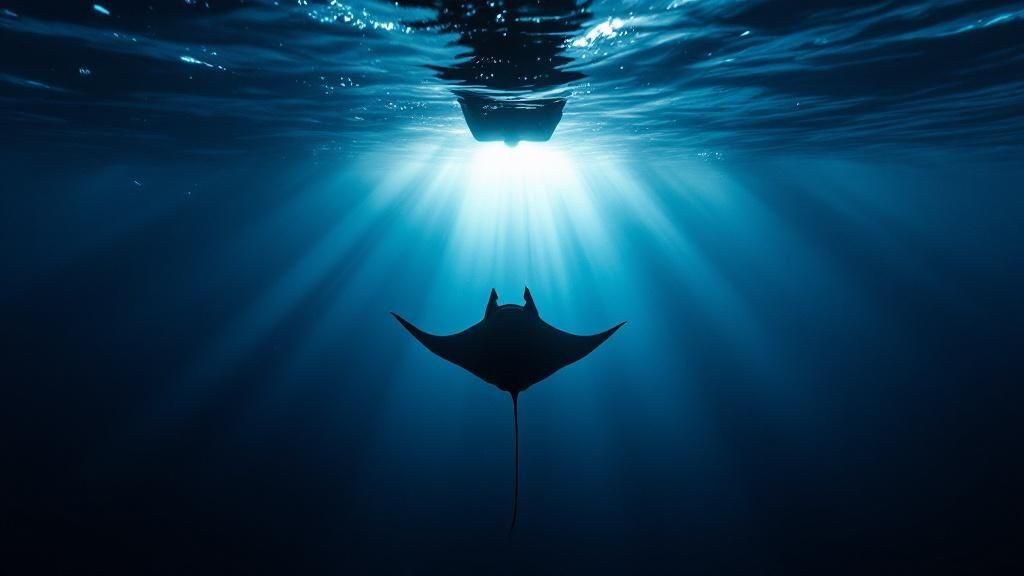
This board essentially becomes a giant floating buffet, attracting plankton to the surface. The mantas aren't far behind, soaring up from the darkness to feed just below you. You get this incredible top-down view of the whole "dance floor," watching multiple mantas crisscross through the beams of light. It's a fantastic and safe way for families, non-divers, and even kids to get in on the action.
Manta Ray Dive vs. Snorkel Experience
Still on the fence? Both the scuba dive and the snorkel offer a world-class wildlife encounter that you won't forget. This table breaks down the key differences to help you choose the perfect adventure for your trip.
| Feature | Scuba Diving | Snorkeling |
|---|---|---|
| Perspective | Bottom-up view, looking up as mantas glide directly overhead. | Top-down view, watching the mantas swoop and feed below the light board. |
| Proximity | Extremely close encounters, often just inches away (but never touch!). | Close, but usually with a few feet of separation from the surface. |
| Certification | An Open Water Diver certification (or equivalent) is required. | No certification needed, just basic comfort in the water. |
| Equipment | Full scuba gear: tank, BCD, regulator, and weights. | A mask, snorkel, fins, and typically a wetsuit for warmth. |
| Physical Effort | Very little effort. You're mostly just sitting still on the seafloor. | Low effort. You're holding onto a float and keeping your body horizontal. |
Honestly, there's no wrong answer here. Both options deliver a stunning, up-close view of Kona's gentle giants. If you're ready to book, Kona Honu Divers runs outstanding manta ray dive and snorkel tours that cater to both experiences, making sure everyone has a safe and magical night.
How To Prepare For Your Manta Ray Encounter
A little prep work goes a long, long way toward making your manta ray dive kona adventure a truly unforgettable one. When you know what to bring and what to expect, you can kick back, relax, and soak in every magical moment.
Here's a pro tip right out of the gate: arrive wearing your swimsuit under your clothes. It’s a simple trick, but it saves so much time and hassle, letting you get into the water that much faster once you’re on the boat. You’ll be glad you did when the excitement starts to build!
Your Essential Packing List
While top-notch tour operators like Kona Honu Divers will have all the necessary dive and snorkel gear waiting for you, a few personal items will make your trip much more comfortable.
- A Towel: It sounds obvious, but you'd be surprised how many people forget one. You’ll definitely want it the second you climb back on board.
- Dry Clothes: The boat ride back to the harbor can get surprisingly chilly, especially with the cool night air on wet skin. A warm sweater or a windbreaker is a game-changer.
- Reusable Water Bottle: Staying hydrated is key, even on an evening tour. Most boats will have a water cooler so you can get refills.
- Camera: If you have an underwater camera like a GoPro, this is its moment to shine! Just remember to be mindful of using a flash and always be respectful of the mantas and your fellow guests.
This quick checklist is all you need to be set for an amazing time, from the moment you step on the boat to the ride back under the stars.
The All-Important Safety Briefing
Before you even dip a toe in the water, your guides will walk you through a detailed safety and procedural briefing. Pay close attention—this isn’t just about ticking boxes. This briefing is your key to a successful and respectful wildlife encounter.
Your guides will explain exactly where to position yourself in the water, whether you’re a diver on the sandy bottom or a snorkeler floating up at the surface. They’ll also cover the single most important rule of the night: do not touch the manta rays. These gentle giants have a protective mucus layer on their skin, and touching them can strip it away, leaving them vulnerable to nasty infections.
Think of it like this: you are a guest in the mantas' home and their personal dining room. The briefing is essentially teaching you the proper etiquette to be a polite visitor. This ensures the animals feel safe and comfortable, which is why they keep coming back to see us night after night.
Putting safety first guarantees a fantastic experience for everyone. It's always a good idea to brush up on essential snorkeling safety tips before any underwater adventure to keep both yourself and the marine life protected.
Expanding Your Kona Dive Horizons
Once you've witnessed the spectacle of the manta ray night dive, you might just find yourself hooked on Kona's incredible underwater world. For certified divers, the adventure doesn't have to stop there. The Big Island is packed with a ton of other unique dives.
If the thrill of the deep, dark ocean is calling your name, you have to check out the one-of-a-kind unique blackwater dive. It's an open-ocean drift dive where you'll see bizarre and beautiful deep-sea creatures migrating toward the surface at night. For those craving more complex topography and different marine life, there are also incredible advanced boat trips that explore remote deep pinnacles and dramatic underwater walls.
Whether you want to build your skills or just see more of what the Big Island has to offer, there are plenty of amazing other diving tours in Kona to explore.
Protecting The Gentle Giants Of Kona
Choosing to see the manta rays in Kona is more than just an incredible vacation highlight—it's a direct vote for their survival. This isn't just another tourist attraction; you're stepping into a powerful story of eco-tourism, one that helps protect Kona's famous manta ray population for years to come.
Your participation is a key piece of a conservation success story where tourism directly funds protection. The manta ray night dive industry is a major force in the local economy, generating an estimated $2.5 million in revenue each year for the Kona community. That kind of money sends a powerful message and gives everyone a compelling reason to protect these animals from global threats like overfishing. You can find more about the economics of manta conservation on Hamer in Hawaii.
From Tourist to Guardian
Realizing this connection changes everything. You're not just a tourist anymore; you become a guardian of the ocean. Every ticket sold proves that these gentle giants are worth far more alive and swimming free in their home than they are to any other industry. It's a sustainable model where the local community, the tour operators, and the mantas all win.
Responsible tour operators are the heart of this entire effort. They aren't just running a business; they're stewards of the local marine world.
- Education: They run you through a crucial pre-dive briefing, explaining manta ray behavior and why it's so important to just float and watch.
- Advocacy: Many of the best operators are deeply involved in research and push for stronger marine protection laws.
- Enforcement: Once you're on the water, they make sure everyone follows the strict no-touching rule to protect the mantas' delicate skin and health.
When you go with a top-rated operator like Kona Honu Divers, you know your money is supporting a company that's truly invested in the health of the whole ecosystem.
Landmark Law and Your Part in It
Hawaii recognized just how special its manta ray population is. On June 5, 2009, the state passed a landmark law that made it illegal to capture or kill manta rays in state waters. This was a massive victory, giving these vulnerable creatures a much-needed legal shield.
But laws can only do so much. The long-term survival of the mantas depends on us being vigilant, especially since they grow and reproduce very slowly. If their numbers drop, it's incredibly difficult for the population to recover.
This is where you come in. By simply following the "passive observation" guidelines, you become a hands-on part of their protection. You’re proving that responsible tourism is the only way forward.
Your actions might seem small—staying in your spot, keeping your hands to yourself, giving them space—but they are absolutely critical to this ongoing conservation success.
Your Dive Truly Makes a Difference
That unforgettable night you spend with the mantas is part of a much bigger story. It’s about a community that rallied to protect a natural treasure and, in doing so, created one of the world's most incredible experiences, all built on respect.
So when you book a manta ray dive or snorkel, you're casting a vote for conservation. You're helping make sure these gentle giants will continue to dance in Kona's waters, leaving visitors awestruck for generations. This is your chance to be part of something genuinely special.
Ready to make a difference and have the experience of a lifetime?
Get To Know The Famous Manta Rays Of Kona
What if your manta ray dive kona experience was less like a random wildlife sighting and more like meeting a local celebrity? Here in Kona, that’s exactly what it feels like. The dive community here doesn't just see a group of mantas; they see Big Bertha, Lefty, Melainah, and literally hundreds of other familiar faces.
This adds a whole other layer to the dive. It's not just an animal encounter; it feels more like a reunion. When you slip into the water, you might be face-to-face with a manta who has been greeting divers in this exact spot for decades.
So, how is this even possible? It all comes down to a fantastic mix of science and pure passion. Every single manta ray has a unique pattern of black spots on its white belly—think of it like a human fingerprint. No two are ever the same.
This natural ID card allows everyone from researchers to divemasters and even regular divers like you to identify individual mantas. By snapping a clear photo of a manta’s underside, you can contribute to a massive photo-identification catalog that acts as a living census for Kona's manta population.
The Science of Manta Identification
This community-driven science has been the backbone of local conservation for years. Since 1991, the manta rays off the Kona coast have been part of dedicated research to track these amazing creatures. The whole catalog started with one of our most famous residents, a manta named 'Lefty,' who was easy to spot thanks to a damaged (but long-healed) left cephalic fin.
Over the years, the database has exploded to include over 330 individual mantas. This includes both the more common reef mantas (Mobula alfredi) and the much rarer, awe-inspiring giant manta rays (Mobula birostris). If you want to dive deeper into the research, check out the incredible work being done by the Manta Pacific Research Foundation.
Meeting the Local Legends
Knowing the mantas by name and hearing their stories just makes the whole experience that much more magical. Most dive briefings will even give you a heads-up on which regulars have been spotted lately, so you know who to keep an eye out for.
Here are just a few of the famous residents you might run into:
- Lefty: The OG, the very first manta officially identified in Kona. Seeing him is like shaking hands with a piece of diving history.
- Big Bertha: She’s a true matriarch of the manta community, known for her impressive size and wonderfully calm presence. She’s a frequent visitor to the dive sites.
- Kailey: Another well-known regular. Kailey is easy to identify and has been a fan favorite for years, consistently delighting divers.
- Sugar Ray: A smaller male known for his energetic, almost acrobatic feeding style. He always puts on one heck of a show.
When you book your trip with an experienced operator like Kona Honu Divers, you’re plugging directly into this living history. Their guides know these animals personally and can point out their unique markings and even their quirky personalities, turning your manta ray dive kona into an intimate and unforgettable meeting with the real stars of the show.
Your Kona Manta Ray Dive Questions, Answered
If you've still got a few questions buzzing around, you're not alone. This is where we tackle the most common things we hear from fellow divers and snorkelers. We're here to clear up any lingering doubts so you can feel totally confident and just plain excited for your adventure.
Let's dive into the details you need for an unforgettable night with Kona's gentle giants.
Is There A Best Time Of Year For A Manta Ray Dive In Kona?
Here’s the fantastic news: the Kona manta ray dive is incredible all year round! Seriously. Thanks to our stable ocean conditions and a constant supply of their favorite food (plankton), the mantas are here every single night. The sighting success rate stays ridiculously high, no matter the season.
Your biggest decision will probably come down to other things, like Hawaii's weather, water temps (always warm, but a little cooler in winter), and when the islands are busiest with tourists. But honestly, any night you go is a great night to see mantas.
How Deep Is The Manta Ray Dive?
This isn't some deep, dark technical dive. The manta ray dive is a pretty shallow night dive, which is great because it makes it accessible for most certified divers. The main site, which everyone calls "Manta Village," has a sandy bottom at around 35 feet (11 meters).
You'll get settled on the sand in a special viewing area, kick back, and let the show come to you. This shallow depth means you get more bottom time and a much more relaxed, safe, and controlled experience.
What Happens If We Do Not See Any Manta Rays?
While sightings are almost a sure thing—we're talking success rates between 80-90%—mantas are wild animals, and nobody can offer a 100% guarantee. Reputable companies like Kona Honu Divers totally get this and usually have what's called a "manta guarantee."
What does this mean? Typically, if your tour doesn't see a manta ray, you can come back for another trip on a different night for free (subject to availability). Always double-check the specific policy with your chosen operator when you book your manta ray tour.
This kind of policy gives you great peace of mind and really shows the company is committed to giving you an amazing experience. You can get more of the inside scoop by reading our full guide on what you should know about the manta ray dive in Kona.
Is The Manta Snorkel Tour Safe For Kids Or Non-Swimmers?
Absolutely! The snorkel tour is designed from the ground up to be super safe and accessible for almost everyone. Snorkelers hold on to a big, custom-built floatation board that has bright lights shining down into the water. Because you're holding onto the board, you don't need to be a super-strong swimmer. You just have to be comfortable putting your face in the water with a mask on.
For extra security, life jackets and other flotation gear are always on hand. It's a fantastic—and completely safe—way for families, kids, and even folks who aren't confident swimmers to see the whole breathtaking spectacle from the surface.