
Picture this: you’re floating in the warm, dark Pacific Ocean off the coast of Kona. Below you, beams of light cut through the blackness, and giant, gentle shadows glide effortlessly through them. This isn't a sci-fi movie; it's the legendary manta ray dive Kona, a wildlife encounter that consistently ranks as one of the very best on Earth. It's a must-do experience on the Big Island that connects you with nature in a way you'll never forget.
What Makes the Kona Manta Ray Dive Unforgettable
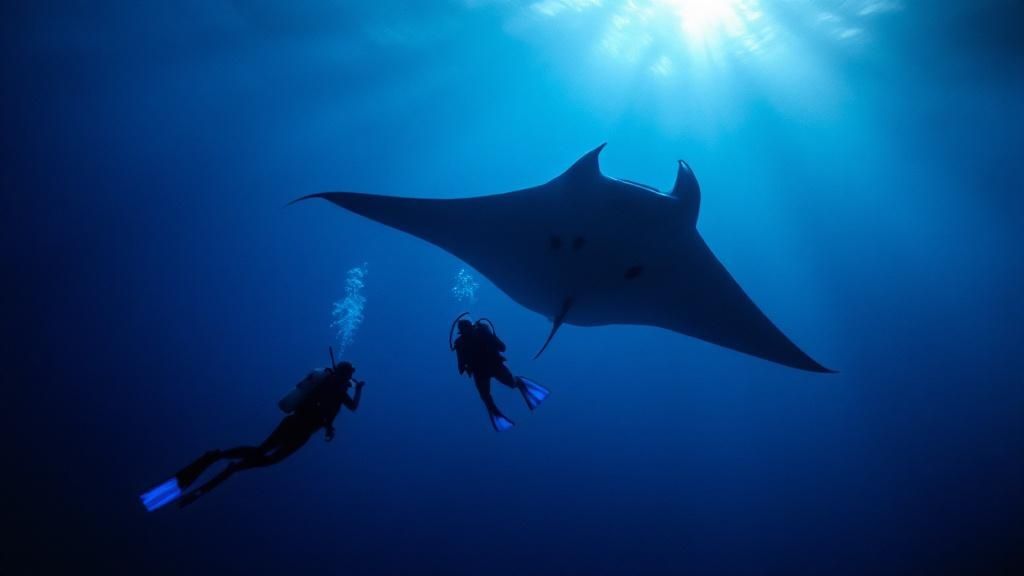
Hawaii’s Kona coast is famous for a lot of things, but for divers and snorkelers, it's the global headquarters for seeing manta rays. This is all thanks to a perfect storm of ecological factors. The local reef manta ray population is estimated to be over 450 different individuals, making it one of the largest and most reliable gatherings of these animals anywhere in the world.
So, why are they all here? These gentle giants, with wingspans that can stretch over 12 feet, are drawn to the coast by nutrient-rich currents that create massive blooms of plankton—their favorite meal. This dependable, all-you-can-eat buffet is the secret sauce behind Kona's incredible 85% to 90% success rate for manta sightings. On almost any given night, the show is on.
The experience itself is a true spectacle. You get to see these huge mantas performing graceful feeding ballets, often just inches away from you. It’s this consistent, up-close-and-personal interaction that has made Kona the place for manta ray ecotourism.
A Ballet of Light and Life
The magic behind the Kona manta ray dive is actually a brilliantly simple idea. Dive operators set up powerful, submerged lights. These lights attract swarms of plankton, and the mantas, being smart creatures, show up for the easy meal. The result is an underwater stage where they perform a mesmerizing dance.
You get a front-row seat to this incredible performance in one of two ways:
- Scuba Diving: If you're a certified diver, you'll head down to a shallow sandy bottom, about 30 to 40 feet deep. You'll settle in with other divers in what we call a "campfire" formation, shining your lights up. From there, you just watch as the mantas swoop and barrel-roll right over your head.
- Snorkeling: Not a diver? No problem. You'll float on the surface, holding onto a custom-made light board. From this vantage point, you look down as the mantas rise from the depths to feed in the light beams just a few feet beneath you.
Both options give you a breathtaking view of these magnificent animals. Understanding the unique setup of the Kona manta ray night dive makes it clear why it's such a reliable and awe-inspiring adventure.
For a quick overview of what to expect, here's a look at the dive at a glance.
Kona Manta Ray Dive At A Glance
| Aspect | Details |
|---|---|
| Location | Kona Coast, Big Island, Hawaii |
| Best Time to Go | Year-round, with consistently high sighting rates |
| Sighting Success | 85% – 90% chance to see manta rays |
| Manta Population | Estimated 450+ resident reef manta rays |
| Experience Type | Night dive or snorkel |
| Depth | 30-40 feet for divers; surface viewing for snorkelers |
| How It Works | Powerful lights attract plankton, which in turn attracts the feeding manta rays. |
| Key Attraction | Watching manta rays perform graceful barrel rolls and feeding maneuvers just inches away. |
As you can see, the experience is well-defined and accessible, but the operator you choose makes all the difference in having a safe and memorable trip.
Choosing a top-tier operator is the key to ensuring your experience is both amazing and safe. Kona Honu Divers has a long-standing reputation for excellence, thanks to their expert guides and meticulously maintained gear. They really focus on making your adventure flawless.
"Diving with mantas is one of the most satisfying things a person can do in the water. It’s impossible to describe the feeling of watching a massive fish the shape of a stealth bomber coming into vision." – Samuel Beckett, Planet Dive
Ready to see the magic for yourself? The first step to an encounter you'll talk about for years is booking your spot on a manta ray dive tour.
Meeting Kona’s Gentle Giants of the Deep
Before you even think about jumping in the water, let's get acquainted with the stars of the show. We’re not just talking about big fish; we're talking about the majestic manta rays that make the manta ray dive Kona so unforgettable. These are intelligent, social animals, each with its own personality. Getting to know them a little beforehand transforms the experience from just a cool dive into a real connection.
The mantas you'll meet are reef mantas, or Mobula alfredi. First thing's first: they are completely harmless. It’s a common question, and the answer is a relief for many. Unlike their stingray cousins, manta rays have no teeth, no barbs, and no stingers. If they get spooked, their only move is to glide away. It's this gentle spirit that makes these up-close encounters so calm and incredibly moving.
The Science Behind the Spectacle
So, how did this nightly underwater ballet even start? The "magic" is actually a brilliant and simple relationship that has developed over years of observation. It turns out, manta rays are smart, and they don't miss an opportunity for an easy meal.
The whole thing works like a well-rehearsed play:
- Lights On: After sunset, powerful (but eco-friendly) lights are placed in the water.
- Plankton Party: These bright lights act like a magnet for tiny microscopic critters called plankton—the manta's favorite food.
- Dinner Bell Rings: The local mantas have learned this trick. When the lights come on, they know the all-you-can-eat buffet is open for business.
This is exactly why Kona's manta ray dives are so reliable. You’re literally watching a learned behavior, a nightly ritual where people and wildlife come together in a way that’s both predictable and beautiful.
Knowing the Locals by Name
Here’s what really sets the Kona manta experience apart. For decades, local researchers and conservationists have been meticulously identifying individual manta rays by the unique spot patterns on their bellies. Think of it like a human fingerprint—no two manta rays have the same pattern.
This means you aren't just seeing a manta ray; you could be meeting a local celebrity. Your guides will often point out famous residents like "Big Bertha," "Lefty," or "Kailey," and even share stories about their history. Suddenly, you're not just observing wildlife; you're being introduced to an old friend of the ocean.
This is what makes the dive so personal. It builds a genuine respect and awe for these creatures, reminding you that you're a guest in their home and that each one is an individual with a life story.
This focus on identification is also crucial for conservation, as it helps scientists track the health and size of the local manta population.
Cultural Significance and a Modern-Day Marvel
These creatures hold a special place in Hawaiian culture, too. In Hawaiian tradition, they are known as 'hāhālua', a name that even appears in the ancient Kumulipo creation chant. Knowing this adds another layer of depth to your dive, connecting you to the rich heritage of the islands.
Today, the manta ray dive Kona is recognized worldwide as a top-tier marine wildlife experience. It's estimated that around 80,000 people come for these tours every year, making it a vital part of the Big Island's ecotourism. Its popularity, supported by dedicated local operators, highlights just how important responsible tourism is for protecting these amazing animals for future generations.
When you join a tour with a reputable company like Kona Honu Divers, you're more than a tourist. You become part of an ongoing story of science, conservation, and cultural appreciation. Booking a two-tank manta dive and snorkel adventure is more than just a tour; it's a chance to meet these gentle giants and support the work that keeps them safe.
Choosing Your Manta Adventure: Scuba Dive or Snorkel?
Alright, you’re set on seeing Kona’s famous manta rays, but now comes the big question: should you scuba dive or snorkel? Both options get you a front-row seat to the action, but they offer two completely different perspectives.
Honestly, there’s no wrong answer here. Choosing the right one just depends on your comfort in the water, your certification level, and who you’re traveling with. Think of it as deciding between sitting in the orchestra pit or the mezzanine for a Broadway show—both are amazing, just different. Let’s break them down so you can pick the perfect adventure for you.
The Scuba Diving Experience: An Immersive Front-Row Seat
If you're a certified scuba diver, this is the definitive way to see the mantas. The experience is often called the "underwater campfire," and for good reason. After a quick boat ride to the site, you'll descend with your guide to a sandy patch of ocean floor, usually around 35 feet deep.
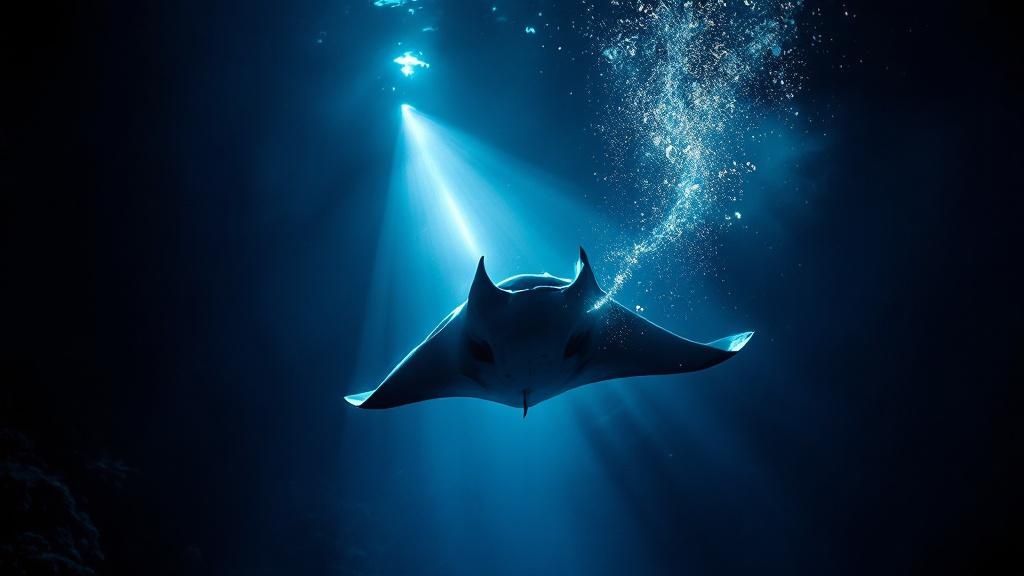
Once there, you and the other divers simply settle in, kneel down, and point your powerful dive lights up towards the surface. This column of light is like a dinner bell for plankton, and where the plankton go, the mantas follow. From your spot on the seafloor, you get to watch these gentle giants perform what can only be described as an underwater ballet, swooping and barrel-rolling just inches above your head. It’s an incredibly peaceful and mesmerizing experience.
Because you're stationary the whole time, it's a fantastic first night dive for newly certified divers who might be a little nervous about navigating in the dark. It’s controlled, well-lit, and utterly unforgettable.
The Snorkeling Experience: A Thrilling Surface View
Not a diver? No worries at all. The snorkeling tour offers an equally stunning view, just from a different angle. As a snorkeler, you'll hold onto a custom-built floating board that has powerful lights shining down into the water. Just put your face in, breathe through your snorkel, and watch the show unfold below.
The mantas are drawn to the light just the same. You'll see them rise from the dark depths to feed on the clouds of plankton congregating right under your board. Watching these massive animals glide so effortlessly toward the surface is a heart-pounding thrill you won't soon forget.
This is the perfect choice for:
- Non-divers and families with kids.
- Anyone who feels more comfortable staying on the surface.
- Groups with a mix of divers and non-divers who want to share the experience.
Manta Ray Dive vs. Snorkel: Which Is Right For You?
Still on the fence? Let's put the two experiences side-by-side. Both get you up close with the mantas, but they cater to very different preferences.
Manta Ray Dive vs Snorkel Which Is Right For You
| Feature | Scuba Diving | Snorkeling |
|---|---|---|
| Certification | Open Water Scuba Certification required. | No certification needed; basic swimming ability required. |
| Perspective | Bottom-up view; mantas glide directly overhead. | Top-down view; mantas swoop up from the depths. |
| Position | Stationary on the sandy ocean floor (approx. 35 ft). | Floating on the surface, holding onto a lighted board. |
| Physical Needs | Good physical health for scuba diving. | Comfortable with being in open water at night. |
| Best For | Certified divers seeking an immersive, close-up view. | Non-divers, families, and those preferring a surface activity. |
| Gear | Full scuba equipment provided (BCD, regulator, tank). | Mask, snorkel, and wetsuit provided. |
No matter which adventure you pick, you're plugging into a unique natural phenomenon that has made Kona world-famous. You become the catalyst—your light attracts the plankton, which brings in the mantas for their nightly feast. To learn more, take a look at our complete guide to the https://konahonudivers.com/kona-manta-ray-night-dive/.
Ultimately, you can't go wrong. Both the dive and the snorkel deliver one of nature's most spectacular shows.
How To Prepare For Your Manta Ray Encounter
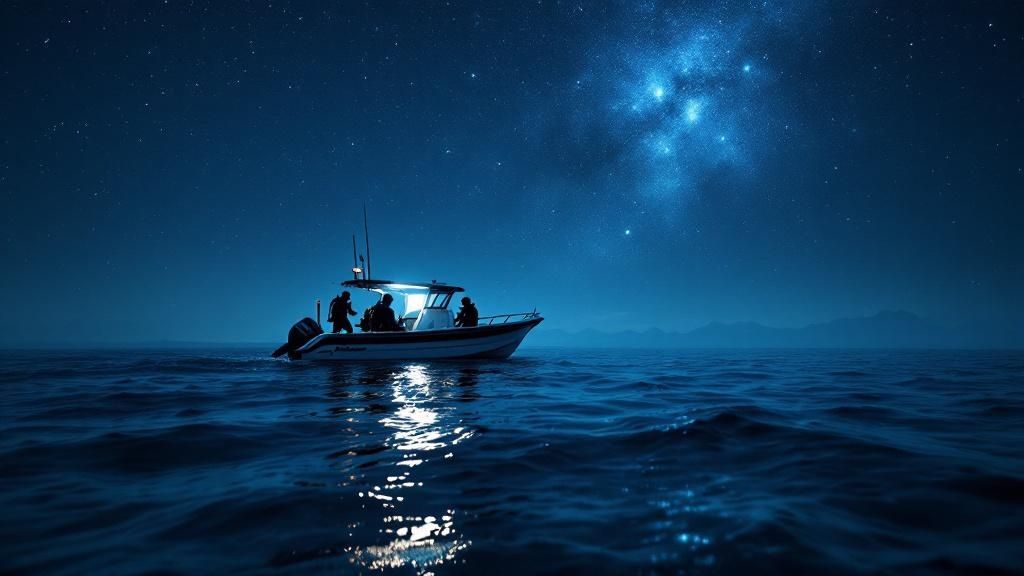
A little prep work can make the difference between a good night and an absolutely unforgettable one. Think of this as your pre-dive checklist—everything you need to know to feel comfortable, confident, and ready for one of the most incredible wildlife experiences on the planet.
Getting ready is part of the adventure. It’s all about packing smart, knowing what to expect, and showing up ready to witness something truly special.
What to Bring (and What to Leave Behind)
The good news is, you don't need much. Your tour operator, like Kona Honu Divers, provides all the big stuff: snorkel or dive gear, wetsuits, and the lights that attract the plankton. Your job is just to bring a few personal items to stay comfortable.
Here’s a quick list of what I always recommend packing:
- A Towel and Dry Clothes: Even in Hawaii, the boat ride back to the harbor can get surprisingly chilly once you’re out of the water. Having a warm, dry set of clothes and a towel makes the trip home much more pleasant.
- A Reusable Water Bottle: Hydration is key, especially after being in saltwater.
- Motion Sickness Medication: If you're even a little prone to seasickness, take your preferred remedy before you get on the boat. The ride is usually short and smooth, but it’s always better to be prepared.
Just as important is what not to bring. The number one thing to leave at your hotel is traditional sunscreen. The chemicals in most sunscreens are incredibly damaging to our fragile coral reefs. Since this is a night dive, you won't need it anyway.
The Golden Rule: Observe, Don't Touch
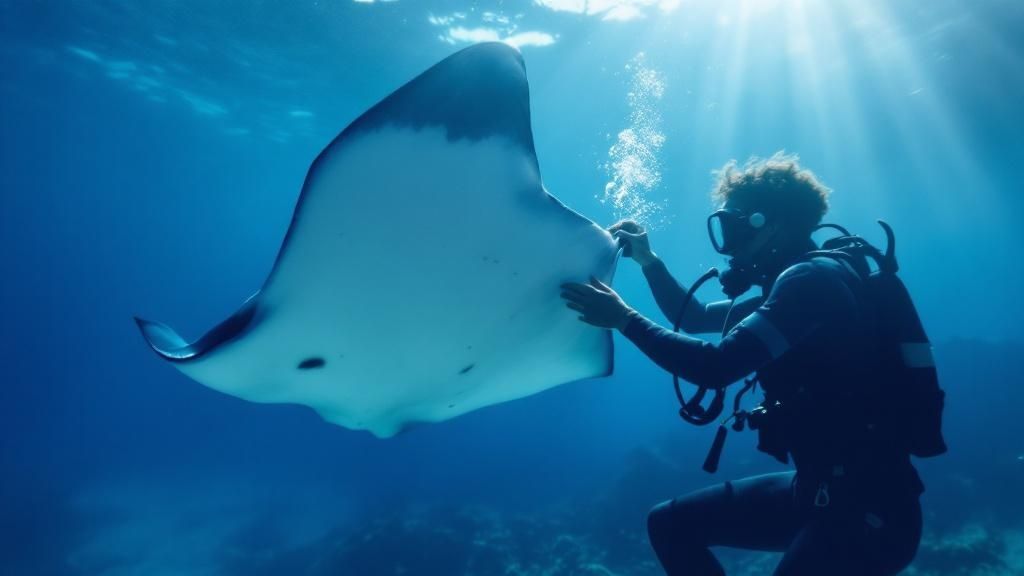
This is the most critical rule of the entire experience: never, ever touch the manta rays. Their bodies are coated in a protective slime layer, which is basically their immune system. Touching them can rub it off, leaving them exposed to dangerous infections. Just relax and let them lead the dance—they'll often glide within inches of you all on their own.
Mental and Physical Prep
Beyond what's in your bag, a little mental preparation goes a long way. First off, always remember you're a guest in the home of wild animals. While Kona's manta dive has a sighting success rate of over 90%, it's never a 100% guarantee. That's why I always suggest booking your tour for early in your vacation; if you happen to hit a rare "no-show" night, you'll have time to reschedule.
Pay close attention during your pre-dive briefing. Your guide or divemaster will walk you through all the safety procedures, hand signals, and the plan for the night. This briefing is what makes the whole operation run so smoothly and safely for both people and mantas.
Honestly, the most important decision you'll make is choosing a top-notch operator. A professional, experienced crew is everything. Kona Honu Divers has built its reputation on safety, education, and creating an amazing experience for every guest. Their guides don't just keep you safe; they share incredible stories and facts about the individual mantas you'll meet.
When you feel prepared and trust your crew, you can let go of any stress and just immerse yourself in the moment. All that’s left is to breathe, watch, and enjoy the show. This simple prep is your first step toward an evening you'll be talking about for years to come.
Ready to book this bucket-list adventure? Securing your spot on a manta ray dive tour is the next step.
Discovering Kona’s Premier Manta Ray Dive Sites
The real magic of the Kona manta ray experience isn't just what you see, but where you see it. Along the Kona coast, a couple of very special spots have become world-famous underwater stages for this nightly spectacle. These aren't just random locations; they're specific, well-established feeding grounds where mantas have been gathering for decades.
Knowing the "where" and "why" behind these sites adds a whole new layer of appreciation to the adventure. Two locations, in particular, are the pillars of the Kona manta experience: Manta Village to the south and Manta Heaven up north.
Manta Village: The Original Manta Hotspot
Just south of Kailua-Kona in Keauhou Bay lies Manta Village, the place where it all began. The story goes that decades ago, a hotel switched on its bright oceanfront lights. Those lights drew in swarms of plankton, and it didn't take long for Kona's brilliant manta rays to discover this new, all-you-can-eat buffet.
What makes Manta Village so special is its incredible history and consistency.
- Location: Situated right off the coast of the Sheraton Keauhou Bay Resort & Spa.
- Reliability: It boasts one of the highest success rates for manta sightings, often hitting over 95%.
- Accessibility: It’s just a quick and comfortable boat ride from Keauhou Harbor, which is a huge plus for anyone who gets a little queasy on the water.
The shallow, protected bay provides a calm and controlled setting, making it a fantastic spot for both scuba divers and snorkelers. Because of the long history here, the mantas are completely comfortable with the lights and the presence of human observers.
Manta Heaven: A Grand Underwater Stage
Travel a bit further north, near the Kona International Airport, and you'll find a site people lovingly call Manta Heaven. By day, it's known as Garden Eel Cove, but by night, it transforms into another premier stage for the manta ballet. While Manta Village is legendary for its reliability, Manta Heaven is often celebrated for the sheer number of mantas that can show up.
On a good night, it’s not unusual for a dozen or more mantas to join the feeding frenzy, creating a truly jaw-dropping spectacle of organized chaos. The success rate here is also fantastic, hovering around 90%, but the shot at a bigger group gives it a unique appeal. It's an amazing place to witness the large-scale social feeding behaviors of these magnificent animals.
The consistency of these sites isn't just local lore. It's backed by years of careful observation and data that have cemented Kona's reputation as a global manta hotspot.
Long-term research has been critical for understanding the behavior and population of Kona's mantas. For instance, from 2009 to 2014, scientists meticulously documented sightings at Manta Village and Manta Heaven. This created a detailed database that tracked individual mantas and their movements, giving us a deeper appreciation for them as individuals with their own stories.
How Do Operators Choose the Best Site?
So, how do you know which site you’ll be visiting? This is where the expertise of a seasoned crew, like the one at Kona Honu Divers, really shines. The decision isn't made until the day of the trip, and it comes down to a few key factors:
- Current Conditions: They'll check the wind, swell, and visibility to make sure the trip is safe and comfortable.
- Recent Manta Activity: Captains and guides are always talking, sharing intel on where the mantas have been most active.
This flexible approach is all about giving you the best possible shot at an incredible encounter. By trusting your crew, you can relax and know you're headed to the best spot for that night's show.
Whether you end up at Manta Village or Manta Heaven, you're taking part in a truly special ecological phenomenon. Booking a manta ray dive tour isn't just about going for a dive; it's about getting a front-row seat to one of the greatest natural theaters on Earth.
Exploring More Epic Dives Around Kona
While the legendary manta ray dive Kona experience is an absolute must-do, it's really just the tip of the iceberg. The Big Island is a world-class diving destination, and once you've seen the manta ballet, you'll be itching to see what else lies beneath the waves. Trust me, the adventure doesn't stop there.
The same volcanic history that created the perfect manta feeding grounds has also sculpted a dramatic underwater world. We're talking ancient lava tubes, awe-inspiring archways, and vibrant reefs bursting with life. Add in some of the best visibility in Hawaii—often exceeding 100 feet—and you have a diver's playground just waiting to be explored.
The Surreal Kona Blackwater Dive
If you thought the manta dive was otherworldly, get ready for something that feels like a trip to another dimension. The Kona Blackwater Dive is a completely unique night dive, unlike anything else you'll ever experience. Instead of exploring a reef, you're drifting in the deep, dark, open ocean, suspended over thousands of feet of water.
This is where you witness one of the planet's largest migrations. Bizarre and beautiful deep-sea creatures rise toward the surface to feed under the cover of darkness. You'll come face-to-face with organisms that look like they're straight out of a sci-fi movie—translucent squids, strange larval fish, and shimmering bioluminescent jellies. It's a surreal, humbling adventure that will forever change how you see the ocean. For any adventurous diver, it's a can't-miss experience. You can learn more about the Kona Blackwater Dive tour here.
Advanced Dives and Lava Formations
For more seasoned divers, Kona serves up some thrilling opportunities to test your skills and explore more challenging environments. The island's volcanic past has left behind a maze of underwater structures perfect for exploration. Just imagine swimming through ancient lava tubes and massive archways carved by nature over millennia.
These advanced dives offer a different kind of thrill—it's the pure excitement of discovery, of navigating complex and beautiful environments. This is where your training and passion for diving really come together for an unforgettable day.
Kona Honu Divers offers a full range of diving tours that showcase this incredible diversity. For those looking to get to the deeper, more remote sites, you should definitely check out a premium advanced dive trip.
Your Manta Ray Dive Questions Answered
As you get ready to book your manta ray dive in Kona, you probably have a few questions. It's only natural! Let's walk through some of the most common ones so you can feel completely at ease and excited for your trip.
Is the Kona Manta Ray Dive Safe?
Yes, it's incredibly safe, especially when you go with a professional, certified operator like Kona Honu Divers. The manta rays themselves are completely harmless—they're gentle giants with no teeth, stingers, or barbs.
The real focus on safety comes down to standard snorkeling and scuba diving protocols. Your guides will give you a detailed briefing before you get in the water, manage the group throughout the dive, and make sure everyone sticks to the golden rule: look, but don't touch the mantas. The dive sites are shallow and well-known, making for a very controlled and secure experience.
What If I've Never Done a Night Dive Before?
No problem at all! In fact, the manta ray dive is the perfect introduction to night diving. It’s not what you might be picturing. You won’t be swimming around a dark reef trying to navigate.
Instead, you'll descend to a well-lit spot on the sand, about 30-40 feet deep. Think of it like gathering around a "campfire" on the ocean floor. You simply kneel or sit and watch the show unfold as powerful lights illuminate the entire area. With divemasters right there with you, it's a comfortable and amazing first taste of diving after dark. You can get a deeper feel for the experience by reading our guide on what it’s like to go on the manta ray dive in Kona, Hawaii.
Are Manta Sightings Guaranteed?
Kona is one of the most reliable places on Earth to see manta rays, with a success rate of over 90%. That said, these are wild animals in their natural habitat, so a sighting can never be 100% guaranteed.
On the very rare night that the mantas decide not to show up, most reputable operators offer a "manta guarantee." This usually means you can come back and try again on another tour for free.
What's the Best Time of Year for the Manta Ray Dive?
This is the best part—anytime! The manta ray dive in Kona is a phenomenal, year-round activity. Our local reef manta population doesn't migrate, so they are here for us to see every single month.
The water stays warm and the conditions are generally calm throughout the year, making this a dependable adventure no matter when you plan your Hawaiian vacation.
Hopefully, that clears things up! With your questions answered, the only thing left to do is book your spot. For an expertly guided and truly unforgettable adventure, Kona Honu Divers is excited to show you the magic of the mantas.