
Picture this: you slip into the warm, dark Pacific waters just as the sun disappears over the horizon. The ocean is quiet, almost serene. Then, out of the darkness, enormous, shadowy figures appear. They glide effortlessly through beams of light, like silent acrobats performing an underwater ballet. This is the world-famous manta ray dive in Kona, an experience that’s consistently voted one of the most magical wildlife encounters on the entire planet.
What Is the Kona Manta Ray Night Dive?
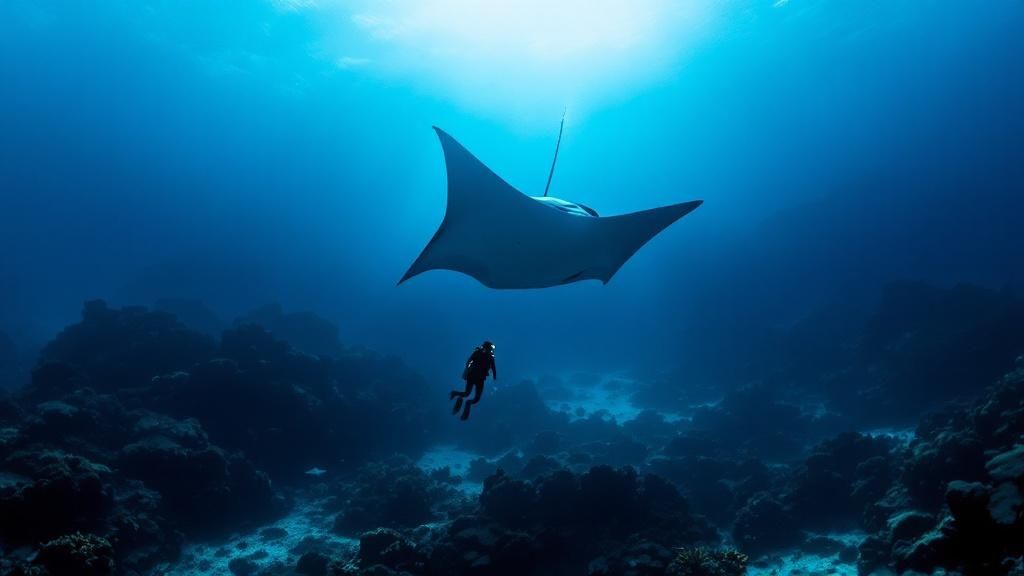
The Kona manta ray dive isn't just another dive—it's a genuine spectacle. It’s a beautifully simple concept that brings people and nature together for an unforgettable show.
After sunset, dive boats head out to specific sites along the Kona coast known as manta feeding grounds. Once there, powerful, eco-friendly lights are set up. For divers, this often means a central light structure on the ocean floor, while snorkelers gather around a floating light board on the surface. These lights act like a massive bug zapper for the ocean, attracting huge, shimmering clouds of phytoplankton—the tiny organisms that manta rays love to eat.
The Underwater Ballet Begins
With the "plankton buffet" officially open, the stars of the show make their grand entrance. Resident manta rays, drawn by the easy meal, swoop in to feed. They perform these incredible, graceful barrel rolls and loop-the-loops, their cavernous mouths wide open to filter the plankton from the water.
If you're diving, you'll be settled on the seafloor, looking up as these gentle giants, with wingspans that can stretch over 12 feet, soar just inches above your head. As a snorkeler, you get a bird's-eye view, watching the mesmerizing dance unfold in the water just below you.
This nightly performance has made the Kona coast the world’s most reliable spot for seeing manta rays. While encounters in other places can be hit-or-miss, the Kona dive has an incredibly high success rate, landing it on the bucket list of ocean lovers everywhere. For a deeper dive into what makes this trip so special, check out our complete guide to the manta ray night dive in Kona.
Why Choosing the Right Guide Matters
The quality of your adventure really comes down to the tour operator you pick. A safe, respectful, and truly awe-inspiring trip depends on going with a premier company. Experienced guides who understand manta behavior and prioritize the animals' well-being are key to getting the best, most ethical experience possible. They know exactly where to go and how to position you to witness this natural wonder up close.
This isn't just about ticking a box and seeing marine life. It’s about being part of a sustainable interaction that has been perfected over decades. It elevates a simple dive into a profound connection with one of the ocean's most majestic creatures, creating a memory you’ll truly never forget.
Why Kona Is the World’s Manta Ray Capital
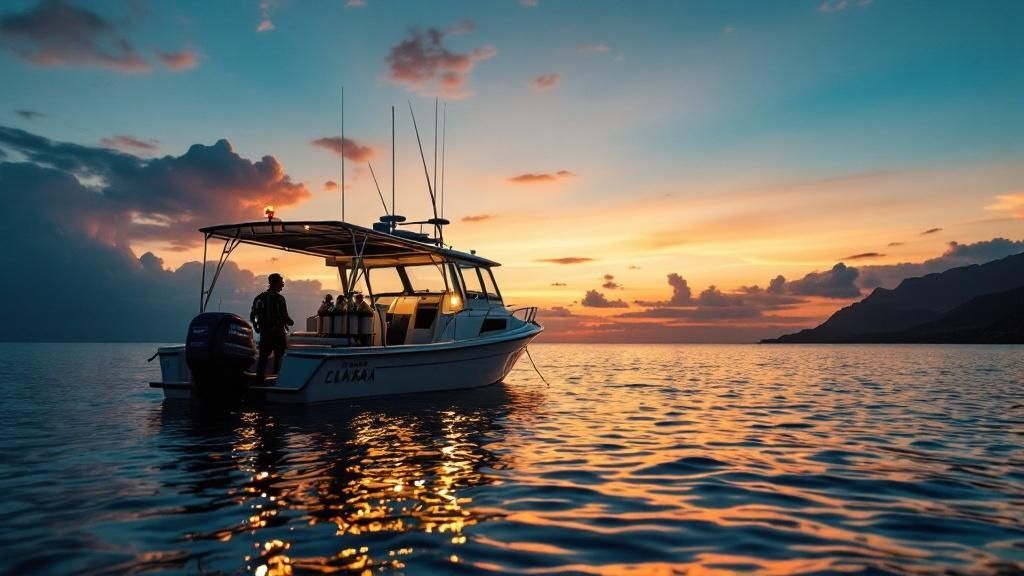
It’s a bold claim, but Kona has truly earned its title as the most reliable place on Earth to see manta rays. This isn't just a lucky coincidence. It's the result of a perfect storm of geography and biology that sets the stage for a nightly spectacle you won't find anywhere else. The island's western coastline naturally creates calm, sheltered bays, which are perfect for both divers and the marine life we come to see.
This protected environment allows a rich ecosystem to flourish, especially the plankton that manta rays feed on. While many other manta hotspots around the globe depend on seasonal migrations, Kona is home to a massive resident population. They live here all year, drawn by a dependable, all-you-can-eat plankton buffet.
This is what makes the manta ray dive in Kona such a uniquely consistent wildlife encounter. The whole thing started decades ago when hotels along the coast began lighting up the shoreline. They unknowingly created a nightly feast for the mantas, and the rays have been showing up for dinner ever since.
Manta Village and Manta Heaven
Over the years, two main sites have become the stuff of legend in the dive community. Both are incredible, but they each have their own personality.
- Manta Village (Keauhou Bay): This is the original, classic spot right offshore from the Sheraton Kona Resort. It's famous for an almost unbelievable success rate, with manta sightings on well over 90% of nights. It's easily accessible and incredibly reliable.
- Manta Heaven (Garden Eel Cove): A bit further north, closer to the airport, this site is known for often attracting even larger groups of mantas. It can be absolutely breathtaking, with a higher average number of rays appearing on any given night.
Both locations provide the perfect underwater stage for the mantas' feeding ballet. Your dive operator will usually choose the best site based on the conditions for that evening, but either way, you’re in for a world-class show. This experience truly elevates scuba diving Kona, Hawaii, into something unforgettable.
The secret to it all is beautifully simple: lights attract plankton, and plankton attracts mantas. This reliable food source is what keeps the rays coming back, turning a dive into an almost guaranteed encounter with nature at its most majestic.
When Is the Best Time to Go?
Here’s the best part: the Kona manta dive is a year-round event. Because the mantas live here, you have a fantastic chance of seeing them any night you decide to go.
That said, some months offer slightly better conditions. The sweet spot for the manta ray dive in Kona is typically from April to October. The water is warmer and the seas are calmer, with temperatures hovering between a pleasant 75 to 80°F (24-27°C). This is prime time, drawing many of the 80,000 people who come for this experience each year. It’s not uncommon to see 8 to 12 mantas during a single dive in these months.
But don't worry if your trip falls outside that window, because sightings are consistently high all year. There's really no "bad" time to go. For a deeper dive into how the seasons might affect your trip, check out our guide on the best time of year to see manta rays in Kona.
Meeting Kona’s Famous Gentle Giants
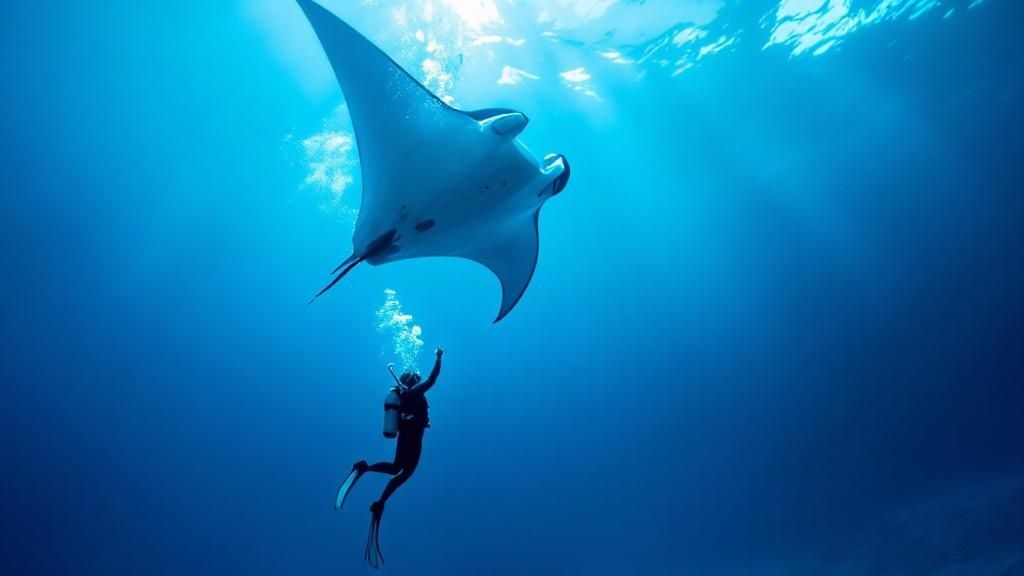
The manta ray dive in Kona is so much more than just a wildlife sighting. It's a genuine introduction to some of the ocean’s most incredible personalities. When you slip into that dark water, you’re not just seeing random animals. You’re meeting individuals with names, backstories, and quirks that the local dive community has known for years, turning a simple tour into a truly meaningful encounter.
So, how do they tell them apart? The secret is on their bellies. Every single manta ray has a unique constellation of black spots on its white underside, which works just like a human fingerprint—no two are the same. This natural marker is what allows local researchers and divemasters to identify and track individual rays over their entire lives. Your guide won't just point and say, "There's a manta ray"; they'll tell you who you're seeing.
You might hear the crew call out names like "Big Bertha," "Lefty," or "Sugar Ray." These aren't just cute nicknames; they're the identities of Kona's underwater celebrities. Hearing their stories—like how Lefty got his name from a damaged fin or that Big Bertha is one of the largest and oldest rays here—creates a connection that goes far beyond a typical dive.
Understanding Kona's Manta Rays
This incredible identification effort has been going on for decades. Researchers began systematically cataloging the Kona manta population way back in 1991, meticulously photographing and recording each ray's unique ventral spot pattern. This massive, long-term project has built an extensive database that now includes over 330 individual mantas—a mix of both the reef manta ray (Mobula alfredi) and the giant manta ray (Mobula birostris) found in Hawaiian waters.
The numbers are staggering. Over just one 14-year period, this database logged nearly 6,000 encounters and an astonishing 28,500 individual manta sightings. It’s a remarkable citizen science project, and you can dive deeper into its findings on manta ray identification to see how it all works.
This deep well of knowledge is what makes the experience here so rich. When you book your adventure with a top-tier operator like Kona Honu Divers, you’re plugging directly into this wealth of information.
Their guides live and breathe this stuff, and their passion for sharing it helps you truly appreciate the intelligence and gentle nature of these amazing animals.
The Famous Manta Barrel Roll
One of the most breathtaking things you'll see is the famous "barrel roll." As the mantas feast on the thick clouds of plankton attracted by the lights, they perform these graceful, acrobatic somersaults to get every last bite. With their huge mouths wide open, they glide forward and then loop completely backward, filtering as much plankton-rich water as they can.
This isn't just for show; it's a highly efficient feeding strategy. Watching this elegant, purposeful ballet from just feet away is an absolute highlight of the manta ray dive in Kona and a powerful reminder of how clever these creatures are.
When you understand these behaviors and can recognize the individuals, you show up to the dive site as more than just a tourist—you're an informed visitor, ready to meet the gentle giants you’re about to share the water with. Booking the right manta ray dive tour is what makes this full, educational, and deeply personal experience possible.
How to Plan Your Manta Ray Adventure
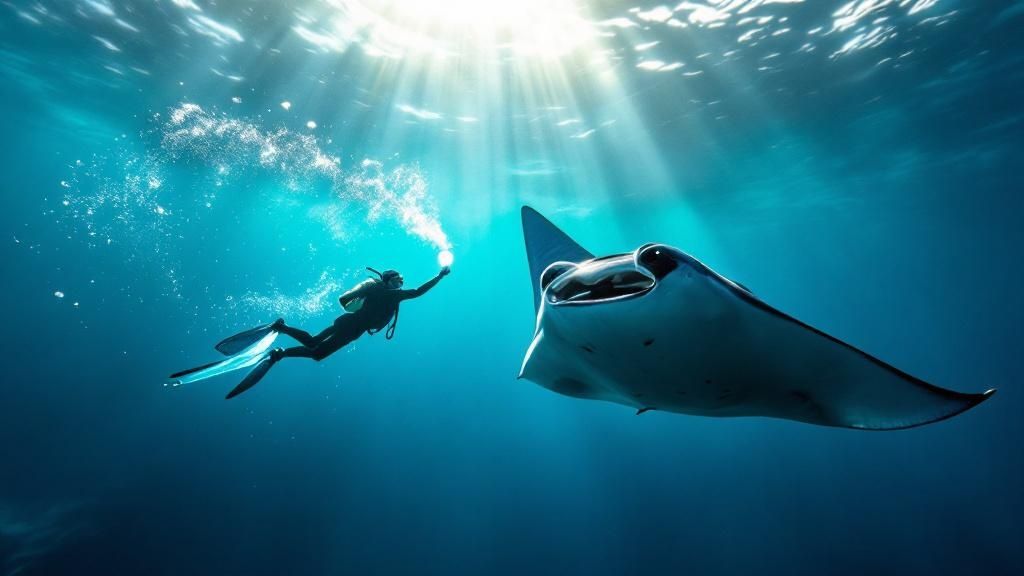
Alright, you’ve seen the photos, you’ve heard the stories, and now you’re ready to experience the magic for yourself. So, how do you turn this dream of swimming with mantas into a reality? Planning your manta ray dive in Kona is surprisingly easy, but a few key decisions will make all the difference in crafting your perfect adventure.
The biggest choice you'll make right out of the gate is deciding how you want to see the show: from beneath the waves as a scuba diver or floating on the surface as a snorkeler. Each offers a completely different, yet equally incredible, perspective. There’s no right answer—it’s all about what suits your comfort, your experience level, and the kind of memory you want to create.
Diving vs Snorkeling: Which Manta Ray Experience Is Right For You?
Choosing between diving and snorkeling really boils down to the viewpoint you're after. I like to use the analogy of watching a parade: you can either have a front-row seat on the curb, looking up as the floats go by (that's diving), or you can get a fantastic bird's-eye view from a balcony above (that's snorkeling). Both are amazing, but the feeling is completely different.
To help you decide, let's look at what sets these two experiences apart.
| Feature | Scuba Diving | Snorkeling |
|---|---|---|
| Perspective | A bottom-up view, watching the mantas swoop and glide directly overhead. | A top-down view, floating on the surface while the action unfolds below. |
| Proximity | Incredibly close encounters. You'll be watching them feed just inches above you. | You're still close, but the mantas are typically a few feet below the surface. |
| Requirements | Scuba certification is a must. | No certification needed, just basic swimming skills. |
| Effort Level | Minimal physical effort. You'll likely kneel or sit on the sandy bottom. | A bit of effort is needed to hold onto the flotation board and stay positioned. |
At the end of the day, divers get the full "IMAX" experience, looking up as these gentle giants dance right above their heads. Snorkelers get a stunning panoramic view of the entire scene, taking in the beautiful, organized chaos of the feeding frenzy. You can't go wrong with either one.
Choosing a Top-Tier Tour Operator
Your next big decision—and arguably the most important one—is picking the right crew to guide your adventure. A fantastic operator is the key to a safe, ethical, and truly awe-inspiring trip. They can turn a good night into an unforgettable, lifelong memory.
Here’s what you should be looking for when booking your manta ray dive in Kona:
- An Impeccable Safety Record: Seek out companies with experienced, certified divemasters and captains who make safety their absolute top priority. No exceptions.
- Small Group Sizes: Smaller groups mean a more personal, less crowded experience. You'll get more attention from your guide and more unobstructed views of the mantas.
- A Commitment to Conservation: Choose operators who adhere to the Manta Ray Green List standards, even though the official list is no longer active. This shows a deep respect for the animals and their fragile habitat.
- High-Quality Gear and Boats: A well-maintained boat and reliable rental equipment aren't just about comfort; they're a clear sign of a professional and trustworthy operation.
A truly great tour company doesn’t just take you to see the mantas; they educate you about them. Their passion for marine life is infectious and makes the entire trip more meaningful. They are stewards of this incredible natural wonder.
This is exactly why we often point people toward the manta ray dive tours page with Kona Honu Divers. Their dedication to small groups, education, and safety really sets the standard for what a responsible manta tour should be.
What to Pack and What to Expect
The good news? You don’t need to pack a ton of gear. Any quality tour operator will provide just about everything you need for the in-water part of the excursion.
What a quality operator provides:
- All the necessary scuba or snorkel gear (wetsuits, masks, fins, tanks, etc.)
- Powerful lights for attracting the plankton
- Snacks and drinks to enjoy on the boat
- A comprehensive safety and educational briefing before you get in the water
What you should bring:
- A towel to dry off with after your swim
- A warm, dry set of clothes to change into for the boat ride back to shore
- A light jacket or hoodie—it can get surprisingly chilly on the water at night!
- Any personal seasickness medication, just in case you're prone to it
With these simple preparations out of the way, you'll be all set for an adventure you’ll be talking about for years to come. The only thing left to do is book it and get excited.
Diving with Aloha: Responsible Manta Tourism
Taking part in the manta ray dive in Kona is so much more than just a thrilling adventure; it's a chance to be a respectful guest in their world. For one incredible night, you're not just a spectator—you're a guardian of this unique experience, and how you act directly impacts its future. Knowing the "rules of engagement" isn't about restriction; it's about protecting the mantas and ensuring this magic can continue for years to come.
Think of it like visiting a sacred, ancient temple. You wouldn't just barge in; you'd follow certain customs out of respect for the place and its history. The same principle holds true in the underwater cathedral where the mantas gather. These rules create a peaceful, safe space where the mantas can feed naturally, without stress or harm from us.
The Rules of Engagement and Why They Matter
When you go out with a reputable crew, your guide will give you a detailed briefing on how to interact—or, more accurately, how not to interact—with the mantas. The rules are simple, but they are absolutely critical for protecting these gentle giants.
The main idea is passive observation. You’re there to witness a natural spectacle, not to become part of it. This means finding your spot, whether that's on the sandy bottom as a diver or holding onto the light board as a snorkeler, and simply letting the show unfold around you.
By far, the most important rule is to never, ever touch a manta ray. Their skin is covered in a delicate mucus layer that works like our immune system, protecting them from infection. When we touch them, we can rub off that protective coating, leaving them vulnerable to disease.
Simple Guidelines for a Respectful Encounter
For you and the mantas to have the best possible experience, just keep these simple guidelines in mind:
- Stay in Your Spot: Divers should find a place on or near the sandy bottom. Snorkelers should stay at the surface, holding onto the light board. This creates a clear "water column" in the middle, giving the mantas a safe freeway to glide through.
- No Chasing or Grabbing: This one’s a biggie. Never pursue a manta ray. Let them come to you. Chasing them is stressful and can easily spook them, causing them to leave the area and ruining the experience for everyone.
- Watch Your Bubbles: If you're diving, try to time your breathing. Avoid exhaling a big cloud of bubbles right into a manta’s path as it swoops overhead. It's like someone blowing smoke in your face while you're trying to eat.
- Control Your Gear: Be mindful of where your camera, fins, and other equipment are at all times. Keep everything tucked in close to your body to avoid accidentally bumping a manta or damaging the fragile reef below.
Following these rules helps ensure the manta ray dive in Kona remains a sustainable, ethical encounter that protects the very animals we're so lucky to witness.
How Your Dive Supports Manta Conservation
Choosing to go with a responsible tour operator does more than just give you an amazing story to tell—it actively supports conservation. The Kona manta dives are a powerful economic force for the local community, bringing in over $2.5 million USD every year. This financial impact was a key argument in passing a Hawaii State law on June 5th, 2009, that made it illegal to intentionally kill or capture manta rays in state waters. To learn more about this, you can read up on the details of Hawaii's manta ray conservation efforts.
This legal protection is a huge deal. Globally, manta rays face serious threats from fishing, and because they reproduce so slowly, their populations are incredibly fragile. By booking with a responsible company, you're casting a vote for conservation and proving that these magnificent animals are worth far more alive than dead.
The best dive operators aren't just boat captains; they are passionate educators and fierce advocates for the ocean. They share invaluable data with researchers, organize cleanup dives, and instill a sense of kuleana (a uniquely Hawaiian value of deep responsibility) in every guest they take out. When you book a tour, you become part of this positive cycle, helping to ensure Kona’s manta rays will continue to grace our waters for generations to come.
Your Kona Manta Ray Dive Questions, Answered
Even after getting pumped up for the adventure, it's totally natural to have some questions rattling around before you book a manta ray dive in Kona. This is where we tackle the common "what ifs" and "how does thats" we hear all the time. We want you to feel completely confident and ready for what will undoubtedly be a highlight of your trip.
Think of this as a quick chat to clear up any last-minute details. We'll cover everything from certifications to safety so you can click that "book now" button with total peace of mind.
Do I Need to Be Scuba Certified to See the Manta Rays?
Nope, and this is probably the biggest myth out there! You absolutely do not need to be a scuba diver to have a mind-blowing encounter with the mantas.
While divers get that incredible view from the seafloor looking up, snorkelers get an equally amazing, top-down perspective. How does it work? Reputable operators like Kona Honu Divers have this down to a science. They use big, custom-built flotation boards with powerful lights shining down into the water.
You just hang on, dip your face in, and watch the show unfold. The light attracts a buffet of plankton, and the mantas swoop in to feast just feet below you. It’s a brilliant setup that’s perfect for everyone—families, non-divers, or anyone who just wants a simpler, less gear-intensive experience.
Is the Manta Ray Night Dive Safe?
Yes, it’s an incredibly safe and well-managed activity, especially when you go with a professional crew. The two primary sites, "Manta Village" and "Manta Heaven," are tucked into shallow, protected bays. They are typically only 25-40 feet deep, which shields them from the big ocean swells and currents.
Safety is the absolute number one priority for these tours. You'll get a detailed safety briefing before you even touch the water, and your divemasters are with you the entire time, keeping a watchful eye and making sure everything runs like clockwork.
It’s also worth remembering that manta rays are the definition of gentle giants. They have no teeth, no stingers, and no barbs. They're filter feeders completely uninterested in humans. The biggest thing you can do to ensure your safety is to choose a high-quality operator that sticks to the established rules.
What Is the Best Time of Year to Do the Manta Ray Dive?
Here’s the best part: there is no bad time! The Kona coast is home to a massive resident population of manta rays, so they don’t migrate away for winter. They’re here all year, and tours run nearly every single night.
That said, if you’re trying to pick the absolute perfect time, most people would point to the summer months, roughly from April to October. The water is a bit warmer (a comfortable 75-80°F or 24-27°C) and the ocean is generally flatter.
While the success rate hovers above 90% all year long, some feel the gatherings are a little larger during these warmer months. But honestly, no matter when you come, your chances of a spectacular show are fantastic. Still wondering why you should go on a manta ray dive in Kona? That incredible reliability is a huge piece of the puzzle.
What if I Am an Experienced Diver Looking for More?
The classic manta night dive is a bucket-list experience for divers of all stripes, but if you're an advanced diver looking to stretch your fins, the Big Island has you covered.
Many local shops offer premium charters that go beyond the usual spots. These trips are designed for more experienced divers and often explore deeper reefs, stunning lava tube swim-throughs, and remote pinnacles where you might spot different shark species. It's a fantastic way to see another side of Kona's underwater world.
But for a truly unique, almost surreal experience, you have to try the Kona Blackwater Dive. This isn't a reef dive. You're tethered to the boat, drifting in the deep open ocean at night, witnessing the planet's largest vertical migration. Strange, bioluminescent creatures you'd never see otherwise rise from the abyss. It’s an unforgettable adventure for any serious diver.