
There's a good reason the manta ray dive in Kona is famous all over the world. It’s hands-down one of the most reliable and genuinely magical wildlife encounters you can have anywhere on Earth.
Picture this: you're floating in the warm, dark Pacific Ocean. Suddenly, giant, graceful creatures with wingspans wider than a car are swooping and barrel-rolling just inches from your face. This isn't just a dive; it's an underwater ballet, and these gentle giants put on a show almost every single night right here off the Big Island's coast.
Your Guide to the World-Famous Kona Manta Ray Dive
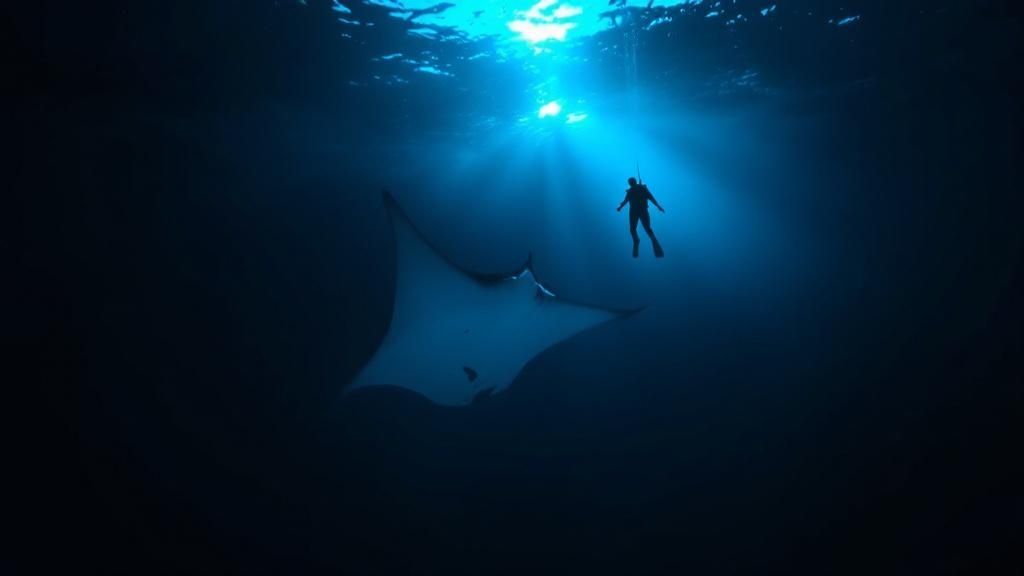
Welcome to the ultimate guide for the manta ray dive in Kona, a true bucket-list experience for ocean lovers. So, what makes this night dive so special? The whole thing started as a brilliant, almost accidental, discovery. Decades ago, a hotel on the Kona coast shone bright lights into the ocean after dark. These lights attracted swarms of microscopic organisms called plankton.
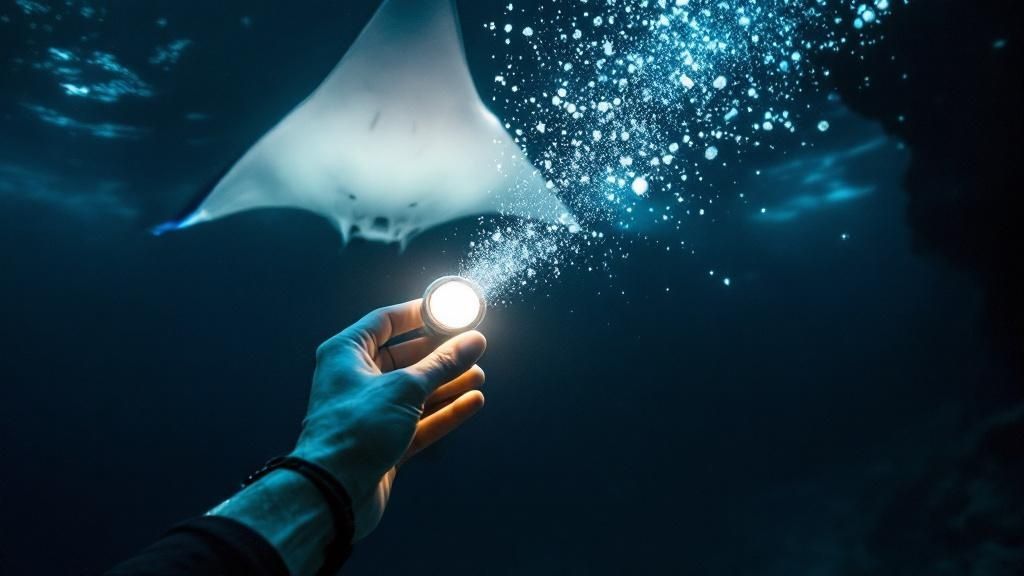
It didn't take long for the local reef manta rays to discover this easy, all-you-can-eat buffet. Dive operators quickly realized they could recreate this phenomenon. Today, we create an underwater "campfire" of light on the ocean floor, which draws in the mantas for a feeding spectacle right before your eyes. This isn't just another dive—it's an immersive show unlike anything else.
Why Is Kona the Manta Ray Capital?
Kona isn't just a great place to see manta rays; it's arguably the best. This is all thanks to a perfect storm of geography, biology, and years of responsible tourism. The Kona coast is naturally sheltered from the heavy trade winds, which means we get consistently calm waters—perfect for both the mantas and the divers who come to see them.
To get a quick overview of what makes this dive so unique, check out the key details below.
Kona Manta Ray Dive At a Glance
| Aspect | Details |
|---|---|
| Manta Population | A resident population of over 450 identified individuals. |
| Dive Depth | Typically between 30 to 40 feet, making it accessible for most divers. |
| Water Time | Most dives last 45 to 60 minutes, giving you plenty of viewing time. |
| Wingspan | The reef mantas here can have wingspans exceeding 12 feet. |
| Success Rate | An incredible 85-90% chance of seeing mantas on any given night. |
These numbers tell a story of consistency and wonder, making Kona one of the most reliable manta destinations on the planet.
Here at Kona Honu Divers, we've spent years perfecting this experience to ensure it’s safe, respectful to the animals, and absolutely breathtaking for our guests. Our guides know these waters and the mantas like the back of their hands.
What to Expect on Your Dive
Getting ready for this adventure is part of the fun. The whole trip is meticulously organized to maximize your time with the mantas while keeping everyone safe and comfortable.
- Both Divers and Snorkelers Welcome: You don't need to be a certified diver for this! Snorkelers can hold onto a floating board equipped with lights pointing down, while scuba divers settle on the sandy bottom with their lights pointing up. Both spots offer incredible, up-close views of the action.
- The "Campfire" Setup: This is the heart of the experience. All the lights from the group are pointed toward the center, creating a massive column of illuminated plankton. This essentially turns the dark ocean into a grand dining hall for the mantas.
- A Graceful Dance: As the mantas arrive, they perform these effortless loops and barrel rolls through the beams of light, filtering plankton with their huge mouths wide open. Their movements are fluid, hypnotic, and completely captivating. It’s something you truly have to see to believe.
To get a real feel for the magic before you go, check out our detailed post on what it’s like to go on the manta ray dive in Kona, Hawaii.
Ready to witness this natural wonder for yourself? The Kona Honu Divers crew is excited to guide you on an adventure you'll be talking about for the rest of your life.
Choosing Your Dive Site: Manta Village vs. Manta Heaven
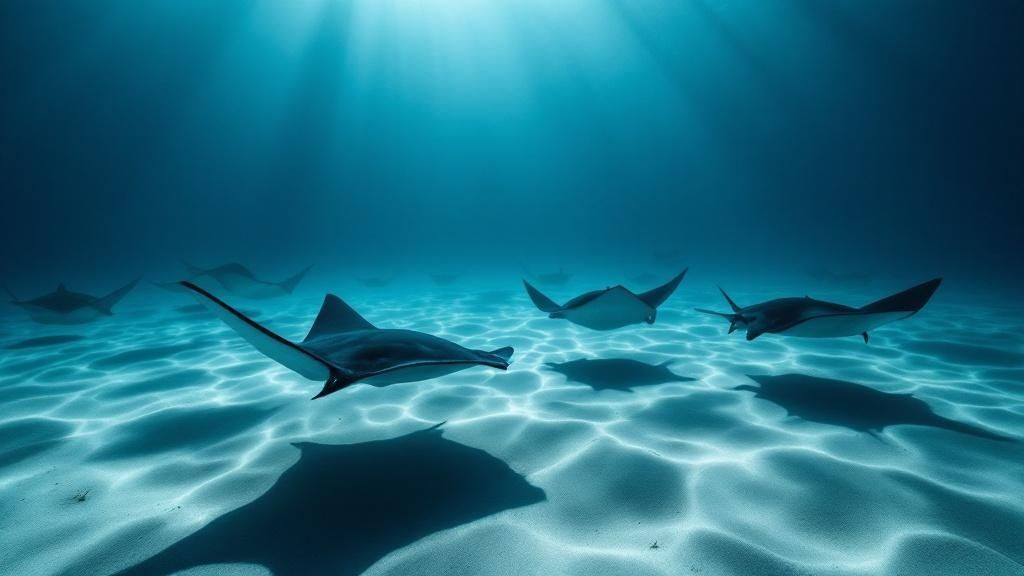
So, you're ready for your manta ray dive kona adventure. The first thing you'll realize is that there isn't just one spot to see these gentle giants. Along the Kona coast, there are two world-famous locations that act as the main stage for this nightly spectacle: Manta Village and Manta Heaven. Both offer incredible encounters, but they are surprisingly different experiences.
Think of it like choosing between two amazing concert venues. One is a cozy, intimate theater where you get a front-row seat, and the other is a massive arena with explosive energy and a bigger crowd. Your choice will really shape the memory you take home.
Each year, about 80,000 people flock to the Kona Coast for manta ray tours, which tells you just how special this place is. The whole ecosystem is geared toward this incredible activity, which you can read more about in our guide to the Kona manta ray phenomenon.
Manta Village: The Original & Most Consistent Site
Just off the coast from the Sheraton Kona Resort at Keauhou Bay, Manta Village is the OG of manta ray feeding sites. It's built its legendary reputation on two things: consistency and accessibility.
- Perfect for Beginners: The water here is generally calmer and a bit shallower, usually around 30-40 feet. This makes it a fantastic choice for your first night dive, for snorkelers, or for anyone who’s feeling a little anxious about heading into the dark.
- High Success Rate: Manta Village has an almost unbelievable success rate, with manta sightings on over 90% of nights. You might see a smaller number of mantas compared to the other site, but the encounters feel reliable and very personal.
- Super Easy Access: The boat ride from Keauhou Harbor is short and sweet. If you're someone who gets seasick, this is a massive bonus.
This site really offers a more controlled and relaxed vibe. It's the ideal spot to settle onto the sandy bottom and just watch the mantas perform their silent, graceful ballet right above your head.
Manta Heaven: The Dynamic Deep-Water Stage
A bit further north, near the Kona airport and Keahole Point, you'll find Manta Heaven (sometimes called Garden Eel Cove). This site delivers a completely different kind of thrill and is known for attracting much larger groups of mantas, creating a vortex of activity that will leave you speechless.
The big draw for Manta Heaven is the sheer number of manta rays you might see. On a great night, divers can be surrounded by more than a dozen mantas swooping and feeding all at once. It's an unforgettable, swirling spectacle.
But with bigger action comes different conditions. The water is a bit deeper, and the site is more exposed to open ocean currents and swell. This makes it a better fit for divers who already have some experience and are comfortable in potentially more challenging water.
Site Comparison at a Glance
| Feature | Manta Village | Manta Heaven |
|---|---|---|
| Location | Keauhou Bay (South Kona) | Keahole Point (North Kona) |
| Depth | Shallower (30-40 ft) | Deeper (35-50 ft) |
| Conditions | Calmer, more protected | Can have stronger currents |
| Best For | Beginners, snorkelers, families | Experienced divers, photographers |
| Manta Count | Consistent, smaller groups | Can be larger aggregations |
Which Site Is Right for You?
Honestly, choosing the right spot for your manta ray dive in Kona just comes down to your comfort level and what kind of show you want to see. If you're new to night diving, have the family with you, or simply prefer a calmer and more predictable experience, Manta Village is absolutely your best bet.
If you’re a confident diver hungry for the most electrifying action and the chance to witness a massive manta party, then Manta Heaven is calling your name. For those seeking an even bigger adventure, Kona also has premium advanced dive tours that explore deeper, more remote sites.
No matter which one you choose, you're in for a life-changing encounter. A quality dive operator like Kona Honu Divers will always pick the best site based on the nightly conditions, ensuring every manta ray dive tour is both safe and spectacular.
Meet the Famous Kona Manta Rays
When you slip into the water for the manta ray dive in Kona, you're not just observing random wildlife. You’re actually meeting a well-known cast of local celebrities, each with its own name, distinct personality, and backstory. It completely changes the experience from just watching animals to having a personal encounter.
So, how do we tell them apart? It all comes down to a fascinating natural marker. Think of it like a human fingerprint. The unique pattern of black spots on a manta ray's white belly is one-of-a-kind. No two mantas share the same pattern, which allows researchers and veteran dive guides to recognize and track specific rays year after year.
Don't be surprised if your guide calls out names like "Lefty" or "Big Bertha" during your dive. It’s a pretty incredible feeling to realize you're not just seeing a manta ray; you're watching a specific individual with a known history in these very waters. You can learn more about just how powerful this experience is in our guide on why you should go on a manta ray dive in Kona.
The Kona Manta Ray Identification Project
This "who's who" of the manta world didn't happen by accident. It’s the result of decades of passionate work by scientists and everyday divers turned citizen scientists. Since 1991, a massive database has logged over 28,500 manta ray sightings from nearly 6,000 encounters. The project began with the very first identified manta, "Lefty," and now includes more than 330 unique individuals.
By photographing the ventral (belly) side of the mantas, the community has built an amazing catalog that helps monitor the population's health, track their movements, and study their behavior. It’s a fantastic effort that turns every single dive into a potential scientific contribution.
Reef Mantas vs. Oceanic Mantas
While diving in Kona, you’ll primarily encounter one of two species of manta ray. Knowing the difference just adds another layer of awe to the whole experience.
- Reef Manta Rays (Mobula alfredi): These are the ones you’re almost certain to see. They are the "locals," with an impressive wingspan that can reach up to 12 feet. They tend to stick to the coastal waters around the Hawaiian islands and are the true stars of the nightly feeding ballet.
- Giant Oceanic Mantas (Mobula birostris): These are the bigger, more elusive cousins. With wingspans that can stretch over 20 feet, they are genuine giants of the sea. As pelagic animals, they roam the vast open ocean, making any appearance they make in Kona a rare and truly special event.
The ability to identify individual mantas has been a game-changer for conservation. It gives us a window into their life cycles, social structures, and the effects of human activity, which is crucial for protecting them for generations to come.
When you book your tour with a top-notch operator like Kona Honu Divers, your guides can share the life stories of the mantas you meet. It makes for a much richer and more meaningful dive, and their passion and expertise are things our guests rave about.
Your Manta Ray Dive Safety Checklist
A great manta ray dive in Kona is always a safe one. The whole experience is built around that feeling of pure awe, but that can only happen when the safety of both divers and mantas comes first. Following the rules doesn't take away from the magic—it actually makes it better, ensuring the mantas feel comfortable enough to give you the show of a lifetime.
It all starts with the pre-dive briefing. This isn't just some formality to rush through; it's your most important tool for the night. Your dive guides will walk you through everything, from how to get into the water in the dark to exactly where you'll be positioned around the underwater "campfire." Listen up, because these details are what make the whole encounter go off without a hitch.
This briefing is also where you'll learn the number one rule of the dive: you're there to be a quiet observer. Think of it like being a respectful guest in their personal underwater dining room.
The Golden Rules of Manta Interaction
To protect Kona’s famous manta rays and keep every diver safe, all tour operators have a strict set of rules. Your guide will cover them in detail, but knowing them ahead of time helps you show up ready to be a respectful guest.
- Observe Only, Never Touch: This is the big one. Manta rays have a protective mucous coating on their skin, which is basically their immune system against nasty bacteria. If you touch them, you can wipe off this slime layer and leave them vulnerable to infection.
- Hold Your Spot: Divers will settle on the sandy bottom, and snorkelers stay floating on the surface. It’s absolutely vital to stay in your assigned area and not swim up into the water column. That open space is the mantas' dance floor, and keeping it clear lets them glide and loop gracefully.
- Mind Your Bubbles: If you're scuba diving, a little courtesy goes a long way. Try to time your breathing so you aren't blasting a stream of bubbles right into a manta’s path as it swoops overhead.
The whole idea behind a safe manta dive is to become part of the scenery, not an active player. When you stay still and calm, you let the mantas approach on their own terms, which is when those breathtakingly close passes usually happen.
Essential Gear and Getting Ready
Having the right gear doesn't just keep you safe; it seriously amps up your comfort and enjoyment. Your tour operator will have the essentials covered, but there are a few things you’ll want to pay close attention to.
First, a wetsuit that actually fits is non-negotiable. Even with Hawaii's balmy water temperatures around 75-80°F, you’re going to be sitting still for about 45 minutes. When you aren't moving to generate body heat, you can get cold faster than you’d think. A good wetsuit is a game-changer.
For all you underwater photographers, the goal is to get amazing shots without messing up the experience for anyone else—or the mantas. Keep your camera setup as compact as you can and be aware of where you are so you're not blocking another diver's view. Let the mantas come to you instead of chasing them for the "perfect" shot. Trust me, patience is what gets you the best pictures.
Your guides are highly trained pros who live and breathe this stuff. Their entire job is to make your manta ray dive in Kona safe and unforgettable. By following their lead and playing by the rules, you're helping protect one of the world's greatest wildlife encounters for everyone who comes after you.
Ready for an experience that’s as safe as it is spectacular? Booking with a trusted operator like Kona Honu Divers means every single safety protocol is handled by experts. We take care of the details so you can just soak in the magic. Check out our premier manta ray dive tour and get ready for a night you'll never forget.
Exploring Kona After Dark: The Blackwater Dive
While the world-famous manta ray dive in Kona absolutely deserves its spot on every ocean lover's bucket list, it isn't the only mind-blowing adventure these waters offer after the sun goes down. For certified divers craving a totally different kind of thrill—something that feels more like a trip to another planet—the Kona Blackwater Dive is an experience that simply has no equal. This is a dive that leaves the reef behind and ventures into the deep, mysterious abyss.
Unlike the manta dive, where you're part of a stationary "campfire" on the seafloor, the blackwater dive is a mid-water drift in the open ocean. You're tethered to the boat, suspended in thousands of feet of inky black water. For a little while, you become a solitary satellite floating in inner space, waiting for the strange inhabitants of the deep to reveal themselves.
Witnessing the Planet's Largest Migration
Every single night, a spectacular event happens that most of the world will never see. It's the largest migration on Earth, known as diel vertical migration. Under the cover of darkness, trillions of tiny, often bizarre and bioluminescent creatures rise from the crushing pressure of the depths toward the surface to feed. Your dive lights act as a beacon, drawing this otherworldly parade of life right to you.
The experience is completely surreal. Instead of the familiar fish and corals of the reef, you're surrounded by creatures that look like they were dreamed up for a science fiction movie. You'll see things like:
- Larval Creatures: Many reef fish and invertebrates start their lives as tiny, transparent larval forms that look nothing like the adults they'll become.
- Pteropods: These are free-swimming sea snails, often called "sea butterflies," that flit and flutter through the water column.
- Bioluminescent Jellies: A stunning variety of jellyfish and ctenophores drift past, many of them pulsing with their own eerie, internal light.
- Strange Squids and Octopuses: You might get lucky and spot species rarely seen during the day, perfectly adapted for life in the deep.
The blackwater dive isn't about one main attraction. It's about the constant, mesmerizing stream of incredible, and often unidentifiable, macro life that drifts right past your mask. It’s a true treasure hunt where you never know what you'll find next.
Manta Dive vs. Blackwater Dive: A Tale of Two Nights
So, how do you choose between these two incredible night dives? It really comes down to the kind of adventure you're after. The manta dive is a majestic, guaranteed spectacle focused on massive, graceful animals. Think of it as an underwater ballet.
The blackwater dive, on the other hand, is a journey into the unknown. It’s a quieter, more introspective experience focused on the weird and wonderful macro-sized aliens of the deep. It’s for the explorer in every diver, offering a rare glimpse into a hidden world. If you're a seasoned diver looking for a unique challenge that pushes the boundaries of a typical night dive, you owe it to yourself to learn more about the Blackwater Dive tour.
Both experiences perfectly showcase the incredible biodiversity of the waters off Kona, Hawaii, cementing its reputation as a world-class diving destination. Whether you choose the gentle giants or the mysterious drifters, diving after dark in Kona is something you will never forget.
Frequently Asked Questions About the Kona Manta Ray Dive
Planning a new adventure can feel like a lot, but getting ready for your manta ray dive in Kona should be all about the excitement, not the stress. To help you feel prepared and confident, we've put together answers to the questions we hear most often from our guests.
If you have other questions about the amazing world of diving on the Big Island, our comprehensive Kona diving tours page is a great resource.
When Is the Best Time of Year for the Manta Ray Dive?
Here's the fantastic news: the Kona manta ray dive is a year-round spectacle with an incredible success rate, regularly topping 90%. Our resident manta population doesn't migrate, so they’re always here, showing up every night for their plankton buffet.
That said, if you're chasing the absolute best conditions, the months between April and October are tough to beat. The ocean is typically at its calmest and the water is warmest, hovering between a comfortable 75-80°F. Winter can bring bigger ocean swells, but don't worry—reputable operators like Kona Honu Divers check the conditions daily and will always pick the safest and most active site for the evening.
Can I See Mantas if I Am Not Scuba Certified?
Absolutely! You don't need a scuba certification to have an unbelievable experience. In fact, most tours offer a snorkeling option that is every bit as breathtaking as the dive.
Snorkelers hold onto a large, custom-lit flotation board at the surface. These powerful lights beam down into the water, attracting plankton and drawing the mantas right up to the top. They'll swoop, glide, and barrel-roll just inches below you, giving you an unforgettable, face-to-face show. This makes it a perfect adventure for families and groups with different comfort levels in the water.
It's a common myth that you need to be a diver to get the best view. The truth is, both snorkelers and divers get front-row seats to the ballet, just from slightly different perspectives.
How Safe Is the Manta Ray Night Dive?
Yes, when you go with a professional, safety-focused dive operator, the manta ray dive is considered very safe. Every tour kicks off with a detailed pre-dive safety briefing. Your guides will walk you through all the procedures, the rules of engagement, and exactly what to expect once you're in the water.
Certified divemasters and instructors are in the water with you the entire time, keeping a close eye on the group and the environment. The single most important rule for keeping everyone—and the mantas—safe is passive observation. By staying in your designated spot and following your guide’s lead, you guarantee a secure and jaw-dropping experience for all. To learn more about picking a great operator, check out our guide on the top 5 manta ray night dive tours.
What Should I Bring on My Tour?
Your tour operator will have all the essential dive or snorkel gear covered, but a few personal items can make your trip even more comfortable.
- Towel and Dry Clothes: A definite must for the boat ride back to the harbor. You'll thank yourself later.
- Personal Gear: If you love your own mask or dive computer, feel free to bring it along.
- Underwater Camera: Perfect for capturing the magic, but make sure you’re comfortable using it at night so you don't miss the show.
- Motion Sickness Remedy: If you're prone to seasickness, it’s a smart move to take a non-drowsy remedy before you head out.
While the Kona Manta Ray Dive is a true bucket-list item, there are so many other incredible ways to see Kona's stunning underwater world. You can discover the best snorkeling in Kona at other amazing spots all along the coast.
Your unforgettable underwater adventure is waiting! Here at Kona Honu Divers, we're all about providing a safe, respectful, and absolutely magical experience. Book your Manta Ray Dive Tour today and get ready to meet the gentle giants of Kona.