
Picture this: you’re sinking into the warm, dark waters off the Kona coast just as the last bits of sunlight vanish. Suddenly, a colossal, shadowy shape glides effortlessly out of the gloom. This isn't just any dive; it’s the world-famous Kona manta ray night dive, an underwater spectacle that rightfully earns its spot on divers' bucket lists time and time again.
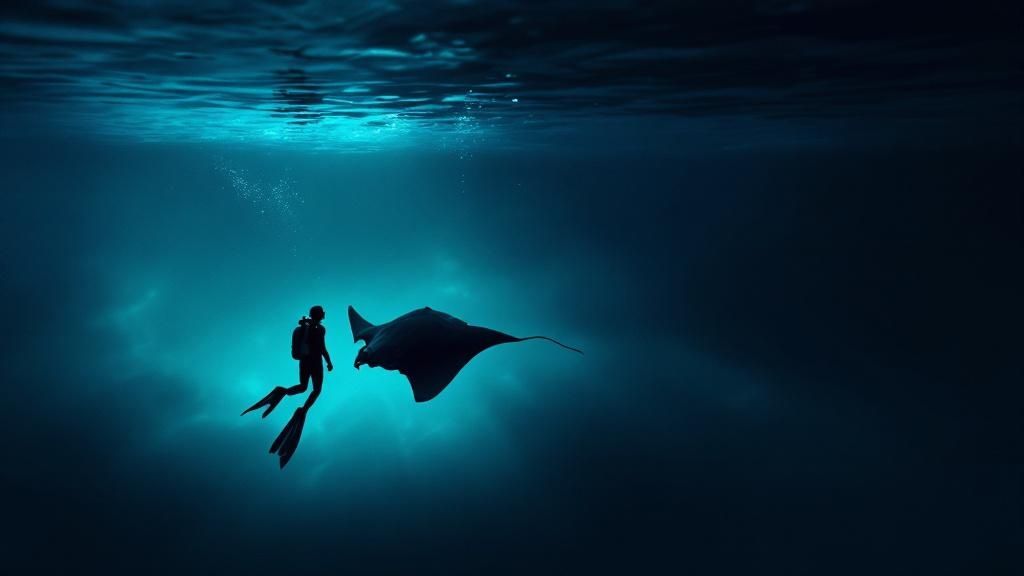
The Kona coast of the Big Island is a truly special place for manta encounters. While sightings can be a game of chance in other parts of the world, Kona provides a front-row seat to the show almost every single night, all year long. This incredible consistency has cemented its reputation as the place to go for a guaranteed magical experience.
So, how does it all work? Decades of experience have taught local operators how to create the perfect dining invitation for the mantas. Dive guides set up a powerful "campfire" of lights on the sandy ocean floor. This light acts like a magnet for plankton, drawing in a thick, shimmering cloud of the mantas' favorite food.
Once the plankton buffet is ready, the guests of honor arrive. With wingspans that can exceed 12 feet, these gentle giants swoop in, performing graceful barrel rolls just inches above your head. Watching them filter the water with their huge, gaping mouths is a silent, mesmerizing ballet that feels like you've entered another world.
An Adventure for Divers and Snorkelers Alike
One of the best things about this experience is that you don't need to be a seasoned diver to take part. The entire operation is designed to be incredibly accessible, whether you have a C-card or have never even worn a mask.
- For Scuba Divers: You’ll get to settle in on the ocean floor, usually at a comfortable depth of 30 to 40 feet. From there, you just look up. The view of the mantas silhouetted against the bright lights from below is absolutely stunning.
- For Snorkelers: You'll float on the surface while holding onto a specially designed light board. The board’s beams shine down into the water, attracting the plankton and bringing the mantas right up to you. It's an equally breathtaking, top-down perspective of the action.
Why Kona Has Such a Healthy Manta Population
Kona isn’t just a random feeding spot; it’s home to a large, well-studied residential population of reef manta rays. Researchers have identified more than 250 individual mantas that frequent these waters, making it one of the most reliable viewing locations on the planet.
To give you a quick summary of what to expect, here are the key details at a glance.
Kona Manta Ray Dive At a Glance
| Attribute | Details |
|---|---|
| Location | Kona Coast, Big Island of Hawaii |
| Best Time to Go | Year-round, with high consistency |
| Water Depth | 30-40 feet for divers, surface for snorkelers |
| Manta Wingspan | Up to 12+ feet |
| Key Activity | Manta rays feed on plankton attracted by lights |
| Accessibility | Open to certified divers and snorkelers |
This thriving local population is precisely why the experience is so consistent. You can find out more about what to expect on the dive in our complete Kailua-Kona manta ray night dive overview. The predictable presence of these gentle giants has not only made Kona a premier ecotourism destination but also fuels vital research and conservation efforts to protect them for generations to come.
Choosing Your Perfect Manta Ray Tour in Kona
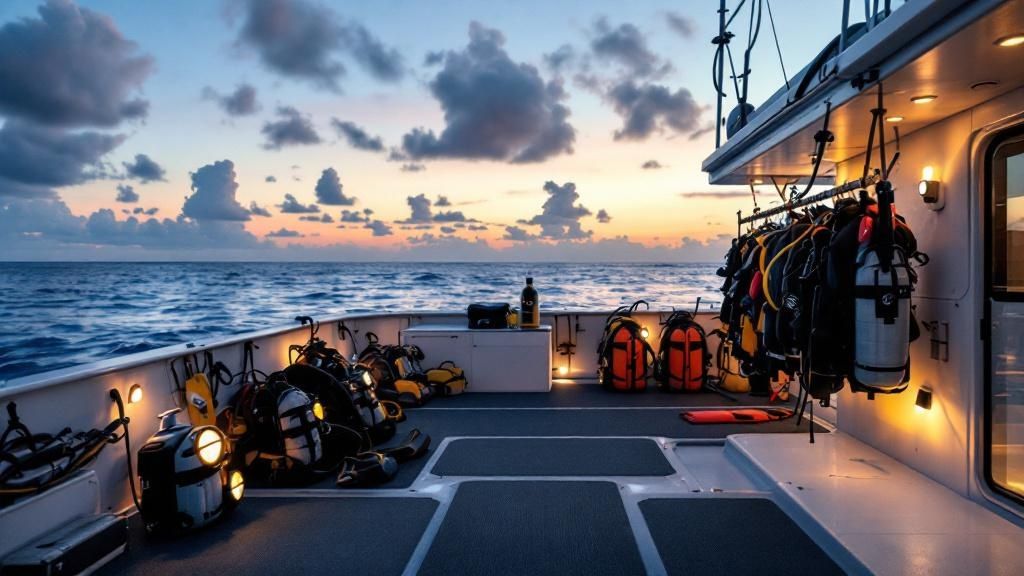
Let's be honest, picking the right operator for your manta ray dive in Kona is the decision that will make or break your trip. It’s the difference between a good night and a truly unforgettable, once-in-a-lifetime experience. It’s not just about getting on a boat—it’s about safety, feeling like you have front-row seats, and sharing the water with a crew that genuinely respects these incredible animals.
What I've learned over the years is that the best tours aren't about the biggest boat, but about the smallest groups. A more intimate setting means you can soak in the magic without bumping into other people's fins. This focus on guest experience is a clear sign of a top-tier company.
Equally important is the operator's dedication to marine conservation. You want to support a business that ensures these manta encounters can continue for generations. Look for companies that actively participate in conservation and follow strict, manta-safe guidelines.
Why a M.A.T.E. Certified Operator Matters
When you're comparing tours, one of the best shortcuts to finding a quality, responsible operator is to look for a M.A.T.E. certification. Manta Ray Advocacy and Tourism Education (M.A.T.E.) created this standard to make sure all tour activities are safe for both people and mantas.
A M.A.T.E. certified operator, like Kona Honu Divers, has formally pledged to follow a strict code of conduct. This isn't just talk; it's a commitment to practices like:
- Passive Observation: A strict no-touching, no-chasing policy. This is critical for protecting the mantas' delicate mucus coating, which acts as a shield against infection.
- Proper Positioning: Guides make sure divers stay on the bottom and snorkelers on the surface. This keeps the water column clear, giving the mantas plenty of room to glide and feed naturally.
- Real Education: Your tour will include a solid briefing on manta ray biology and behavior. It makes the whole experience richer when you understand what you're seeing.
Choosing a M.A.T.E. certified company is your way of voting with your wallet for sustainable ecotourism on the Big Island. Your money goes directly to operators who put the mantas' well-being first.
This experience is incredibly popular for a reason. Each year, roughly 80,000 people come to see the mantas along the Kona Coast, making it a premier global destination for wildlife encounters and helping to fund vital conservation work. The action is centered around two world-class sites: Manta Village in Keauhou Bay, which is perfect for beginners, and Manta Heaven near the airport, a deeper site that's great for experienced divers. You can get more details about these renowned Kona manta dive sites and their importance.
One Tank or Two? Deciding on Your Dive Charter
Once you've zeroed in on a great operator, you'll likely see options for a 1-tank or 2-tank charter. Which one is right for you really comes down to your schedule, budget, and how much underwater time you're craving.
A 1-tank charter is all about the main event: the manta ray night dive. You’ll head out in the late afternoon, get your briefing, and do one incredible dive as the sun goes down. It's a fantastic option if you're tight on time.
A 2-tank charter, on the other hand, is a more complete diving adventure. This trip usually unfolds in two parts:
- A Twilight Reef Dive: Your first dive is in the late afternoon. You get to explore a beautiful Kona reef just as the day-shift critters are heading to bed and the night-shift comes out to play.
- The Manta Ray Night Dive: After a surface interval on the boat (often with snacks!), you'll descend again for the main attraction.
This two-tank format is my personal recommendation. It lets you get your weighting dialed in and feel comfortable with your gear before the big show, making for a much more relaxed and enjoyable manta dive. Kona Honu Divers offers an exceptional 2-tank manta dive and snorkel tour that gives you this full experience.
Don't just take my word for it. Hearing from other divers is one of the best ways to get a feel for a company. Check out what recent guests have to say about their experience with Kona Honu Divers.
For certified divers looking for even more adventure, Kona has other world-class dives. You could try the surreal Kona Blackwater Dive, where you drift in the deep open ocean at night to see bizarre and beautiful bioluminescent creatures. If you've got the experience, there are also advanced dive trips that explore deeper reefs, lava tubes, and dramatic underwater pinnacles.
Ready to book your own manta ray adventure?
Getting Ready for Your Manta Ray Adventure
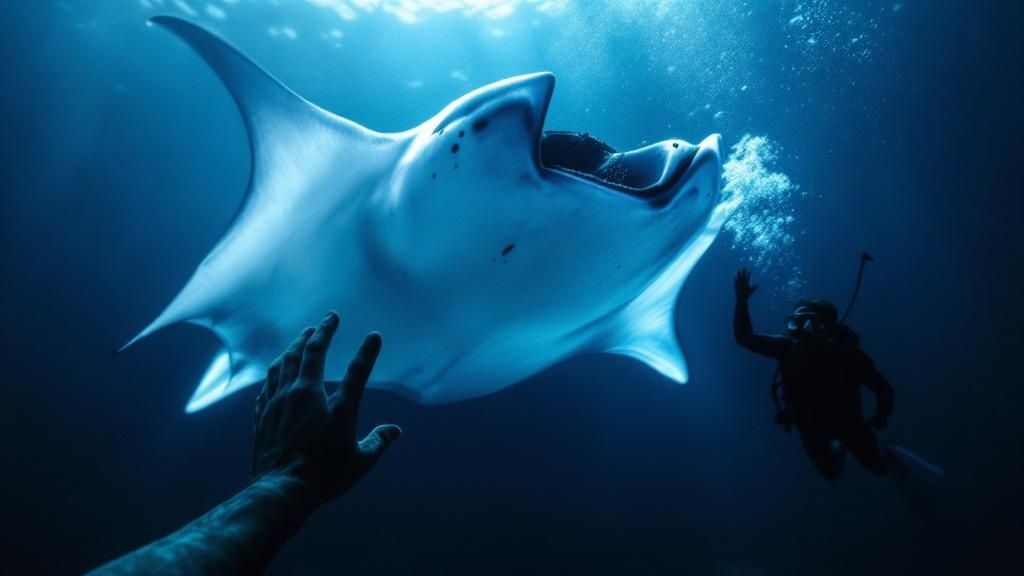
A little bit of prep work is what separates a good manta ray dive kona from an unforgettable one. When you know what to pack and what to expect, you can stop worrying about the logistics and just soak in the magic of the experience.
Your adventure will likely start with a check-in at a specific spot like Honokohau Harbor. These boats run on a tight schedule to catch the sunset, so being on time is crucial. Give yourself a buffer—arriving early lets you check in without rushing and enjoy the buzz of excitement building on the dock.
What to Pack for the Night Dive
Packing for a night dive isn't like a typical day at the beach. While your tour operator will handle the main diving gear, a few personal items can make a huge difference in your comfort.
Here’s my go-to list based on years of experience:
- Reef-Safe Sunscreen: Even for a late afternoon boat ride, that Hawaiian sun is no joke. Lather up before you even get on the boat.
- A Good Towel: You’ll be so grateful for a warm, dry towel when you get out of the water. A quick-dry travel towel is perfect because it doesn't take up much space.
- Warm, Dry Clothes: This one's a must. The boat ride back to the harbor can get surprisingly chilly once you’re out of the water and the wind picks up. A hoodie or windbreaker will be your best friend.
- A Dry Bag: This is the best way to keep your phone, wallet, and that warm layer of clothes completely dry and all in one place.
- Seasickness Medication: If you even think you might get motion sickness, take your preferred remedy before the boat leaves the harbor. The ride is usually smooth, but it’s always better to be safe than sorry.
It’s just as important to know what not to bring. Leave valuables and anything that isn’t waterproof at home or in your car. On a dive boat, simplicity is key.
Rental Gear vs. Bringing Your Own
For most people, using the gear provided by the tour operator is the way to go. It’s high-quality, well-maintained, and included in the price. It just makes things easy.
That said, bringing a couple of your own items can seriously upgrade your dive.
The single most common piece of personal gear I see divers bring is their own mask. A mask that you know fits your face perfectly is a game-changer. It prevents those annoying little leaks that can pull you out of the moment.
If you’re a photographer, of course, you’ll bring your own camera setup. You already know its quirks and settings, so you can focus on getting that perfect shot of a manta gliding overhead. Just double-check your batteries and memory card space before you leave!
So, while using the operator's gear is a great, stress-free choice, the comfort of your own mask or the control of your camera can make all the difference. To get a better feel for what a full day of diving is like, you can learn more about how to dive the Big Island of Hawaii with Kona Honu Divers.
Getting in the Right Headspace
Your physical and mental state really does impact how much you'll enjoy the dive. Make sure to drink plenty of water throughout the day, but maybe skip that huge, heavy meal right before you head to the harbor. A light snack is a much better call.
Feeling a little nervous, especially if you’re new to night diving? That is completely normal. The best thing you can do is talk to your guide. They are pros at easing anxieties and will walk you through every single step. Trust them and pay close attention during the safety briefing—it’s very thorough.
Remember, this whole experience is designed to be awe-inspiring, not scary. The "campfire" of lights set up on the ocean floor creates a well-lit, surprisingly comfortable space. It’s nowhere near as dark as you might be picturing.
Ultimately, the goal is to relax and just be present. Once you're prepared, you can let go and fully appreciate an incredible encounter with Kona's gentle giants.
What to Expect During Your Manta Ray Dive
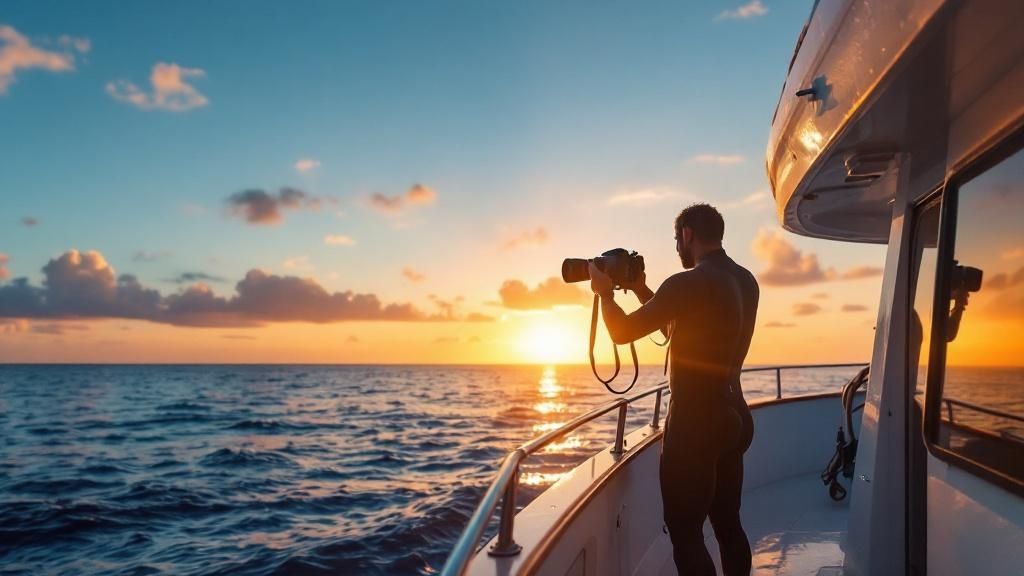
The moment is finally here. You’re on the boat, the sky is on fire as the sun dips below the horizon, and you can feel the energy buzzing all around you. This is it. The preparation is over, and the real magic of the manta ray dive kona is about to begin.
Everything kicks off with a detailed pre-dive briefing from your guide. Don't tune this part out—it’s not just a formality. This is where the crew lays out the entire plan, from how you’ll get in the water to exactly where you’ll be positioned. Most importantly, they’ll cover the rules for interacting with the mantas to keep everyone safe—divers, snorkelers, and especially the rays themselves.
This is your time to get comfortable, ask any last-minute questions, and get your head in the game for the descent into the twilight ocean. Listen closely, because everything they share is designed to make sure you feel confident and ready for the incredible experience ahead.
The Underwater Campfire and First Encounters
As you descend into the warm Pacific, a glow appears in the darkness. This is the "underwater campfire," the heart of the whole operation. Divemasters have set up a circle of powerful, upward-facing lights on a sandy patch of the seafloor, usually at a comfortable depth of about 35 feet. This bright light acts like a giant beacon, attracting a thick, shimmering cloud of plankton—the mantas' favorite food.
For divers, this is your front-row seat. You'll find a spot on the sand around the edge of the light circle, get settled, and just look up. It's a truly unique perspective, giving you an unobstructed, bottom-up view of the entire show.
If you're snorkeling, you'll be floating up on the surface, holding onto a specially designed light board. These boards shine their beams down, creating a second plankton buffet just for you. The view is just as mesmerizing from above, with mantas often gliding right up to the surface to feed.
And then, you wait. Sometimes it’s just a minute or two, but that first sighting is always a showstopper. A huge, dark shape emerges from the blackness, gliding silently into the light. The ballet has begun.
The Golden Rule of Passive Observation
Getting to see these gentle giants up close is an absolute privilege, and with that comes the responsibility of being a good guest in their home. The entire encounter is built on one simple, non-negotiable rule: passive observation.
To keep the mantas comfortable and ensure this experience is sustainable for years to come, everyone needs to stick to a few key guidelines:
- No Touching: Manta rays have a delicate mucus layer on their skin that protects them from infection. Even a gentle touch can strip this layer and harm them. You have to resist the urge to reach out.
- No Chasing: Never pursue or try to "ride" a manta. Let them control the encounter. Chasing them only scares them off and ruins the experience for everyone.
- Don't Block Their Path: Your guides will place you so the central water column stays clear. This is the mantas' "flight path," giving them plenty of room to swoop, glide, and do their famous barrel rolls.
This hands-off approach is the cornerstone of a safe and ethical manta ray tour. It’s what allows for such close, incredible encounters. When the mantas feel safe and unthreatened, they will often glide just inches above your head, completely unbothered by your presence.
The Breathtaking Spectacle
What happens next is something words can barely do justice. One manta turns into two, then five, and sometimes more than a dozen. They swoop in from every direction in a silent, weightless ballet, their huge mouths open to filter the plankton-rich water. It's a continuous loop of graceful barrel rolls right above your head.
The only sound is the steady rhythm of your own breathing, punctuated by the muffled gasps of awe from your fellow divers. The scale is just mind-blowing. With wingspans that can reach up to 18 feet, having a manta glide directly over you can momentarily block out all the light from the campfire. It’s humbling.
You'll get a close-up look at their unique belly spot patterns—the "fingerprints" researchers use to identify each one. The whole thing feels hypnotic, almost dreamlike. For a more detailed, first-hand account, check out our article about what it's really like to go on the manta ray dive in Kona. It’s an adventure that sticks with you long after you've dried off.
Ready to witness this incredible underwater ballet for yourself? You can book an unforgettable 2-tank manta dive or snorkel tour and secure your spot at the campfire.
Tips for Photographing the Manta Ray Night Dive
Trying to photograph the manta ray night dive is one of the most rewarding and frustrating things you can do underwater. You're in the dark, the subjects are moving, and there's a blizzard of plankton swirling everywhere. But when you nail the shot? There's nothing like it.
Success really boils down to your prep work. It doesn't matter if you're bringing a professional DSLR rig or just a GoPro—you need to know your gear inside and out before you hit the water. This isn't the time for a point-and-shoot mentality; every setting needs to be intentional.
Mastering Your Camera Settings
Low-light photography is always a tricky dance between getting enough light to your sensor without ending up with a blurry, noisy mess. There's no magic formula that works for every camera, but here are some settings that will put you in the right ballpark.
- ISO: I usually start my ISO around 800 or 1600. This makes your camera more sensitive in the dark, but pushing it too much higher will start to introduce a ton of distracting grain, or "noise."
- Aperture: Open that lens up! A wide aperture (think a low f-stop number like f/2.8 or f/4) lets in as much light as possible. As a bonus, it creates a nice, shallow depth of field that makes the mantas pop.
- Shutter Speed: This is where you have to compromise. You need to be fast enough to freeze the motion of a gliding manta—I'd aim for at least 1/125s. Any slower and you risk motion blur, but too fast and your background will be pitch black.
The best thing you can do is take a few test shots of the "campfire" of lights on the bottom before the real action starts. It’s your only chance to tweak your exposure without the pressure of a 1,000-pound animal soaring over your head.
Lights and Strobes: The Key to Sharp Images
The biggest headache you'll face isn't just the darkness; it's the backscatter. Those giant lights that attract the plankton also light up every single particle between you and the manta, which can ruin your photos with a "snowstorm" effect. This is precisely why external lights are a game-changer.
A video light helps, but an external strobe is the real solution. By mounting your strobes on arms away from the camera body, you light the manta from the side instead of from the front. This simple change stops the light from hitting the water directly in front of your lens, drastically cutting down on backscatter and making your subject stand out against a clean, black background.
Even if you're just using a GoPro, a small video light will make a world of difference. It brings back color and detail that the tiny camera sensor just can't capture on its own in that environment.
Composition and Positioning for Impact
Your camera settings are only half the battle; where you put yourself matters just as much. My go-to move is to get low on the sand and shoot up. This angle gives you that iconic shot of a manta's silhouette against the bright surface lights, perfectly capturing its massive wingspan.
Before you start snapping away, think about the story. Do you want to include other divers in the frame to show a sense of scale? Or are you waiting for that perfect moment when a manta glides right at you, making direct eye contact? Be patient. The most powerful images come from anticipating the manta’s path and waiting for it to come to you.
How Your Dive Supports Manta Ray Conservation
That unforgettable manta ray night dive does more than just create a lifelong memory—it makes you an active partner in marine conservation. When you dive with a reputable, responsible operator in Kona, you're plugging directly into a system designed to protect these gentle giants for generations to come.
This isn't just about sightseeing; it's a powerful form of ecotourism. The revenue from these dives gives the manta rays a tangible economic value, transforming them from a natural wonder into a vital community asset. Suddenly, protecting their habitat isn't just a nice idea; it's a smart economic move for the whole community.
When you choose your tour company carefully, you’re voting with your wallet for businesses that invest in sustainable practices, crew education, and strict interaction guidelines. It’s a beautiful example of how a thriving tourism industry and a healthy marine ecosystem can work hand-in-hand.
Becoming a Citizen Scientist on Your Dive
Here’s something you might not realize: your dive can contribute directly to scientific research. The photos and videos you capture can become invaluable data for scientists studying Kona’s manta ray population.
How? Every manta ray has a completely unique spot pattern on its belly, just like a human fingerprint. Marine biologists rely on clear images of these ventral patterns to identify and track individual animals. It’s a technique called photo-identification, and it’s the backbone of local manta research.
Many conservation-minded operators, like our friends at Kona Honu Divers, train their guides to get these crucial ID shots. But your own photos can help, too! By submitting clear belly shots to research organizations, you help build a massive database that's essential for understanding the lives of these incredible animals.
This citizen science project has been running since 1991 and is one of the most successful of its kind. Thanks to thousands of divers like you, researchers have created one of the world's most detailed databases of manta ray encounters. The program has identified over 330 individual mantas from more than 28,500 sightings, giving us priceless information on their population, health, and behavior. You can dive deeper into these Kona manta ray research efforts and their findings and see the impact for yourself.
How Your Participation Helps Researchers
Every photo adds another piece to the puzzle, giving scientists insights that are nearly impossible to get otherwise.
Here’s a glimpse of what researchers learn from your contributions:
- Population Size and Dynamics: By tracking individual mantas over time, scientists can estimate the overall population size and see if it's growing, shrinking, or holding steady.
- Behavioral Patterns: Repeated sightings show where specific mantas like to feed, who they hang out with, and what their daily routines look like.
- Health and Injury Assessment: Photos can document injuries from boat propellers or fishing line entanglement. This helps conservation groups pinpoint the biggest threats to the local population and advocate for better protections.
- Reproductive Cycles: Spotting pregnant females and the arrival of new pups gives us a rare window into the manta ray life cycle, something we still know surprisingly little about.
By simply joining a manta ray dive tour, you are directly fueling this real-time research. Your presence helps fund the very platform that makes these discoveries possible.
The Impact of Choosing a Responsible Operator
Ultimately, the most important decision you'll make is choosing your tour operator. A company like Kona Honu Divers isn't just in the business of running tours; they are stewards of the ocean and true advocates for the mantas.
They get it: the long-term health of their business is directly tied to the well-being of the manta ray population. Because of this, they are deeply committed to conservation, guest education, and sticking to the highest standards of responsible tourism.
When you book with a company that puts the mantas first and actively contributes to research, you're ensuring the magic of the Kona manta ray night dive will be around for many years to come. Your incredible adventure becomes a meaningful act of conservation.
Common Questions About the Kona Manta Ray Dive
Planning any big adventure brings up questions, and the manta dive is no exception. It’s totally normal to want all the details before you commit. After years of guiding these trips, I've heard just about every question in the book. Let's tackle some of the most common ones so you can feel confident and excited when you arrive at the harbor.
Do I Need to Be a Certified Scuba Diver?
Absolutely not! While divers get an amazing view from the seafloor looking up at the action, the experience for snorkelers is just as breathtaking.
Top-notch operators have this dialed in. Snorkelers float on the surface, holding onto a specially designed light board. These boards shine powerful lights down into the water, attracting the plankton that manta rays feed on. The result? The mantas glide right up to the surface, just inches below you. It makes this incredible encounter accessible to nearly everyone, regardless of their diving certification.
What Is the Best Time of Year for a Manta Ray Dive?
One of the best parts about this dive is its consistency. It’s a year-round spectacle with a success rate that often tops 90%. Unlike migratory species, Kona’s manta rays are residents—they live here all year long, so they're always around.
Sure, the "peak" season from April through October generally brings warmer, calmer water. But visiting in the off-season has its own perks, like fewer boats at the dive site. Honestly, no matter when you book, your chances of a mind-blowing encounter are incredibly high.
Key Takeaway: The Kona manta experience isn't seasonal. The resident population ensures consistent, year-round sightings, making it a reliable adventure whenever you choose to visit the Big Island.
Is the Manta Ray Night Dive Safe?
Yes, it's extremely safe, provided you go with a professional and reputable company like Kona Honu Divers. Safety is their top priority. They run a tight ship with strict protocols, experienced in-water guides, and thorough briefings that cover every detail before you even get your feet wet.
The dive sites themselves are well-established and relatively shallow. More importantly, manta rays are true gentle giants. They have no teeth, no stingers, and no barbs—they are completely harmless to humans. The whole experience is built around passive observation, ensuring a safe and respectful encounter for both you and the mantas.
What Happens If We Don’t See Any Mantas?
It's a fair question. While sightings are incredibly reliable, we are dealing with wild animals, and their appearance can never be 100% guaranteed.
This is where choosing a quality operator really pays off. The best companies stand by their tours with a "manta guarantee." For example, Kona Honu Divers will often offer a complimentary second trip if you don't see any mantas, subject to availability. It's always smart to confirm the specific policy when you book, but this shows just how confident they are that you'll have an amazing time.
Ready to see the underwater ballet for yourself? Book your tour with Kona Honu Divers and get ready for a night you'll be talking about for years.
Check out our world-famous manta ray dive and snorkel tour to secure your spot.