
Picture this: massive, elegant manta rays gliding silently through the dark, their forms illuminated by an underwater spotlight. They swoop and soar, feeding on plankton just inches from your face. This isn't a scene from a nature documentary—it's the world-famous Kona manta ray dive, one of the most incredible wildlife encounters on the planet.
What Is the Kona Manta Ray Night Dive?
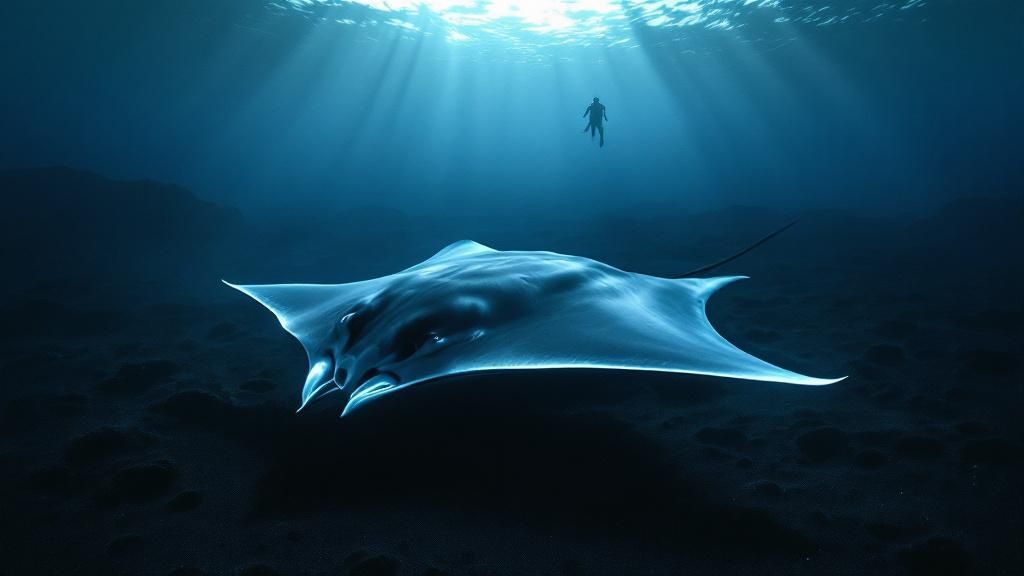
The Kona manta ray night dive is a true bucket-list adventure where you get to watch giant manta rays feed after sunset. It’s not some random chance encounter; it's a remarkably consistent spectacle made possible by a brilliantly simple idea. Dive operators set up powerful underwater lights, which act like a magnet for clouds of plankton, the mantas' absolute favorite meal.
Soon after the lights go on, the mantas arrive for dinner. They put on an aquatic ballet, performing graceful barrel rolls and swooping through the light beams to feast.
Think of it as setting a dinner table for giants. The lights are the invitation, the plankton is the buffet, and the mantas are the guests of honor. It all comes together to create an up-close and personal experience that feels nothing short of magical.
A Consistently Amazing Experience
The Kona Coast has earned its international reputation for this dive for one big reason: it almost always delivers. That's a huge draw for the roughly 80,000 people who come to see it every year. This isn't a hit-or-miss activity; operators report a staggering 80-90% encounter rate year-round. It’s a testament to both the healthy local manta population and the nutrient-rich ocean currents.
The sheer reliability of this dive is why so many people consider it a non-negotiable part of any trip to the Big Island.
For a deeper dive into the logistics and what to expect on the boat, check out our complete guide to the Kailua-Kona manta ray night dive.
People often say it’s like watching a stealth bomber glide silently through the water. The immense size and effortless grace of these animals, some with wingspans stretching over 12 feet, leave you with a sense of awe that’s tough to put into words.
To give you a quick snapshot of what to expect, here are the core details at a glance.
Kona Manta Dive At a Glance
This table breaks down the essentials for planning your own manta ray adventure.
| Key Aspect | Details |
|---|---|
| Location | Kona Coast, Big Island of Hawaii |
| Activity Type | Night dive or snorkel |
| Primary Attraction | Giant Pacific Manta Rays |
| Success Rate | 80-90% encounter rate |
| Best Time to Go | Year-round, with peak conditions in summer |
| Wingspan | Up to 12-15+ feet |
| Annual Visitors | Approximately 80,000 |
This dive is a cornerstone of Kona's identity, but it's also helpful to have a broader perspective by understanding different types of diving excursions, like multi-day liveaboard trips, to see how unique this single-night event truly is.
Now, let's walk through everything you need to know to plan this incredible adventure for yourself.
Why Kona Is a Global Manta Ray Hotspot
So, what makes the Kona manta ray dive so unbelievably consistent compared to anywhere else on the planet? It's not just pure luck. It's a perfect storm of geography, a little bit of history, and a clever understanding of how these gentle giants behave. The whole secret boils down to one simple thing: creating an all-you-can-eat plankton buffet they just can't resist.
Picture the Big Island's coastline as a giant, natural funnel. The ocean currents that flow along the Kona coast are packed with nutrients, which fuels a massive population of microscopic plankton. This endless food supply is what drew a resident population of reef mantas here in the first place, but the story of how the world-famous night dive actually started is a tale of happy accidents.
An Accidental Discovery
Years ago, a hotel right on the Kona coast used to shine bright lights into the ocean at night. The staff started noticing something incredible. Those lights were attracting huge clouds of plankton, and right behind them came the giant manta rays, swooping in for a nightly feast. It turned out to be a spectacular show for the guests, completely free of charge.
It didn't take long for local dive operators to see the potential. They figured, "Hey, we can do that!" and started taking divers out after dark, shining their own powerful (and eco-friendly) lights into the water. The effect was instant. The mantas, being the highly intelligent creatures they are, quickly learned to associate the beams of light with a guaranteed, easy meal. This conditioned behavior has been passed down through generations, making the nightly gathering an incredibly dependable event. You can learn more about the best seasons and conditions in our guide on the best time of year to see manta rays in Kona.
This learned behavior is really the heart of the whole experience. Unlike other places in the world where you might find mantas at "cleaning stations" (where they go to get parasites picked off), Kona's sites are dedicated feeding stations. This makes for a much more active and dynamic spectacle for us divers.
Kona's Premier Manta Locations
This reliable food source led to the creation of two world-famous dive sites. Each has its own personality, but both are known for delivering absolutely mind-blowing encounters.
- Manta Village (Keauhou Bay): This is the original site where it all began, just south of Kailua-Kona. It’s famous for its super high success rate and is often a great spot for beginners because the conditions tend to be calmer and the water a bit shallower.
- Manta Heaven (Garden Eel Cove): You'll find this site north of town, closer to the airport. It often draws in even larger groups of mantas and has a different underwater landscape that many seasoned divers love.
The reliability of these spots is just off the charts. Some operators report success rates exceeding 90%. Think about that—on almost any given night, you are virtually guaranteed to witness this incredible underwater ballet. It's that kind of consistency that turned the Kona manta ray dive from a local secret into a global phenomenon.
Choosing Your Dive Site: Manta Village vs Manta Heaven
Picking the right spot for your manta ray dive in Kona is one of the most important decisions you'll make. It’s a key step in setting yourself up for the perfect underwater night. The Big Island’s two main sites, Manta Village and Manta Heaven, each have their own unique personality and vibe. Your choice really boils down to your comfort level in the water, how much you value predictability, and what kind of underwater show you’re hoping to see.
I like to think of it like choosing between a cozy, intimate theater and a massive, big-stage concert hall. Both can put on an absolutely incredible performance, but the atmosphere and scale are worlds apart. It all comes down to what kind of ticket you're looking for.
Manta Village: The Original Classic
Just south of Kailua-Kona in Keauhou Bay, you’ll find Manta Village, the OG of manta ray night dives. This is where it all started—the very spot this unbelievable spectacle was first discovered. The site is generally shallower and more protected from the open ocean, which makes it a fantastic choice for first-time night divers, snorkelers, and anyone who might feel a little anxious in the water.
Because the conditions are often much calmer here, the experience tends to be more relaxed and predictable. While you might see slightly fewer mantas than at its northern cousin, the consistency at Manta Village is legendary. We're talking success rates that are frequently over 90%.
Manta Heaven: A Grand Spectacle
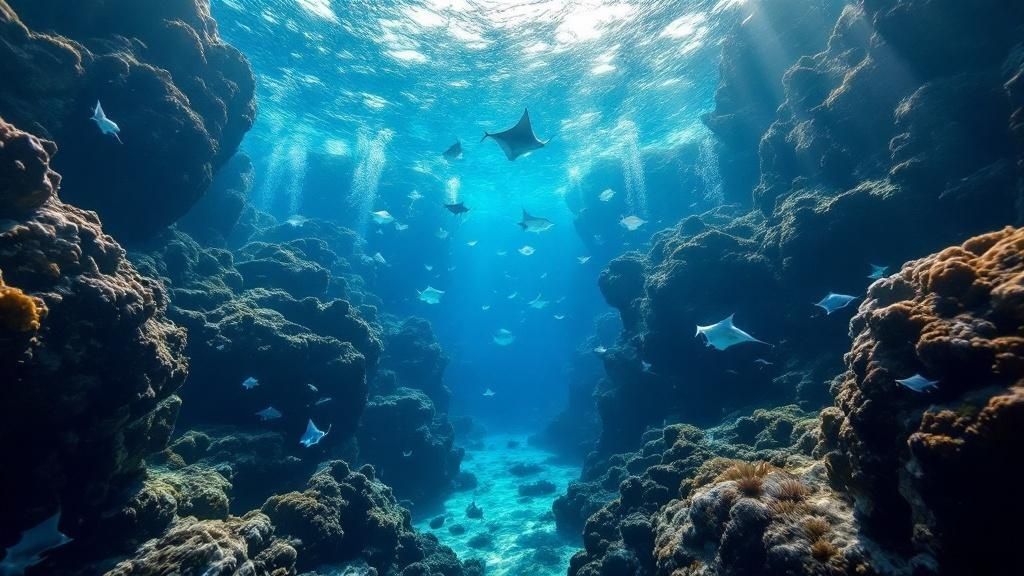
Head north of Kona, near the airport, and you'll find Manta Heaven, also known as Garden Eel Cove. This site definitely lives up to its name, often attracting a massive congregation of mantas. We’ve seen nights with more than a dozen rays swooping and feeding all at once—it's a truly jaw-dropping spectacle and a favorite among seasoned divers and underwater photographers looking for those dramatic, wide-angle shots.
But that bigger show comes with a few trade-offs. Manta Heaven is a bit deeper and can be more exposed to ocean currents and swells, which might be a challenge for divers with less experience under their belt.
To help you decide which site is the right fit for you, here’s a quick side-by-side look at what to expect from each location.
Manta Village vs Manta Heaven Comparison
| Feature | Manta Village (Keauhou Bay) | Manta Heaven (Garden Eel Cove) |
|---|---|---|
| Location | South of Kailua-Kona | North of Kailua-Kona, near the airport |
| Best For | Beginners, snorkelers, families, anxious divers | Experienced divers, underwater photographers |
| Conditions | Generally calmer, shallower, and more protected | Can be deeper with stronger currents and swell |
| Manta Numbers | Very consistent sightings, but often smaller groups | Potential for huge groups of mantas ("manta chaos") |
| Vibe | More intimate, relaxed, and predictable | Grand, dynamic, and absolutely spectacular |
At the end of the day, there’s really no wrong answer here; both sites offer an unforgettable manta ray dive in Kona. Making an informed choice just helps ensure the experience lines up with what you’re hoping for. Of course, a huge part of your experience depends on the crew leading the dive, so it’s always a good idea to learn how to choose a Kona dive shop that puts safety and an amazing time first.
How to Responsibly Interact with Manta Rays
The success of the Kona manta ray dive isn't just about the incredible show; it's rooted in a deep, community-wide promise to protect these gentle giants. The entire encounter is built on one core principle: passive interaction.
Think of yourself as a quiet guest in their underwater dining room, not an active participant. Your only job is to be still, find your spot, and let the mantas work their magic around you.
This hands-off approach is everything. In fact, the single most important rule of your entire manta ray dive in Kona is to never, ever touch a manta ray. It’s so tempting when they glide just inches from your face, but touching them can cause serious harm.
Manta rays have a thin, protective mucus layer covering their skin. It’s their natural shield against harmful bacteria in the ocean. When you touch them, you can rub off this delicate coating, leaving them wide open to infections and disease. Following this one rule is the biggest sign of respect you can show them.
Rules of Engagement for a Safe Dive
Your divemaster will give you a full briefing before you hit the water, but honestly, the main rules are simple and easy to remember. Sticking to these guidelines keeps both you and the manta population safe and healthy. This commitment to responsible tourism is exactly what makes the experience sustainable for years to come.
Here are the key things to keep in mind:
-
Stay in Your Spot
- Do This: Remain in your assigned area, whether you're kneeling on the sandy bottom as a diver or holding onto the snorkel raft up top.
- Not That: Don't go free swimming or chase after the mantas. Just relax and let them come to you—they will!
-
Control Your Buoyancy
- Do This: Maintain a fixed position and avoid any sudden up-and-down movements. The mantas need that open water column to maneuver safely.
- Not That: Don’t dive down from the snorkel raft or pop up from the dive group to try and get a closer look.
-
Manage Your Bubbles
- Do This: If you're diving, try to time your breathing so your bubbles don't go right into a manta's face as it passes over you.
- Not That: Definitely don't blow bubbles at them on purpose. It can startle them and throw off their feeding rhythm.
"Resist the urge to “pet” the mantas. This will rub off their protective mucus coating. Do not chase, grab, or try to take a ride on the mantas. This doesn’t benefit the animal in any way."
By following these simple rules, you become part of the solution, helping preserve one of the planet's most mind-blowing wildlife encounters. You can dive deeper by exploring our guide on everything you should know about the manta ray dive in Kona.
How to Choose the Right Manta Ray Tour Operator
Picking the right company for your manta ray dive is just as critical as picking the right dive site. It’s about more than just getting in the water; a great operator is obsessed with safety, the well-being of the mantas, and making sure your adventure is unforgettable. You’ve got to look past the price tag and find a team that delivers a genuinely world-class experience.
Think of it this way: you wouldn't hire the cheapest guide to take you up a mountain. The best guides ensure you're safe, share fascinating stories, and make the whole trek something you'll talk about for years. It's the exact same logic for your dive.
What to Look For in a Tour Company
When you start digging into different operators, a few things should jump out as signs of a high-quality, responsible company. One of the biggest tells used to be membership in the Manta Ray Green List. While that program isn't active anymore, any operator who was on that list has a proven, long-term commitment to doing things the right way. Beyond that, always check out an operator's safety record and what recent customers are saying in reviews.
Here are a few other practical things to check:
- Boat Capacity: Smaller groups almost always mean a better, more personal experience without feeling crowded in the water.
- Guest-to-Guide Ratio: A lower ratio is a huge plus. It means you get more one-on-one attention from your divemaster, which is great for both safety and your overall enjoyment.
- Equipment Quality: A top-notch company invests in well-maintained, modern gear. Don't be shy about asking if they provide good wetsuits—the water can definitely get chilly at night.
The best tour operators are deeply invested in the health of the local manta population. Their dedication to responsible tourism is what keeps the Kona manta ray dive a sustainable, world-class attraction.
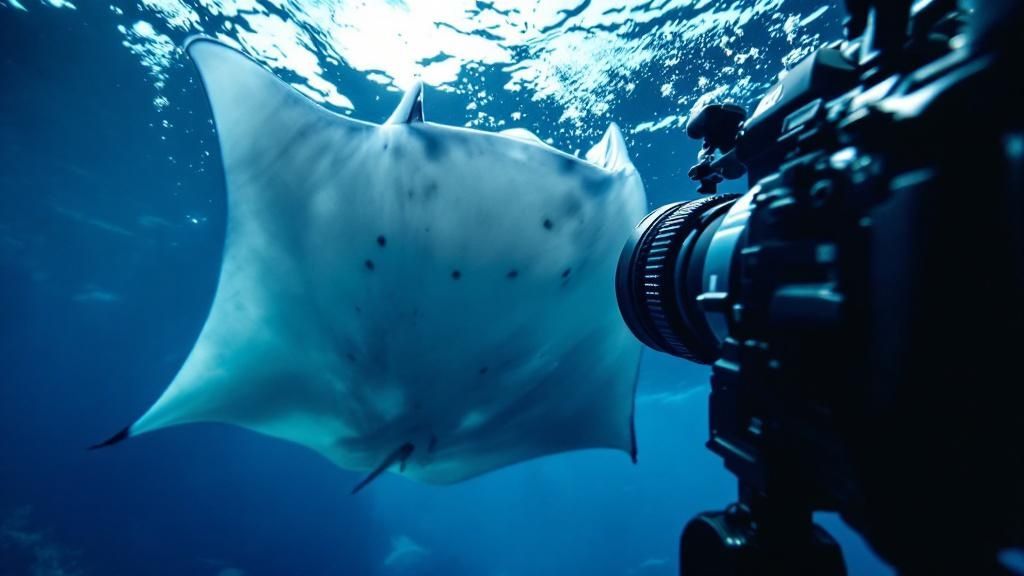
This commitment isn't just talk. For years, local videographers and researchers have been meticulously recording manta sightings. They identify individual rays by their unique spot patterns to track the population's health.
Before you pull out your credit card, get clear on what's included in the price. Are snacks, drinks, and photos part of the package, or are those extra add-ons? Knowing this stuff upfront means no surprises later. For a deeper dive into what makes this trip so special, check out the top reasons why you should go on a manta ray dive in Kona.
Frequently Asked Questions About the Kona Manta Dive
Even with all the planning, it's totally normal to have a few questions buzzing around your head before you jump into a world-class adventure like this one. Getting clear answers is the best way to build your confidence and make sure you feel ready for an incredible night.
Let's dive into some of the most common questions we hear from our guests.
Do I Need to Be a Certified Diver?
Nope, and that's one of the best things about this experience! It’s designed to be accessible to just about everyone. Tour operators run two separate trips at the same time: one for certified scuba divers and another for snorkelers.
If you go the snorkel route, you'll hold onto a big, custom-made float on the surface. These floats are equipped with powerful lights that shine down into the water, attracting the plankton. The mantas swim right up to the light—and right up to you—to feed.
Is the Manta Ray Night Dive Safe?
Yes, absolutely. When you go with a professional, reputable operator, this is a very safe activity. Safety is always priority number one, and every tour kicks off with a detailed briefing that covers all the rules and what to expect.
You’ll have experienced divemasters and guides in the water with you the entire time, keeping a close eye on everything. And the manta rays? They’re true gentle giants. They’re only interested in scooping up plankton and couldn't care less about people. Your only job is to relax, float, and enjoy the show.
What Happens If We Don't See Mantas?
While manta sightings are extremely reliable—we're talking a success rate that's often over 90%—these are wild animals. You can never get a 100% guarantee.
That said, most quality tour companies have what they call a "manta guarantee." If your group strikes out and doesn't see any mantas, you can usually rebook for another night, free of charge. It’s a great policy that shows how confident the operator is. Always double-check the specifics of the guarantee before you book.
This is exactly why we always suggest scheduling your manta dive early in your trip. That way, you have plenty of backup nights to reschedule, just in case.
Ready for your own unforgettable underwater ballet? At Kona Honu Divers, we offer a world-class, safe, and breathtaking manta ray experience. Our expert crew and top-tier boats ensure you have the adventure of a lifetime. Book your dive with us today