
You're on the Kona coast at dusk, looking at a boat, a wetsuit, and a night ocean that feels a lot bigger than it did an hour ago. That mix of excitement and nerves is normal. A manta dive Hawaii experience turns that feeling into something calm and focused, because the whole encounter is built around simple mechanics, clear briefing, and patient wildlife behavior.
The magic is real, but it isn't random. Lights gather plankton, plankton draws manta rays, and the mantas arrive to feed. Once you understand that chain, the whole night makes sense, from the quiet boat ride out to the first slow shape crossing the beams of light.
What to Expect on a Manta Ray Night Dive
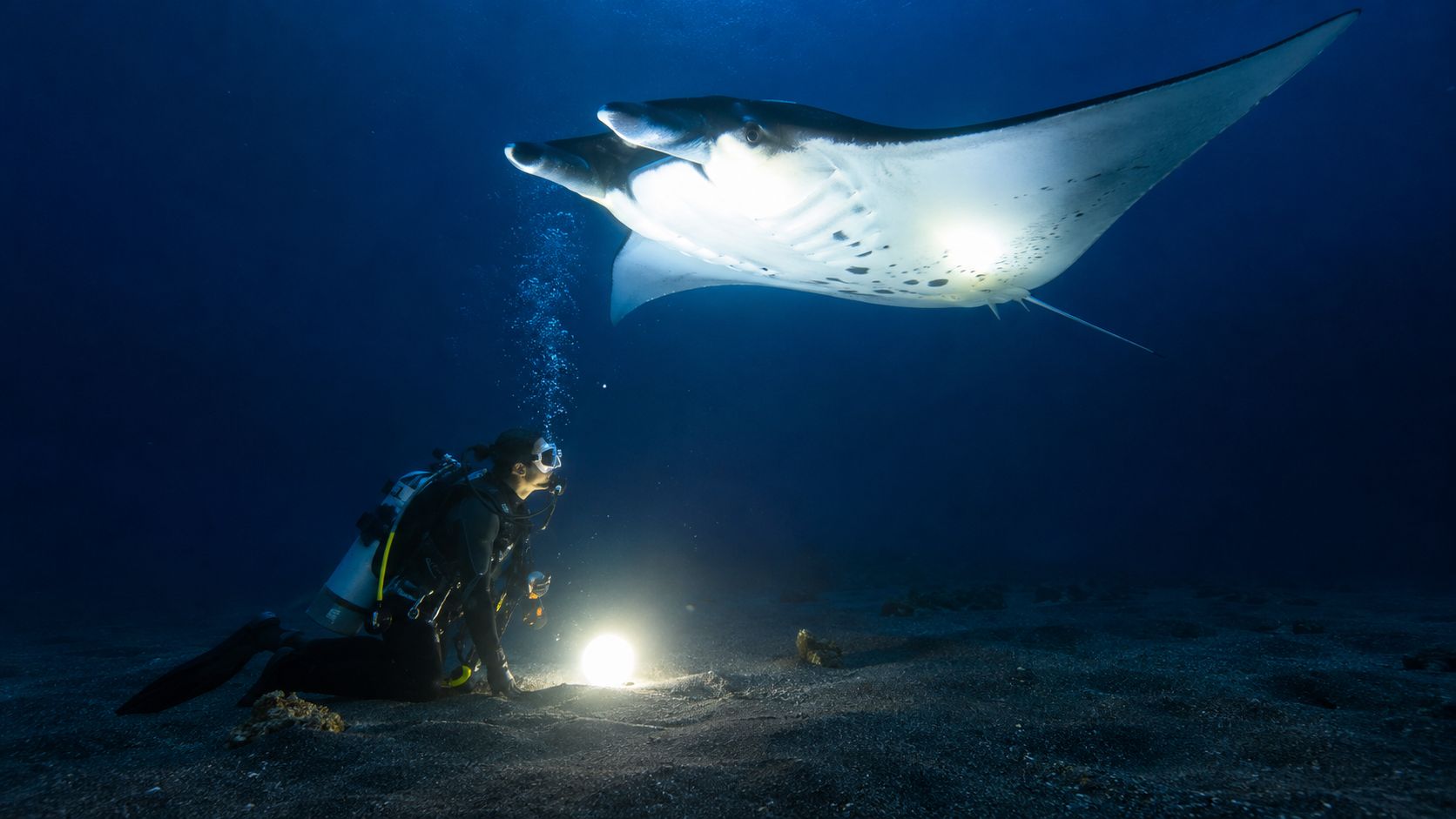
The boat leaves the shore, the coastline fades behind you, and the water gets darker in a way that feels almost ceremonial. Then the crew settles everyone into position, the lights come on, and the ocean stops feeling empty. A few minutes later, a shadow rolls through the illuminated water column and you realize the show has started.
The encounter works because the food chain is simple. Stationary underwater lights concentrate phototactic plankton, and the plankton draws manta rays into the lit water to feed underwater atlas guidance. Divers stay low near the seafloor, while the rays glide above in the open water. That setup gives you the feeling of watching a giant aerial ballet from the best seat in the house.
If you're diving, the first surprise is how still you need to be. You're not chasing anything, you're holding position and letting the mantas come to you. That patience pays off when a ray pivots overhead, turns, and passes through the light with slow, controlled confidence.
Practical rule: the less you try to force the moment, the better the encounter usually feels.
For a first-timer, the emotional shift is the biggest part. The sea stops being a black void and becomes a living space with clear rules, clear light, and animals that know exactly what they're doing. If you want a broader overview of the experience, this guide to manta ray swimming in Hawaii is a useful companion.
Why Kona Is the Global Hub for Manta Diving
Kona's manta tradition did not start as a planned tourist product. It began with an accidental wildlife interaction at the former Kona Surf Hotel, where bright shoreline lights in the late 1980s gathered plankton and drew manta rays into the lit water Scuba Diving magazine history. Night dives were being scheduled there by 1991, and by 1993 the activity had expanded quickly, with multiple boats and dozens of people entering the water on busy nights Scuba Diving magazine history. Kona's manta tradition is built on repeatable animal behavior, not myth.
The ecology behind the attraction
The mechanism is simple. Artificial light pulls plankton into a concentrated area, and that plankton creates a feeding opportunity for mantas DLNR operations assessment. The rays are not being baited or handled, they are responding to a food source they can detect and use. That is why the encounter feels far more dependable than many other wildlife experiences.
Protection matters just as much as the food source. Hawaii made it illegal to kill or capture manta rays on June 5, 2009, when Governor Linda Lingle signed Act 092(09) Springer-hosted legislative testimony and research. The same testimony described a small Kona population, with an average of 57 unique manta rays observed per year over the preceding four years, fewer than 200 estimated in the broader population, and only 2 to 3 new pups seen Springer-hosted legislative testimony and research. In plain language, this is not an endless stream of animals. It is a local population that depends on careful use.
That is why Kona works so well, and why it also needs restraint. Researchers have described Hawaiian reef-manta groups as small, island-resident populations with limited movement between islands Springer-hosted legislative testimony and research. The dive is special because the animals live here, not because they are passing through in huge numbers.
How the Dive Operates from Start to Finish
The evening usually starts with a check-in, gear fitting, and a briefing that covers lights, positioning, and how everyone shares the water. Once the boat reaches the site, the crew places the lights and the group settles into either a dive position near the bottom or a snorkel position at the surface. The structure is simple, which helps first-timers relax fast.
What divers do underwater
If you're scuba diving, you stay low and leave the central water column open. Divers should aim their lights upward rather than sideways, keep a calm semicircle, and avoid exhaling directly into an approaching ray's path because bubbles can startle or redirect it Needham et al. manta testimony. That's not just etiquette, it helps the encounter stay smooth and predictable.
The session is also designed around body position. Divers remain near the seafloor while snorkelers stay above the feeding zone, which keeps both groups separated vertically Needham et al. manta testimony. If you get cold or feel uneasy, signal the crew early. The best night dives feel unhurried because the team has already built that slack into the plan.
What makes the night manageable
The unknown is usually what people worry about most. Once you know that the lights, positioning, and movement pattern are all controlled, the dive becomes easier to settle into. If you're still comparing options for a broader Kona outing, the operator's dive tours page gives you a sense of the other trip styles available.
Keep your movements small, keep your lights where the crew showed you, and let the mantas decide how close they want to come.
Why Garden Eel Cove Is the Superior Dive Site
Garden Eel Cove's bay setting gives it more protection from open-ocean swells, which usually means calmer, more comfortable water for a night dive Kona Hōnu Divers site notes. For a first-timer, that difference matters. Calm water makes it easier to settle your breathing, stay relaxed, and enjoy the manta pass instead of thinking about the motion around you.
Better positioning, better visibility
The site also suits the way the encounter works. Its sandy bottom gives divers a place to settle without stirring up the reef edge, so the water stays clearer and the viewing lane stays open Kona Hōnu Divers site notes. The surrounding reef is described as healthier and more vibrant than a generic open-water setup, which strengthens the case for Garden Eel Cove Kona Hōnu Divers site notes.
Keauhou's main advantage is proximity to shore, but proximity trades off against water conditions and site quality. Garden Eel Cove offers a protected bay, a sandy bottom, and a reef environment that supports a better overall experience.
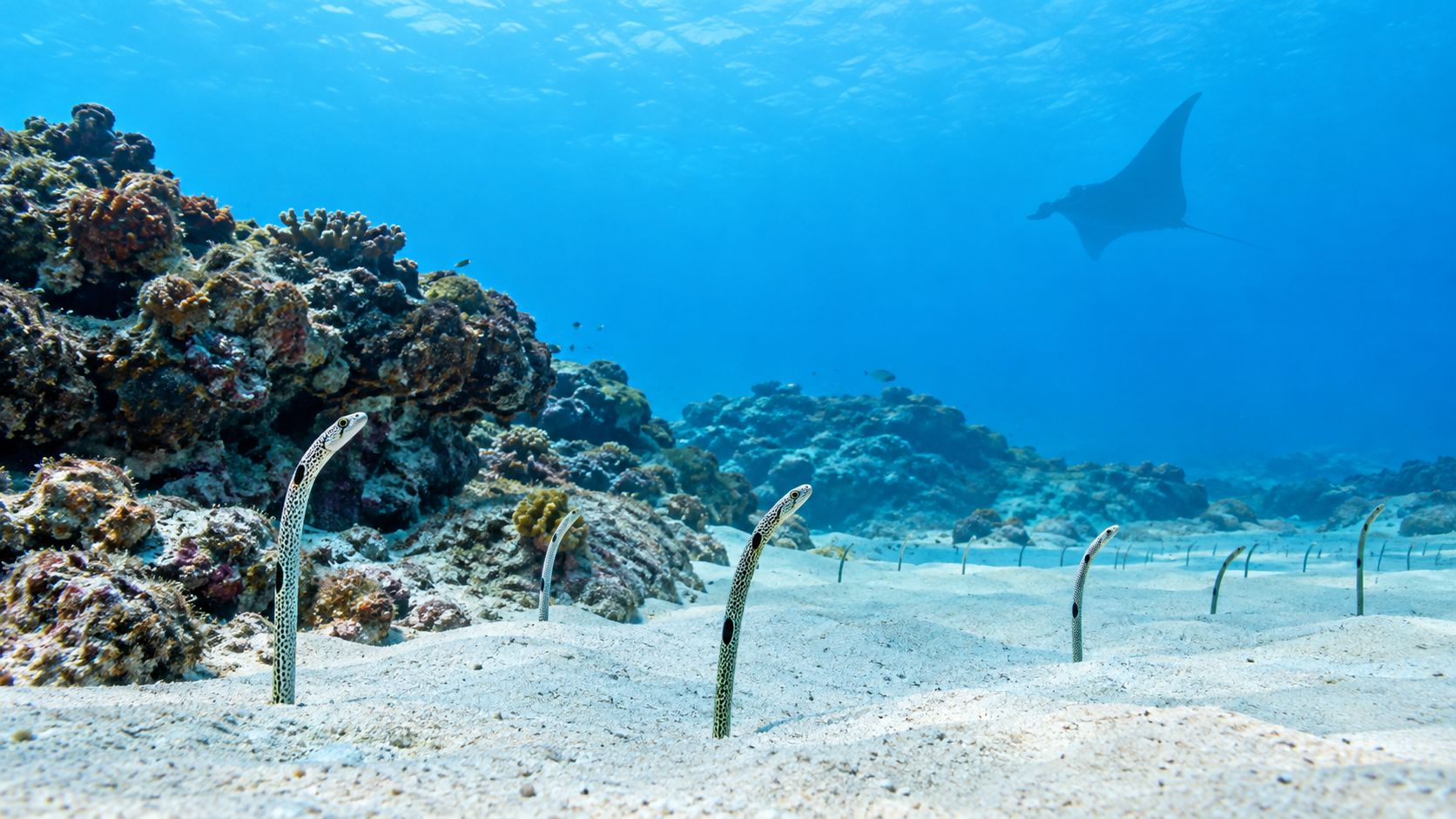
The mechanics matter too. Mantas need vertical space to glide and pivot, while divers need a stable place to stay low and leave the center open Maui manta management research. Garden Eel Cove fits that pattern well, which is one reason this Kona manta dive experience is organized around the site.
Essential Safety Rules and Photography Tips
The safest manta encounters are the quietest ones. Do not touch, chase, block, ride, or crowd a manta ray. Contact can strip the animal's protective mucus layer, which leaves it more vulnerable to infection and skin problems underwater atlas guidance. That one rule does most of the conservation work on the site.
How to stay low-impact
Good buoyancy keeps the bottom clear. If you're a diver, stay stable and avoid finning hard, because stirred sand turns a sharp night view into a cloudy one. If you're snorkeling, stay above the feeding zone and hold position so the rays can pass underneath without having to dodge people Needham et al. manta testimony.
A few small habits make a big difference:
- Aim lights into the water column. That keeps the plankton concentrated where the mantas feed and avoids shining directly into animals or people DLNR safety assessment.
- Leave the center open. The rays need room to turn, somersault, and pass through the lit zone without hitting gear or fins Needham et al. manta testimony.
- Avoid blowing bubbles at close range. Bubble streams can change a manta's path, which reduces the quality of the pass Needham et al. manta testimony.
Camera work that doesn't interfere
The best photos come from stillness, not pursuit. Set your position first, let the manta come into frame, and keep your hands off the chase instinct. If you want a tour option that includes photo-oriented guidance, the Kona manta night dive with photo package is worth a look.
If a manta changes direction, let it. The next clean pass is usually better than the one you tried to force.
Booking Your Dive with Kona Honu Divers
If you are choosing a manta trip for the first time, focus on how the operator runs the night. Look for small groups, deliberate light placement, and a briefing that explains manta behavior before anyone enters the water. Those details matter because the encounter depends on steady positioning and calm traffic, not on chasing the animals. A useful booking also makes the logistics clear, so you know what the crew expects before you arrive. Kona Honu Divers' diving tours page shows the range of trips they offer, and it notes complimentary nitrox for divers, which can help you extend the second tank.
A good manta booking should feel organized, not crowded. The crew should place lights to attract plankton, keep the viewing area open, and manage entry and exit so divers and snorkelers can stay relaxed. That is the practical test to use when comparing operators.
What to look for in a booking
Garden Eel Cove is the site to ask about when conditions allow, because its protected setting supports a cleaner viewing setup than busier alternatives. Ask how the operator chooses the site, how they brief guests on spacing, and how they handle guests who are new to night diving. If those answers are clear, the trip is more likely to run the way a manta night should.
Frequently Asked Questions for First-Timers
Most first-timers want to know three things: how hard it is, what happens if the mantas don't show, and whether certification matters. The answer depends on the format you choose. Scuba divers need the right certification for the dive they book, while snorkelers need comfort in open water and the ability to follow the crew's briefing Kona Honu Divers FAQ page.
What should you wear under a wetsuit? Keep it simple, and wear a swimsuit that fits snugly. If you get cold easily, bring a dry layer for after the dive. You don't need to arrive expecting technical gear, just be ready for a night on the water.
What if there are no mantas? That can happen with any wild animal encounter. The responsible answer is that no one should guarantee wildlife, even on a well-known Kona site Springer-hosted testimony and research. The best operators plan for that uncertainty and treat each night as a real ecological event, not a scheduled performance.
If you're worried about confidence, remember this: preparation matters more than experience. Good briefings, calm breathing, and respect for the space around the animals do most of the work.
If you want a manta night built around clear briefing, careful site choice, and practical support for first-time guests, visit Kona Honu Divers and look at their manta dive options. You'll find a structured way to experience Kona's night feeding scene with the gear, guidance, and pacing that make the experience feel smooth from the boat ride out to the final return to shore.