
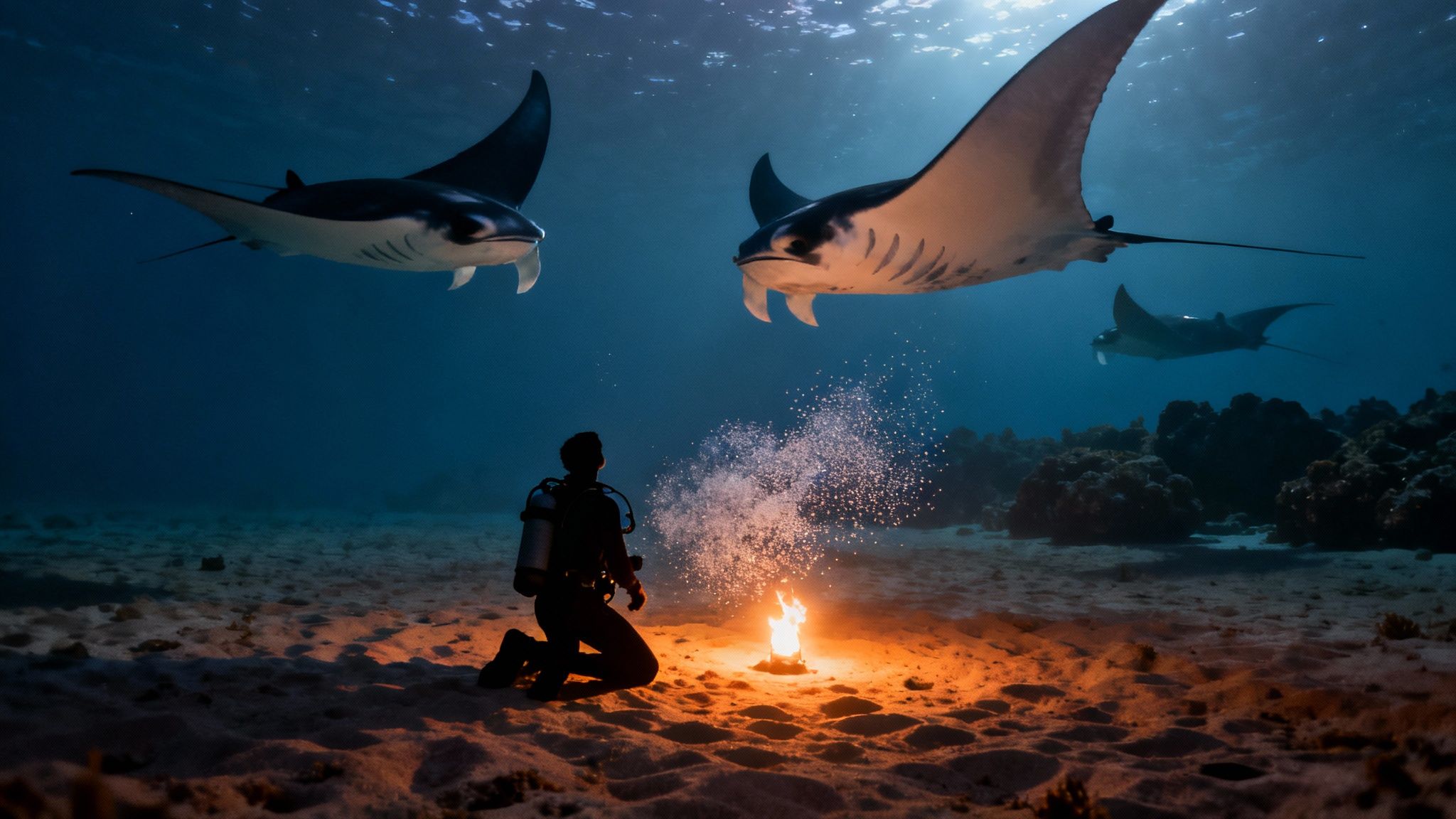
Picture this: you're kneeling on the warm, sandy bottom of the Pacific, long after the sun has set. The world around you is a peaceful, deep blue, lit up by the surreal glow of powerful dive lights placed on the seabed.
This “underwater campfire” acts as a massive beacon, attracting swarms of microscopic plankton that create a shimmering column of life in the darkness. And for the manta rays of Kona, that’s the dinner bell.
The Magic of the Worlds Premier Manta Ray Encounter
Then, they arrive. Out of the darkness, enormous, graceful manta rays appear, some with wingspans stretching up to a staggering 16 feet.
They perform a silent, hypnotic ballet, swooping and barrel-rolling right over your head as they feed on the plankton concentrated in the light beams. This is what the Kona night dive manta ray experience is all about—a breathtaking spectacle that has earned Kona its reputation as the global capital for this adventure.
Why This Dive Is a Once-in-a-Lifetime Experience
This isn't just about watching a big animal from a distance; it's about being fully immersed in a natural phenomenon. The sheer grace of the mantas, combined with how incredibly close they get, forges an emotional connection that’s hard to describe and impossible to forget. It really helps to have a saltwater mindset to truly soak in this unique spectacle.
Of course, the right operator makes all the difference in having a safe, respectful, and magical dive. We at Kona Honu Divers have spent decades perfecting this tour, driven by a deep respect for these animals and their home. Our expert guides know exactly how to position you for the best view of the show without ever disturbing the mantas. It's an experience consistently rated as a highlight for anyone visiting Hawaii.
For the complete experience, we always recommend the 2-Tank Manta Dive. It gives you a chance to see the reef by daylight before the main event kicks off after dark.
This encounter is more than a dive; it's a humbling reminder of the ocean's majesty. Watching these massive creatures glide effortlessly through the water is a profound experience that stays with you long after you surface.
Ready to witness this incredible underwater ballet for yourself? Let's get you booked for an adventure you will never forget.
Why the Kona Coast Is the Manta Ray Capital of the World
The incredible consistency of a Kona night dive manta ray experience is no accident—it's the result of a perfect ecological storm. The Big Island's unique geology and marine life have conspired to create a reliable, world-famous stage for this nightly spectacle. And it all starts with volcanoes.
The underwater landscape here on the Kona coast is defined by steep volcanic shelves that plunge into the deep. This dramatic topography is the secret ingredient, as it forces nutrient-rich currents up from the ocean floor. This process, known as upwelling, creates a thriving environment for microscopic plankton.
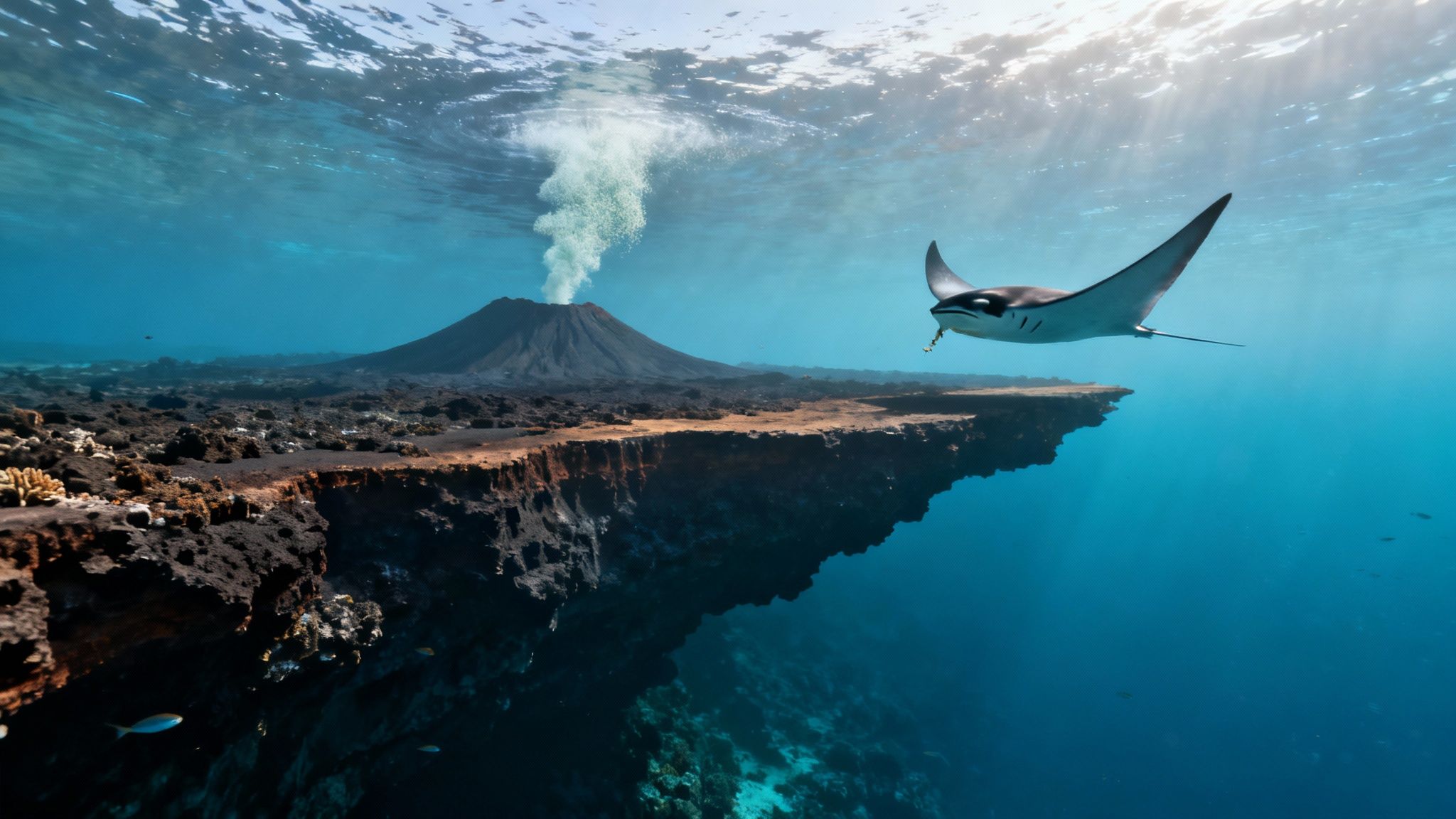
This constant cloud of plankton is the foundation of the entire food web, serving as a dependable, all-you-can-eat buffet for Kona's resident manta rays. They don't need to migrate for food; it's delivered right to their doorstep, day in and day out.
A Perfect Habitat: Calm, Clear, and Protected
But a reliable food source is only half the story. Kona's coastline offers another huge advantage: the massive volcanoes of Mauna Loa and Hualalai act as a natural shield, protecting the western coast from the powerful trade winds. The result is exceptionally calm and protected waters, making the night dive experience comfortable and safe for divers all year round.
These calm conditions also mean fantastic water clarity. With hardly any wind or waves to stir up sediment, visibility often pushes past 100 feet, creating a crystal-clear underwater theater for the show.
It's this unique combination—a constant food supply, calm seas, and clear water—that has made Kona the undisputed global hotspot for manta ray encounters. The reliability is just phenomenal. We're talking documented sighting rates that consistently top 80%, with many nights seeing success rates as high as 85-90%. Seeing an average of six mantas a night is why the Kona experience is a bucket-list item for divers everywhere.
Why Garden Eel Cove Stands Out
While there are a couple of go-to sites for the manta dive, we at Kona Honu Divers are convinced that Garden Eel Cove is the superior choice. Its location is more protected from ocean swells, which means calmer conditions and even more consistent sightings.
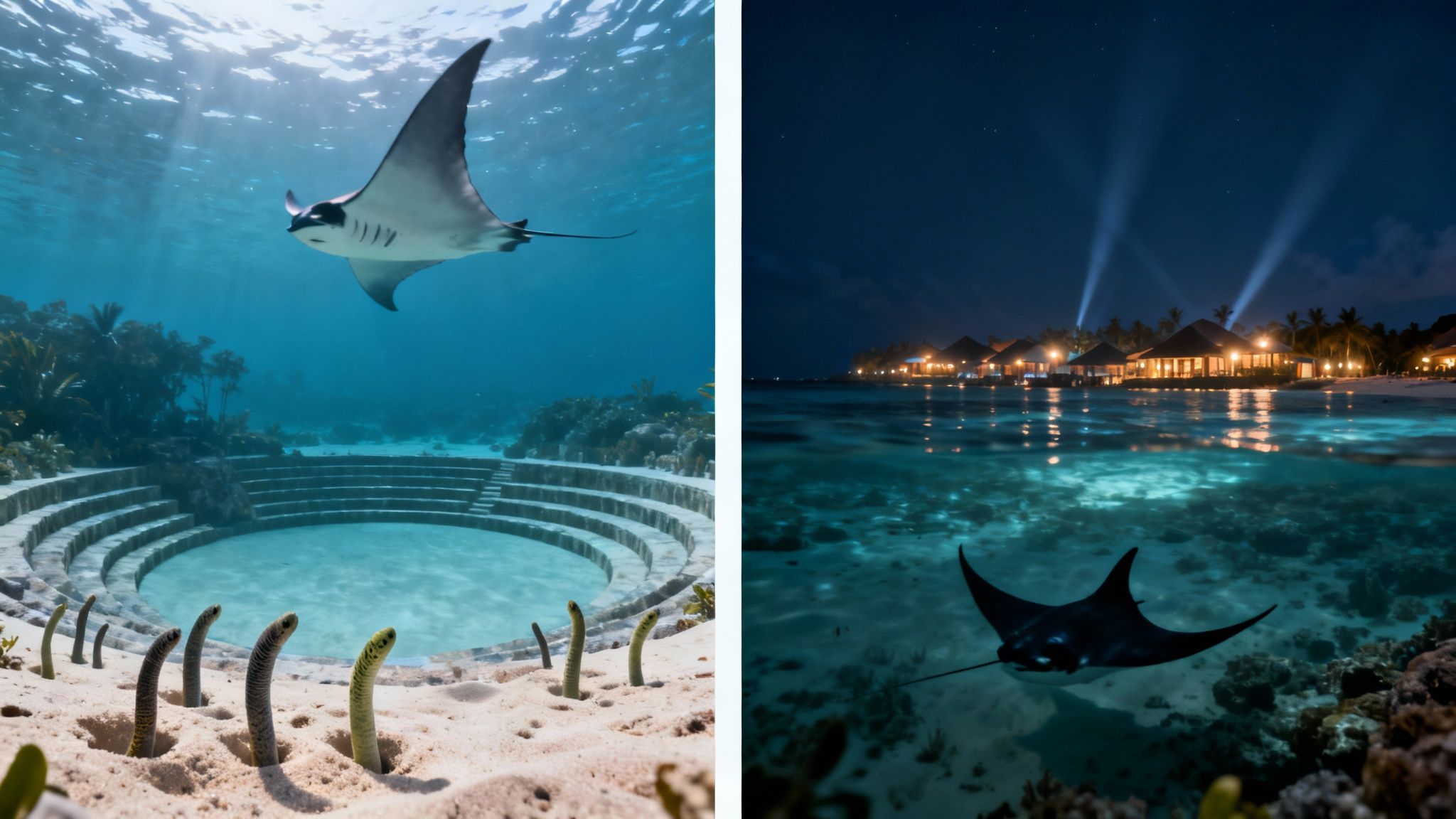
The viewing area itself is a major difference-maker. Garden Eel Cove has a natural underwater amphitheater—a sandy bowl where divers can settle in comfortably. This setup gives everyone a front-row, panoramic view of the mantas as they perform their feeding ballet right above the lights. On top of that, the surrounding reefs at Garden Eel Cove are just healthier and more vibrant. This doesn't just make the dive more beautiful; it also supports a richer ecosystem, which is great for the mantas' overall environment. You can discover more about what makes Kona's underwater world famous.
The magic of Kona is its predictability. The unique blend of volcanic geology and ocean currents has created a natural dinner theater that runs almost every night of the year, cementing its status as the world's most reliable manta ray destination.
When you book a Kona night dive manta ray tour, going with an operator who heads to Garden Eel Cove gives you the absolute best chance for a calm, comfortable, and truly spectacular encounter. The protected location, amazing viewing area, and healthier reefs make it the premier stage for this unforgettable show.
Choosing The Best Dive Site: Garden Eel Cove Or Manta Village
When you start planning your Kona night dive manta ray adventure, two names will pop up again and again: Manta Village and Garden Eel Cove. Both spots offer a chance to see these incredible animals, but they are far from equal. In our expert opinion, Garden Eel Cove is the superior choice because of its protected location, better viewing area, and healthier reefs.
After years of running these charters, we’ve learned a thing or two. That’s why at Kona Honu Divers, we exclusively take our guests to Garden Eel Cove for our manta ray dive tours. The reasoning is simple—it consistently delivers a calmer, more dependable, and just plain more magical show for everyone on board.
Why Garden Eel Cove Is The Superior Choice
Garden Eel Cove, sometimes called Manta Heaven, is tucked away offshore near the Kona Airport. Its biggest advantage is its location. The coastline here forms a natural shield, protecting the cove from the big ocean swells that can roll in and disrupt other sites.
This natural protection translates into some huge perks for divers:
- Calmer Conditions: The water is almost always smoother here. That means a more comfortable boat ride over and a more relaxing, stable time underwater. If you're new to night diving or get seasick, this is a massive bonus.
- More Reliable Sightings: The calm, sheltered water is a five-star restaurant for mantas. The predictable conditions at Garden Eel Cove make for incredibly consistent manta encounters night after night.
- A Better Viewing Area: Garden Eel Cove has a natural underwater "amphitheater"—a sandy bowl where divers can settle in and get a front-row seat. This setup ensures everyone gets an unobstructed view as the mantas swoop and glide right overhead.
- Healthier Reefs: The surrounding corals are absolutely teeming with life. This creates a stunning backdrop for the manta ballet and makes the entire dive a richer, more beautiful experience.
We break down more of what makes this spot so special in our guide to why Garden Eel Cove is a true manta ray heaven.
Understanding Manta Village
Manta Village, located just off the Sheraton Kona Resort in Keauhou Bay, is the original manta dive site. For years, the resort’s lights attracted plankton, and the mantas followed. It’s a place with a lot of history, and you can definitely have an amazing dive there.
However, its location is much more exposed to the open ocean than Garden Eel Cove. This means conditions can be all over the place. You might have to deal with stronger surge pushing you around or rougher seas on the surface. While it’s still a good spot, the experience just isn't as consistently great.
Your choice of dive site has a huge impact on the quality of your manta encounter. Garden Eel Cove’s protected location, perfect viewing area, and healthier reefs make it the hands-down winner for a calm, reliable, and awe-inspiring dive.
To help you see the difference at a glance, we've put together a quick comparison.
Kona Manta Ray Dive Site Comparison
| Feature | Garden Eel Cove (Recommended) | Manta Village |
|---|---|---|
| Location | Protected cove near Kona Airport | Exposed bay near Keauhou Resort |
| Conditions | Generally calmer and more predictable | More susceptible to ocean swells and surge |
| Viewing Area | Natural sandy "amphitheater" for clear, panoramic views | Flatter, more open area |
| Reef Health | Vibrant, healthy coral reef ecosystem | Good reef, but less vibrant than Garden Eel Cove |
| Reliability | Extremely high and consistent sighting success rate | High success rate, but more variable with conditions |
When it comes down to it, if you want the most dependable and breathtaking Kona night dive manta ray experience, Garden Eel Cove is the place to be. Its natural advantages have created the perfect underwater stage for this world-famous spectacle.
Your Manta Ray Night Dive Experience from Start to Finish
So, what’s it really like to do a manta ray night dive in Kona? Knowing the play-by-play from the moment you hit the harbor to the warm ride home can turn any pre-dive jitters into pure excitement. Let’s walk through the whole evening so you feel like a seasoned pro before you even step on the boat.
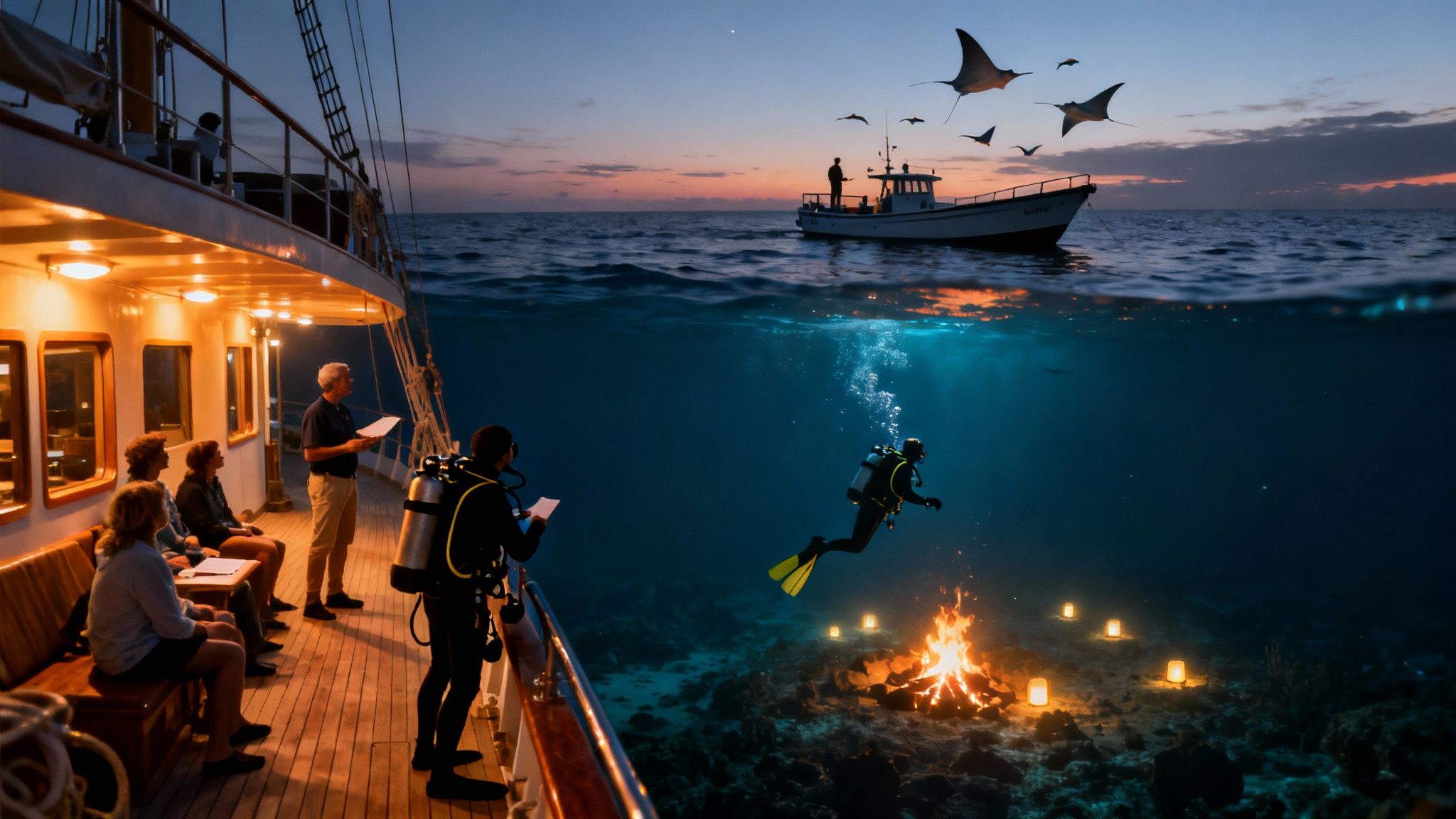
The adventure kicks off in the late afternoon at the harbor. After you check in, the crew gathers everyone for a detailed pre-dive briefing. This isn’t just a formality; it’s where the guides lay out everything you need to know for a safe and amazing dive. They'll cover safety checks, how to interact respectfully with the mantas (the golden rule: look, but never, ever touch!), and what to expect when you're in the water. It’s the perfect time to ask any last-minute questions and get comfortable with the plan.
The Sunset Voyage and Descent into Darkness
With the briefing done, you'll hop aboard and motor out to the dive site. Honestly, this boat ride is a whole experience in itself. As you cruise the stunning Kona coast, the sky just explodes with the colors of a Hawaiian sunset—a perfect opening act for the main event. You can feel the buzz of anticipation on the boat as dusk settles in and the sky goes dark.
Once the boat is anchored at a prime spot like Garden Eel Cove, it's time to gear up. The crew helps everyone get situated, and then, one by one, you'll slip into the warm, dark Pacific. As a diver, you'll follow your guide on a controlled descent, usually to a sandy patch of ocean floor about 30-40 feet down. There's nothing quite like that feeling of descending into the ocean at night; it's both thrilling and incredibly peaceful.
The Underwater Campfire and the Main Event
On the bottom, your guide sets up a powerful light source, which we all call the "campfire." This light shoots a beam up through the water, creating a massive column of light that acts like a giant magnet for plankton. We divers then find a spot in a circle around the campfire, get comfortable on the sand, and point our own dive lights straight up to help build the plankton buffet. Now for the easy part: you just relax, breathe, and wait for the show to begin.
And it usually doesn't take long. First one, then two, then maybe a dozen or more massive manta rays materialize out of the darkness. They perform this stunning underwater ballet, swooping, gliding, and barrel-rolling inches above your head as they feed. The only sounds are your own bubbles and the quiet gasps of awe from your fellow divers. You’ll spend about 45 minutes completely lost in this unbelievable natural spectacle.
The moment a 12-foot manta ray gracefully soars directly over you for the first time is pure magic. It’s an intimate, humbling connection with one of the ocean's most gentle giants—a memory that will stay with you forever.
Ascending and the Energized Ride Home
When your guide signals that time is up, you’ll slowly ascend back to the boat, leaving the underwater ballroom behind. The energy on the ride back to the harbor is always buzzing. Everyone is swapping stories, pointing at their cameras, and still marveling at what they just witnessed.
The best operators, like Kona Honu Divers, make the trip home extra comfortable with hot showers right on the boat deck to rinse off the salt. They’ll often have hot chocolate and snacks waiting, which is the perfect way to wrap up an unforgettable night. From beginning to end, the whole experience is designed to be safe, respectful of the animals, and absolutely awe-inspiring.
The Manta Etiquette: How We Keep This Dive Safe and Sustainable
Being a part of the Kona manta ray night dive is an absolute privilege. This isn't just another dive site; it's a delicate dance between humans and wildlife, a partnership built on decades of learning how to share the water with these gentle giants without causing them any harm.
To keep this incredible experience going for generations, we all follow a simple set of rules known as "Manta Etiquette." Think of it as being a respectful guest in their underwater home. Every good dive operator in Kona will walk you through these rules in their briefing, but knowing them ahead of time makes you a better, more prepared diver.
The Golden Rules of Manta Interaction
The whole idea behind manta etiquette is to be a passive observer. Your job is to become part of the scenery so the mantas feel comfortable enough to do their thing. They'll swoop, glide, and feed, sometimes just inches away, but only if they feel safe.
Here are the non-negotiables that every diver and snorkeler must follow:
- Observe, Don't Touch. This is the number one rule. Manta rays have a special mucus coating on their skin that protects them from infection. If we touch them, we can rub off that protective layer, leaving them vulnerable.
- Find Your Spot and Stay There. If you're diving, you'll settle onto a designated spot on the sandy bottom. Snorkelers hold onto a light board or raft at the surface. This creates a predictable space for the mantas to swim through without having to dodge people.
- Watch Your Bubbles. This one’s for the divers. Try to time your breathing so you aren’t exhaling a big cloud of bubbles right as a manta is gliding overhead. It can startle them and throw off their feeding pattern.
- Never Chase or Block a Manta. Let them come to you. Don't ever swim after them or get in their way. The magic happens when they choose to approach, so just relax and enjoy the show.
Following these simple rules is how you personally contribute to the health and conservation of Kona's beloved manta ray population. Your respectful behavior makes all the difference.
A Legacy of Doing It Right
Kona's dedication to the manta rays didn't happen overnight. The whole industry has grown up around protecting them. Back before 1992, you could really only see mantas from the lights of a few hotels. Soon, a few dive operators started taking people out for a closer look.
By the early 2000s, it was a regular adventure, and by 2012, the community of operators came together to create official standards for manta tours all across Hawaii. It was a massive step in cementing a shared commitment to sustainable tourism. You can read more about how this dive evolved into a regulated, sustainable industry on Wikipedia.
This legacy of care is why the dive is so well-managed today. From the detailed safety briefings to the constant supervision by professional guides in the water, every single detail is handled with respect for you, the divers, and the incredible marine life you've come all this way to see.
Your Questions About the Kona Manta Night Dive, Answered
Thinking about booking your own manta ray adventure in Kona? You've probably got a few questions. Let's run through some of the most common ones we hear so you can feel completely ready for this incredible experience.
Do I Have to Be a Certified Diver to See the Mantas?
Nope, not at all! While certified divers get a fantastic view from the "campfire" on the ocean floor, snorkelers get an equally amazing show from the surface. It’s a completely different perspective, but no less spectacular.
Snorkelers usually hang onto a custom-built light raft. This raft shines powerful lights down into the water, attracting the plankton and bringing the mantas right up to you. You get a perfect bird's-eye view as they barrel roll and feed just inches below.
If you're a diver, our 2-Tank Manta Dive tour is the way to go. If you’d rather stay on top or aren’t certified, the snorkeling option will still blow you away.
When Is the Best Time of Year to See Manta Rays in Kona?
This is one of the best parts about diving in Kona—there is no "best" time! The manta rays here are a resident population, which means they don't migrate. They stick around all year because the food source is so reliable.
That means whether you visit in the peak of summer or the middle of winter, your chances of an unforgettable encounter are incredibly high. It’s a truly year-round spectacle.
What Should I Pack for the Boat Trip?
We—like most top-tier operators—will handle all the heavy lifting by providing your dive or snorkel gear. All you really need to bring are a few personal items to make the trip more comfortable.
Here’s a quick checklist of what I always recommend:
- A towel and a change of clothes: You’ll be grateful for something warm and dry for the boat ride home under the stars.
- Reef-safe sunscreen: For any tours that head out before sunset, this is essential for protecting yourself and our delicate reefs.
- Personal necessities: Think about any medications or other small items you might need.
We always have snacks and drinks on board, but it never hurts to double-check the specifics when booking any of the diving tours in Kona.
Is the Manta Ray Dive Dangerous?
Absolutely not. In fact, it's an incredibly safe and well-managed experience. Manta rays are famously gentle giants. They have no teeth, no stingers, and no barbs—their only interest is scooping up mouthfuls of microscopic plankton.
This is a passive observation activity where we become part of their environment for a little while. Every reputable operator follows strict safety guidelines and has professional guides in the water to look after both the divers and the mantas. You're in good hands the entire time.