
You're standing at the Kona harbor ramp, tightening your mask strap while the last light fades behind Hualālai. The boat is loaded with tanks, weight belts, snorkel gear, and the light boards that will turn a dark patch of Pacific into an underwater feeding station. You're excited, but practical questions keep surfacing. Will the mantas appear? How crowded will the site be? Is scuba better than snorkeling, and which cove deserves your booking?
Kona manta diving is an extraordinary wildlife encounter, but it isn't a guaranteed stage show. The experience depends on animal behavior, plankton conditions, sea state, group management, and the judgment of the operator. The best preparation combines realistic expectations with good technique, careful site selection, and a willingness to let the mantas control the encounter.
How Kona Manta Diving Became a World-Famous Night Dive
The modern experience began accidentally rather than through a purpose-built attraction. In the 1970s, lights from a shore-side hotel drew plankton toward the water. Manta rays followed the concentrated food, and people began noticing their repeated feeding passes near the illuminated shoreline. The first recorded Kona manta encounter at the Kona Surf Hotel is commonly dated to 1979, according to this history of the Kona manta dive.
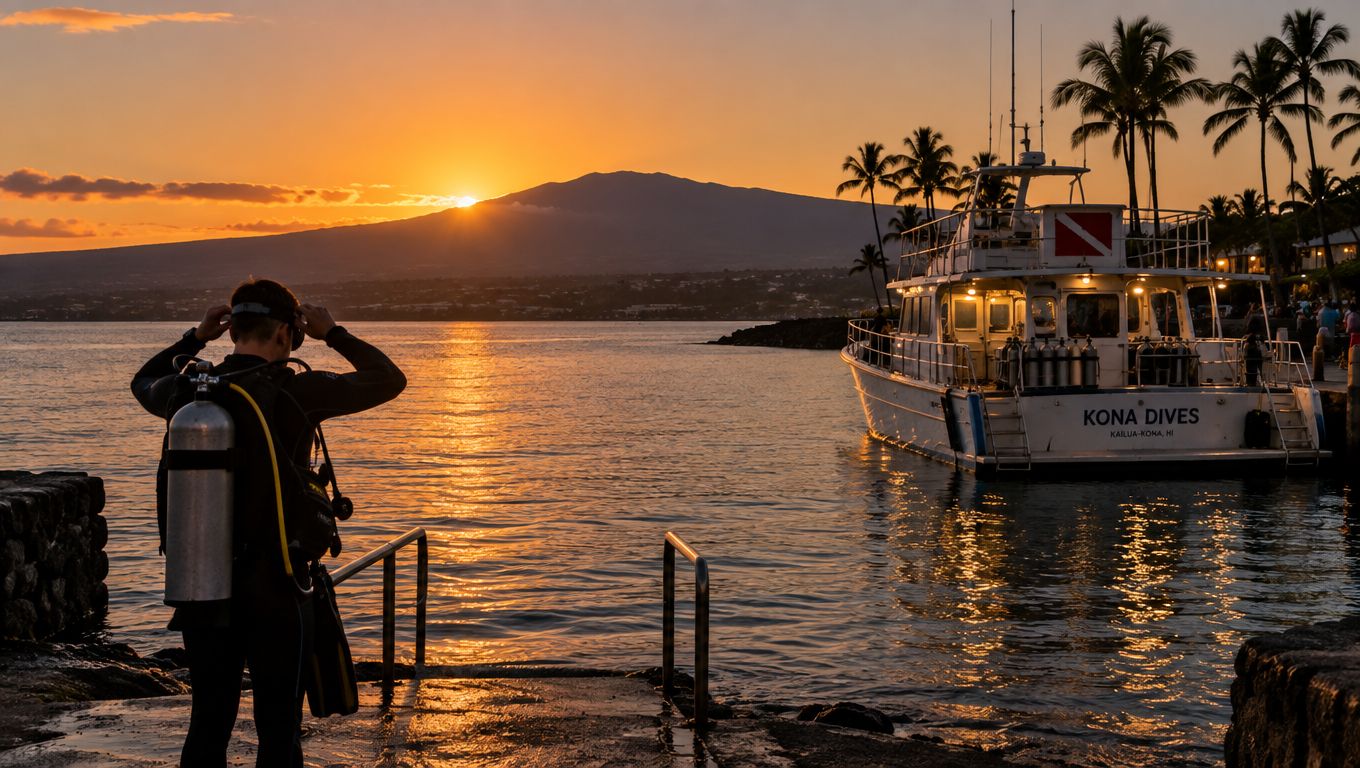
The discovery changed local diving. Operators began taking divers to the area in 1992, and the activity continued until the Kona Surf Hotel closed for remodeling in 1999. The mantas then shifted about 16 miles north, toward the area west of the Kona airport. That relocation helped establish the modern pattern of using reliable viewing sites rather than depending on a single shoreline location.
A feeding system built from simple biology
The method works because manta rays filter-feed on plankton. Underwater and surface lights gather plankton into a concentrated field, and the mantas return to exploit that predictable food source. The lights don't create a performance. They create conditions in which the animals can feed naturally.
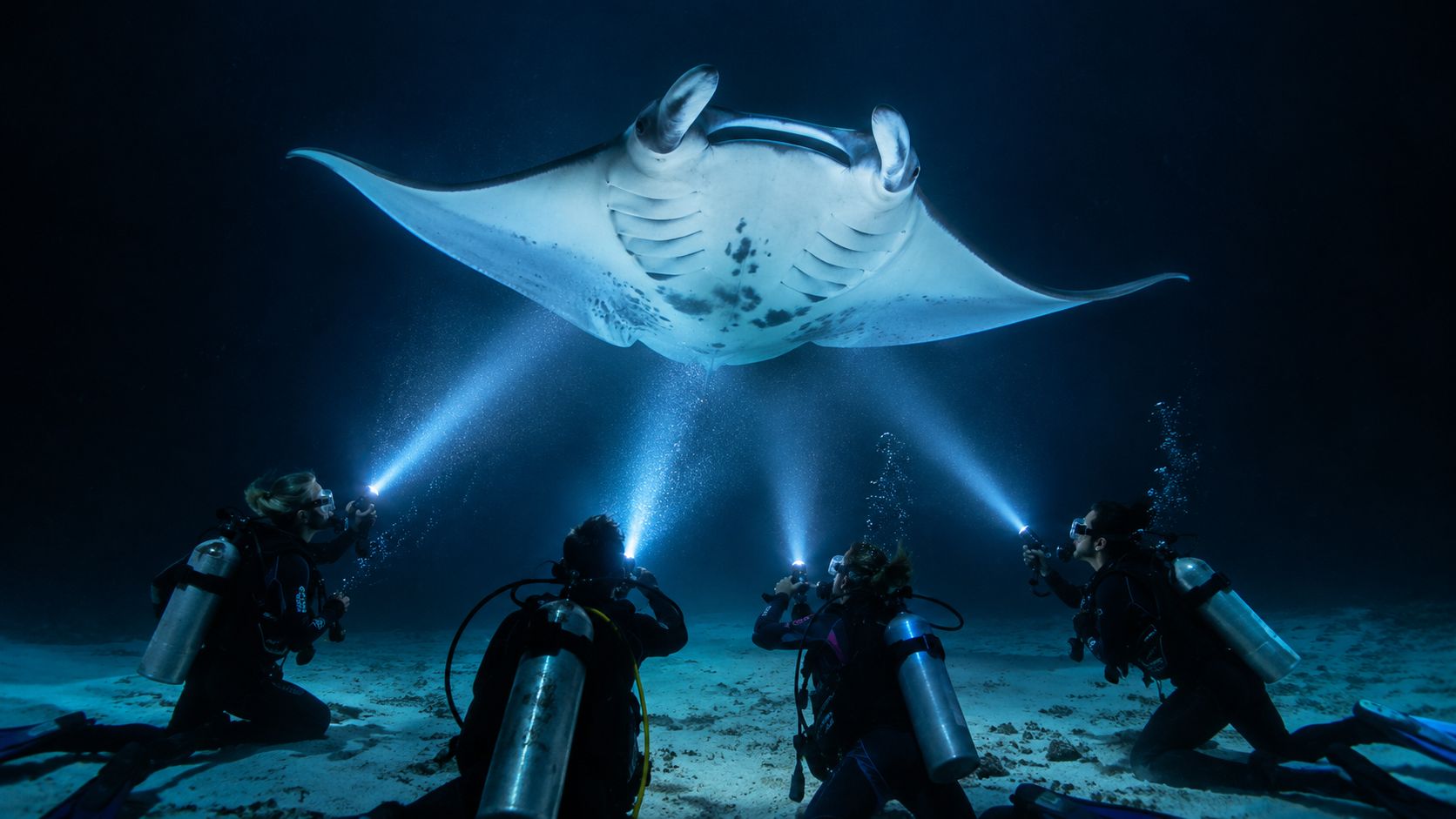
Divers sit or kneel on the bottom while snorkelers stay at the surface. That separation leaves the central water column open, giving the mantas room to bank, turn, and pass over the viewing area. This positioning also reduces the chance of swimmers and divers crossing paths during a close approach, as described in this practical explanation of the Kona manta ray night dive setup.
The two locations most associated with the experience are Manta Village and Garden Eel Cove. What started as an unexpected interaction near a hotel became a coordinated nightly activity involving boats, guides, light boards, divers, and snorkelers. For a broader look at the island's underwater character, see this guide to what makes diving in Kona unique.
What Actually Happens on a Manta Ray Night Dive
The evening usually starts with check-in, gear fitting, and a boat briefing. Your crew should explain the entry, exit, light-board position, bottom behavior, spacing rules, and the most important wildlife instruction, never touch or chase a manta. A clear briefing matters because darkness, moving water, and unfamiliar equipment can make simple actions feel more complicated.
The boat ride takes you away from the harbor as the sunset disappears. Once the crew reaches the viewing area, divers and snorkelers enter according to the operator's sequence. Snorkelers remain at the surface with flotation support, while scuba divers descend to a sandy bottom and arrange themselves around the lights.
Why the lights work
The light boards concentrate plankton in the illuminated water. Mantas then make repeated feeding passes through that patch, often turning or rolling as they filter food from the water. Divers carry lights or sit near fixed lights, but the objective isn't to shine directly into an animal's face. The lighting creates visibility for guests while supporting the feeding pattern that brings the mantas close.
Practical rule: Stay still and let the manta choose its path. Trying to improve your view by swimming after it usually makes the encounter worse for everyone.
Divers typically hold position on the sand in a semicircle. Keeping your knees, fins, and hands controlled prevents accidental contact with the reef or an animal passing overhead. It also leaves the water column open, which is the central design feature of the dive. Snorkelers should keep their bodies flat and avoid dropping below the surface into the divers' area.
What works underwater
Good buoyancy is more valuable than elaborate equipment. A diver who maintains a stable position can watch the mantas without kicking up sand or drifting into a neighbor. If your mask leaks, your regulator feels unfamiliar, or you're struggling to hold position, signal the guide rather than trying to solve the problem while moving through the viewing area.
After the interaction, the group ascends and returns to the boat. The ride back is part of the experience, but it's also when crews check that everyone is warm, accounted for, and comfortable. Read more about the practical side of diving with manta rays before you reserve a trip.
Garden Eel Cove and Manta Village Compared
Site choice shapes the night more than many travelers realize. Garden Eel Cove offers a protected setting, a broad viewing area, and reef structure around the light zone. That combination makes it the stronger choice for a manta tour when an operator can use it safely and conditions allow.
Manta Village has deeper water and a long association with the original Kona manta experience. It remains an important site, but the larger depth profile can feel less forgiving for divers who are managing buoyancy, air consumption, or nighttime nerves. Site access and operating conditions can also change, so a responsible crew should explain where it's going and why.
| Feature | Garden Eel Cove | Manta Village |
|---|---|---|
| Setting | More protected location with a defined viewing area | Historic manta site with a deeper viewing profile |
| Reef environment | Better reef edges and habitat around the lights | More focused on the viewing station and sandy bottom |
| Diver experience | Easier to settle into a controlled position | Requires more comfort with depth and nighttime diving |
| Snorkeling | Snorkeling can be offered when conditions and operations allow | Often operated as a diver-focused site |
| Main trade-off | Popularity can bring crowding | Distance, depth, and variable feeding conditions can affect comfort |
| Editorial choice | Preferred option for a dedicated tour | Useful alternative when conditions or logistics favor it |
Why Garden Eel Cove gets my preference
Garden Eel Cove's protected location and wider viewing area reduce unnecessary movement. Divers can establish a stable position, snorkelers can remain above the feeding lane, and guides can monitor the group without constantly correcting drifting guests. The reef edges also add more visual interest than a purely sandy viewing station.
That doesn't mean Garden Eel Cove guarantees mantas or eliminates crowding. It means the site generally offers a better structure for a calm, well-managed interaction. Ask the operator whether the trip is specifically planned for Garden Eel Cove, whether snorkeling is available, and how the crew handles boat and guest spacing.
Skill, Certification, and Seasickness Preparation
A manta night dive is not technically difficult for a comfortable certified diver, but it tests skills that daytime reef diving can hide. You need to control your buoyancy, manage your breathing, listen to the guide, and remain composed when a large animal passes close overhead. Open Water certification from SSI or PADI is the normal starting point, although each operator sets its own experience and medical requirements.
The surface swim from the boat or entry point can be the most tiring part. Even divers with strong underwater skills can become uncomfortable if they rush the swim, carry too much gear, or enter the water already dehydrated. Fit your mask and regulator before entry, use the available flotation support, and tell the crew if you need a slower pace.
Health checks deserve honest answers
Discuss the trip with a dive-friendly medical professional if you have asthma, pregnancy-related concerns, ear-equalization problems, recent illness, or any condition that could affect breathing or pressure changes. Don't hide a concern during check-in. A guide can help with logistics, but a crew member can't replace medical clearance.
Seasickness prevention works best before nausea begins. Eat a light meal, drink water, avoid alcohol, and consider your personal response to medication before boarding. Products travelers commonly compare include a Ship-EEZ Seasickness Patch, Dramamine pills, Bonine pills, Sea Band wristbands, and Ginger chews. Ask a dive-friendly doctor about a prescription antiemetic if over-the-counter options haven't worked for you.
Pack for comfort, not clutter
Reef-safe sunscreen belongs on exposed skin before the boat leaves, not in the water around the mantas. An electrolyte powder can help you rehydrate after a long day in the sun. A wetsuit rinse extender can make post-dive comfort easier when you're changing out of damp gear, especially if you're sensitive to cold.
Use this guide to avoiding seasickness when planning the day. The goal isn't to eliminate every sensation of movement. It's to arrive rested, fed lightly, hydrated, and prepared.
Sighting Odds, Crowding, and 2026 Conditions
A responsible booking decision starts with accepting variability. The independent manta-tracking database records almost 6,000 documented encounters and 28,500 sightings over 14 years, and its public listings show different counts on consecutive nights, including 28 mantas on June 24, 2025, 20 on June 25, and 15 on both June 26 and June 27. Those figures come from Manta Rays Info's tracking database. They show that manta activity changes from night to night, even at a famous site.
That variability is the reason I'm cautious about language such as “guaranteed” or “every night is magical.” Rainfall, plankton concentration, water movement, visibility, and the number of boats operating in the area can all affect what guests see. A quiet night can still produce a memorable encounter, but it may look different from the crowded, continuous feeding scene shown in promotional photos.
Crowding is now part of the booking decision
Local reporting has raised concerns about safety for swimmers and manta rays as tour activity increases. State officials have considered tying boats to buoys instead of allowing them to drift with engines, because propellers can create hazards for rays and people in the water. This report on Kona manta tour safety and management captures the emerging concern that crowd control is an animal-welfare issue as well as a guest-comfort issue.
| Metric | Garden Eel Cove | Manta Village |
|---|---|---|
| Sighting pattern | Variable, with feeding shaped by plankton and conditions | Variable, with conditions changing between departures |
| Crowd concern | Ask about mooring plans and group limits | Ask how the operator manages busy departures |
| Booking approach | Favor clear site planning and controlled positioning | Confirm the site before departure and understand the depth profile |
| Best expectation | Strong opportunity, never a promise | Historic site, never a promise |
For planning, I prefer weekday departures and less congested travel periods when the itinerary allows. More important than chasing a supposedly perfect date is choosing a company that explains its mooring plan, limits unnecessary crowding, and will adjust the site when safety requires it. A smaller group can improve the experience, but it doesn't override weather, sea conditions, or animal behavior.
Gear, Wetsuits, and Underwater Photography Tips
Night diving rewards simple, dependable equipment. A well-fitting mask, comfortable exposure protection, and stable buoyancy will improve the experience more than a large camera rig. For most guests, the operator supplies the main scuba and snorkeling equipment, but you should confirm what's included before boarding.
A full wetsuit is useful because divers remain relatively still for long periods. Ask what thickness the operator recommends for the season and whether a hood or additional layer is available if you tend to get cold. This guide to choosing a wetsuit for Hawaii is a useful starting point, but personal comfort matters more than copying another diver's setup.
Manage light carefully
A low-profile mask with a black skirt helps reduce distracting reflections around your eyes. Bright mask frames can reflect light downward and interfere with photography. Your primary dive light should illuminate your immediate area without becoming a spotlight aimed at the animals or other guests.
Some operators ask divers to use red-filter modes or limit certain light settings. Follow the crew's instructions. Red light can help preserve a darker atmosphere and reduce unnecessary glare, but operator rules vary according to the equipment and site.
Photograph without chasing
Low-light footage improves when you stabilize yourself first. Keep the camera close to your body, use a video light designed for underwater work, and shoot short clips rather than recording continuously. A manta moving through the beam is easier to capture when you anticipate its path instead of swimming after it.
The strongest manta footage usually comes from a diver who stays in position, keeps the lens level, and lets the animal enter the frame.
Avoid strobes aimed directly at mantas unless the operator specifically permits them. Don't touch the reef for stability, wear gloves that encourage contact, or swim into the snorkel lane to improve an angle. A one-meter hover above the bottom gives you room to move while protecting the habitat and preserving the viewing area for everyone else.
Booking, Pricing, and Choosing the Right Operator
Manta tour prices vary with boat type, group size, equipment, duration, and whether the trip includes a daytime reef dive. A two-tank scuba package usually includes more equipment and instruction than a snorkel-only departure, but the cheapest headline price can exclude items such as rash guard rental, digital photographs, or marine preserve fees. Ask for the complete cost before you compare operators.
The useful comparison isn't “cheap versus expensive.” It's what kind of night does the price buy? Check the boat's passenger capacity, guide-to-guest ratio, included equipment, water time, photo policy, cancellation terms, and the operator's approach to crowded sites.
Questions that reveal the operating standard
- Boat and passenger layout: Can guests move safely, and does the crew separate divers from snorkelers?
- Site selection: Does the operator explain why it chooses Garden Eel Cove or Manta Village on a given night?
- Guide presence: Are guides active in the water, or do they remain focused only on boat operations?
- Wildlife rules: Does the briefing clearly prohibit touching, chasing, and blocking manta paths?
- Crowd management: Does the company discuss moorings, group limits, and spacing between guests?
- Evidence of consistency: Do recent reviews describe the actual crew, boat, communication, and handling of changing conditions?
For divers comparing local options, this overview of Kona diving companies can help organize your research. Kona Honu Divers offers a two-tank manta trip centered on Garden Eel Cove, with a reef dive, sunset surface interval, and manta briefing. Its offering also includes a manta snorkel option, so the same general experience can suit mixed groups.
Sample Itinerary and Practical FAQs
A sensible two-night plan gives you room to adjust rather than forcing the manta dive into the final evening of your trip. On the first day, complete a pool check or gear fitting and take an afternoon refresher if your last dive was a while ago. Follow that with the Garden Eel Cove night dive, allowing enough time afterward to eat, warm up, and rest.
On the second day, choose a daytime shore dive at Place of Refuge or a boat dive along the Kona coast. A second optional manta night can be worthwhile if the first evening had difficult surface conditions, limited activity, or poor photography visibility. The second attempt shouldn't be treated as a guarantee. It gives you another set of conditions and another chance to practice calm positioning.
Practical questions
How large are Kona's manta rays?
Adults can look enormous in the light, but size varies between individuals. Focus less on a maximum wingspan and more on safe positioning. Keep your body controlled and allow each animal a clear feeding lane.
Do tours run in the rain?
They may. Rain alone doesn't determine whether mantas feed, because the interaction depends more directly on plankton concentration, water movement, visibility, and operational safety. The crew makes the final decision if conditions become unsuitable.
Can younger divers participate?
Junior certification rules and operator policies differ. Confirm the minimum age, recent-dive requirement, medical form, and whether the child is comfortable in open water at night before booking.
How long does the manta interaction last?
The in-water viewing period varies with the operator's schedule, sea conditions, group needs, and manta activity. Ask for the expected water time rather than assuming the entire tour duration is spent directly above the lights.
Kona Honu Divers offers a Garden Eel Cove manta experience for certified divers, along with a manta snorkeling option for guests who prefer to remain at the surface. Review the itinerary, equipment, site plan, and crowd-management approach, then visit Kona Honu Divers to check availability for your Kona manta diving trip.