
You're on your hotel lanai before sunrise, coffee in hand, comparing boats and trying to figure out which Kona diving company fits the kind of diving you want to do. That decision shapes more than your departure time. It affects how much support you get in the water, how the day feels on the boat, and whether the dive plan matches your experience instead of testing it.
Good Kona operators can deliver very different experiences.
A newly certified diver, a parent booking for a mixed-skill family, and an experienced diver looking for blackwater or manta trips should not book the same way. The right fit comes down to trip design, guide judgment, group pace, and how the crew handles changing ocean conditions. Those details matter more here than polished marketing language.
Kona Diving Company belongs in that comparison. It is a Kailua-Kona operation with a family-run identity and a broad range of training and charter options. That matters as background, but it does not tell you how a trip will feel once you step onto the boat.
That is the practical gap this guide addresses. It focuses on the things divers usually wish they had asked earlier: which experiences suit newer divers, which ones demand stronger buoyancy and comfort in open water, how boat setup affects the day, and what separates a generic charter from a carefully run one. If you want a wider overview before narrowing operators, start with this guide to diving Kona on the Big Island.
Kona Honu Divers stands out in that conversation because the operation details are easy to feel as a guest. Boat size changes crowding and comfort. Guide quality changes how relaxed the dive feels underwater. Site selection changes whether you come back saying the reef was nice, or talking about one specific dive for the next ten years. Garden Eel Cove is a perfect example. On paper it is a site name. In practice, it is where execution, timing, and local knowledge turn a famous manta dive into a smooth and memorable one.
Your Ultimate Kona Diving Adventure Starts Here
You can have an excellent dive trip in Kona, but only if you book the right kind of trip.
Some visitors want relaxed reef diving with easy entries and a calm pace. Others come to Hawaii with one goal only: manta rays at night. Then there are experienced divers who don't want a standard sightseeing charter. They want a guide who understands how to run a clean advanced day and who knows the difference between a pretty reef and an exceptional dive.
That's where operator selection starts to matter.
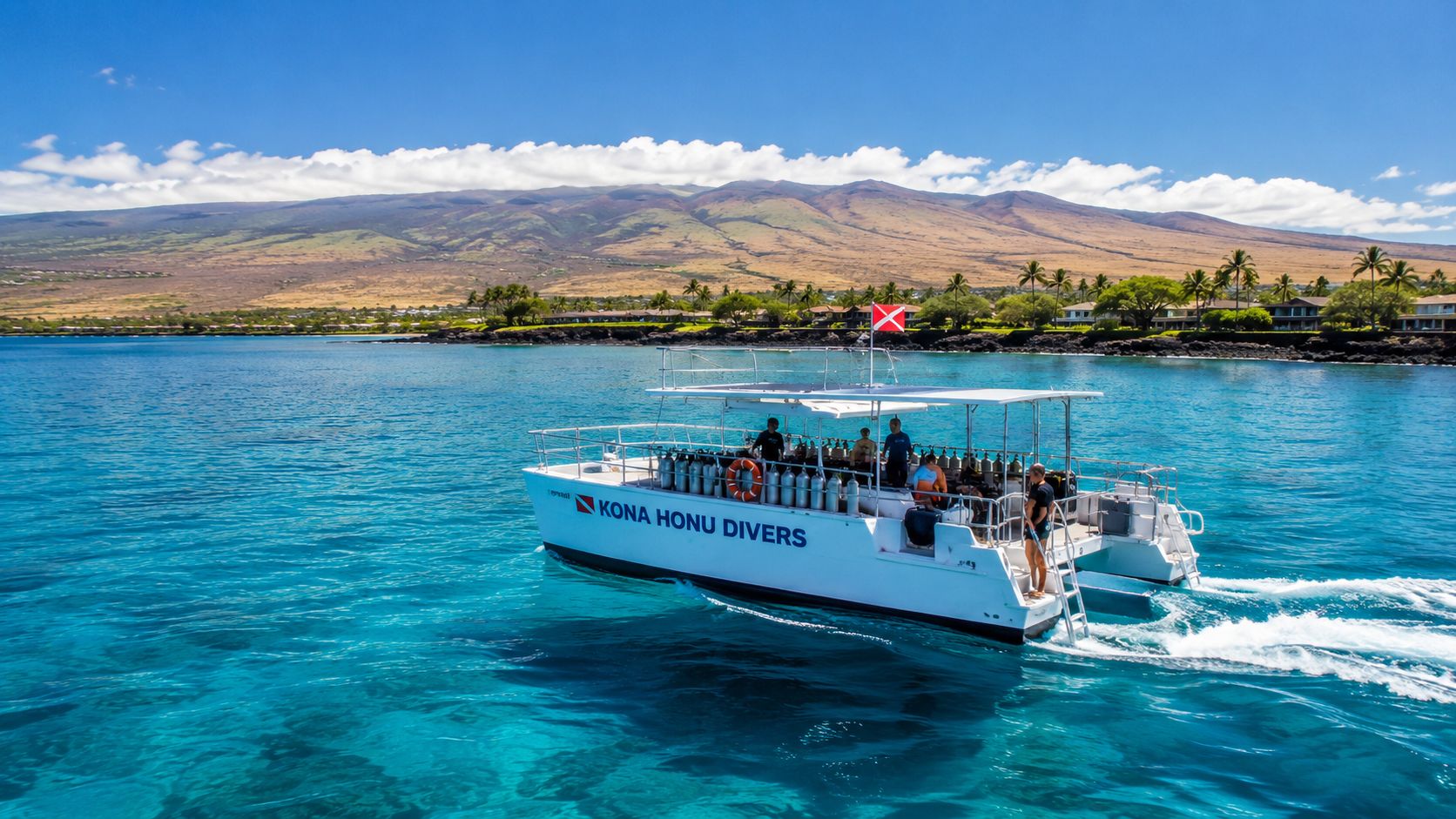
If you're still narrowing options, start with a broad look at diving Kona on the Big Island. It helps to frame the coast by experience type rather than by brand name alone.
What most travelers get wrong
Many people search “Kona diving company” and assume every boat offers roughly the same experience. That isn't how Kona works.
The important differences usually come down to:
- Trip design: A manta dive, a two-tank reef charter, and a blackwater dive are completely different products.
- Guide style: Some divers want close supervision. Others want a guide who can read the group and give capable divers room.
- Operational judgment: Weather, surge, current, and comfort at the surface all change the quality of the day.
- Fit for ability: A beginner can have a memorable trip on the Kona coast. Put that same diver on an advanced-profile outing too soon, and the day becomes stressful instead of fun.
Practical rule: Book for the dive you're actually ready for, not the one that sounds most dramatic online.
What to look for before you commit
A good dive operator should make it easy to understand whether a trip is beginner-friendly, advanced, shore-focused, boat-focused, or weather-sensitive. It should also be clear how much of the premium goes toward logistics, site selection, or guiding quality.
That matters even more in Kona because the coast offers both gentle reef experiences and specialty dives that demand much tighter control. The water can look inviting from shore and still require discipline once you're in open ocean or on a night profile.
Why Choose Kona Honu Divers
When divers compare a Kona diving company, they usually start with review scores. That's useful, but it's only one piece of the decision.
The better question is simpler: which operator style gives you the highest chance of getting the dive day you want?
Kona Diving Company has a documented public record that gets attention. TripAdvisor lists the company with the Certificate of Excellence from 2014 to 2019 and the Travelers' Choice Award from 2020 to 2023, which signals recurring positive guest feedback over multiple years on a major travel platform, as shown on its TripAdvisor listing.
For divers researching alternatives, it also helps to review the people leading trips. You can see one operator's staff structure and roles on the Kona Honu Divers team page.
What strong operators usually do well
Good operators separate themselves in ways that aren't always obvious on a homepage.
First, they match site choice to conditions instead of forcing a plan that looked good the day before. On the Kona coast, that judgment shows up in small decisions all day long. Entry and exit comfort, drift management, how much task loading a diver can handle, and whether the second site should be easier or more ambitious.
Second, they explain the trade-off clearly. A diver paying for a more curated trip usually wants to know if the value is in smaller groups, a more experienced guide, better site access, or smoother logistics. That's a more useful answer than broad promises about service.
Why reviews help, but don't tell the whole story
Reviews are best used as a filter, not as your only decision tool.
A top-rated operator may be perfect for first-time Kona visitors who value hand-holding, clear briefings, and a friendly pace. An advanced diver, on the other hand, may care more about site access, guide-to-diver ratio, and whether the crew can run a specialty dive without unnecessary chaos.
That distinction matters because public-facing content across the Kona market often emphasizes the emotional side of the trip while leaving out the operational side. Buyers still want to know what happens when wind shifts, whether a boat changes sites often, and how the crew handles a group with mixed ability.
The best dive day usually comes from the operator whose style matches your needs, not the operator with the flashiest description.
The Legendary Manta Ray Night Dive
The boat settles on the mooring after sunset, the crew finishes the last safety check, and every diver can feel the mood shift. Kona's manta night dive has that effect. Even seasoned divers who have logged reefs all over the Pacific still light up when the first ray sweeps through the beams.
The experience is organized for a reason. Divers kneel or settle low near the light source, the plankton gathers, and the mantas come in to feed on their own terms. When conditions line up, the passes are close, repeated, and surprisingly calm. It feels dramatic without feeling chaotic.
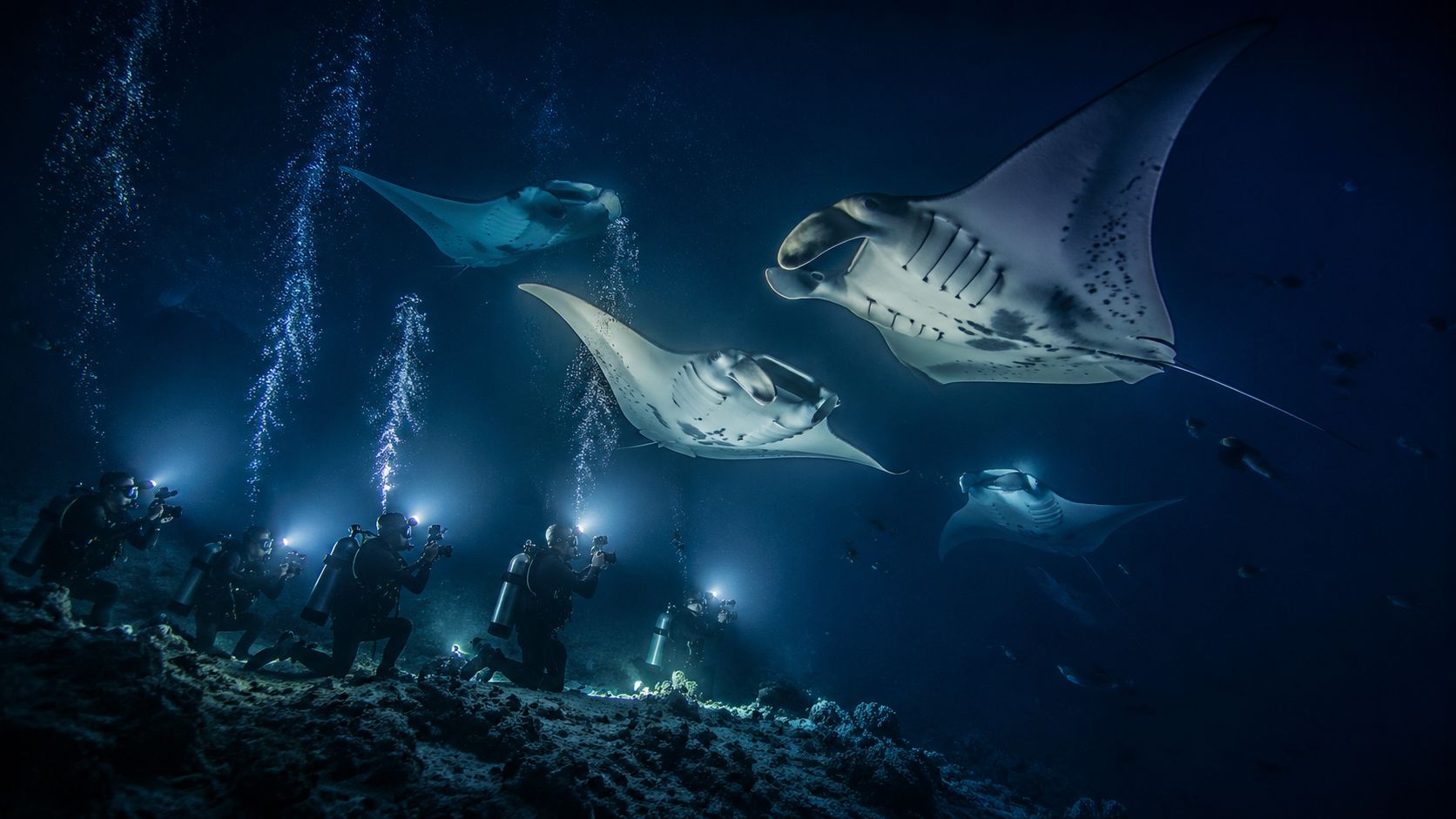
If you are deciding between staying on scuba or watching from the surface, the manta ray night swim guide gives a clear picture of how the snorkel version differs from the dive.
Why site choice matters
Site choice changes the whole night.
Garden Eel Cove has earned its reputation because the layout is usually more forgiving than the more exposed options. Protected water often means an easier entry, a cleaner descent, and less motion while divers get settled. For newer night divers, that can be the difference between spending the first several minutes calming down and spending those minutes watching mantas.
From a working divemaster's perspective, calmer conditions also make the operation tighter. Briefings are easier to execute, lights stay organized, and divers are less likely to drift out of position or kick up a lot of unnecessary movement. Better control for the crew usually leads to a better show for the guests.
What separates a strong manta operation from a mediocre one
A good manta dive is built before anyone gets in the water. The crew needs to set expectations clearly, check weighting, confirm light use, and make sure every diver knows where to be and what not to do once the rays arrive.
The strongest operations usually share a few habits:
- Clear coaching before entry: Divers should understand the descent, the final resting position, and how to keep their light aimed without blinding other guests.
- A controlled setup underwater: Good crews get everyone stable first instead of rushing the group into the viewing area.
- Respect for natural behavior: Mantas feed better when divers stay put, keep their hands to themselves, and avoid turning the site into a chase.
- A layout that matches the group: Mixed-experience groups do better when the crew chooses a site and pace that reduce stress from the start.
Stay still, breathe slowly, and let the rays approach. The divers who move the least usually get the closest passes.
How to compare operators for this dive
The details matter more than the marketing copy. Ask whether the trip is run for divers only or mixed with snorkelers, how many guests each guide is managing, and how the crew handles divers who are comfortable in daylight but hesitant after dark. Those answers tell you a lot about how the night will feel.
Kona Honu Divers stands out for divers who want a more dive-focused operation instead of a broad tourist format. The practical advantage is not just the destination. It is how the trip is run. Boat comfort, guide attention, and disciplined site setup all shape the manta encounter as much as the mantas themselves.
If you are choosing between companies, look past the promise of seeing rays. Ask who is on the boat with you, how the briefing is run, where the operator usually dives, and what the crew does when conditions are only fair instead of perfect. That is how divers choose the right manta trip for their skill level, not just the loudest one.
Unique Diving Adventures Blackwater and Beyond
Kona ceases to feel like a tropical reef destination and begins to feel like a frontier.
Blackwater is not a reef dive. There's no lava ledge to reference, no coral head to orient on, and no casual drifting while looking for turtles. You're suspended in open ocean at night, watching creatures rise out of the deep water column.
That's exactly why experienced divers love it.
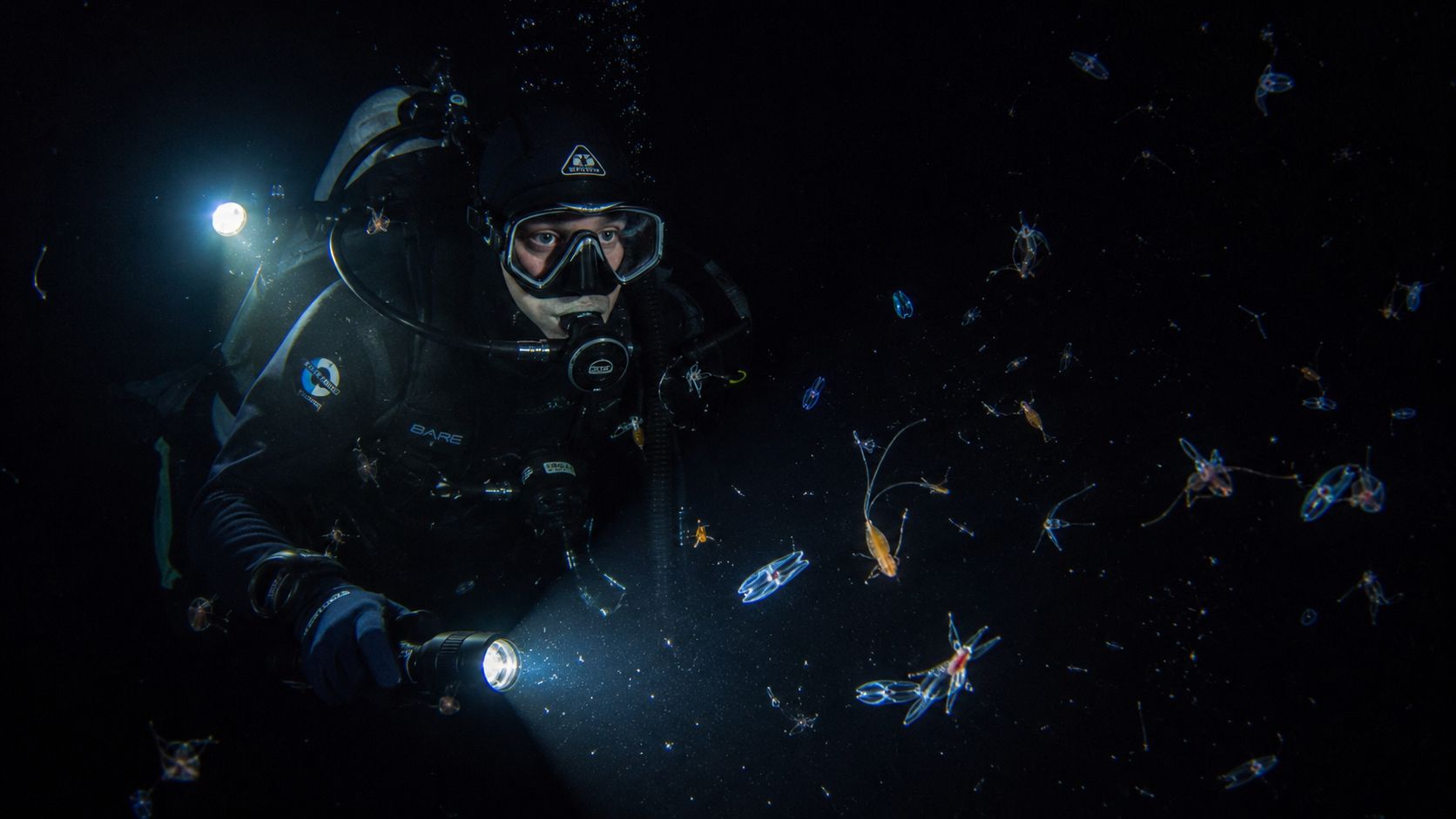
For anyone actively comparing operators that run this specialty trip, the blackwater dive Kona page is worth reviewing alongside each company's certification requirements and briefing style.
What the profile actually involves
The technical profile matters here. Blackwater diving in Kona is conducted 2 to 3 miles offshore over 3,000 to 8,000 feet of water, with divers held around 50 feet on a tether system typically 10 to 15 feet long, and Advanced Open Water certification is required because the open-ocean drift environment demands precise buoyancy and depth control, as described in this explanation of the Kona blackwater dive setup.
That one paragraph tells you most of what you need to know.
This isn't advanced because it's “extreme.” It's advanced because there's very little visual reference, the environment is dark, and every diver has to stay controlled in the water column. If your buoyancy is sloppy or you're uncomfortable at night, blackwater exposes that fast.
Who should book it and who shouldn't
Blackwater is a strong fit for divers who:
- Hold solid buoyancy naturally: You shouldn't need constant correction.
- Stay calm in low-reference environments: Darkness and open water shouldn't spike your stress.
- Follow a controlled team format: This is not the place for freelance diving habits.
- Want rare pelagic life: The reward is seeing unusual larval and deep-water animals that reef divers never encounter.
It's a poor fit for divers who are newly certified, uneasy at night, or still consuming too much mental bandwidth just managing gear and trim.
Field note: If you're wondering whether you're ready for blackwater, the answer is usually clear from your last few dives. If basic buoyancy still takes effort, wait.
Advanced day diving versus blackwater
Some experienced visitors want challenge, but not darkness. That's where a long-range or advanced day charter often makes more sense.
Advanced daytime trips are usually the better call when you want stronger site selection, more dramatic topography, and a more traditional dive rhythm. You still need comfort in the water and good situational awareness, but you're not adding the sensory load of open-ocean night diving.
For that lane, the premium advanced two-tank trip is one example of an advanced-focused day option.
If you do want the offshore night experience, the Blackwater Dive tour page shows one current booking path.
Explore Konas Reefs with Day Trips and Courses
A lot of Kona visitors arrive focused on the headline dives, then discover their favorite underwater moments on a morning reef charter. You drop onto a lava ledge, settle your breathing, and the coast starts to make sense. Finger coral, arches, eels in the rock, clouds of reef fish, and water clear enough to enjoy the site instead of chasing the plan.
For many divers, that is the right place to start.
If you want to move from beginner to certified diver, or sharpen the skills that make every charter easier and safer, the scuba classes page shows the training path.
Day trips that work for most travelers
A standard two-tank morning trip suits more people than any other option in Kona. It is usually the smartest choice for newly certified divers, guests who have been out of the water for a while, couples with different experience levels, and travelers who want solid diving without adding extra task loading.
The value is practical, not theoretical:
- You have room to settle in: The first dive gives you time to dial in weighting, buoyancy, and breathing before the second dive.
- The reef gives better reference points: Lava structure and daylight make depth control and buddy awareness easier.
- Guides can adjust the plan: On a reef charter, the crew often has more flexibility to choose sites that fit the group's comfort and skill.
- You still see classic Kona underwater terrain: You are not giving up the Big Island feel by choosing a simpler profile. You are often getting a better look at it.
That matters more than many divers expect. A trip that matches your current skill level usually produces better air consumption, calmer descents, and more attention left over for marine life.
Courses and when they make sense
Training only pays off if it solves a real problem. The card itself is secondary.
A new diver should book instruction when they want time to build habits correctly, especially buoyancy, equalization, and basic awareness around a buddy and guide. A certified diver should look at continuing education when a clear gap keeps showing up on regular dives. Maybe your trim slips every time you stop to photograph something. Maybe depth changes still pull too much attention. Maybe you want access to advanced charters, but your recent diving does not support that jump yet.
Kona Honu Divers offers both tours and classes on the Big Island, which is useful for travelers who want their training connected to the same local conditions they will dive.
A simple way to choose
Use this comparison to avoid overbooking yourself:
| Goal | Best fit |
|---|---|
| First ocean scuba experience | Introductory or beginner training program |
| Recently certified and want relaxed, enjoyable dives | Two-tank morning reef trip |
| Want better control and readiness for tougher outings | Skills-focused continuing education |
| Already experienced and want a more demanding profile | Advanced day trip or blackwater, if qualified |
The mistake I see most often is skipping the middle step. Divers get certified, log very little time, then sign up for the most demanding charter on the board. They usually enjoy Kona more after a few clean reef dives, a course that fixes the weak spots, and a realistic look at what kind of diving fits them now.
Planning Your Dive Trip Logistics and Pricing
This is the part divers often underestimate. A trip can look perfect on paper and still become frustrating if you ignore the small logistics.
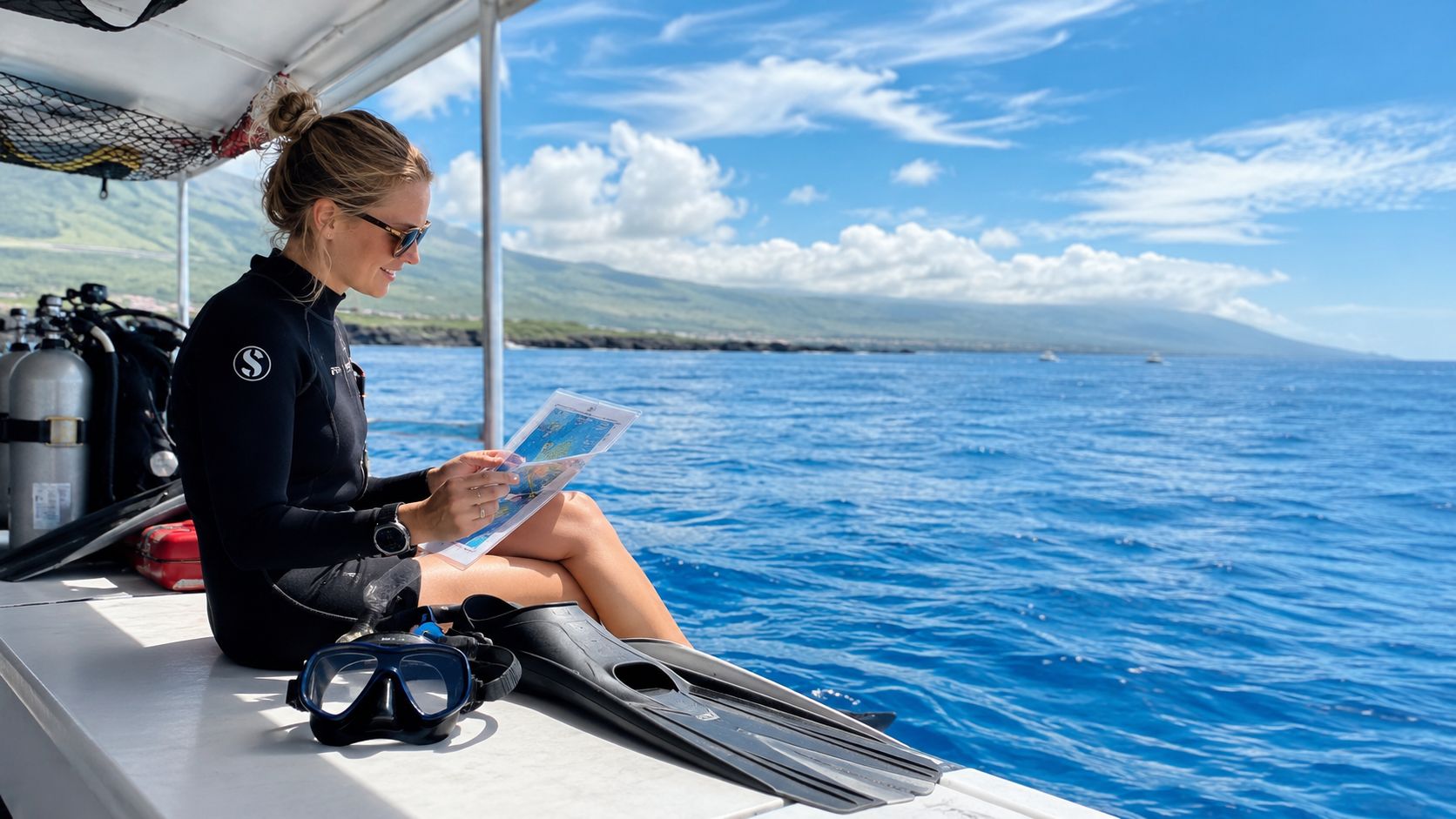
Booking windows, cancellation terms, gear prep, seasickness management, and weather flexibility all affect the overall experience more than people expect. A smooth dive day usually starts the night before, not on the boat.
What to confirm before booking
Kona Diving Company's booking policy states a 72-hour cancellation policy and notes that charters are subject to local tax, as shown on its booking policies page. That's useful baseline information, but many travelers still need more practical clarity than most operators publish.
The questions worth asking are:
- Weather flexibility: Will the crew substitute a different site, reschedule, or cancel if conditions change?
- Trip suitability: Is this charter appropriate for your certification and recent experience?
- Gear inclusion: Are tanks and weights included, and what must be rented separately?
- Surface conditions: If you're uneasy on boats, is this trip typically exposed or relatively protected?
That weather-and-safety gap matters a lot in Kona. Signature dives depend on real ocean conditions, not brochure language.
Seasickness and comfort prep
If you know you get motion sick, don't gamble on “maybe I'll be fine.” Even a short run can feel long once nausea starts.
Bring one of these before the trip if you need it: Ship-EEZ Seasickness Patch, Dramamine pills, Bonine pills, Sea Band wristbands, or ginger chews.
If you're prone to seasickness, prevention works better than trying to recover once the boat is already moving.
What to pack
Keep it simple:
- Certification items: Bring your certification information and anything the operator asks you to show at check-in.
- Boat basics: Swimsuit, towel, dry clothes, and sun protection.
- Personal dive gear if preferred: Mask, computer, and exposure items you already trust.
- Post-dive planning: Leave enough time after diving before any altitude travel in your itinerary.
Kona Diving FAQs
Is Kona Diving Company a good option for beginners
Sometimes, if the trip is matched to the diver.
Beginner divers usually need easy entries, calm site selection, clear briefings, and a guide who watches air, buoyancy, and stress level closely. A company can welcome new divers on paper and still run trips that feel rushed or poorly matched in practice. The critical question is whether the operator puts newer divers on forgiving reef profiles instead of pushing them onto specialty dives too early.
For a first Kona boat day, I would look for a simple two-tank reef charter or a training-focused outing. That gives a new diver time to settle in, get weighted correctly, and enjoy the fish life without extra task loading.
What makes a Kona diving company worth paying for
The price should show up in the water, not just on the invoice.
Good operators separate divers by experience when possible, adjust the site plan to conditions, and run briefings that prepare people for the actual dive instead of giving a generic speech. Boat setup matters too. A larger, more stable boat can make a big difference for comfort, especially for anxious divers or anyone prone to seasickness. Small details count. Easy ladders, organized gear stations, and a crew that notices problems early all improve the day.
This is one place where Kona Honu Divers stands out. The value is not just a seat on the boat. It is the combination of experienced guides, site choices that fit the group, and charters built for specific goals such as reef diving, mantas, or advanced outings.
Are manta and blackwater dives suitable for everyone
No. These are very different experiences.
The manta night dive works well for many certified divers who are comfortable at night and can follow simple light and positioning procedures. Blackwater is a bigger step. You are in open ocean at night, managing buoyancy without a reef for reference, while small pelagic life drifts through the beam of your light. Divers who do best on blackwater already have calm control in the water and enough experience to stay relaxed when the usual visual cues disappear.
If there is any doubt, do a day charter first. A competent crew can tell very quickly whether a diver is ready for a specialty profile or would have a better time building experience first.
What should I ask before I book
Start with questions that reveal how the operation runs:
- How do you match trips to diver experience
- What sites do you use when conditions change
- How many divers does each guide normally supervise
- Is this trip intended for new divers, experienced divers, or mixed groups
- What makes this charter different from a standard reef trip
Those answers tell you far more than marketing language. A strong operator will answer directly and explain the trade-offs.
Is there one operator that fits every diver
There is not, and that is normal.
A family with a newly certified diver needs something different from an underwater photographer, a diver chasing manta rays, or an experienced guest looking for blackwater or advanced site selection. Kona is better when you choose an operator whose boat, crew style, and trip design match the experience you want.
If your priority is clear trip options and honest matching between diver skill and charter type, Kona Honu Divers is worth a close look. Compare the day trips, manta schedule, and specialty dives against your certification, recent experience, and comfort level, then book the trip that fits you now.