
You're probably doing what most visiting divers do before a Kona trip. You've got too many tabs open, every operator looks solid at first glance, and the important questions aren't getting answered clearly. Which boat feels comfortable in Kona chop? Who handles anxious divers well? Which manta dive setup provides the cleaner experience underwater?
Kona Diving Company is one of the names you'll run into quickly, and for good reason. They've been in the local market for years, they cover a wide range of charters and training, and they have enough visibility that most divers researching Kailua-Kona will at least consider them. What matters more is whether they're the right fit for your kind of diving, your comfort level, and the specific experience you're booking.
Your Guide to Diving in Kona
You can usually tell how a Kona dive day will feel before the boat leaves the harbor. The shop may advertise the same manta rays, lava tubes, and clear water as everyone else, but the difference shows up in the details. How the crew briefs. How gear is staged. How quickly the operation settles divers once the boat starts rocking outside the bay.
That practical side matters in Kona because the diving here is not one single experience. A two-tank morning reef charter, a manta night dive, a blackwater trip, and an Open Water class all ask for different strengths from an operator. Kona Diving Company is one of several established names in town, but a useful review has to get past the brochure version and look at what divers are likely to notice on the water.
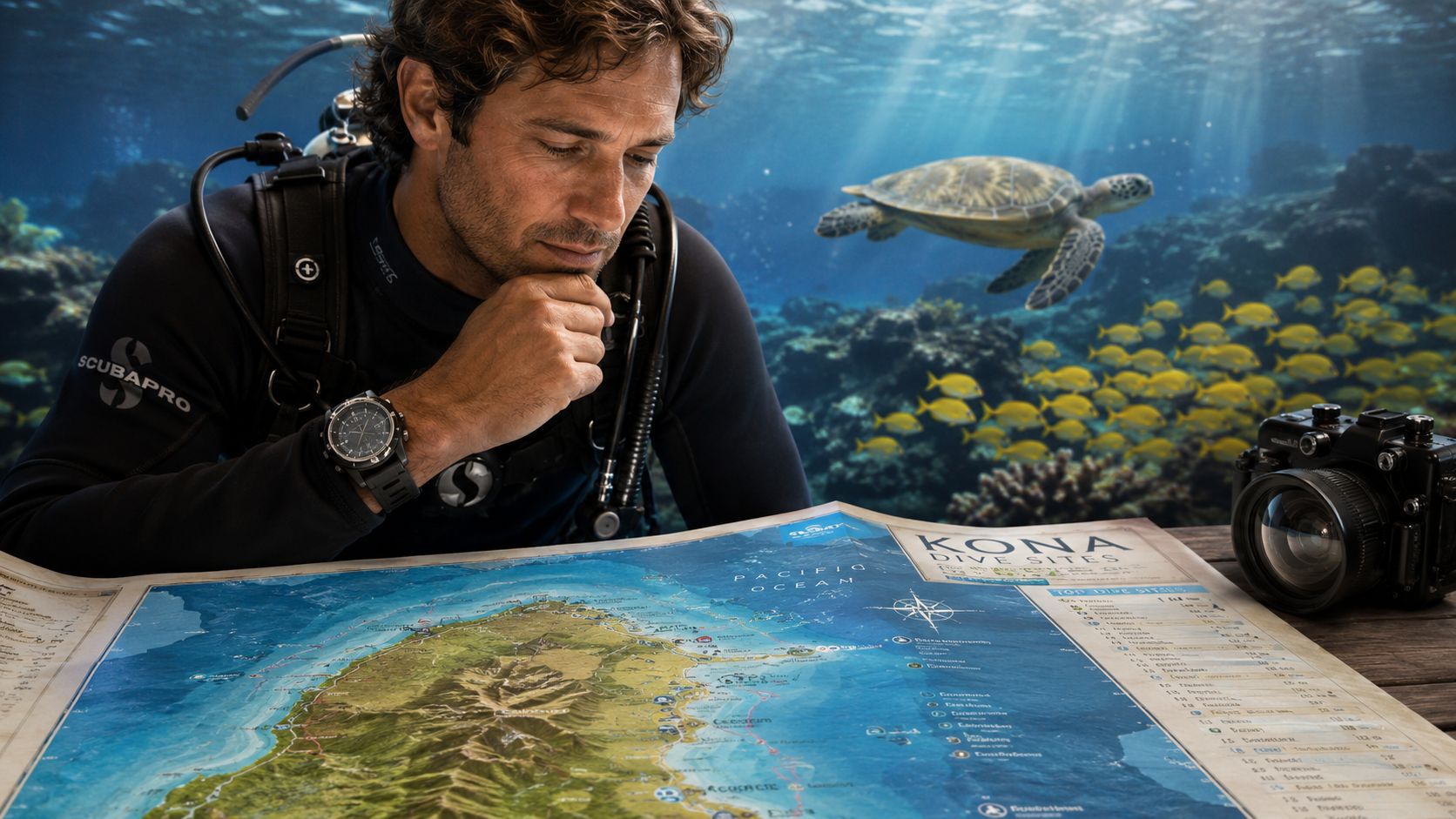
What matters most in Kona
The first filter is not branding. It is fit.
A good Kona operator needs to match boat platform, crew style, and site planning to the dive you are booking. Some shops are stronger for training and new divers. Some run smoother for experienced divers who want efficient two-tank mornings with minimal hand-holding. Some do a better job keeping night operations calm and orderly once everyone is loading lights, cameras, and extra exposure protection.
A few points are worth checking before you commit:
- Boat comfort and layout: Kona can be calm, but it can also get bouncy fast. Wide, stable boats with clear gear stations make a long ride and a choppy pickup much easier.
- Site execution: The headline dive matters less than how the crew runs it. Manta dives, blackwater charters, and advanced profiles all depend on setup, timing, and in-water control.
- Briefing quality: Good crews give direct site-specific briefings, not generic reef talk. That becomes more important at night and on deeper dives.
- Diver fit: Some operations are better with nervous vacation divers. Others are more efficient with certified divers who already know their gear and want less oversight.
If you are comparing operators across the coast, it helps to review the broader range of Kona diving conditions and dive styles before deciding which company fits your trip.
One trade-off shows up often in Kona. A shop can offer a wide menu and still not be the best choice for every item on that menu. That is why I look less at how many trips an operator lists and more at whether their boat, staffing, and dive flow suit the specific charter. Divers who want a polished, diver-focused boat routine often compare several local options, including Kona Honu Divers, before booking.
Practical rule: Choose the exact dive first. Then choose the operator whose crew habits, boat setup, and site access make that dive run well.
Kona Diving Company Background and Reputation
You can usually tell what kind of operator you are dealing with before the boat leaves the harbor. In Kona, established shops tend to show it in small ways: consistent scheduling, a staff bench deep enough to cover training and charters on the same day, and a customer record that holds up over time. Kona Diving Company fits that profile. They have been in the local market since 2010, they run as a family-owned operation in Kailua-Kona, and they cover a wide spread of diving services rather than focusing on a single niche.
That matters because breadth cuts both ways. A shop that offers introductory dives, training, night dives, and guided charters can be convenient for mixed groups or returning visitors who want one place to handle the whole trip. The trade-off is that divers should still check whether the specific charter they want is one the company runs especially well, rather than assuming a broad menu means every trip has the same strengths.
The public track record is solid. Kona Diving Company's PADI Dive Center profile shows an established training operation with multiple instructors attached to the shop. That does not guarantee the same in-water style from one guide or instructor to another, but it usually points to repeat business, enough demand to support staffing, and systems that are more mature than a very small operation can maintain.
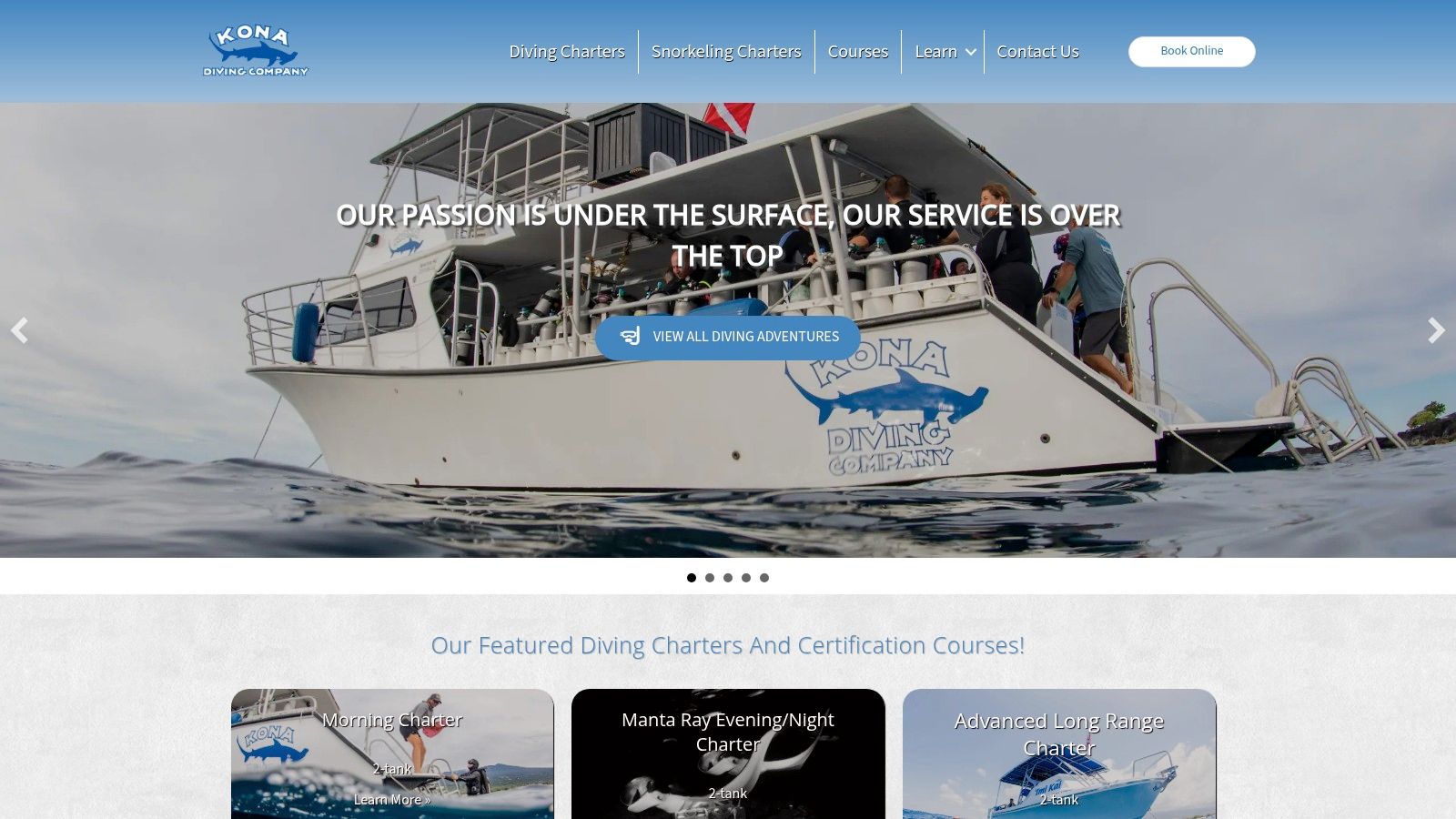
Their guest reputation is also strong. Kona Diving Company's TripAdvisor listing shows years of recurring recognition, including Certificate of Excellence and Travelers' Choice awards across multiple seasons. In practical terms, that suggests they have met vacation-diver expectations consistently, which is not easy in a market where weather, swell, and diver skill levels vary day to day.
For experienced divers, the more useful question is what kind of reputation they have earned. My read is that they present as a reliable, mainstream Kona operator with enough scale to serve a broad audience well. That is a positive for families, newer divers, and travelers who want one shop that can handle training and recreational charters in the same trip. Divers who care a lot about crew style, brief depth, and how independently certified divers are managed may still want to compare them with operators that put more of their identity into guide culture and diver workflow, including shops that publicly show how their Kona dive team is structured.
That is the takeaway here. Kona Diving Company has the kind of background and public reputation that earns a place on a serious Kona shortlist. The remaining question is not whether they are legitimate. It is whether their on-the-water style matches the kind of diving you came to Kona to do.
The World Famous Manta Ray Night Dive
You feel this trip before you hit the water. Night gear-up changes the mood on any boat, and a steady platform helps more than first-time manta divers usually expect. Kona Diving Company runs a large Newton, which is a practical advantage for entries, exits, and keeping the group organized once the sun is down.
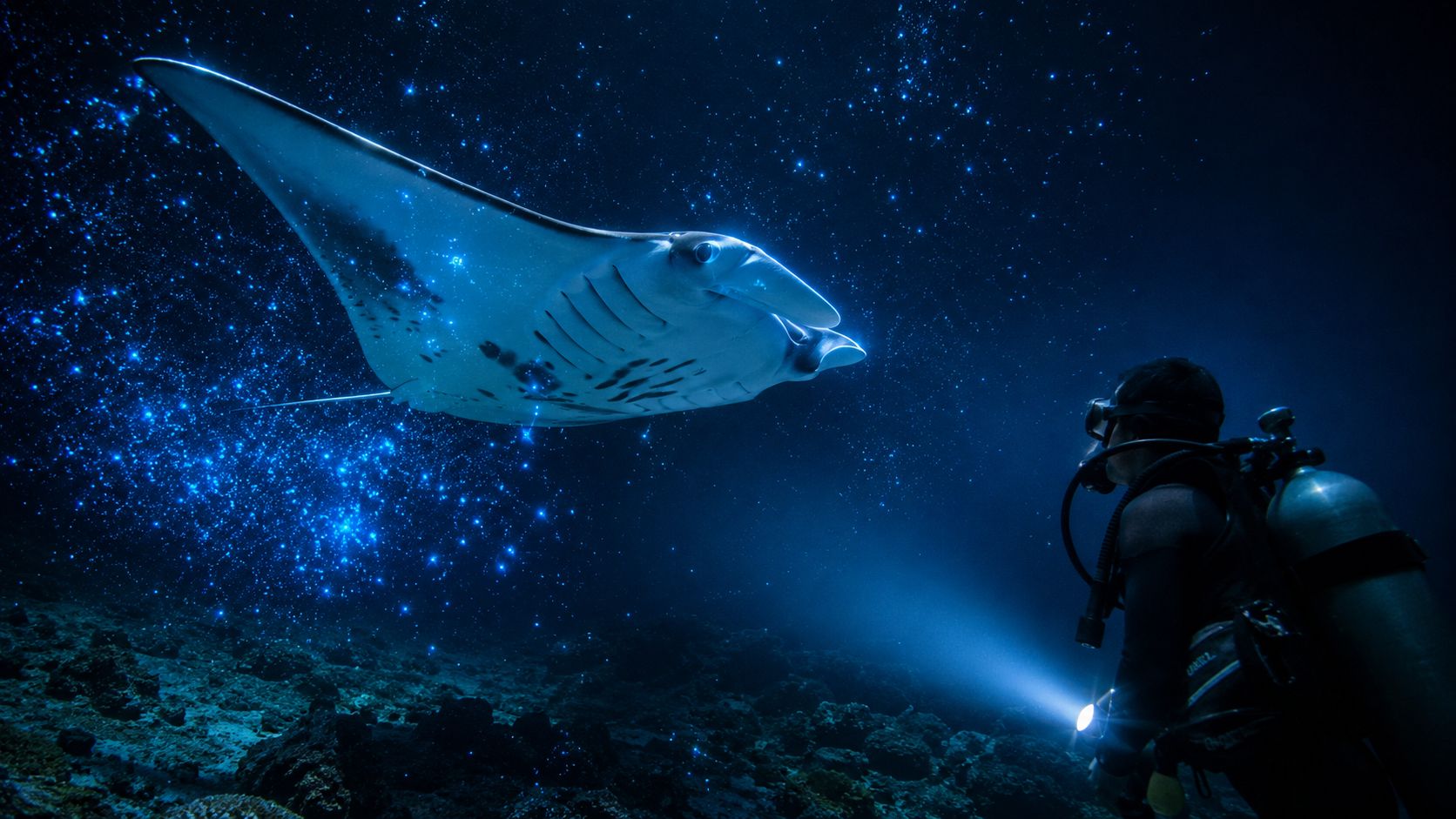
That matters because the manta dive is rarely difficult in the technical sense. The challenge is comfort. Divers are dealing with darkness, boat traffic, surge, and the pressure of doing Kona's signature dive on a schedule. A bigger, more settled boat makes the whole process easier, especially for couples, mixed-experience groups, and anyone who gets uneasy before a night descent.
The key decision point is the site.
Operators can sell the same manta headline and deliver noticeably different underwater experiences depending on where they run. Garden Eel Cove is usually the cleaner setup for many divers because it is more protected and the viewing pattern tends to feel more controlled. At less protected sites, the manta interaction can still be excellent, but the overall dive may feel more exposed, with more current, more surface chop, or a less relaxed descent and exit. That trade-off matters if you are choosing between operators, not just between departure times.
That is why experienced divers compare manta charters by site access, crew pacing, and how the in-water portion is managed, not only by price. For a useful comparison point, Kona Honu also outlines its manta dive and snorkel tour, which helps show how different operators frame the same signature outing.
The best manta trips feel calm from briefing through pickup. You notice site protection, clear in-water positioning, and a crew that keeps the group settled instead of hurrying people through the dive.
Kona Diving Company's manta charter is likely to suit divers who are comfortable following a structured plan and want a well-known operator with enough boat space to reduce some of the stress that comes with night diving.
A few groups should ask more pointed questions before booking:
- Newly certified divers: Ask how the crew handles buoyancy issues once everyone is down and watching mantas.
- Rusty divers: Ask whether a refresher or easier daytime dive makes more sense before booking a night signature trip.
- Divers uneasy in darkness or current: Ask which site is planned, how entries are done, and how much direct supervision to expect in the water.
If you want more background on how the local encounter works before choosing an operator, this overview of the Kona manta ray night swim experience gives helpful context.
Explore Deeper with Specialty Dives
A lot of visitors book Kona for easy reef diving, then realize the more memorable dives start once you leave that comfort zone. Kona Diving Company is more interesting in that second category, where the main question is not whether they offer specialty charters, but how those trips are run and who they suit.
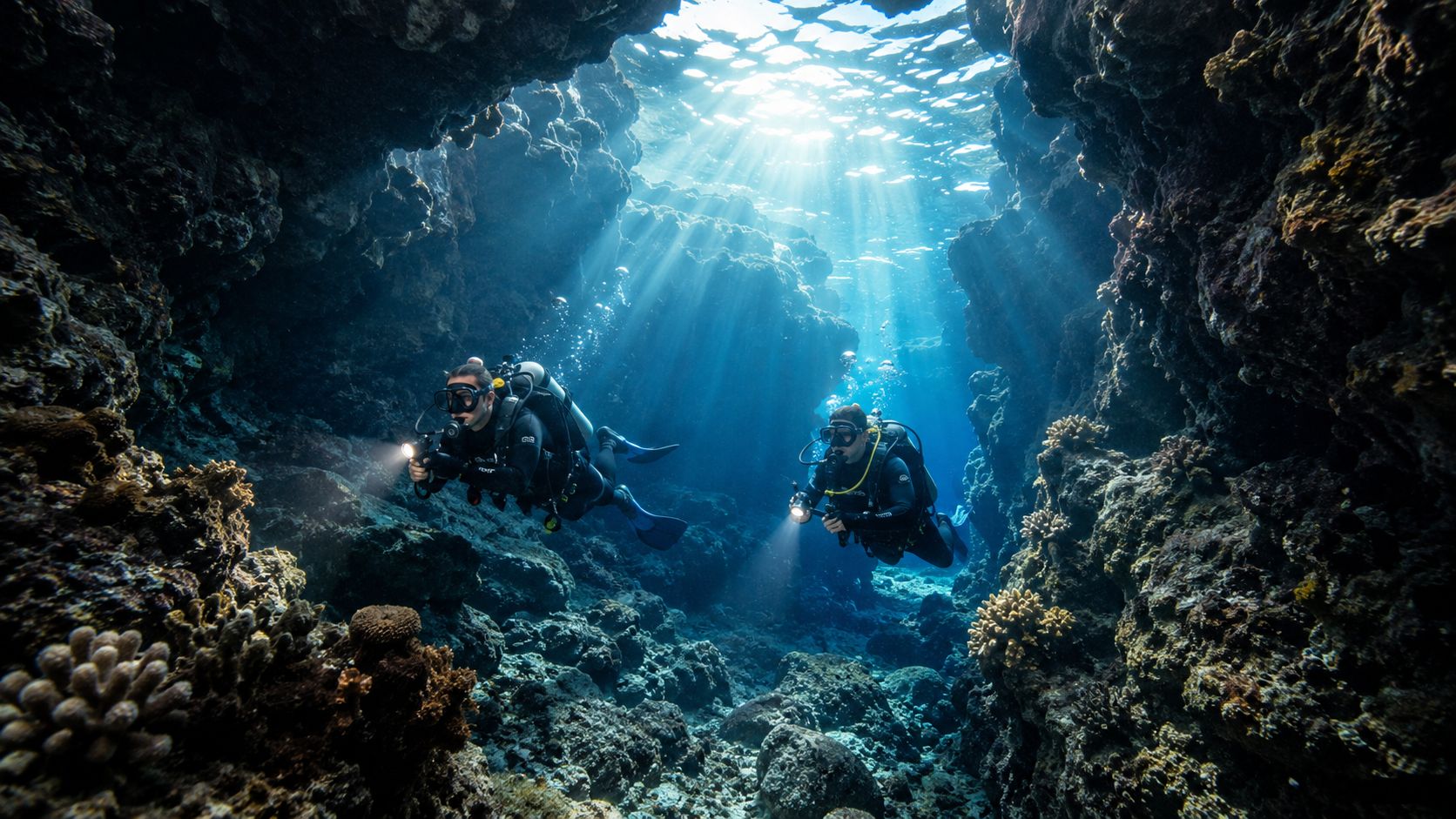
Blackwater is not a novelty dive
Blackwater off Kona is one of the few dives here that can reset an experienced diver's idea of what ocean diving feels like. You are suspended over deep water at night with no reef, no bottom reference, and marine life drifting up from the open ocean. Some divers get hooked on it after one drop. Others decide once is enough.
The operator matters more on blackwater than on a standard night reef dive. Good crews keep the descent organized, set expectations clearly before entry, and watch for the diver who is technically capable but mentally overloaded by the lack of visual reference. Poorly managed blackwater feels disorienting fast, even for divers with solid logbooks.
That is why I pay attention to briefing quality, tether setup, and how much in-water supervision a boat provides, not just whether blackwater is listed on the menu. If you want a comparison point, Kona Honu also runs a blackwater dive in Kona that shows how another local operator structures this kind of pelagic-focused night dive.
Advanced local and long-range style diving
Kona Diving Company also appeals to divers looking for more than a casual two-site reef morning. Their operation is built to serve advanced local diving, and that usually means stronger current exposure, deeper profiles, and site choices where buoyancy, trim, and gas planning matter more than on entry-level charters.
That can be a good fit.
The trade-off is straightforward. A boat designed around experienced certified divers often runs more efficiently and spends less time managing basic skills, but it may feel less forgiving if you are recently certified, rusty, or still working on air consumption. Kona's lava structure, drop-offs, and moving water can be excellent diving, though they reward comfort in the water more than card level alone.
Here is what serious divers should compare before booking an advanced-style day charter:
| Consideration | Why it matters |
|---|---|
| Current tolerance | Kona's better advanced sites often depend on being comfortable in moving water, not just having an advanced card |
| Guide attention | Smaller groups usually make site navigation, timing, and problem spotting more manageable |
| Boat platform | Stable, diver-focused boats reduce fatigue between drops and make geared-up entries less clumsy |
| Depth and profile goals | Wall diving, structure hunting, photography, and pelagic searching do not all call for the same site plan |
If your goal is a more ambitious daytime charter, it also helps to compare operators that build trips specifically around experienced divers rather than folding one or two advanced guests into a mixed-skill boat. One useful benchmark is Kona Honu's premium advanced long-range dive tour, which gives another local standard for what a focused advanced charter can look like.
Kona Diving Company makes sense for divers who want to go past the introductory version of Kona diving. Before you book, ask direct questions about current expectations, typical depth range, and how the crew handles diver pairing and supervision on the more committing trips. Those answers tell you more than the sales copy will.
PADI Courses and Certifications
A lot of visiting divers look at Kona Diving Company for charters first, then realize they also run a full training operation. That matters because a shop that teaches regularly usually has systems for gear prep, student flow, and skill progression, but it does not automatically tell you how much personal attention you will get in the water. In Kona, that distinction matters more than the course list.
Kona is a strong place to train if you want real ocean diving from the start. Students here deal with entries from a boat, changing surface conditions, surge at some sites, and the added task loading that comes with dark lava topography instead of a flat sandy bottom. That can build confidence fast. It can also overwhelm a brand-new diver if the course pace is too compressed.
The smart question is specific. Ask how they structure confined-water style skill development, how many students are typically with one instructor, and whether weaker skills get extra time before students are pushed into the next step.
Courses that fit Kona conditions
For most visitors, the training path usually breaks down like this:
- Introductory or Discover-style dives: A practical option for travelers who want to find out whether breathing underwater feels comfortable before signing up for a full certification.
- Open Water certification: A good fit if you have enough days on the island to avoid cramming academics, pool-style skills, and checkout dives into a rushed schedule.
- Advanced-level continuing education: Useful in Kona because better buoyancy, navigation, and situational awareness pay off quickly on reef structure, lava formations, and deeper profiles.
- Rescue training: Worth considering for divers who plan to keep diving after the trip, especially if they want stronger problem recognition and self-management skills.
One trade-off with vacation training is that people often choose based on convenience rather than teaching style. A packaged course can be efficient, but efficiency is not always what a new diver needs. Some students do better with shorter days and time to absorb skills between sessions. Others prefer to finish everything in one block and move on to fun dives.
If you are comparing local options, it helps to look at another operator's scuba classes in Kona as a reference point for how course pacing, prerequisites, and continuing education are presented.
I would also ask a simple final question before booking any course with Kona Diving Company. Who is in the water with me, and how much flexibility do they have if I need more time on a skill? The answer usually tells you more than the certification menu does.
What to Expect Onboard Safety and Comfort
The hardest part of reviewing Kona Diving Company fairly is that the public information gets thin right where many divers need it most. There's strong visibility around tours and booking, but there's much less detail about what the in-water experience feels like for a nervous guest, a non-certified participant on an introductory dive, or someone doing a night dive who isn't fully confident.
That gap matters. Existing public discussion around Kona Diving Company doesn't say much about how the crew typically manages anxiety, buoyancy struggles, equipment problems, or changing conditions on manta night dives, and that's specifically called out in this summary of the information gap around the guest experience on Yelp-related coverage. For confident divers, that may not be a deal-breaker. For a first-timer, it's exactly the stuff that determines whether the charter feels supportive.
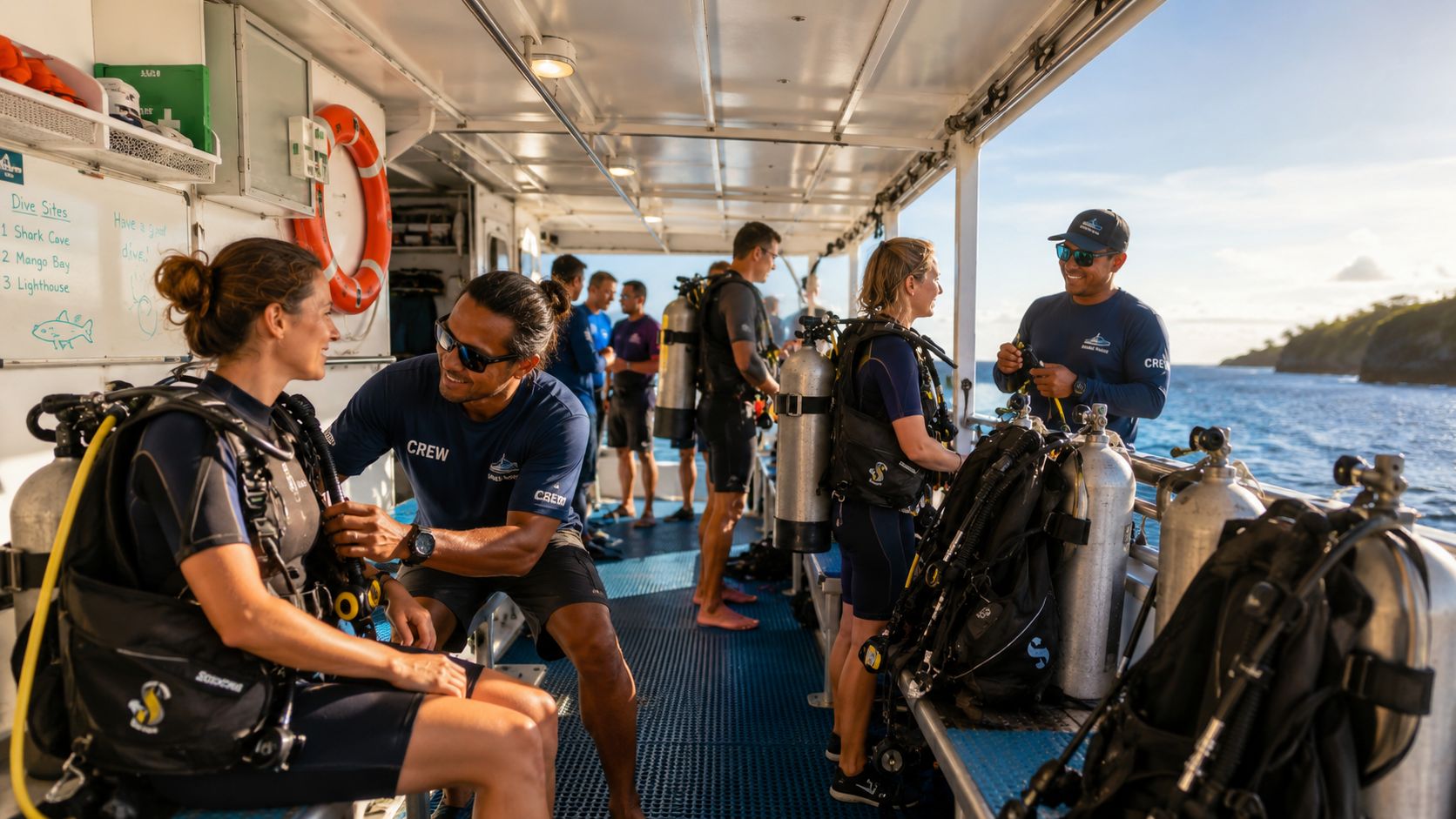
Questions worth asking before you hand over your card
If you're evaluating any Kona operator, ask these directly:
- For nervous divers: How does the crew handle someone who gets stressed on the surface or at descent?
- For night dives: How much in-water supervision is normal once everyone is down?
- For mixed-experience groups: Are newer divers grouped differently from confident, experienced divers?
- For equipment concerns: What happens if mask fit, weighting, or regulator comfort becomes a problem at the site?
Those questions don't imply there's a problem. They just force clarity.
Seasickness is common in Kona
This part is simple. If you're prone to motion sickness, don't gamble on “maybe I'll be fine.”
Kona Diving Company specifically advises guests to consider motion-sickness preventatives before boat trips and notes that it often works better to start medication or patch treatments well before departure on their guide to diving in Kona and preparing for boat conditions. That's practical advice.
Options divers commonly consider include:
- Patch option: Ship-EEZ Seasickness Patch
- Classic medication: Dramamine pills
- Another medication choice: Bonine pills
- Non-medication approach: Sea Band wristbands
- Milder backup: Ginger chews
If seasickness ruins your boat ride, it usually ruins your air consumption, your comfort, and your memory of the dive. Treat it before the boat leaves, not after you feel green.
Comfort onboard also comes down to expectations. A stable platform helps. A clear briefing helps more. The best crews lower stress before anyone touches the water.
Planning Your Dive Trip and Booking Tips
You usually feel the quality of a Kona booking decision before the boat even leaves the harbor. The operator answers specific questions clearly, the trip format matches your experience, and there are no surprises about site plan, group pace, or gear logistics.
That matters with Kona Diving Company because they cover a wide range of diving. Broad menus are useful, but they also mean a diver should confirm exactly what day they are buying. A manta trip, a training-focused charter, and a more advanced two-tank morning all place different demands on the crew and the guests. Marketing pages rarely explain those trade-offs well enough.
The practical move is to book by fit, not by name recognition.
A diver chasing the strongest manta experience should ask which site is running and why. A newer diver should ask how much in-water supervision to expect, how the crew handles slower descents, and whether the boat often carries mixed experience levels on the same outing. Experienced divers should ask about diver-to-guide ratio, how aggressively the crew changes plans for current or surge, and whether the trip tends to suit photographers, casual vacation divers, or certified divers who move efficiently and need less hand-holding.
Questions worth asking before you pay
Use the booking call or email to get specifics:
- What is the exact itinerary? Ask for departure time, number of dives, typical sites, and whether the plan changes often with conditions.
- How is the boat load structured? Find out whether students, first-time ocean divers, and experienced certified divers are commonly mixed together.
- What level of self-sufficiency is expected? Some charters suit divers who can gear up, descend, and manage themselves with minimal delay. Others are built for more coaching.
- How much flexibility is there if conditions change? Kona can be calm one day and sloppy the next. Good operators explain their backup plan without dancing around it.
- What are the rental and comfort details? Ask about exposure protection, DIN availability, camera handling, snacks, and how much shade the boat has.
Those answers tell you more than a polished booking page.
It also helps to leave some air in your schedule. Don't stack every morning and night with diving if you know boat fatigue hits you by day two. If you are doing manta, blackwater, or any charter that runs later, protect the next morning a little. Kona diving is better when you are rested, warm, and not rushing from one checkout time to the next.
Kona Diving Company is a valid option for divers who want an established local operator with recognizable offerings. Still, side-by-side comparison is worth the effort. Some divers will prefer a smaller-group feel, a different boat setup, or a schedule that is easier to sort through at a glance. That is one reason many visiting divers also compare Kona Honu Divers before booking.
If you want a second benchmark before committing, take a look at Kona Honu Divers. Their site makes it easy to compare reef trips, manta charters, blackwater dives, and training options without digging through multiple pages, which helps when you are trying to match the trip to your actual experience level.