
You're trying to pick one Kona dive operator, one boat day, and maybe one course that won't waste a precious vacation morning. That's the right problem to solve. In Kona, the mistake isn't booking a bad trip, it's booking the wrong trip for your certification, your tolerance for dark water, and your group's pace.
Why Kona Honu Divers Is the Kona Diving Company to Start With
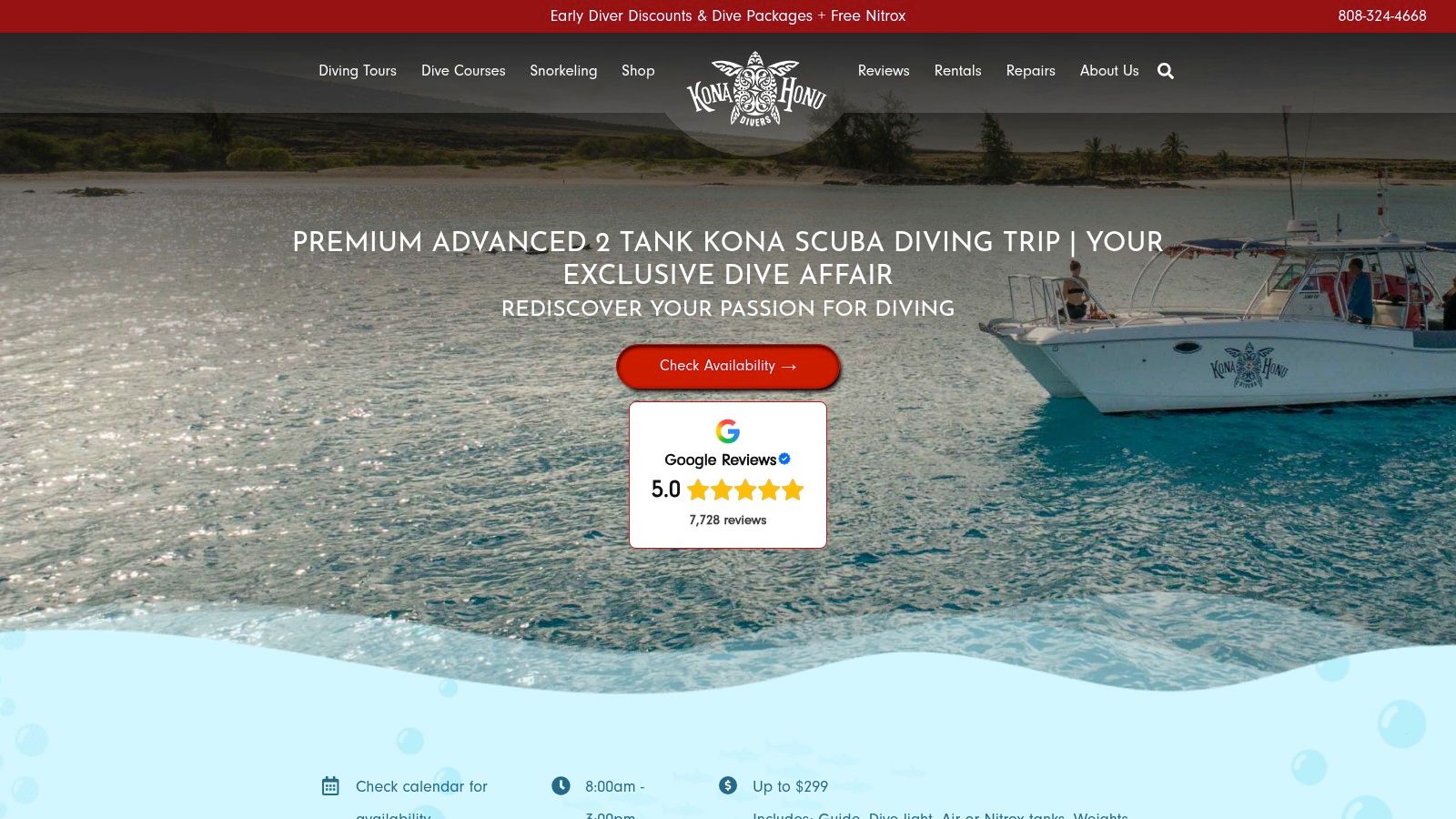
If you want a clean starting point, Kona Honu Divers is the kona diving company to put at the top of the list. The reason is simple. They run the full spread of Kona diving without turning the experience into a cattle call, and that matters when you're deciding between a manta night, a blackwater dive, a standard two-tank morning, or a more advanced charter. Their team page is worth a look if you want to see who's taking you out: meet the diving team.
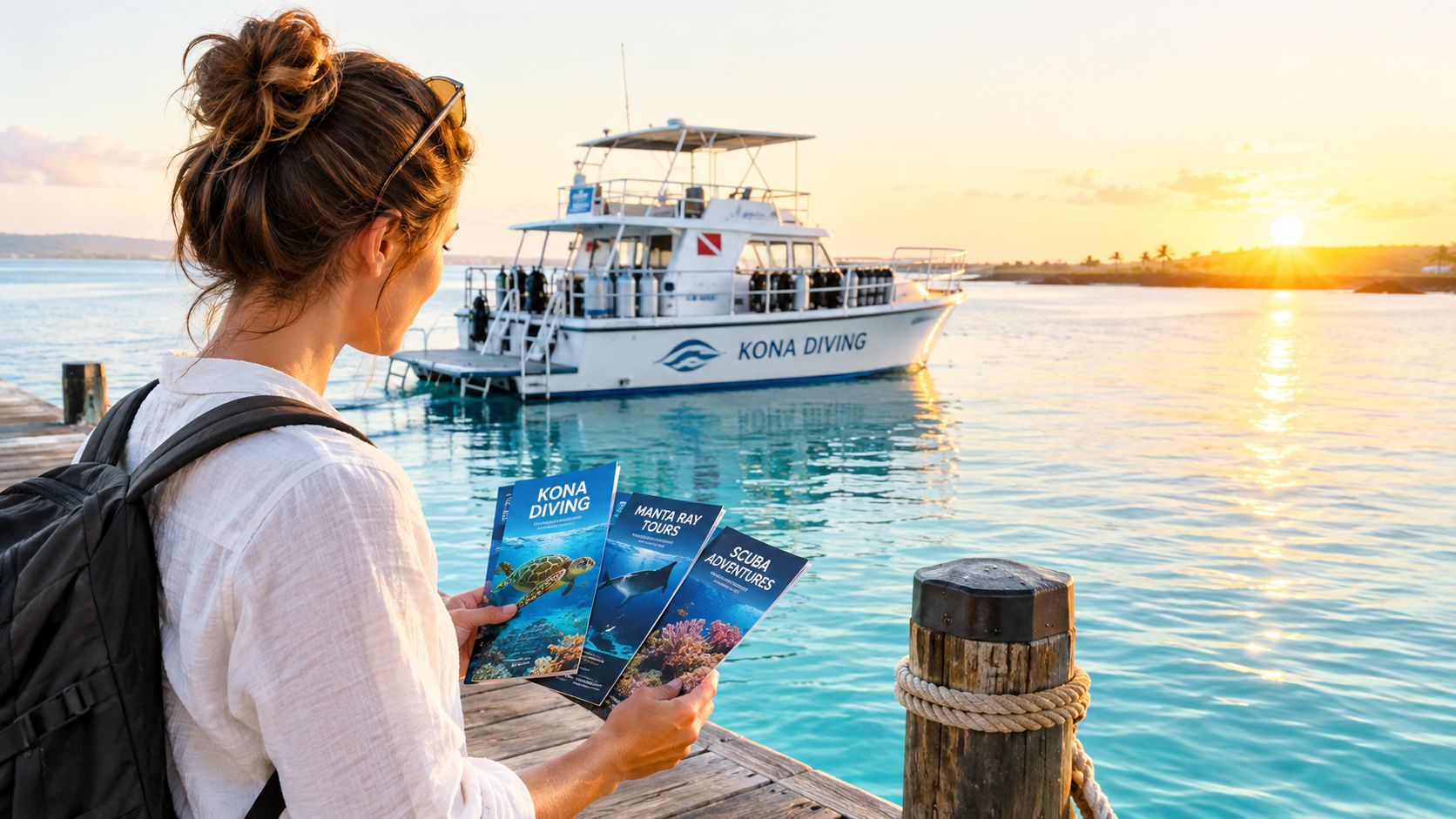
Start by matching the trip to your goal
Don't begin with the boat. Begin with the experience. If you want a classic Kona reef day, book the 2-tank morning charter. If you want the iconic nighttime wildlife encounter, book the manta dive. If you want something odd, dark, and different, pick the blackwater dive. If you're already comfortable in the water and want more challenge, move into advanced or specialty training.
Practical rule: the right Kona trip is the one that matches your recent dive activity, not the one with the flashiest marketing.
That's where this operator is useful. They keep the menu broad enough for a first-time visitor, but the structure still makes sense for experienced divers. The company overview also emphasizes over 200 years of combined staff experience, thousands upon thousands of five-star reviews, free nitrox, and boats with hot showers, shaded seating, and room for gear.
The four archetypes that matter
The smartest way to think about Kona diving is in four buckets.
- Manta night dive: for travelers who want a signature wildlife encounter.
- Blackwater dive: for advanced divers who want offshore night conditions and rare pelagic life.
- 2-tank reef charter: for most certified visitors who want a reliable Kona day.
- Advanced or specialty trip: for divers who want deeper sites, stronger skills work, or more demanding conditions.
That's the map. Use it, and you won't get talked into the wrong boat. If you're only in Kona for a short window, the decision gets easier fast, because the signature experiences here are specific, not interchangeable.
Aboard the Boat and What a Typical Day Looks Like
A good Kona dive day should feel organized before the boat even leaves the harbor. Check-in happens early, gear gets staged without drama, and the crew gets people sorted before the first tank goes on. That rhythm matters because a sloppy start usually turns into a rushed dive plan, and on the Kona coast, rushed planning is how people forget layers, forget snacks, or show up under-hydrated.
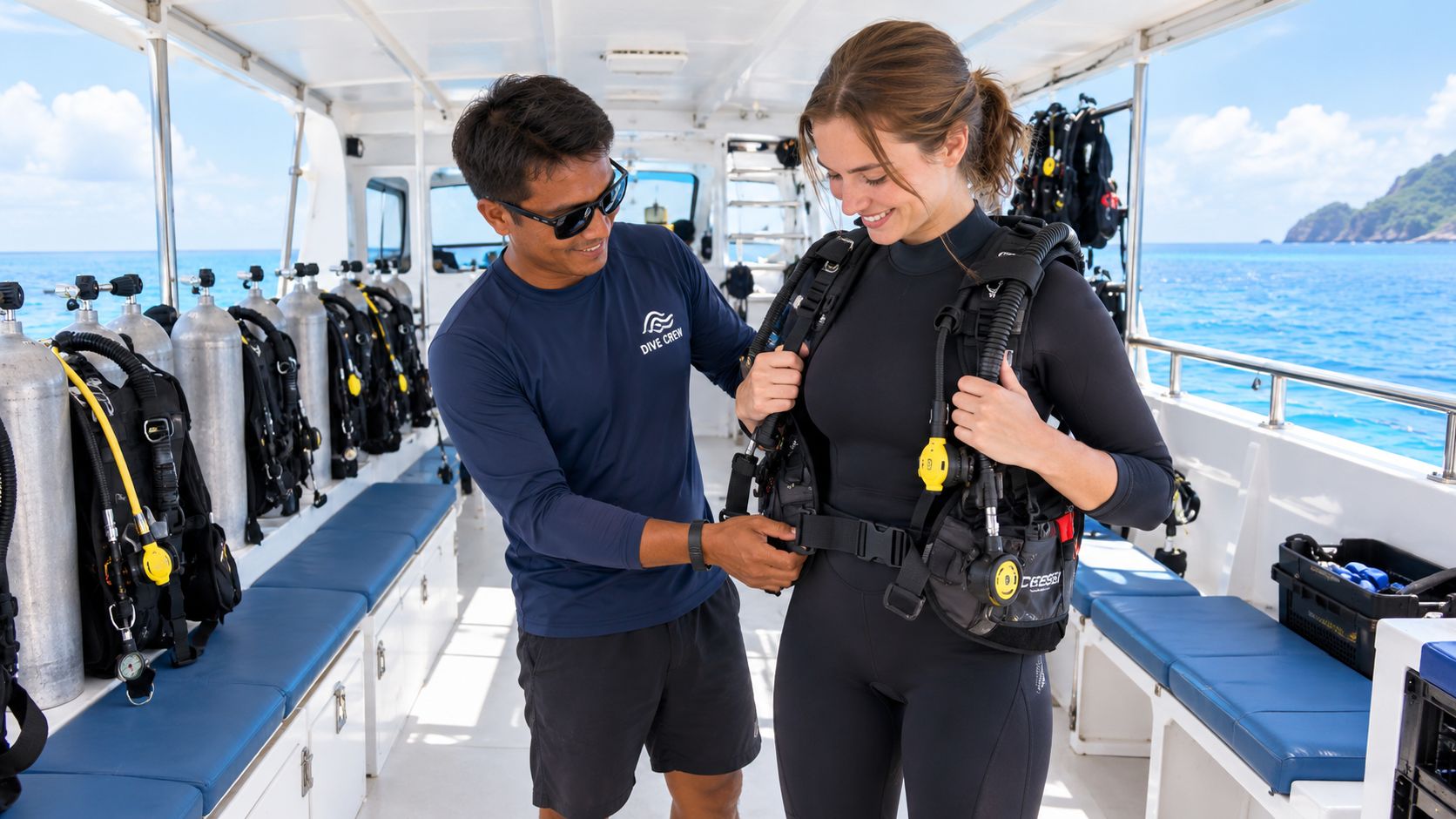
What the boat day actually feels like
The boats are built for comfort, not crowding. You'll want shaded seating on the ride out, a place to stow cameras and towels, and rinse showers for the salty reset between dives. That's not luxury fluff, it's what keeps the charter efficient and keeps your second dive from starting with a tangled mess of wet gear.
The cadence is usually straightforward. On a two-tank morning, the deeper dive comes first and the shallower dive comes second, with the surface interval used for breakfast, water, and a quick camera review. That order is sensible because the more demanding dive is out of the way while everyone is fresh and buoyancy is sharp. By the second site, divers usually settle into the day.
The smartest divers treat the surface interval like part of the dive, not dead time.
What to bring and what to skip
Bring the basics that make the boat day easier. A light layer helps when the spray picks up, especially if you're leaving early. A towel, reef-safe sunscreen, and a dry change of clothes make the ride home better. Leave the bulky luggage in the room and keep your deck kit lean.
Tank changes and brief gear checks happen fast when the crew isn't fighting clutter. That's why well-run charters feel calm even when the boat is full. You're not buying a ride. You're buying a system that gets you from dock to dive site without wasting energy on logistics.
For a look at how the captain fits into that rhythm, see the dive boat captain. The point isn't the title, it's the coordination. A good captain and crew keep the day moving while leaving enough margin for small fixes, camera handling, and late questions from first-timers.
The Manta Night Dive at Garden Eel Cove
Garden Eel Cove is the right place for a Kona manta trip, and I'd say that bluntly to any visitor comparing options. The site has the protected setup, the feeding ecology, and the management context that make the encounter feel controlled instead of chaotic. That matters because manta tourism only works when people stay out of the animals' way.
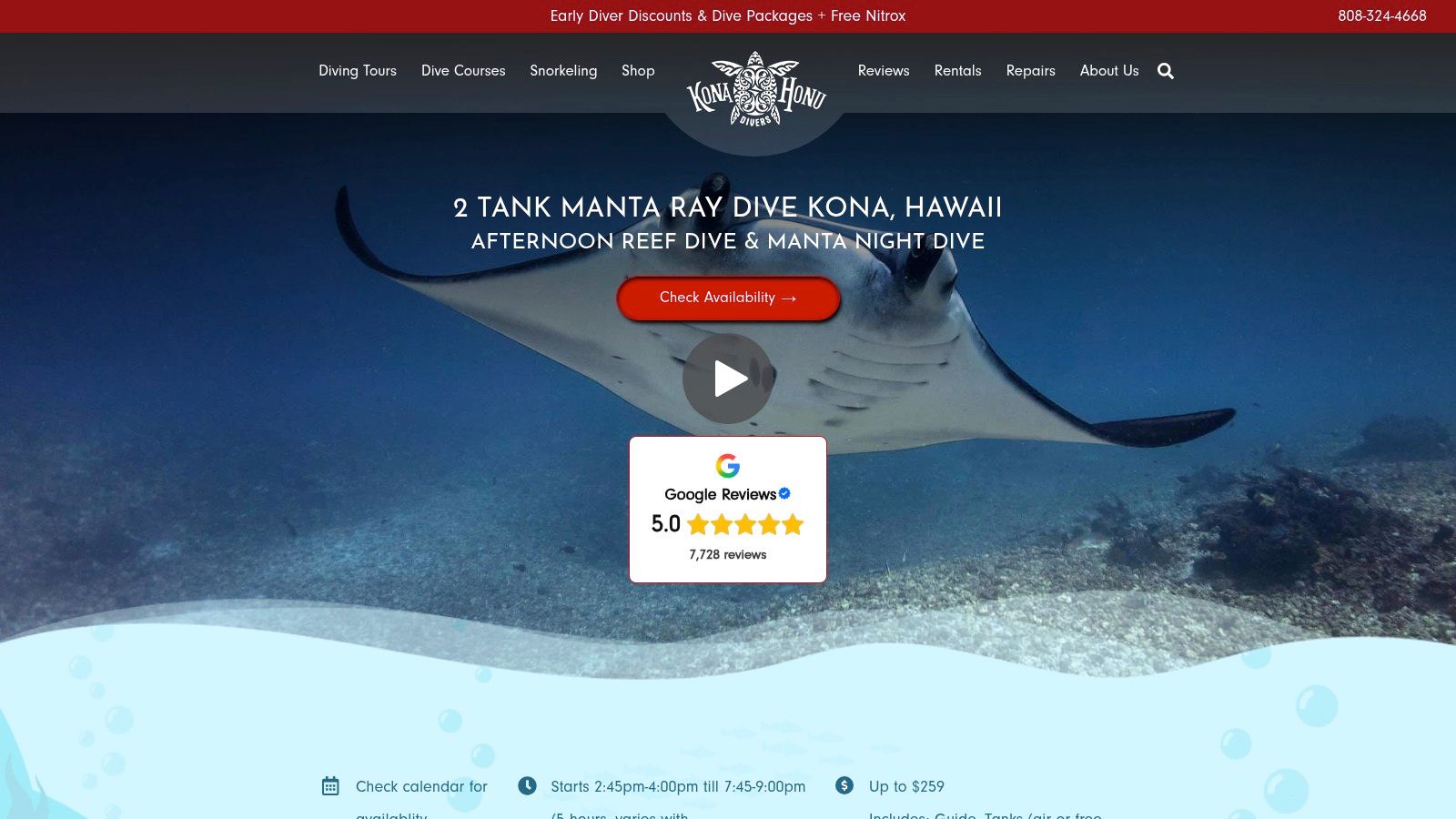
Why this site works
The mechanism is straightforward. Lights concentrate zooplankton, and manta rays are filter feeders that respond to that food source. NOAA describes dives where operators illuminated both the surface and the seafloor at about 10 m, and the prey patches formed where the light concentrated the plankton. That's why the encounter is repeatable without baiting, and why the animals make repeated passes once they settle into feeding mode.
The state's management discussion gives you the rest of the picture. Hawaiʻi DLNR identified Makako Bay, also known as Garden Eel Cove, and Kaukalaelae Point, also known as Keauhou Bay, as the main Kona manta-viewing zones. In 2022, the agency reported about 60 to 70 viewing vessels bringing guests close to feeding manta rays in those areas, and it proposed permit caps and viewing-hour controls to manage pressure on the site. That context is exactly why a designated viewing area beats an unstructured coastal free-for-all. DLNR's 2022 manta management notice lays out the setting.
What the dive should feel like
A proper briefing should cover fixed positioning, low-impact lighting, and no-touch rules. Don't chase the mantas. Don't drift into their path. Hold your place, stay calm, and let the animals choose the passes. That advice isn't moral theater, it's how you get better viewing and better images.
The 2-tank manta-and-snorkel style of trip is also the easiest recommendation for mixed groups. Divers can be on the bottom, snorkelers can watch from the surface, and everyone gets the same event without splitting the family onto separate boats. For booking and trip specifics, the operator's manta page is here: manta ray dive.
If you want one night in Kona that feels unmistakably Kona, this is it. If you want more open water, deeper weirdness, or a research-style night, that belongs in blackwater territory, not here.
Blackwater Diving After Dark in the Open Pacific
A blackwater dive is not a reef dive at night. It's an epipelagic scuba dive after sunset in offshore water, and the whole point is to leave the reef behind. NOAA's Kona surveys used recreational divers to document open-ocean communities, and in 59 night-dive surveys off the Kona coast between November 2013 and May 2015, the most frequently encountered organisms included salps, siphonophores, ctenophores, crustaceans, mollusks, cnidarians, pelagic fishes, worms, and larval fishes. NOAA's blackwater report is the clearest reference point for what's out there.
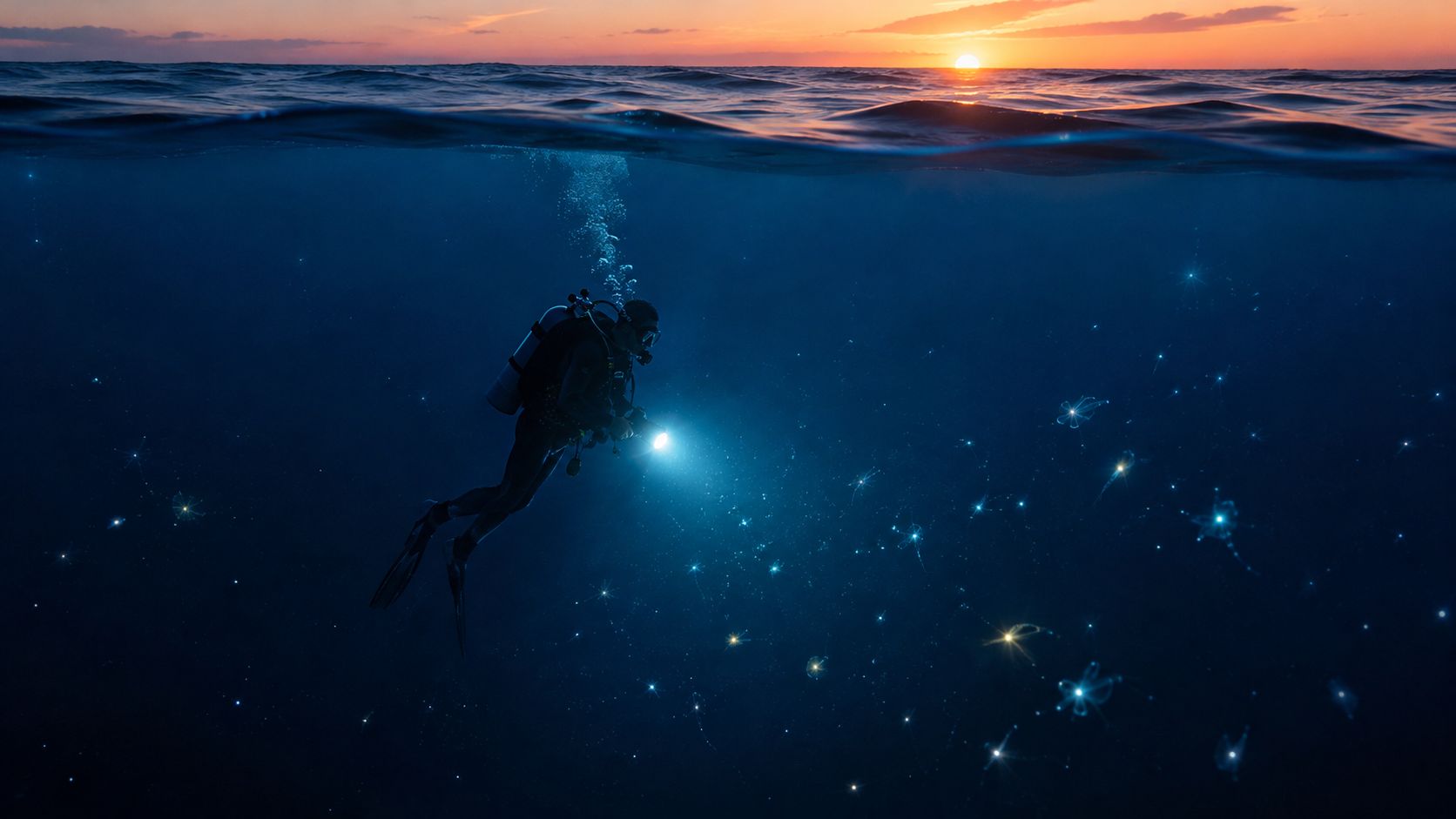
What you'll do in the water
You leave after dark, move offshore, and descend into open water where the bottom disappears. The boat holds position while the crew lights the water column and you stay tethered or otherwise controlled depending on the operator's system. The appeal isn't scenery in the usual sense. It's watching vertically migrating life drift into view from the dark.
This is an advanced dive because buoyancy has to be precise. If you're heavy, you sink into the line. If you're underweighted, you waste focus fixing it instead of observing the water. The best blackwater divers are still, steady, and patient. They don't kick around for attention. They watch the drift.
Rule of thumb: if you're still fighting buoyancy on normal reef dives, don't make blackwater your first Kona night charter.
Who should book it
Book blackwater if you're comfortable in the dark, self-reliant in open water, and ready for something that feels more like exploration than tourism. Skip it if you want a relaxed wildlife viewing trip or if you'd rather stay on the reef. If you want the trip details for Kona specifically, the local blackwater page is here: Kona black water dive.
The right expectation is not “giant animals everywhere.” The right expectation is a controlled encounter with strange, delicate, often tiny pelagic life. That's the draw. It's also why photographers love it, because the black background isolates subjects in a way reef diving never can.
Courses, Certifications, and Rental Gear That Actually Works
If you're not certified yet, get certified here only if you want your vacation to include actual training time. A Discover Scuba style resort course gets you into the ocean fast. A full Open Water path takes longer, but it leaves you with a real certification instead of a one-off taste of the sport. For training details, the shop's course page is here: scuba classes.
What to learn first
If you're rusty, start with a refresher before you chase specialty dives. That's especially true in Kona, where easy-looking water can hide bad habits. For divers who are ready to level up, Deep, Nitrox, and other specialty tracks are the most practical next steps because they open the door to more advanced site choices and longer comfort in the water.
The gear side matters too. Renting from a shop that services its own equipment is a better call than showing up with random resort gear you've never tested. You want familiar fit, predictable inflators, and regulators that have been looked over by the same crew that's putting you on the boat. A well-run local operation earns trust here.
What actually belongs in your bag
Bring your own mask, dive computer, and any personal fit item you're picky about. Rent the bulky stuff if you don't travel with it.
- Mask: this should fit your face, not somebody else's inventory.
- Computer: keep your dive history consistent and easy to read.
- Wetsuit: choose warmth and fit over packing convenience.
- BCD and regulators: rent these if the shop's maintenance is solid and recent.
- Fins: bring them only if you already know they fit your kick style.
A good rental program should reduce hassle, not create new doubts.
Kona Honu Divers also keeps free nitrox in the mix for certified divers, which makes the advanced side of the menu more appealing if you're doing repeated dives. That's the kind of practical advantage that matters on a short trip, because it gives you more flexibility without adding clutter to your luggage.
Booking, Pricing, and Planning Your Kona Dive Trip
Book directly and book early if you want the right departure, not just an open seat. Kona charters fill by type, not just by date. A manta night, a blackwater dive, and a morning reef run each attract a different crowd, so waiting until the last minute usually means compromise. If you're traveling with family or a photographer, a private or custom charter is worth serious consideration because it gives the crew a cleaner briefing and gives you more control over pace.
What to expect when you plan
Weather is part of the plan, not an afterthought. Kona's west coast can look calm while storms still disrupt the broader schedule, and official reporting around the March 2026 Kona Low storms showed how quickly flooding and damage can hit homes, businesses, and infrastructure. If you need certainty, build in backup days and avoid stacking your only dive day against your flight home.
For seasickness prevention, don't improvise. Bring what works for you before you board. If you're the type who gets queasy, products people commonly use include Ship-EEZ Seasickness Patch, Dramamine pills, Bonine pills, Sea Band wristbands, and ginger chews. Pick one approach and use it before the boat leaves, not after you're already green.
| Kona Honu Divers Signature Trips at a Glance | Best For | Experience Level | Typical Window |
|---|---|---|---|
| 2-Tank Morning Reef Dive | Classic Kona reefs and a full boat morning | Certified divers | Morning |
| Manta Ray Night Dive | Signature wildlife encounters | Certified divers and snorkelers, depending on trip format | Evening |
| Blackwater Dive | Open-ocean night exploration and pelagic life | Advanced divers | After dark |
| Advanced Trip | Deeper or more demanding sites | Experienced divers | Morning |
I'd plan around a normal reef morning first, then add a night dive if your schedule gives you room. If you want the best value for a mixed group, line up a snorkel-compatible charter and keep the divers and surface swimmers on the same boat.
How to Be a Responsible Manta Guest
The popular manta story makes the encounter sound easy, but the conservation side is the part that matters. Kona's resident reef manta population is geographically isolated, and the genetic exchange between island groups is extremely limited. Recent research reported migration rates equivalent to roughly one female moving between island groups every 1,300 years and one male about every 64 years, which means local pressure doesn't get diluted quickly by outside animals. The manta genetics coverage makes the point plainly.
The code of conduct that actually works
Your job is not to manage the manta. Your job is to stay out of the way.
- No touching: contact changes the animal's behavior and risks injury.
- No chasing: let the manta set the pace.
- No flash: keep the viewing environment steady and predictable.
- Neutral buoyancy: hold position without crashing into the zone.
- Wide framing: give the animal room and you'll get better photographs.
Those rules aren't restrictions, they're how you protect the experience. A manta that controls the interaction is a better subject than a manta that's being crowded. A patient guest gets the cleaner shot, the calmer water column, and the encounter that lasts longer.
Citizen-science photo submissions matter here too. Individual identification depends on recognizable markings, and those images help researchers track the local population over time. If you want to contribute something useful, submit clean, well-lit photographs instead of trying to force a closer pass.
Planning Questions Real Visitors Ask Before Booking
What happens if weather turns bad? The operator puts safety first and rebooking second. If a Kona Low or rough west-coast conditions wipe out the day, do not stack your only dive before a flight or a long drive. Leave room in your itinerary, especially for manta night and blackwater trips, because those are the departures worth protecting.
Can snorkelers and certified divers go on the same boat? Yes, on the right trip. That usually works better for families because one booking keeps everyone together without forcing the whole group into the same depth or certification level.
What should I bring or rent? Bring your own mask if fit matters to you. Rent the bulky scuba gear unless you already own a setup you trust. If you have been out of the water for a while, book a refresher before you move into the more specialized dives.
How far ahead should I book? Book manta nights and blackwater outings early. Those trips fill faster than a standard reef day, and the best boats go first.
If you want a Kona operator that can handle a reef morning, a manta night, a blackwater run, or a training day without making the logistics messy, go straight to Kona Honu Divers. Pick the trip that matches your certification and your appetite for darkness, then book before the good departures disappear.