
Most advice about picking a Kona diving company is too soft. It treats every operator like they're basically interchangeable and tells you to choose based on schedule, price, or who has space tonight. That's lazy advice.
If you're booking iconic Kona dives, especially the manta night dive or blackwater, operator choice changes the experience. The boat setup matters. The site matters. Group policy matters. The difference between a decent night and a story you'll still tell years later usually starts there.
The Kona Diving Company You Are Actually Looking For
Many divers searching for Kona Diving Company are not looking for the business named Kona Diving Company. They're trying to find the operator known for Kona's signature dives, especially mantas and blackwater. That confusion is common enough that it needs to be cleared up immediately. Search results regularly blur the line between the family-owned Kona Diving Company, founded in 2010, and Kona Honu Divers, the operator many travelers try to find when they search for top Kona diving, manta dives, and blackwater trips, as noted on the Kona Diving Company website.
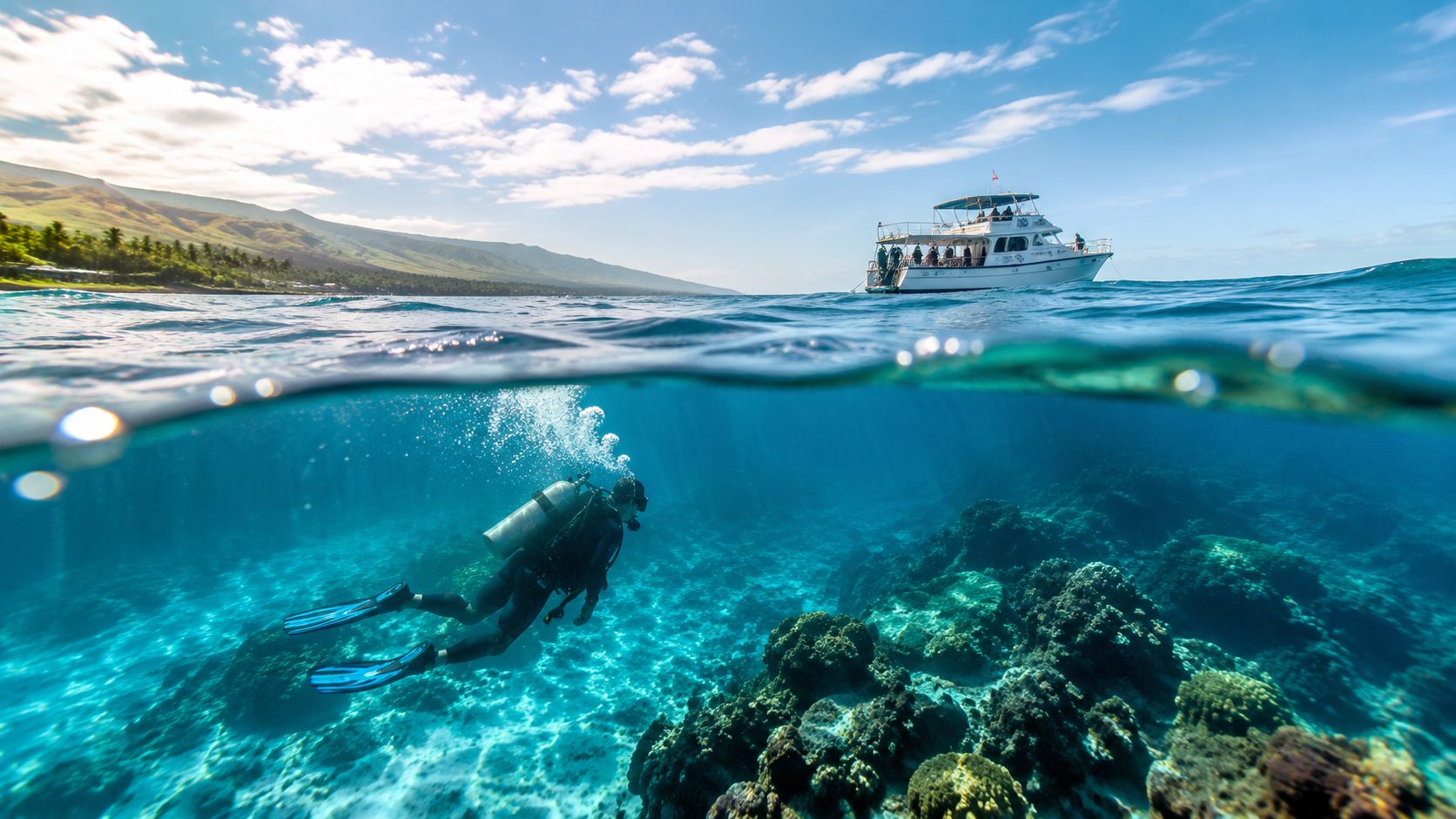
Here's the blunt version. If you typed "kona diving company" because you want the famous manta experience, the offshore blackwater dive, small diver-focused groups, or complimentary nitrox, you're probably thinking of Kona Honu Divers, not the similarly named company.
Why the name mix-up matters
This isn't just a branding issue. It affects what you book.
- Manta focus: One operator is strongly associated with the manta ray dive experience divers travel to Kona for.
- Blackwater access: If blackwater is on your list, the distinction matters even more.
- Boat culture: A diver-only operation feels very different from a mixed format built around broader tourism needs.
You don't want to solve the wrong problem. The question isn't "Which company has a similar name?" It's "Which operation delivers the dive I came to Hawaii to do?"
My recommendation
If you're comparing names because search results sent you in circles, stop there. Treat Kona Diving Company and Kona Honu Divers as separate businesses with different strengths, then book based on the actual experience you want.
For divers chasing Kona's most famous underwater nights, the rest of this guide points you toward the operator that fits that goal.
Why Kona Honu Divers Is Hawaii's Top Choice
The strongest case for Kona Honu Divers is simple. They built an operation around divers, not around squeezing divers into a broader sightseeing model.
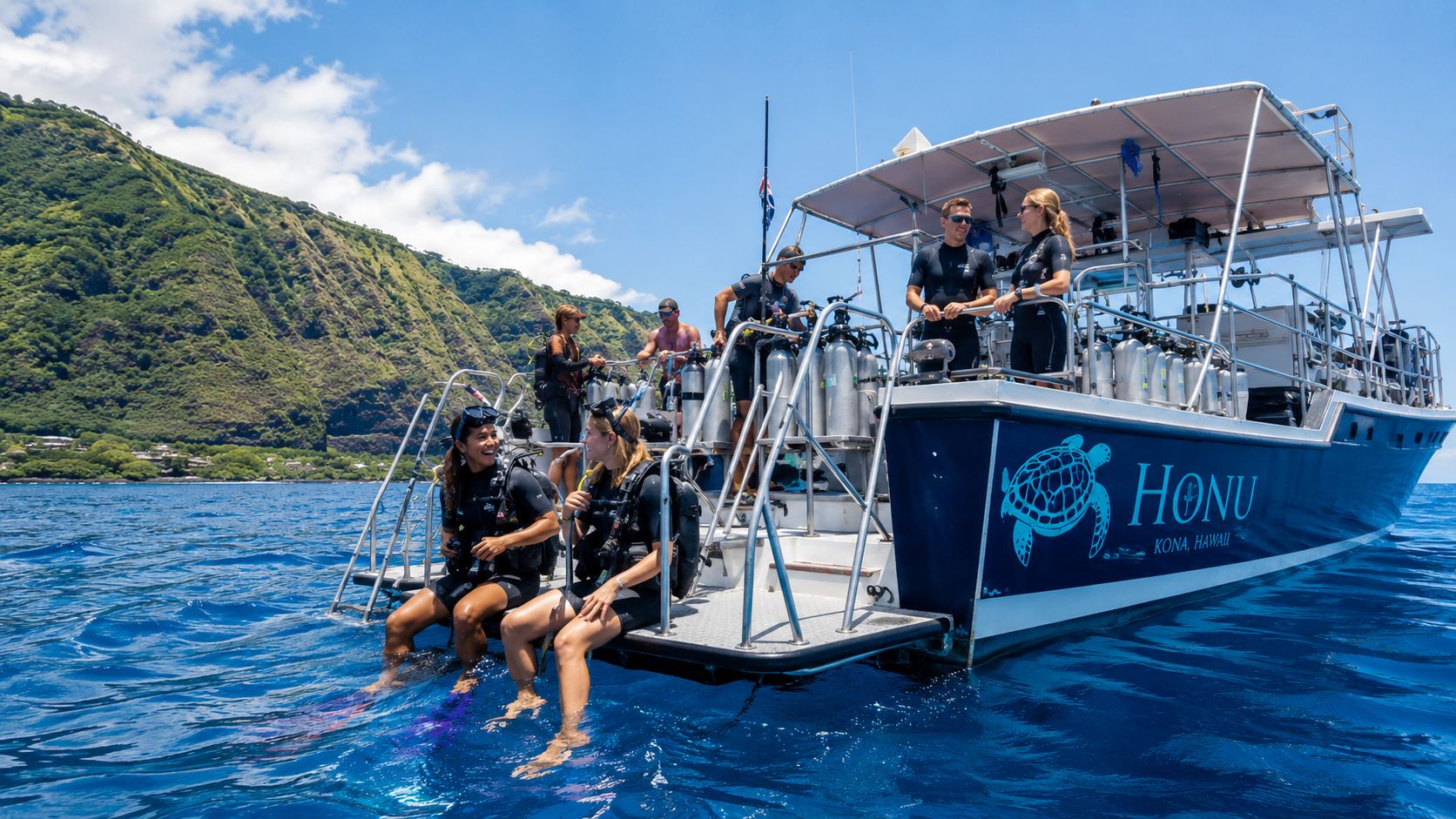
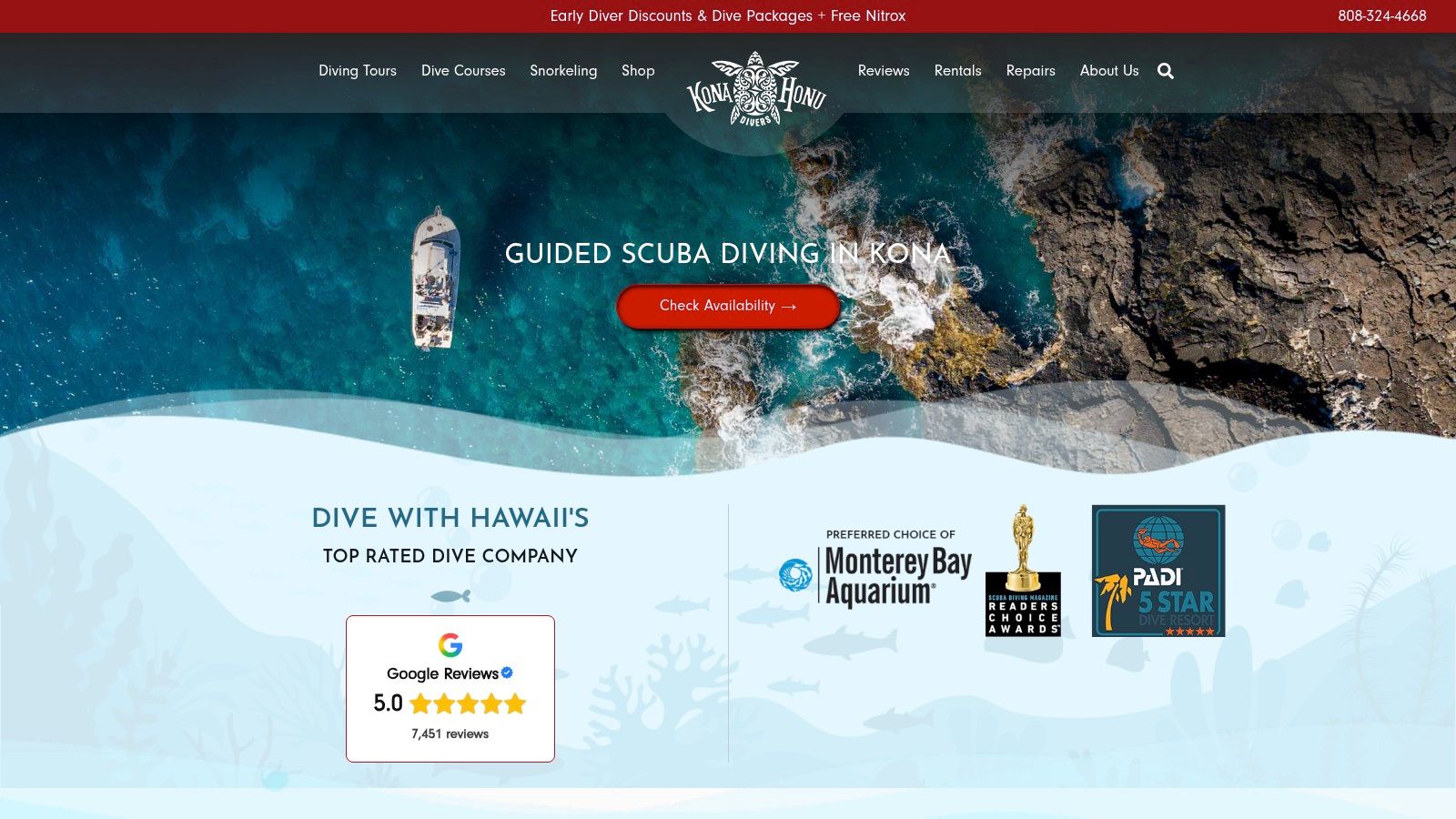
They are recognized as the number one dive shop in Hawaii and received the Scuba Diving Magazine Reader's Choice Award. They also run a strict divers-only policy on boats and include complimentary nitrox for certified divers in a region that sees about 100,000 certified dives every year, according to FareHarbor's feature on the company. If you want to look at the operation directly, start with the Kona Honu Divers homepage.
What actually makes that better for divers
A divers-only boat changes the rhythm of the day. The briefings are for divers. The entries are planned for divers. The crew isn't splitting attention between totally different in-water activities and expectations.
Complimentary nitrox matters too. If you're certified for it, free nitrox is not some throwaway perk. It's useful, practical value that supports more relaxed profiles and longer enjoyment on dives where appropriate.
The stuff experienced divers notice
A good Kona operation doesn't just move people from harbor to site. It makes the whole day cleaner.
- Boat policy: Diver-focused boats reduce friction and keep the trip centered on underwater time.
- Tour identity: Manta and blackwater aren't side products. They're core experiences.
- Service design: Small-group diving and nitrox availability attract the kind of guests who care how a dive is run.
Practical rule: If an operator's best selling point is that they also take non-divers comfortably, that's fine for mixed groups. It's not usually the sign of the sharpest dive-centric charter.
That distinction is why serious divers keep circling back to this shop when they come to Kona.
Experiencing The World-Famous Manta Ray Night Dive
Plenty of visitors ask for a trip with "Kona Diving Company" when what they in fact want is the classic Kona manta dive. The name confusion is real. Your real decision is simpler. Pick the operator that runs this dive well, keeps the group controlled, and puts divers at the right site. That points straight to Kona Honu Divers.
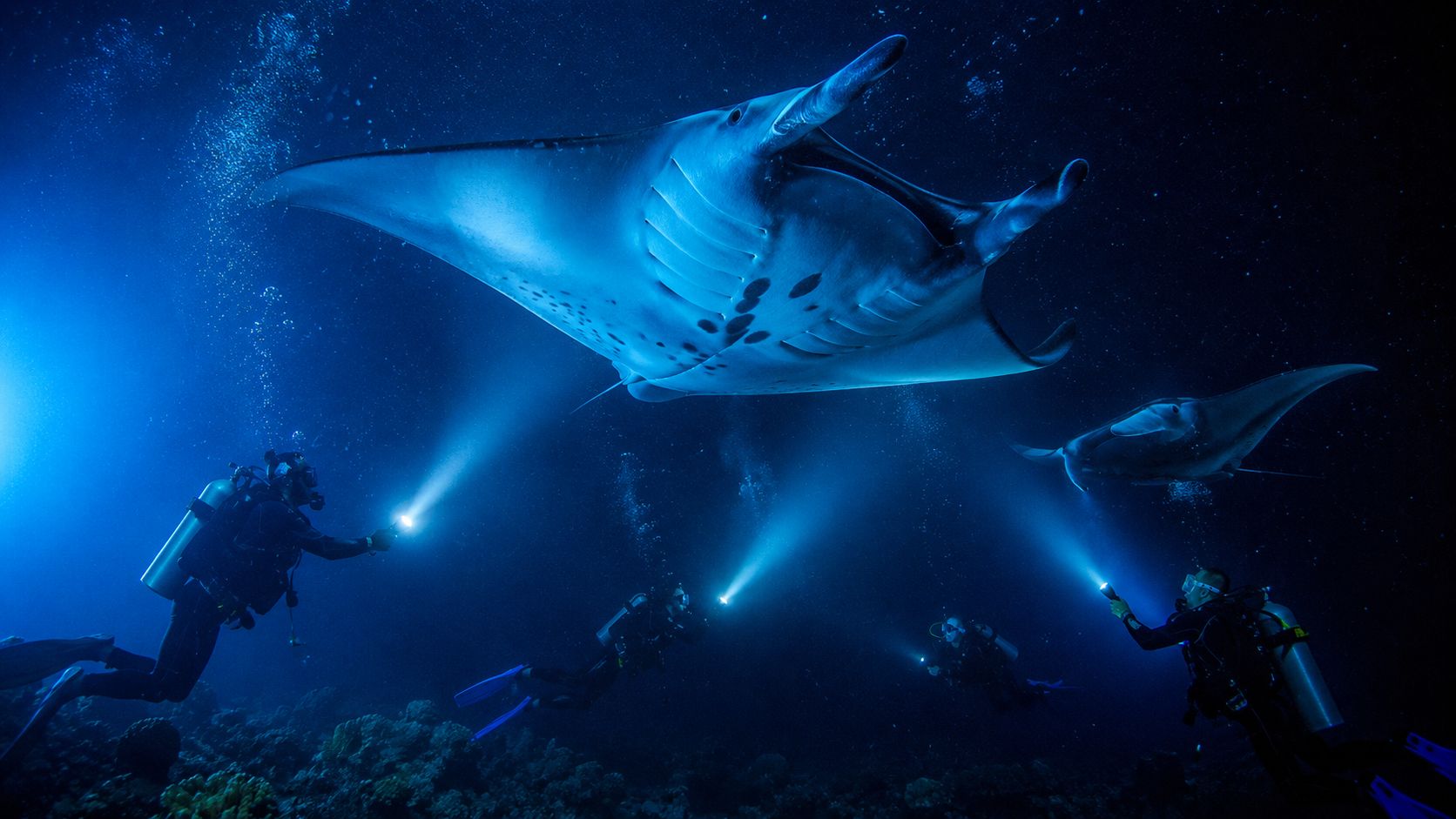
The site matters more than the sales pitch. Kona Honu runs its manta dive at Garden Eel Cove, which is the stronger choice for consistent conditions and cleaner viewing. Keahole Point helps block southern swell, so the dive usually feels calmer and more organized in the water. Kona Honu also explains why this location has become the island's standout manta site in their Garden Eel Cove overview.
Why Garden Eel Cove wins
A manta dive works best when the setting stays controlled. You want easy positioning, predictable light placement, and enough shelter that divers can settle in and watch instead of fighting surge. Garden Eel Cove delivers that better than the rougher, less forgiving alternatives.
If you want a clear overview of how this experience is set up for guests in the water, the Kona manta ray night swim page lays it out well.
What the dive feels like
The first few minutes are quiet. Then the lights start concentrating plankton, everyone settles into position, and the whole water column changes. Mantas sweep in above you, bank through the beams, and pass close enough that every diver on the bottom instinctively looks up and freezes.
That is the moment people come to Kona for.
Kona Honu has offered manta trips for years, and their program is built to keep the experience orderly rather than crowded and sloppy. If mantas do not show, the crew shifts the plan to an alternative night reef dive instead of wasting the evening.
Details experienced divers actually care about
Good manta trips are built on control. Lighting setup matters. Diver spacing matters. Gear choices matter.
A feature from California Diver on the manta trip describes the Honu One using underwater LED lights to draw in plankton, with divers carrying Sola 800 lights and red glow sticks for identification in the water. That kind of organization makes the scene easier to manage and easier to enjoy.
Kona Honu also describes its own night-dive setup in detail on its best dive operator page, including Light & Motion lighting systems, neutral buoyancy tanks, and Atomic regulators maintained for precise performance. Those choices are practical. Divers stay steadier on the bottom and spend more of the dive watching mantas instead of fixing trim every thirty seconds.
The right manta operator gives you stable conditions, disciplined in-water setup, and enough space to watch the animals naturally. That is why Kona Honu stands out.
Signature Dives For The Advanced Adventurer
For the Kona diving company that delivers more than another easy reef loop, this is the part that matters. Advanced divers usually mean one of two things when they ask about Kona. They want the manta done right, or they want blackwater. Kona Honu Divers stands out because it runs both with the kind of structure, briefing quality, and in-water discipline that experienced divers notice fast.
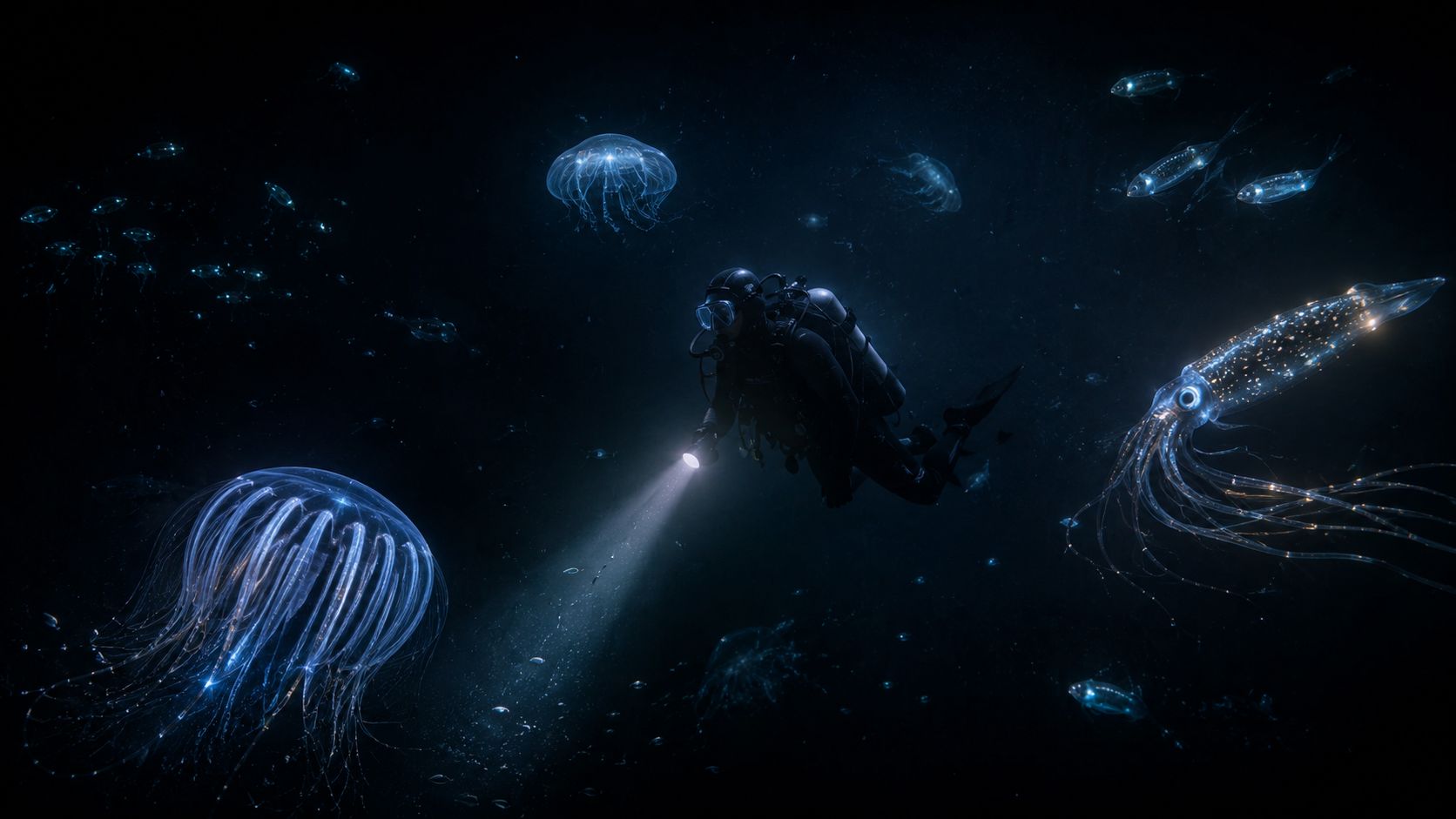
The blackwater trip is the signature choice for divers who want something rare, technical, and unforgettable. As noted on the Kona blackwater dive page, you're suspended in open ocean at night over deep water, connected to a downline system with no reef, no slope, and no natural reference point. That setting changes everything.
Why blackwater is different
Blackwater strips diving down to control, awareness, and composure. You are hovering in darkness while larval and pelagic animals rise through your light beam. If your buoyancy is sloppy or your breathing rate spikes, you'll feel it immediately.
That is exactly why serious divers love it.
You are not there for coral structure or wide lava topography. You are there for the strange midwater life that almost nobody sees in its living, drifting stage. Larval fish, juvenile cephalopods, gelatinous animals, and other translucent creatures turn the dive into a moving parade of alien biology.
Who should actually book it
Book blackwater if you already dive with control and stay calm when the environment removes your usual visual cues. Skip it if night diving still feels busy, stressful, or disorienting.
A good fit looks like this:
- Steady buoyancy: You can hold depth without constant corrections.
- Comfort after dark: You stay relaxed on night dives and keep your situational awareness.
- Interest in pelagic life: You care more about rare sightings and unusual behavior than ticking off another standard reef charter.
- Solid listening skills: Advanced dives reward divers who follow the briefing exactly, especially in open-water nighttime conditions.
Kona has plenty of operators selling boat space. Kona Honu earns the recommendation for advanced charters because the crew puts real thought into diver fit, procedures, and execution. That matters more on blackwater than almost anywhere else in Hawaii.
If you want a signature Kona dive that feels distinctly different, start here.
Your Complete Guide To Diving Logistics
Good Kona diving starts long before the boat leaves the harbor. Pick the wrong trip, show up underprepared, or ignore sea conditions, and you turn a bucket-list dive into a grind.
Kona Honu Divers has been running boats here for years, and that matters for logistics more than marketing. Experienced crews keep check-in organized, briefings clear, gear handling tidy, and entries calm. That is what you want in Kona, especially if your trip includes a manta night or any advanced charter where small mistakes become annoying fast.
What to sort out before you book
Start with the dive type, not the calendar.
A daytime reef charter, a manta night dive, and a blackwater or advanced offshore trip demand different skills, different energy, and a different attitude. Divers get into trouble when they book the famous dive first and ask whether they are a fit later.
Use this filter:
- Choose the experience that matches your actual comfort level: If night diving still spikes your stress, do not force a night charter on day one.
- Check the prerequisites: Advanced trips are for divers with control, awareness, and the ability to follow a briefing exactly.
- Ask about the day plan: Good operators explain check-in time, return time, site selection, and what happens if conditions change.
- Book the signature dives on separate days if possible: Stacking demanding dives back-to-back sounds ambitious and often feels sloppy in the water.
Gear and boat setup
Bring your own mask if it fits well. That one choice prevents a surprising number of bad dives.
Also bring whatever exposure protection you know works for you, a save-a-dive kit if you travel with one, and any defog or backup items you rely on. Do not debut new gear on a night charter. Kona is the place to enjoy the dive, not troubleshoot a bargain-mask leak at dusk.
On a well-run boat, setup should feel orderly. Tanks are staged cleanly, crew instructions are easy to follow, and divers know where to sit, stow gear, and kit up without tripping over each other. If an operator cannot make the deck feel calm before the dive, do not expect precision once everyone is in the water.
Show up hydrated, eat lightly, and arrive early enough that you are not assembling gear with your heart rate already up.
Seasickness prep that actually helps
If you are even a maybe for seasickness, treat yourself like a guaranteed yes.
Afternoon chop, waiting on sunset for the manta dive, and gearing up while the boat rocks can hit harder than visitors expect. Prevention beats recovery every time.
Here are solid options to pack:
- Patch option: Ship-EEZ Seasickness Patch
- Classic tablet: Dramamine pills
- Another popular pill option: Bonine pills
- Non-medication backup: Sea Band wristbands
- Easy stomach-friendly extra: Ginger chews
Take your remedy before boarding, not after the horizon starts rolling. Bring water. Bring a small snack. Skip heavy, greasy food.
Understanding The Other Kona Diving Company
To be fair, Kona Diving Company is a real, separate business. It's family-owned, founded in 2010, and travelers do run into it often while researching Kona diving. The problem is that many people land there while looking for a different operator entirely. That's the naming collision in a nutshell.
The other issue is expectation mismatch. Searchers often want a direct comparison between the two businesses, including how they differ on manta offerings, safety style, and cancellation details. There isn't much clear guidance on that, even though confusion is common and travelers ask whether the companies are the same or which one is better, as reflected on the Kona diving companies ranked guide.
A simple side-by-side view
| Point | Kona Diving Company | Kona Honu-focused search intent |
|---|---|---|
| Identity | Family-owned dive business | Often the operator people mean when searching for manta and blackwater |
| Founded | 2010 | Different company entirely |
| Why people confuse them | Similar name | Strong association with signature Kona dives |
Booking nuance people should know
Kona Diving Company lists a 72-hour cancellation policy, but travelers also look for more clarity around weather-driven and safety-driven cancellations for manta nights, especially when conditions are rough or dives get cut short. That's one of the practical gaps people keep running into when they compare operators.
I'm not saying ignore Kona Diving Company. I'm saying identify what you're trying to book before you hand over your credit card.
FAQ And How To Book Your Kona Dive
Stop treating every Kona operator as interchangeable. If you're trying to book the manta dive, blackwater, or a diver-focused reef charter, company choice changes the trip.
What certification level do I need
For standard scuba charters, you need an active certification unless you're signing up for instruction or an intro dive. For the manta night dive on scuba, certification is the baseline. For blackwater, I recommend that only confident, experienced divers book it. You should already be calm at night, comfortable in blue water, and able to manage yourself without hand-holding.
If that description does not fit you yet, book a reef dive first.
Can non-divers join
Sometimes, yes. Ask before you book.
That matters a lot with mixed groups. Some boats are set up to serve both divers and snorkelers on the same outing, and some are built around certified divers only. If your priority is a serious dive trip instead of a family compromise, pick the operator that focuses on divers and runs the trip accordingly.
What happens if weather changes the plan
Ask this before you pay, not after the swell builds.
Night diving off Kona depends on real conditions, not vacation plans. A good operator will explain what happens if a manta site is unavailable, if the route changes, or if the crew calls the dive for safety. Kona Honu Divers stands out here because they run trips with a diver's mindset first. That means clearer decisions, tighter procedures, and less guesswork when conditions are marginal.
What's the smartest way to choose
Match the dive to your actual experience, not your ego.
- Book the manta dive if you want Kona's signature experience and a strong first night dive.
- Book blackwater if you already have solid buoyancy, night comfort, and a taste for unusual pelagic life.
- Book daytime reef diving if you want lava formations, marine life, and a lower-stress way to get oriented before harder night dives.
How should I book
Start with your must-do dive, then confirm the prerequisites, schedule, and boat fit. That simple step clears up a lot of the confusion between Kona Diving Company and Kona Honu Divers. They are not the same business, and divers looking for Kona's iconic charters usually mean Kona Honu Divers.
If you want help choosing the right trip, use the Kona Honu Divers contact page for booking questions. That is the fastest way to get a straight answer on skill fit, availability, and whether your group setup makes sense.
If your goal is the Kona trip divers talk about after they fly home, book the operator known for the manta and blackwater experience, not the one with the confusingly similar name. Kona Honu Divers is the clear pick.