
Three keeps showing up in Kona: manta night dives, blackwater drifts, and classic reef dives. If you're trying to decide fast, book the manta dive at Garden Eel Cove as your anchor, add a reef day for your skill level, and only choose blackwater if you're already comfortable in open water at night.
You're probably staring at too many options and too little vacation time. Kona rewards the diver who makes a clear call, because the coast gives you a real range, from easy reef entries to technical-feeling night dives. The right trip isn't the one with the loudest marketing, it's the one that matches your certification, the day's conditions, and how much novelty you want.
Planning Your Kona Diving Trip in 2026
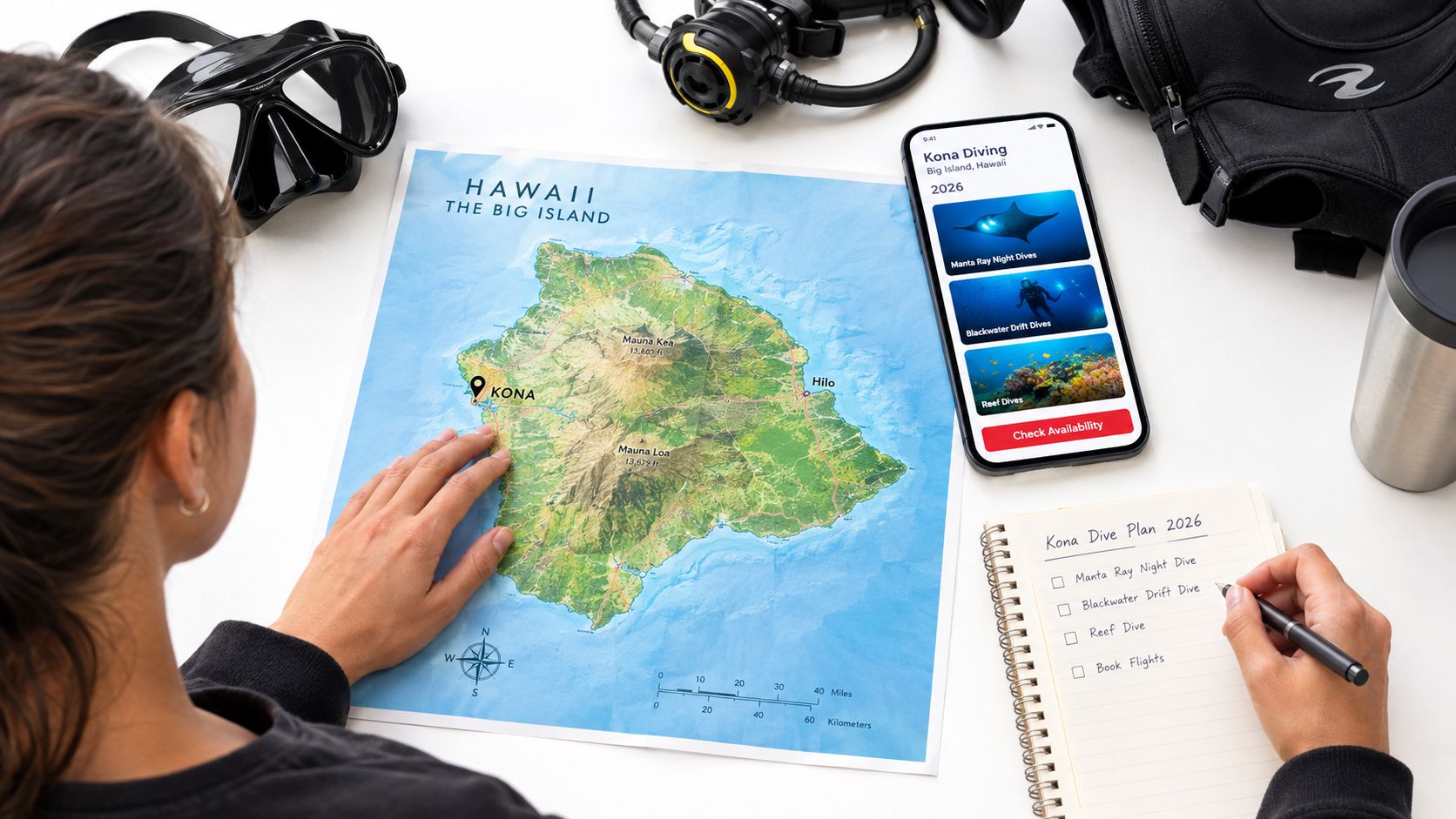
Kona diving works best when you stop thinking in terms of one “best dive” and start thinking in terms of three different jobs. Manta diving is the signature wildlife encounter, blackwater is the weird, offshore night experience, and reef diving is where you warm up, check your weighting, and enjoy the lava architecture. If you try to force all three into the same mindset, you'll pick the wrong day for at least one of them.
Start with your certification and comfort level
Open Water divers should stay with manageable reef sites and guided manta trips. Advanced divers can chase deeper lava features and more demanding profiles, but that only makes sense if the conditions are clean on the day you go. A site that looks easy on a glossy page can still feel bad if swell, surge, or entry/exit conditions are off.
Then use the ocean, not the brochure
Kona is famous for calm water, but “usually calm” is not the same thing as safe today. I'd rather see a diver skip a marginal shore entry or wait out a rough morning than burn a trip fighting the sea. That's the local discipline that keeps you diving tomorrow.
Practical rule: if a site, a dive profile, and the weather don't agree, trust the ocean and simplify the day.
My advice is blunt. Build your Kona trip around one easy reef day, one manta night, and, if you're qualified and genuinely curious, one blackwater dive. If you want the cleanest starting point for planning logistics, use the Kona dive shop information to sort the basics, then book the dives that fit your real skill, not your wish list.
Top Kona Dive Sites by Certification and Conditions
Boat diving and shore diving solve different problems. Boats get you to offshore lava structures and cleaner routes with less surface slog, while shore entries reward certified divers who know how to read surf and want schedule flexibility. I'd choose boat diving for the majority of visitors, then reserve shore diving for people who already know they're comfortable carrying gear over lava and timing entries carefully.
| Site | Max Depth | Min Certification | Boat/Shore | Surge Risk | Best Window |
|---|---|---|---|---|---|
| Kealakekua Bay | Varies by route | Open Water for guided diving | Boat | Lower when sheltered, higher when swell builds | Calm weather, steady seas |
| Amphitheater | About 30 meters | Advanced Open Water | Boat | Can be affected by surge on the shallows | Good conditions, experienced groups |
| Suck ’em Up | Site-dependent | Advanced Open Water or equivalent comfort | Boat | Depends on swell and current | Best on stable forecast days |
| Shore sites like Puakō and 2 Step | Shallow to moderate | Open Water, with solid shore skills | Shore | Varies fast with surf | Calm days, light swell |
The divider is not “boat versus shore,” it's whether the day fits the dive. Amphitheater is not a beginner site, because the depth pushes beyond standard Open Water training limits and the shallow rim can still feel energetic when surge moves in. Kealakekua Bay is the cleaner choice for divers who want a less punishing day, especially if you care more about the reef and fish life than about depth.
Match the site to the diver, not the dream
Advanced divers who want more structure and bigger-water drama should lean into deeper boat dives and sites with pelagic potential. Open Water divers should stay shallow and let the day be about comfort, not credentials. Photographers usually do best on lava arches and protected reef structure, because those give you time to frame shots without fighting the bottom time clock.
Keep the ego out of the boat. The best Kona day is the one where you surface with gas left, a clear head, and a reason to dive again tomorrow.
Snorkelers in mixed groups should not force dive-centric itineraries. If part of the group is not certified, choose sites and operators that can split the experience cleanly instead of making everyone compromise. That's how you keep the day relaxed instead of turning it into a logistics problem.
The Manta Ray Night Dive at Garden Eel Cove
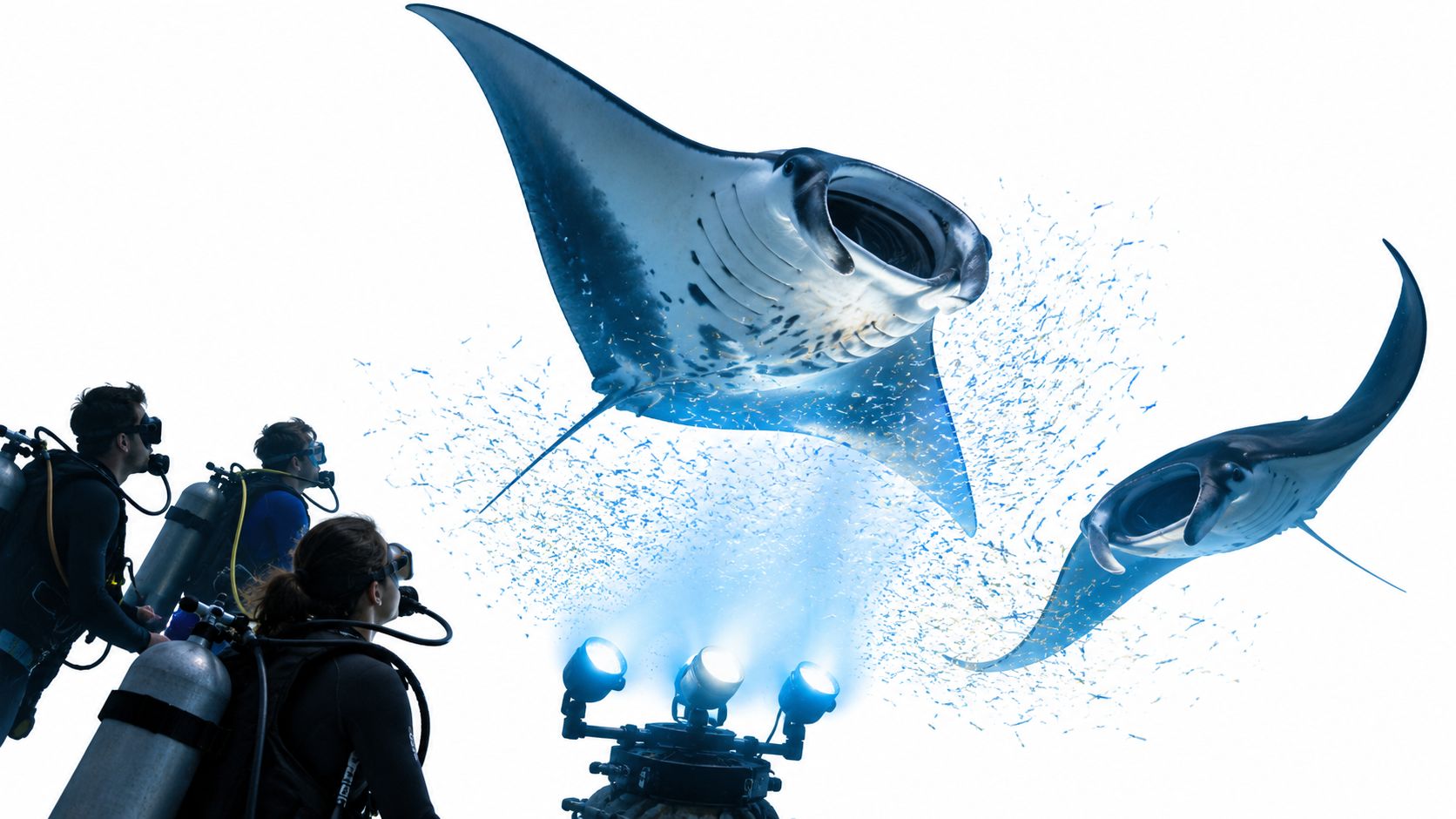
The manta dive works because the lights do the work for you. Divers and snorkelers create a bright plankton patch, reef mantas arrive to feed, and the animals make repeated barrel-roll passes through the illuminated water column. The dive feels calm, almost staged, until a manta turns broadside in front of you and takes over your whole field of view.
What to do in the water
You settle on or near the sandy bottom, keep the open water column clear, and point your lights upward. The mantas choose the space, not you. That matters, because chasing them or crowding their path just turns a graceful feeding behavior into a stressed one.
Here's the behavior checklist I tell people to follow:
- Never touch a manta. Contact can strip its protective mucus coating.
- Don't chase or block its path. Let the animal control the distance.
- Stay low and stable. Controlled buoyancy keeps the feeding lane open.
- Time your breathing. Don't blast bubbles directly into a manta overhead.
- Keep coral and other marine life clear. The dive is about the mantas, not the bottom.
Garden Eel Cove, also known as Makako Bay, is the site I'd choose. It's the more manageable viewing area, and the protected cove setting gives the whole operation a better feel than a loose, exposed alternative. The site also has the reef structure to make the setting feel like a real marine encounter, not just a floating light show.
Book the manta ray dive tour if you want the straightforward guided version. If you're going to do one wildlife dive in Kona, this is the one I'd put first.
What Blackwater Diving in Kona Actually Feels Like
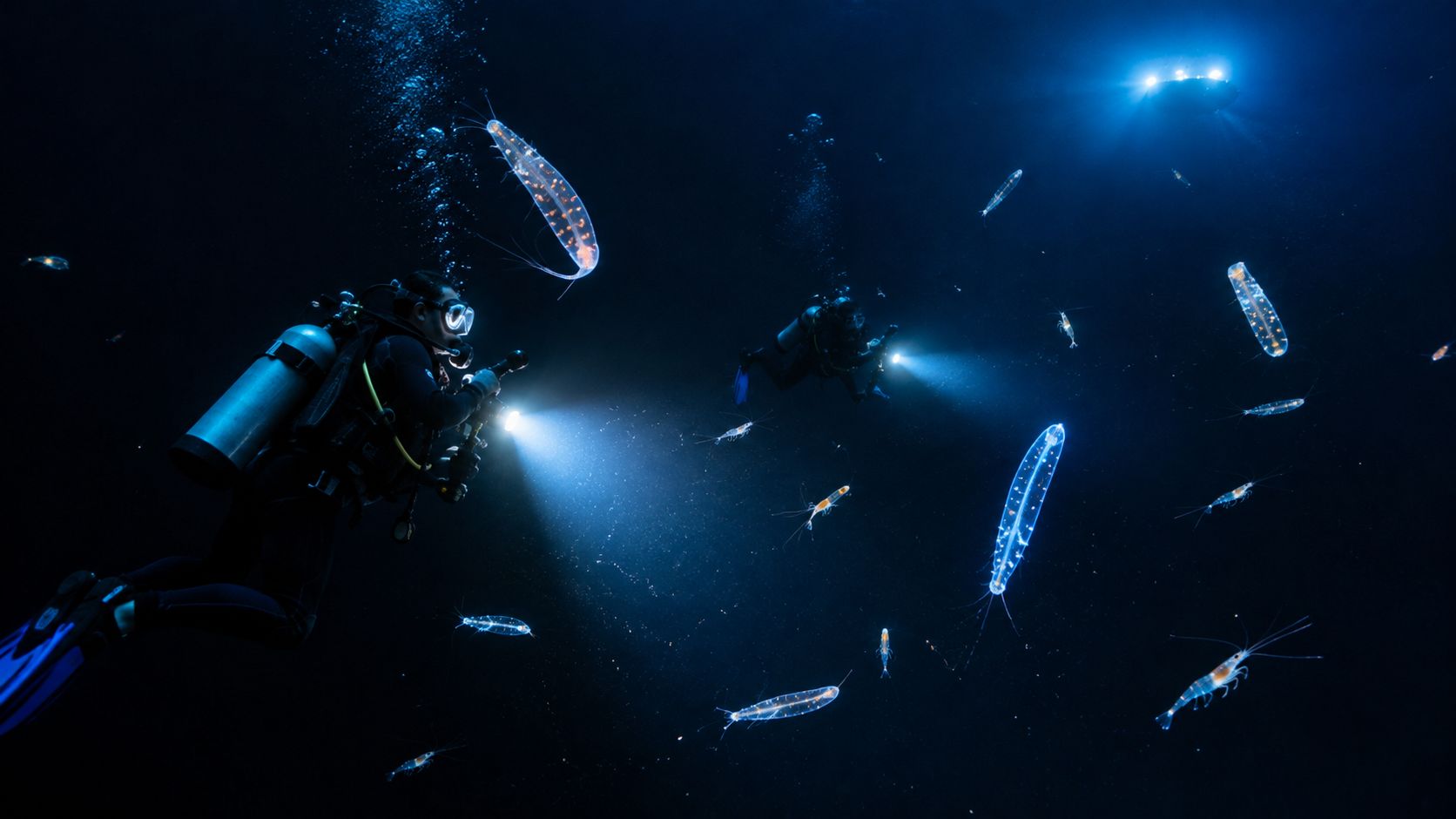
A blackwater dive feels like the ocean has removed the floor and replaced it with darkness. The boat runs 2 to 3 miles offshore, the seafloor disappears into black water, and the dive team drops you into an open-ocean night where the only useful reference is your light and the tether. The experience is built around diel vertical migration, the massive nightly movement of deep-water life toward the surface.
How the dive actually runs
You descend in controlled fashion to roughly 15 to 20 meters, stay attached to the system, and keep the lighting disciplined. The lights point downward to attract rather than stun, and the point is to create a small working window in the midwater column. There's no reef below you, no wall to stare at, just open water and whatever migrates into the glow.
That setup brings in gelatinous animals, crustaceans, larval fish, and the strange little bodies that divers rarely see on a reef. The dive usually lasts about 45 minutes, which is enough time for the novelty to sink in without overstaying the point. You need to be comfortable in darkness and open water, because this is not the place to learn how to relax.
My blunt take: if night diving already makes you tense, skip blackwater. If it makes you curious, book it.
Use the Kona blackwater dive page if you want the right booking path for a true offshore night encounter. Blackwater is the most niche of Kona's signature dives, and it's exactly why it has a reputation.
Courses, Certifications, and Gear You Will Need
Certification matters more in Kona than people expect, because the island gives you enough range that your card changes the kind of trip you can have. Open Water gets first-timers into guided diving and shallow reef work. Advanced Open Water opens the door to deeper sites like Amphitheater, and specialty training in nitrox, deep, and night diving gives you more flexibility once you're here.
If you haven't been diving lately
A refresher isn't an insult, it's the smart move. If you've been out of the water for a while, especially if you're rusty on buoyancy or ascent control, do the refresher before you book the trip with the tighter profile. That way the first dive of your vacation isn't spent remembering how your own gear works.
Pack for warmth, not for fashion
A 3mm wetsuit is the practical default for most Kona diving. Your computer is essential, especially if you're planning deeper boat dives or multiple days in the water. Rental gear at a serious Kona shop should be actively serviced, and if you're doing several days of diving, a package usually makes more sense than piecing everything together one day at a time.
Here's the quick version of what to sort before you fly:
- Certification card: bring the one that matches your planned dives.
- Dive computer: don't rely on memory or a buddy's instrument.
- Exposure protection: plan around a 3mm suit, not guesswork.
- Question the inclusions: confirm what gear, nitrox, and transport are part of your booking.
- Ask about the off days: a shop should tell you what happens if conditions change.
If you want a clean training pathway for Big Island conditions, use this scuba certification page as your reference point and pick the course level that matches your actual trip goals. Don't overbuy training, and don't underprepare either.
Seasonality, Permits, and a Sample 3-Day Itinerary
Kona diving runs year-round, but the sea still has moods. Summer usually gives you calmer conditions for mantas, winter brings humpback whale encounters with strict approach rules, and surface conditions can shift fast when swell lines up badly. The mistake most travelers make is confusing a good visibility report with a safe day.
Use the calendar without worshipping it
Commercial manta-viewing sites are not places to freelance. They rely on operator coordination, so the right move is to book through a shop that handles the site, the timing, and the group flow. That matters more than trying to show up and improvise.
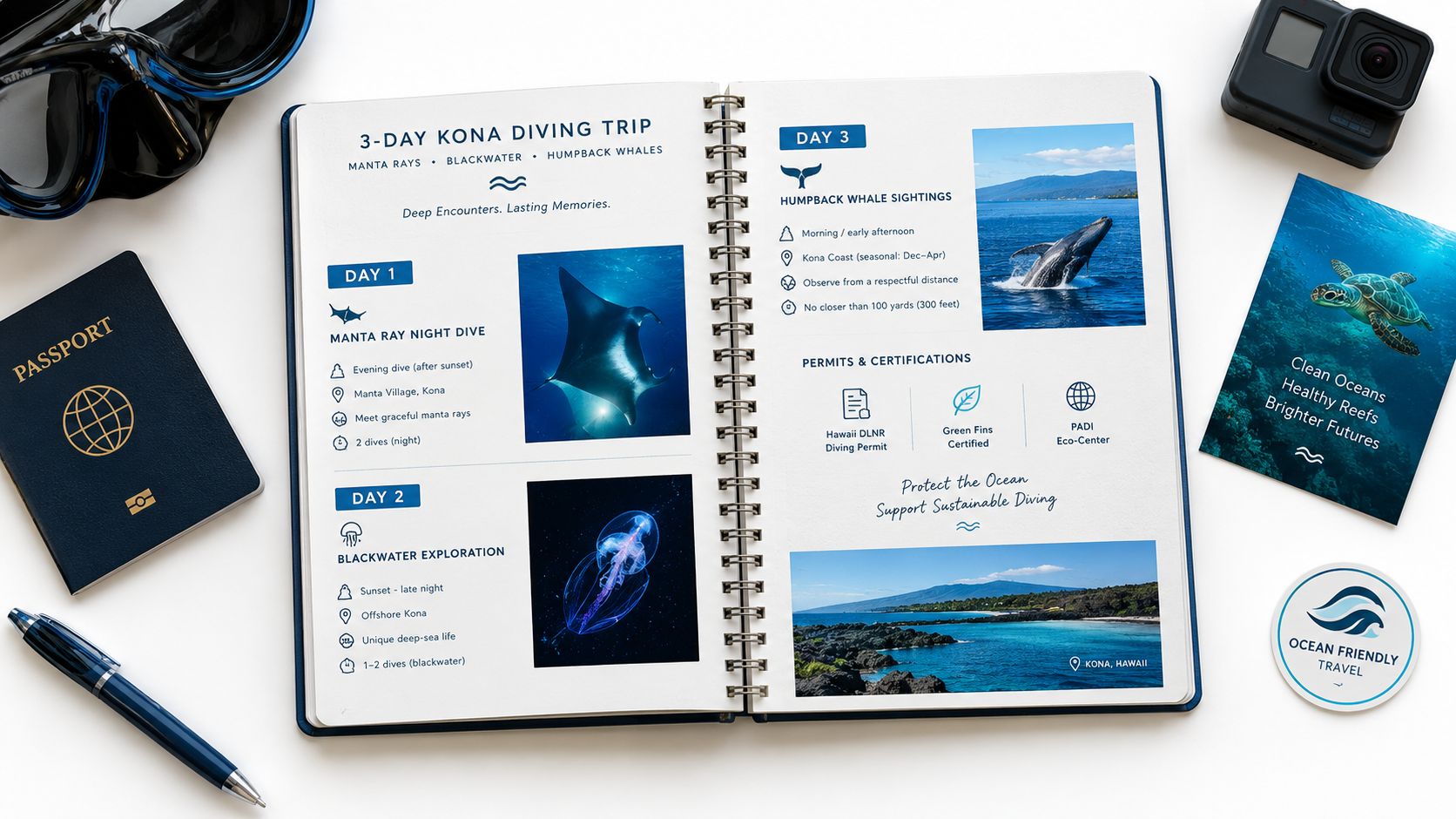
A simple three-day plan works better than a crowded one. Day 1 should be a check-out reef dive or a skills refresh, Day 2 should be the manta night dive at Garden Eel Cove, and Day 3 should be blackwater only if you're qualified and genuinely interested in open-ocean night work. If you're traveling with mixed abilities, split the group rather than forcing one compromise day.
For experienced divers who want more structure, look at the Kona diving tours page and the premium advanced 2-tank trip. Those are better fits for people who already know they want a harder profile and less hand-holding.
Safety, Sustainability Etiquette, and Booking Smart
A guaranteed sighting promise is not the same thing as responsible diving. What matters is how the operator handles group size, light placement, distance from the animals, and whether the crew enforces behavior instead of just selling an easy story. If a shop talks more about certainty than about etiquette, I'd be suspicious.
Ask the operator the hard questions
- How many divers are in the group? Smaller groups are easier to control around mantas.
- Where do the lights go? Light discipline matters more than flashy gear.
- How do you keep people off the feeding path? Good guides manage position, not just entry.
- Do you share conservation practices or incident reporting? Serious operators should.
- What happens if the site is crowded? You want a real answer, not a sales line.
You also need the boring safety basics in place. Be hydrated, equalize early, respect your no-fly window after diving, and don't pretend seasickness won't happen on a rolling boat. For motion help, the practical kit is a Ship-EEZ Seasickness Patch, Dramamine pills, Bonine pills, Sea Band wristbands, and ginger chews. Pick the method that works for your stomach, not the one that sounds coolest.
If you're traveling with family or a private group, a charter gives you the most flexibility, especially when some people want to dive and others want to snorkel. Use the responsible diver etiquette guide to keep your standards high, then book the trip that lets the ocean stay the center of the day.
Kona Honu Divers runs guided reef dives, manta trips, blackwater dives, training, and private charters from the Kona side, so it's a practical place to start if you want one operator that can cover the full range of this trip. If you're ready to stop comparing tabs and get in the water, visit Kona Honu Divers and book the dive that matches your certification, your timing, and the kind of Kona experience you want.