
Picture this: you're dropping into impossibly clear, warm water, and below you, a dramatic landscape of ancient lava flows unfolds. It’s a diver’s playground, sculpted by volcanoes and brought to life by a kaleidoscope of marine creatures. That's the heart of Kona diving. The Big Island’s west coast isn't just another dive spot; it's a world-renowned destination famous for its calm seas, incredible visibility, and a lineup of diving tours that has something for everyone, from the freshly certified to the seasoned pro.
Why Kona Is a World-Class Diving Destination
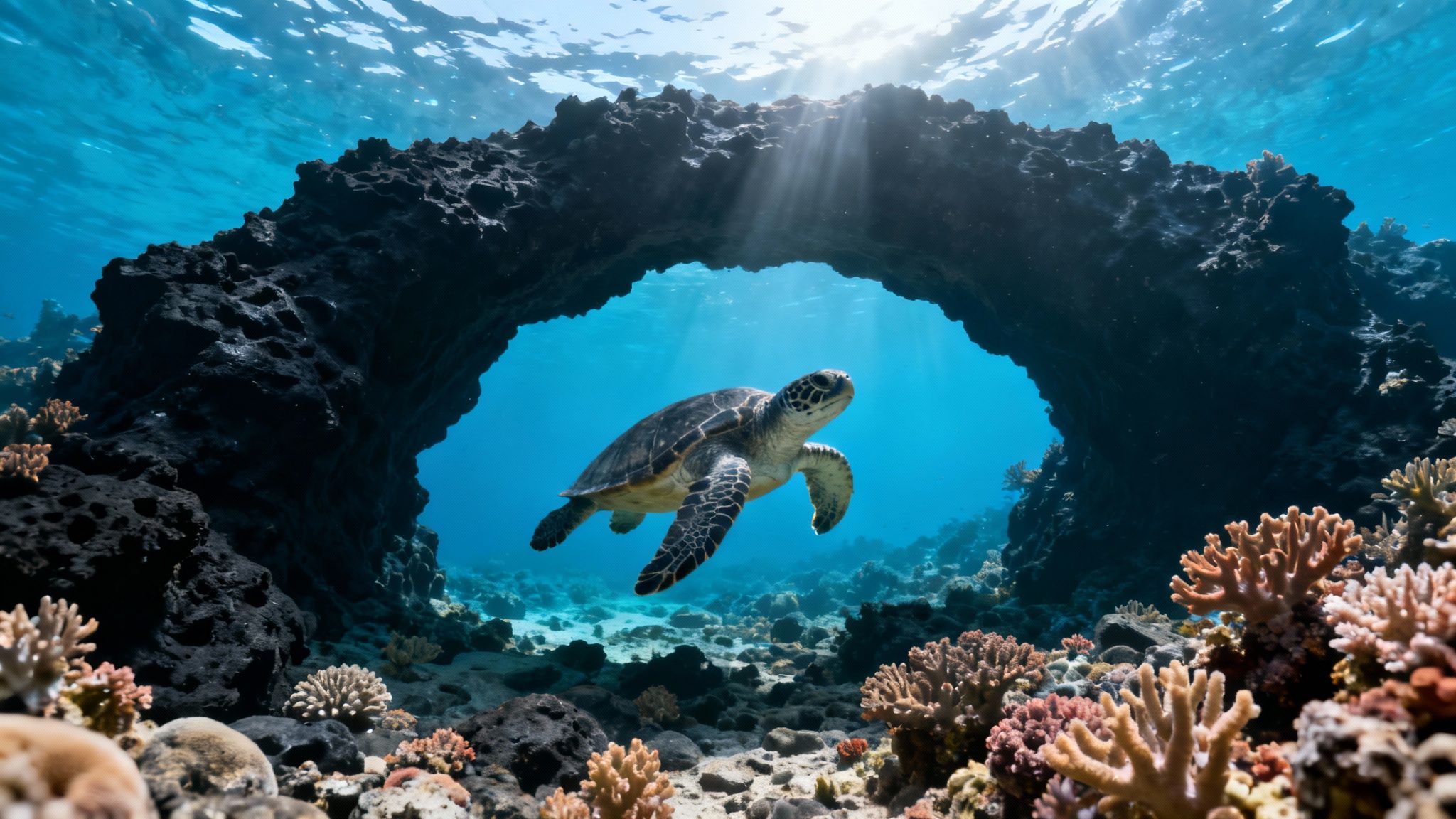
The story of Kona’s underwater world starts with fire. Over thousands of years, volcanic eruptions forged the very structure of the seafloor here, leaving behind an incredible seascape of lava tubes, massive archways, and winding canyons. Today, these ancient formations are covered in healthy coral, creating the perfect home for a dizzying array of marine life.
But what really puts Kona in a league of its own are the near-perfect conditions. The colossal volcanoes, Mauna Loa and Hualalai, stand guard over the coastline, shielding it from the powerful trade winds. This natural barrier gives us exceptionally calm, almost lake-like water most days of the year. It's an ideal setting whether you're taking your first breath underwater or you're an old salt looking for a new adventure.
A Thriving Underwater Ecosystem
Then there’s the visibility. It's not uncommon for the water clarity to exceed 100 feet, letting you take in the full grandeur of the underwater architecture and the animals that call it home. And the waters here are absolutely packed with life—a lot of which you won’t find anywhere else on the planet.
A few highlights you can expect to see:
- Endemic Species: A huge chunk of the fish you'll encounter are unique to Hawaiian waters. You literally can't see them anywhere else.
- Green Sea Turtles: We call them honu, and these gentle giants are a common and beloved sight, especially at underwater "cleaning stations" where they go for a spa day.
- Diverse Invertebrates: Keep a sharp eye out for cleverly camouflaged octopuses, bizarre-looking frogfish, and a whole rainbow of tiny nudibranchs tucked into the reef.
The Big Island has been a top-tier scuba destination for a long time. The dive scene started taking root in the early 1970s, but it was shops like Jack's Diving Locker, founded in 1981, that really put Kona on the global diving map. Fast forward to today, and the island sees about 100,000 certified scuba dives every year, with over 50 dive charters catering to divers from all corners of the globe.
Kona really does have it all—from the legendary manta ray night dive to peaceful coral gardens and the thrill of spotting big pelagic animals in the blue. When you start to explore what makes Kona famous underwater, you realize it’s more than just a place to dive. It's a full-on immersion into the heart of Hawaii’s incredible marine world.
The World-Famous Manta Ray Night Dive Ballet
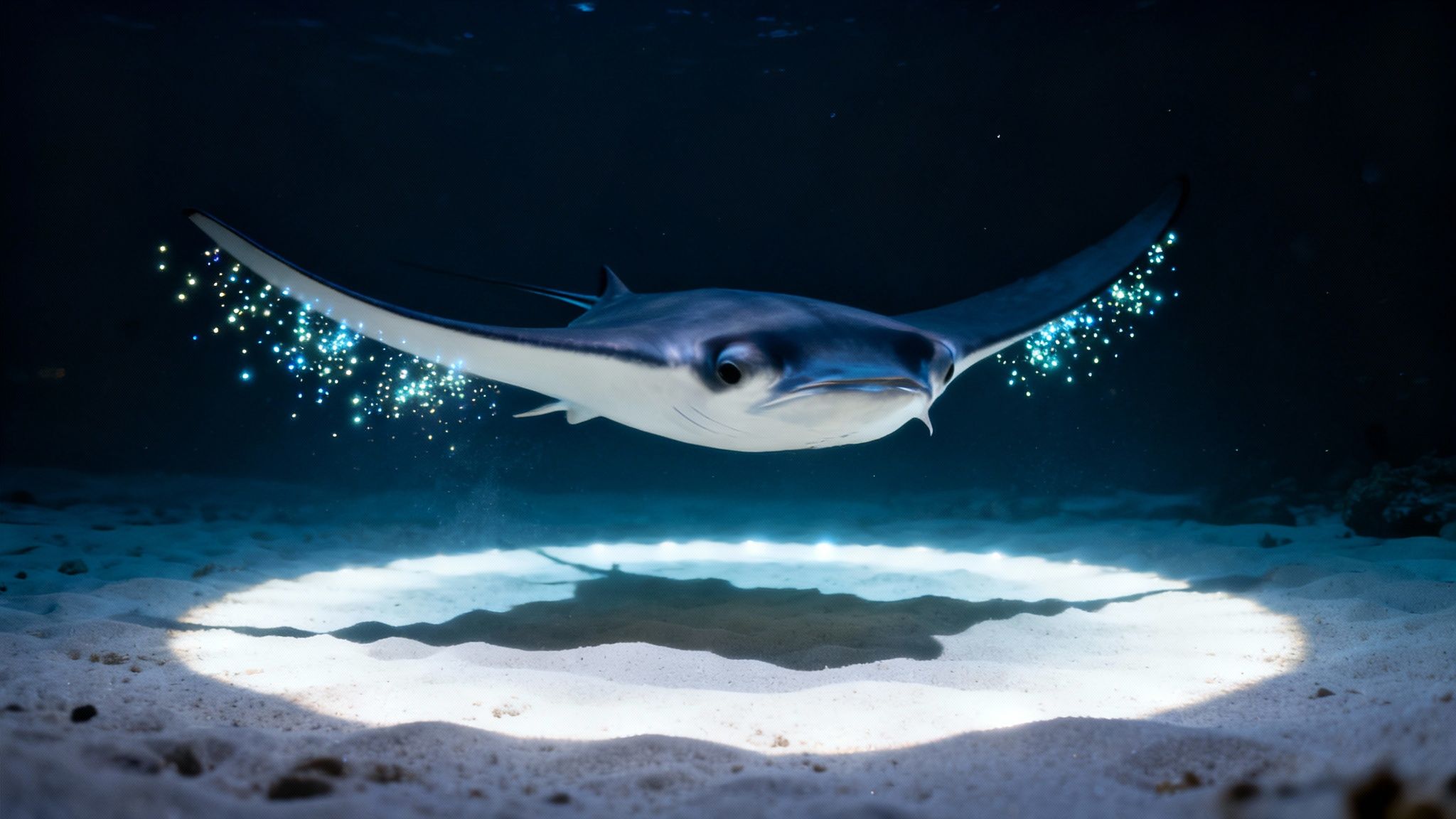
Imagine this: you're settled on the sandy ocean floor in the quiet darkness of night. All around you, powerful lights point up, creating an eerie, beautiful glow. Then, out of the deep blue, they appear. Silent giants with wingspans stretching over 12 feet glide into the light, performing effortless barrel rolls just inches above your head. This isn’t a dream. This is the Kona manta ray night dive, and it’s consistently hailed as one of the best night dives on the entire planet.
This incredible underwater show is all thanks to some simple biology. The bright lights we place on the seafloor attract clouds of microscopic plankton, which just so happens to be the mantas' favorite meal. It's like we're setting up the perfect, irresistible buffet for them. The mantas swoop in for the feast, putting on a breathtaking acrobatic display for the divers and snorkelers who've come to watch.
How Did This Incredible Spectacle Start?
Believe it or not, this all began by accident. Back in the 1990s, divers noticed mantas gathering near hotel lights that were shining on the water. A few smart dive operators figured they could recreate this, and one of the world's most legendary dive experiences was born. Kona is the perfect stage for this because of its calm, protected bays and nutrient-rich waters that keep the plankton—and the mantas—coming back for more.
What really makes Kona diving so special is just how reliable these encounters are. We've identified nearly 200 individual manta rays who live here year-round, each one recognizable by the unique spot patterns on their bellies. On a typical night, you might see several mantas, but we’ve had incredible nights with over 20 at once—the record is somewhere around 36! This is only possible because local dive shops work hard to promote safety and conservation, ensuring this natural wonder is here for years to come.
What It's Really Like to Be There
It’s hard to put into words what it feels like to have a massive, gentle creature glide so close you can count the gills. There's a real sense of awe and connection that washes over you. The only sounds are the steady rhythm of your own breathing and the quiet hum of the ocean as these majestic animals perform their silent, underwater dance.
The experience is often described as surreal and deeply moving. Watching these intelligent creatures feed with such grace and power is a humbling reminder of the ocean's magic and the importance of protecting it.
Responsible tourism is what keeps this amazing interaction going. Dive operators have strict rules to keep both the divers and the mantas safe. You can learn more about what the manta ray night dive entails to get a better feel for the experience and the guidelines that protect these beautiful animals.
When you're in the water, just remember these key rules:
- Look, Don't Touch: Never, ever touch a manta ray. Your touch can remove their protective mucus coating, which leaves them vulnerable to infections.
- Hold Your Position: Divers stay on the bottom, and snorkelers stay on the surface. This keeps the water column clear so the mantas have plenty of room to maneuver.
- Lights Up (or Down): Lights are always pointed up from the seafloor or down from the surface. This creates a "plankton column" that concentrates their food source and keeps the show going.
This isn't just another dive; it's a chance to witness one of nature's most spectacular performances up close. It's an adventure you truly won't forget.
A Guide to Kona’s Must-See Dive Sites
Sure, the manta ray night dive gets a lot of the spotlight, and for good reason! But that one incredible experience is just the beginning of what Kona diving is all about. This coastline is an underwater treasure map, where ancient lava flows have sculpted a playground of dramatic arches, hidden caverns, and reefs that are just bursting with life.
Instead of just rattling off a list of names, let's gear up and take a virtual plunge into a few of the spots that make Kona so special. Think of it as a preview to help you pick the perfect adventure for your skill level and what you're hoping to see.
Crescent Beach (Pawaeʻe)
Right away, Crescent Beach (or Pawaeʻe) gives you a perfect taste of Kona's signature lava tube topography. The site is famous for its massive archways and swim-throughs that create this almost cathedral-like feeling as sunlight streams down through the volcanic rock. It's an absolute dream for photographers and a fantastic, relaxed dive for any level of experience.
The geology is stunning, but the real stars here are the green sea turtles (honu). Crescent Beach is a well-known turtle “cleaning station.” You can literally watch them line up, waiting for their turn to get parasites and algae nibbled off by local surgeonfish. It's one of those amazing natural behaviors you just have to see for yourself.
- Average Depth: 30-50 feet (9-15 meters)
- Best For: All skill levels, photographers, and anyone who loves turtles.
- What You’ll See: Green sea turtles, whitetip reef sharks, and breathtaking lava formations.
Golden Arches
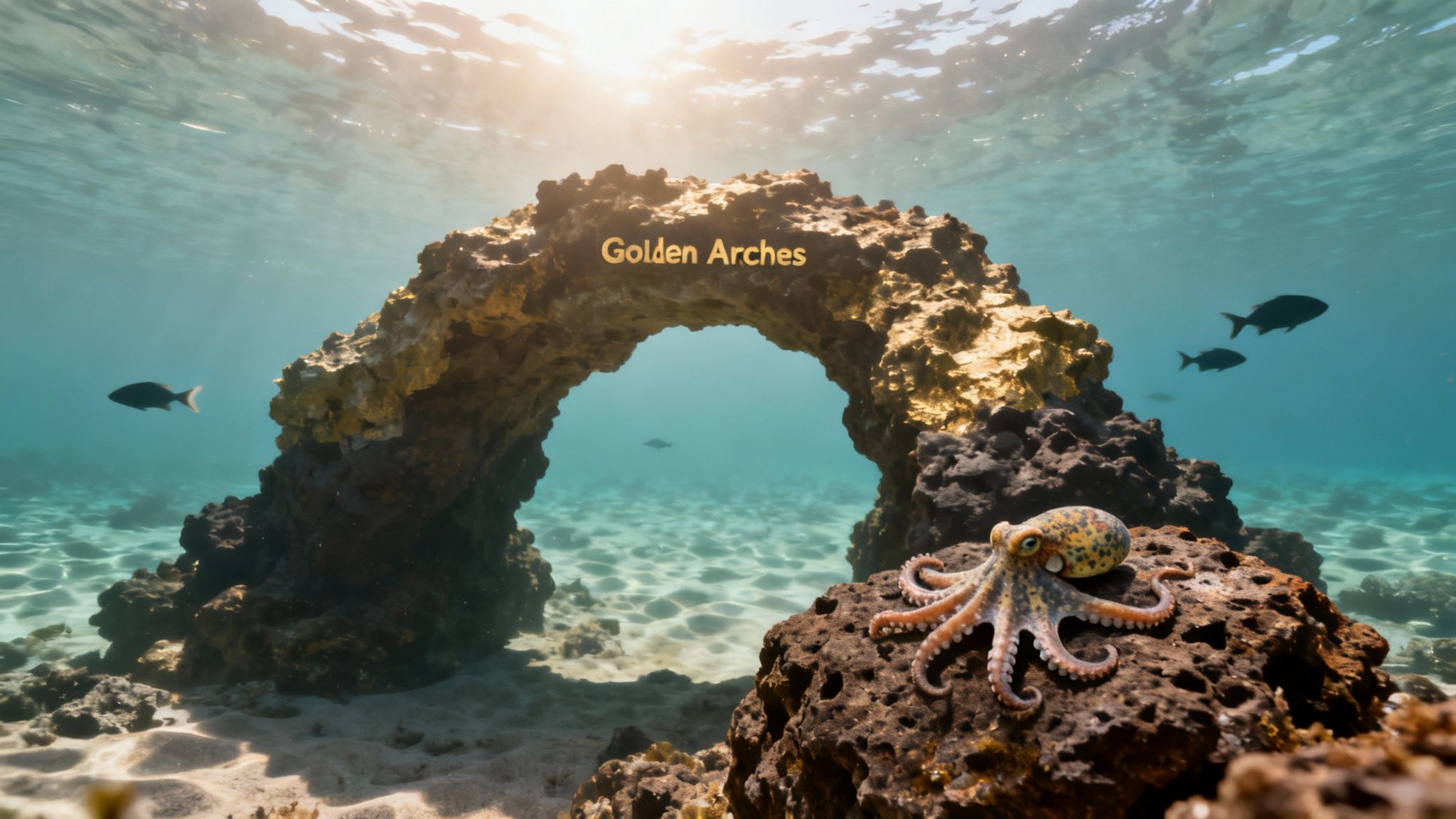
Just like the name promises, Golden Arches is all about a spectacular series of lava-formed archways, but these are draped in beautiful golden-hued corals. This spot is a little deeper, making it a perfect second dive of the day. Weaving through the arches feels like you're exploring some kind of lost, submerged city.
The reef here is wonderfully complex, which means there are endless little nooks and crannies for marine life to call home. You’ll want to keep your eyes peeled for moray eels poking their heads out, octopuses doing their camouflage thing, and big schools of colorful reef fish darting everywhere.
Eel Cove
Don’t let the name throw you—you'll see more than just eels here, though the ones you find are pretty impressive! Eel Cove is a macro-diver's paradise, a place celebrated for its insane diversity of tiny, cryptic critters. It's the kind of dive where the slower you go, the more you see.
This is where you'll find the true masters of disguise. Patient divers are often rewarded with a glimpse of an elusive frogfish, which honestly looks more like an algae-covered rock than a fish. Scorpionfish blend in perfectly with the reef, and you might even stumble upon a shy octopus or a brilliantly colored nudibranch. If you want to get a sense of just how much variety there is, check out this big list of Kona dive sites Kona Honu Divers visits.
Focusing on the "small stuff" at a site like Eel Cove is one of the best ways to sharpen your observation skills. It really teaches you to slow down and appreciate the tiny, intricate details of the reef.
Kaloko Arches
Tucked inside the Kaloko-Honokōhau National Historical Park, this site is another incredible monument to Kona's volcanic origins. It’s a maze of archways, lava tubes, and small caverns that are an absolute blast to explore. The layout is so dynamic that every dive here feels like you're discovering it for the first time.
Because it's in a protected park, the reef is exceptionally healthy and vibrant. You'll swim through massive clouds of milletseed butterflyfish and see large schools of goatfish digging around in the sand. The unique structure also makes it a popular daytime nap spot for whitetip reef sharks.
To give you a quick way to compare these amazing spots, here's a little cheat sheet.
Kona Dive Site Snapshot
| Dive Site | Average Depth | Key Features | Common Marine Life | Best For |
|---|---|---|---|---|
| Crescent Beach | 30-50 ft | Large archways, turtle cleaning station | Green sea turtles, whitetip reef sharks, parrotfish | All levels, photographers |
| Golden Arches | 40-70 ft | Golden coral-covered arches, complex reef | Moray eels, octopus, schools of butterflyfish | Intermediate divers, explorers |
| Eel Cove | 30-60 ft | Rich macro life, unique critters | Frogfish, scorpionfish, nudibranchs, eels | Macro lovers, patient observers |
| Kaloko Arches | 40-80 ft | Labyrinth of lava tubes and caverns | Whitetip reef sharks, large fish schools, healthy coral | Advanced divers, adventurous spirits |
Of course, this is just a small sample of the underwater world waiting for you here. Each site tells a unique story about Kona's fiery beginnings and the amazing life that has made it home. By mixing and matching these different locations, you can guarantee that every single dive is a fresh and unforgettable adventure.
Diving Beyond the Reef in Kona
So, you think you've seen it all underwater? For the divers who are hungry for something completely different, Kona diving has a few tricks up its sleeve that go way beyond the standard reef tour. This is where you leave the shallows behind and venture into the deep, dark, and wild heart of the Pacific.
Don't get us wrong, Kona's reefs are incredible. But the real adrenaline rush starts where the seafloor plummets into thousands of feet of pure blackness. Out there, in the open ocean, a whole different cast of characters comes out to play, especially after the sun goes down.
The Surreal World of the Blackwater Dive
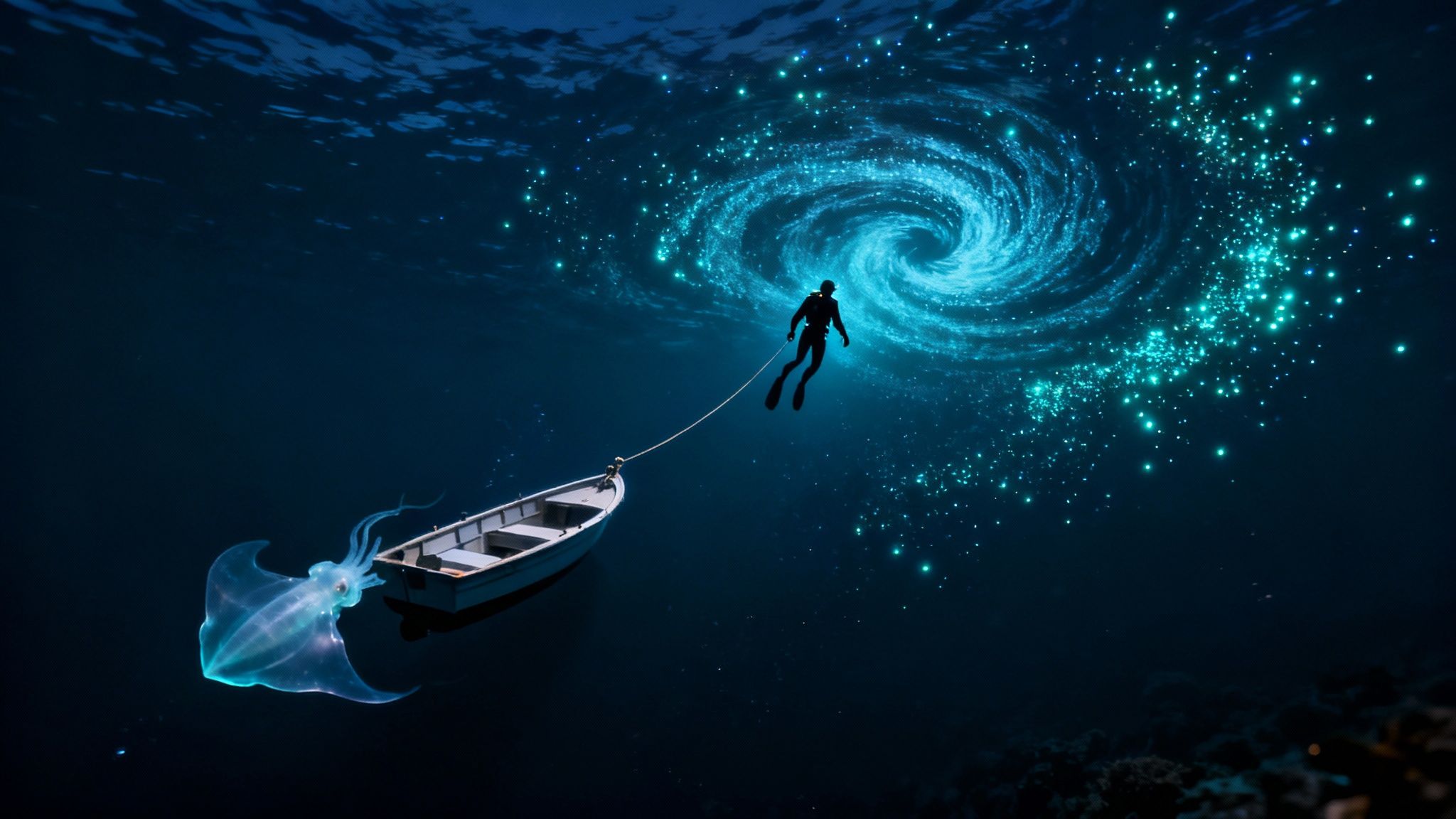
Picture this: you’re floating in the middle of the ocean at night, miles from shore, with nothing but inky blackness below you. You're tethered to a boat, and all around you, strange and wonderful bioluminescent creatures are rising up from the abyss on their nightly migration to feed. This isn't science fiction—it's the Kona Blackwater Dive, and it’s about as close as you can get to diving in outer space.
On this dive, you’re not exploring a reef or a wreck; you're exploring the water column itself. The feeling is hard to describe—it's humbling, a little spooky, and completely mesmerizing all at once. You’ll see life forms that look like they were designed for a Hollywood movie: tiny see-through squids, bizarre larval fish, and otherworldly jellies that pulse with their own internal light, creating a private galaxy just for you.
This mind-bending experience was actually pioneered right here in Kona. Our unique island geography means the deep ocean is just a short boat ride away, giving us access to this mysterious world. The dive is now famous across the globe, but nothing beats doing it where it all started. To really get it, you'll want to do it more than once. You can learn more about Kona's unique contributions to diving on dan.org.
A blackwater dive is a sensory experience unlike any other. It’s not about seeing big things; it’s about witnessing the strange, beautiful, and often transparent life that forms the very foundation of the ocean’s food web.
Encounters with Ocean Giants
Beyond the tiny, glowing aliens of the blackwater world, Kona’s deep waters serve as a superhighway for some of the ocean's biggest residents. On our more advanced charters, we head offshore for a chance to bump into these massive pelagic species. The thrill is in the complete unpredictability—you truly never know what might swim out of the blue.
Keep your eyes peeled on these advanced trips, because you might just see:
- Pilot Whales: These smart, social animals often cruise by in big family pods.
- Oceanic Whitetip Sharks: A true open-ocean predator, easily identified by its signature rounded, white-tipped fins. A seriously impressive sight.
- Whale Sharks: The biggest fish in the sea! Spotting one of these gentle giants is a bucket-list moment for any diver, and we average about three sightings per month year-round.
These dives are the pinnacle of what Kona offers, a rare peek into the wild, untamed Pacific. They're a rewarding challenge for seasoned divers who have rock-solid buoyancy control and a calm head. If you’re ready for the ultimate thrill, join us on a Blackwater Night Dive. Or, if you're an experienced diver looking for a different kind of adventure, check out our Advanced Dive Tours.
Choosing the Right Dive Operator in Kona
Let’s be honest, your dive trip is only as good as the crew leading the charge. Picking the right dive shop in Kona isn't just about finding a boat to take you out; it's about entrusting your safety and your precious vacation time to a team that gets it. The best operators don't just show you the reef—they make you feel like part of the ocean family.
When you're looking at your options, it's easy to get focused on the price tag, but the real value is in the details. Think about safety standards, the actual experience of the guides, the quality of the boat you'll be on, and a real-deal commitment to protecting the ocean. A great operator makes you feel confident and looked after from the second you book until you’re back on shore, buzzing about what you saw.
What to Look for in a Top-Tier Dive Shop
So, how do you sort the great from the just-okay? A truly professional dive company will be totally upfront about how they run things. Here's what really matters:
- Small Group Sizes: Ever felt like a sardine on a dive boat? It’s no fun. A smaller diver-to-guide ratio means you get more personal attention, a much safer dive, and you're not bumping fins with a dozen other people underwater.
- Experienced Guides: You want guides who know the Kona dive sites like the back of their hand. These are the folks who can point out that elusive frogfish or navigate a lava tube with their eyes closed. Their local knowledge is pure gold.
- Well-Maintained Boats: A clean, spacious, and well-cared-for boat is a massive sign of a professional operation. Little things like a hot shower after a dive, plenty of shade, and an easy way to get in and out of the water make a huge difference in your day.
- A Strong Conservation Ethos: The best operators are guardians of the ocean. They’re the ones teaching divers how to interact with wildlife responsibly, participating in reef cleanups, and genuinely caring for the underwater world they share every day.
For a super detailed breakdown, check out our guide on how to choose a Kona dive shop. It's got a full checklist to help you find your perfect match.
Leading by Example Kona Honu Divers
Around here, Kona Honu Divers is pretty much the gold standard. They've built their reputation on a deep-rooted commitment to taking care of the ocean and making sure every single diver has an incredible experience. You can see their passion in everything they do, from their top-of-the-line boats to their seriously experienced crew. But hey, don't just take our word for it—their reviews speak volumes.
Other Reputable Operators
To give you the full picture, there are other great, long-standing companies on the island, too. Shops like Jack's Diving Locker and Big Island Divers have been around for years and have also earned solid reputations for delivering quality dives along the Kona coast.
Doing a little homework on your operator is the first step toward a safe, responsible, and flat-out amazing Kona diving adventure. It ensures you can book with total confidence, knowing you’re in good hands from start to finish.
Planning Your Kona Diving Trip Logistics
A truly great Kona diving adventure doesn’t just happen when you splash into the water; it starts with a bit of smart planning. Nailing the logistics before you leave home means you can just relax and soak in the underwater magic without sweating the small stuff. Think of this as your complete checklist for a smooth, stress-free dive vacation on the Big Island.
The first question on everyone's mind is usually, "When's the best time to go?" The fantastic news is that Kona offers incredible diving all year round. That said, there are a few seasonal quirks you might want to consider.
- Summer (June to September): This is when you'll find the warmest water, often getting up to a toasty 80-82°F (27-28°C). The ocean is typically at its calmest, giving you those glassy, flat conditions that make for effortless diving.
- Winter (December to March): The water temperature dips just a bit, hovering around 75-77°F (24-25°C). But the real draw for this season is the arrival of humpback whales. Hearing their otherworldly songs echoing through the water on a dive is an experience you will never, ever forget.
What to Pack for Your Kona Dive Trip
Packing smart is the secret to staying comfortable, both in and out of the water. While you can always rent excellent gear from any reputable shop here, most seasoned divers feel more comfortable bringing at least a few key pieces of their own equipment.
Pro Tip: Never check your mask, dive computer, or any prescription lenses. Pack them in your carry-on. These are the most personal—and difficult—items to replace quickly if your checked luggage decides to take a little vacation of its own.
Here’s a quick rundown of the essentials:
- Dive Gear: At a minimum, think about bringing your own mask, fins, and dive computer. If you love your BCD and regs, and have the space, bring them along! Otherwise, top-notch rentals are always available.
- Wetsuit: For most people, a 3mm full wetsuit is the sweet spot for year-round diving in Kona. If you know you run cold or you're planning on doing multiple dives a day during the winter months, a 5mm wetsuit or even just adding a hooded vest can make a world of difference.
- On-Shore Necessities: The Hawaiian sun is no joke. Be sure to pack reef-safe sunscreen to protect your skin and our precious coral reefs. A reusable water bottle, a good hat, sunglasses, and a light jacket for breezy evenings or post-dive boat rides are also must-haves.
Big Island Logistics and Accommodations
Kailua-Kona is the heart of the Big Island's dive scene, which makes it the most convenient home base for your trip. You’ll find everything from sprawling resorts to cozy vacation rentals, all just a stone's throw from Honokohau Harbor, the launching point for most dive boats.
To really get around and see what the Big Island has to offer, you’ll probably want to rent a car. It gives you the freedom to explore the island's incredible diversity on your off-gassing days. During your surface intervals, you could be standing at the edge of a volcano in Volcanoes National Park, hiking through a lush rainforest, or just kicking back on a stunning black sand beach.
A little bit of planning upfront guarantees that every moment of your Kona trip is as spectacular as the underwater world you came to see. With your bags packed and your plan in place, you’re all set to experience some of the best scuba diving tours the Big Island has to offer.
Your Kona Diving Questions, Answered
Alright, let's wrap this up by hitting some of the most common questions we hear from divers planning their trip. This should clear up any lingering thoughts and get you ready for your underwater adventure in Kona.
Do I Need to Be an Advanced Diver to Enjoy Kona?
Not a chance! While Kona definitely has some deeper, more challenging sites for the seasoned pros, it's also a fantastic place for beginners to get their fins wet.
So many of our most beautiful, vibrant reef dives are tucked away in calm, protected bays. The depths are perfect for brand new Open Water divers. We're all about tailoring the trip to who's on the boat, so whether it's your very first intro dive or you're an expert exploring lava tubes, we've got the perfect spot for you.
What Is the Water Temperature in Kona?
One of the best parts about Kona diving is that the water is comfortable pretty much all year round. It’s a huge reason people love it here so much.
- Winter (Dec-Mar): You'll be looking at water temps around 75-77°F (24-25°C).
- Summer (Jun-Sep): The water warms up nicely to about 80-82°F (27-28°C).
For most people, a standard 3mm wetsuit is perfect any time of year. But if you're someone who gets chilly easily, or you're planning on doing multiple dives in a day (especially in the winter), you might be happier with a 5mm.
Can I See Sharks While Diving in Kona?
Yes, and honestly, it's a major highlight for a lot of our divers! The shark you're most likely to meet is the whitetip reef shark. They're usually pretty chill, often found just resting on the sand or under ledges during the day. They are beautiful animals and couldn't be less bothered by divers.
If you're looking for bigger action on one of our advanced dive tours, the offshore sites can sometimes deliver encounters with oceanic whitetips, scalloped hammerheads, and even the occasional tiger shark. Those sightings are a bit rarer, but when they happen… wow. Unforgettable.
Is It Better to Book Dives in Advance?
Absolutely, 100%. We can't recommend this enough, especially if you're coming during the busy seasons like winter or summer. The world-famous Manta Ray Night Dive, in particular, gets booked up solid, often weeks ahead of time.
Booking early doesn't just guarantee you have a spot on the boat. It also helps us plan our logistics, which means a smoother, better-organized trip for you and everyone else. It's a win-win.