
Picture this: you're descending into warm, crystal-clear blue water. Ancient volcanic landscapes disappear below you, replaced by vibrant coral reefs buzzing with life. That’s the magic of Kona diving, and it’s why the Big Island of Hawaii is a must-do for divers everywhere. From the world-famous night dive with gentle giants to exploring peaceful coral gardens, Kona is an underwater adventure like no other.
Welcome to the Ultimate Kona Diving Experience

Think of this guide as your backstage pass to Kona's legendary dive scene. We'll get into everything—from the calm, shallow reefs that are perfect for new divers to the deep-water mysteries that seasoned pros come back for again and again. This is more than just a list of spots; we're going to uncover what makes Kona’s underwater world tick.
Let's start planning an unforgettable trip. We'll dive deep into the heart of Hawaii's top underwater paradise, beginning with the incredible Kona diving tours that open up this amazing aquatic world.
What Awaits Beneath the Waves
The Kona coast is a real treasure trove, packed with a wild mix of marine life and incredible geology. The Big Island's volcanic past sculpted a dramatic underwater landscape full of lava tubes, massive arches, and craters. These formations are now home to some of the most stunning coral reefs you'll find anywhere in the Pacific.
When you splash in, you can expect to meet a whole cast of amazing characters:
- Hawaiian Green Sea Turtles (Honu): Seeing these graceful, gentle turtles gliding by is a classic Kona experience. They’re everywhere and always a favorite.
- Spinner Dolphins: You'll often spot these guys putting on a show, leaping and spinning in the boat's wake. They bring a dose of pure joy to any dive trip.
- Endemic Fish Species: A huge chunk of the fish you'll see here are found nowhere else on Earth. Seriously. Every single dive is a chance to spot something truly unique.
- Majestic Manta Rays: Kona is famous for a reason. Our manta ray sightings are incredibly reliable, especially on the world-renowned night dive.
Kona’s coastline is tucked away in the shadow of massive volcanoes, which shields it from the wind and rough seas. This little geographic cheat code gives us consistently calm, clear conditions. We're talking visibility that often pushes past 100 feet, making it a perfect spot for divers of all levels, all year long.
It's this blend of perfect water conditions and a ridiculous amount of unique wildlife that truly makes Kona special. Whether you’re floating over a shallow reef or exploring a deep pinnacle, the underwater world here is always ready to surprise you. Let’s get to it.
What Makes Kona a World-Class Diving Destination

It’s one thing to be a beautiful spot on the map, but Kona is something else entirely. Its unique geography and ecology have conspired to create a diver's paradise. The secret sauce? The two massive volcanoes, Mauna Loa and Hualālai, that act as a natural shield for the coastline.
This colossal volcanic barrier blocks the powerful trade winds that batter other parts of Hawaii, leaving Kona's waters consistently calm and predictable. While other tropical spots can be a roll of the dice with rough seas, Kona diving is almost always a green light. For divers, that means incredible visibility, often topping 100 feet, and a comfortable, safe experience whether you're a seasoned pro or just getting your fins wet.
This perfect storm of calm seas, clear water, and deep ocean access close to shore has cultivated a thriving underwater world. The island's fiery past has sculpted a dramatic seascape of lava tubes, arches, and ancient craters, all now carpeted in a kaleidoscope of healthy coral.
A Hotspot for Unique Marine Life
The real magic of Kona, however, is the life that calls these waters home. The Hawaiian archipelago is one of the most isolated island chains on the planet, which forced its marine inhabitants down a unique evolutionary road. The result is an astonishing rate of endemism—a fancy way of saying a whole lot of the critters you'll meet here can't be found anywhere else on Earth.
In fact, Kona boasts the world's highest rate of marine endemism for many fish and invertebrate species. This alone is a huge draw, but Kona also happens to be on the cutting edge of dive experiences, offering guided trips to witness rare deep-sea creatures migrating toward the surface at dusk. Add in frequent, awe-inspiring encounters with whale sharks and other pelagics, and you can see why Kona is a global destination for serious underwater explorers. To dive deeper, check out this great article from DAN.org on Kona's marine ecosystem.
Every single dive is a chance to see something truly rare.
- Endemic Fish: Keep an eye out for the vibrant Bandit Angelfish, Milletseed Butterflyfish, and Hawaiian Cleaner Wrasse. Think of them as local celebrities you won't spot in the Caribbean or the South Pacific.
- Larger Residents: Beyond the reef, Kona is a fantastic place to find Hawaiian green sea turtles (honu), playful spinner dolphins, and even the occasional Hawaiian monk seal—one of the most endangered seal species in the world.
It’s like visiting a living museum where the exhibits are constantly swimming by and can’t be seen anywhere else. That's what takes a dive from just "good" to absolutely unforgettable.
Beyond the Reefs: The Blackwater Dive
The daytime reefs are spectacular, no doubt. But what really cements Kona's legendary status are the dives that happen after the sun goes down. One of the most talked-about experiences is the "Pelagic Magic" or Blackwater Dive. Trust me, this isn't your average night dive.
Instead of hovering over a reef, the boat heads miles offshore into the deep, dark ocean. High-powered lights are then suspended in the water column, attracting an unbelievable procession of creatures migrating from the abyss toward the surface to feed. This is diel vertical migration—the largest migration on our planet, and you're right in the middle of it.
What you'll see is straight out of a sci-fi movie: bizarre larval critters, glowing jellies, and alien-like squid that seem to belong on another planet. It’s a surreal, humbling, and utterly mind-blowing experience that solidifies Kona's reputation as a destination for true adventurers. If you're up for the challenge, you have to book a specialized Blackwater Dive tour.
Ultimately, it’s this powerful mix of perfect conditions, rare wildlife, and pioneering dive experiences that elevates Kona from simply a great place to dive to a truly world-class one.
Experiencing the Famous Manta Ray Night Dive
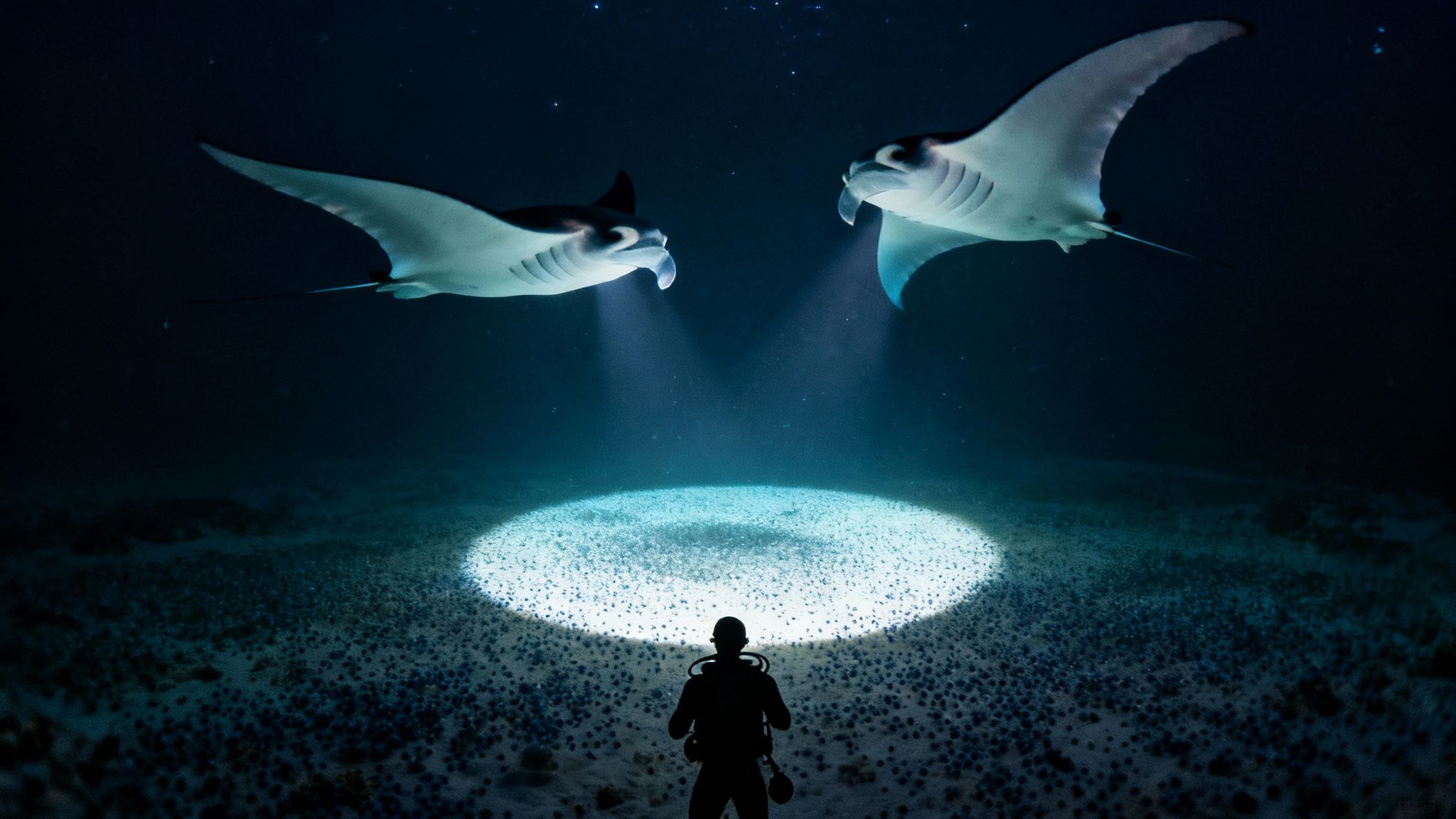
Get ready for one of the most incredible underwater encounters you could ever imagine. The Kona manta ray night dive isn't just a swim—it's more like a silent, underwater ballet, and you've got the best seat in the house. This is Kona's signature experience, and there's a good reason it’s consistently rated the number one spot in the world for a reliable manta ray encounter.
So how does the magic happen? It all starts with what we divers call the "campfire." We place powerful, eco-friendly lights on the seafloor, aimed straight up. As the sun sets and darkness takes over, these lights attract swarms of plankton, which happens to be the mantas' favorite meal. The result is a glowing column of food, a beacon in the dark water.
This illuminated buffet is an invitation the gentle giants of the Kona coast simply can't refuse. Before long, they glide effortlessly out of the darkness to start feeding.
The Underwater Ballet Begins
Watching these majestic animals, with wingspans that can stretch up to 16 feet, is a truly humbling experience. They perform graceful barrel rolls and sweeping loops, soaring just inches over your head as they filter plankton from the water. The only things you'll hear are the rhythmic bubbles from your regulator and the soft whoosh of a giant wing passing by.
This stunning spectacle is exactly why the Kona Coast is world-famous, bringing in around 80,000 people every year for this unique dive. Our coastline has the perfect setup: consistent currents that deliver plenty of plankton and sheltered bays that have become the ideal habitat for a healthy manta population. It's this blend of natural advantages and dedicated conservation that has made Kona the global destination for this experience.
It’s a moment of pure, unfiltered connection with nature that sticks with you long after you’ve surfaced.
A Commitment to Safe and Eco-Conscious Diving
To keep this amazing interaction sustainable for years to come, it’s critical that we all follow best practices for a safe and eco-conscious dive. The main goal is simple: be a passive observer. We want to let the mantas go about their business naturally, without any interference from us.
Any responsible operator will be committed to the Manta Ray Green List guidelines, which are all about protecting these incredible animals and their home. Here are the key rules you’ll follow on a guided dive with us:
- Observe, Don't Touch: This is the golden rule. Never, ever touch a manta ray. Their skin is coated with a protective mucus layer that can be easily damaged by human hands.
- Stay Put: Find your spot on the sandy bottom and hang out there. This creates a predictable and calm environment for the mantas.
- No Chasing: Let the mantas come to you. Chasing them causes stress and can scare them away from their feeding grounds.
- Lights Up: Keep your dive light pointed toward the surface. This helps attract more plankton and avoids shining the bright light directly in the mantas' eyes.
By choosing a dive operator that puts these guidelines first, you're doing more than just going on a dive—you're actively helping conserve Kona's manta ray population. Your participation ensures this magical experience will be here for future generations of divers to enjoy.
Understanding the "why" behind this encounter makes it even more special. For a deeper look into the mechanics and magic, check out our guide on what is a manta ray night dive. This experience truly is the pinnacle of Kona diving and an absolute must-do for anyone who loves the ocean.
Exploring Top Kona Dive Sites for Every Diver
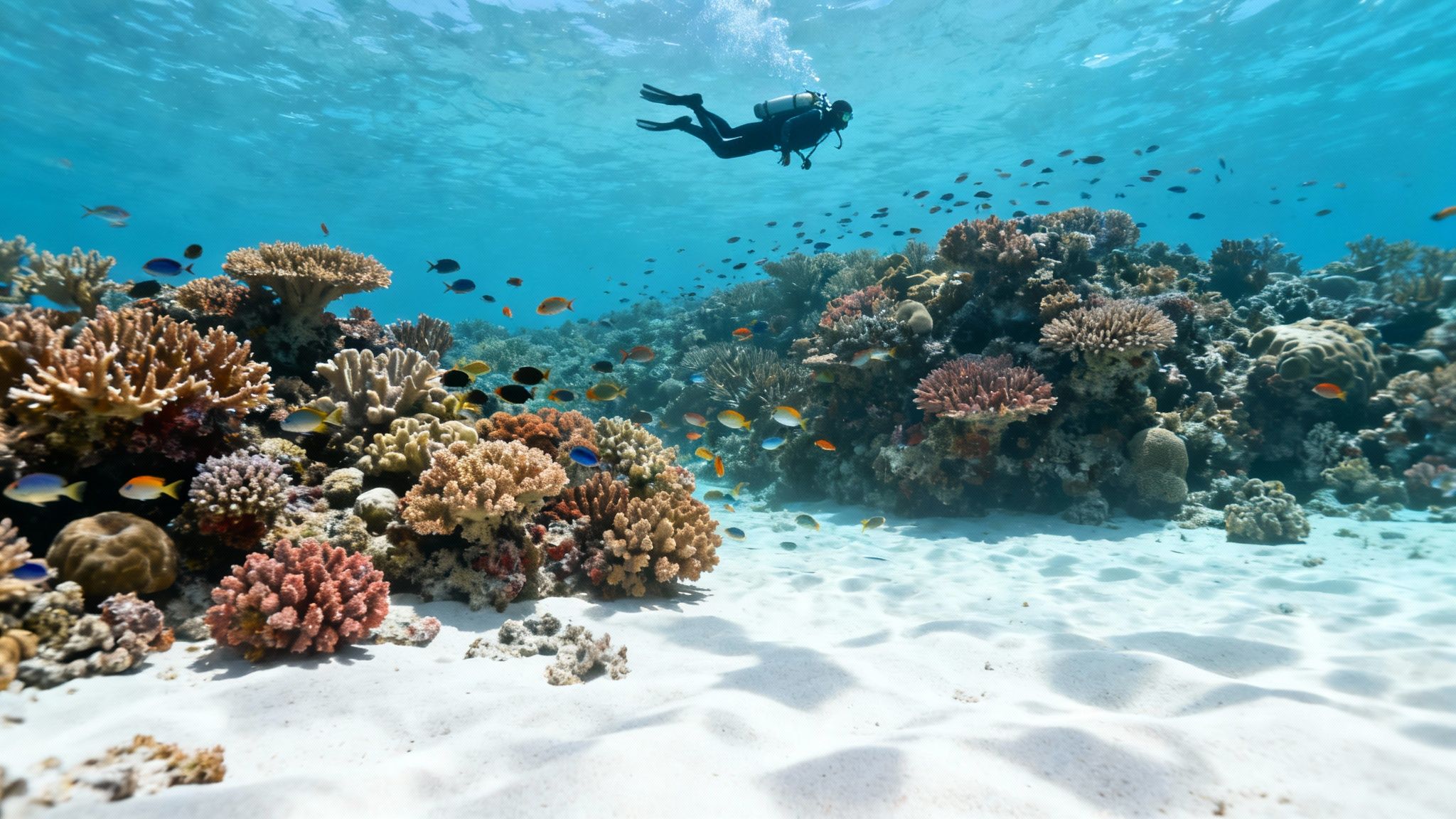
Whether you’re taking your first breaths underwater or you've got hundreds of dives in your logbook, the Kona diving scene has a spot with your name on it. The Big Island’s volcanic origins have sculpted an absolutely breathtaking underwater world, giving us everything from calm, sun-drenched coral gardens to deep, dramatic lava formations. It's this incredible variety that guarantees every diver finds their perfect adventure.
Think of this as your guide to navigating some of the best underwater playgrounds Kona has to offer. We'll help you match your skill level and what you want to see with the ideal location. From mellow bays perfect for dialing in your buoyancy to wild structures that will put your skills to the test, let's jump in and see what makes these sites so special.
Calm Waters For New Divers
For divers just getting their fins wet, Kona is fantastic. It’s home to a bunch of sheltered, shallow sites that are both incredibly safe and jaw-droppingly beautiful. These spots offer a gentle welcome to the underwater world, letting you build confidence while being completely surrounded by marine life.
One of the most-loved sites for beginners has to be Pawai Bay. It's famous for its calm conditions and sprawling coral gardens. Because the bay is protected from the open ocean swells, it often feels like diving in a giant, crystal-clear swimming pool. You'll be swimming through clouds of colorful reef fish—yellow tangs, butterflyfish, and the endemic Hawaiian cleaner wrasse are everywhere. The shallow depths, usually between 20 and 40 feet, mean you get nice, long, relaxed dives to just soak it all in.
Thrilling Adventures For The Experienced
Looking for a bigger adrenaline rush? Kona absolutely delivers. For the seasoned diver, our advanced dive tours showcase the raw, untamed power of the island’s volcanic past. These dives often mean deeper water, mind-bending lava formations, and a real chance of encountering larger marine animals.
A perfect example is Au Au Crater, a partially submerged volcanic crater that serves up one of the most dramatic dives on the entire coast. This site is a true playground for advanced divers, packed with stunning lava tubes, massive archways, and winding swim-throughs just begging to be explored. The crater walls plummet into the deep blue, attracting pelagic visitors like eagle rays, reef sharks, and sometimes even hammerheads. Navigating this complex terrain demands rock-solid buoyancy control and awareness, making it an incredibly rewarding challenge.
Every dive site along the Kona coast tells a different story. From the slow, patient growth of coral in a protected bay to the raw, powerful formations left by ancient lava flows, you're not just diving—you're exploring a living history book.
To help you get started, here’s a quick look at some of our favorite and most popular spots. For a deeper dive (pun intended!), you can explore some of the most beautiful Kona diving sites in our more detailed guide.
We've put together a simple chart to give you a snapshot of what to expect at a few key locations.
Kona Dive Site Guide
| Dive Site | Average Depth | Skill Level | What You Might See |
|---|---|---|---|
| Pawai Bay | 20-40 ft | Beginner | Colorful reef fish, hard coral gardens, eels, turtles. |
| Golden Arches | 30-60 ft | Beginner/Intermediate | Lava rock arches, whitetip reef sharks, octopus. |
| Au Au Crater | 40-80 ft | Advanced | Eagle rays, large lava formations, potential for sharks. |
| Suck 'em Up | 40-70 ft | Advanced | Exciting lava tube swim-through, unique topography. |
Of course, this is just scratching the surface. The Kona coast is dotted with dozens of world-class sites, and each one gives you a unique peek into Hawaii's incredible marine ecosystem. The real key to an unforgettable underwater adventure is matching your experience level with the right site.
How to Choose the Right Kona Dive Operator
Picking your dive operator is probably the single most important decision you’ll make when planning a dive trip to Kona. Honestly, it can make or break your entire underwater experience.
A great company does more than just taxi you to a dive site. They’re the ones who keep you safe, make sure you're having a blast, and help you truly connect with the incredible ocean world here. It's about way more than just the price tag; you’re literally putting your safety and your precious vacation time in their hands.
What to Look for in a Premier Dive Company
When you start digging into different operators, it’s the little details that separate the good from the truly great. Things like a spotless safety record, a comfortable boat, small group sizes, and top-notch gear shouldn't be optional extras—they should be the standard.
Here are the non-negotiables to look for:
- Safety First, Always: This is everything. The company’s safety record should be flawless. Check for experienced, certified divemasters and captains, meticulously maintained equipment, and clear, well-practiced emergency plans.
- Boat Comfort and Amenities: You spend a surprising amount of time on the boat. Little things like a hot freshwater shower after a dive, plenty of shade, and a ladder that’s easy to climb make a world of difference to your day.
- Small Group Philosophy: Getting packed onto a crowded boat can feel rushed and impersonal. Operators that stick to small groups offer a much more relaxed, personal, and safe dive. You actually get to know your guide and get one-on-one attention.
- Quality of Rental Gear: If you're renting gear, it needs to be modern, well-serviced, and something you can trust. The state of a shop's rental gear says a lot about their overall commitment to safety and a good customer experience.
The best dive operators see themselves as more than just a ride to the reef. They are stewards of the ocean, passionate educators, and dedicated hosts. Their goal is to make your entire experience exceptional, from the moment you book until you’re back on shore with a huge smile on your face.
Why Kona Honu Divers Stands Out
Here at Kona Honu Divers, we’ve staked our reputation on getting every single one of those details right. Our whole mission is to provide a premium, super safe, and unforgettable dive that respects you and the fragile marine life we get to visit.
Our commitment starts with keeping our groups small. This ensures every dive feels personal and you get all the attention you need. Our boats were designed from the ground up for diver comfort, and our guides aren't just experienced—they're genuinely excited to share Kona's underwater treasures with you. We're also serious about our eco-friendly practices to make sure these reefs we love stay healthy for generations to come. If you want to dive deeper into this, we have a whole guide on how to choose a Kona dive shop.
But don't just take our word for it—have a look at what other divers are saying about their time with us.
When you focus on these key things while picking your dive company, you're setting yourself up for an amazing trip that also supports responsible and sustainable diving here in Kona.
Your Essential Kona Diving Trip Planner
Alright, we've covered all the amazing things you can see and do underwater here. Now, let's get down to the nitty-gritty of making it happen. Planning the logistics is what takes a dive trip from good to absolutely unforgettable, and this section is your roadmap to a smooth, stress-free Kona vacation.
The first big decision is when to visit. The great news is Kona has incredible diving all year long, but different seasons offer slightly different flavors. The water is always inviting, typically hanging out between a comfortable 75-80°F (24-27°C). The real variable is the cast of characters you'll meet underwater.
When to Visit and What to Pack
The winter months, from November through March, are truly special. This is when humpback whales make their annual migration to Hawaiian waters to breed and give birth. While you can't actually dive with them, hearing their haunting, complex songs echo through the water during a dive is an experience that will stay with you forever. It's pure magic.
If you're after the calmest seas and gin-clear visibility, summer is often your best bet. But no matter when you come, your packing list needs a few non-negotiables besides your standard dive kit.
- Certification Card: Don't even think about leaving home without it! We, like any reputable dive shop, will need to see your C-card.
- Logbook: Bring it. You're going to want to remember these dives, and getting that stamp is part of the fun.
- Reef-Safe Sunscreen: This is a big one. Sunscreens with chemicals like oxybenzone are devastating to our coral reefs. Please, help us protect our ocean by choosing a mineral-based, reef-safe option.
- Reusable Water Bottle: Staying hydrated on the boat is crucial. A reusable bottle cuts down on plastic waste and keeps you feeling your best.
For a deeper dive into what each month has to offer, check out our full guide on the best season for diving in Kona.
Booking and Certification Logistics
Once you've picked your dates, it’s a really good idea to book your dives in advance. This is especially true for the "must-do" experiences. The world-famous manta ray night dive, for example, is one of the most popular activities on the entire Big Island and frequently sells out weeks in advance.
Planning ahead doesn't just guarantee your spot; it gives you the peace of mind to just relax and get excited for the adventure. The last thing you want is to miss out on a bucket-list dive.
A trip to Kona is also the perfect time to level up your dive skills. If you're currently an Open Water diver, think about completing your Advanced Open Water certification with us. It'll open up a whole new world of deeper, more adventurous sites like the dramatic Au Au Crater and other incredible lava formations that are just out of reach for less experienced divers.
And if you're wondering just how reliable those manta sightings are, you're not alone. Back in 2013, a group of dedicated local dive pros compiled detailed research tracking manta ray appearances. Their data confirmed what we see every night: a consistently high success rate at the main Kona sites. The mantas love it here, and their strong site fidelity makes this one of the most dependable wildlife encounters on the planet. You can even nerd out on the manta ray sighting statistics yourself.
With these tips in your back pocket, you’re already on your way to a perfectly planned Kona diving adventure.
Common Questions About Diving in Kona
Thinking about your ultimate **Kona diving** trip? You’ve probably got some questions buzzing around your head, whether you’re a seasoned pro or just getting your fins wet. We get it.
To make sure you're ready for the incredible world waiting just off the coast, we've put together some quick, clear answers to the questions we hear most often.
Do I Need to Be Certified to See the Manta Rays?
This is the big one, and the answer is no! While you do need to be a certified scuba diver to join the action on the seafloor, snorkelers get a breathtaking front-row seat from the surface.
Many of our manta ray dive tours are designed for both divers and snorkelers, so everyone can share in the magic of watching these gentle giants feed. If you're not certified but have always dreamed of trying scuba, Kona is the perfect place to start. A "Discover Scuba Diving" program lets you dive with a pro without a full certification, opening up a whole new way to experience the ocean.
What Is the Water Temperature in Kona?
The water here is beautiful and warm all year long. You can expect temperatures to hover between 75-80°F (24-27°C).
For most of our daytime dives, a standard 3mm wetsuit is plenty to keep you comfortable while you're exploring the reefs. However, for the famous manta ray night dive, you'll be holding still in the water for a while. To make sure you stay toasty warm and can enjoy the entire show without a shiver, we usually suggest a slightly thicker 5mm wetsuit. Don't worry, we always have high-quality rental wetsuits ready to go.
What Large Marine Life Can I See Besides Manta Rays?
Kona is a playground for big marine animals, and every single dive is a chance for an amazing encounter. Besides the world-famous mantas, you've got a fantastic shot at seeing Hawaiian green sea turtles (honu), energetic spinner dolphins, and whitetip reef sharks on just about any dive.
But depending on the season, things get even more exciting.
- Humpback Whales: From November through March, these incredible giants visit Hawaiian waters to breed and give birth. While you can't swim with them, hearing their complex, haunting songs underwater during a dive is an experience that will stay with you forever.
- Other Big Pelagics: Keep your eyes peeled! Encounters with whale sharks, tiger sharks, and even pilot whales are always a possibility, adding a special thrill to every descent into the blue.
Are the Diving Conditions in Kona Suitable for Beginners?
Absolutely. The Kona coast has a huge advantage—it's sheltered by the island's massive volcanoes. They block the strong trade winds, which means our waters are consistently calm, clear, and generally free of strong currents.
This protected environment is perfect for new divers who are still getting comfortable and building their skills. We have tons of shallow reef sites that are ideal for beginners, packed with colorful fish in a safe, controlled setting. Here at Kona Honu Divers, safety is always our top priority. We keep our groups small and give thorough briefings to make sure every diver, from novice to expert, feels secure and has an incredible time.
Ready to experience the best diving Kona has to offer? The expert team at Kona Honu Divers is here to guide you on an unforgettable underwater journey. Book your dive today!