
Picture this: you're sinking into unbelievably clear, turquoise water. All around you are vibrant coral gardens and massive, ancient lava tubes forged by volcanoes. That's the reality of Kona diving, and it’s an experience that easily ranks among the best on the planet.
The Big Island’s one-of-a-kind volcanic coastline creates some of the most pristine and predictable diving conditions you'll ever find. It’s a true year-round paradise for divers, whether you're just getting started or have logged thousands of dives.
Discovering the World Beneath Kona’s Waves
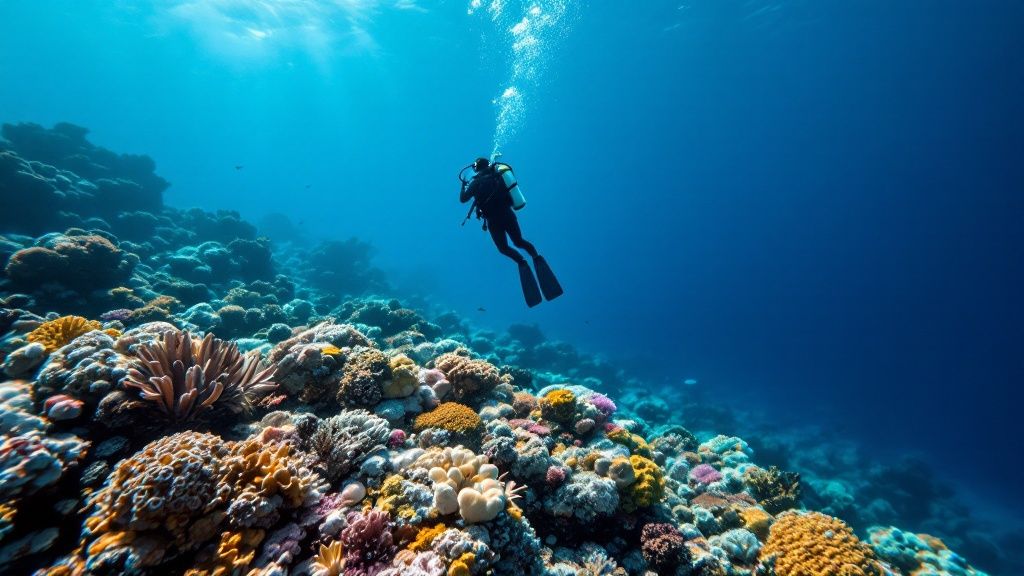
Kona isn't just another dot on the map; it's a world-class destination for anyone who loves exploring underwater. So, what’s the secret? It’s all about geology. The massive volcanoes of Mauna Loa and Hualalai act as a natural shield for the western coast, protecting it from the strong trade winds. This lucky break means we get consistently calm, clear water where visibility often punches past 100 feet.
That incredible clarity and calm have allowed a rich and incredibly diverse marine ecosystem to thrive. The underwater landscape here is a direct result of volcanic activity, leaving behind stunning formations like arches, lava tubes, and submerged craters you just won't find anywhere else. These structures have become the perfect homes for a staggering amount of marine life.
What Makes Kona Diving a Must-Do
For a lot of people, the first thing that comes to mind is the world-famous Manta Ray Night Dive—and for good reason, it's pure magic. But the adventure here goes way beyond that incredible experience. The waters are absolutely teeming with life, offering a little something for every diver.
- Diverse Marine Encounters: You can pretty much count on seeing Hawaiian green sea turtles (honu), all kinds of eels, octopuses, and reef sharks. And don't be surprised if you see a pod of playful spinner dolphins from the boat!
- Unique Underwater Topography: Every dive is different. You can explore ancient lava tubes, swim through dramatic arches, and peer into submerged volcanic craters.
- Year-Round Accessibility: The weather is stable and the water temperature stays comfortable, averaging between 75-80°F (24-27°C). Any time is a good time to dive in Kona.
- Adventures for All Levels: We’ve got shallow, sun-drenched reefs perfect for beginners and thrilling deep-water sites for the more experienced crowd. There’s no shortage of advanced diving opportunities.
To give you a quick snapshot of what to expect, here's a look at what makes Kona diving so special.
| Feature | Description |
|---|---|
| Visibility | Consistently 100+ feet due to volcanic protection from trade winds. |
| Water Temp | A comfortable 75-80°F (24-27°C) all year long. |
| Key Attraction | The world-famous Manta Ray Night Dive. |
| Topography | Volcanic formations: lava tubes, arches, and underwater craters. |
| Marine Life | Turtles, manta rays, dolphins, eels, reef sharks, and vibrant coral. |
| Best For | Divers of all levels, from first-timers to seasoned pros. |
This table just scratches the surface, but it highlights why so many divers consider Kona a bucket-list destination.
Your Trusted Guide to Kona's Waters
To really get the most out of this incredible underwater world—and do it safely—you need to go with an operator who knows these waters inside and out. As Hawaii’s top-rated and most-reviewed dive company, we at Kona Honu Divers are dedicated to crafting safe, unforgettable aquatic journeys. Our team of seasoned pros makes sure every dive is more than just an activity; it's a memory you'll cherish for a lifetime.
Whether you're about to take your very first breath underwater or you're a seasoned diver looking for a new challenge, the waters of Kona are waiting. Take a look at our full range of Kona diving tours and find your perfect underwater adventure.
Witnessing the Manta Ray Night Ballet
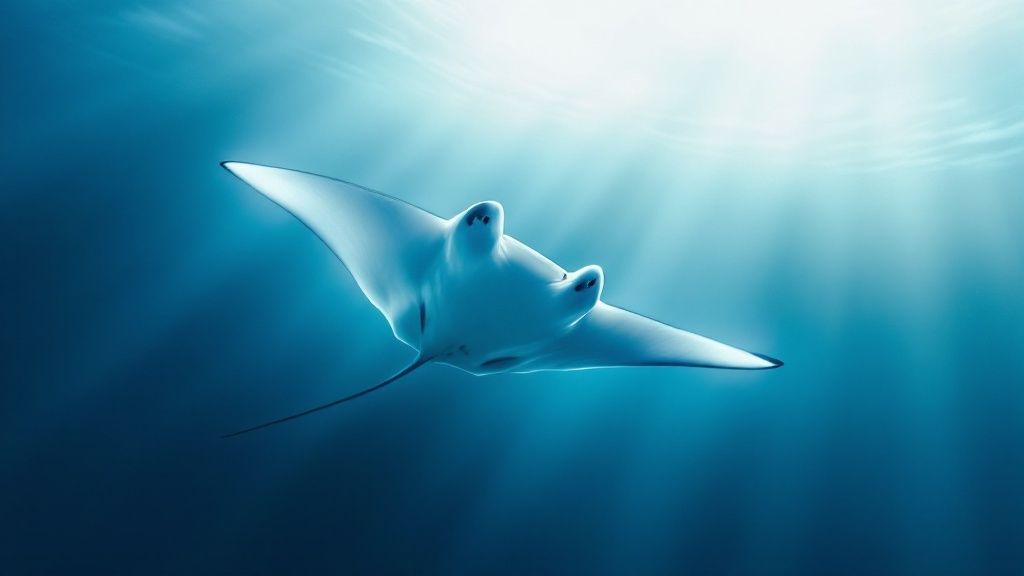
This isn't just another dive on your Kona itinerary. It's a genuine, bucket-list spectacle. The Manta Ray Night Dive is Kona’s most famous underwater experience, an encounter so powerful it draws people from all over the world. Honestly, it feels less like a dive and more like a private audience with some of the ocean's most elegant giants.
The magic behind this dive is a brilliant, almost accidental, bit of symbiosis. After the sun goes down, powerful lights are set up on the ocean floor, shining straight up. These beams attract swarms of microscopic plankton, essentially creating a glowing, all-you-can-eat buffet in the water column.
This irresistible feast brings in the majestic manta rays for a silent, weightless ballet. Just picture it: you're kneeling on the sandy bottom as these gentle creatures, with wingspans reaching up to 16 feet, glide, swoop, and somersault just inches above you. It’s a hypnotic and deeply humbling performance that feels completely otherworldly.
How the Encounter Unfolds
From the moment you step on the boat, the whole thing is carefully choreographed for maximum wonder and safety. It all starts with a detailed briefing from your divemaster. They'll walk you through manta behavior and explain the crucial ground rules for a respectful encounter. This is your chance to really learn about these incredible animals and understand your part in keeping them safe.
Once you get to the dive site, you'll make a controlled descent to a specific spot on the ocean floor, usually in fairly shallow water around 30-40 feet. This isn't a dive where you'll be swimming around; instead, you'll find a comfortable spot and simply watch the show unfold right over your head.
The entire principle of the manta ray dive is passive observation. You are a guest in their dining room. By staying put and shining your light upward, you become part of the 'campfire' that attracts the plankton, allowing the mantas to feed naturally and safely right in front of you.
This stationary approach makes the dive surprisingly accessible, even for newly certified divers. The focus is purely on the breathtaking aerial display.
A Global Phenomenon Centered in Kona
There's a reason Kona is known globally as the number one spot for this specific encounter—the numbers back it up. Every year, around 80,000 people travel to the Kona Coast just for manta ray tours. The local population is incredibly well-studied, with nearly 200 individual mantas identified by the unique spot patterns on their bellies. On a good night, divers have seen over 20 mantas at once, which is a powerful testament to the health and consistency of this amazing gathering.
Picking a responsible operator is everything. A professional crew doesn't just look after your safety; they prioritize the well-being of the mantas. They enforce strict "no-touching" policies, because human contact can strip away the protective mucous layer on a manta's skin, leaving it vulnerable to infection.
By following these simple guidelines, you help sustain an encounter that has defined Kona diving for decades. Ready to see this incredible spectacle for yourself? Our manta ray dive tours are a life-changing experience.
Exploring Kona’s Most Beloved Dive Sites
Sure, the Manta Ray Night Dive gets a ton of the glory, but that's just scratching the surface. The Kona coast is stacked with over 50 unique dive sites, and every single one offers a different kind of underwater adventure. The very volcanoes that built the Big Island are to thank for this—they left behind a stunning playground of dramatic lava tubes, massive arches, and submerged craters, all bursting with life. It's this wild geology that makes Kona diving so special.
Whether you just got your certification and are looking for a calm, sun-drenched reef or you're a seasoned pro hunting for a new challenge, there’s a perfect spot here waiting for you. The trick is knowing where to go for your skill level and what you're hoping to find. From turtle cleaning stations to endless coral gardens, each location has its own personality.
For Beginners and Photographers
If you're new to the sport or just love capturing incredible underwater scenes, Kona has plenty of shallow reefs that are as safe as they are spectacular. These sites are usually tucked away from strong currents and boast amazing visibility, which is exactly what you want when you're learning the ropes or lining up the perfect shot.
- Pawae Bay (aka Turtle Heaven): The name says it all. This is hands-down one of the best places to hang out with the beloved Hawaiian green sea turtle, or honu. The site is a series of lava rock ridges and arches where turtles come to rest and visit "cleaning stations." It's incredible to watch smaller fish nibble algae and parasites right off their shells.
- Kailua Pier: This is a seriously underrated shore dive, but it's a fantastic spot for an easy, mellow exploration. For macro photographers, it’s a dream come true—you can find frogfish, nudibranchs, and all sorts of other tiny, fascinating critters hiding among the pilings.
These calmer spots are a perfect introduction to Kona's underwater world. You can build your confidence while being surrounded by schools of colorful reef fish and chilled-out turtles.
For Intermediate Divers
Once you've got a few dives in your logbook, a whole new world of awesome sites opens up. These spots often have more complex terrain, like swim-throughs and lava tubes, that really dial up the sense of adventure and exploration.
Au Au Crater is a perfect example. Dropping into this submerged volcanic cone feels like entering another world entirely, with its sheer walls and sandy bottom. The crater provides shelter for an incredible amount of marine life, from schools of bannerfish and huge moray eels to the occasional whitetip reef shark just resting on the crater floor. The rim is covered in healthy coral, making the whole dive a non-stop visual treat.
Another killer intermediate dive is Golden Arches. This site is famous for its huge, picture-perfect lava rock arches that are a breeze to swim through. The way the sunlight streams through the openings creates these stunning light rays that are a photographer's dream. You'll often find big schools of fish here, and it’s a great place to spot an octopus or an eel tucked into one of the many crevices.
For the Advanced Adventurer
For you seasoned divers looking for a real thrill, Kona absolutely delivers. We're talking deep walls, dramatic drop-offs, and sites exposed to stronger currents that pull in the big pelagic species. These advanced dives demand rock-solid buoyancy control and a cool head, but the payoff is huge.
One of the most legendary advanced sites is The Hive. It's a deep pinnacle that rises from the abyss further offshore, and it’s known for attracting bigger marine life—including schooling hammerhead sharks at certain times of the year. The currents can be ripping, but that's what brings in the nutrients that support this incredible, dynamic ecosystem.
Tackling these more challenging spots requires experience and, just as importantly, local knowledge. This is where going with a guide isn't just a good idea—it's essential for both your safety and your enjoyment. Our advanced dive tours are designed for experienced divers looking for a challenge.
Venturing into the Deep with Blackwater Diving
For the truly adventurous at heart, Kona offers something that feels less like an ocean dive and more like a spacewalk. This is the world of blackwater diving, a surreal adventure that completely redefines underwater exploration. Forget coral reefs and sandy bottoms; this dive takes you into the vast, inky abyss of the open ocean long after the sun goes down.
Picture this: you're tethered to a boat, suspended in thousands of feet of water. Below you? Nothing but darkness. As your eyes adjust, you begin to witness one of the largest migrations on the entire planet. Strange, almost alien-like creatures, many of them glowing, rise from the depths. It’s a spectacular show of living light against a pure black canvas.
This nightly journey is called diel vertical migration, where countless organisms travel from the deep ocean toward the surface to feed under the cover of darkness. Kona isn't just a place to try this; it's where this unique type of diving was pioneered and perfected, making it the world's premier destination for this incredible encounter.
The Aliens of the Abyss
Unlike a reef dive where you actively search for marine life, on a blackwater dive, the marine life comes directly to you. Drawn in by the lights from the dive group, a parade of weird and wonderful creatures materializes out of the darkness. Many of these animals are in their larval stages, looking completely different from their adult forms.
You might see things like:
- Translucent Larval Fish: Ghost-like versions of familiar reef fish, so clear you can see their delicate skeletons and internal organs.
- Pulsating Siphonophores: These colonial critters, related to jellyfish, drift by in long, string-like chains, sometimes glowing with their own bioluminescence.
- Pelagic Nudibranchs: Sea slugs that have evolved for life in the open ocean, often with otherworldly shapes and vibrant colors.
- Bioluminescent Jellies: A whole host of ctenophores and jellyfish put on a dazzling light show, pulsing with brilliant blues, greens, and reds as they move.
The experience is profoundly humbling. Floating in that immense darkness, watching these delicate, glowing creatures drift by, you realize you're just a temporary visitor in a vast and mysterious world that operates on a scale beyond human comprehension.
This is a specialized dive that requires experience and a calm mindset, but the reward is an adventure that few people on Earth will ever get to witness. To get a better feel for it, check out our guide on what to expect from blackwater diving in Kona.
Why Kona is the Epicenter for Blackwater Diving
Kona’s unique underwater geography creates the perfect setup for blackwater diving. The seafloor drops off incredibly steeply just a short distance from shore, giving us quick access to the deep pelagic zone where this migration happens. That proximity means less boat time and more time in the water with these amazing creatures.
These "Pelagic Magic" night dives were pioneered right here in Kona before being replicated worldwide. The waters here have one of the highest concentrations of endemic marine species on the globe, and on these dives, you're seeing life forms that are rarely, if ever, seen during the day. You descend into the deep at night, and countless tiny, mostly transparent creatures migrate up from depths of hundreds or thousands of feet, creating an experience that is truly out of this world.
For seasoned divers looking for something truly different, our Blackwater Dive tour is an unforgettable experience.
Diving Smart and Safe in Kona’s Waters
An unforgettable Kona diving trip is, above all else, a safe one. The waters off the Kona coast are famously calm and protected, but the ocean always demands our respect. Let’s move past the generic safety tips and dig into what really matters here in Kona—the local conditions and practices that will let you dive with total confidence.
Every single dive starts long before you hit the water. It starts with the pre-dive briefing. Honestly, this is the most critical part of your dive. Our local divemasters are giving you real-time, vital information about the specific site—currents, entry points, what to look out for. Tuning into that briefing isn't just a suggestion; it’s non-negotiable for a good, safe time.
Understanding the Local Environment
Kona’s underwater landscape is pure volcanic artistry, creating a stunning but complex world to explore. Knowing how to navigate this environment and interact with its residents is crucial, both for your safety and the health of the reef.
- Respect Marine Life: Give all marine animals their space. That means no touching, no chasing, and definitely no cornering any creature. This simple rule protects you and the fragile ecosystem you're visiting. We go deep on this topic in our guide on responsible and considerate diver etiquette.
- Know Your Limits: Stick to dives that are within your training and comfort level. If a dive profile sounds a bit much for you that day, it’s perfectly fine to sit it out. There will always be another dive site waiting.
- Check Your Gear: Every single time. Before you even think about getting in the water, run a full pre-dive safety check on your gear, and then do it again with your buddy on their gear. A tiny issue on the boat can turn into a serious problem 60 feet down.
Part of being a smart diver is about more than just your own gear and skills. It’s about a wider awareness of the marine world. For a broader look at interacting with ocean life, this guide on understanding marine life safety is a pretty helpful resource.
A Special Note on Snorkel Safety
We divers are drilled on safety from day one, but snorkeling is often treated like a casual swim in a pool. This mindset is, unfortunately, a dangerous one. The numbers tell a sobering story and really highlight why proper supervision is so important.
Between 2009 and 2018, Hawaii recorded 206 snorkeling-related deaths. A shocking 189 of those were visitors. Compare that to 28 scuba fatalities over the same ten years, and you see the problem. The trend became so alarming it even triggered a state-wide investigation into public safety. These statistics are a stark reminder of why going with a guided tour is so critical, especially if you’re not familiar with our local ocean conditions.
The takeaway here is simple: Never underestimate the ocean. Whether you're on scuba or a snorkel, the most important decision you can make is choosing a professional, reputable operator who puts safety first.
Being proactive about safety doesn't subtract from the adventure; it actually makes it better. When you listen to the experts, respect the environment, and know your own limits, you free yourself up to focus on what you came for—the breathtaking, mind-blowing beauty of Kona’s underwater world. That peace of mind is what lets you truly relax and soak it all in.
Planning Your Ultimate Kona Diving Trip
Alright, let's get down to the brass tacks of making your Kona dive trip happen. You've seen the pictures, you've heard the stories—now it's time to plan it. This is your no-nonsense checklist to get everything squared away so you can spend less time worrying and more time underwater.
One of the best things about scuba diving the Big Island is that it's phenomenal 365 days a year. Seriously. We have the massive volcanoes on the Big Island to thank for that; they shield the coastline, keeping the waters remarkably calm and clear pretty much all the time. The water temperature is always inviting, hovering between a comfortable 75-80°F (24-27°C).
While you can't go wrong any time of year, there's a little something extra special if you visit between December and March. That's when the humpback whales are in town. There's nothing quite like being on a dive and hearing their beautiful, haunting songs echoing through the water around you. It’s an experience that stays with you.
Getting Certified and Packing Your Gear
If you're not a diver yet, Kona is probably one of the best classrooms in the world. The calm, protected bays are like giant natural swimming pools, making it a stress-free place to get your Open Water certification. If you're just curious, you can try a one-day Discover Scuba Diving experience to see what all the fuss is about.
Now, let's talk gear. We have excellent, well-maintained rental gear available, but we all know there's nothing like using your own stuff. If you're packing your kit, here are the essentials:
- Mask, Snorkel, and Fins: A mask that fits your face perfectly is non-negotiable. A leaky mask can ruin a dive faster than anything.
- Wetsuit: For Kona's temps, a 3mm or 5mm wetsuit is usually all you need to stay comfortable.
- Dive Computer: This is a critical piece of safety equipment. Don't leave home without it.
- Underwater Camera: You're going to want proof. Trust me. The mantas, the reef fish, the turtles… you'll be kicking yourself if you can't capture it.
Booking Your Dives in Advance
Here's a piece of advice from people who see it happen all the time: book your key dives early. Kona isn't a secret anymore, and our most popular trips, especially the Manta Ray Night Dive, get booked up weeks—sometimes months—out.
The single biggest mistake we see visitors make is waiting too long to book. Lock in your Manta Dive and Blackwater Dive the moment you know your travel dates. That way, you've got your anchor adventures secured, and you can plan the rest of your trip around them without the stress of missing out.
Kona truly is a special place. The combination of easy access, unbelievable marine life, and dives you simply can't do anywhere else on Earth makes it a destination for every diver's bucket list. Whether it’s your first time breathing underwater or you're a seasoned pro looking for that next big thrill, Kona has something waiting for you.
Ready to jump in? Let's get your spot on the boat. Check out our lineup of incredible Kona diving tours and book your adventure today!
Frequently Asked Questions About Kona Diving
Do I Need to Be Certified to Go Diving in Kona?
Not at all! You don't need any prior experience to give scuba diving a try here in Kona. While most of our boat dives do require a certification, we have the perfect option for first-timers: the Discover Scuba Diving experience.
It’s a fantastic one-day program where you'll be right alongside an instructor in a calm, shallow spot. This gives you a real taste of what diving is like in a super safe and controlled way. If you get hooked (and many do!), Kona's clear, gentle waters are the perfect classroom to get your full PADI Open Water certification.
What Is the Best Time of Year for Kona Diving?
Honestly, there’s never a bad time. Thanks to the massive volcanoes protecting the coastline from the stronger trade winds, Kona is blessed with incredible Kona diving conditions all year long. The visibility is almost always great, and there's always something amazing to see.
That said, if you're looking for an extra touch of magic, plan your trip between December and March. That's when the humpback whales migrate through, and hearing their songs echo through the water while you're on a dive is an experience you will never, ever forget.
What Kind of Marine Life Can I Expect to See?
Kona is an absolute hotbed of biodiversity. On pretty much any given dive, you can count on seeing Hawaiian green sea turtles (we call them honu), different kinds of moray eels peeking out from the reef, octopuses, and a whole rainbow of tropical reef fish.
If you’re lucky, you might even get a visit from a pod of spinner dolphins, a graceful eagle ray, or a cruising reef shark. And of course, there’s the main event: our world-famous night dives. You've got the breathtaking Manta Rays, and for the really adventurous divers, the strange and wonderful deep-water critters on a Blackwater Night Dive.
Is the Manta Ray Night Dive Safe for Beginners?
Absolutely, it’s one of the safest and most mind-blowing dives you can do, even if you just got certified. The whole experience is meticulously managed. We take you to a shallow, sandy spot—only about 30-40 feet deep—where you settle in and stay put.
There’s no swimming around involved. You just kneel or lie comfortably on the sandy bottom and watch the giant mantas glide and swoop right over your head. Our divemasters are in the water with you the entire time, making sure everyone is safe and comfortable. It's all about relaxing and enjoying the show.