
Picture this: you're descending into impossibly clear, blue water. All around you are a kaleidoscope of vibrant coral reefs and ancient, dramatic lava formations. This isn't a dream—this is Kona diving.
Welcome to the Big Island of Hawaii, a world-class scuba destination that serves up unforgettable underwater adventures for divers of every stripe. From the legendary Manta Ray Night Dive to otherworldly blackwater expeditions, Kona's volcanic coastline is the ultimate playground for marine exploration.
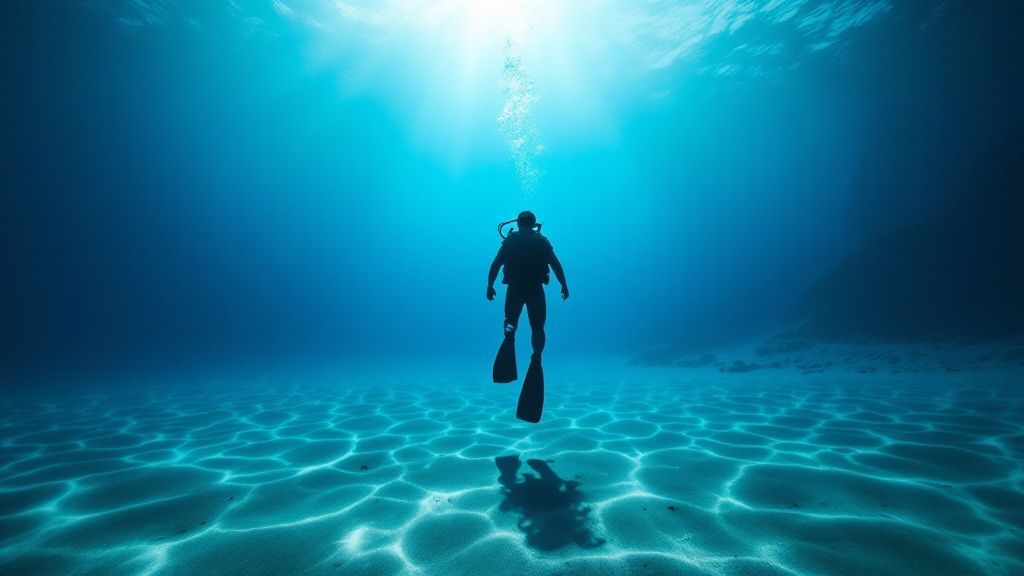
Kona isn't just another dot on the map; it's a unique underwater ecosystem sculpted by millennia of volcanic activity. The lava tubes, sweeping arches, and submerged pinnacles create a complex and breathtaking terrain that's now home to an incredible diversity of marine life. This fiery geological history is exactly what makes diving here so special.
That same volcanic shoreline also acts as a natural shield against the strong trade winds, blessing us with remarkably calm and clear waters pretty much year-round. These gentle conditions make Kona an ideal "classroom" for new divers, but don't be fooled—they also set the stage for thrilling explorations for even the most seasoned experts.
To give you a better idea of what to expect, here’s a quick rundown of the conditions and highlights that put Kona on every diver's bucket list.
Kona Diving At A Glance
| Feature | Details |
|---|---|
| Water Temperature | A comfortable 75 to 80°F (24 to 27°C) all year. |
| Visibility | Often exceeds 75 feet, with days where you can see over 100 feet into the blue. |
| Marine Life | Abundant endemic fish, Hawaiian green sea turtles, dolphins, and, of course, the famous manta rays. |
| Topography | Dramatic volcanic landscapes: lava tubes, arches, caverns, and pinnacles. |
| Accessibility | Most premier dive sites are just a short boat ride away from the harbor. |
| Skill Level | Conditions are perfect for beginners, with plenty of challenging and deep sites for advanced divers. |
| Best Time to Dive | Year-round! The conditions are consistently fantastic. |
As you can see, Kona delivers on all fronts, offering a truly world-class experience right here in Hawaii.
Why Kona Is a Cut Above the Rest
What really sets Kona apart is its perfect blend of easy access and mind-blowing marine encounters. Unlike many global dive hotspots where you spend hours on a boat, Kona's best sites are just a quick trip from the shore. That means less travel and more time where you want to be: under the waves.
The sheer amount of life here is staggering. On almost any given dive, you're likely to be greeted by some of the locals:
- Hawaiian Green Sea Turtles (Honu): We see these gentle giants on about 80% of our trips, often resting on the reef or cruising gracefully by.
- Fish You Won't See Anywhere Else: A huge number of the fish here, like the vibrant yellow tang, are endemic. They only live in Hawaiian waters.
- Spinner Dolphins: It's common to see pods of them playing in our boat's wake during surface intervals—a show in itself!
- Manta Rays: The stars of the show. The world-famous night dive is a bucket-list experience for a reason, and seeing these majestic creatures is something you'll never forget.
Here at Kona Honu Divers, sharing this underwater paradise is what we live for. Our experienced guides and top-notch operation are all geared toward making sure your dive is safe, inspiring, and absolutely unforgettable. To get a feel for a day out with us, check out our guide on what you can expect when diving in Kona.
Experience the World Famous Manta Ray Night Dive
Of all the incredible things you can do in Kona's waters, one experience is in a league of its own: the world-famous Manta Ray Night Dive. This isn't just another checklist item for divers; it's a surreal, underwater ballet that people travel across the globe to see. It’s an encounter so profound, it feels less like a scuba trip and more like a spiritual connection with the ocean itself.
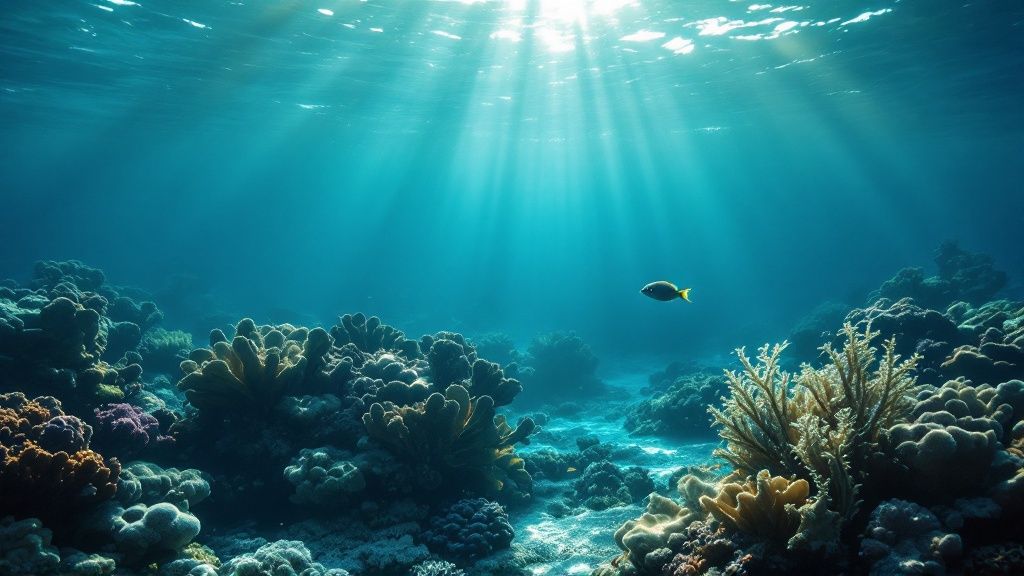
The magic behind this dive is brilliantly simple. Once the sun goes down, powerful, eco-friendly lights are set up on the ocean floor. These bright beams act like a massive bug zapper in reverse, attracting swarms of microscopic plankton and creating a dense, shimmering cloud—a five-star buffet for Kona's resident manta rays.
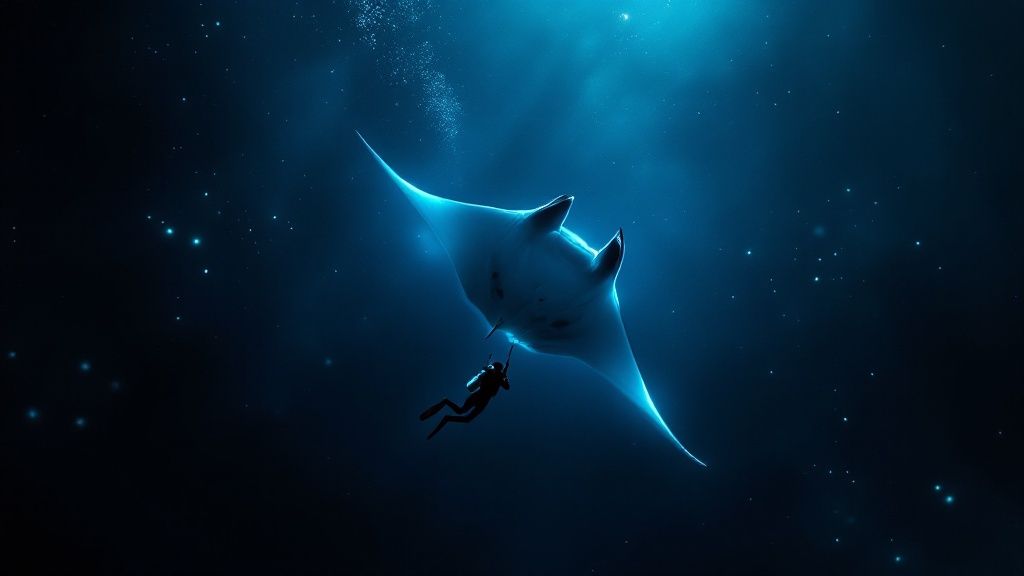
Drawn in by the easy meal, these majestic giants arrive to feast. With massive wingspans reaching up to 16 feet, they glide, swoop, and perform effortless barrel rolls just inches over your head, filtering the plankton from the water. It’s mesmerizing, peaceful, and absolutely unforgettable.
What to Expect on Your Manta Adventure
Your adventure kicks off with a boat ride just as the sun sets, painting the Kona sky in fiery oranges and purples. On the way out, your guides will give a thorough briefing, explaining manta behavior and the simple rules for a safe, respectful interaction. The main principle is passive observation—you're a guest in their house, and they run the show.
Once we reach the site, you'll descend to a designated spot on the sandy bottom, often called the "campfire." Here, you'll kneel or lie down with the group, pointing your dive light up to help build the plankton buffet. And then, the show begins.
The feeling of a massive, gentle giant gliding silently over you—so close you can see the intricate patterns on its belly—is impossible to put into words. It's a moment of pure awe that connects you directly to the wild, mysterious heart of the ocean.
As these graceful creatures feed, you become part of their world. There are no cages, no barriers—just you, the quiet darkness, and the silent, breathtaking dance of the mantas. To get an even better idea of the dive, you can learn more about what makes the manta ray night dive so special.
A Cornerstone of Kona Diving
The Manta Ray Night Dive is far more than a tourist attraction. It's the cornerstone of the Kona diving scene and plays a vital role in local conservation and education. This nightly spectacle is one of the most reliable and extraordinary wildlife encounters on the planet.
During peak seasons, hundreds of divers a week get to witness this. It’s common to see groups of 5 to 12 mantas on a single dive. With researchers estimating the local population in the hundreds, Kona has become a globally significant hub for these gentle giants. This unique dive truly put Kona on the map.
Here at Kona Honu Divers, we're dedicated to sharing this amazing experience while putting the safety and well-being of the mantas first. Our guides ensure every interaction is responsible and sustainable, so this magic can continue for generations to come. We offer a fantastic manta ray dive tour for certified divers.
Exploring Kona’s Top Dive Sites
The world-famous manta ray dive gets a lot of love, and for good reason. But what many divers don't realize is that it's just the beginning of what Kona diving has to offer. The Big Island's volcanic coast has sculpted an incredible underwater world full of lava tubes, dramatic pinnacles, and vibrant reefs, each buzzing with its own unique marine life. There's a whole universe to explore long after the manta lights go out.
To really unlock the secrets of this coastline, you need someone who knows it like the back of their hand. An experienced guide can show you a hidden nook where an octopus likes to hang out or time your surface interval perfectly to watch spinner dolphins leap from the water. This is where local knowledge truly shines, turning a good dive into an unforgettable one.
Must-See Dive Locations
The Kona coast is absolutely packed with dive sites, but a few always rise to the top of everyone's list. These are the spots that really show off the best of what this island has to offer.
Golden Arches
A favorite for photographers and adventurers, Golden Arches is all about the dramatic underwater landscape. The site gets its name from massive lava tubes you can swim right through. When the sunlight streams through the openings in the rock, it creates these incredible, almost spiritual, beams of light that dance through the water.
- What you'll see: As you glide through the arches, look for whitemouth moray eels peeking out from the cracks. You'll also see big schools of bright yellow tangs and maybe even a whitetip reef shark resting on the sandy bottom.
- Best for: All skill levels. The swim-throughs are wide open and not at all claustrophobic, making it a comfortable and beautiful experience for everyone.
Turtle Pinnacle
You can probably guess what this site is famous for. Turtle Pinnacle is a bustling hub for our local Hawaiian green sea turtles, or honu. It's a natural "cleaning station," a spot on the reef where turtles line up to let smaller fish nibble away algae and parasites from their shells. It's basically a turtle day spa, and you get a front-row seat to the action.
- What you'll see: It’s not uncommon to see several turtles here at once, either patiently waiting their turn or just cruising around the reef. Keep an eye out for plenty of other reef fish too, including the beautiful, endemic bandit angelfish.
- Best for: Everyone! The calm conditions and relatively shallow depth make this a wonderfully relaxing dive for beginners and seasoned pros alike.
There's something truly special about watching a cleaning station in action. It's a peaceful, mesmerizing moment that reminds you just how interconnected and perfectly balanced the reef ecosystem is.
If you want to dive deeper into these spots and discover even more, be sure to check out our full guide on the most beautiful Kona diving sites.
Top Kona Dive Sites Comparison
With so many amazing options, picking a dive site can be tough. We put together this quick-glance table to help you compare some of Kona's most popular spots and choose your next underwater adventure.
| Dive Site | Key Features | Common Marine Life | Best For |
|---|---|---|---|
| Golden Arches | Large lava tube swim-throughs and dramatic arches. | Eels, reef sharks, schools of tangs. | Photographers & All Levels |
| Turtle Pinnacle | A natural turtle "cleaning station" on a pinnacle. | Hawaiian green sea turtles, bandit angelfish, octopus. | Beginners & Turtle Lovers |
| Suck 'Em Up | A cavern where surge pushes water in and out. | Whitetip reef sharks, large schools of fish. | Intermediate to Advanced |
| Kailua Pier | Muck diving with rare and juvenile marine life. | Frogfish, nudibranchs, seahorses, scorpionfish. | Macro Photographers |
No matter where you choose to jump in, you're in for a treat. Every dive here reveals a new side of this incredible volcanic island, from its tiniest, most bizarre critters to its most majestic residents.
Advanced and Specialized Diving Adventures
So, you’ve got your certifications, you're comfortable on the reef, and now you’re feeling that itch for something… more. For divers who have seen the beautiful coral gardens and are ready to push their own boundaries, Kona has a few tricks up its sleeve. These aren't your typical two-tank reef tours. We're talking about expeditions that are more demanding, a bit mysterious, and seriously rewarding.
These are the kinds of dives that require solid skills. You’ll need rock-steady buoyancy control, a cool head in deep water or overhead environments, and the ability to roll with whatever the ocean throws at you. But for those who are up for the challenge, Kona offers two of the most unique underwater adventures you’ll find anywhere on the planet.
The Kona Blackwater Dive: It's Like a Spacewalk
Imagine this: you're floating in pure, inky blackness, miles from shore, suspended over thousands of feet of water with nothing but the deep blue abyss below. This is the Kona Blackwater Dive, and people aren't kidding when they call it "diving in outer space." It is, hands down, one of the most mind-blowing night dives in the world.
The concept is surprisingly simple. We head offshore into very deep water and deploy a heavy tether with a set of powerful down-lights. You and your fellow divers clip onto this line and just drift along in the dark, becoming a human satellite in the middle of the open ocean. Those lights act like a magnet for creatures taking part in the largest migration on Earth.
Every single night, a countless menagerie of bizarre, bioluminescent, and often larval-stage creatures rise from the depths to feed near the surface. The blackwater dive drops you right into the thick of this massive vertical migration, showing you a side of the ocean almost no one ever gets to see.
You'll see things that look truly alien—tiny, see-through larval fish, shimmering ctenophores that look like disco balls, and jellyfish pulsing with their own internal light. It’s a surreal and humbling experience that brings you face-to-face with the ocean’s deepest secrets. If you're ready for the ultimate night dive, check out the unforgettable Kona Blackwater Dive tour.
Exploring Remote and Challenging Dive Sites
Beyond the blackwater experience, Kona's rugged volcanic coastline hides plenty of advanced dive sites that are way off the beaten path. These spots are for seasoned divers who are looking for more of an exploratory adventure. At Kona Honu Divers, we run premium advanced dive tours designed specifically to get you to these untouched underwater environments.
These trips head to sites with more complex topography—think lava tubes and arches—and potentially stronger currents, which means you need to be on your A-game.
What makes these advanced charters special?
- Deep Pinnacles: We explore submerged volcanic spires that shoot up from the seafloor, acting as magnets for big pelagic species and massive schools of fish.
- Intricate Lava Caverns: You’ll get to navigate through complex lava tube formations and swim-throughs that require excellent buoyancy and a calm attitude.
- Remote Locations: We take you to pristine sites that most recreational divers never see, offering a glimpse of a truly undisturbed marine ecosystem.
- Unique Marine Life Encounters: The challenging conditions and remote nature of these sites often lead to bigger rewards, like encounters with sharks, rays, and sometimes even whale sharks.
These charters are built for divers who are confident with depth, can handle a bit of current, and enjoy complex navigation. It’s the perfect way for an experienced diver to really see what Kona diving is all about.
How to Get Your Scuba Certification in Kona
If you’ve ever watched a nature documentary and felt that pull to explore the vibrant, silent world beneath the waves, Kona is the perfect place to make it happen. Getting scuba certified opens up a lifetime of adventure, and the Big Island's warm, clear, and exceptionally calm waters create a natural classroom that’s as safe as it is inspiring.
Learning to dive here isn't just about checking boxes to get a card; it's an experience in itself. Imagine practicing your first skills while a curious green sea turtle glides by, or taking your first real breaths in the open ocean surrounded by a kaleidoscope of reef fish. The conditions in Kona are so ideal for beginners that you'll build confidence quickly and comfortably.
Your First Steps Underwater
For anyone who's curious but not quite ready to commit to a full course, the Discover Scuba Diving program is a fantastic way to dip your toes in. Think of it as a test drive for the underwater world. An expert instructor will walk you through the absolute basics, get you comfortable with the gear in shallow water, and then take you on a guided dive to a stunning reef.
It’s the perfect way to feel the magic of breathing underwater without the time commitment of a full certification. We see it all the time—people try it once, fall in love, and immediately sign up to get certified.
The Path to PADI Open Water Diver
Ready to become a full-fledged diver? The PADI Open Water Diver course is your ticket to exploring the ocean anywhere in the world. The whole process is broken down into three simple, manageable parts:
- Knowledge Development: This part starts before you even get here. You'll work through the PADI eLearning at your own pace, which covers all the fundamental principles of scuba—from safety procedures to how pressure affects your body.
- Confined Water Dives: Once you're in Kona, your instructor will take you to a calm, shallow spot (like a pool or a protected bay) to practice the hands-on skills. This is where you really get comfortable breathing underwater and learn to handle key tasks like clearing your mask.
- Open Water Dives: Now for the best part! You'll head out on the boat for four dives in the open ocean. Under the watchful eye of your instructor, you’ll apply everything you’ve learned while exploring the incredible lava tube formations and marine life that make Kona diving so famous. You can learn more about the complete Kona scuba certification course and see exactly what the training involves.
There's a reason Kona’s dive scene is booming. An introductory experience like Discover Scuba often costs around $399, making it an accessible way for visitors to give diving a shot. Combine that with average water temperatures of 78°F and visibility that often hits 100 feet, and you have the perfect recipe for success—something you'll see echoed in countless diver trip reports. You can even find discussions on Big Island dive shop comparisons on ScubaBoard.
At Kona Honu Divers, we offer a full range of PADI courses designed to get you started on your underwater journey safely and with a ton of confidence.
Your Kona Diving Questions Answered
It's natural to have questions when you're planning a big dive trip. We get it. To help you get your gear and your mind sorted, we've put together answers to some of the most common things divers ask us before heading to Kona.
What Is The Best Time Of Year For Kona Diving?
Honestly, one of the best things about diving in Kona is that there's no "off-season." The water is great all year round.
We see water temperatures hanging out between a balmy 75-80°F (24-27°C) pretty much constantly. That means you can ditch the heavy-duty wetsuit. Visibility is also consistently fantastic, often stretching out beyond 100 feet.
If you have to pick, the winter months (December through March) can sometimes have a bit more surface chop, but that's also when the humpback whales are in town. Hearing them sing on a dive is an experience you won't forget. Summer (June through August) typically brings the flattest, calmest seas, which is perfect for just about everyone. It really just comes down to what you're hoping to see.
Do I Need To Be A Certified Diver To Try Scuba?
Not at all! You don't need a C-card to get your feet wet here.
Most shops, ours included, offer a "Discover Scuba Diving" program. Think of it as a one-day crash course. A certified instructor will walk you through the basics in a super safe, controlled spot before taking you out for a real shallow-water ocean dive or two.
It’s the best way to see if diving is for you without committing to a full course. And if you get hooked (which, let's be honest, you probably will), you can roll right into the PADI Open Water Diver certification. It only takes a couple of days, and Kona's calm, clear waters make it one of the easiest and most beautiful places on the planet to learn.
What Marine Life Will I See While Diving In Kona?
Kona is just buzzing with underwater life. It’s hard not to see something amazing. You're almost guaranteed to run into a few Hawaiian green sea turtles (we call them honu), and they're usually pretty relaxed around divers.
The reefs are a kaleidoscope of tropical fish, many of which are endemic, meaning you can't see them anywhere else in the world. Look for schools of bright yellow tangs, big parrotfish munching on coral, and moray eels peeking out from their homes. Keep an eye out for clever octopuses, too.
On any given dive, you might also get lucky and spot spinner dolphins, a majestic eagle ray gliding by, or even a few reef sharks (they're shy and not interested in divers). And of course, there are the headliners: the giant rays on the legendary manta ray night dive and the bizarre, alien-like creatures on the Kona Blackwater Dive. Every drop into the water here is a new adventure.
What Should I Bring On A Kona Diving Trip?
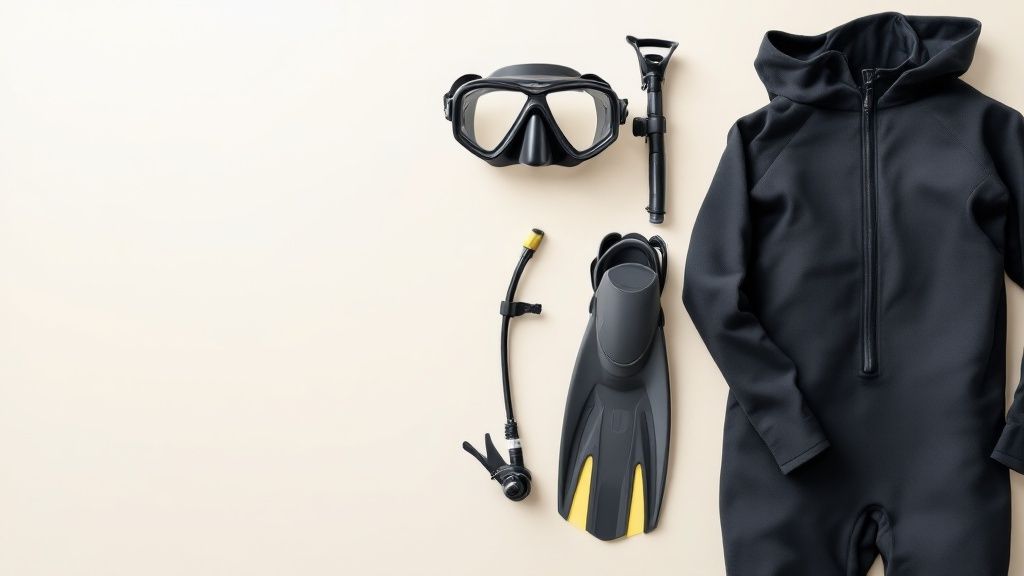
We’ve got you covered on the big stuff. Any good dive operator like Kona Honu Divers will provide the essential scuba gear: BCD, regulators, tanks, and weights. You just need to bring the personal items that will make your day more comfortable.
Here’s a simple checklist for your day bag:
- Swimsuit: Wear it to the dock to make things easy.
- Towel: You'll be glad you have it.
- Reef-Safe Sunscreen: This is a big one. It protects you and our fragile coral reefs.
- Dry Clothes: Nothing beats a dry shirt for the ride home.
- Hat & Sunglasses: The sun is no joke out on the water.
- C-Card: If you're certified, don't leave it at the hotel!
- Underwater Camera: You're going to want proof of what you saw.
If you have your own mask, fins, or wetsuit that fit you perfectly, definitely bring them along. If not, don't worry, rentals are always available.
Which Dive Operator Should I Choose?
Picking the right dive boat can truly make or break your trip. You've got plenty of choices in Kona, so you'll want to look for a company with a solid safety record, guides who know the sites like the back of their hand, and a real commitment to protecting the ocean.
Here at Kona Honu Divers, we're proud of our crew's experience and our top-notch boats, but what really drives us is our passion for sharing the ocean in a way that's safe, fun, and respectful. You can see what fellow divers have said about their time with us below.
Ultimately, you need to find an operator that fits your vibe. Whether you want a chill reef tour, a deep technical dive, or that very first breath underwater, there's a perfect boat waiting for you in Kona. We'd be stoked if you chose to experience the Kona Honu Divers difference with us.
Ready to explore the incredible underwater world of the Big Island? Kona Honu Divers offers a full range of diving tours for every skill level, from breathtaking reef explorations to the world-famous Manta Ray Night Dive. Book your adventure today and discover why Kona is a top global destination for divers.