
Picture this: you descend into impossibly clear, blue water. Sunlight filters down, lighting up ancient lava tubes and revealing reefs buzzing with life you can't find anywhere else on the planet. That's the heart of Kona diving. It’s an underwater world defined by calm, protected waters and a wild amount of biodiversity, and there's a good reason it consistently ranks among the best dive destinations in the world.
Why Kona Is a Diver's Paradise
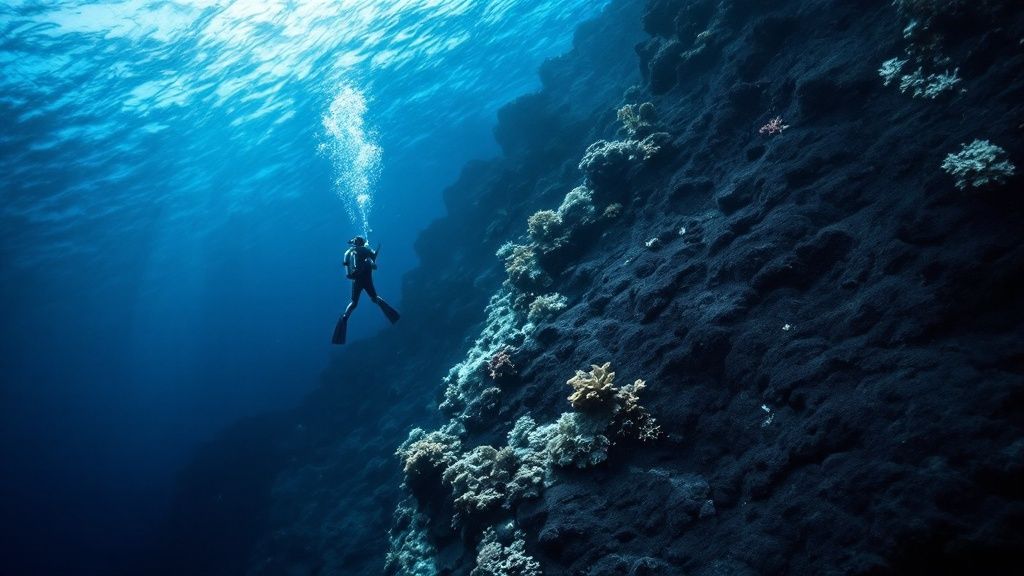
The secret to Kona's incredible diving is geology. The Big Island's west coast is tucked into the lee of two massive volcanoes, Mauna Loa and Hualalai. These giants act as a natural shield, blocking the powerful trade winds and creating exceptionally calm and clear seas pretty much year-round. It’s not uncommon for visibility to push past 100 feet, which means you can soak in every last detail of the world below.
This sheltered environment has allowed a truly unique ecosystem to flourish. Kona's waters have one of the highest concentrations of endemic marine species in the world. That means a huge chunk of the life here—from the fish to the funny-looking invertebrates—can only be found in Hawaii. Every dive is a chance to see something genuinely special. We get into all the details in our guide on the top reasons to scuba dive in Kona, Hawaii.
Home to Iconic Underwater Experiences
Kona isn’t just about beautiful reefs; it's home to a couple of signature dives that are on every serious diver’s bucket list. These two experiences truly set Kona apart from anywhere else on Earth.
First up is the world-famous Manta Ray Night Dive. It’s an otherworldly ballet where these gentle giants, with wingspans stretching up to 16 feet, glide and swoop right over your head. They're feeding on plankton attracted to our underwater lights, and it's a mesmerizing, humbling show that connects you with one of the ocean's most majestic animals. Explore our manta ray dive tours to experience it for yourself.
Then there's the Kona Blackwater Dive, a trip into the deep, dark open ocean. You drift, tethered to the boat, in the black abyss and watch as all sorts of bizarre, bioluminescent creatures rise from the depths on their nightly migration. People often say it feels like you're diving in outer space. Ready for the adventure? Check out our Blackwater Dive tour.
Your Gateway to Adventure
With so many different kinds of underwater adventures to be had, having the right guide makes all the difference. At Kona Honu Divers, we run expertly guided diving tours designed to show you the absolute best of the Big Island. Our experienced crew, top-notch safety standards, and real passion for the ocean guarantee your Kona diving trip will be one for the books.
Exploring Kona’s Signature Dives
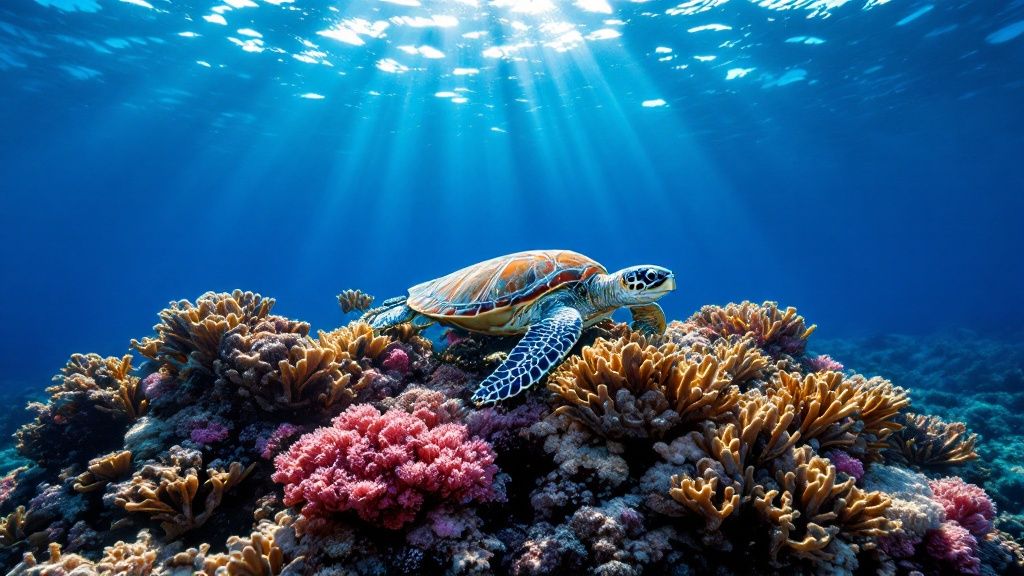
Diving in Kona isn't just about getting in the water; it's about having experiences that you'll be talking about for the rest of your life. There are three dives here that really define what makes the Big Island a world-class destination. Each one is a completely different kind of adventure, showcasing the incredible variety of life just off our coast.
From the silent, graceful ballet of giant manta rays after sunset to a surreal trip into the deep ocean abyss, these are the dives that should be on every visitor's bucket list. Let's break down what makes each one so special.
The World-Famous Manta Ray Night Dive
Ask any seasoned diver about their top ten dives, and the Kona Manta Ray Night Dive is almost always on the list. The concept is beautifully simple, but the experience is profound. We set up powerful, eco-friendly lights on the ocean floor, creating what we call the "manta campfire."
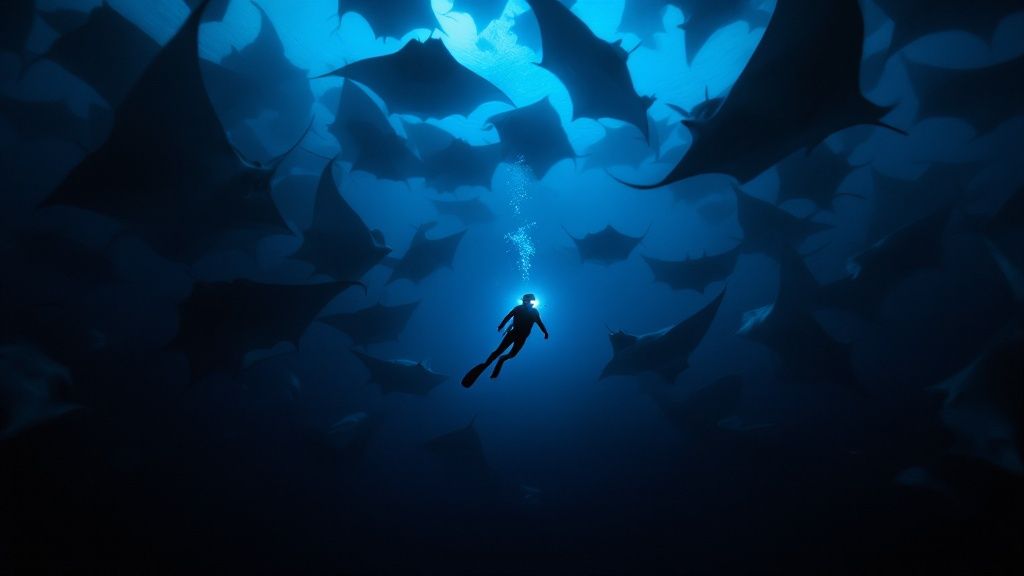
This light acts like a giant bug zapper for plankton, drawing in clouds of the microscopic critters that are the foundation of the ocean's food web. Before long, the main event begins. Drawn in by the promise of an all-you-can-eat buffet, giant manta rays materialize out of the darkness. They perform mesmerizing, looping somersaults to scoop up mouthfuls of plankton.
As a diver, you just settle onto the sandy bottom, look up, and enjoy the show. These gentle giants, with wingspans often stretching over 12 feet, glide just inches above your head. It’s an entirely passive interaction, allowing you to witness one of the planet's most incredible wildlife encounters up close.
The Kona coast is home to a resident population of nearly 200 manta rays, which is why sightings are so consistent. It’s not unusual to see over 20 mantas on a single dive! This is a must-do for any certified diver visiting the island. For an even deeper look, check out our guide to diving with manta rays in Hawaii.
Journey into the Abyss: The Blackwater Dive
If the Manta Dive is a beautiful ballet, the Kona Blackwater Dive is like taking a trip to another planet. This is not your typical reef dive. We take you miles offshore where the seafloor is thousands of feet down. Tethered safely to the boat, you descend into the pitch-black open ocean and drift with the current.
What you're witnessing is part of the largest animal migration on Earth, which happens every single night. Under the cover of darkness, countless strange and wonderful creatures rise from the deep to feed near the surface. Many are bioluminescent, creating their own light in the inky blackness.
You'll see things that look like they're straight out of a sci-fi movie:
- Translucent Squids: With complex patterns and colors that flash in your light.
- Bizarre Larval Fish: Looking nothing like the adults they will become.
- Pulsating Jellies: Drifting past like alien spaceships.
This is an advanced drift dive in deep, open water at night, so it does require a higher skill level. You'll need an Advanced Open Water certification and sharp buoyancy control. For those ready to explore the abyss, Kona Honu Divers offers a fully guided Blackwater Dive tour.
Classic Daytime Reef Dives
Beyond the legendary night dives, Kona's classic daytime reef diving is absolutely spectacular. The Big Island's volcanic past has created a dramatic underwater playground you won't find anywhere else. You'll get to explore ancient lava tubes, swim-throughs, and incredible archways, all covered in healthy coral.
These reefs are buzzing with life. On any given dive, you can expect to see green sea turtles snoozing on the reef, moray eels peeking out from their homes, and huge schools of fish found only in Hawaiian waters. The water is typically calm and clear, making for relaxed and beautiful dives perfect for any skill level, from the brand-new diver to the seasoned pro. These dives are the foundation of what makes Kona so incredible.
A Guide to Kona’s Top Dive Sites
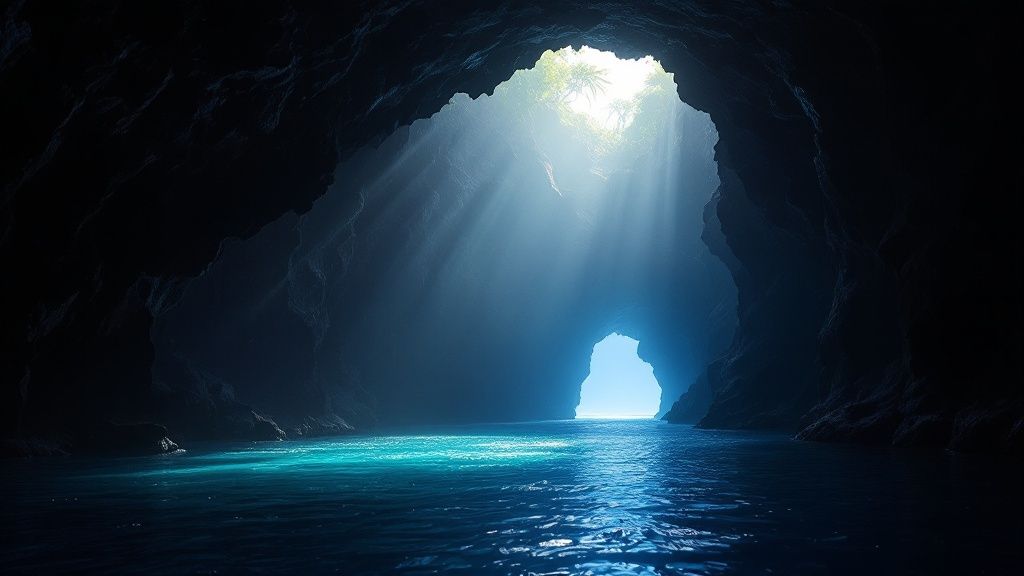
Alright, you get what makes Kona diving so special. Now for the fun part: planning where you'll actually get wet. The Kona coast is lined with dozens of incredible dive sites, each one a unique window into Hawaii's volcanic soul and thriving underwater world.
We're talking dramatic lava tubes, bustling "turtle cleaning stations," and more. There’s an adventure here for every single diver, no matter your experience level.
Think of this as your starting point, a checklist of some of the most spectacular and beloved spots that really show off what the Big Island has to offer. Let’s find the perfect sites for your trip.
Garden Eel Cove (Manta Heaven)
Famous for more than just its namesake eels, Garden Eel Cove is ground zero for the legendary Manta Ray Night Dive. But don't sleep on it during the day—it's a stunning reef dive that's great for all skill levels.
The site is defined by a huge, gently sloping sandy bottom where hundreds of shy garden eels poke their heads out. They just sway in the current like a field of grass. Surrounding this patch is a healthy coral reef dotted with small lava formations, giving you plenty to explore.
By day, you'll spot Hawaiian green sea turtles, well-camouflaged frogfish, and a ton of reef fish. But this site really has a split personality; it's beautiful and serene in the sun, then transforms into something truly magical after dark when the mantas arrive.
Turtle Pinnacle
No surprise here—Turtle Pinnacle is an absolute hotspot for honu, the beloved Hawaiian green sea turtle. This is a classic "cleaning station."
Basically, it’s a day spa for sea turtles. They gather here to let surgeonfish and other small cleaner wrasse nibble away algae and parasites from their shells. As a diver, you get a front-row seat to the whole affair. The pinnacle itself is an ancient volcanic cone rising from the seafloor, making it a natural hub for marine life. It’s an incredible spot for underwater photography.
Golden Arches
Named for the stunning lava rock archways you can actually swim through, Golden Arches is a diver's playground. This site is the perfect showcase of Kona's unique volcanic underwater landscape.
Dropping in here feels like entering a submerged cathedral. Light streams through the arches, illuminating the schools of fish that shelter inside. The main arch is big enough for a small group to pass through comfortably, making for an unforgettable experience and some killer photo ops.
The complex structures at sites like Golden Arches provide critical habitats for a wide range of marine creatures, from tiny cleaner shrimp hiding in crevices to schools of rudderfish seeking refuge from open-water predators.
Eel Cove
Don't let the name scare you off! Eel Cove is a fantastic and lively site that's home to way more than just eels. It’s built around a series of ledges and lava formations that create the perfect hideouts for all sorts of marine life.
You’ll almost certainly find whitemouth, undulated, and viper morays peeking out from their rocky homes. But beyond the eels, the site is known for its healthy coral gardens and huge numbers of endemic Hawaiian fish. It's a great choice for newer divers, but the rich biodiversity means experienced divers and macro photographers will have a blast, too.
For a quick look at how these sites stack up, here’s a simple table to help you compare.
Snapshot of Top Kona Dive Sites
| Dive Site Name | Max Depth | Key Features | Common Marine Life | Best For |
|---|---|---|---|---|
| Garden Eel Cove | 60 ft | Large sandy bottom with surrounding reef, Manta Ray night dive location | Garden eels, Manta Rays (night), Turtles, Frogfish | All Levels, Night Dives |
| Turtle Pinnacle | 65 ft | Volcanic pinnacle, turtle cleaning station | Hawaiian Green Sea Turtles, Surgeonfish, Reef Fish | All Levels, Photographers |
| Golden Arches | 50 ft | Large lava rock archways, complex topography | Schools of Milletseed Butterflyfish, Eels, Shrimp | Intermediate Divers |
| Eel Cove | 45 ft | Lava ledges and rock formations, healthy coral | Various Moray Eels, Endemic Hawaiian Fish, Octopus | All Levels, Macro Photo |
This is just a taste of what Kona has to offer. Each site has its own personality, and the best way to experience them is to see for yourself!
If you're certified and looking for a bigger challenge, Kona has deeper spots to explore, too. Our dedicated advanced dive tours are designed to take you to more remote pinnacles and canyons that most divers never get to see.
Choosing the Right Dive Operator in Kona
With a coastline packed with incredible dive sites, the single most important decision you'll make for your Kona diving trip is picking the right guide. The dive operator you choose can be the difference between a good vacation and an absolutely unforgettable one.
This isn’t just about getting on a boat and into the water. It’s about the safety, comfort, and deep-seated expertise of the crew leading you into Kona's unique underwater world. A great operator is your partner in exploration, responsible for your well-being from the moment you step on board.
What Separates the Best from the Rest
When you start looking at dive companies, a few things should be non-negotiable. These are the pillars of a safe, fun, and memorable experience under the waves.
- Ironclad Safety Protocols: Safety is everything. A top-tier operator has clear emergency plans, meticulously maintained safety gear, and divemasters who give thorough, unhurried briefings before every single dive. There are no shortcuts here.
- High-Quality, Well-Maintained Gear: Whether you’re renting a full setup or just a tank, the equipment has to be modern and in perfect working order. Properly serviced regulators and BCDs are crucial for a stress-free dive.
- Comfortable Boats & Small Groups: You want a boat built for diving, not a cramped vessel that feels like a cattle car. Smaller group sizes are a game-changer, ensuring you get more personal attention from the crew both on the boat and in the water.
- A Knowledgeable and Passionate Crew: The best guides are more than just underwater tour leaders; they're marine life experts who are genuinely passionate about Kona's ecosystem. They can spot that rare nudibranch, explain fascinating animal behaviors, and share a real love for the ocean.
A dive operator’s commitment to ocean stewardship—what we call malama i ke kai (to care for the ocean)—is often the biggest tell. Companies that actively participate in conservation are usually the ones most dedicated to providing exceptional and respectful wildlife encounters.
Why Kona Honu Divers Stands Out
Here at Kona Honu Divers, we’ve built our entire reputation on hitting every single one of those marks. We are obsessed with providing the highest quality Kona diving experience possible.
Our crew is made up of seasoned, passionate pros who know these waters like the back of their hand. We keep our boats and gear in top-notch condition and truly believe that smaller groups lead to better, safer, and more personal adventures.
But don’t just take our word for it. Our divers' experiences speak for themselves. Check out our reviews and see why we're consistently rated one of the top dive operators on the Big Island. We've even put together a full guide on how to choose a Kona dive shop to help you make the best decision for your trip.
Planning Your Kona Diving Adventure
Alright, you've seen what makes diving in Kona so incredible. Now for the fun part: making it happen. Nailing down the logistics—like when to come, what to pack, and how to stay safe—is what turns a good trip into an unforgettable one.
A little bit of planning now pays off big time later. Thinking ahead about water temps, gear, and safety sets you up for an amazing experience from the moment you hit the water.
When Is the Best Time for Kona Diving?
Here's the great news: thanks to the massive volcanoes that block the wind, Kona has fantastic diving pretty much all year. But there are a few seasonal quirks that might help you pick the perfect time for your trip.
- Summer (June – October): This is when you'll find the warmest water, often creeping into the low 80s°F (around 28°C). The ocean is typically at its calmest, giving us those beautiful, glassy conditions for super smooth boat rides.
- Winter (November – March): The water cools down a bit, usually hovering in the mid-70s°F (around 24-25°C). You'll probably want a 5mm wetsuit, but the trade-off is huge. This is when the humpback whales show up. Hearing their songs echoing through the water on a dive is pure magic. It’s an experience you’ll never forget.
No matter when you come, visibility is almost always stellar, often clearing 100 feet. So, you really can't lose. It just comes down to a simple choice: do you prefer warmer water, or do you want to hear the whales sing?
Your Essential Packing List
Packing for a dive trip is all about being prepared without hauling your entire house with you. Aside from your usual vacation stuff, a few key items will make your dive days in Kona much better.
Of course, your personal dive gear is number one. While we have top-notch rental gear, nothing beats the fit and comfort of your own mask, fins, and computer. If you have gear you love, bring it. For a full rundown, take a look at our guide on the gear you will need for your Kona diving adventure.
Beyond your core equipment, don't leave these behind:
- Reef-Safe Sunscreen: This is a big one. Hawaii has banned sunscreens with oxybenzone and octinoxate because they harm our beautiful coral. Look for mineral sunscreens that use zinc oxide or titanium dioxide instead.
- Reusable Water Bottle: Staying hydrated is non-negotiable for safe diving. A reusable bottle cuts down on plastic and serves as a constant reminder to drink up.
- Dry Bag: Even a small one is a lifesaver on the boat. It'll keep your phone, keys, and towel safe from the inevitable splashes.
- A Light Jacket or Sweatshirt: Trust us on this one. After a dive, especially a night dive, the boat ride back can feel surprisingly chilly, even on a warm day.
A Strong Focus on Water Safety
At the end of the day, safety is what allows us to have all this fun. In Hawaii, that means being smart and respectful anytime you're in the ocean. The statistics really bring this home—between 2009 and 2018, there were 206 snorkeling-related fatalities in the state. You can read more about the Hawaiian snorkelling deaths mystery on divernet.com.
Those numbers are a stark reminder of why you should always go with a professional, reputable operator. It’s just not worth the risk otherwise.
Keep these simple but crucial safety rules in mind:
- Dive Within Your Limits: Don’t let ego push you past your training or comfort level. There's always another day.
- Listen to Every Briefing: Your divemaster isn't just talking to hear their own voice. They're giving you critical, site-specific info on currents, entries, exits, and what to look out for.
- Stay Hydrated and Rested: Being tired or dehydrated seriously increases your risk of decompression sickness. Drink water, and get a good night's sleep.
- Never, Ever Hold Your Breath: It's the golden rule of scuba for a reason. Just breathe normally and continuously.
When you make safety your top priority, you guarantee your Kona diving adventure will be amazing for all the right reasons.
Your Kona Diving Questions, Answered
Got a few last-minute questions before you book your Kona dive trip? You're not alone. We hear these all the time, so we’ve put together some straightforward answers to help you plan your adventure.
What Scuba Certification Do I Need to Dive in Kona?
For most of our stunning reef dives, a standard Open Water certification is all you need to jump in. That said, a couple of Kona's most legendary experiences—the Manta Ray Night Dive and the Blackwater Dive—have their own set of requirements to keep everyone safe and comfortable.
The world-famous manta ray night dive is open to pretty much any certified diver. It’s an incredible, accessible experience. The Kona Blackwater Dive, on the other hand, is a whole different ballgame. This is a true advanced adventure, and for good reason. You’ll need an Advanced Open Water certification and rock-solid buoyancy control, as you'll be drifting in the deep, open ocean at night.
What’s the Water Temperature Like in Kona?
One of the absolute best things about Kona diving is how comfortable the water is year-round. In the winter months, you can expect temperatures around a pleasant 75°F (24°C). By summer, it warms up to a balmy 82°F (28°C).
Most divers find a 3mm or 5mm full wetsuit is the sweet spot for staying warm, especially if you're doing a few dives in one day or joining us for one of the night dives.
Will I See Anything Besides Manta Rays on the Night Dive?
Oh, absolutely! The manta rays are the undisputed headliners, but they are far from the only act. The powerful lights we use to attract the plankton for the mantas essentially create a massive underwater buffet, and everyone wants a seat at the table.
We call it the "manta campfire" for a reason—it draws in a whole ecosystem. Keep your eyes peeled for moray eels slinking out of the reef to hunt, curious squid pulsing in the darkness, and maybe even an octopus out for a stroll. You'll also spot all sorts of crustaceans that come out to play after the sun goes down, making the whole experience incredibly dynamic.
How Far Ahead Should I Book My Dive Tours?
It’s always a smart move to book your diving tours in advance, especially for the can't-miss Manta Ray Night Dive. We strongly recommend locking in your spot at least a few weeks before your trip.
If you’re visiting during peak season—think winter holidays or the middle of summer—booking a month or even more in advance is your best bet. This makes sure you get a spot on the boat and don't miss out on what many call the dive of a lifetime.
Ready to see Kona's underwater world for yourself? At Kona Honu Divers, we run professionally guided tours for every kind of diver.