
Diving in Kona is something truly special. For 40 years, this slice of paradise on the Big Island has been quietly building a reputation as one of the best scuba destinations on the planet. Its volcanic coastline and warm, tropical waters have drawn in divers from all corners of the globe, and for good reason. It's an experience that sticks with you.
Pioneering shops like Jack's Diving Locker have been guiding divers here for over 45 years, helping shape Kona into the world-class, safe, and utterly thrilling place it is today. You can get a great sense of the local dive history by checking out this article on Big Island scuba diving on Kona Honu Divers' blog. For an overview of available diving tours, this page is a great resource.
Welcome to the Heart of Hawaiian Scuba
Picture an underwater world literally sculpted by volcanoes—that's Kona. The western coast of the Big Island is a diver’s dream, shielded from the gusty trade winds by the colossal Mauna Loa and Hualālai volcanoes. This natural barrier creates an incredibly calm and predictable marine environment, which is perfect for exploring the world beneath the waves.
Think of this guide as your personal roadmap to this aquatic wonderland. We’ll get into what makes Kona diving a true bucket-list adventure, from its legendary visibility that often stretches past 100 feet to the dramatic lava tubes and arches just teeming with life.
Whether you're curious about taking your first breath underwater or you're a seasoned diver on the hunt for your next great story, Kona has you covered.
What Makes Kona a Premier Dive Destination?
Kona’s magic isn't just about what you see; it's about the entire experience. The conditions are consistently fantastic, and the sheer variety of underwater landscapes is mind-boggling. You can spend a morning drifting over a sun-drenched shallow reef and then spend the afternoon descending into an ancient, cathedral-like lava tube.
So, what’s the big deal? Here’s why divers can’t get enough of this place:
- Unreal Visibility: The water is so clear it feels like you're flying. It’s a photographer's dream.
- Volcanic Topography: You're not just diving over sand. You're exploring underwater arches, caves, and pinnacles forged by lava flows, creating intricate homes for all sorts of critters.
- Abundant Marine Life: Kona is a biodiversity hotspot. You’ll be sharing the water with Hawaiian green sea turtles (honu), moray eels, octopus, and hundreds of species of tropical fish.
- Iconic Night Dives: The world-famous manta ray night dive and the surreal blackwater dive are two experiences you literally can't get anywhere else. They're game-changers.
Before we dive deeper, here's a quick look at what to expect when planning your trip.
| Aspect | Details | Best For |
|---|---|---|
| Water Temperature | 75-80°F (24-27°C) year-round. A 3mm or 5mm wetsuit is usually comfortable. | Year-round diving comfort |
| Visibility | Often exceeds 100 feet (30 meters), especially in the mornings. | Photographers & videographers |
| Experience Level | Sites range from shallow reefs for beginners to deep lava tubes and advanced boat dives. | Divers of all skill levels |
| Must-Do Dives | Manta Ray Night Dive, Blackwater Dive, and exploring the volcanic arches and lava tubes. | Adventurous divers seeking unique encounters |
| Best Time to Go | Diving is excellent all year. Summer has the warmest water; winter offers a chance to hear humpback whales. | Anyone, anytime! |
This table just scratches the surface, but it gives you a solid idea of why Kona is such a reliable and exciting place to plan a dive trip.
Plan Your Kona Adventure with the Best
With a stellar reputation for top-notch service and a serious commitment to safety, Kona Honu Divers is a standout choice. Their experienced crew, comfortable boats, and genuine passion for the ocean make every trip an unforgettable one.
Ready to see it for yourself? The first step to an incredible underwater journey is exploring the full range of Kona diving tours available. From beginner-friendly reef dives to advanced excursions, your adventure is waiting.
Experience the Manta Ray Night Dive Spectacle
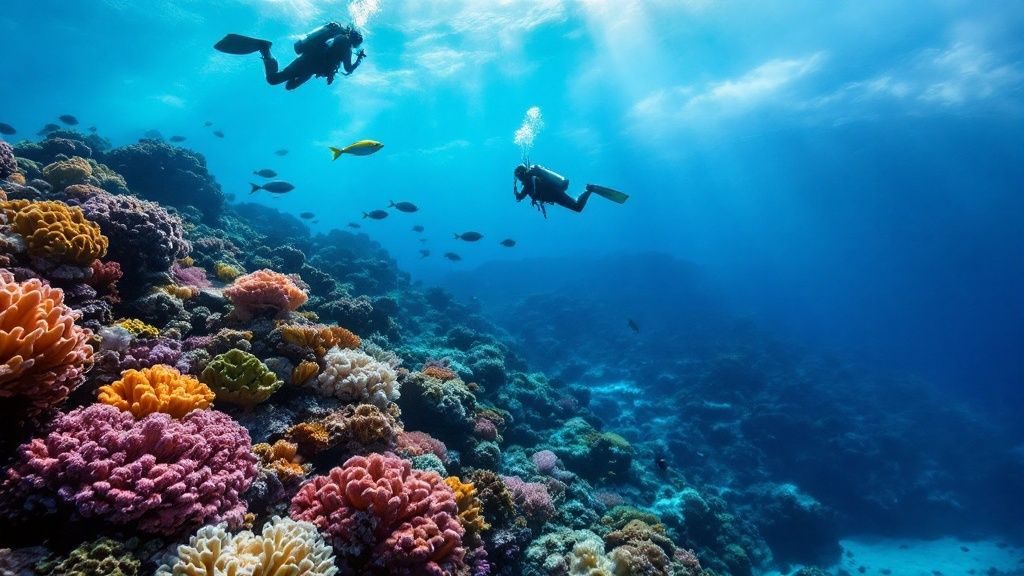
The Kona Manta Ray Night Dive isn't just another box to check on your scuba bucket list. It’s a surreal, world-famous spectacle that feels more like floating through an underwater ballet than a typical dive. Honestly, it's an experience that consistently ranks as one of the planet's most memorable wildlife encounters, making it the most iconic part of Kona diving.
Picture this: you descend into the warm, dark ocean after sunset. The only light is from your group’s torches and a powerful beacon placed on the seafloor. This light acts like an underwater campfire, attracting massive swarms of microscopic plankton—the favorite meal of giant manta rays.
What happens next is pure magic. Drawn in by the all-you-can-eat buffet, these gentle giants emerge from the darkness, gliding effortlessly through the beams of light. With wingspans reaching up to 16 feet, they perform barrel rolls and somersaults, scooping up plankton just inches above your head. It’s an incredibly intimate and awe-inspiring display of nature's grace.
What to Expect on This Unforgettable Dive
Your adventure kicks off with a boat briefing under the stars, where the crew walks you through the plan, emphasizing safety and respect for the mantas. Once you're in the water and descend, you'll find a spot on the ocean floor, shine your light upwards, and simply watch the show unfold.
This isn’t a deep or technically difficult dive, but it does require you to be calm and still. The key is to stay put and let the mantas come to you. Operators like Kona Honu Divers have perfected this encounter, making it both breathtaking for divers and completely safe for the rays. If you want a deeper dive into the specifics, check out our guide on what the manta ray night dive is all about. You can book your own spot on one of the manta ray dive tours here.
To get the most out of it, just remember these simple rules:
- Look, Don't Touch: Never, ever touch a manta ray. Touching them can strip away their protective mucous coating, leaving them vulnerable to infections.
- Stay in Your Spot: Divers should remain on or near the sandy bottom. This keeps the water column clear for the mantas to maneuver safely and gracefully.
- Light Discipline: Point your dive light straight up to attract the plankton. This creates that "campfire" effect that draws the mantas in for their feeding dance.
An Eco-Conscious Encounter
Kona's dive community is fiercely protective of its resident manta ray population. The entire dive is built around eco-conscious principles designed to minimize our impact and ensure these incredible creatures continue to thrive for years to come.
The feeling of watching a massive fish the shape of a stealth bomber coming into vision is impossible to describe. It’s akin to watching your child ride a bike for the first time or finding a winning lottery ticket.
Top operators put the mantas' welfare above everything else. They stick to strict guidelines and make sure every diver understands how to be a passive, respectful observer. It’s this responsible approach that has allowed Kona to maintain a healthy, year-round population, with sightings guaranteed on over 90% of trips.
This focus on conservation is a core value here at Kona Honu Divers. Our experienced crew ensures every single dive is conducted with the utmost respect for the ocean and its inhabitants.
Exploring Kona’s Top Dive Sites
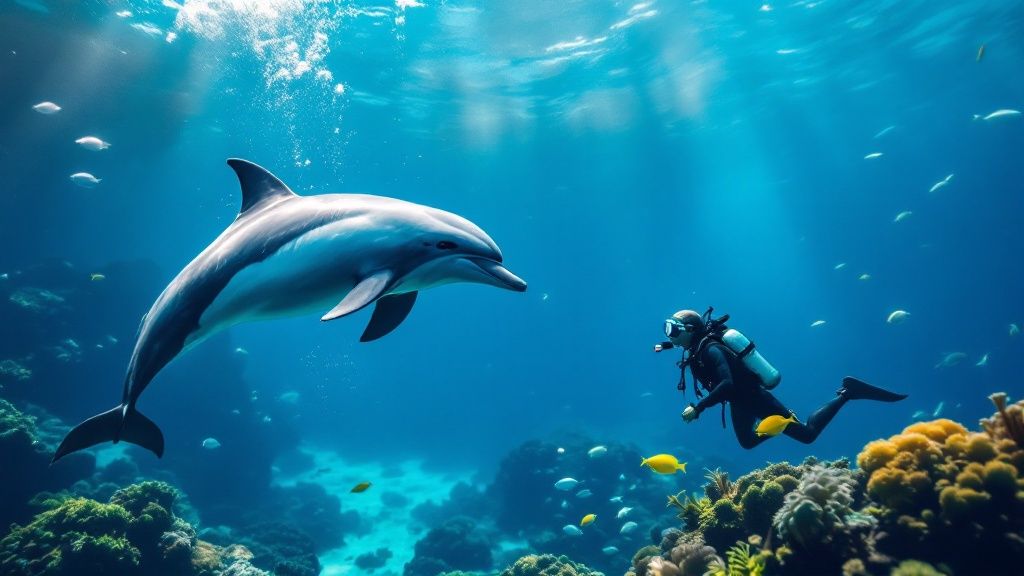
The Kona coastline is an underwater world sculpted by volcanoes. That fiery history left behind an incredible playground for divers, a tapestry of shallow reefs, mind-bending lava tubes, and deep-water pinnacles. Knowing where to go is the key to unlocking your perfect Kona diving trip.
Think of this as your treasure map to the best spots the Big Island has to offer. We’ve laid everything out by experience level, so you can easily find a dive that fits your skills, whether you're just getting your fins wet or you're a seasoned pro looking for a challenge.
Dive Sites For Beginners
If you're new to the sport or just want a chill, beautiful dive, Kona’s protected bays are the perfect place to start. These spots are typically calm and shallow, absolutely packed with colorful fish. They’re the ideal environment to get comfortable, practice your skills, and just soak in the magic of being underwater.
- Pawai Bay: We love taking new divers here. It’s often called a "nursery" for juvenile fish, and for good reason. Conditions are gentle, depths are usually between 20-40 feet, and you’re surrounded by vibrant schools of yellow tangs and butterflyfish. It’s a fantastic place to build confidence.
- Kailua Bay: Right in the heart of Kona, this site is super accessible but don’t let that fool you—the ecosystem is surprisingly rich. You can spend your time exploring coral heads, spotting octopuses and moray eels, and you might even get a visit from a Hawaiian green sea turtle.
These beginner-friendly sites prove you don’t have to go deep to see amazing things. We carefully pick these locations to make sure your first taste of Kona is safe, fun, and unforgettable. For a closer look at these and other spots, check out our guide to the most beautiful Kona diving sites.
Intermediate Dive Adventures
Once you’ve got your buoyancy dialed in and you're ready for something more, Kona's intermediate sites are waiting. These dives introduce you to more complex lava formations and an even greater variety of marine life.
A local legend is Turtle Pinnacle, a fantastic dive that usually bottoms out between 30 to 60 feet. This spot is famous for being a natural 'cleaning station' where Hawaiian green sea turtles (honu) hang out while smaller fish nibble algae off their shells. It's an incredible thing to witness and a big reason divers come back here again and again.
Another must-do is Golden Arches. As the name suggests, it’s famous for its stunning underwater lava arches that you can actually swim through. The photo ops are unreal. You'll often find these arches patrolled by big schools of surgeonfish, and if you look closely, you might spot a well-camouflaged frogfish.
Challenges for Advanced Divers
For the seasoned diver looking for a real thrill, Kona delivers. We're talking deeper sites, more dramatic topography, and the chance of running into some current. These dives require experience, but the payoff is seeing landscapes and creatures that few ever get to.
Advanced dives are where you really see the raw, creative power of the volcanoes that formed these islands. The geology gets more dramatic, and the marine life can get bigger and a lot more surprising.
Sites like Au Au Crater (which locals sometimes call "Suck 'em Up") have these awesome lava chutes and caverns that can create a gentle surge, pulling you in and out. It's a blast. This is also a great place to spot whitetip reef sharks and eagle rays. A dive like this demands excellent buoyancy control and a sharp eye.
Venturing into these more challenging waters is something you want to do with a skilled crew who knows the sites inside and out. It's why we run premium advanced dive tours specifically designed for experienced divers who want to explore Kona's wilder side safely.
How to Get Scuba Certified in Paradise
Picture this: you take your first-ever breath underwater, surrounded by a kaleidoscope of tropical fish in warm, crystal-clear water. Sounds like a dream, right? Well, there's no better classroom on earth for learning to scuba dive than the calm, protected bays of Kona. If you’ve ever thought about becoming a certified diver, this is the perfect place to kick off a lifelong adventure.
The whole process might sound intimidating, but getting your PADI Open Water Diver certification is actually really straightforward and incredibly rewarding. It’s broken down into three simple, manageable parts that build your confidence every step of the way. With its amazing visibility and gentle conditions, Kona diving provides the ideal learning environment, with professional, patient instructors guiding you through it all.
The Three Steps to Certification
Becoming a certified diver is a journey that cleverly mixes knowledge, practice, and real-world experience. Here’s a look at how the PADI Open Water course is structured to make you a safe, competent, and confident diver.
- Knowledge Development: This is the "book smarts" part where you learn the fundamental principles of scuba diving. Most people knock this out online with PADI eLearning before they even land in Hawaii. It’s a huge time-saver and means more time in the water once you're here.
- Confined Water Dives: Next up, you'll gear up and head to a calm, pool-like spot to practice all the essential scuba skills. Under the watchful eye of your instructor, you’ll get comfortable with everything from clearing your mask to mastering your buoyancy in a super safe, controlled setting.
- Open Water Dives: This is where the magic happens! You'll complete four dives in the beautiful Kona ocean, putting all your new skills to use while exploring the vibrant reefs. These dives are the final, thrilling step to earning your certification and officially joining the scuba diving community.
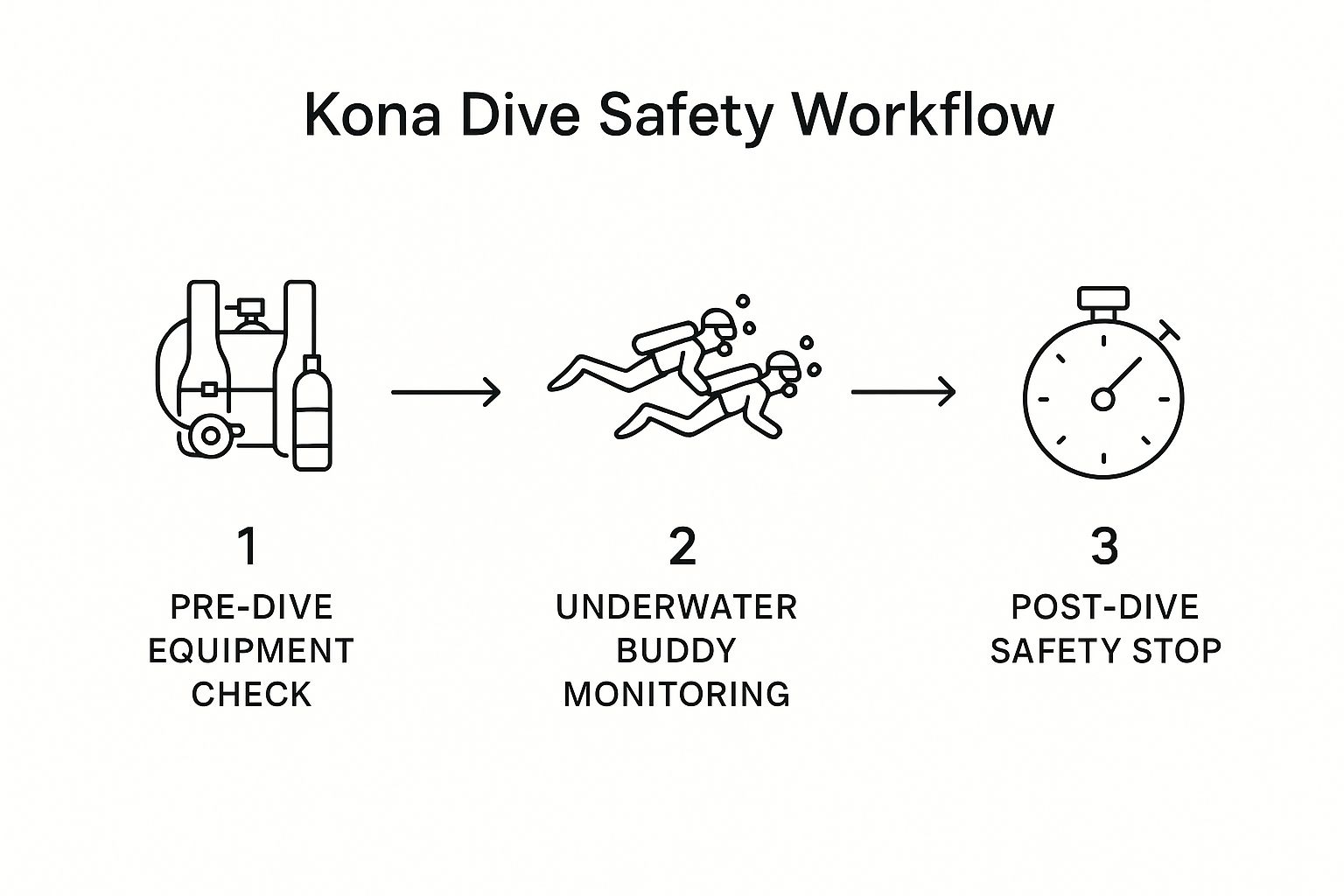
The entire certification process usually takes about three to four days, making it an easy and unforgettable addition to any Kona vacation. For a complete deep dive into the course schedule and what's included, you can check out the Kona scuba certification course offered by local pros.
Not Ready for a Full Course? Try a "Discover Scuba" Experience
If you're a bit short on time or just aren't sure you're ready to commit to a full certification, the Discover Scuba Diving program is your perfect answer. Think of it as a one-day "test drive" of the underwater world, without the commitment of the multi-day course.
After a quick-and-easy lesson on safety and the basic skills, an instructor will guide you on a shallow reef dive. This is your chance to see if Kona diving is for you, and honestly, it’s an incredible adventure all on its own. A word of warning, though: many people who try it get hooked immediately and sign up for the full Open Water course before the day is over.
Whether you go for the full certification or just dip your toes in with a discovery dive, learning in Kona means you're starting your scuba journey in one of the most beautiful and forgiving underwater environments on the planet.
Choosing the Best Kona Dive Operator
When you're planning a dive trip to Kona, the single most important call you'll make is picking your dive operator. Think of them as more than just a boat taxi. They're your guide, your safety crew, and your ticket to seeing the absolute best stuff the Big Island has hiding beneath the waves.
A fantastic operator can turn a good dive into one of those stories you tell for years. The wrong one? Well, that can put a serious damper on your fun and even your safety. Kona has a bunch of options, from big, well-known outfits to smaller, more intimate charters. Let's break down how to pick the right one for you.
What to Look for in a Kona Dive Shop
Choosing a dive shop isn't about finding the cheapest price. It’s about finding the right fit—from how comfy the boat is to how much the guides know. Kona's dive scene really took off in the 1980s, built by local pioneers who cared deeply about safety and keeping our reefs healthy.
Many of those original family-run shops set the standard, and that legacy of care continues today. It's a huge part of why Kona's diving is still so incredible.
As you look around, keep these things in mind:
- Safety Record and Crew Experience: A PADI 5-Star rating is a great sign. You also want divemasters who really know Kona. That local knowledge is priceless when it comes to understanding currents, finding cool critters, and keeping everyone safe.
- The Boat Matters: A comfy boat with a marine head (that’s a toilet!), a hot shower for after, and some snacks can make a world of difference. Trust me, you'll appreciate it on your surface interval.
- Group Size: Do you like a bigger, more social vibe, or do you prefer a small group where you get more one-on-one time with the guide? There’s no wrong answer, just what’s right for you.
- Their Specialty: Some shops are amazing with first-timers and families. Others are geared toward technical divers or serious photographers. Try to match their focus with your own diving goals.
For a deeper dive, check out our full guide on how to choose a Kona dive shop where we break down even more things to consider.
Comparing Top-Rated Kona Operators
To give you a head start, here’s a look at a few of the most respected names in town, along with their live Google Reviews so you can see what other divers are saying.
Kona Honu Divers
We're known for two things above all else: top-notch customer service and an award-winning manta ray night dive that people rave about. We run big, comfortable boats but keep our groups small, and we even offer free Nitrox if you’re certified. We really focus on creating an 'ohana' (family) vibe where every diver feels welcome, safe, and part of the crew.
Jack’s Diving Locker
As one of Kona's original shops, Jack's has been around forever and has a solid reputation for professional training. They have multiple boats and can handle larger groups, which makes them a popular pick for families or divers looking to get a specific certification.
Big Island Divers
Another well-loved operator, Big Island Divers is known for having a super friendly crew and running a tight ship. They offer a good mix of daily reef dives and manta charters, making them a great all-around choice for most divers visiting the island.
Ultimately, the "best" shop really depends on what's most important to you. If you’re looking for an incredible all-around experience that nails the fundamentals of safety, comfort, and a genuine passion for the ocean, we'd love to show you what makes us different.
Frequently Asked Questions About Diving in Kona
Heading to a new dive spot always sparks a few questions. We get it. To make sure you feel totally ready for your underwater adventure, we've put together answers to the most common things people ask about Kona diving. This is the inside scoop, straight from people who live and breathe this stuff every day.
What Is the Best Time of Year for Kona Diving?
Honestly, one of the best things about Kona is that the diving is incredible all year long. There's really no bad time to visit.
But if you're looking for that absolute picture-perfect, calm-as-glass, see-forever kind of diving, the summer months from June to September are tough to beat. The water warms up to a balmy 80°F (27°C), the seas are usually super flat, and visibility can easily top 100 feet.
The winter brings its own kind of magic, though. From the boat and even underwater, you can often hear the haunting songs of humpback whales echoing through the ocean. It's an experience that will give you chills—in a good way.
What Marine Life Will I See?
Kona's volcanic coastline has created this incredibly rich, rugged underwater landscape that life just loves to cling to. It’s a real biodiversity hotspot. On just about any dive, you can pretty much count on seeing Hawaiian green sea turtles (we call them honu), moray eels peeking out from their homes, octopuses, and a whole rainbow of reef fish like butterflyfish, parrotfish, and bright yellow tangs. It's also super common to have spinner dolphins escorting the boat.
Of course, the A-listers are the giant manta rays you'll meet on the world-famous night dive. And if you're feeling extra adventurous, the surreal Kona blackwater dive brings bizarre, bioluminescent creatures up from the deep that you won't see anywhere else on earth. Keep an eye out for eagle rays and whitetip reef sharks, too—they're often cruising the reef edges.
Do I Need to Be an Expert Diver for Kona?
Not at all! Kona is genuinely a fantastic spot for divers of all stripes. We have tons of protected, shallow sites that are perfect for beginners or anyone still working on their certification. The local dive crews are pros at making new divers feel safe, comfortable, and confident in the water.
Got a few more dives under your belt? Great. Kona has plenty of thrilling advanced diving opportunities to keep you excited, from deep lava tubes and dramatic walls to those one-of-a-kind night dives. The most important thing is just to be honest about your experience level. That way, your guide can pick the perfect sites to match your skills.
What Should I Pack for My Dive Trip?
Besides the obvious—your certification card and logbook—here are a few must-haves for a Kona dive trip.
- Reef-safe sunscreen is non-negotiable. Hawaii's corals are fragile, and we all need to do our part to protect them.
- A 3mm or 5mm wetsuit is what most people are comfortable in, but don't sweat it if you don't own one. You can easily rent great gear from any local shop.
- Other things you'll be glad you brought: a hat, sunglasses, a reusable water bottle, and a towel.
If you know you're prone to seasickness, it’s a good idea to bring some medication for the boat rides. Reputable shops like Kona Honu Divers have top-notch, well-maintained rental equipment, so you only really need to pack your own gear if you prefer it.