
Picture this: you're drifting down into impossibly clear, blue water. Sunlight streams through the openings of an ancient lava tube, and just as you're taking it all in, a massive Hawaiian green sea turtle glides effortlessly past. That, right there, is the soul of Kona diving. It’s not just another reef tour; it’s a full-blown underwater adventure defined by wild volcanic landscapes and an incredible cast of marine characters.
Why Kona is a World-Class Diving Destination
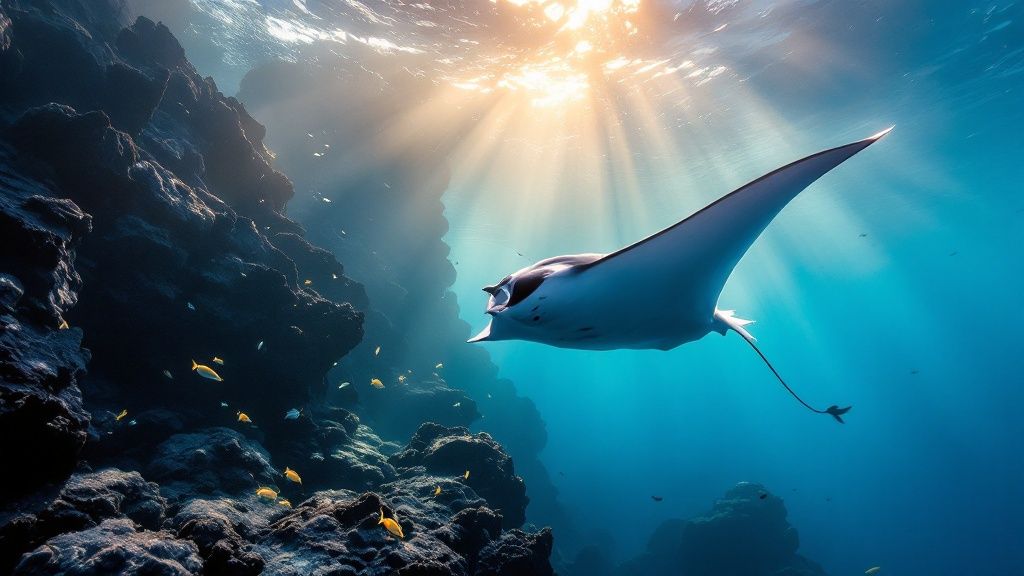
Divers from every corner of the globe flock to Kona, and it doesn't take long to see why. Tucked away on the Big Island's western coast, we're shielded from the trade winds by the colossal volcanoes of Mauna Loa and Hualalai. This natural barrier gives us consistently calm, clear water—perfect conditions for exploring the underwater world shaped by millennia of lava flows.
Unlike the flat, sandy bottoms you might find elsewhere, Kona's seafloor is a playground. We're talking dramatic lava tubes, soaring arches, hidden caverns, and huge underwater pinnacles. This unique topography creates the perfect home for a ridiculously diverse ecosystem. Visibility is often off the charts, sometimes pushing past 100 feet, so you get a front-row seat to the vibrant coral gardens and all the critters that live there.
Unforgettable Marine Encounters
The sheer amount of life here is staggering. On any given dive, you can spot everything from tiny, brilliantly colored nudibranchs tucked into crevices to the kind of majestic megafauna that tops every diver's bucket list.
A huge part of the magic is the high number of endemic species—creatures you won’t find anywhere else on the planet. Keep your eyes peeled for the Milletseed Butterflyfish, Hawaiian Dascyllus, and the eye-popping Potter's Angelfish.
Of course, what really put Kona on the map are the iconic, big-animal encounters. These aren't just lucky sightings; they're reliable, world-famous experiences that have cemented our reputation as a top-tier diving hub. Whether you're a freshly certified diver or a seasoned pro, there are plenty of jaw-dropping moments waiting for you. You can dive deeper into all the reasons to scuba dive Kona Hawaii in our dedicated guide.
Here's a quick rundown of what makes Kona's underwater scene so special:
- Manta Ray Night Dive: Witness an otherworldly ballet as these gentle giants swoop and barrel-roll through clouds of plankton attracted by underwater lights.
- Blackwater Dive: A true adventure. You'll drift in the deep, open ocean at night, watching bizarre and beautiful creatures rise from the abyss.
- Turtles Everywhere: You'll see Hawaiian Green Sea Turtles (Honu) on nearly every dive, often snoozing on the reef or getting a good scrub at a "cleaning station."
- Dolphins and Whales: Spinner dolphins often escort our boats to the dive site. In the winter, the haunting songs of humpback whales become the soundtrack to your dive.
To help you get a sense of what's possible, here’s a quick snapshot of the top experiences Kona offers throughout the year.
Kona Diving at a Glance
| Dive Type | Best Season | Experience Level | Key Marine Life |
|---|---|---|---|
| Manta Ray Night Dive | Year-round | Open Water Diver+ | Manta Rays, Eels, Crustaceans |
| Blackwater Dive | Year-round | Advanced Open Water | Pelagic Larval Fish, Squid, Jellies |
| Reef Dives | Year-round | All Levels | Turtles, Dolphins, Reef Fish |
| Whale Encounters | Dec – March | All Levels | Humpback Whales (boat-based) |
From thrilling night dives to relaxed reef explorations, the sheer variety here is what makes Kona such an unforgettable place to get wet. There's truly an adventure here for every diver.
Planning Your Trip for Perfect Dive Conditions

Every diver dreams of the perfect day: calm seas, bathtub-warm water, and visibility that seems to go on forever. The good news? That's pretty much an average day of diving in Kona. Thanks to the massive volcanoes that shield the coastline from powerful trade winds, the waters here are famously serene, making it a fantastic destination almost any day of the year.
That said, each season brings its own unique flavor to the underwater world. Knowing the subtle differences can help you line up your trip with exactly what you want to experience—whether that's hearing whale songs on your safety stop or enjoying the calmest, most glassy surface conditions imaginable.
Summer: The Peak Season for Kona Diving
For many divers, the absolute best conditions for Kona diving happen between June and September. During these summer months, the ocean often lays down completely flat, looking more like a lake than the open Pacific. It's not uncommon for underwater visibility to push past 100 feet. The water also warms up to a balmy 79-82°F (26-28°C), making for some incredibly comfortable dives.
This is hands-down the most popular time for a reason. The stable seas and peak marine life activity create some truly exceptional encounters, from thriving reefs bustling with fish to regular sightings of Hawaiian green sea turtles. Of course, perfect conditions bring people, so expect it to be the busiest season. You can get more great seasonal tips from the crew at Kona Ocean Adventures.
Winter: Whale Songs and Unique Encounters
Diving in Kona between December and March adds a magical element that no other season can touch: humpback whales. While you won't be scuba diving with them, their powerful and haunting songs travel for miles underwater, becoming the unforgettable soundtrack to your dives.
Water temps dip just a bit to a still-comfortable 75-77°F (24-25°C). And while the surface might have a bit more swell than in the summer, the underwater conditions are still fantastic. This season offers a different kind of quiet and peace beneath the waves, punctuated by the chorus of giants.
Winter diving in Kona adds an auditory dimension that is simply breathtaking. Hearing the complex songs of humpback whales echoing through the reef is a profound experience that connects you directly to the raw, wild nature of the Pacific.
Spring and Fall: The Shoulder Season Sweet Spot
Don't sleep on the shoulder seasons of April-May and October-November. For a lot of divers, these months are the sweet spot, offering the best of both worlds. You get the warm water and excellent visibility of summer, but with noticeably fewer people on the boats and at the dive sites.
These periods strike a perfect balance, giving you prime Kona diving conditions without the peak-season crowds. It’s an ideal time to plan your trip if you're looking for a more relaxed and personal underwater experience while still cashing in on fantastic weather and marine life.
Exploring Kona’s Signature Underwater Adventures
Sure, Kona’s reefs are spectacular on their own, but the real magic happens on its signature underwater adventures. These are the bucket-list experiences that people fly from all over the world for—the kind of dives that completely redefine what’s possible on a single tank of air.
We're going to break down the "big three" that have cemented Kona diving on the international map. First up is the legendary, almost spiritual, Manta Ray Night Dive. Then, we’ll take a plunge into the inky blackness of the Blackwater Night Dive for a truly surreal journey. And finally, we'll cover the advanced charters built to thrill even the most seasoned divers.
The World-Famous Manta Ray Night Dive
Picture this: you’re kneeling on a sandy patch of the ocean floor in the dark. Your dive light is pointed straight up, a beacon in the night. Out of the blackness, a shadow emerges, growing larger and larger until a majestic manta ray with a massive 12-foot wingspan glides inches above your head. This isn't just a lucky sighting; it's the nightly show here in Kona.
How does it work? Dive operators have set up specific, safe spots where powerful underwater lights illuminate the water, attracting huge clouds of plankton. The local, non-migratory manta rays know exactly where to find this all-you-can-eat buffet and show up consistently. As a diver, you just get to sit back and watch the performance. It's an underwater theater where these gentle giants perform an effortless ballet of swoops, somersaults, and barrel rolls.
This dive is consistently ranked as one of the best night dives on the planet. The sheer grace and up-close proximity of these enormous creatures create a profound and unforgettable connection with the ocean.
It’s a mesmerizing and totally safe experience that's perfect for any certified diver. Because the dive is stationary and in a relatively shallow spot, it's an incredible adventure even if you only have a few dives in your logbook. To really dig into what makes this one of the most unique and respectful wildlife encounters out there, check out our detailed guide to diving with manta rays in Hawaii.
The Blackwater Night Dive: An Otherworldly Experience
For the truly adventurous souls, the Blackwater Night Dive is an absolute must. Trust me, this dive is unlike anything you have ever done before. Instead of exploring a reef, you're drifting miles offshore, tethered to the boat, and suspended over thousands of feet of inky black water.
At night, one of the largest migrations on Earth happens right here, as bizarre and beautiful creatures rise from the abyss to feed near the surface. You'll come face-to-face with life forms that look like they belong on another planet: translucent larval fish, iridescent squid, and pulsing, bioluminescent jellies. It's a thrilling, humbling experience that gives you a rare glimpse into the vast, mysterious world of the deep sea.
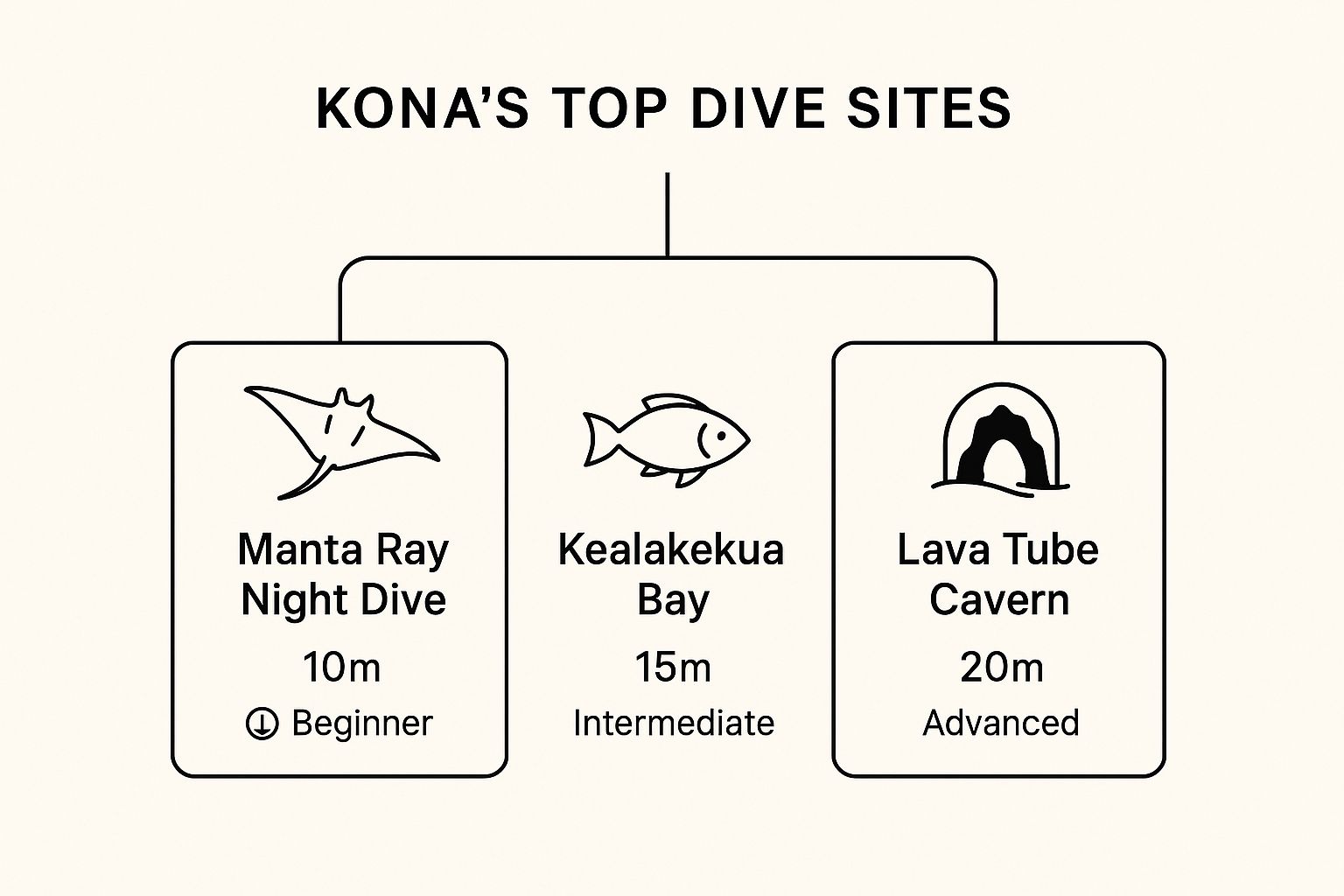
As you can see, while iconic dives like the Manta Ray Night Dive are super accessible for beginners, Kona also offers a clear path to deeper and more challenging sites for intermediate and advanced divers.
Advanced Charters for Experienced Divers
Have an advanced certification and a taste for exploration? Kona has plenty to get your adrenaline pumping. We run specialized advanced charters that cater to seasoned divers looking to go deeper and explore more complex underwater terrain.
These trips head out to more remote sites that feature:
- Deep Pinnacles: Think of these as underwater mountains rising from the seafloor, often acting as magnets for larger pelagic species.
- Lava Tube Caverns: We safely penetrate the dramatic volcanic formations that define the Kona coast.
- Dramatic Walls and Canyons: Get ready to explore vertical drop-offs that descend straight into the deep blue.
These dives demand excellent buoyancy control and a solid foundation of experience, but the payoff is huge. You’ll see different marine life and explore rugged topography that very few people ever get to witness.
A Diver’s Guide to Top Kona Dive Sites
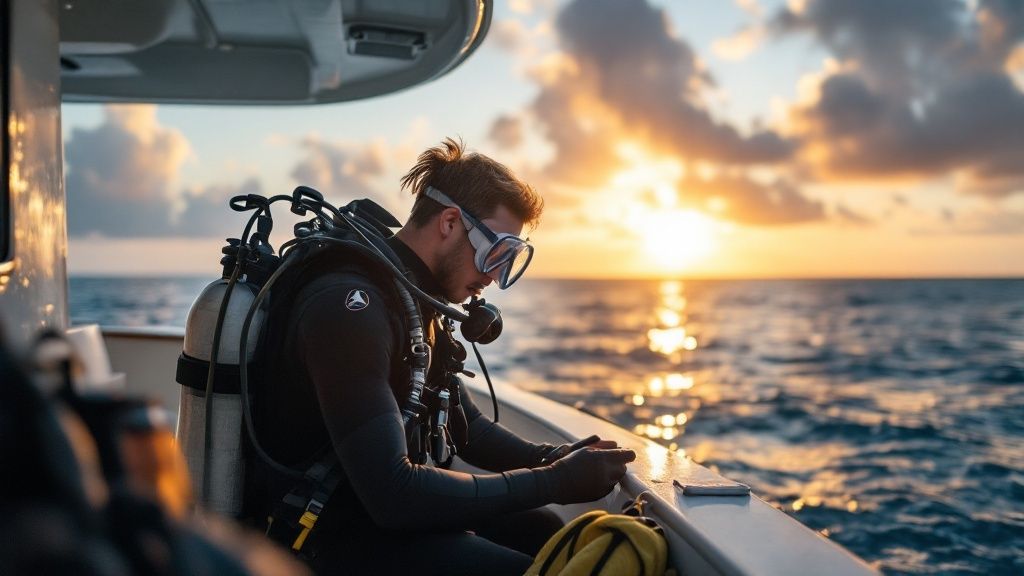
Sure, Kona is famous for its manta ray and blackwater dives, but it's the daily reef diving where you'll get a true sense of the Big Island's soul. The coastline is just packed with dozens of unique sites, each one a different adventure shaped by ancient lava flows and the vibrant critters that call them home. This isn't your average coral garden tour; it's an exploration of a raw, underwater volcanic landscape.
The real magic of Kona diving is just how different every dive feels. One minute, you could be gliding through a massive, cathedral-like lava arch. The next, you're watching a Hawaiian green sea turtle getting a spa day at a "cleaning station." The topography is the undisputed star of the show here, creating an incredible playground of swim-throughs, canyons, and pinnacles that are teeming with life.
Must-See Sites for Every Diver
Whether you’re a new diver looking for shallow, sun-drenched coral gardens or a seasoned pro hunting for dramatic drop-offs, Kona delivers. Every site has its own personality and its own cast of resident characters, which guarantees you’ll never have the same dive twice. The best part? Many of these world-class spots are just a quick boat ride from Honokohau Harbor.
Here are a few of the local legends that almost never disappoint:
- Golden Arches: This spot is a photographer's dream, named for its absolutely massive lava archway. When the sun hits just right, the light streams through and illuminates huge schools of Milletseed Butterflyfish—a species you'll only find in Hawaii.
- Turtle Pinnacle: If you want a guaranteed turtle encounter, this is your spot. The site is built around a huge coral pinnacle that acts as a cleaning station, where turtles line up and patiently hover while smaller fish pick them clean of algae. It’s an incredible sight.
- Suck 'em up: Don't let the name scare you! This lava tube cavern is a thrilling but perfectly safe swim-through. You enter one end, and the gentle surge "sucks" you through to the other side, giving you a front-row seat to the colorful sponges and crustaceans hiding in the walls.
Exploring the Unique Underwater Landscape
So, what makes these sites so special? It's all about the geology. The Big Island is the youngest in the Hawaiian chain, and you can feel that raw, volcanic energy in its underwater terrain. You aren't just looking at marine life; you're exploring the very building blocks of the island itself.
This dramatic structure creates the perfect habitat for an insane amount of life. You'll often find Whitetip reef sharks napping on sandy patches between lava formations, and moray eels poke their heads out from countless little nooks and crannies. For a deeper look at even more amazing locations, check out our full guide to the most beautiful Kona diving sites.
The volcanic topography is the true heart of Kona's reef systems. The intricate network of lava tubes, arches, and caverns provides shelter and hunting grounds for a dense and diverse population of marine animals, making every dive a journey of discovery.
Thanks to the calm, clear water, even at depths of 60-80 feet, the reefs are drenched in sunlight. This helps support some of the highest coral cover in the entire state. This healthy ecosystem is a powerful reminder of the pristine conditions that make Kona diving a truly world-class experience. It doesn't matter if it's your first dive or your five-hundredth—the reefs here will leave you speechless.
How to Choose the Right Kona Dive Operator
Let’s be honest, your dive operator is way more than just a boat ride. These are the folks who will be your guides, your safety net, and your key to unlocking the absolute best of Kona's underwater world. Picking the right one can easily be the difference between a good dive trip and an unforgettable one. The Kona coast has a ton of operators, and each one has its own vibe and way of doing things, so finding a perfect match for your diving style is a big deal.
Think about it: Do you want the personal, close-knit feel of a small group, or do you feed off the energy of a bigger boat? Are you here for a highly specialized technical dive, or are you just looking for a couple of beautiful, laid-back reef tours? Nailing down the answers to these questions will make your choice a lot easier and set you up for a safe, fun, and totally stress-free experience.
Small Groups vs. Large Operations
The first fork in the road is usually group size. Some divers love the social aspect and buzz of a larger boat, while others, like me, really value a more personal, tailored approach.
Operators like Kona Honu Divers have really built their reputation on the small-group model. What does that mean for you? It almost always translates to more one-on-one time with your divemaster, more say in where you go, and a much more relaxed pace. For a lot of people, that "ohana" (family) feeling is a huge part of the aloha spirit.
Then you have the big, established operations that have been the backbone of the Kona diving community for decades. Take Jack's Diving Locker, for example—they're a true cornerstone of Big Island diving with over 45 years of history. Their bigger boats can handle larger groups with incredible efficiency, making them a go-to for families or anyone who appreciates a well-oiled machine that can easily accommodate both divers and snorkelers.
Your Checklist for Choosing an Operator
Beyond just the size of the boat, there are a few other key things you should absolutely look into. A little bit of homework before you book goes a long way in making sure you're comfortable and safe out on the water.
Here's a quick checklist to run through when you're looking at different shops:
- Safety Record and Reviews: Dive into online reviews. Look for people consistently mentioning great safety briefings, knowledgeable guides, and gear that’s clearly well taken care of. Real-world feedback is gold.
- Boat Comfort and Amenities: How big is the boat? Is there plenty of shade? Is there a marine head (that’s a toilet, for you landlubbers) and, crucially, a hot shower for a post-dive warm-up? These little things make a massive difference, especially on a two-tank trip.
- Guide-to-Diver Ratio: A lower ratio is almost always better. Think one guide for every four or five divers. It just means a more personal and safer experience for everyone.
- Gear Quality: If you’re renting, don’t be shy about asking what brand they use and how often it’s serviced. The best shops invest in modern, high-quality equipment because they know it matters.
- Eco-Consciousness: Does the operator practice what they preach? Check if they follow responsible wildlife interaction guidelines, especially for the manta ray night dive. Supporting a company that genuinely cares about marine conservation helps protect the very reefs you came to see.
At the end of the day, the "best" operator is the one that just feels right for you. Do they answer your questions without making you feel silly? Are they genuinely stoked about diving and the local marine life? Trust your gut—the right vibe is often the best indicator of a fantastic trip ahead.
Making a smart choice here is your first real step toward an incredible Kona diving adventure. For an even deeper dive on what to look for, check out our full guide on how to choose a Kona dive shop.
Preparing for Your Kona Dive Adventure
A great dive day starts long before you get on the boat. It begins with confidence—the kind you get from knowing exactly what’s coming and being fully prepared. Getting ready for a **Kona diving** trip isn’t complicated, but a little bit of prep work makes all the difference.
Think of it as a pre-flight checklist. Run through these simple steps, and you’ll show up at the dock feeling cool, calm, and ready to make some bubbles.
A typical day kicks off with an early check-in at the harbor. You’ll meet the crew, knock out any last-minute paperwork, and get your gear sorted. Once aboard, your divemaster will walk you through the plan for the day—the dive site, safety stuff, and what cool critters you might see. After the first dive, most boats have snacks and drinks to help you refuel during your surface interval before you head off for round two.
What to Pack for Your Dive Day
We’ve got you covered with the heavy gear, like tanks and weights. But there are a few personal items you’ll want to bring along to make your day on the water as smooth as possible.
Here’s your must-have list:
- Your C-Card: No card, no dive. It's the one thing you absolutely can't forget.
- Logbook: You’re about to make some incredible memories. Why not write them down?
- Reef-Safe Sunscreen: This is a big one. The chemicals in regular sunscreen are seriously bad for our coral. Go for a mineral-based sunscreen to protect both your skin and the reef.
- Swimsuit & Towel: Simple enough—wear your suit under your clothes and bring a towel for after.
- A Dry Bag: A small dry bag is a lifesaver for keeping your phone, keys, and a light jacket from getting soaked.
Understanding Certification and Safety
Your certification level is basically your passport to different underwater adventures. With an Open Water certification, you can explore the vast majority of Kona’s amazing shallow reefs.
But if you’ve got your sights set on something a little more adventurous, like a Kona Blackwater dive or some of the deeper sites, you’ll need to be an Advanced Open Water diver.
When it comes to the dive itself, safety is everything. Listen up during the divemaster's briefings—they’re packed with essential info about the site, how to get in and out of the water, and what to do if something goes sideways. Always stick with your buddy, keep an eye on your air, and never push your limits.
Finally, remember we’re just visitors down there. The best divers are the ones who leave no trace. Keep your buoyancy in check to avoid bumping into the fragile reef, give the marine life its space, and take only pictures. It’s on all of us to make sure Kona’s underwater world stays beautiful for years to come.
Follow these simple tips, and you’ll be set for an unforgettable Kona diving experience. Ready to jump in? Check out our full lineup of scuba diving tours on the Big Island.
Common Questions About Diving in Kona
Even the most seasoned divers have a few last-minute questions before a big trip. It’s totally normal! Getting those final details ironed out is the key to showing up feeling confident and ready for an epic time.
Let's tackle some of the most common questions we hear from divers planning their Kona adventure, so you can book with total peace of mind.
Do I Need to Be an Advanced Diver to Enjoy Kona?
Not at all! This is one of the biggest misconceptions about diving here. Kona is a fantastic spot for divers of all experience levels.
While we do have some special charters that require an advanced certification, like the mind-blowing Kona Blackwater dive, the vast majority of our world-famous reefs are in calm, clear, and relatively shallow water. Most of our best sites are between 30-60 feet, making them perfect for Open Water certified divers. We’re also pros at grouping divers by skill level, so you’ll always feel safe and comfortable while getting to see Kona’s incredible underwater world.
What Is the Water Temperature and What Wetsuit Should I Bring?
You're in luck—Kona's ocean is beautifully warm year-round. In the winter, you can expect water temps to hover around 75-77°F (24-25°C). In the summer, it gets even toastier, climbing to a balmy 79-82°F (26-28°C).
For most people, a standard 3mm full wetsuit is the sweet spot. It provides just the right amount of warmth without restricting your movement. If you tend to run cold, especially on those unforgettable night dives, you might be happier bringing a 5mm suit just to be safe.
Is the Manta Ray Night Dive Safe for Beginners?
Absolutely, and it's an experience you'll never forget! The world-famous manta ray night dive is incredibly safe and specifically set up to be accessible for certified divers of any level. The whole thing is stationary, taking place in a shallow, sandy area about 25-40 feet deep.
You won't be swimming around in the dark. Instead, you'll settle in on the seafloor near our light source, which is what attracts the plankton the mantas come to feed on. You just get to be a spectator in a truly breathtaking underwater show. Our experienced divemasters are right there with you the whole time, making it a spectacular and completely secure adventure, even for newly certified divers.