
Picture this: you're floating in the vast, inky blackness of the Pacific Ocean, miles offshore. There's no reef below you, just thousands of feet of deep, dark water. This isn't a sci-fi movie—it's a Kona blackwater dive, and it’s one of the most mind-bending experiences you can have underwater.
What Is a Kona Blackwater Dive
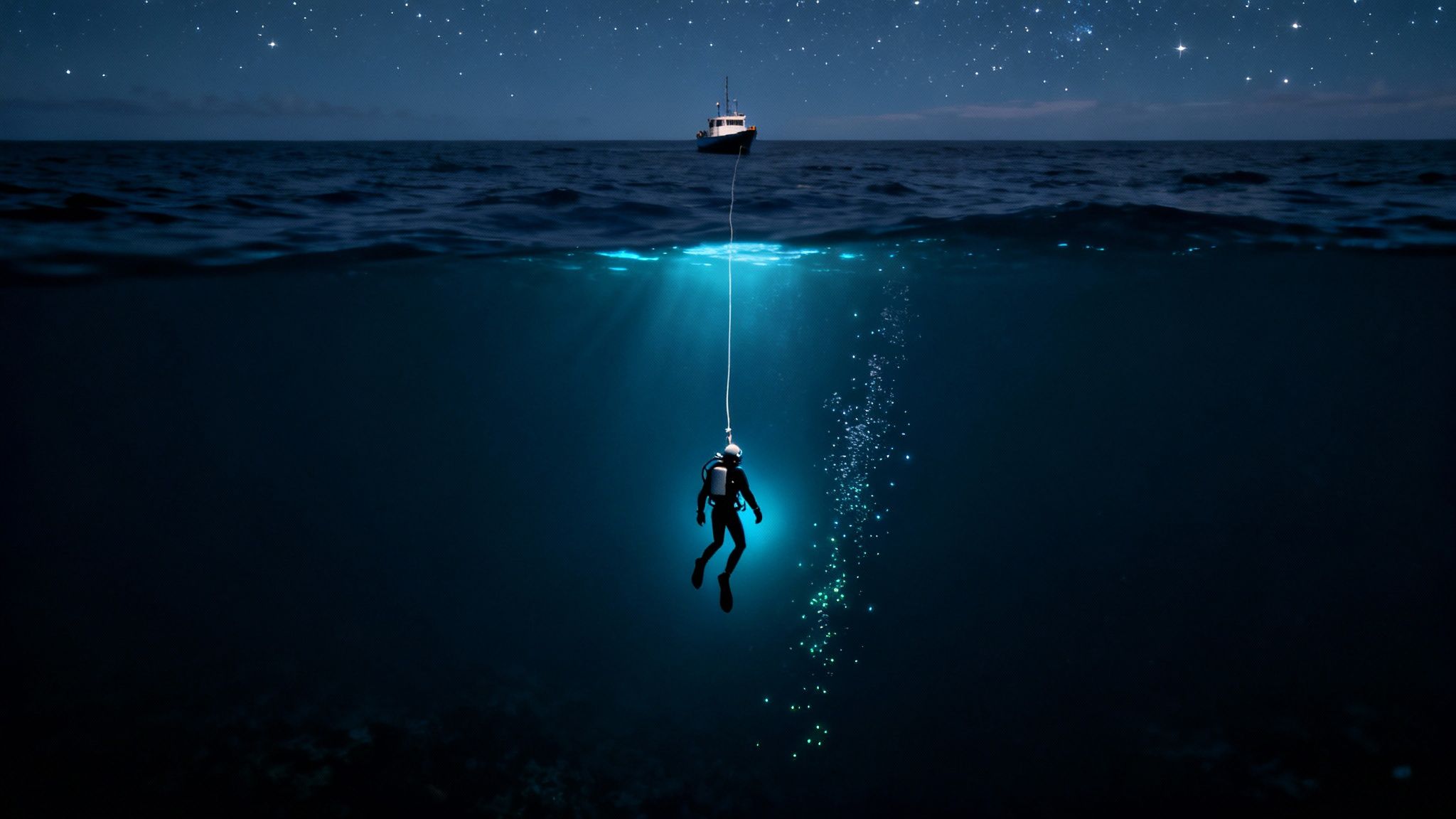
This is nothing like your typical night dive. Forget hovering over a familiar reef. On a blackwater dive, you're tethered to a boat, drifting over deep ocean channels. You become a frontline observer of the Diel Vertical Migration, the largest migration of animal life on the entire planet, which happens every single night.
When the sun goes down, an unbelievable host of deep-sea creatures starts rising from the abyss to feed near the surface. You're suspended right in their path, witnessing a parade of bizarre, translucent, and often alien-looking organisms that most people will never see.
An Astronaut in Inner Space
Divers often say it feels like being an astronaut in inner space. You're surrounded by an infinite darkness, and your dive light cuts through it to reveal a hidden universe. The real show begins when you notice the bioluminescence—the creatures themselves create light, flashing and glowing in the dark. It’s absolutely surreal.
You’ll be looking for things like:
- Larval Creatures: The baby stages of familiar fish and crustaceans that look completely different from their adult forms. It’s like a guessing game.
- Bizarre Jellies: Strange and beautiful gelatinous animals like siphonophores and ctenophores drift past, some trailing long, delicate tentacles.
- Translucent Wonders: Perfectly camouflaged for life in the open ocean, you'll spot nearly see-through squids, shrimps, and other oddities.
This incredible dive happens just a few miles off the Kona coast. We hang on a downline over water that plunges to depths of 3,000-8,000 feet. The concept was pioneered right here on the Big Island, and it's a front-row seat to a world where over 76 percent of the creatures you see—from tiny larval fish to strange squids—produce their own light. The ocean truly becomes a living galaxy.
To give you a clearer picture, here's a quick rundown of what a blackwater dive entails.
Kona Blackwater Dive At a Glance
| Characteristic | Details |
|---|---|
| Dive Type | Open-ocean, pelagic night dive |
| Location | Miles offshore, over deep water |
| Setup | Divers are tethered to a floating downline attached to the boat |
| Max Depth | Typically 40-50 feet (12-15 meters) |
| Focus | Observing vertically migrating marine life from the deep ocean |
| Key Attraction | Bioluminescent and larval creatures |
| Prerequisites | Advanced Open Water certification with excellent buoyancy |
This dive isn’t just about seeing cool critters; it’s about immersing yourself in an ecosystem that feels like another planet. For a more detailed look at the experience, you can learn more about what to expect on a blackwater dive in Hawaii. It’s a genuine, once-in-a-lifetime adventure for any serious diver.
Meeting the Creatures of the Deep
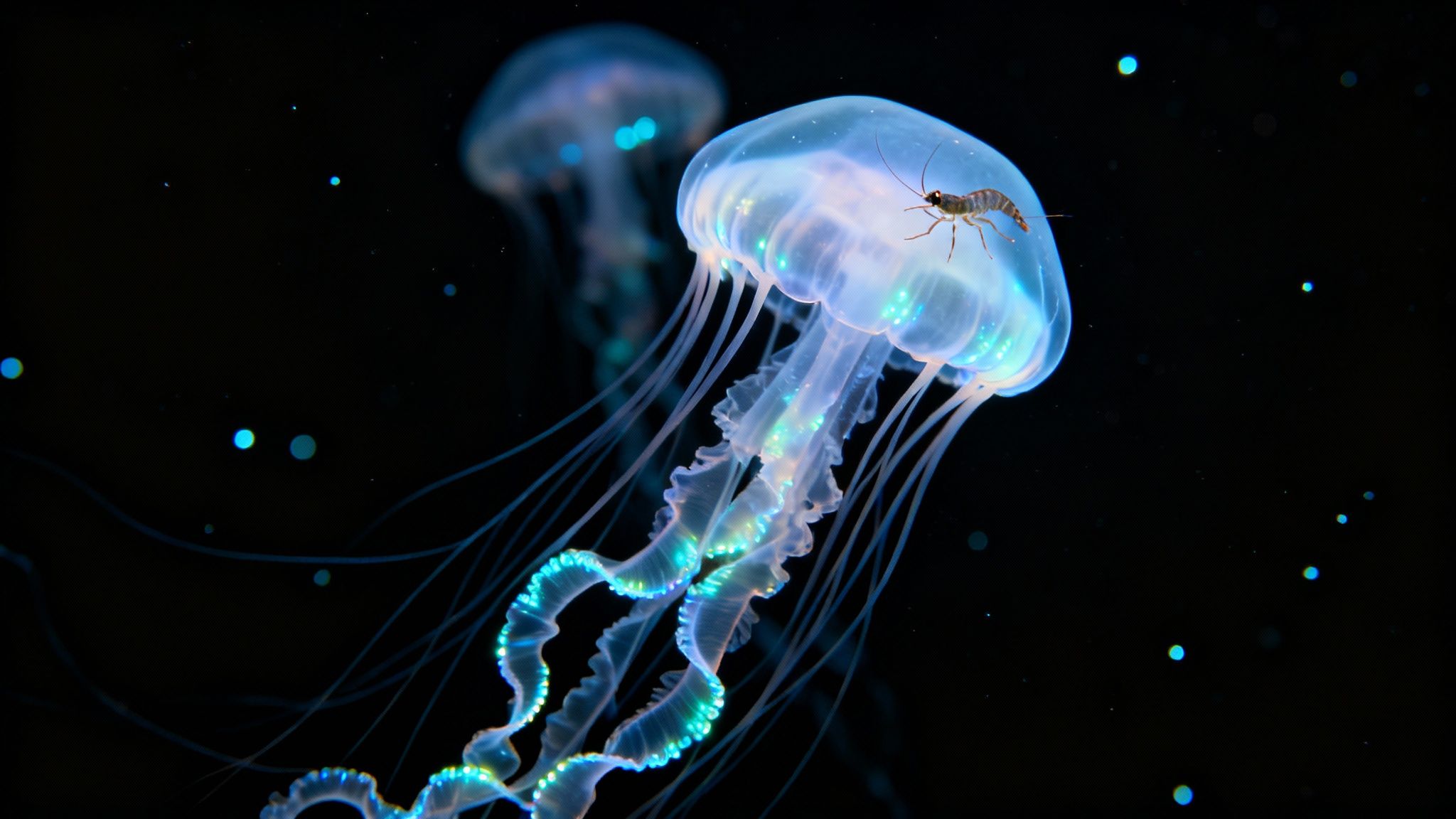
When you slip beneath the surface on a Kona blackwater dive, you're leaving the world you know behind. The familiar reef ecosystem fades away, replaced by an inky blackness punctuated by a living galaxy of the strange and the beautiful. These are the creatures of the deep, rising from the abyss in a nightly migration that feels like something out of a science fiction film.
The true stars of this show are often the larval creatures. Think of them as the baby versions of fish and critters we recognize, but they look absolutely nothing like their parents. You might find a larval flounder, still completely see-through with its eyes on opposite sides of its head before they make their famous migration to one side. Or maybe you'll cross paths with a larval lobster, looking more like a spiny, alien spaceship than the creature we know from the reef.
The Dance of the Deep
Beyond the larval fish, the water comes alive with an incredible variety of gelatinous animals. These aren't just your typical jellyfish. We're talking about ethereal, pulsating beings that often create their own light through a process called bioluminescence. It's a truly otherworldly sight.
Some of the most common encounters you can expect are:
- Siphonophores: These aren't single animals but bizarre colonies of individual organisms, all working together. They drift by like long, glowing strings of pearls, sometimes stretching for several feet.
- Ctenophores (Comb Jellies): Don't worry, these guys don't sting. They move using tiny rows of cilia that catch your dive light, creating stunning, shimmering rainbows that ripple down their bodies.
- Pelagic Tunicates: You'll often hear these called salps. They are translucent, barrel-shaped creatures that can link up to form massive, ghostly chains that drift through the open ocean.
This nightly event is an absolute masterclass in adaptation. The transparency, the glowing bodies, and the truly bizarre shapes are all survival tools these creatures have developed to navigate life in the vast, predator-filled open ocean.
Tiny Terrors and Otherworldly Wonders
On a blackwater dive, you quickly learn that the smallest things are often the most captivating. You have to keep your eyes peeled for the Phronima amphipod, a tiny crustacean with a fierce look that is said to have inspired the xenomorph from the movie Alien. These little guys actually hollow out the bodies of salps and use the empty gelatinous shells as a barrel-like home to raise their young. It’s wild stuff.
You'll also run into deep-water squids with enormous eyes, tiny glowing shrimp, and a whole host of planktonic life almost never seen by human eyes. Every moment of a Kona blackwater dive is a chance for a new discovery, illuminating a hidden world that truly thrives in the dark. It’s a powerful, humbling reminder of just how much life is out there, waiting just beyond the reach of the sun.
Why Kona Is the Perfect Place for This Dive
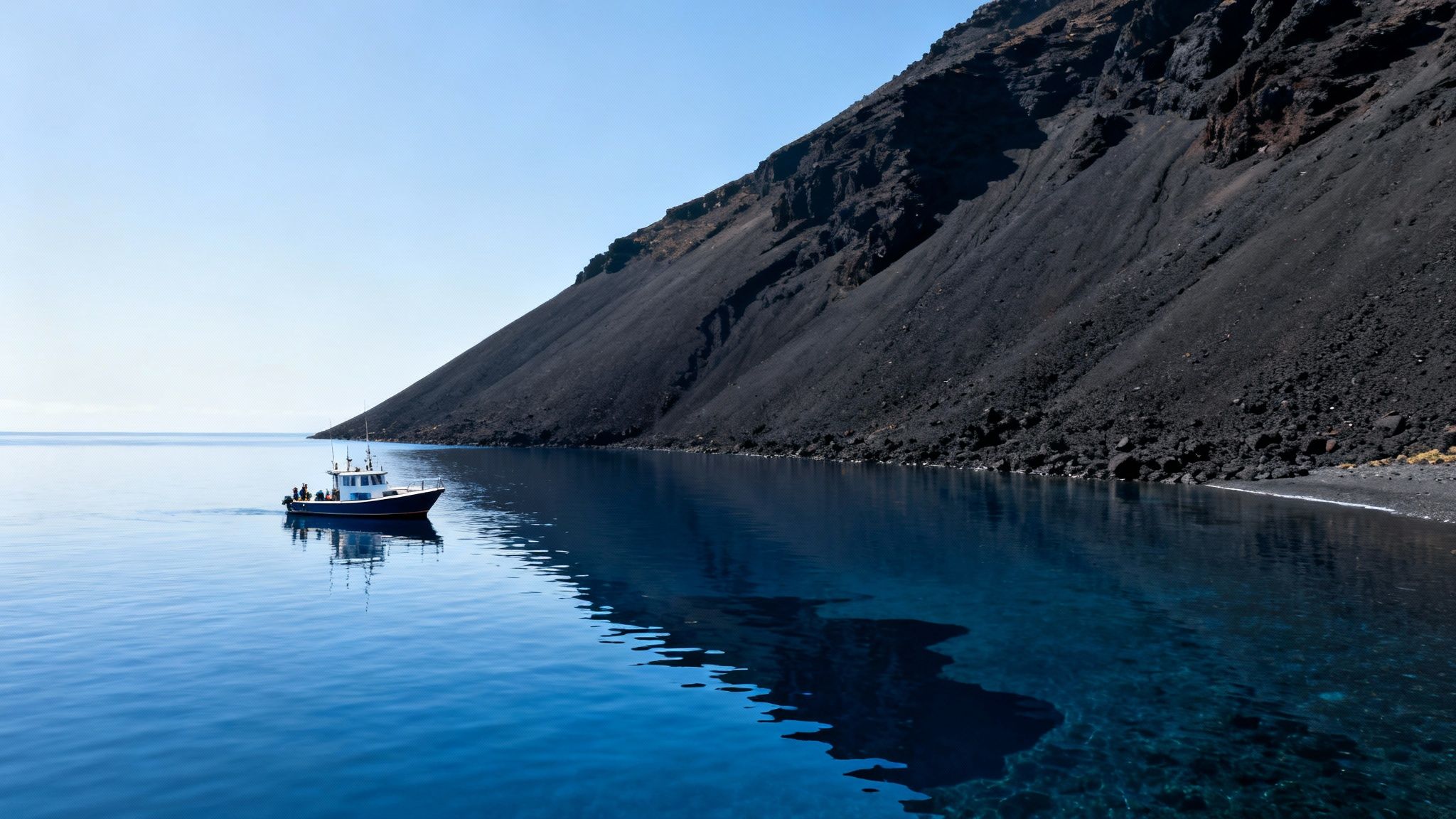
Kona isn't just a good spot for a blackwater dive; it’s widely considered the world capital for this unique experience. This isn't by chance. It's the result of a perfect storm of geological and oceanographic conditions that you just don’t find anywhere else.
The secret starts with the Big Island itself. As a massive volcanic shield, its underwater slopes don't gently meander—they plunge dramatically into the abyss. This means that incredibly deep water, thousands of feet deep, is just a short boat ride from the harbor. In most places, you'd have to travel for hours to reach the pelagic zones we can get to in minutes.
This unique access is precisely why the Kona blackwater dive was born and perfected right here. The global fascination with this type of diving really took off from Hawaii, thanks to ideal conditions like calm nights and access to depths of 3,000-8,000 feet just a few miles offshore. It’s in these waters that a mind-boggling 76 percent of the organisms we encounter are bioluminescent, from glowing squids to jellies that look like they’re from another planet. You can learn more about how this all started from PADI's excellent deep dive on blackwater diving.
Sheltered Waters and Calm Conditions
Geography is only half the story; the weather is the other critical piece. The colossal volcanoes of Mauna Kea and Mauna Loa act as a natural shield, protecting the Kona coast from the powerful trade winds. The result is exceptionally calm and predictable seas, which is non-negotiable for a dive where you're drifting in the open ocean at night.
The calm, leeward side of the island provides a safe and comfortable environment, allowing divers to focus entirely on the spectacle unfolding before them without battling rough seas. It’s this combination of deep, accessible water and protected conditions that makes Kona the ultimate stage for this underwater show.
A Legacy of Night Diving Adventures
Kona has a long history of pushing the boundaries of underwater exploration, which cemented its reputation as a world-class dive destination long ago. This culture of innovation is what led to the development of this specialized dive in the first place.
While blackwater diving offers a one-of-a-kind peek into the pelagic world, Kona is also famous for its incredible Kona Manta Ray Dives and other night dive sites, which highlight the sheer diversity of nocturnal marine life here. It’s this rich history of after-dark adventures that truly makes Kona the perfect place to experience the ocean’s hidden magic. The full range of diving tours in Kona showcases why the Big Island is a premier destination for underwater enthusiasts.
How to Prepare for Your Blackwater Adventure
A Kona blackwater dive is an experience you'll never forget, but it’s a world away from a typical night dive over a reef. We’re talking about a dive that demands a solid foundation of skill, confidence, and the right preparation.
This is considered an advanced dive for good reason. You'll be drifting in the open ocean at night, suspended over thousands of feet of inky black water. There's no seafloor or reef below to give you a sense of place, which makes it a unique and challenging environment. Because of these conditions, it’s essential that you’re completely comfortable and proficient underwater. While specific requirements can vary, we strongly recommend holding an Advanced Open Water certification. Having a good number of logged dives, especially night dives, under your belt will also make a huge difference. For those seeking to build this experience, there are excellent advanced dive tours available. This experience ensures you have the core skills needed to handle the sensory inputs of being suspended in the vast, dark blue.
Essential Skills and Mindset
If there's one skill that stands above all others for blackwater diving, it's flawless buoyancy control. You’ll be hovering at a specific depth—usually around 40-50 feet—attached to a downline. Your ability to hold that depth without even thinking about it is what frees you up to focus on spotting the incredible creatures floating past. It's absolutely crucial.
Beyond the technical side, your mindset is just as important. A little bit of pre-dive excitement is totally normal, but the divers who get the most out of this experience are the ones who are truly comfortable in darkness and open water. The goal is to be in a state of calm observation and control, not managing anxiety.
Non-Negotiable Dive Gear
Having the right equipment isn't just a suggestion; it’s a non-negotiable part of your safety out there. You can find a complete list of the gear you will need for your Kona diving adventure, but a few items are especially critical for this specific dive:
- A Powerful Primary Dive Light: Think of this as your window into the abyss. A strong, focused beam is essential for cutting through the darkness and illuminating the tiny, often translucent creatures of the deep.
- A Reliable Backup Light: Redundancy is your best friend. Your backup light must be dependable and within easy reach in the unlikely event your primary light fails.
- Personal Safety Equipment: A dive computer is mandatory to monitor your depth and time. Many divers also choose to carry a surface marker buoy (SMB) and a signaling device for added peace of mind.
Proper preparation is the key that unlocks the magic. When you have the right skills, mindset, and gear, you can truly relax and immerse yourself in one of the most unique underwater adventures on the planet.
Your Blackwater Dive Experience with Kona Honu Divers
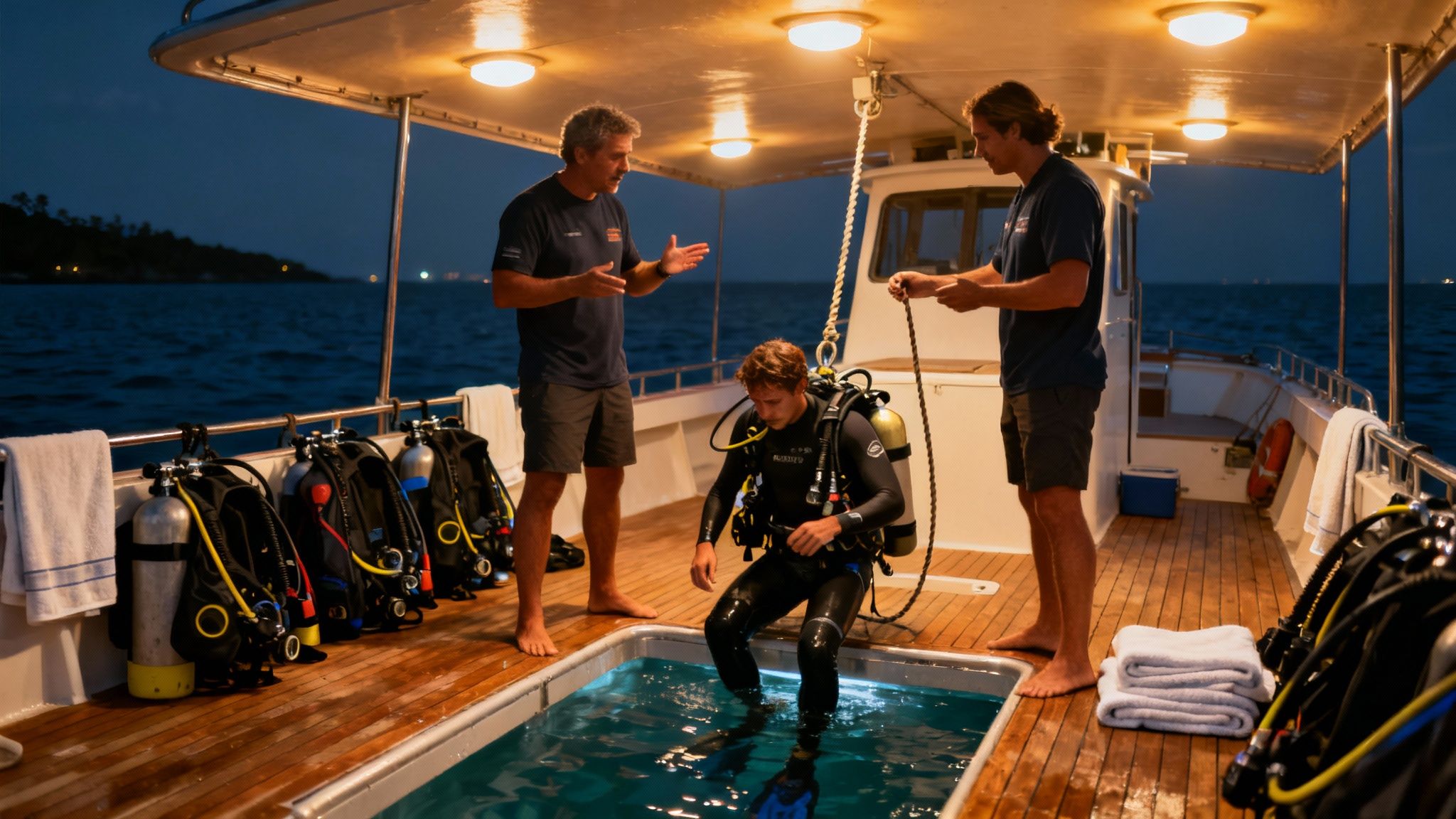
When it comes to a Kona blackwater dive, picking the right charter is everything. It's the most critical choice you'll make for both your safety and the quality of your experience. From the moment you step onto our boat, you’ll see the difference. We’ve designed the entire trip, from our gear to our process, to make sure you feel confident and ready for the wild adventure ahead.
Your journey into the black begins with a thorough pre-dive briefing. We go way beyond the basics. We'll walk you through the science of the vertical migration, show you what strange critters to look for, and explain exactly how to use our custom-designed tether system. This system is your anchor in the abyss, keeping you safely oriented with the boat while giving you plenty of room to explore the water column around you.
Guided by Experts in the Abyss
The real heart of the Kona Honu Divers experience is our crew. Our guides aren't just divemasters; they're seasoned naturalists who have spent years exploring this unique environment. They have an almost uncanny ability to spot the tiniest, most bizarre creatures that most people would swim right past—things like nearly invisible larval fish or ethereal, glowing jellies.
Think of them as your interpreters for an alien world. They're there to ensure you're safe, of course, but their real passion is pointing out the hidden wonders of the deep. They elevate the dive from a simple swim in the dark to a fully guided tour of another universe.
Safety and a world-class experience are non-negotiable for us. Blackwater diving was pioneered right here in Kona, and while it's now copied globally, Hawaii's calm seas make this the absolute best place to do it. It's a key part of the Big Island's diving scene, which sees around 100,000 certified dives every year.
Comfort and Confidence Above and Below
We've learned that it's the little things that make a huge difference. After a dive that will likely blow your mind, you’ll climb back on board to a hot freshwater shower. Trust us, it’s a simple luxury that feels absolutely incredible after an hour in the deep. Our boat is spacious and comfortable, giving you plenty of room to relax and swap stories about the incredible things you just witnessed.
But you don't have to take our word for it. Hearing from divers who have already been out with us says it all.
Ready to see this underwater world for yourself? Book your spot on our world-famous Blackwater Dive tour.
Common Questions About the Kona Blackwater Dive
It’s totally understandable to have questions about an adventure as wild as a blackwater dive. It’s not your average reef tour, after all. We put this section together to answer the most common questions we hear, so you can feel excited and ready to go before you even step on the boat.
Is the Blackwater Dive Safe?
Absolutely. We know the idea of floating in the deep, dark ocean sounds intense, but your safety is the absolute bedrock of this entire experience. From the moment you get on the boat to the moment you get off, every step is carefully managed.
You’ll be securely clipped to a downline that’s attached to the boat, so there's zero chance of drifting away. Our expert guides are right there with you in the water, keeping a close eye on everything and making sure the dive runs smoothly. It's a drift dive, which means we just go with the flow of the current—no complex navigation required. This lets you relax and focus on the incredible show happening all around you.
What Happens If I Get Separated from the Group?
This is a big concern for many divers, but our setup is specifically designed to prevent this from ever happening. Every single diver has their own personal tether connecting them to the main line. Think of it like a lanyard system that keeps you comfortably in the group's orbit. It’s a simple, effective way to ensure we all stick together.
In the extremely unlikely event a piece of gear were to fail, our crew is trained and ready. The boat is always right there, and our guides know exactly what to do. But honestly, with the system we use, it's just not something you need to worry about.
Will I See Sharks on the Dive?
While it’s always possible to see a shark in the ocean, it's incredibly rare on a Kona blackwater dive. The animals we're looking for are part of the great vertical migration—tiny, strange, and beautiful pelagic critters. They simply aren't on the menu for big sharks.
In all our years of running these dives, seeing a large pelagic shark like an Oceanic Whitetip is an exceptionally uncommon event. The dive is all about the tiny, alien-like life forms that rise from the abyss, not big predators.
What Are the Physical Demands?
You might be surprised to learn that this dive is less physically demanding than a typical reef dive. Because we're drifting with the current, there's very little actual swimming. You're mostly just hovering in place, a spectator to one of nature's greatest migrations.
The real challenge is mental. You have to be comfortable with the darkness and the unique feeling of being in the open ocean at night. The single most important physical skill is top-notch buoyancy control. This is why we recommend an Advanced Open Water certification and that you've been diving recently. You need to be able to hold your depth almost without thinking about it.
Can I Bring a Camera?
Yes, and you'll be kicking yourself if you don't! This dive is a photographer's dream. You'll get a chance to capture images of creatures that most people don't even know exist. That said, it's a challenging environment to shoot in.
Here are a few quick tips to get you started:
- A fast lens is your friend: These critters are small and can move unpredictably. A good macro lens that performs well in low light is essential.
- Dial in your settings beforehand: You won’t have time to fiddle with your camera in the water. Practice on land so you know exactly what you need to do.
- Think macro: This is the time for your macro setup. You’ll want to capture the stunning, intricate details of these tiny animals.
- Be patient: It takes a few minutes for your eyes to adjust and start spotting things. Just relax, breathe, and let the ocean reveal its secrets.
What if the Weather Is Bad?
Your safety is our priority, period. The boat captain has the final say, and if conditions aren't right, we don't go. The Kona coast is famous for its calm waters, but the ocean is still the ocean. If it's too rough or the weather poses any risk, we will cancel the trip.
If that happens, we'll do everything we can to get you rebooked on another night. If your schedule doesn't allow for it, you'll get a full refund. We never gamble with your safety.
Ready for an adventure into the deep? Kona Honu Divers offers a world-class Blackwater Dive tour that will redefine your understanding of the ocean.