
Imagine floating weightless in the dark void of outer space, surrounded by a universe of strange, glowing nebulae and distant stars. Now, picture that same experience, but underwater.
That’s the closest you can get to describing a Kona black water dive.
What Is a Kona Black Water Dive
This isn’t your typical night dive along a familiar reef. A black water dive is a trip into a completely different world—the vast, open ocean, miles from shore, where the seafloor is thousands of feet below. It's a true pelagic dive.
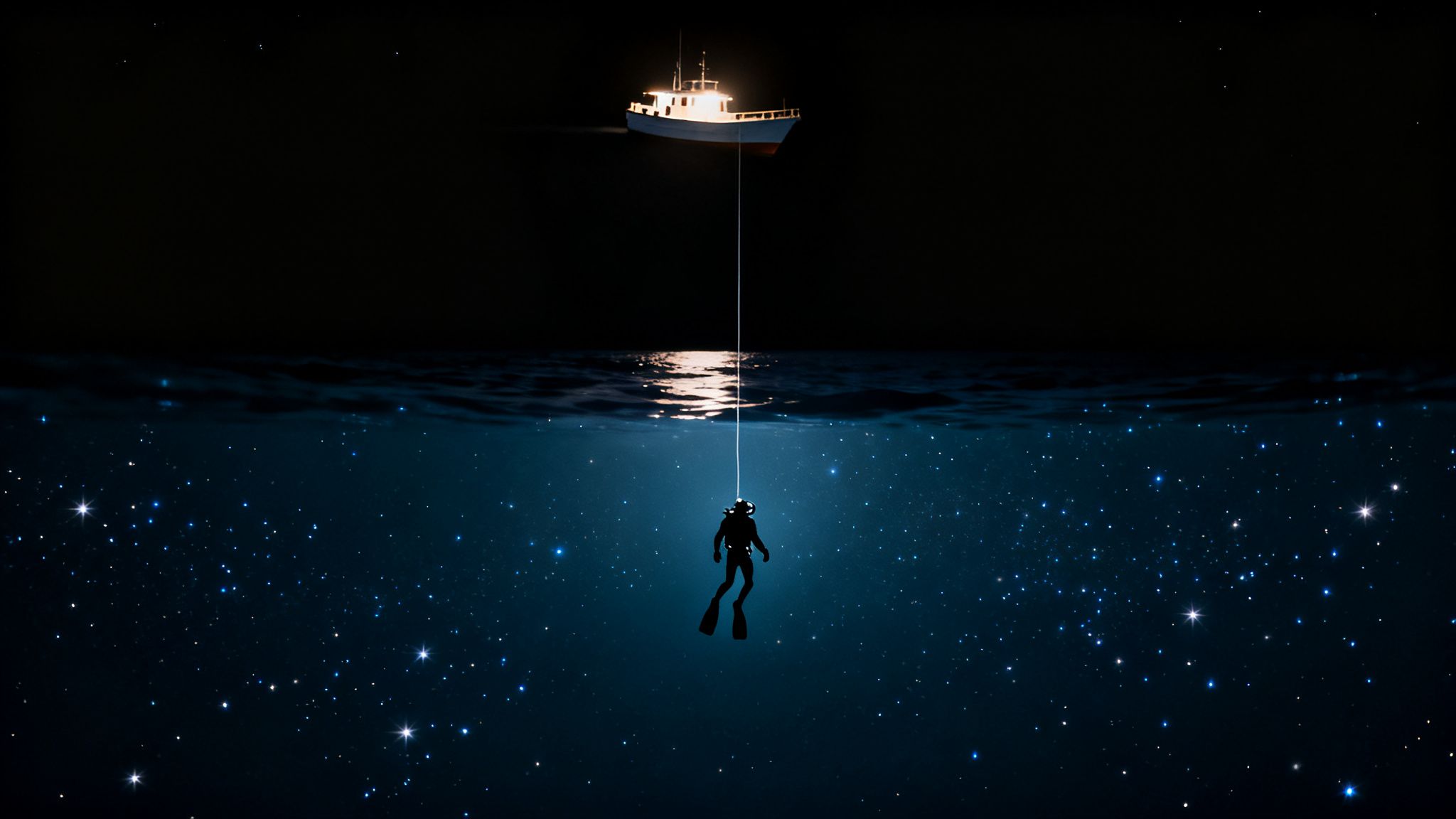
Here's how it works: you're tethered to the boat for safety, hovering in the water column at a controlled depth, usually around 40-50 feet. As you drift, you become a spectator to the largest migration on Earth. Every single night, countless deep-sea creatures, many of them bizarre and bioluminescent, journey from the abyss toward the surface to feed.
Your dive light illuminates a slice of this hidden world, revealing creatures that look like they belong on another planet.
An Experience Born in Kona
Believe it or not, this incredible style of diving was pioneered right here in Kona. Our unique geography, with deep oceanic trenches just a short boat ride from the coast, made it the perfect place for this kind of exploration. The concept has been so successful that it's now a bucket-list dive in premier locations worldwide. You can read more about the global spread of this unique diving style to see how far it's come.
To really understand what sets this dive apart, it helps to see how it stacks up against a more traditional night dive. While they both happen after dark, the experience couldn't be more different.
The feeling is more like floating in space than moving along a dive site. A black water dive removes the bottom entirely, challenging you to slow down and observe the water itself as alien-like creatures drift past.
Let's break down the key differences.
Black Water Dive vs Traditional Night Dive
| Feature | Kona Black Water Dive | Traditional Reef Night Dive |
|---|---|---|
| Location | Open ocean, miles offshore over deep water | Coastal reef, wreck, or shoreline |
| Reference | No bottom; tethered to the boat | Seafloor, coral formations, or wreck structure |
| Marine Life | Pelagic, larval, and bioluminescent deep-sea creatures | Nocturnal reef dwellers like eels, octopus, and crabs |
| Objective | Observe the vertical migration of bizarre life | Explore the reef as it comes alive at night |
| Feeling | Like an "inner-space spacewalk" in a vast void | Like exploring a familiar neighborhood after dark |
As you can see, a black water dive is an entirely unique sensory experience focused on the tiny, otherworldly creatures of the deep, while a traditional night dive is about seeing a familiar reef in a new light.
Ready to take the plunge into inner space? Kona Honu Divers offers a premier Blackwater Dive tour that sets the standard for safety and adventure, giving you a front-row seat to one of nature's most spectacular and hidden events.
Discovering the Ocean’s Hidden Universe
When the sun goes down in Kona, an entirely different world awakens. Far below the surface, the largest migration on Earth begins as countless strange and wonderful creatures rise from the crushing depths to feed in the upper water column. A Kona black water dive is your ticket to witness this nightly parade.
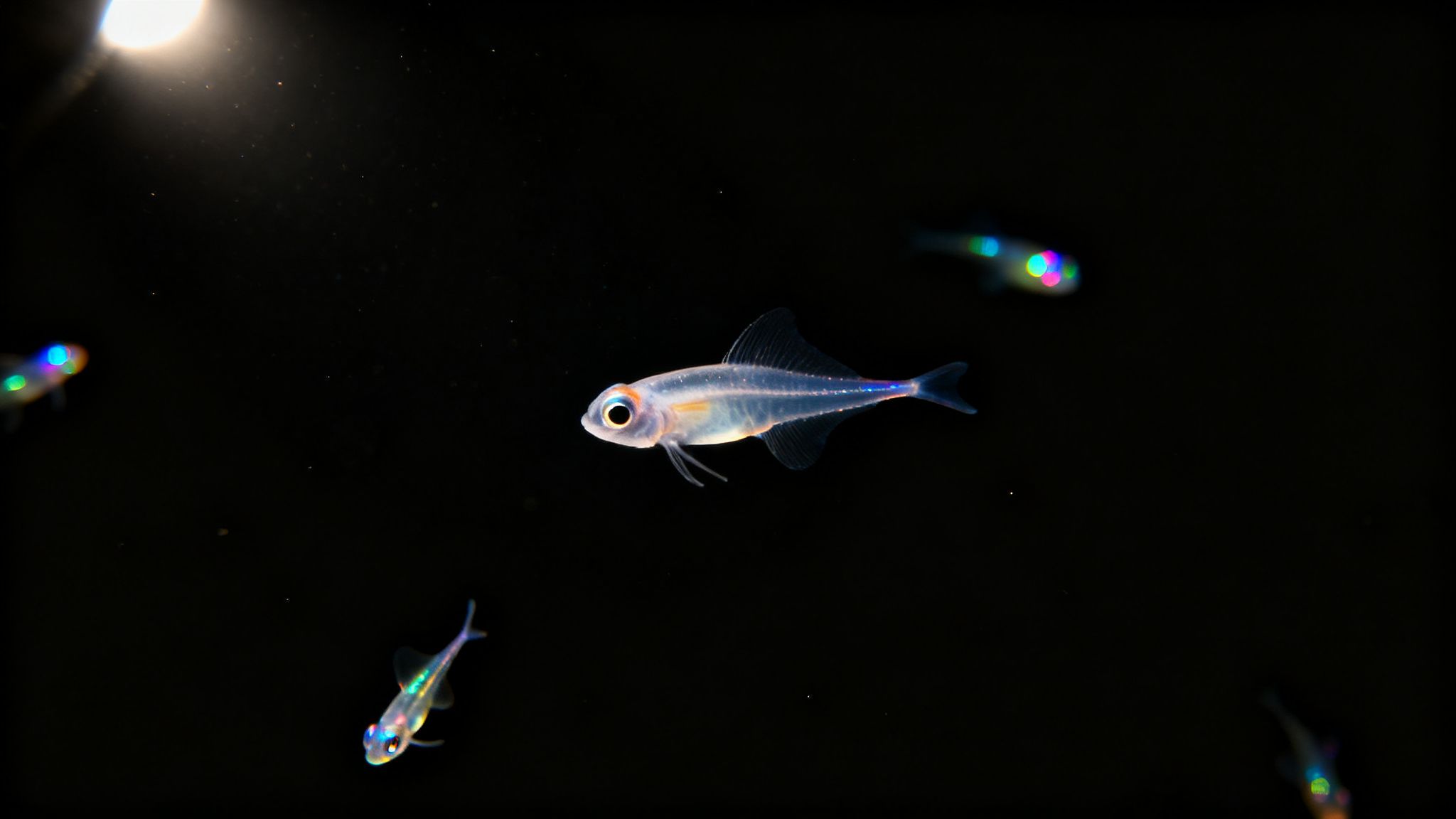
Imagine floating, suspended in the pitch-black open ocean, tethered to a line for safety. The only thing piercing the darkness is the beam of your dive light, and what it illuminates is a constant stream of life that looks like it swam right out of a sci-fi film. This isn’t your typical reef dive for spotting sharks or turtles; it's an intimate, almost meditative experience with the tiny, bizarre, and delicate organisms that form the very base of the deep-sea food web.
Creatures of the Deep Emerge
Get ready to be absolutely floored by the sheer variety of life that only shows up after dark. Your light becomes a stage, showcasing a slow-motion procession of creatures, each more fascinating than the one before it.
You'll likely come face-to-face with:
- Translucent Larval Fish: You get to see common reef fish in their earliest, most alien-looking stages. Many are almost completely transparent, with just their shimmering organs visible.
- Pulsating Jellyfish: A whole host of gelatinous critters drifts by, from tiny comb jellies that refract your light into rainbows to much larger, more complex species.
- Iridescent Squid: Keep an eye out for juvenile squid, some no bigger than your thumbnail, darting past with brilliant flashes of metallic color.
- Chain-like Siphonophores: These are colonial animals, not single creatures, and they drift like glowing, predatory nets that can stretch to incredible lengths.
This dive is a masterclass in observation. The real key is to just be still and let the ocean's current bring this hidden world to you. The less you move, the more you'll see.
This constant, gentle drift of life makes every single moment on a black water dive completely unpredictable and mesmerizing.
The Science of Living Light
One of the most jaw-dropping parts of this dive is the sheer amount of bioluminescence—living light. In the total darkness of the deep, an organism's ability to create its own light is a critical tool for hunting, defense, and even finding a mate.
It’s not just a rare treat, either. Research has shown that an astounding 76 percent of the organisms you'll see down here can generate their own light. It really drives home how different this environment is. The water is alive with the glow of salps, siphonophores, and ctenophores, which are some of the most common creatures you'll encounter. If you want to dive deeper into the biology, you can learn more about the science behind Kona's most extreme dive and truly appreciate the ecosystem's complexity.
Here at Kona Honu Divers, we have the local expertise and safety protocols to guide you confidently through this mind-blowing experience. Our crew's deep understanding of the pelagic zone means we can put you in the best possible spot to witness this incredible natural wonder.
Ready to explore this hidden universe for yourself? Join one of our guided Blackwater Dive tours and see the ocean's secrets firsthand.
Are You Ready for This Unique Dive
A Kona blackwater dive is an adventure you’ll never forget, but it’s one that demands a healthy respect for the ocean. We’re not exploring a reef with the bottom a few feet below; we're suspended in the vast, open ocean. This unique environment requires a certain level of comfort and skill in the water, which is why we treat it as an advanced dive.
These standards aren't here to be gatekeepers. They're in place to make sure every diver on the boat is safe, confident, and can truly soak in the magic of the experience without feeling overwhelmed. Think of it less as a list of rules and more as a recipe for an incredible dive.
Diver Prerequisites for a Black Water Dive
To join us on this one-of-a-kind trip, you'll need to have a solid foundation of diving experience. The challenges of floating in the deep blue at night are very real, and being prepared is key.
Advanced Open Water Certification: This is the baseline, and for good reason. It means you’ve already been trained in deep diving, navigation, and most importantly, night diving.
A Healthy Logbook: We're looking for divers with at least 50 logged dives. This isn't an arbitrary number; it shows you're an active diver who is dialed in with your gear and comfortable with standard procedures.
Recent Night Dive Experience: You absolutely need to have a night dive or two under your belt. Getting comfortable with the darkness and the different feel of the ocean at night is crucial before you head out into the deep.
The Importance of Buoyancy Control
If there's one skill to rule them all on a blackwater dive, it’s buoyancy control. It is everything. With no seafloor to give you a reference point, your ability to hold your depth is what keeps you stable and safe.
Your goal is to become a neutral, floating observation post. The less you have to fuss with your BCD, the more you'll see. The delicate creatures we're looking for are easily spooked by flailing fins or sudden movements.
When your buoyancy is dialed in, you can hover effortlessly, avoid drifting up or down, and just focus on the incredible alien-like creatures floating past. If you're still polishing those skills, our guide on Big Island scuba diving for beginners has some great tips on the fundamentals.
While the requirements might seem strict, they are truly designed to set you up for a successful and jaw-dropping dive. For certified divers who want to build the right kind of experience, joining one of our premium advanced dive tours is a fantastic way to get comfortable in Kona’s amazing waters and prepare for the ultimate night dive.
How We Keep You Safe in the Deep
Let’s be honest: heading miles offshore into the open ocean after sunset sounds pretty intense. And it is. But with Kona Honu Divers, it’s also a tightly controlled and incredibly safe experience. For our Kona black water dive, safety isn't just a box we tick; it's the bedrock of the entire adventure. We've spent years perfecting our procedures so you can drift in the dark and focus on the magic, knowing we’ve got your back.
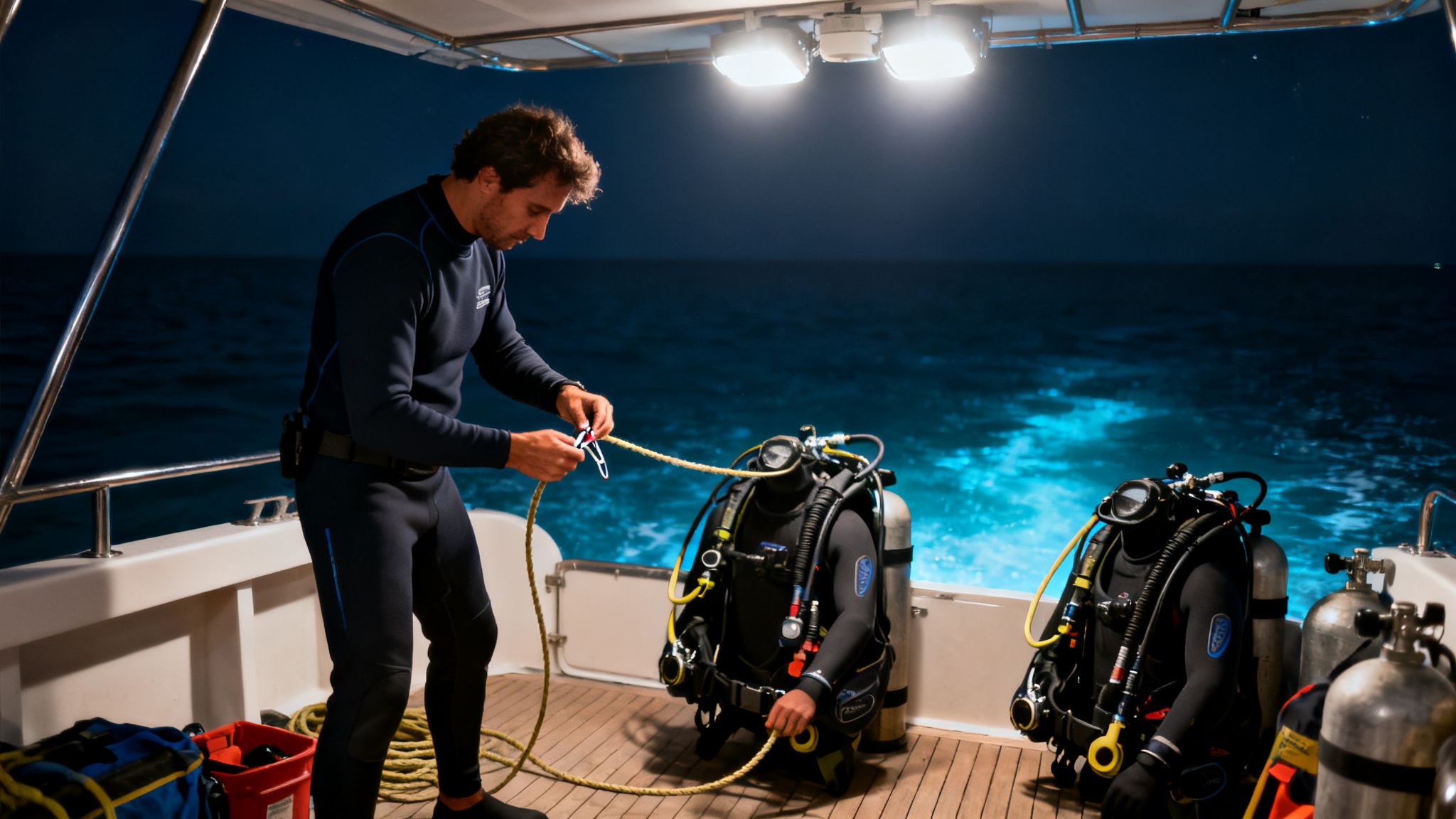
From the moment you step aboard our boat, you're in the hands of a professional crew. The ride out to our deep-water site is all part of the build-up, and once we're there, we run a thorough pre-dive briefing that covers every single detail. We want you to feel completely confident before you ever hit the water.
Our Professional Tethering System
The real key to making this dive both possible and safe is our professional tethering system. This isn’t just some rope we toss over the side; it’s a purpose-built setup that creates a secure, stable home base in the middle of the ocean.
The Down-Line: We start by deploying a heavy, weighted line from the boat that hangs vertically in the water. This line becomes our central reference point, lit up by powerful lights that not only make it easy to see but also attract the weird and wonderful creatures you came here for.
Individual Tethers: Every diver gets their own 10 to 15-foot tether, which connects you directly to that main down-line. This simple piece of gear completely eliminates the biggest risk of open-ocean diving—drifting away from the boat and the group.
Buddy System Ready: The tethers are just the right length to give you and your buddy plenty of room to explore and share discoveries together, all while staying securely connected to the main line. It’s a design that brings a huge sense of peace of mind.
This tethered setup essentially transforms the vast, dark ocean into a safe, contained observation area. Think of it as your personal lifeline to the boat, giving you the freedom to look around without any risk of getting lost.
Of course, our expert Divemasters are right there in the water with you, supervising the entire dive and making sure every safety protocol is followed. They’re not just your guides to the marine life; they are your dedicated guardians in the deep. They ensure all best practices are followed, including a proper scuba safety stop at the end of the dive.
A Focus on Proactive Safety
Our commitment to safety goes well beyond the tethers. The boat itself is equipped with powerful lights that illuminate the surface around us, and we require every diver to carry both a primary and a backup dive light.
While we are laser-focused on preventing any issues, we also believe in being prepared for anything. It’s always a good idea for advanced divers to understand fundamental medical interventions. For example, knowing what hyperbaric oxygen therapy is is important background knowledge, as it's a critical treatment for decompression sickness. This all-around dedication to preparedness is why divers trust us to lead them on this incredible adventure.
Ready to see how our professional approach makes this the ultimate dive?
Essential Gear and Photography Tips
Getting your gear dialed in is what separates a good black water dive from a truly mind-blowing one. While we at Kona Honu Divers handle the specialized tether system and all the safety logistics, having the right personal equipment lets you forget about everything else and just get lost in the magic of the deep.
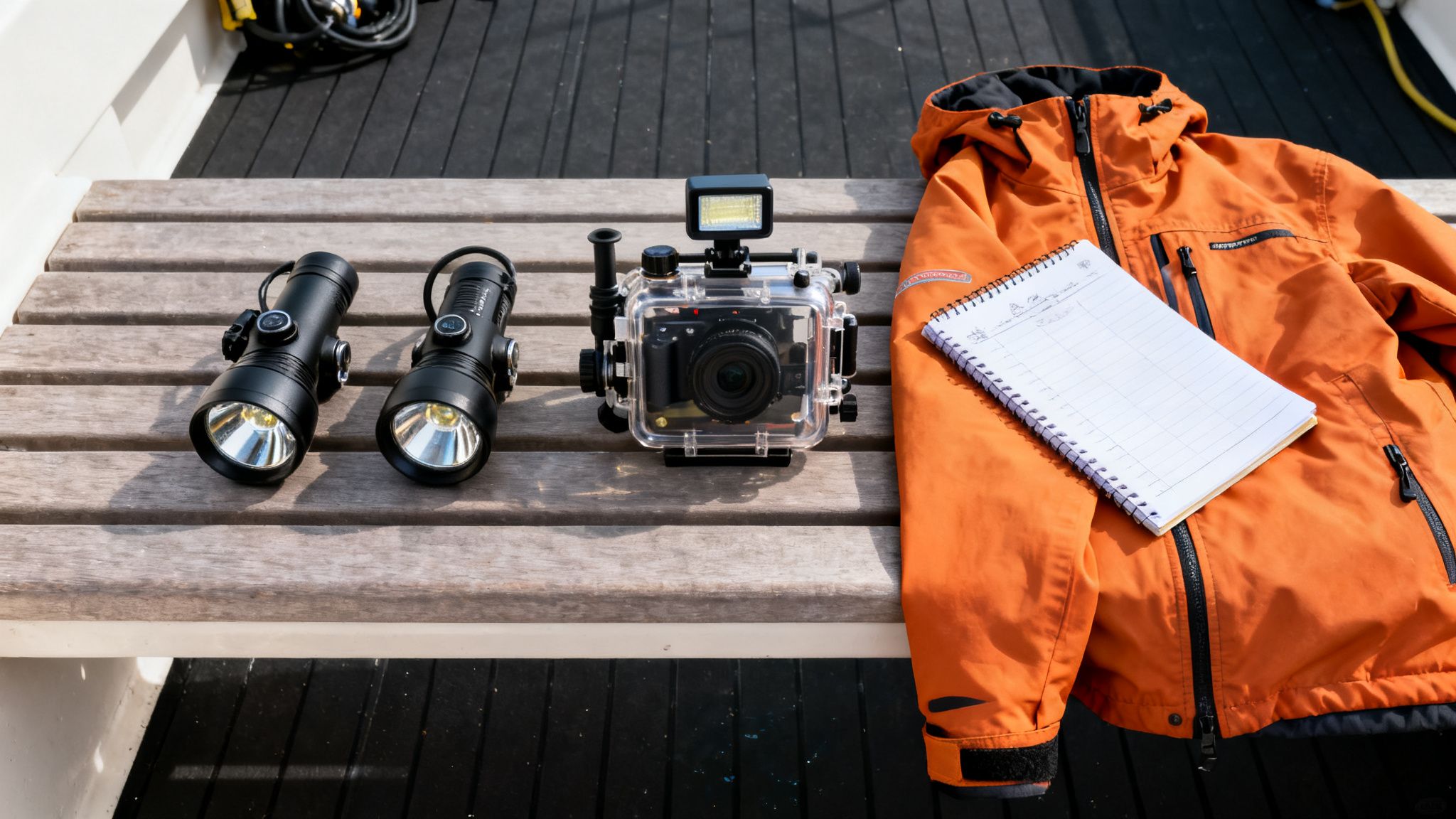
You’ll want to think about comfort both in and out of the water. Even with Hawaii's warm climate, the boat ride back after a night dive can get surprisingly brisk. Tucking a windbreaker or a dry hoodie into your bag is always a good call. And don't forget your dive log—you're going to want to remember the names of the alien-like critters you meet. For a good refresher on the basics, our guide on the best scuba gear for beginners is a great place to start.
Your Black Water Dive Checklist
We’ve got the big stuff covered, but here’s what you should have in your own dive bag for the trip out to the abyss.
- A Powerful Primary Dive Light: This is more than just a light; it's your paintbrush for the darkness. A strong, tightly focused beam is what you need to cut through the water and pick out those tiny, almost invisible organisms from a distance.
- A Reliable Backup Light: This one’s non-negotiable. Every diver needs a secondary light, fully charged and ready to go. It’s a critical piece of safety gear in the rare case your main light decides to call it a night.
- Your Dive Computer: Without a sea floor to reference, your computer is your best friend for keeping tabs on depth and dive time.
- Warm Layers for a Dry You: Trust us on this one. Having a warm, dry layer to throw on for the ride home makes the whole experience that much better.
On a black water dive, your lights are everything. A powerful beam doesn't just let you see what's out there—it actually pulls in the tiny, drifting creatures you came all this way to find.
Tips for Underwater Photography
Shooting black water critters is one of the most rewarding challenges in underwater photography. You're dealing with subjects that are often minuscule, translucent, and zipping around unpredictably against an endless black backdrop. It’s tough, but the results can be spectacular.
The key is to come prepared. You absolutely need a macro lens to have any hope of capturing the incredible details on these larval creatures. Get your camera settings ready before you even hit the water; a fast shutter speed is crucial to freeze movement, and a closed-down aperture (a high f-stop) will give you the depth of field needed to get these tiny subjects in focus.
Lighting is just as important as your lens. You’ll want to use strobes mounted on long arms, positioning them far out to the sides. This prevents the flash from lighting up all the little particles in the water between you and your subject—a phenomenon we call backscatter. Nailing this technique is how you get those stunning, studio-quality portraits against a perfectly clean, black background.
Ready to gear up and capture the unknown? Book your Kona Blackwater Dive tour today and prepare for an otherworldly adventure.
Your Black Water Dive Questions, Answered
Diving into the open ocean at night naturally brings up a few questions. The Kona black water dive is a unique adventure, and we want to make sure you feel completely prepared and excited for what’s in store. Here are answers to some of the things people often ask us.
How Deep Do We Actually Go?
This is easily the most common question we get, and the answer usually comes as a surprise. Even though the ocean floor is thousands of feet below us, the dive itself is actually pretty shallow.
We keep the entire dive at a controlled depth of 40-50 feet (that’s about 12-15 meters). Every diver is attached to a down-line that hangs from the boat, which keeps everyone at a consistent, safe depth. The real magic isn’t about going deep; it’s about hanging out in the sweet spot and letting the deep come to you as countless strange creatures rise from the abyss.
Black Water Dive vs. Manta Ray Night Dive: Which Is Better?
That's a tough one. It’s like asking if you’d rather go on an African safari or see the Northern Lights. They are both world-class, but completely different, experiences that make diving in Kona so incredible.
The famous manta ray night dive is pure spectacle. You get a front-row seat to a mesmerizing ballet as giant, graceful mantas swoop and barrel-roll through light beams to feed on plankton. It’s a guaranteed, awe-inspiring wildlife encounter. If that sounds like your kind of night, you should definitely check out our Manta Ray Dive Tour.
The black water dive, on the other hand, is a journey into an alien world. It’s a dive of pure discovery, where the focus is on finding bizarre, tiny, and often glowing critters you’ll never see on a reef. Most seasoned divers who come to the Big Island do both because they are truly the cornerstone experiences of diving in Hawaii.
Many divers describe the manta ray dive as a spectacular show, while the black water dive is a treasure hunt in deep space. Both are unforgettable, but they appeal to different kinds of adventure.
What if I Get Scared or Seasick?
It's totally normal to feel a bit of apprehension before a dive like this—you’re dropping into the deep blue at night, after all! Our experienced crew at Kona Honu Divers is specially trained to make you feel comfortable from the moment you step on the boat. We run a very thorough pre-dive briefing that's designed to answer every last question and calm any nerves.
The tether system itself gives you a strong sense of security in the open ocean. If you know you're prone to seasickness, we highly recommend taking some non-drowsy medication beforehand. We'll be offshore where the water can get a little bumpy, and your comfort and safety are our absolute top priorities.
What Happens if My Light Fails?
We plan for everything, and redundancy is key. Every diver is required to have a powerful primary dive light and a reliable backup. We check all your gear before you hit the water to make sure everything is good to go.
But let's say the very unlikely happens and both of your lights fail. You're still safely clipped into the main tether system. Your buddy and dive guide are right there with you, and the main downline from the boat is brightly lit, acting as a constant beacon and reference point in the darkness. You're never truly alone out there.
Ready to see what else the underwater world has to offer? Take a look at all of our amazing Kona diving tours and find your next adventure.