
A lot of visitors learn this the hard way. They drive to Kealakekua Bay, see the blue water, and assume the famous snorkeling is right beside the road. It isn't.
The magic is present there, but access takes planning. If you want a smooth Kealakekua Bay snorkeling Hawaii experience, you need to know why the bay is special, how to reach the good water, and how to do it without stressing the reef or yourself.
Welcome to Hawaii's Underwater Paradise
Slip your face into the water here and the first surprise is the clarity. You don't feel like you're peering into dark blue ocean. You feel like someone turned the lights on under the surface.
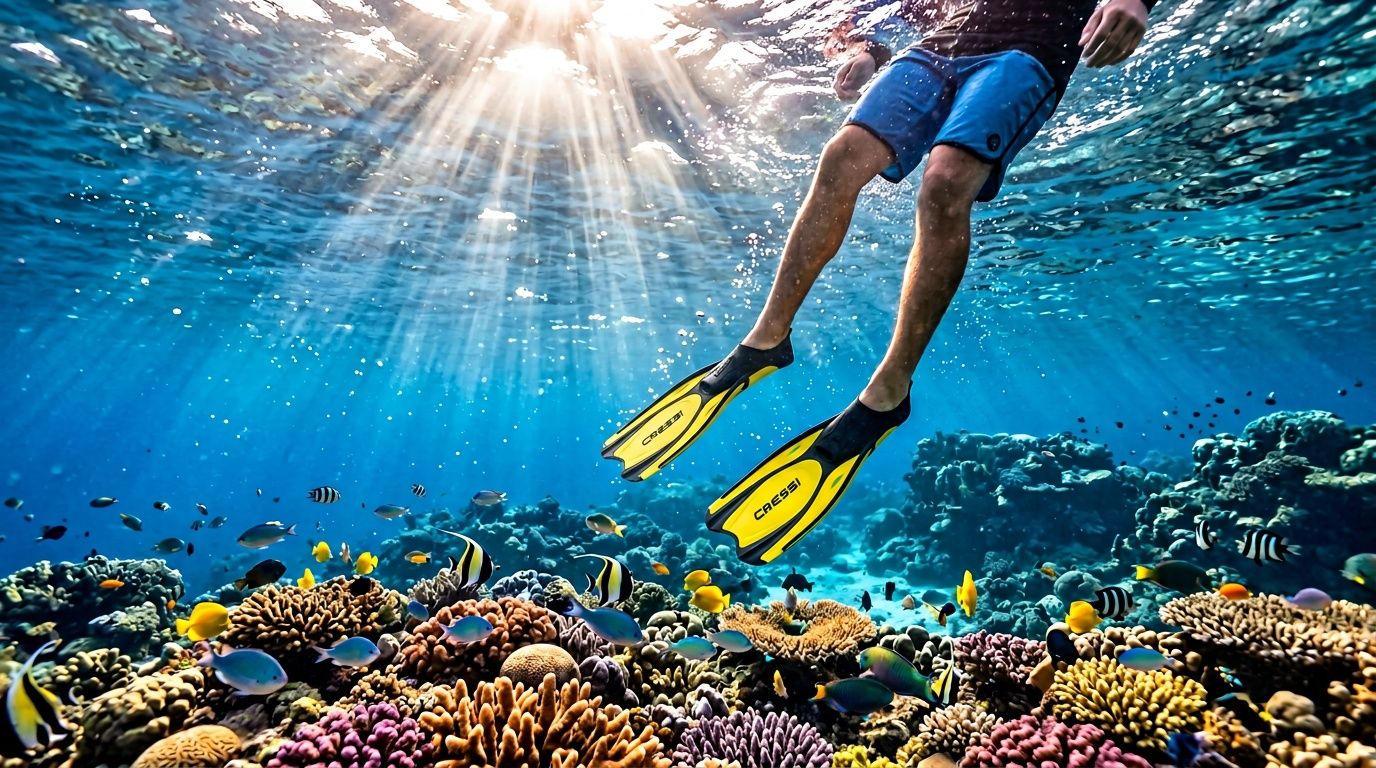
Kealakekua Bay sits 12 miles south of Kailua-Kona and holds two kinds of importance at once. It is a protected marine area, and the surrounding Kealakekua Bay Historical District was listed on the National Register of Historic Places in 1973. It is also the place where Captain James Cook first landed in Hawaiʻi on January 17, 1778, and where he was killed on February 14, 1779, during a conflict, as noted in this overview of Kealakekua Bay.
That mix matters. You're not just visiting a pretty snorkeling cove. You're entering a place with cultural weight, historical significance, and a fragile underwater ecosystem that still feels remarkably alive.
What first-time visitors usually misunderstand
Upon hearing “Captain Cook snorkel,” it's often assumed to be one simple beach stop. In practice, the bay asks a few more questions:
- How will you get there: by boat, kayak, or hike?
- Who is in your group: strong hikers, small kids, nervous beginners, older travelers?
- What kind of day do you want: effort-heavy DIY adventure or easy water access?
- How comfortable are you in the ocean: calm water helps, but logistics still matter
If you're sorting out those choices, this guide to planning a Captain Cook snorkel trip is a useful companion read.
Practical rule: Kealakekua Bay rewards preparation more than spontaneity.
Start with the right expectations
The bay is famous for good reason, but “famous” doesn't mean effortless. The most enjoyable trips usually come from travelers who decide early whether they want a self-powered outing or a guided one.
If you're comparing this stop with other island water activities, this broader guide to snorkeling the Big Island helps put Kealakekua Bay in context.
Why Kealakekua Bay is a World-Class Snorkel Spot
Some snorkeling spots get attention because they're easy. Kealakekua Bay gets attention because the conditions and protections line up in a rare way.
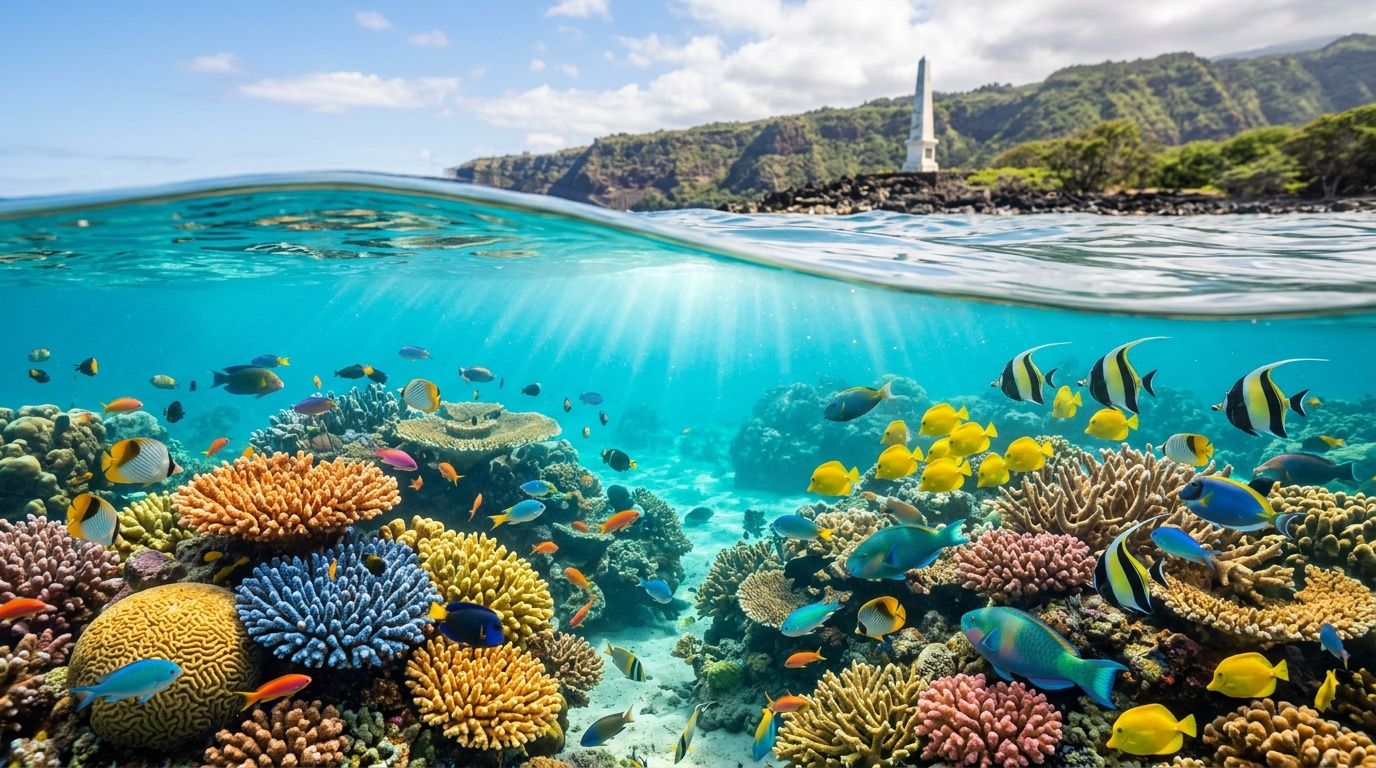
The bay has been a Marine Life Conservation District since 1969, covering 315 acres, and the restricted fishing is a big reason the ecosystem stays so active. Its steep pali cliffs also shelter the water from wind and wave action, which helps create visibility that often exceeds 100 feet, according to Love Big Island's Kealakekua Bay guide.
Protection changes what you see
Protected water usually looks different from heavily used, open-access reef. Fish act differently too.
In Kealakekua Bay, restricted fishing supports a reef scene that feels busy instead of sparse. You notice it quickly. More movement. More color. More moments where fish stay in view instead of vanishing the second a snorkeler arrives.
That protected status also helps explain why the bay has such a strong reputation among people who want an easy visual payoff. Even beginners can float over shallow reef and still see a lot without diving down.
Geography does the rest
The cliffs around the bay aren't just scenic. They shape the experience.
Here’s why that matters:
- Less wind chop: sheltered water is easier for newer snorkelers to manage
- Better clarity: calm water makes the reef easier to see from the surface
- More comfort: when the surface isn't bouncing around, people relax faster
- Broader appeal: families, cautious swimmers, and experienced snorkelers can all enjoy the same site for different reasons
Calm water doesn't mean automatic perfection. It means the bay has a strong natural advantage when weather cooperates.
Depth makes it beginner-friendly
Another reason Kealakekua Bay snorkeling Hawaii is so appealing is the range of water depths. The bay averages about 25 feet and reaches 153 feet in some places in the verified data, but many of the most enjoyable snorkel views happen over shallower reef structure.
That makes it easy to drift, look down, and stay oriented. You don't need scuba skills to appreciate the drop-offs, coral flats, and fish traffic.
If you also want to compare reef quality with dive-focused areas around the island, this article on the best place to dive on the Big Island gives helpful perspective.
How to Access Kealakekua Bay
Here, people either set themselves up for a great day or a frustrating one.
The best snorkeling water near the Captain Cook Monument is not next to a convenient parking lot. There is no road or parking lot near the best snorkeling spot, so visitors usually choose one of three approaches: hike, kayak, or boat. That access challenge affects the more than 190,000 annual visitors noted in this Captain Cook snorkel access guide.
The three real options
Each option works. Each has tradeoffs.
Hike in
This appeals to independent travelers who don't mind effort. The upside is control. You move at your own pace and don't need a boat schedule.
The downside is simple. You do the hard part before and after snorkeling. Heat, gear, water, footing, and energy management all become part of the outing.
Kayak across
Kayaking sounds romantic, and on the right day it can be. You get a water-level approach and a sense of doing the bay under your own power.
This option can confuse visitors because practical details matter. Landing rules and permit questions come up quickly, and those details can affect whether a DIY plan feels smooth or annoying.
Take a boat tour
For many travelers, this is the lowest-friction option. You skip the hardest access problem and spend more of your energy snorkeling instead of getting to the snorkeling.
That's especially useful for beginners, mixed-age groups, and anyone on vacation who doesn't want their “easy reef day” to turn into a logistics project.
Kealakekua Bay Access Methods Compared
| Method | Difficulty | Approx. Cost | Permit Needed? | Best For |
|---|---|---|---|---|
| Hike | High | Low | No | Fit travelers who don't mind a strenuous outing |
| Kayak | Moderate to high | Moderate | Sometimes, depending on landing plans and current rules | DIY visitors comfortable managing logistics |
| Boat tour | Low | Higher than DIY options | Operator handles access logistics | Families, beginners, and travelers who want the simplest day |
How to decide quickly
Use this filter:
- Choose the hike if the walk itself sounds enjoyable, not just tolerable.
- Choose the kayak if you already like paddling and don't mind checking rules carefully.
- Choose the boat if your priority is reef time, ease, and a more predictable schedule.
A lot of people say they want the adventurous version, but what they really want is the water. Be honest about that.
If you already know you want guided access, this page on a Captain Cook snorkeling tour shows what that route typically looks like.
Choosing the Best Kealakekua Bay Snorkel Tour
A lot of visitors reach this point after the same realization. The bay itself sounds easy. Getting to the good snorkeling without turning the day into a tiring logistics puzzle is the hard part.
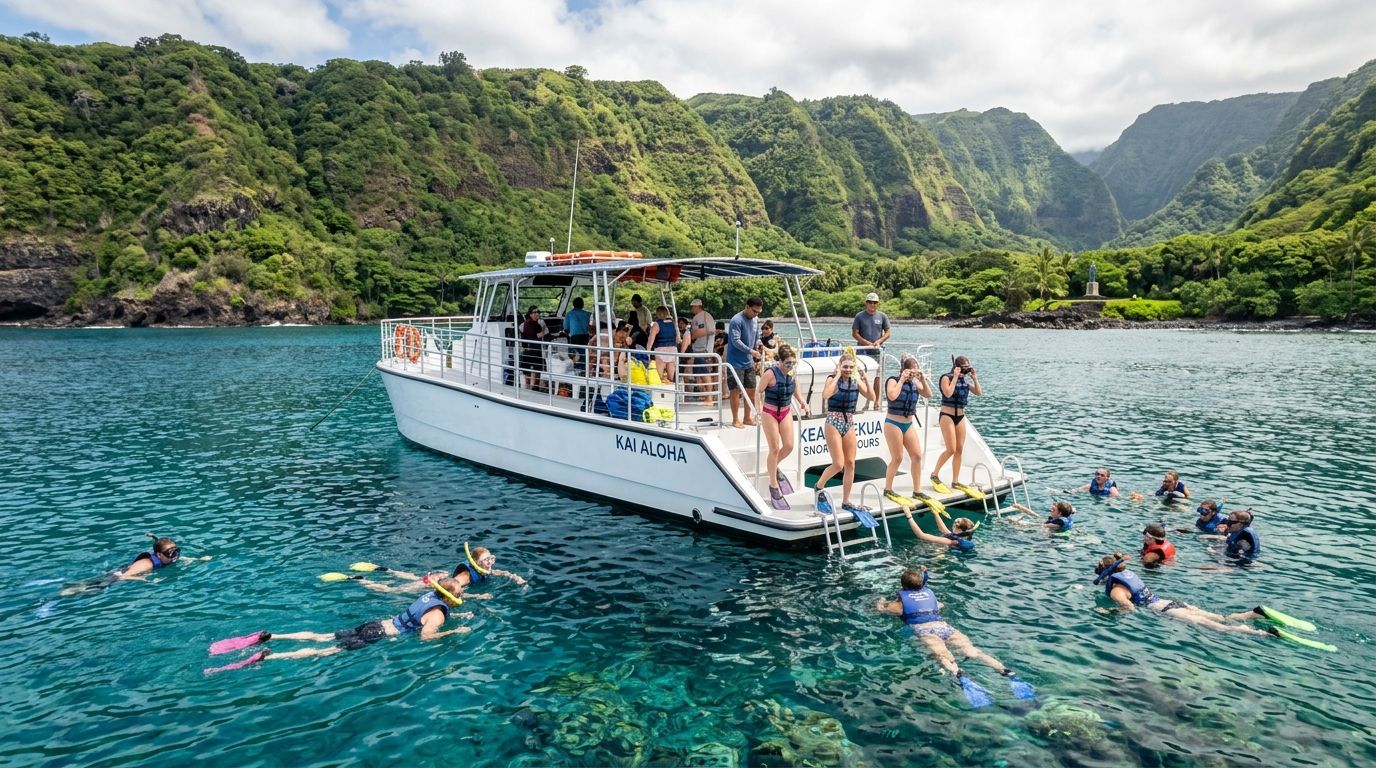
That is why choosing a tour matters so much at Kealakekua Bay. The right boat trip does more than put you on the water. It solves the access problem, keeps the morning organized, and gives your group a much better chance of arriving calm, on time, and ready to enjoy the reef.
Choose the tour style that fits your actual group
Boat tours are not all the same, even if they visit the same bay. Some feel like a relaxed reef outing with plenty of crew support. Others are better for confident swimmers who care more about water time than hand-holding.
A simple way to sort your options is to ask one question first. What part of the day feels hardest for your group?
If the hardest part is getting everyone out the door, checked in, fitted with gear, and into the water without stress, look for an operator known for clear instructions and easy boarding. Families, first-time snorkelers, and mixed-age groups usually do best here.
If the hardest part is keeping strong swimmers interested, look for a trip with a good amount of snorkel time and guides who know where to position the group once they reach the bay.
What to look for before you book
Start with the details that shape the experience on the boat, not the marketing language on the booking page.
- Crew support in the water: helpful for beginners, nervous swimmers, and kids
- Quality snorkel gear: a well-fitting mask changes the whole day
- Boarding ease: useful for older guests, anyone with mobility concerns, and travelers who dislike rushed departures
- Trip pace: some boats feel lively and social, while others are quieter and more instructional
- Reef guidance: good guides explain where to snorkel, what marine life you may see, and how to avoid damaging coral
Two direct starting points for bay-specific trips are Kona Snorkel Trips and Captain Cook Snorkeling Tours. If you are coordinating different ocean activities on the same vacation, Kona Honu Divers also offers snorkel-related experiences on the Big Island.
A practical shortcut for deciding
Use this filter.
Choose the tour with the fewest friction points for the least confident person in your group.
That sounds simple, but it works. A strong swimmer can still enjoy an easy, well-run trip. A nervous snorkeler often struggles on a trip that assumes everyone is fast, confident, and comfortable from the first minute.
Comfort also matters more than many travelers expect. A rash guard, anti-fog prep, and a dry place to store your stuff can improve the day more than flashy extras. Some gear-focused travelers also research compact propulsion devices such as the Stermay M1 sea scooter, but always check with the tour operator before bringing personal equipment.
Pick the tour that makes the day easier to enjoy, not the one that sounds toughest in a vacation story.
Booking option
If you are still comparing operators beyond this bay, this guide to the best snorkeling tours on the Big Island can help you sort out which style of trip fits your vacation.
The Incredible Marine Life You Will Encounter
The reward for all the planning is what happens after you put your face in the water.
Kealakekua Bay is known for massive schools of yellow tang, colorful parrotfish, and Hawaiʻi's state fish, humuhumunukunukuapuaʻa. It's also an important resting habitat for Hawaiian spinner dolphins, especially in the morning, and a common place to see Hawaiian green sea turtles, as described in this look at Captain Cook snorkeling marine life.
What the reef feels like in motion
Yellow tang are often what people remember first. They don't appear one at a time. They move in bright groups that turn a patch of reef into a shifting yellow cloud.
Parrotfish add a different texture to the scene. They bring thicker shapes, stronger colors, and that steady reef-grazing behavior that makes the underwater environment feel busy and alive.
Then there’s the humuhumunukunukuapuaʻa. Visitors love spotting it partly because of the name, but also because it looks unmistakably Hawaiian. It's one of those fish people talk about long after the trip.
Dolphins and turtles
Spinner dolphins are the animals people most want to see and the animals they need to treat most carefully. Morning is a common time to notice them because the bay is part of their resting routine.
Sea turtles create a different kind of moment. The encounter is quieter. A turtle glides through, barely seeming to work, and everyone nearby suddenly slows down.
Seeing more wildlife starts with doing less. Float calmly, avoid splashing, and let the reef come to you.
How to notice more without chasing anything
A few habits improve marine life encounters:
- Pause often: constant kicking makes you miss the side-to-side movement around coral heads
- Scan edges: reef transitions often hold the most interesting activity
- Stay horizontal: good body position keeps your fins away from coral
- Watch first, identify second: don't spend the whole swim trying to name every fish
If endemic species interest you, this guide to diving the Big Island to look for endemic marine animals adds useful background.
Best Times to Go and What to Expect
Morning usually gives you the cleanest shot at the bay, a much-desired view.
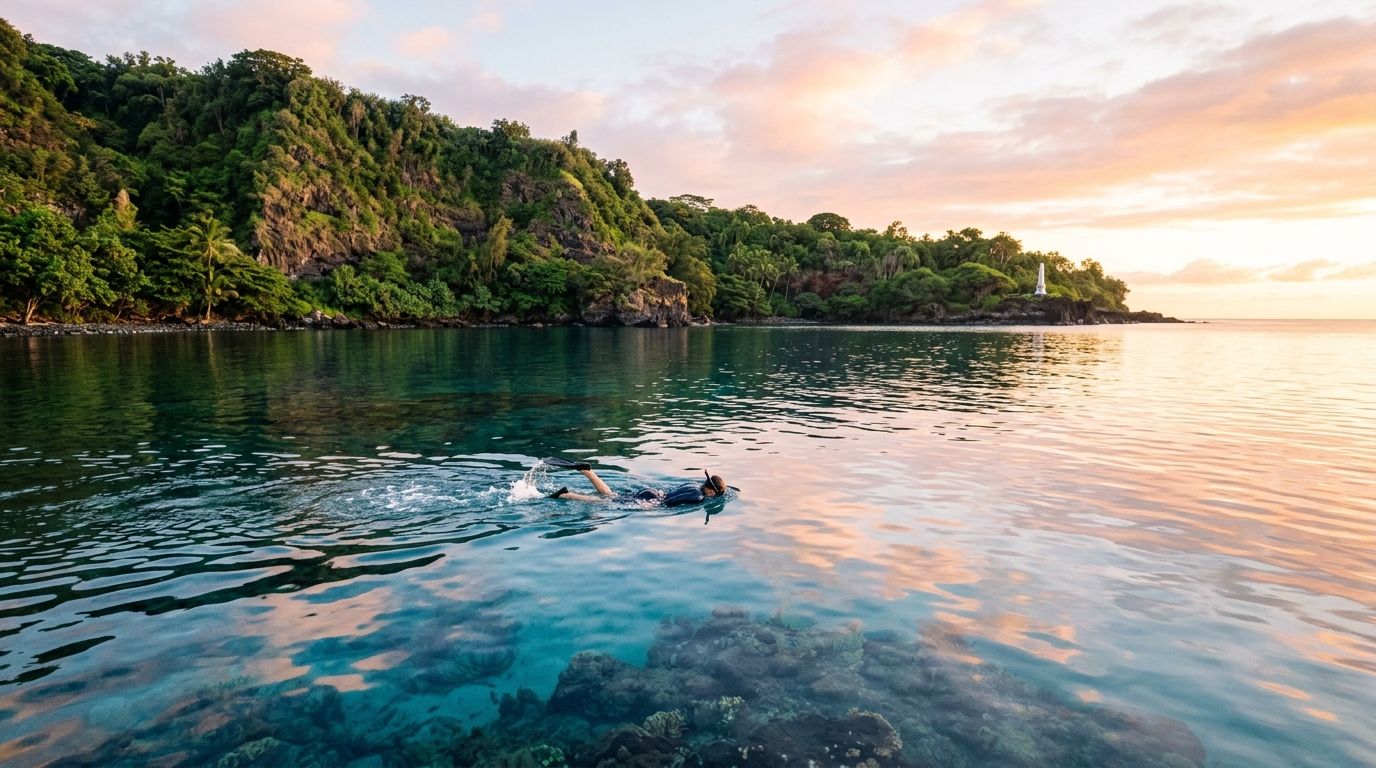
Kealakekua Bay is famous for visibility that often exceeds 100 feet, but that clarity is still weather-dependent. Seasonal variability and swell forecasts matter, and some weather windows produce better conditions than others, as explained in this Kealakekua Bay visibility article.
Why mornings usually work better
The logic is straightforward. Earlier trips often line up with calmer water, cleaner surface conditions, and less visual glare.
Morning can also improve the feel of the whole outing:
- Smoother water: easier for beginners
- Better viewing: reef structure stands out more clearly
- Cooler start: especially helpful for anyone hiking or doing pre-trip prep
- More relaxed wildlife viewing: this is when spinner dolphins are often resting in the bay
Manage expectations like a local
Visitors sometimes hear “100-foot visibility” and assume every day will look like a postcard. That's not how ocean conditions work.
A better expectation is this: Kealakekua Bay has excellent potential, but ocean clarity still depends on weather, swell, and timing. If your schedule allows flexibility, choose the calmest weather window available instead of locking yourself into one idea of the bay months in advance.
Safety Regulations and Reef Etiquette
A good day in Kealakekua Bay is simple. Stay within your comfort level, avoid touching the reef, and leave the place exactly as you found it.
The bay's protected status isn't just a label. It shapes what responsible snorkeling looks like.
Personal safety first
Before you think about fish, think about your own basics.
- Hydrate early: start before you feel thirsty
- Test your mask fit: a leaking mask frustrates beginners fast
- Use sun protection wisely: reef-safe sunscreen, sun shirts, and shade all help
- Snorkel within your limits: tired swimmers should rest early, not late
- Listen to the crew: guided trips work best when guests follow the briefing
A lot of snorkeling trouble starts small. A foggy mask, tight fins, missed breakfast, too much sun, or pushing past comfort. Solve those early and the whole outing improves.
Reef etiquette that actually matters
Some rules sound obvious, but they matter because people break them every day.
Keep your hands and fins off coral
Coral is alive and delicate. Even casual contact can damage it.
Give animals space
Don't chase turtles. Don't swim toward resting dolphins. Don't force an encounter because you want a closer photo.
Leave everything in the bay
Shells, rocks, coral pieces, and other natural materials belong there. So does your trash-free lunch wrapper and bottle cap.
The best snorkelers in Kealakekua Bay are the ones who leave almost no trace of having been there.
A smart packing list
Bring gear that solves real problems:
- Reef-safe sunscreen: apply it before the water portion of your day
- Rash guard or sun shirt: often more useful than extra sunscreen alone
- Towel: obvious, but easy to forget in rental-car chaos
- Dry bag: helpful for phones, keys, and extra layers
- Reusable water bottle: simple hydration fix
- Waterproof camera: optional, but fun if you already know how to use it
If you're renting gear through a tour, check what they provide so you don't overpack.
Frequently Asked Questions about Snorkeling Kealakekua Bay
People often arrive at Kealakekua Bay assuming the hard part is snorkeling. It usually is not. The main challenge is getting to the right part of the bay without building your whole day around a plan that does not fit your group.
Is Kealakekua Bay good for beginners
Yes, especially in calm morning conditions. Clear water helps new snorkelers relax because they can see the bottom, spot fish easily, and stay oriented.
The easier beginner option is usually a guided boat trip. Crew members can help with mask fit, fin sizing, and the small problems that can make a first snorkel feel harder than it should.
Can I just drive to the best snorkel spot
No. The prime snorkeling area by the Captain Cook Monument does not have direct road access.
That detail surprises a lot of visitors. Kealakekua Bay works a bit like a beautiful beach with the front door missing. You can reach it, but you need to choose your route first. For most visitors, that means one of three options: hike in, kayak with current rules in mind, or book a boat tour.
Do kayak visitors need to think about permits
Yes, and DIY plans can get tangled fast. Kayaking sounds simple on paper, but landing rules and access requirements can affect whether your plan works the way you expect.
Check the current rules before you reserve anything else for that day. If your group includes casual swimmers, young kids, or anyone who does not enjoy logistical surprises, a boat tour is often the cleaner choice.
Are mornings really better
Usually, yes. Morning trips often have calmer water, better visibility, and a more relaxed feel before winds pick up later in the day.
If you have flexibility, treat an early start like choosing the first showing at a popular attraction. You get the bay at its gentlest.
What if I get seasick on boat tours
Plan for it before boarding. Motion sickness is much easier to prevent than fix once you are already on the water.
Common options include patches, over-the-counter medicine, acupressure bands, or ginger-based remedies, as noted earlier in the article. If you know you are sensitive to boats, eat lightly, hydrate well, avoid alcohol beforehand, and choose a morning tour when conditions are often calmer.
If you're building a Hawaii trip that includes snorkeling, diving, or both, Kona Honu Divers is a practical place to start. They offer Big Island water activities and helpful trip-planning information, which makes it easier to line up the right ocean day for your group.