
You're probably in Kona right now doing what almost everyone does before they commit to a bay day. You're comparing photos, checking weather, and trying to figure out whether Kealakekua Bay is really worth the extra planning.
It is.
Kealakekua bay kona isn't just another pretty snorkel stop. It's one of those places where the water, the history, and the setting all work together. Ancient Hawaiians settled this bay over a thousand years ago, and it became a sacred cultural center that hosted the annual makahiki festival honoring Lono, a season of peace and abundance, as described by this history of Kealakekua Bay. That matters, because a good visit starts with understanding you're entering a place people valued long before it became famous with visitors.
Most guides stop at “take a boat tour” or “you can hike there.” That's not enough if you're trying to choose well. The true question is simpler: which access method fits your group, your energy, and the kind of day you want?
Your Essential Guide to Visiting Kealakekua Bay
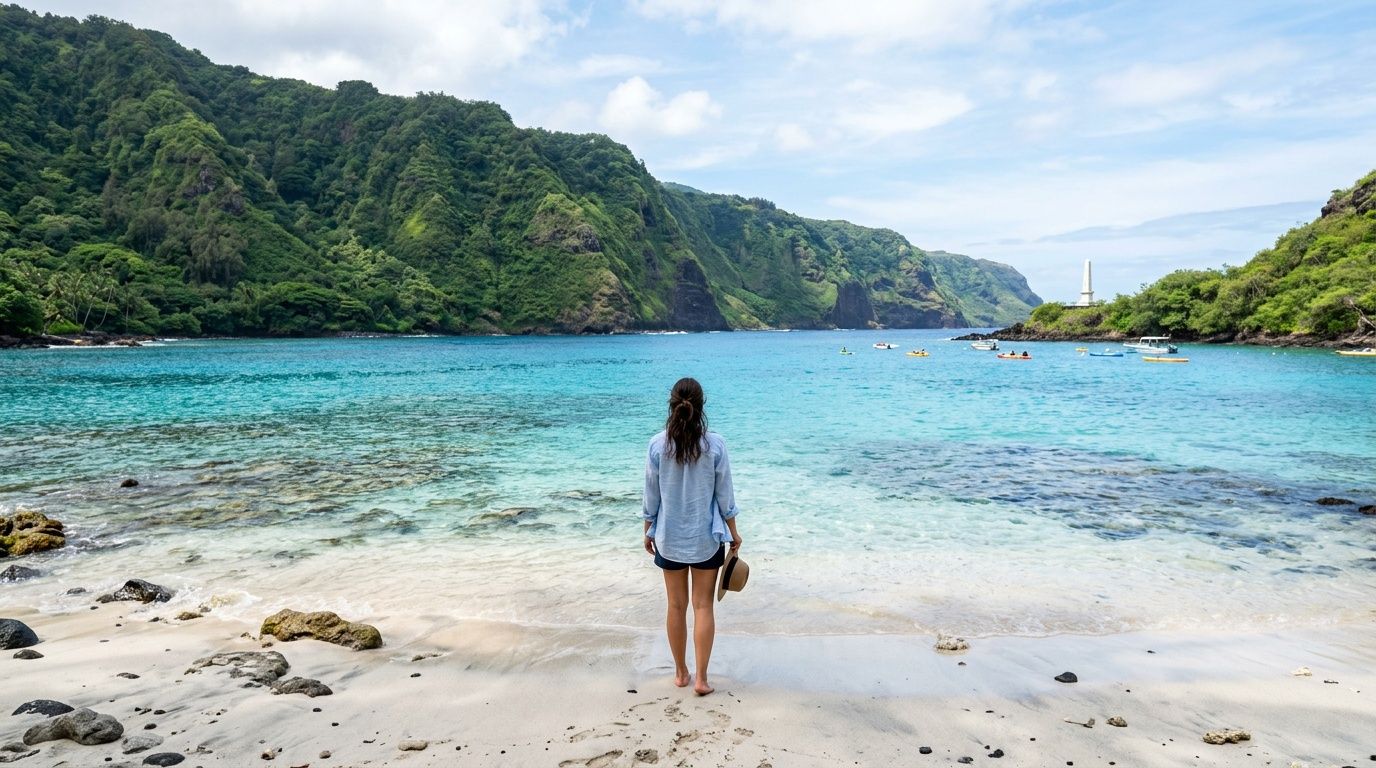
You leave Kona expecting a simple beach stop. Then the first real question hits. How are you getting into Kealakekua Bay?
That question matters more here than it does at many other snorkel spots. The bay is famous, but access is not straightforward, and the wrong choice can turn a great water day into a tiring logistics problem. A good visit starts by matching the route to your group, your budget, and your energy level.
Kealakekua Bay works like three places layered together. It is a culturally important Hawaiian site. It is a protected marine preserve with clear water and strong reef life. It is also a place where boat, kayak, and hike create three very different days.
That is the angle many guides miss.
Instead of treating every option as roughly equal, it helps to compare them the way a local captain would. How much work does each one require before you even touch the water? What does it cost in money or effort? What rules apply once you arrive? And with updated dolphin protection rules now affecting how visitors use the bay, which choice still gives you the kind of experience you want?
The quick decision framework
Use this as your first filter before you get into the details.
| Access choice | Best for | Main tradeoff |
|---|---|---|
| Boat tour | Families, beginners, divers, and visitors who want a lower-effort day | Usually costs more than going on your own |
| Kayak | Independent travelers who are comfortable paddling, planning, and carrying gear | Adds physical effort and requires closer attention to rules |
| Hike | Fit visitors who do well on steep, exposed trails | The climb back out can be the hardest part of the day |
A boat day usually gives you the most energy for snorkeling once you arrive. If you want to compare organized coastal trips before choosing, look at these Kona boat tour options.
Our experience on this coast shows that visitors enjoy the bay more when they save their strength for the water instead of spending it on the approach.
That does not mean boat is always the right answer. Kayak and hike can both be rewarding. But they ask more from you up front, and they leave less margin for heat, fatigue, gear trouble, or changing conditions.
Choose the access method that fits the day you want to have, not the story you want to tell afterward.
How to Get to Kealakekua Bay Boat vs Kayak vs Hike
You wake up in Kona to flat blue water and think, “Today's the day for Kealakekua Bay.” Good start. The next choice shapes the whole outing. Do you arrive fresh by boat, work for it by kayak, or trade money for sweat on the hike?
That decision matters more here than at many snorkel spots. Kealakekua Bay is not a pull-up, park-and-walk beach. Each access method asks for something different up front, then gives something different back. The easiest way to choose is to compare four things: effort, cost, rules, and how much energy you will still have once you reach the water.
Boat access
Boat access is the lowest-effort path for most visitors. You step aboard in Kona, ride the coast, and arrive with your legs, lungs, and patience still intact. For first-time snorkelers, that matters. A calm person in the water usually has a better day than a tired person in the water.
Boat trips also remove a lot of friction. Crews handle timing, entry points, and basic safety flow. If conditions change, the captain can adjust the plan. That flexibility is hard to match on your own.
For divers, boat access is often the clearest choice because it gives better support for gear and easier access to areas beyond a simple shoreline swim. If you want to compare organized coastal options before deciding, look at these Kona boat tour options.
Boat access usually fits:
- Families with kids
- Beginner snorkelers
- Older travelers
- Visitors who want the reef to be the main event
- Divers carrying more equipment
The tradeoff is simple. You pay more, but you spend less energy getting there.
Kayak access
Kayak access sits in the middle. It costs less than many boat tours and gives you more independence, but you earn the bay with your shoulders and your planning.
On a calm morning, the paddle can be beautiful. You see the coastline at water level, move at your own pace, and feel more connected to the place. That is the appeal. The bay feels larger and more alive when you approach it under your own power.
But kayak days have more moving parts than first-time visitors expect. You have to launch, secure gear, manage sun exposure, judge conditions, and leave enough strength for the return. A kayak works like carrying your own small expedition to the reef. If your setup is sloppy, the day gets harder fast.
Common trouble spots are predictable:
- The return paddle feels longer and hotter than the paddle out.
- Too much gear turns a fun trip into a balancing act.
- Visitors focus on reaching the monument area and do not give enough thought to wind, chop, and landing logistics.
- Rules can change what is allowed on the water, especially in a sensitive marine area.
One more point matters in 2025 and 2026. Spinner dolphin protection rules are stricter than many older blog posts reflect. NOAA explains that people may not swim with, approach, or stay within the protected distance of resting spinner dolphins in Hawaiian waters during the regulated daytime hours, under the Hawaiian spinner dolphin rule summary. If you are kayaking independently, that means you need to be more alert and more conservative with wildlife spacing than visitors often assume.
Hike access
The hike is the cheapest route in direct dollars and the most expensive in effort.
The Kaʻawaloa Trail drops you down to the bay from above on a steep, exposed route over uneven ground. Going down can feel manageable because gravity is helping. The return is a true test, especially after sun, salt, and a swim. Hawaii County's trail information for the area notes the route and access conditions through its Kealakekua Bay State Historical Park page.
This option works best for visitors who already know they handle heat well, move confidently on rough terrain, and do not mind carrying water and snorkel gear. If anyone in your group overheats easily, has shaky footing, or just wants a relaxing reef day, the hike can drain the fun before the best part starts.
A lot of travelers call hiking the “free” option. Local captains tend to see it differently. You are paying in sun exposure, leg strength, extra water, and recovery on the climb out.
Kealakekua Bay Access Methods Compared
| Access Method | Effort Level | Approx. Cost | Rules and logistics | Overall experience quality |
|---|---|---|---|---|
| Boat | Low to moderate | Paid tour | Operator handles most timing, gear flow, and safety structure | Best for saving energy for snorkeling or diving |
| Kayak | Moderate | Rental or guided kayak cost | Requires planning, self-management, and close attention to marine rules | Great for independent travelers who enjoy the approach as part of the day |
| Hike | High | Low direct cost | Simple in theory, but physically demanding and exposed | Rewarding for fit hikers, least forgiving for casual visitors |
Which one should you choose
Choose boat access if your goal is simple: spend your energy in the water, not on the approach.
Choose kayak access if the journey itself is part of the reward and you are comfortable handling your own logistics and wildlife rules.
Choose hike access if you enjoy steep trails, handle heat well, and want the challenge as much as the bay.
If you are still undecided, use one question. What do you want your strongest memory to be? The reef, the paddle, or the climb? For first-time visitors, the reef is usually the right answer.
Exploring an Underwater Paradise Snorkeling and Diving
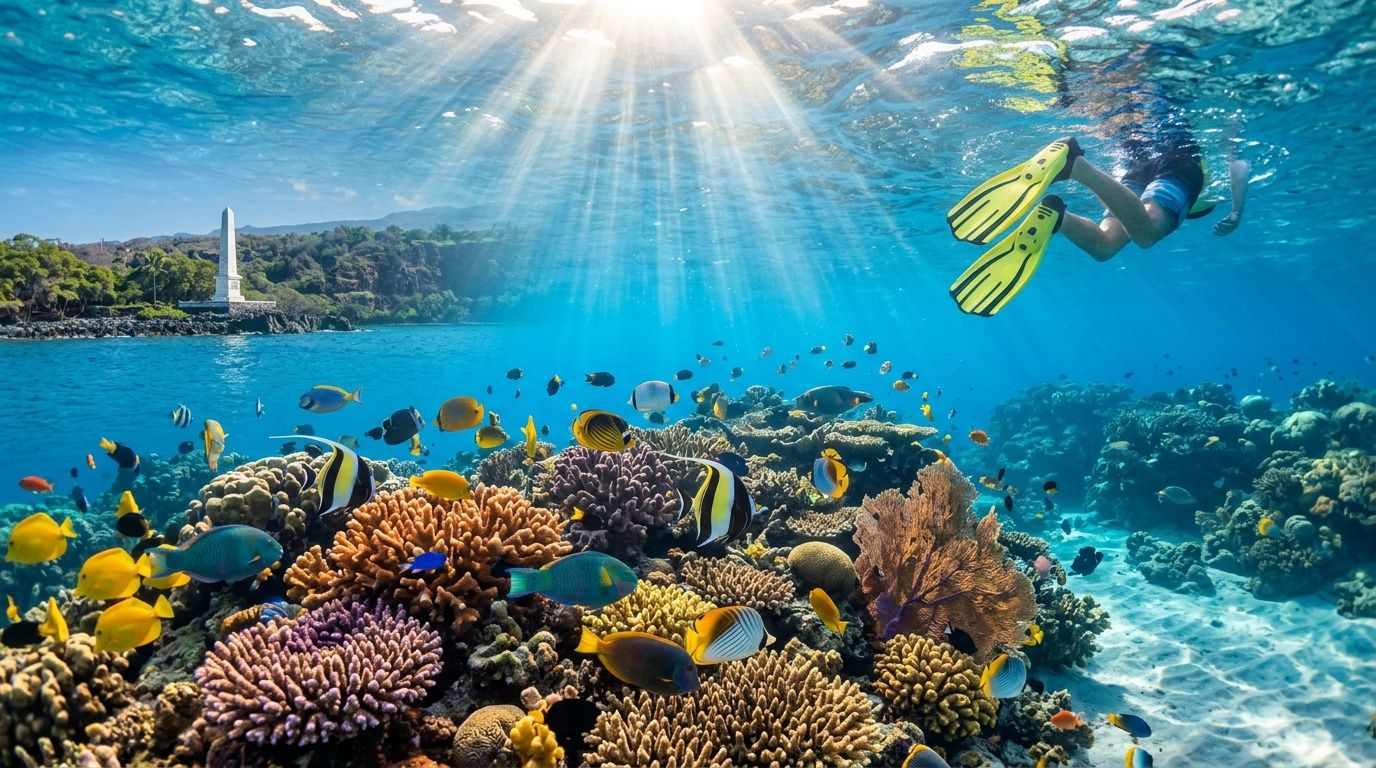
Once you're in the water, the bay makes sense immediately. The reef starts shallow, the visibility can be remarkable, and the water color shifts from bright turquoise near the shelf to deep blue over the drop.
The underwater layout is what makes this place work for both snorkelers and scuba divers. The bay has a shallow reef shelf that drops to over 150 feet, with some walls descending to 120 feet, while water temperatures stay in the 75 to 82°F range and visibility often exceeds 100 feet on calm mornings, according to this bathymetry overview of Kealakekua Bay. For a visitor, that means the same bay can feel welcoming at the surface and dramatic once you descend.
What snorkelers notice first
Most snorkelers fall in love with the clarity and the fish density close to the reef. You don't need a long swim to start seeing movement. That matters if you're new to snorkeling, because immediate feedback calms people down. They stop worrying about the mask and start looking around.
The sweet spot for many first-timers is simple:
- Stay near the reef edge
- Float instead of kicking hard
- Pause often and let the fish come to you
If you're comparing outings, Kona snorkeling options here can help you decide whether you want a bay-focused day or a broader coastal trip.
What divers get that snorkelers don't
Divers experience the bay in layers. In the shallows, it feels bright and easy. Along the walls, the space opens up and the bay changes character. You start to see ledges, lava structure, and that clean blue water off the edge.
For certified divers, the appeal isn't just “more depth.” It's contrast. One moment you're over a reef bench with dense life. The next, you're looking down a wall where the terrain drops away and the whole site feels bigger.
Practical rule: Snorkelers should think horizontally. Divers should think in contours and transitions.
Dolphins, clarity, and timing
Morning conditions often look the most inviting, and that's also when people need to be the most careful about wildlife boundaries. Spinner dolphins use the bay as a resting area, and modern trip planning should treat respectful distance as essential. The right goal isn't to get close. It's to witness the bay without disrupting the animals using it.
For that reason, good operators and good self-guided visitors make the same choice. They keep the focus on reef viewing, careful movement, and low-impact time in the water.
Why the bay feels so rich
Protected water plus varied depth creates variety fast. A beginner can stay over the reef shelf and have a full experience. A diver can move into a more advanced profile and see how the bay changes with structure and depth.
That is the primary draw of kealakekua bay kona. It isn't famous for one thing. It gives different visitors different versions of the same place, and each one works if you approach it with the right plan.
A Guide to Kealakekua Bay's Marine Life
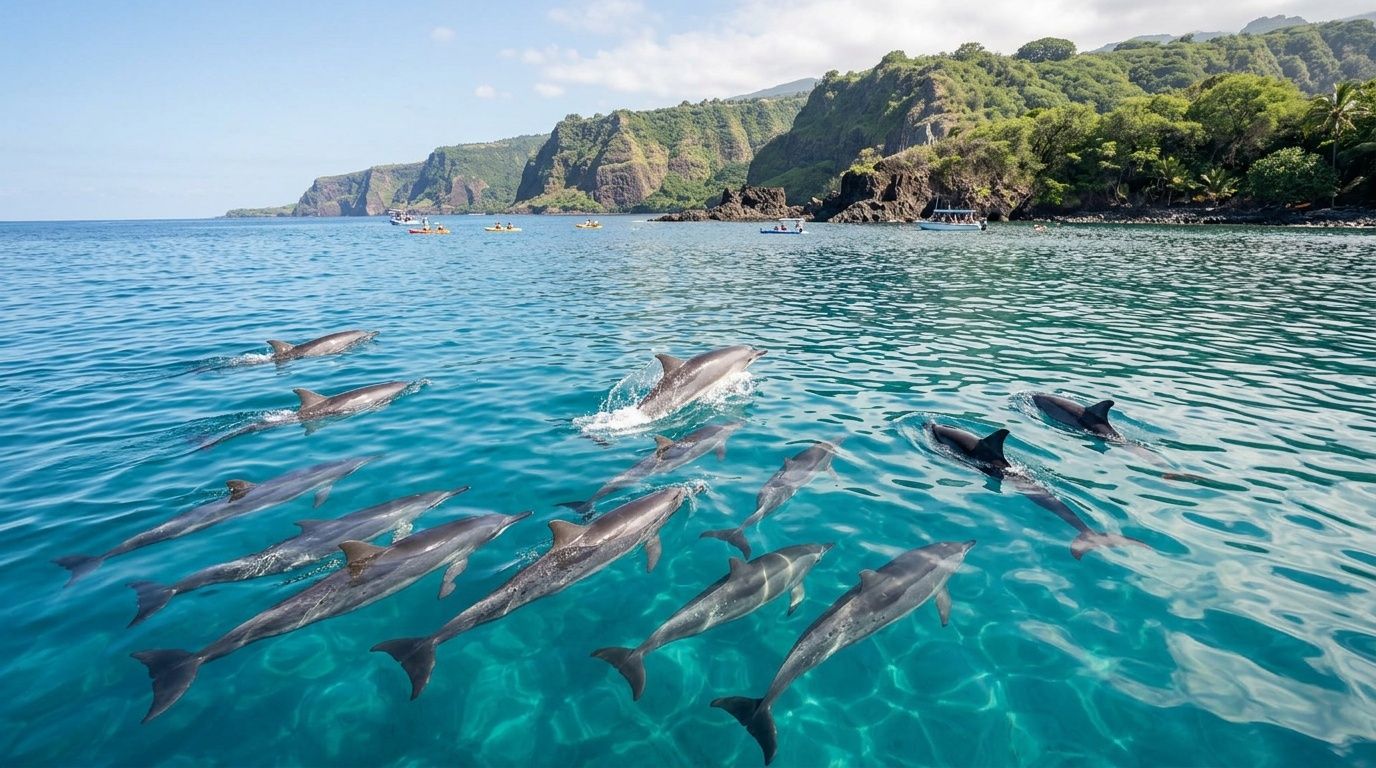
You may enter Kealakekua Bay hoping to see spinner dolphins. Many first-time visitors do. The better goal is to understand how to see them without becoming the reason they leave their resting area.
That matters more now because Hawaiʻi's dolphin protection rules are being enforced closely, and trip planning in 2025 and 2026 needs to reflect that reality. Spinner dolphins use this bay as a place to rest, especially in the morning. Federal rules prohibit swimming with, approaching, or positioning yourself within 100 meters of them. In plain terms, if dolphins are changing direction because of you, you are too close.
A good rule is simple. Treat dolphins the way you would treat a sleeping neighbor. You would not walk into their yard for a better photo. In the bay, respectful viewing means staying well back, keeping your body and fins out of their path, and letting the animals choose where to go.
What you are more likely to notice, if you slow down
Visitors who stop scanning only the open water usually end up seeing more.
The reef itself does the heavy lifting here. Coral heads, lava ledges, sandy pockets, and deeper blue water all create different feeding and hiding zones. That is why the bay can feel busy even when nothing “dramatic” is happening on the surface.
Look for these patterns:
- Hawaiian green sea turtles gliding over reef sections or rising calmly for air
- Butterflyfish, tangs, and other reef fish moving in schools along coral structure
- Moray eels peering from cracks and holes in the lava
- Octopus and other shy animals tucked into ledges, especially if you pause instead of kicking constantly
If you want a sharper eye for what is unique to Hawaiʻi, this guide to endemic marine animals around the Big Island gives useful background before you get in the water.
How to watch marine life without clearing the reef around you
New snorkelers often make one small mistake. They swim fast, look far, and miss what is right below them.
Kealakekua works better with a slower approach. Float first. Let your breathing settle. Then study one patch of reef for a full half-minute. Fish that seemed invisible at first start separating into layers, like watching a busy town square from above instead of speeding past in a car.
A few habits help:
- Keep your fins high and your kicks small so you do not stir up water or clip coral
- Pause over reef structure instead of constantly chasing the next thing
- Watch edges and shadows because many animals avoid the brightest open areas
- Give turtles room so they can surface, feed, or travel without adjusting to you
Marine life is different depending on how you access the bay
This is one place where access method shapes the wildlife experience.
Boat visitors usually arrive with more energy and more time to observe calmly. Kayakers may see surface activity during the crossing, but they also need to keep track of landing conditions, gear, and current. Hikers often earn the bay with effort first, which can make the first few minutes in the water feel rushed if they are tired or overheated.
That difference matters because good wildlife viewing depends on patience. If your goal is reef life, turtles, and fish behavior, the best method is often the one that leaves you calm enough to float and watch. The “best” access choice is not only about price or adventure. It is also about what kind of observer you will be once you reach the water.
The bay rewards attention, not pursuit
Kealakekua Bay's marine life is impressive because it feels intact. You are not looking for one headline animal and calling the day complete. You are watching a living system where dolphins rest, turtles cruise, fish work the reef, and hidden animals appear only when the water around them stays quiet.
That is the true magic here. The more respectfully you enter the bay, the more of it the bay is willing to show you.
Choosing Your Tour Operator The Best of the Bay
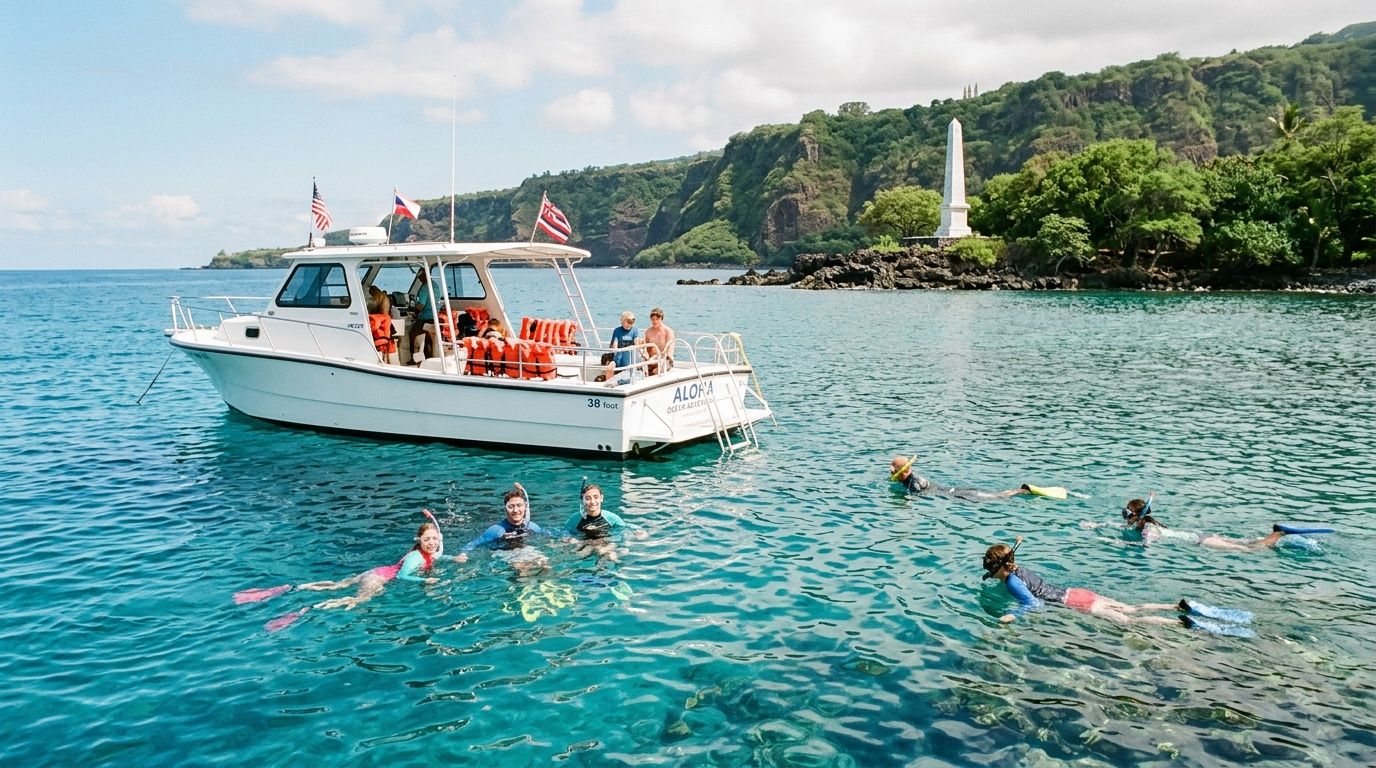
You wake up in Kona with one good morning to spend at Kealakekua Bay. Now the primary choice starts. Do you want the easiest path into the water, the lowest-cost route, or the trip with the most hands-on support once you arrive?
That is how I'd choose an operator here. Start with the access method you already decided fits you best, then pick the company that runs that kind of day well. A boat operator should make the bay feel simple and calm. A dive operator should make the underwater plan clear, organized, and appropriate for your training. If a company cannot explain who its trip is for in plain language, keep looking.
For snorkeling trips
Boat snorkeling trips make the most sense for visitors who want to save energy for the water itself. You board, get briefed, ride to the bay, and enter with a crew nearby. For first-time snorkelers, families, or anyone who does not want to manage a hot hike or kayak landing, that convenience often improves the day more than people expect.
Two useful options are:
A good snorkel crew does more than drive a boat. They set expectations early, fit gear carefully, explain where beginners should start, and follow the dolphin rules without treating them as optional. That matters even more now, because the bay is not a place for casual wildlife pressure. The 2025 to 2026 conservation rules are stricter than many older blog posts reflect, so choose operators who explain current wildlife spacing and resting-dolphin protections clearly before anyone gets in.
For certified scuba divers
Divers should use a different filter. The question is not just “Can this boat get me there?” The better question is “Does this operator run a trip that matches my certification, air use, comfort in open water, and interest in the bay's deeper structure?”
One option is Kona Honu Divers' diving tours. For divers looking at more advanced conditions and longer-range profiles, their premium advanced 2-tank trip is the most relevant page to review. If you're comparing operators broadly, this guide on choosing a Kona dive shop gives practical selection criteria.
Dive trips reward specificity. Ask what kind of sites are typically chosen in these conditions, how the crew handles less-experienced certified divers, and whether the pace feels like a relaxed reef dive or a more advanced outing. A strong operator will answer directly, without vague promises.
Questions to ask before you book
A short call or careful read through the trip page can save you from booking the wrong day.
- Who is this trip built for? Beginners, mixed-skill families, and confident certified divers need different support.
- How much instruction is included? Some trips are friendly but fast. Others teach more.
- How are wildlife rules handled? You want a crew that treats dolphin protection and reef etiquette as normal operating procedure.
- What is included? Gear, flotation, snacks, and in-water guidance change the value of the trip.
- How much physical effort is required after arrival? Entry style matters, especially for older travelers or nervous swimmers.
Here's the simplest way to frame it. Boat snorkeling is like taking the front door into the bay. Kayaking and hiking can be rewarding, but they ask more from you before the snorkeling even begins. The right operator reduces that workload and leaves more of your energy for the part you came for.
If you enjoy comparing water-based trips in different destinations, the planning mindset is similar to evaluating Sag Harbor sailing experiences. The boat itself matters, but the true difference is usually the crew, the trip design, and whether the day fits your group.
A simple way to decide
Choose a snorkeling operator if your group wants the highest odds of an easy, well-supported reef day.
Choose a dive operator if the decision-makers in your group are certified, comfortable, and booking the bay for what lies below the surface.
That framework keeps you from shopping by photos alone. At Kealakekua Bay, the best operator for you is the one that matches your effort level, budget, rule awareness, and the kind of experience you want once you reach the water.
Know Before You Go Rules and Recommendations
You arrive at the bay early, the water looks calm, and everything feels easy. That is usually when visitors make their first mistake. Kealakekua Bay rewards people who prepare before they show up, because the rules here protect a living reef, resting dolphins, and a shoreline with limited access and very little room for improvising.
The bay is part of the Kealakekua Bay Marine Life Conservation District, where fishing and collecting are prohibited. Hawaiʻi DLNR explains the current protections on its Kealakekua Bay marine managed area page. The practical takeaway is simple. Leave everything where you found it, and plan your visit around low-impact behavior.
The rules visitors need to understand
Some bay rules are obvious. A few are easy to misunderstand.
- Do not take natural or cultural items. That includes fish, coral, shells, rocks, and anything else you find.
- Do not stand on, grab, or kick coral. Coral looks like rock, but it is living habitat.
- Keep space from wildlife. Turtles need room. Spinner dolphins need even more.
- Use sun protection that reduces reef impact. Rash guards, hats, and shade help as much as sunscreen.
- Follow access-specific rules. Boat guests follow crew instructions. Kayakers need to pay attention to landing rules and conditions. Hikers need enough water, sun protection, and time to get back safely.
The dolphin rule deserves special attention because many older travel articles are out of date. Kealakekua Bay is a known resting area for Hawaiian spinner dolphins, and federal rules now prohibit swimming with, approaching, or positioning yourself in the path of resting dolphins within 50 yards in Hawaiʻi waters. In plain language, if dolphins are in the bay, you watch from a distance and let them rest. Do not paddle toward them. Do not swim after them. Do not treat an encounter as the goal of the day.
That matters no matter how you enter the bay. A boat captain can help keep your group compliant. A kayaker or hiker has to make those decisions alone.
Match your prep to your access method
This bay has three main access styles, and each asks for a different kind of preparation.
Boat works best for visitors who want the easiest logistics. You still need sun protection, hydration, and motion-sickness planning, but the crew handles entry, exit, and most of the safety setup.
Kayak asks more from you before the fun starts. You need to understand launch conditions, ocean exposure, gear management, and current rules that can affect shoreline landing and wildlife interactions.
Hike costs less in cash for some travelers, but it can cost more in energy. The trail is steep, hot, and much harder on the return. If you arrive dehydrated or underestimate the climb out, the day can turn from memorable to miserable fast.
That comparison is the whole point. Saving money only helps if the access method still fits your group's ability, comfort level, and rule awareness.
Seasickness is easier to prevent than fix
If you are choosing the boat option, handle motion sickness before boarding. Once nausea starts offshore, your choices shrink quickly.
A lot of first-time visitors wait to see how they feel. Experienced crews know that is like waiting to put on sunscreen until after you burn. If you are prone to motion sickness, prepare early, eat lightly, stay hydrated, and choose a morning trip when conditions are often calmer. For a practical overview of prevention options, read these sea sickness planning tips from Kona Honu Divers.
What to pack, without overpacking
Bring what supports a safe water day and leave the rest in the car or hotel.
- Water
- Sun shirt or rash guard
- Hat and sunglasses
- Towel and dry clothes
- Any personal medication
- Waterproof bag for phone, keys, and small essentials
- Footwear that matches your access plan
Footwear is where people often get tripped up. Boat guests usually want simple sandals or deck-friendly shoes. Hikers need something with grip. Kayakers often need a mix of both shoreline traction and water tolerance.
Two smart ways to plan the day
If your priority is the best overall experience quality: book a morning boat trip, follow the wildlife briefing, and spend your energy in the water instead of on transportation logistics.
If your priority is the lowest upfront cost: compare kayak and hike options carefully, including heat, gear load, physical effort, and the responsibility of following wildlife rules on your own.
That kind of tradeoff exists in other coastal destinations too. If you like comparing trip styles and how preparation changes the day, these Sag Harbor sailing experiences offer a useful contrast.
The visitors who enjoy Kealakekua Bay most are usually not the strongest swimmers or the biggest planners. They are the ones who show up with the right expectations, enough water, and a clear understanding that this bay is protected first and visited second.
Frequently Asked Questions About Kealakekua Bay
Visitors usually ask the same handful of questions after they realize one thing about Kealakekua Bay. It is not a casual pull-off where you park, stroll a few steps, and hop in. Your day changes a lot depending on whether you arrive by boat, kayak, or hike, and that choice affects cost, effort, rules, and how much energy you still have left for the water.
Can I drive to the Captain Cook Monument
No. The Captain Cook Monument sits on the shoreline at Kaʻawaloa, and you reach it by boat, kayak, or the steep Kaʻawaloa Trail.
That surprises first-time visitors, but it helps explain why access method matters so much here. A boat gives you the easiest arrival. A kayak gives you independence, but also more responsibility. The hike costs less in cash, yet it asks the most from your legs, especially on the climb back out.
Is Kealakekua Bay safe for children and beginner snorkelers
It can be, if the conditions are calm and the plan matches the child or beginner. The safest first experience is usually a guided boat trip with easy entry, flotation available, and a crew that can explain what to expect before anyone gets in.
The bay is clear enough that beginners often feel encouraged fast, sometimes too fast. Clear water does not always mean easy water. If someone is nervous, tired, or not a strong swimmer, treat that with sincerity and choose the access method that keeps the day simple.
Can I swim with dolphins in the bay
Do not plan on that. Spinner dolphins use Kealakekua Bay as a resting area, and current rules are designed to keep people from disturbing them.
For 2025 and 2026, the smart approach is simple. View dolphins from a respectful distance, do not chase or intercept them, and do not enter the water to get close. If seeing dolphins is part of the day, consider it watching a sleeping neighborhood from the sidewalk, not walking into the yard.
Is kayaking or hiking better if I want to save money
That depends on what kind of cost you mean. Kayaking and hiking can reduce the ticket price compared with a boat tour, but they add physical effort, heat exposure, timing pressure, and more self-management.
A kayak works best for visitors who are comfortable handling gear, checking rules, and paddling both directions. The hike fits people who do well on steep, hot trails and can still carry snorkel gear down and back. If your goal is the best experience quality, not just the lowest upfront spend, boat access often wins because it saves your energy for the bay itself.
What if I'm worried about seasickness
Prepare before departure. That matters more than the brand of remedy you choose.
Some visitors do well with motion sickness medicine, wristbands, or ginger. Others prefer to eat lightly, stay hydrated, and pick a calmer morning trip. If you are deciding between access methods, this is another useful filter. Boat trips can trigger motion sickness for some people, while kayak and hike options avoid that issue but bring their own demands.
Is the bay mainly for snorkelers or scuba divers
Both do well here. Snorkelers get one of the bay's biggest advantages right away, healthy reef and plenty to see without needing much depth. Divers get more structure, more contour, and a longer look at how the underwater terrain changes away from the surface zone.
If you are new to the bay, the better question is not which activity is better overall. It is which one fits your skill, comfort, and access plan.
If you're a certified diver and want organized access to Kealakekua Bay and other Kona sites, Kona Honu Divers is one practical place to compare tours, trip styles, and current availability before you book.