
Let’s get this out of the way right up front. Is Kona good for diving? The answer is a resounding yes. It's not just "good"—it's genuinely world-class.
So, what makes it so special? It's all thanks to a bit of lucky geography. The Kona coast is tucked away on the leeward side of the Big Island, sheltered from the powerful trade winds by the colossal volcanoes Mauna Kea and Mauna Loa. This natural shield creates an underwater paradise with uniquely calm, clear, and warm water nearly every single day of the year.
Why Kona Is a Top Global Diving Destination
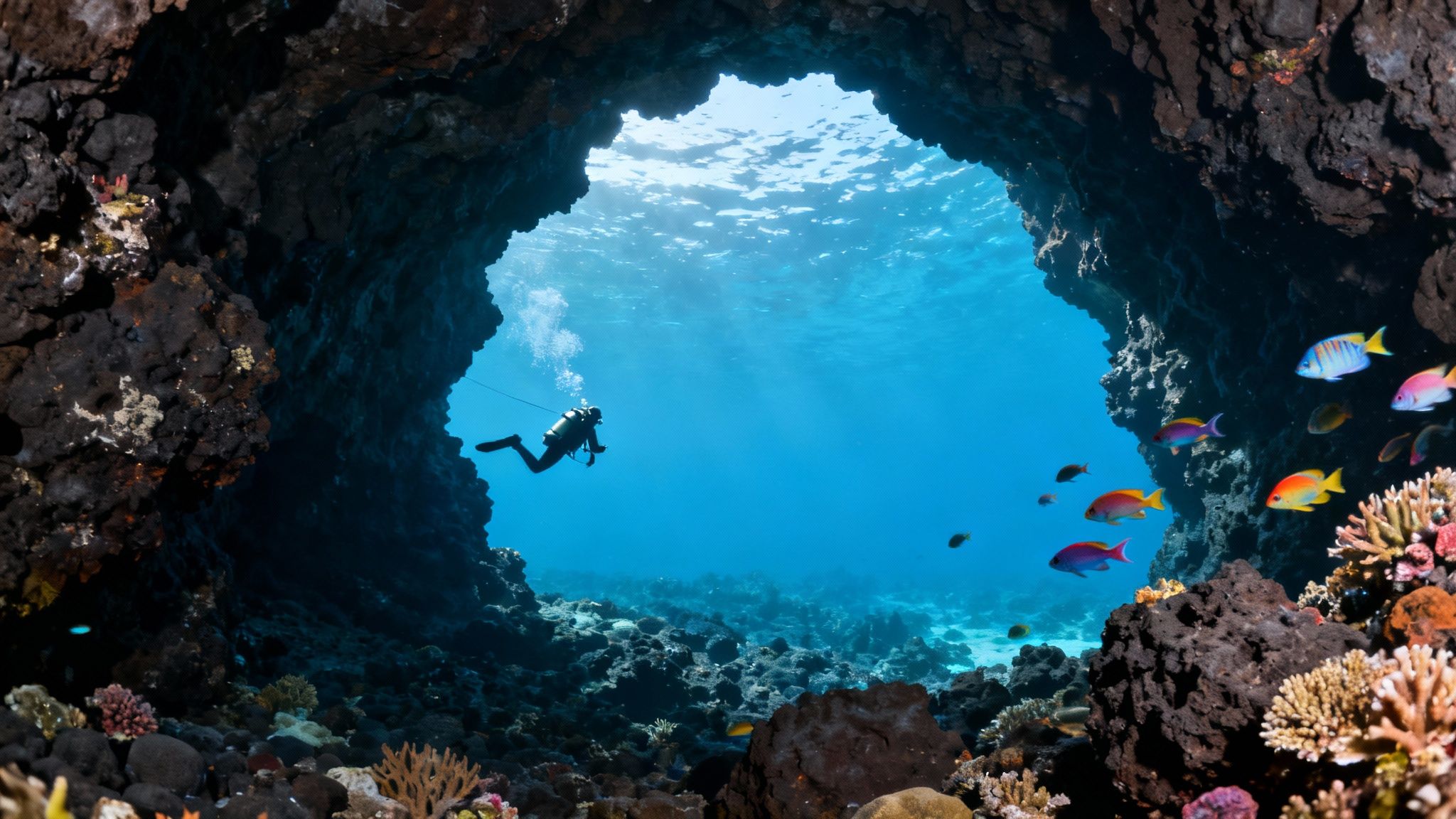
This unique combination of ideal conditions and one-of-a-kind underwater attractions is what puts the Kona coast on every serious diver's map.
That natural protection I mentioned means you can expect glassy water and barely any current on most days. It’s perfect for everyone, from someone taking their first breaths underwater to seasoned pros who’ve been diving for decades. The visibility is often jaw-dropping, frequently pushing past 100 feet, which lets you see the stunning underwater world with incredible clarity.
For a quick overview, here's a snapshot of what makes diving in Kona so incredible.
Kona Diving at a Glance
| Feature | Description | Best For |
|---|---|---|
| Calm Waters | Protected by massive volcanoes, the Kona coast has very little wind, current, or swell. | All skill levels, especially beginners, photographers, and those who get seasick. |
| Excellent Visibility | Consistently clear water, often exceeding 100 feet, for incredible views of the underwater landscape. | Underwater photography, spotting distant marine life, and enjoying the vibrant reefs. |
| Unique Topography | Ancient lava flows have created dramatic underwater canyons, archways, and lava tubes. | Divers seeking adventure, unique underwater navigation, and exploring one-of-a-kind geology. |
| Endemic Wildlife | A high percentage of marine life is found only in Hawaii, offering rare and special encounters. | Wildlife enthusiasts, photographers, and anyone wanting to see species they can’t find anywhere else. |
This table just scratches the surface, but it gives you a good idea of why divers from all over the world flock to this specific stretch of coastline.
The Underwater Landscape
What really sets Kona apart is its dramatic volcanic topography. This isn't your typical sandy-bottom reef. Ancient lava flows have sculpted an underwater playground filled with incredible structures you simply won’t find elsewhere.
As a diver here, you get to explore:
- Lava Tubes and Caverns: Imagine swimming through natural archways and tunnels carved by molten rock centuries ago. It’s a pure sense of adventure and discovery.
- Pinnacles and Craters: Underwater volcanic cones rise from the seafloor like ancient monuments, acting as magnets for schools of fish and other marine life.
- Vibrant Coral Reefs: Healthy, colorful reefs have grown right over the old lava rock, creating a complex and thriving habitat for countless species.
This geological foundation creates an environment that’s just as exciting to navigate as the marine life is to watch. It's a landscape photographer's dream.
A Hub of Endemic Marine Life
Beyond the stunning scenery, the biodiversity here is off the charts. A huge percentage of Hawaii's marine creatures are endemic, meaning they exist nowhere else on Earth. On any given dive, you're almost guaranteed to run into Hawaiian green sea turtles (we call them honu), see playful spinner dolphins cruising by, and swim through massive schools of vibrant reef fish like the bright yellow tang and countless butterflyfish.
This mix of perfect water, unique volcanic formations, and rare wildlife is exactly why Kona has earned its reputation as a must-visit destination for divers. To dive deeper into the specifics, you can learn more about what makes Kona's underwater world famous in our detailed guide.
Experiencing the Kona Manta Ray Night Dive
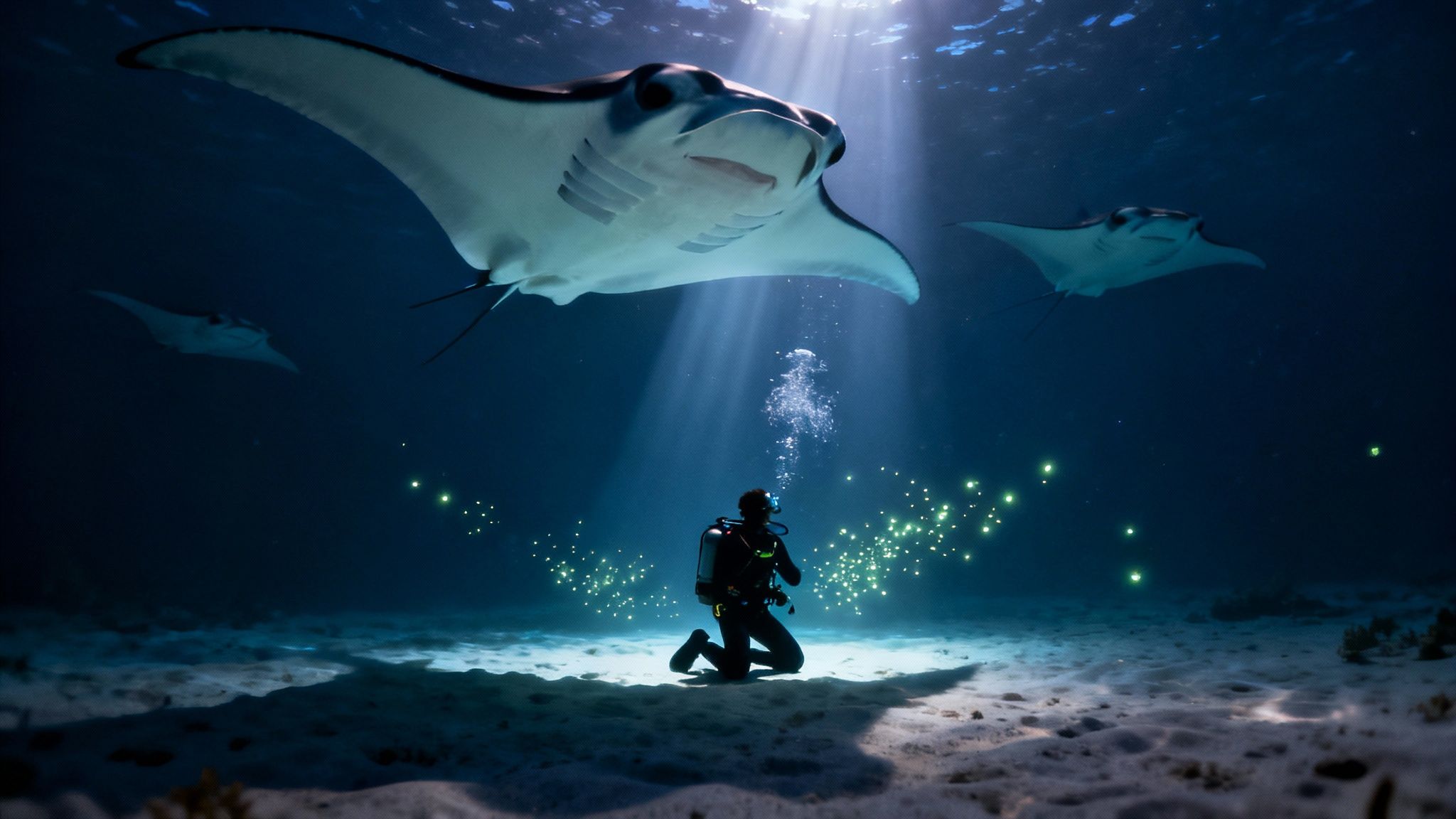
If you ask divers what makes Kona so special, one experience will come up again and again: the world-famous Manta Ray Night Dive. This isn't just another dive on the logbook; it's a true bucket-list spectacle that people talk about for the rest of their lives. The whole thing has a kind of beautiful simplicity to it. At night, dive operators set up powerful, eco-friendly lights on the ocean floor, creating a bright column in the dark water.
This light acts like a dinner bell, attracting dense clouds of plankton—the mantas' favorite meal. What happens next is a silent, graceful, and utterly mesmerizing underwater ballet. As a diver, you simply settle onto the sandy bottom and watch as these gentle giants, some with wingspans stretching up to 16 feet, glide, swoop, and barrel-roll just inches over your head.
It’s an incredible performance that feels both otherworldly and deeply personal. We see jaws drop and hear muffled shouts of pure joy through regulators every single night. For those ready to experience it, you can book manta ray dive tours directly.
Manta Village vs. Manta Heaven
When you start planning your manta adventure, you’ll hear two main site names tossed around: Manta Village and Manta Heaven. They’re both fantastic, but they offer slightly different experiences, and knowing the difference can help you pick the perfect one.
- Manta Village: This spot is down by Keauhou Bay. It’s a bit shallower with a clean, sandy bottom. The big draw here is the incredible consistency of the sightings and its typically calmer conditions, which makes it an excellent choice for both divers and snorkelers.
- Manta Heaven: Located further north, closer to the airport, this site is a little deeper and has more varied terrain on the bottom. It can sometimes attract larger groups of mantas, turning the feeding into a truly wild spectacle.
Both locations are absolute magnets for mantas, drawing in about 80,000 divers and snorkelers every year. At Manta Village, the bright, sandy bottom does a great job of reflecting the lights, really making the whole scene pop. Over at Manta Heaven, the deeper setting can sometimes host a huge number of rays—we’ve seen nights with more than ten mantas at once!
The success rate for seeing mantas on these tours is exceptionally high, often exceeding 90%. This isn't a hopeful wildlife search; it's a virtually guaranteed front-row seat to one of nature's most graceful performances.
No matter which site you choose, the experience is profound. To get a real feel for how the whole evening unfolds, check out our guide on what it's like to go on the manta ray dive in Kona, which breaks down the entire journey from the boat briefing to the final awe-struck ascent.
Exploring Kona’s Unique Marine Life and Underwater Landscapes
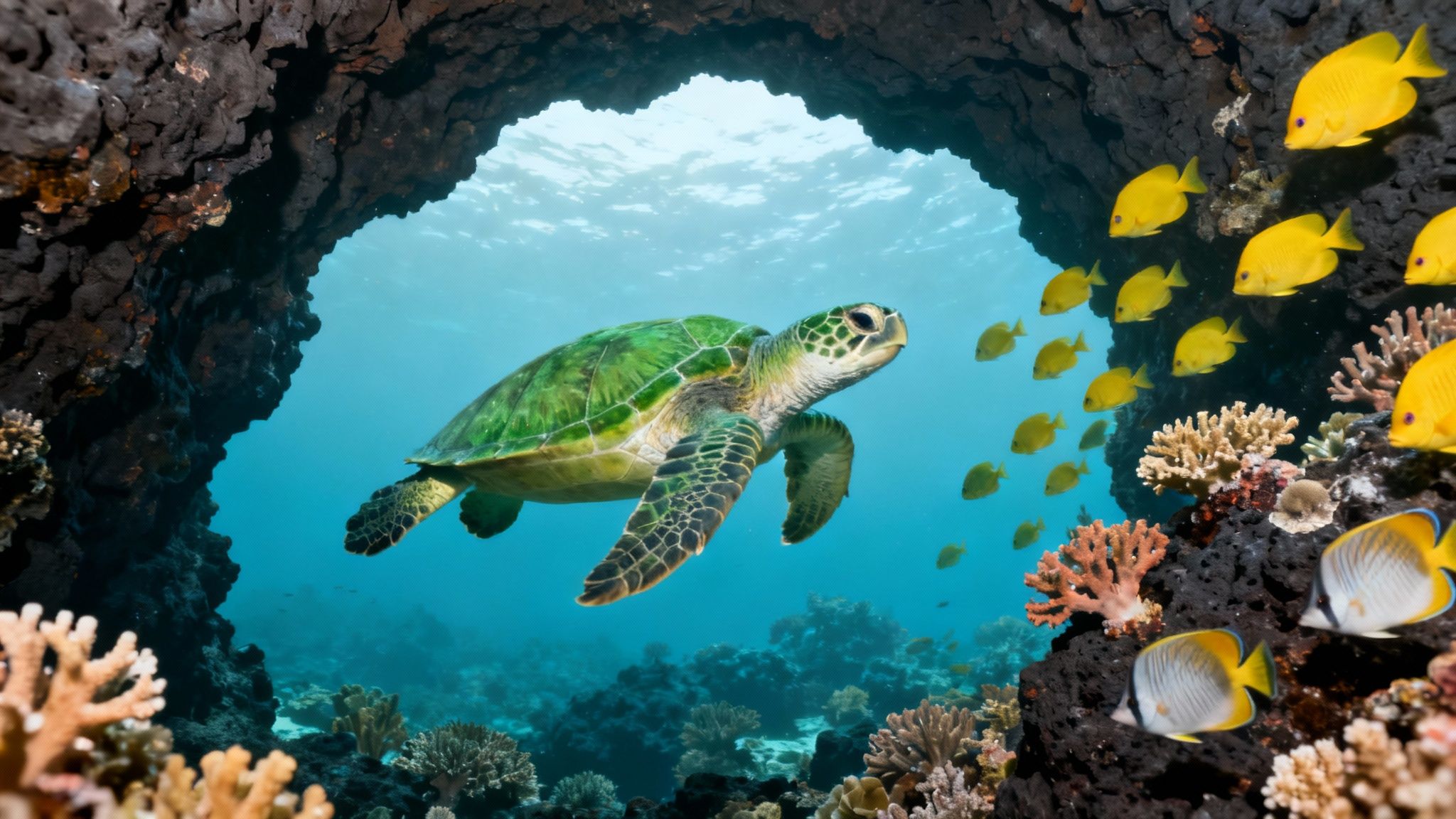
Everyone talks about the manta ray night dive, and for good reason—it's an absolute showstopper. But let me tell you, the daytime scuba diving tours in Kona are every bit as spectacular. The underwater world here is a buzzing, vibrant ecosystem packed with creatures you simply won't find anywhere else on the planet.
Thanks to Hawaii's incredible geographic isolation, it’s become a hotbed for unique evolution. A staggering 25% of the marine life you’ll see here is endemic, meaning it's found only in these islands. Every single dive becomes a true voyage of discovery. You're not just looking at fish; you're looking at Hawaiian fish.
Common Encounters on a Kona Dive
On any given day, the reefs are just humming with activity. It's totally normal to share your dive with a graceful Hawaiian green sea turtle (honu) as it cruises by or takes a nap on the reef. We often spot playful spinner dolphins from the boat, and if you’re lucky, they’ll sometimes make a curious pass at divers underwater.
A typical dive here means you'll almost certainly run into:
- Huge schools of colorful reef fish: Keep an eye out for clouds of brilliant yellow tangs, delicate butterflyfish, and of course, the humuhumunukunukuāpuaʻa—Hawaii's quirky state fish.
- Shy moray eels: Take a peek into the cracks and crevices of the lava rock, and you’ll find all sorts of morays, from the striking whitemouth to the massive yellowmargin.
- Weird and wonderful invertebrates: Look closely for vibrant Spanish dancer nudibranchs, tiny Hawaiian cleaner shrimp, and octopuses that are absolute masters of camouflage.
A Landscape Forged by Fire
What really sets Kona apart, though, is the dramatic underwater topography, sculpted over millennia by volcanic activity. This isn't a world of soft, sandy bottoms. It's a rugged, architectural marvel. The ancient lava flows have created a complex and stunning environment for us to explore.
This volcanic foundation creates a three-dimensional playground unlike anywhere else. You're not just swimming over a reef; you're navigating through a piece of geological history, which makes every moment of the dive more engaging.
You’ll find yourself weaving through intricate lava tubes, swimming under massive archways, and exploring ancient coral reefs that have grown right on top of the hardened lava. All this structure provides endless nooks and crannies for marine life to shelter in, which is why no two dives in Kona ever feel the same.
The diving experience here is really defined by this perfect storm of unique wildlife and incredible underwater landscapes. For the best conditions, the summer months between June and September usually bring the calmest seas and clearest water. To get a better idea of who you might meet down there, check out our guide on which marine life hides in Kona's waters during a dive.
Discovering Advanced and Specialty Dives in Kona
Sure, Kona is famous for its incredible reef dives that are accessible and full of life. But for certified divers with a taste for real adventure, the island has some next-level experiences that go way beyond the usual.
Once you look past the sun-drenched coral gardens, you’ll find dives designed for those with more training and a serious desire to see something extraordinary. These specialty dives pull back the curtain on a side of the ocean most people never witness. It's pure exploration.
So, if you’re an experienced diver asking, "Is Kona good for diving?" The answer is a resounding yes—especially when you discover what lies in the deep.
The Blackwater Dive: Pelagic Magic
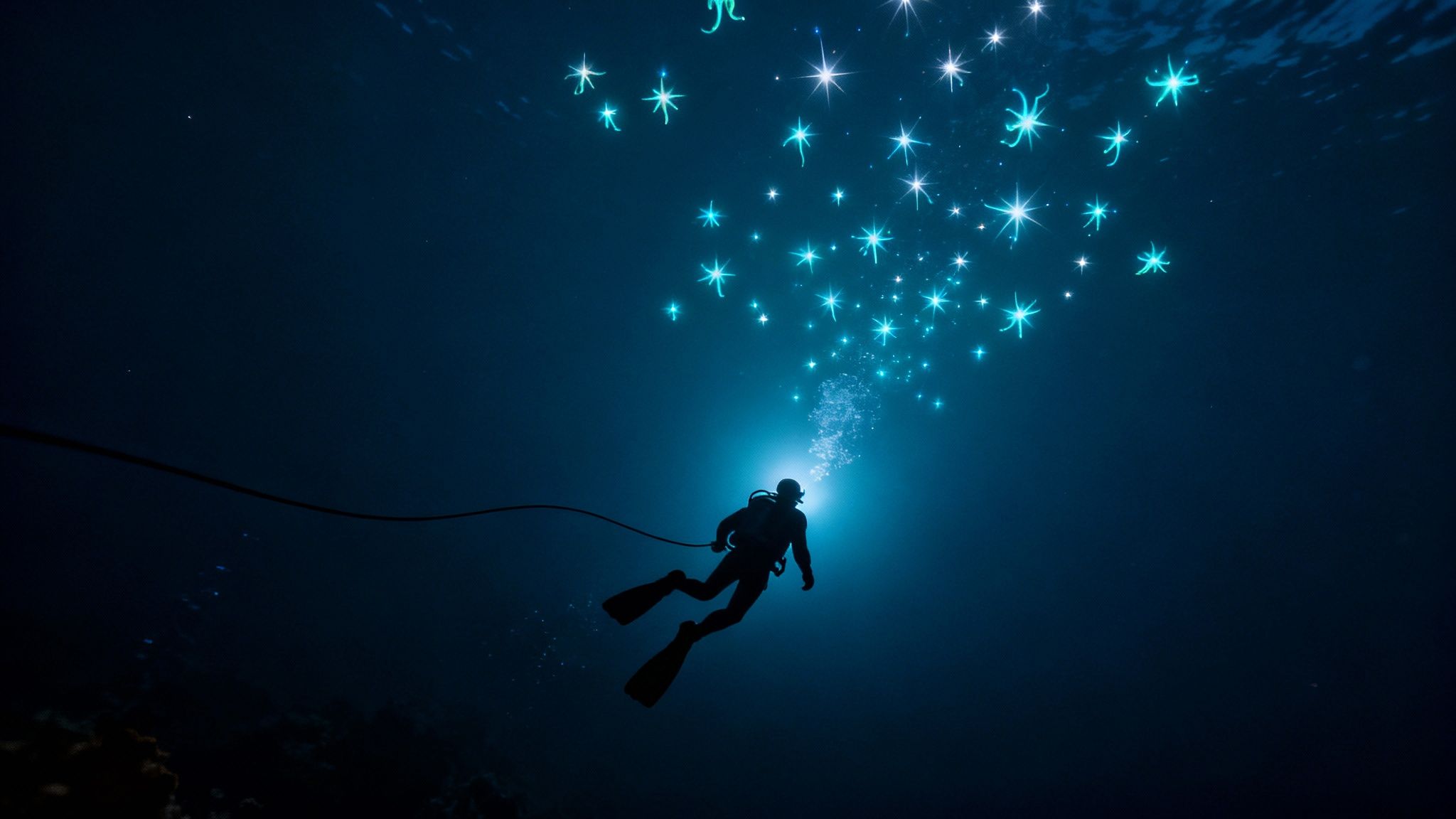
Picture this: you're floating in the deep, inky blackness of the open ocean, miles from shore. You’re safely tethered to the boat, drifting in the dark, as strange and beautiful bioluminescent creatures rise up from the abyss to greet you. This is the world-famous Kona Blackwater Dive, and it’s unlike any other night dive on Earth.
This isn't a reef dive. Instead, you're witnessing the largest migration on the planet—the vertical migration of tiny, often transparent organisms that spend their days in the crushing deep and come to the surface to feed at night.
You’ll see things that look like they’re straight out of a sci-fi movie. Larval fish, bizarre jellies, and alien-looking cephalopods, many glowing with their own light. It’s a humbling, surreal experience that feels less like scuba diving and more like floating through outer space. You can jump on a dedicated Blackwater Dive tour to see it for yourself.
Advanced Boat Charters to Remote Sites
For seasoned divers looking to push their limits and explore more rugged underwater territory, we run premium advanced charters. These trips get you away from the more popular spots and out to deeper reefs, complex cavern systems, and remote locations known for more challenging conditions. These sites often have stronger currents, which are like a magnet for big pelagic species.
These trips are built for divers who are comfortable with deeper profiles and aren't afraid of a little navigational challenge. The payoff? Access to untouched underwater landscapes and a real shot at some incredible big-animal encounters.
These dives aren't just about going deeper. They're about embracing a more demanding—and ultimately more rewarding—kind of exploration. The skills you need for these charters open up a whole new side of Kona's underwater world.
Exploring these remote sites requires solid training and experience, making it a perfect goal for divers looking to level up. If you're ready to see what's beyond the typical dive sites, our advanced dive trip is the ultimate way to do it.
Planning Your Trip: When Is the Best Time to Dive Kona?
Let’s be honest, there's really no bad time to go diving in Kona. It's one of the best things about this place. The massive volcanoes on the Big Island act as a shield, keeping the waters along the Kona coast reliably calm and clear pretty much all year.
But that doesn't mean the seasons are identical. Understanding the subtle shifts between summer and winter can help you line up the absolute perfect trip for what you want to get out of your dives. So while the answer to "Is Kona good for diving year-round?" is a resounding "yes!", your best time might boil down to a simple choice: do you want the warmest, flattest water, or do you want to hear something truly magical?
Summer Season: The Prime Time for Calm Seas
For a lot of divers, summer—which in Kona runs from roughly April to October—is the absolute peak. This is when the ocean lays down, becoming as flat as a pancake, and the water temps climb to a delightful 78-80°F (26-27°C). It's pure bliss.
These incredible conditions are a dream come true for a few kinds of divers in particular:
- New Divers: If you're just getting certified or still building confidence, these gentle seas create a stress-free, comfortable environment to learn and explore.
- Underwater Photographers: When the water is like glass and there's hardly any current, you can focus all your energy on nailing that perfect shot instead of fighting to stay in position.
- Anyone Prone to Seasickness: Let's face it, nobody likes feeling green. The super calm surface during these months dramatically cuts down the chances of feeling queasy on the boat.
Winter Season: Whalesongs and Cooler Waters
Once winter rolls in, from about November to March, things change just a little. The water temperature dips slightly to a still-very-comfortable 75-77°F (24-25°C). Most folks find a 5mm wetsuit is perfect. The seas can get a little more active on occasion, but the trade-off is absolutely spectacular.
This is humpback whale season. While actually spotting one on a dive is incredibly rare (and you'd have to be the luckiest person on the planet), you don't need to see them to experience their presence. On many dives, you can hear their complex, haunting songs echoing through the water. It’s a powerful, goosebump-inducing experience that adds a whole other layer of magic to your time beneath the waves.
No matter when you decide to visit, Kona's visibility is legendary, often stretching beyond 100 feet. And if you're here for the main event—the manta rays—you're in luck. Sighting success rates for the famous manta ray night dive stay consistently high year-round, with most operators reporting an 85-90% success rate. If you want to geek out on the data, you can even check out detailed manta sighting reports.
At the end of the day, it really comes down to what you're looking for. If your top priority is bathtub-warm water and the calmest conditions possible, book your trip for the summer. But if the thought of listening to whale songs during your safety stop sends a shiver down your spine, then winter is calling your name.
Choosing the Right Dive Operator for Your Kona Adventure
Let’s be honest, an amazing dive trip lives or dies by the quality of the dive operator you choose. Picking the right company is easily the most critical decision you'll make. It’s the difference between a pretty good dive and an unforgettable, safe, and genuinely personal adventure. When people ask, "Is Kona good for diving?" the real answer often comes down to the quality of their guide.
So, what should you look for? Zero in on operators that are obsessed with three things: unwavering safety standards, small group sizes, and a real, demonstrated commitment to protecting the reef. A great company doesn’t just show you the sights; they act as guardians of the underwater world and make sure you have an intimate experience, far from the bubble-blowing crowds. This isn't just about safety—it's about forging a deeper connection with Kona's incredible marine life.
Why We Think Kona Honu Divers Stands Out
When divers are looking for that top-tier experience, Kona Honu Divers is consistently the name that comes up. They've built a reputation for having some of the most experienced guides on the island, a meticulous eye for safety, and a deep-seated passion for marine conservation. You can feel their love for the ocean on every single trip, which is why people don't just leave with great photos, but with a new appreciation for the whole ecosystem.
But don't just take our word for it; the experiences of fellow divers say it all.
We get it—sifting through all the options can be a bit much. To help you cut through the noise, we put together a detailed breakdown of what really matters. Check out our guide on how to choose a Kona dive shop to make sure you find the perfect fit.
When you book with a top-rated crew like Kona Honu Divers, you can just relax and enjoy the ride, knowing you’re in the best possible hands.
Common Questions About Diving in Kona
Got a few last-minute questions before you suit up and jump in? Good! It means you're thinking like a diver. We've heard just about every question under the sun, so we’ve put together some straight-to-the-point answers to help you feel confident about your trip.
Do I Need to Be an Advanced Diver to Enjoy Kona?
Not at all! That's one of the best things about diving here. Kona has a fantastic mix of sites that are perfect for divers of all stripes. We've got calm, protected bays with beautiful shallow reefs that are ideal for brand-new divers or those working on their certifications.
Now, if you're looking for a bigger challenge, we've definitely got that too. Thrill-seekers love our advanced dives and the truly unique Blackwater Dive. But you don't need an advanced card to see the main event; most of the sites for the world-famous Manta Ray Night Dive are well within the limits for Open Water divers.
What Is the Water Temperature and What Wetsuit Should I Bring?
You're in for a treat—the water here is beautiful all year long. In the winter, you can expect temps around 75-77°F (24-25°C), and in the summer, it warms up to a balmy 78-80°F (26-27°C).
For most people, a full 3mm or 5mm wetsuit is the sweet spot. If you tend to run cold or you're joining us for a night dive, I’d lean towards the 5mm. There's nothing worse than cutting a great dive short because you're shivering!
What Big Marine Life Can I See Besides Manta Rays?
While the mantas are the rockstars, Kona's reefs are absolutely packed with other incredible animals. You're almost guaranteed to spot a few honu (Hawaiian green sea turtles) cruising by or munching on algae.
Keep an eye out for whitetip reef sharks napping on the sandy bottom, and you’ll often see schools of spinner dolphins playing in the boat's wake. And in the winter months, from December to March, you might just get to hear the haunting songs of humpback whales echoing through the water on your dive. It's an experience that will give you goosebumps.
Is Shore Diving Popular in Kona?
Absolutely. There are some great shore dives here, and it's a solid option if you're an experienced diver who's comfortable with your own navigation and gear. Spots like 'Two Step' at Honaunau Bay have easy entry and a ton to see right off the beach.
That said, the boat is your ticket to the really premier sites. To experience the best, most pristine, and most diverse scuba diving tours on the Big Island, you really want to get out on the water with a local charter.
So, is Kona good for diving? It's a massive, unequivocal "yes." From laid-back coral gardens to heart-pumping night dives, this place has it all.
Here at Kona Honu Divers, we live and breathe this stuff. We're all about sharing the magic of Kona's underwater world with you, and we do it safely and responsibly. Check out our full lineup of diving tours and let's get you in the water!