
Absolutely. In fact, seeing manta rays on the Big Island isn't just possible—it's one of the most reliable and breathtaking underwater experiences you can have anywhere in the world. The Kona coast is famous for its manta ray night dive, a bucket-list spectacle that draws people from all corners of the globe for a front-row seat to an incredible feeding frenzy.
This guide will break down what makes these encounters so consistent and show you how to be a part of this underwater ballet yourself.
Your Guide to Big Island Manta Ray Dives
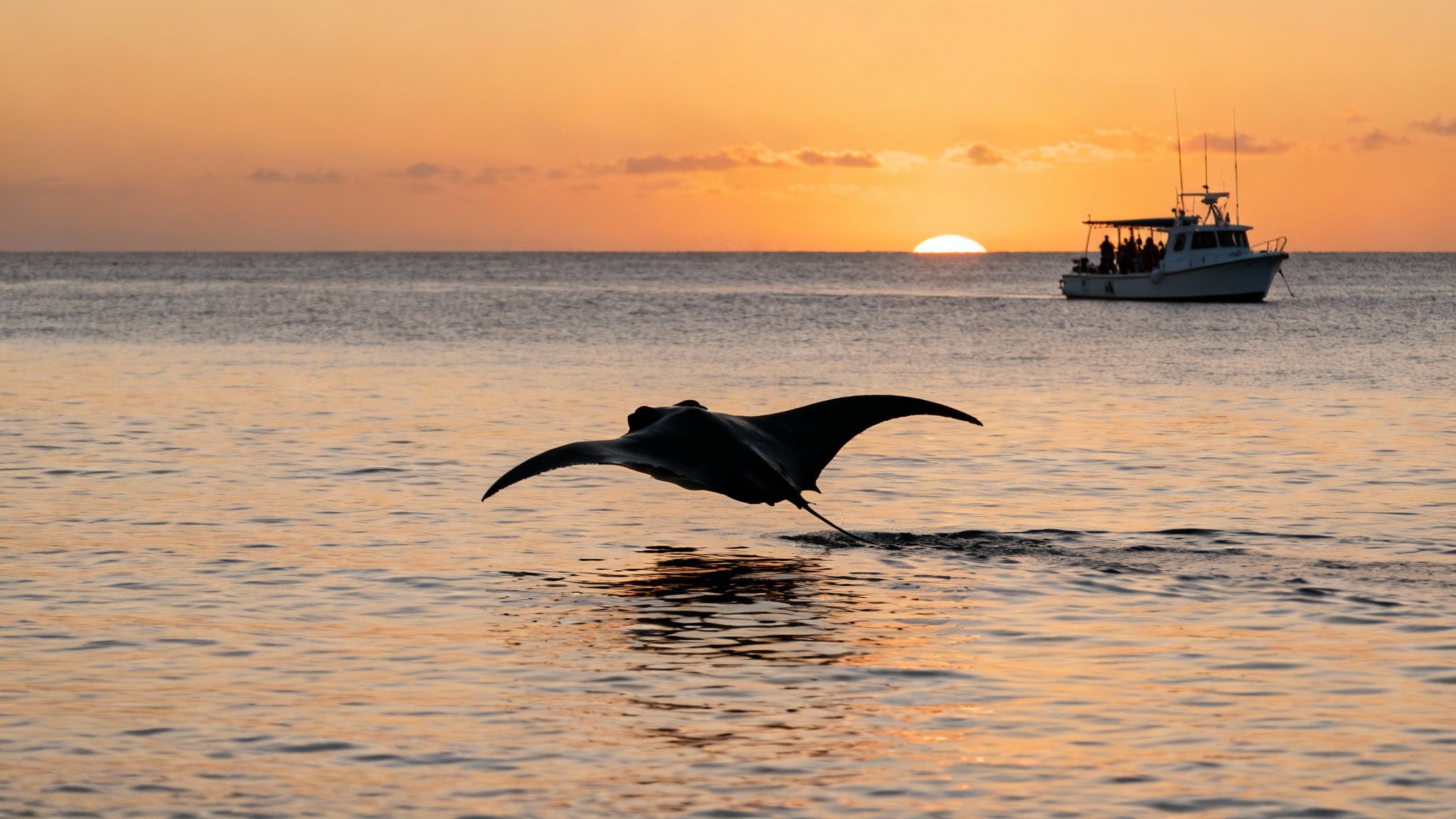
The Kona Manta Ray Night Dive is more than just a dive; it's a world-famous event. The real magic here is the sheer consistency of the sightings. While most wildlife encounters rely on a good dose of luck, the tours along the Kona coast have an astonishing 80-90% success rate for manta encounters. You can get more insights on these success rates and what they mean for your trip.
So, how did this come to be? It all started decades ago when a hotel pointed lights into the ocean. These lights attracted swarms of microscopic plankton, which happen to be the mantas' favorite meal. It didn't take long for these intelligent creatures to connect the light with an all-you-can-eat buffet.
Today's dive operators have perfected this technique. They set up powerful, stationary underwater lights on the seafloor, creating what we affectionately call the "campfire." This light draws in clouds of plankton, and just like clockwork, the resident manta rays show up for their nightly feast.
Kona Manta Ray Dive At a Glance
Here’s a quick summary of what to expect on your Big Island manta ray adventure. This table covers the essential details to help you plan an unforgettable trip.
| Aspect | Details |
|---|---|
| Sighting Success Rate | A reliable 80-90% all year. |
| Best Time to Go | Possible any month, but seas are often calmer from April to October. |
| Main Dive Locations | Garden Eel Cove ("Manta Heaven") and Keauhou Bay ("Manta Village"). |
| What You'll See | Giant manta rays performing graceful barrel rolls to scoop up plankton. |
| Activity Options | You can join a tour as either a scuba diver or a snorkeler. |
| Typical Wingspan | The resident Kona mantas average an impressive 12 feet from tip to tip. |
This at-a-glance view should give you a solid starting point for one of the most memorable nights you'll ever spend in the water.
Why Garden Eel Cove Is The Superior Choice for Manta Dives
When people ask where to see manta rays on the Big Island, two spots always come up: Manta Village and Garden Eel Cove. While you can see mantas at both, Garden Eel Cove consistently delivers a superior and more magical experience.
A huge reason for this is its protected location. The cove is naturally tucked away, shielding it from wind and swell that can affect other sites. This means calmer, more predictable conditions—a massive plus for any night dive. The healthier, more vibrant reefs in the area also add to the beauty of the entire experience. You can dive deeper into what makes this spot a true manta ray heaven in our detailed guide.
An Underwater Amphitheater
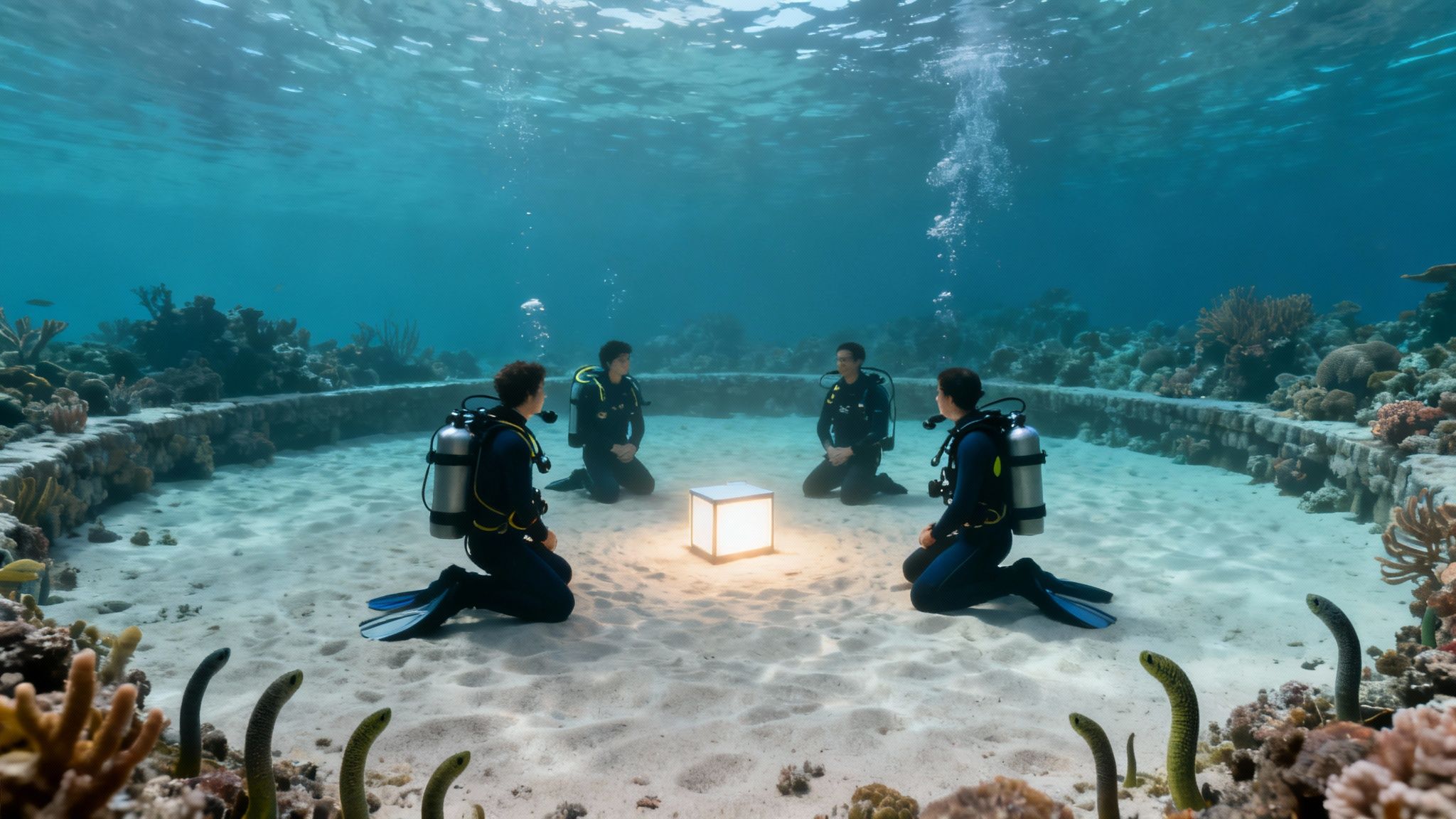
What truly elevates Garden Eel Cove is the setup. Dive operators guide divers to a sandy bottom to form a semi-circle around a central light source, affectionately called the "campfire."
This formation creates a perfect underwater amphitheater. It gives every diver an unobstructed, front-row seat to the show, ensuring nobody is jostling for position as the mantas glide and feed just inches overhead. This viewing area is simply better.
The consistent manta turnout is the final piece of the puzzle. With nearly 200 individually identified manta rays on the Kona coast, the chances of an incredible encounter are extremely high.
For all these reasons—the calm, protected water, the superior viewing setup, and the thriving reef—Garden Eel Cove is the best choice for this bucket-list dive.
What Happens on a Manta Ray Night Dive
It all starts as the Hawaiian sun paints the sky in shades of orange and pink. You’ll climb aboard a comfortable dive boat, feel the evening breeze, and listen as your guide gives you the full rundown—not just a safety briefing, but a lesson in how to be a respectful guest in the mantas' world. This briefing is key; it ensures everyone, divers and animals alike, has a safe and amazing time.
After a quick trip along the beautiful Kona coast, it's time to gear up. You'll take that giant stride into the warm, dark Pacific, and as you descend, the world fades to a quiet, inky blue. The only light is from the moon above and the beam of your own dive torch cutting through the water. It’s a peaceful, almost surreal feeling that sets the stage for what’s to come.
Gathering at the Campfire
Once you reach the sandy bottom, your group will settle in around a powerful, fixed light rig that the local dive community calls the "campfire." It's not for warmth, but for food.
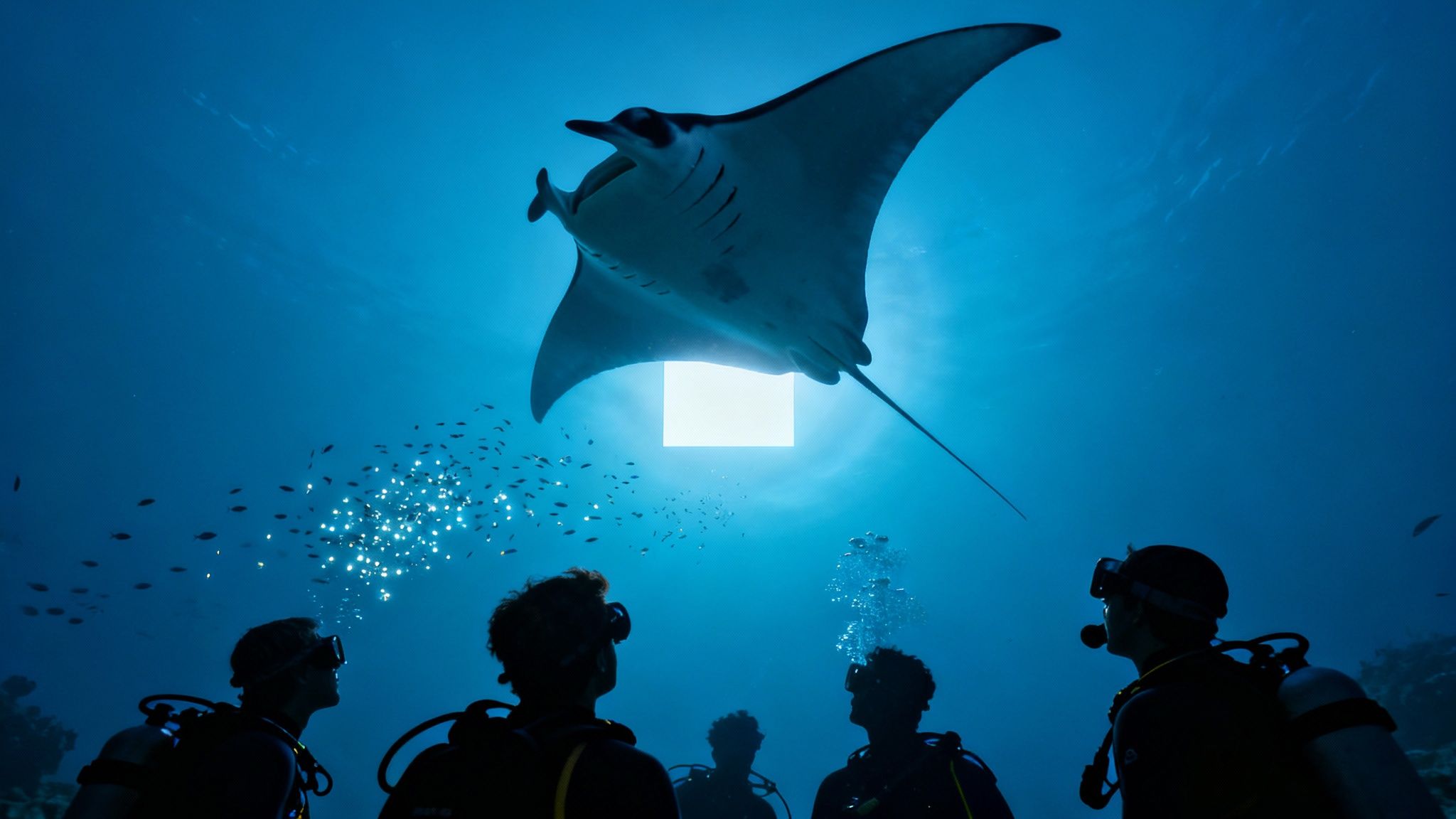
This bright light is a massive magnet for microscopic plankton, the manta rays' favorite meal. You'll find a comfortable spot to kneel or sit, pointing your own light upwards to add to the buffet. Then you just wait. And it's never a long wait.
Out of the deep blue, you'll see them. Massive, shadowy figures gliding effortlessly toward the light. These gentle giants, with wingspans that can stretch over 16 feet, begin a silent, mesmerizing underwater ballet, swooping and barrel-rolling right over your head.
It’s an incredible, almost unbelievable spectacle. They loop and soar, mouths agape, filtering the plankton from the water just inches away. To be at the center of this natural wonder is profoundly humbling. It doesn't just answer the question "Can you see manta rays on the Big Island?"—it leaves you speechless.
Ready to see the show for yourself? You can book an unforgettable manta ray dive tour and experience a memory that will stay with you forever.
Check Availability
Choosing the Right Crew for Your Manta Dive
Picking the right dive operator is probably the single most important decision you'll make for this trip. The quality of the crew, the boat, and their whole approach can genuinely make or break what should be a magical experience.
It’s about more than just a boat ride. You want to look for an operator focused on safety, sustainability, and genuine guide expertise. A great crew doesn't just drop you in the water; they curate the entire encounter, making it richer and more memorable.
What Sets Kona Honu Divers Apart?
We've built our reputation on providing a top-tier experience, and that starts with keeping our groups small. You get personal attention from our guides and have plenty of space to enjoy the show without feeling like you're in a crowd.
Our guides are seasoned pros who live and breathe ocean conservation. Many of them can actually identify the mantas by name and will share incredible stories about their individual personalities and histories. This is what turns a cool dive into a truly personal connection with these gentle giants.
We also exclusively use the Garden Eel Cove site for our manta dives. In our experience, it consistently offers calmer, more protected waters and the best chances for a spectacular manta encounter.
When it comes right down to it, your choice of operator affects everything: your safety, your enjoyment, and just as importantly, the well-being of the mantas themselves.
But you don’t have to take our word for it. See what fellow divers have said about their nights out with our team.
For more helpful advice, take a look at our complete guide on how to choose a Kona dive shop. Our manta ray dive tour is our most popular trip for a reason, and we'd love to show you why firsthand.
Discover More World-Class Big Island Dives
The manta ray dive is an absolute must-do on the Big Island, but trust me, it’s just the tip of the iceberg. Once you’ve seen the famous manta ballet, a whole other world of incredible diving is waiting for you. The Kona coast is a complete diving destination with something for everyone.
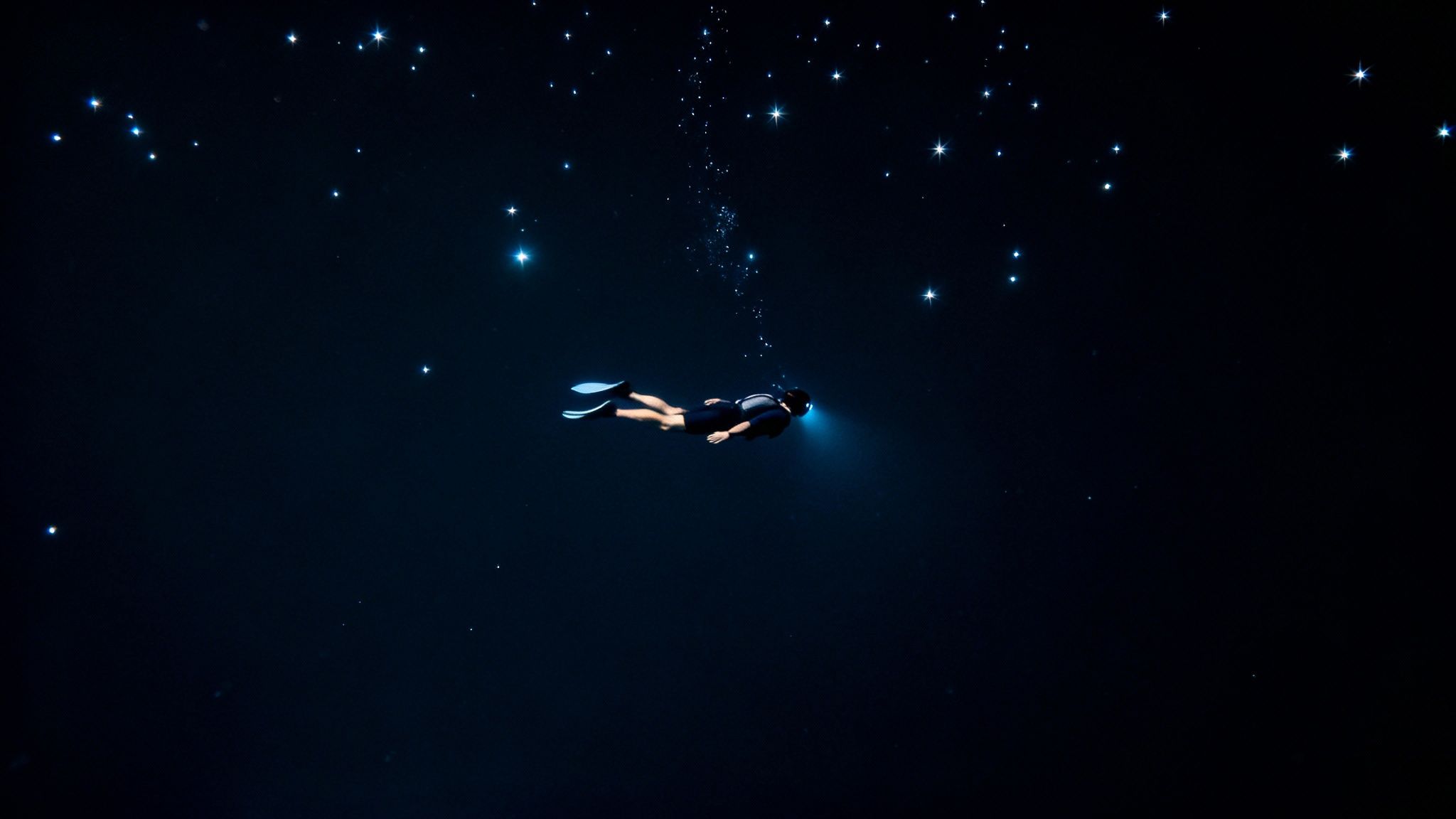
For an experience that’s truly out of this world, you have to try the Kona Blackwater Dive. Think of it as a pelagic magic carpet ride. You'll be suspended from a tether in the deep, dark open ocean, peacefully drifting as bizarre and beautiful bioluminescent creatures rise up from the abyss.
Beyond the Usual Dive Sites
This is nothing like a typical reef dive. You're floating over thousands of feet of water, watching life forms that look like they belong on another planet. The light show from translucent larval fish, alien-like jellies, and other strange critters is something you’ll never forget. You can get all the details on our Blackwater Dive tour page.
The blackwater dive is a front-row seat to one of nature's greatest migrations. Every night, countless deep-sea creatures journey toward the surface to feed. It’s a rare and fascinating glimpse into an ecosystem most people will never see.
Are you an experienced diver looking for a different kind of thrill? The Big Island’s dramatic underwater landscape is your playground. We run advanced dive tours that take you through deep reefs, ancient lava tubes, and along sheer underwater cliffs buzzing with marine life.
From the mantas to the deep, there's always another adventure waiting. Take a look at all our Big Island diving tours and let's get you back in the water.
Your Manta Dive Questions, Answered
If you're gearing up for a manta ray dive on the Big Island, you probably have a few questions rolling around in your head. That's a good thing! Getting the right info ahead of time is the key to an unforgettable—and safe—adventure. Let's tackle some of the most common ones we hear from divers and snorkelers.
When Is the Best Time of Year to See Manta Rays in Kona?
This is the best part: there’s no "off-season." The Kona manta ray experience is a year-round spectacle, thanks to a large resident population that hangs around the island. They aren’t migrating, so you have an excellent chance of a fantastic sighting any month you visit.
While the summer months often serve up the flattest, calmest ocean conditions, you can count on incredible encounters whenever your travels bring you here.
Do I Need to Be Scuba Certified to See the Manta Rays?
Not at all! While getting down on the ocean floor as a diver is an amazing perspective, snorkeling offers its own unique magic.
Snorkelers get to float on the surface, usually holding onto a custom-built light board that draws in the plankton. The mantas then come right up to feed, swooping and gliding just inches below you. It's a breathtaking, front-row seat to the action, and the best tour operators can accommodate both divers and snorkelers on the same boat.
Is the Manta Ray Night Dive Safe?
Yes, absolutely. When you go with a professional, reputable company, the manta ray night dive is an incredibly safe and well-managed experience.
These operators live and breathe safety. They run detailed briefings, follow strict protocols, and always have certified divemasters or instructors right there in the water with you. The dive sites themselves are chosen and managed to create a controlled environment where everyone can just relax and enjoy the show.
Can I Touch the Manta Rays?
This is a firm no. Touching the manta rays is strictly prohibited, and for a very important reason. Their skin is covered in a delicate, protective mucus layer that acts as their immune system, shielding them from infection.
When we touch them, we can rub off this coating, leaving them vulnerable to bacteria and disease. To learn more about how to interact with these gentle giants responsibly, check out our guide on whether you can scuba dive with manta rays. Your guide will go over all the "manta etiquette" rules before you get in the water to ensure we're all being respectful guests in their home.