
Yes, you can absolutely see manta rays while diving on the Big Island. In fact, it’s one of the best and most reliable places on the entire planet for it. This isn't just a lucky, once-in-a-lifetime encounter; it's a world-famous underwater spectacle that happens nearly every single night. Your dream of diving with these gentle giants isn't just possible—it's practically guaranteed.
Your Guide to Seeing Manta Rays on the Big Island
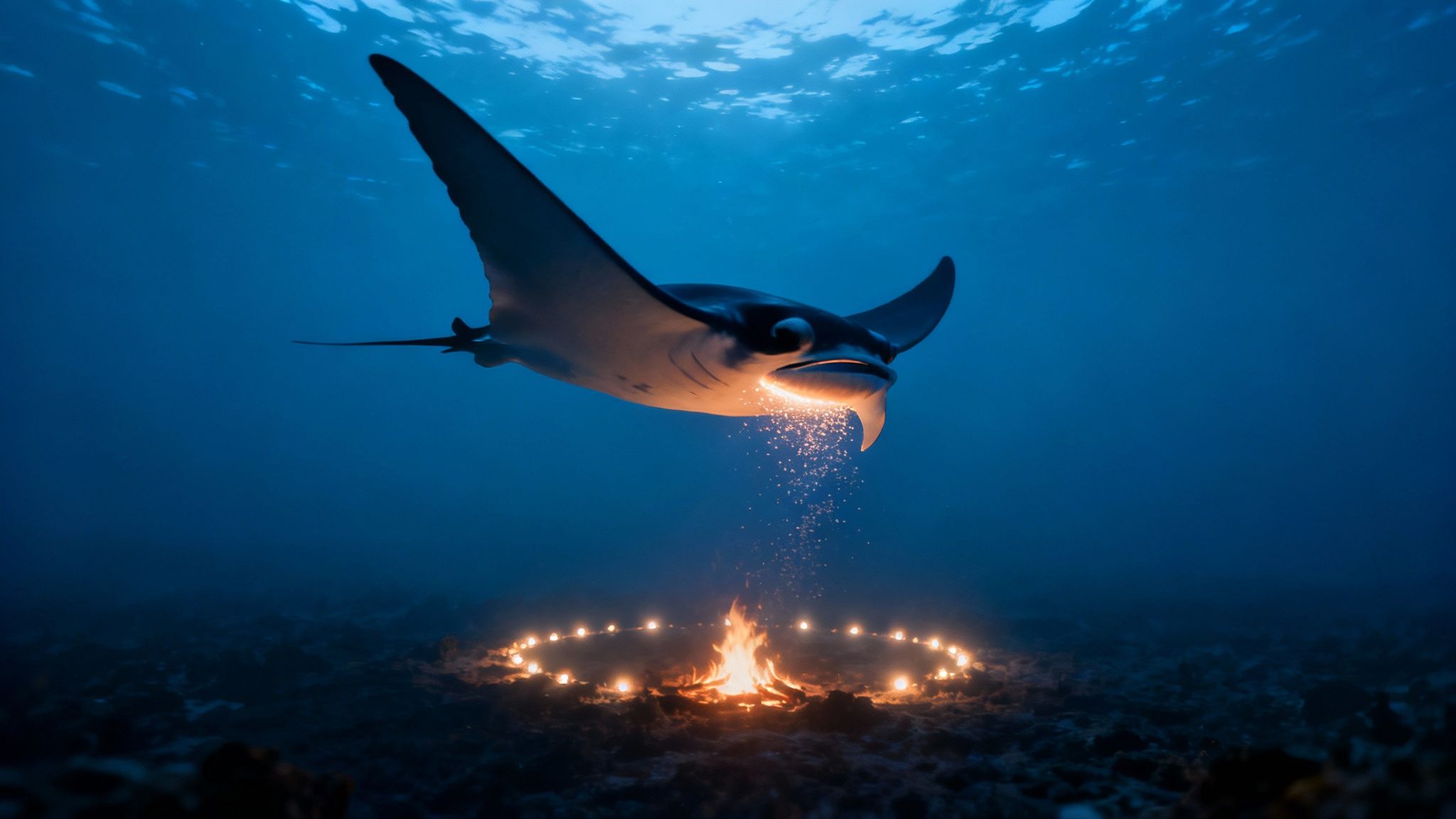
So, what makes the Kona coast so special? It all comes down to a unique feeding environment that has developed over decades, centered around a brilliant concept that divers affectionately call the "underwater campfire."
Dive operators have set up specific sites with powerful lights anchored to the ocean floor. At night, these lights attract massive clouds of plankton—the manta rays' favorite meal—creating a concentrated, all-you-can-eat buffet in one spot.
As dusk settles, divers and snorkelers get in the water and gather around the light source. And then, the magic begins. Giant manta rays, some with wingspans stretching up to 16 feet, emerge from the dark. They glide in, performing effortless barrel rolls just inches above you as they feast on the plankton.
This nightly ritual means the question isn't if you'll see mantas, but how many. The success rate is incredible.
Why Your Chances Are So High
The Big Island’s manta dive is famous for a reason—it’s incredibly consistent.
- Success Rate: Most operators report an 80-90% success rate on any given night.
- Resident Population: There’s a healthy, local population of over 450 identified manta rays that frequent these feeding sites.
- Established Sites: The "campfire" locations are well-established, meaning the mantas know exactly where to show up for dinner.
This isn't your typical dive where you're actively searching for wildlife. It's more like getting a front-row seat to one of nature's greatest performances. You just settle onto the sandy bottom and watch the show unfold right in front of you.
To help you get the most out of this experience, we've put together a quick summary of what you need to know.
Quick Guide to Manta Ray Diving Success on the Big Island
| Factor | Key Information |
|---|---|
| Best Location | The Kona Coast, specifically sites like Manta Village and Manta Heaven. |
| Best Time | Year-round, but conditions are often calmest during the summer months. |
| Dive Type | Night dive. The entire spectacle depends on lights attracting plankton after sunset. |
| What to Expect | A stationary dive where you'll kneel or sit on the ocean floor and watch the mantas feed above you. |
| Success Rate | Extremely high, typically between 80-90%. |
| Manta Population | Over 450 known individuals in the local area. |
Ultimately, because this dive is so reliable, it has become a true must-do for any ocean lover visiting Hawaii. If you’re ready to start planning, a great next step is learning about the specific locations—check out our detailed guide on where to see manta rays in Hawaii.
Finding the Best Manta Ray Dive Sites
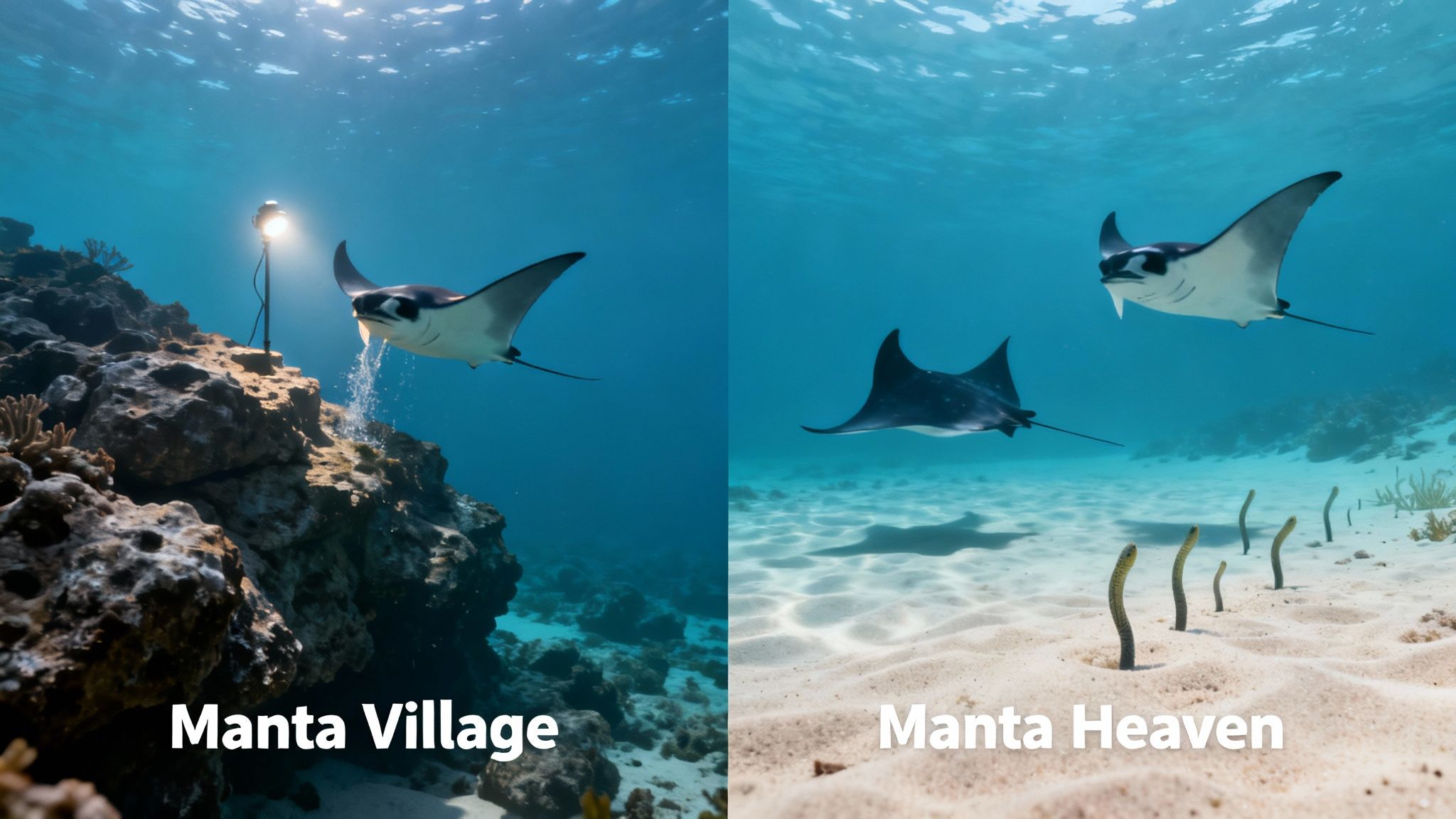
Alright, you're sold on the experience. The big question now is, where does this underwater magic actually happen?
Along the Kona coast, there are two superstar locations that host this nightly ballet. Think of them as the mantas' favorite five-star restaurants, where the plankton is always on the menu.
The truth is, you can’t go wrong with either one. Both spots offer a world-class chance to see these incredible animals, and your dive crew will always pick the location with the best conditions for the night.
Manta Village
Just south of Kailua-Kona, near Keauhou Bay, you’ll find Manta Village. This is the OG, the original and most famous manta ray dive site on the island. It’s built a legendary reputation for being incredibly reliable.
For decades, this has been one of the most consistent places on the planet for manta ray encounters. It’s also relatively sheltered and easy to get to, which makes it a go-to for many dive boats.
Because of its calm waters and the high likelihood of seeing at least a few mantas, Manta Village is a fantastic choice for divers of all skill levels.
Manta Heaven
Head north of Kona, up by the airport, and you'll discover Manta Heaven. Also known as Garden Eel Cove, this spot often delivers a different flavor of spectacle.
While Manta Village is prized for its consistency, Manta Heaven is famous for sometimes hosting massive congregations of mantas. It boasts an impressive 90% success rate for sightings, making it a serious contender for the top spot.
In fact, some research has shown that the average number of mantas seen here is often higher, creating a truly jaw-dropping vortex of gentle giants.
Ultimately, your dive captain will make the final call on where to go. They’re constantly monitoring conditions and talking to other boats to give you the absolute best shot at an unforgettable dive. For a closer look at the underwater topography you'll be exploring, take a look at our breakdown of popular dive sites in Kona.
How to Choose the Right Manta Dive Operator
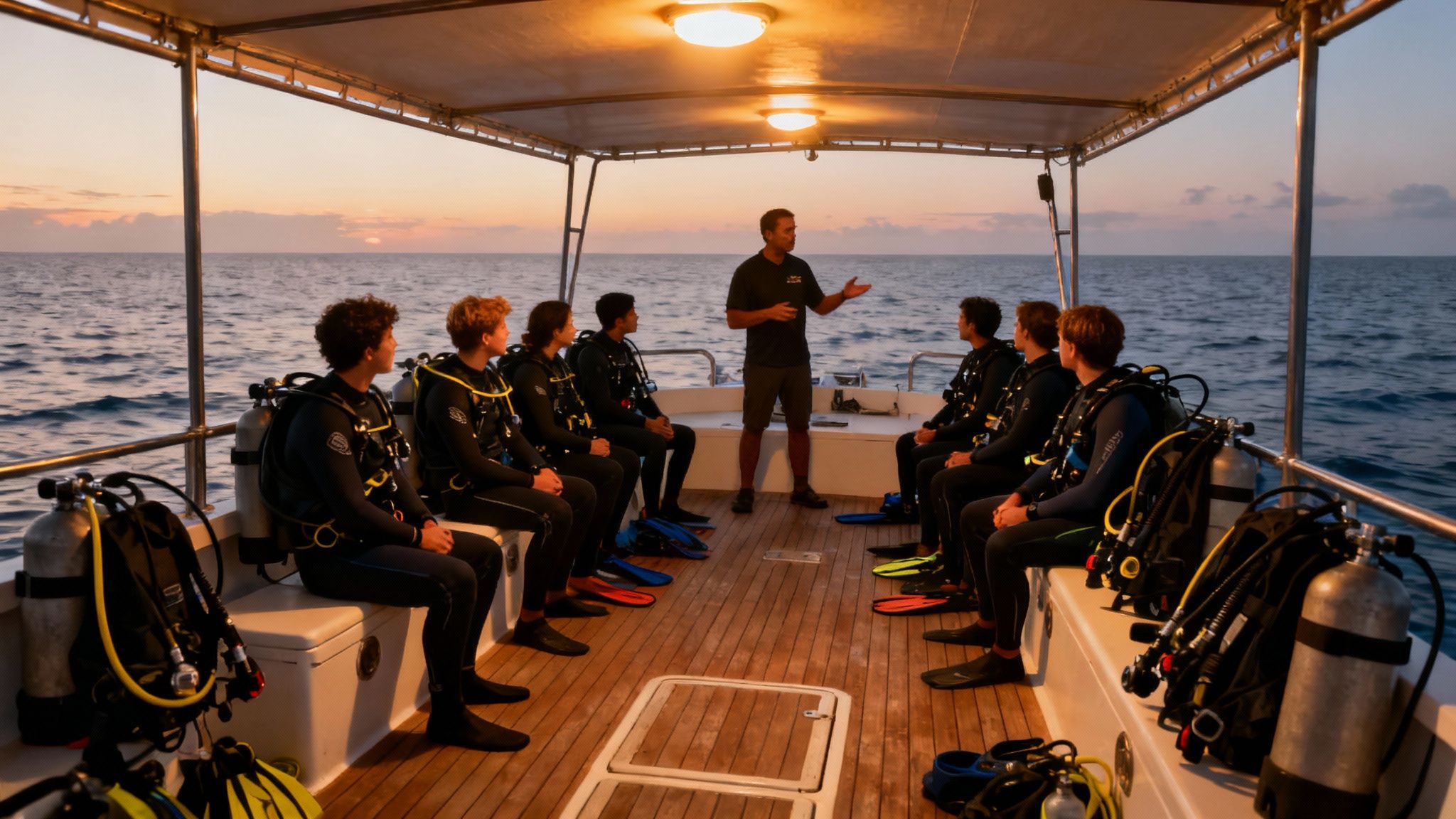
When it comes to your manta ray dive, the single biggest decision you'll make is choosing your dive operator. This choice can be the difference between a good trip and an absolutely unforgettable one. The best companies do more than just drop you in the water; they build an entire experience around safety, education, and a genuine respect for the animals.
Think of a great operator as a steward of the ocean. They follow the established standards for responsible manta interactions, ensuring your dive doesn't stress or harm these gentle giants. Their top priority is the well-being of the mantas, and that commitment is what makes the encounter so special.
What to Look For in a Manta Dive Company
So, what separates the good from the great? First off, look for operators that keep their groups small. A crowded "campfire" on the ocean floor means you're just another face in the crowd. A smaller group gives you a better view, a more intimate experience, and a real connection to the world around you.
The quality of the guides is just as important. A truly knowledgeable guide can turn a simple viewing into a fascinating lesson. They’ll point out individual mantas they know by name, explain their unique behaviors, and share insights about the entire ecosystem. It completely changes your appreciation for what you're seeing. An operator like Kona Honu Divers really gets this right, mixing the thrill of the dive with a powerful conservation message.
Making Your Final Decision
Ultimately, you want a company that not only delivers an amazing adventure but also actively protects the local manta population for years to come. Spending a little time reading reviews and comparing what each outfit offers is well worth the effort.
To give you a head start, we've put together a detailed guide ranking the top 10 Kona diving companies. It’s a great resource to help you find the perfect operator for your trip.
Ready to book your front-row seat to one of nature’s greatest shows? Securing your spot on a world-class manta ray dive tour is just a few clicks away.
What to Expect on Your Manta Ray Night Dive
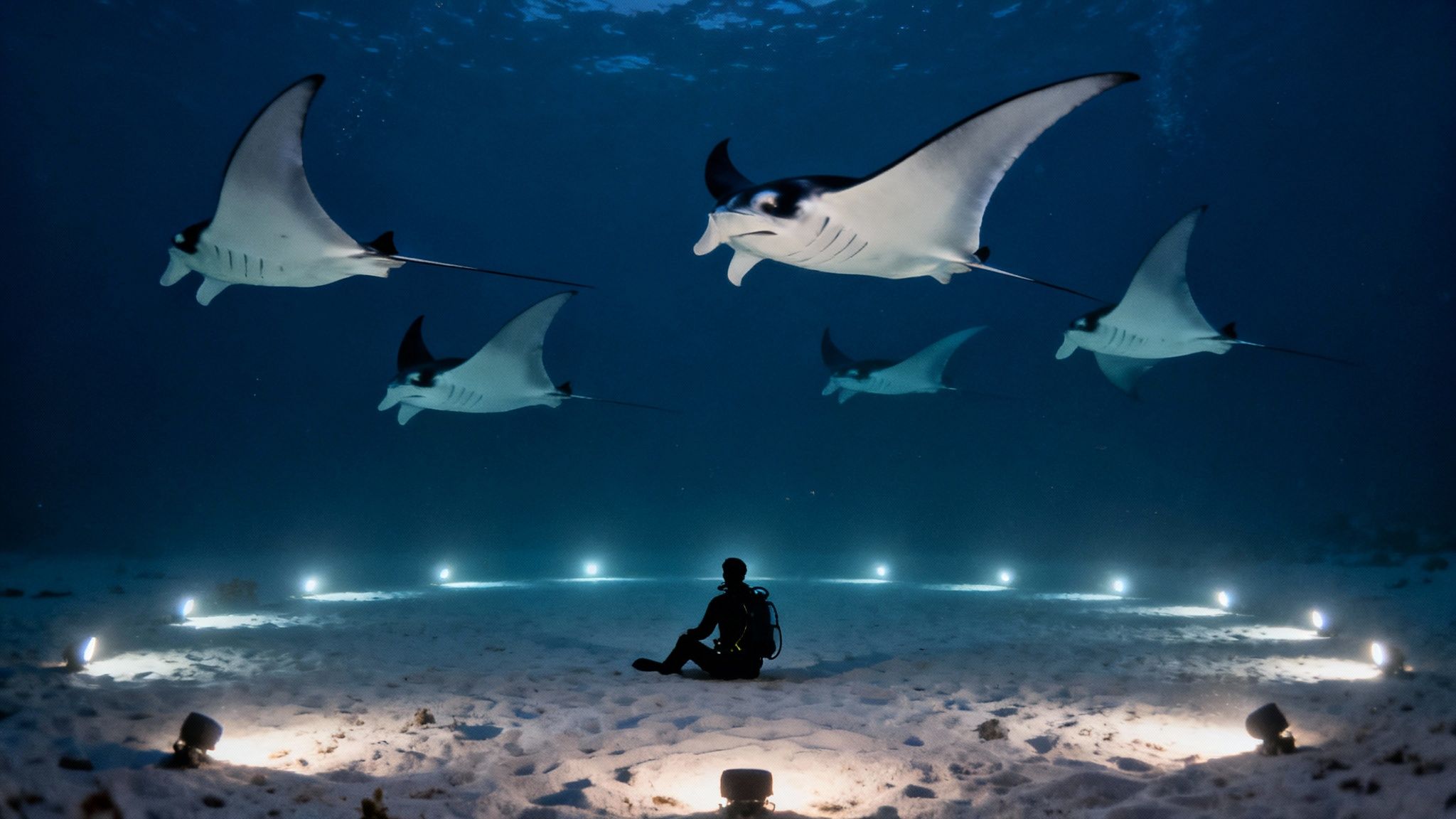
Picture this: you slip into the ocean just as the sun sets, descending into the deep blue twilight. As you follow your guide's light beam toward the sandy bottom, you're about to get a front-row seat to one of the most incredible shows on Earth.
Your journey starts on the boat with a solid pre-dive briefing from the crew. They'll walk you through everything, making sure you feel totally prepared. Once in the water, you’ll head down to a relatively shallow depth of about 30-40 feet and find your spot for the main event.
The Underwater 'Campfire'
The magic really starts around the "campfire"—a circle of powerful lights pointed straight up from the ocean floor. This setup isn't for warmth; it's a massive beacon for plankton. These tiny organisms are drawn to the light, creating a thick, swirling buffet in the water column.
And where there's a buffet, the dinner guests soon follow.
Gracefully emerging from the darkness, the giant manta rays arrive. With wingspans stretching over 16 feet, they glide just inches over your head, performing stunning, acrobatic barrel rolls to scoop up mouthfuls of plankton.
The whole experience is surreal. The sound of your own breathing is the only thing that breaks the silence as these gentle giants dance in the beams of light. Your only job is to be still and watch, becoming part of their underwater world for a little while.
This nightly ballet has become a must-do for visitors to the Big Island, drawing an estimated 80,000 people every year. The good news is that its popularity has fueled important research, with organizations documenting the local manta population since 2009. You can learn more about how these dives help researchers by checking out this guide to understanding the local manta population on mantaraynightsnorkelhawaii.com.
The manta dive is truly a highlight, but it's just one of the many amazing diving tours available in Kona that showcase the Big Island's incredible marine life.
The Best Time of Year for Manta Ray Sightings
So, when is “manta season” on the Big Island? It’s a question I get all the time from divers planning their trip, worried they’ll miss the window. The fantastic news is, there isn’t one! The world-famous Kona manta ray encounter happens every single night, **365 days a year**.
What makes Kona so special is that our manta ray population is residential. These aren't migratory animals just passing through; they live here full-time. They aren’t leaving for warmer waters or chasing a seasonal food source somewhere else, which means your chances of an incredible encounter are just as good in December as they are in July.
Do Other Factors Affect the Dive?
While the mantas are always here, a couple of things can shape your overall experience. Thinking about these can help you pick the time that’s right for you.
- Sea Conditions: The summer months, roughly from April to October, tend to have calmer, glassier seas and warmer water. This can make the boat ride out to the dive site a bit more comfortable, especially for those prone to seasickness.
- Moon Cycle: There's a theory among some divers that the darkest nights around a new moon draw in more plankton, which could mean more manta action. Honestly, though, we see incredible activity all month long, regardless of what the moon is doing.
The most important thing to remember is that any night can be a magical night. The mantas are here, the lights will attract their food, and the show will go on.
Ultimately, the best time to see the manta rays is whenever you can make it to Kona. Don't stress about finding a "perfect" time that doesn't really exist. Just focus on finding a tour that works with your schedule.
Ready to see this nightly ballet for yourself? Booking a spot on an unforgettable manta ray dive tour is the best way to guarantee your front-row seat.
Common Questions About Manta Ray Diving
It's one thing to see pictures of manta rays, but it's another thing entirely to plan on getting in the water with them at night! It’s totally normal to have a few questions before you book. We get asked these all the time, so let’s clear things up so you can feel completely ready for this incredible experience.
Think of this as your personal FAQ for one of the world's greatest underwater encounters.
Do I Need an Advanced Certification for the Manta Dive?
Nope, not at all. This is one of the coolest things about the Big Island's manta dive—it's surprisingly beginner-friendly and makes for a fantastic first-ever night dive.
The dive site is quite shallow, usually between 25-45 feet, and the plan is simple. Instead of swimming around, you'll settle onto a sandy spot on the ocean floor and watch the show unfold above you. As long as you have a standard Open Water certification, you're good to go.
Is Diving with Manta Rays Safe?
Absolutely. Manta rays have earned their nickname, "gentle giants," for a reason. Unlike stingrays, mantas do not have a stinger or barb on their tail, making them completely harmless to people. They are filter feeders, meaning their diet consists of tiny plankton, which are drawn to the dive lights. You are simply not on their menu.
Safety on this dive comes down to following standard night diving practices and listening to your guide. They'll show you where to position yourself to keep everyone—divers and mantas alike—safe and comfortable.
The golden rule of this dive is simple: look, but don't touch. A manta ray is covered in a protective mucous coating, which is their version of skin. Touching them can strip this layer away, leaving them vulnerable to infections. The best way to respect these animals is to be a passive observer and let them work their magic around you.
What Happens If No Manta Rays Show Up?
This is a fair question! While the dive has an amazing track record—often with a success rate over 90%—we are dealing with wild animals in their natural habitat, so nothing can be 100% guaranteed.
The best and most reputable operators have a "manta guarantee." If your trip is one of those very rare nights where the mantas decide to be elsewhere, they’ll typically invite you back for another night, free of charge (depending on availability). Just make sure to ask about the specific policy when you book with your chosen dive shop.
At Kona Honu Divers, our passion is sharing this unforgettable, safe, and educational experience with you. Check out our world-famous manta ray dive tour and prepare for an adventure you'll be talking about for years to come.