
Thinking about diving with manta rays on the Big Island? The answer to whether you can see them here isn't just a "yes"—it's an emphatic, absolutely-can't-miss-it "yes." The Kona coast is, without a doubt, the single most reliable place on the entire planet for this breathtaking encounter.
This isn't a lucky, once-in-a-blue-moon sighting. It's a nightly spectacle, an underwater ballet where you get a front-row seat to one of nature's greatest shows.
Why Kona All But Guarantees an Unforgettable Manta Encounter
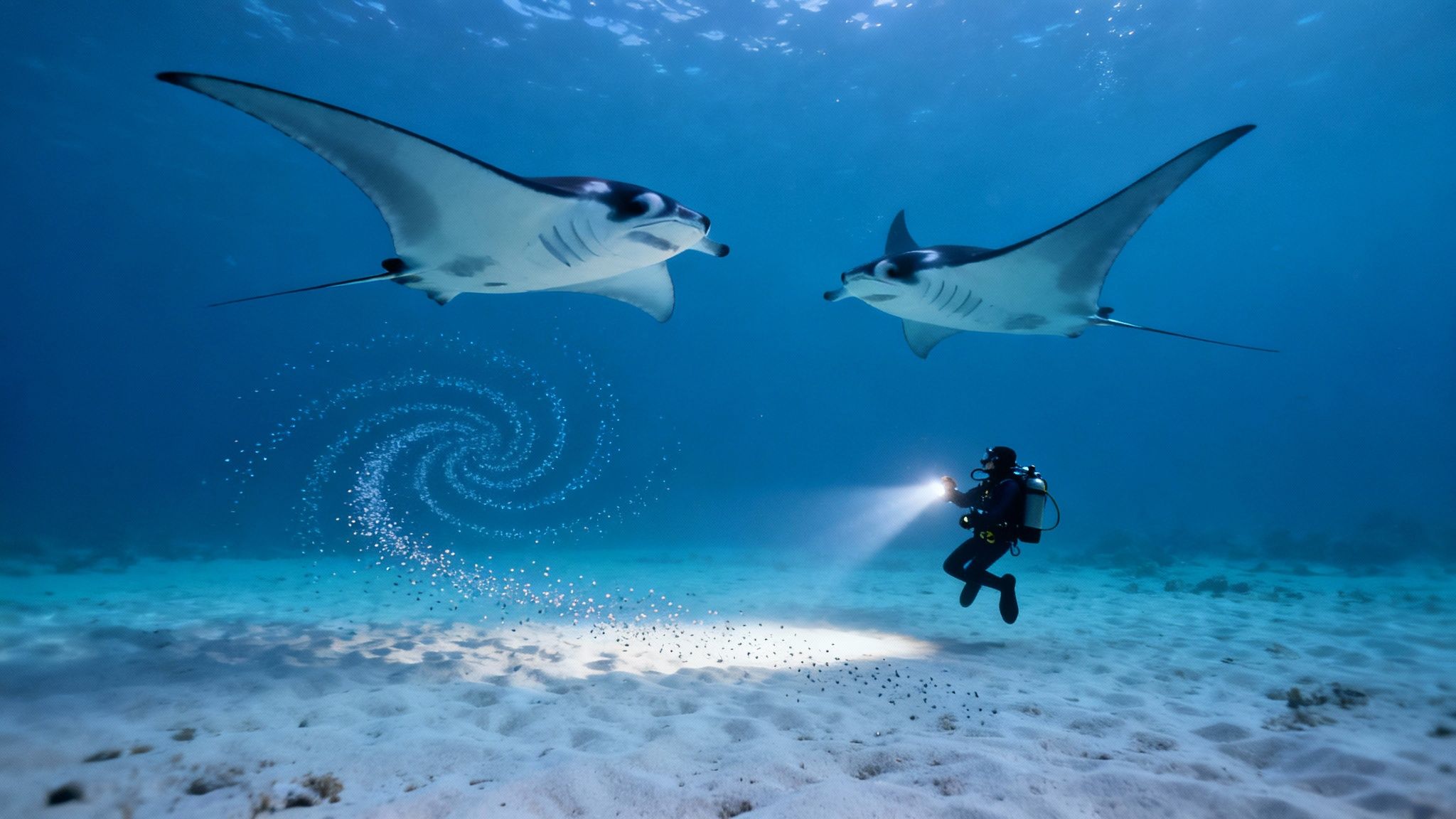
The high success rate here is no accident. It stems from a fascinating, decades-old relationship between lights, plankton, and the mantas themselves.
Over time, these incredibly intelligent creatures learned that the lights from coastal hotels and, later, dive operators, attract dense clouds of plankton—their favorite food. This effectively created a dependable, all-you-can-eat buffet that draws them in night after night.
With an estimated 200 individual manta rays identified and cataloged right here off the Kona coast, your chances of seeing these gentle giants are incredibly high. The local population is healthy, resident, and knows exactly where to show up for dinner.
A Quick Look at the Manta Dive Experience
To give you a better idea of what to expect, here’s a quick summary of the essential details for planning your trip.
Manta Ray Diving on the Big Island at a Glance
| Aspect | Details |
|---|---|
| Best Viewing Method | Guided night dive or snorkel |
| Likelihood of Sighting | Extremely high (often over 90% success rate) |
| Primary Location | The Kona Coast, Big Island |
| Experience Required | None for snorkeling; basic open water certification for diving |
This table just scratches the surface, of course. For a much deeper look at the specific dive sites and what makes each one unique, you can check out our complete guide on where to see manta rays in Hawaii.
So, we've established that seeing mantas in Kona isn't just a possibility—it's an exceptionally reliable and world-class adventure. Next, we'll dive into the specific reasons why this one little spot on the globe has become such a powerful magnet for manta rays.
Why Kona Is a Manta Ray Magnet
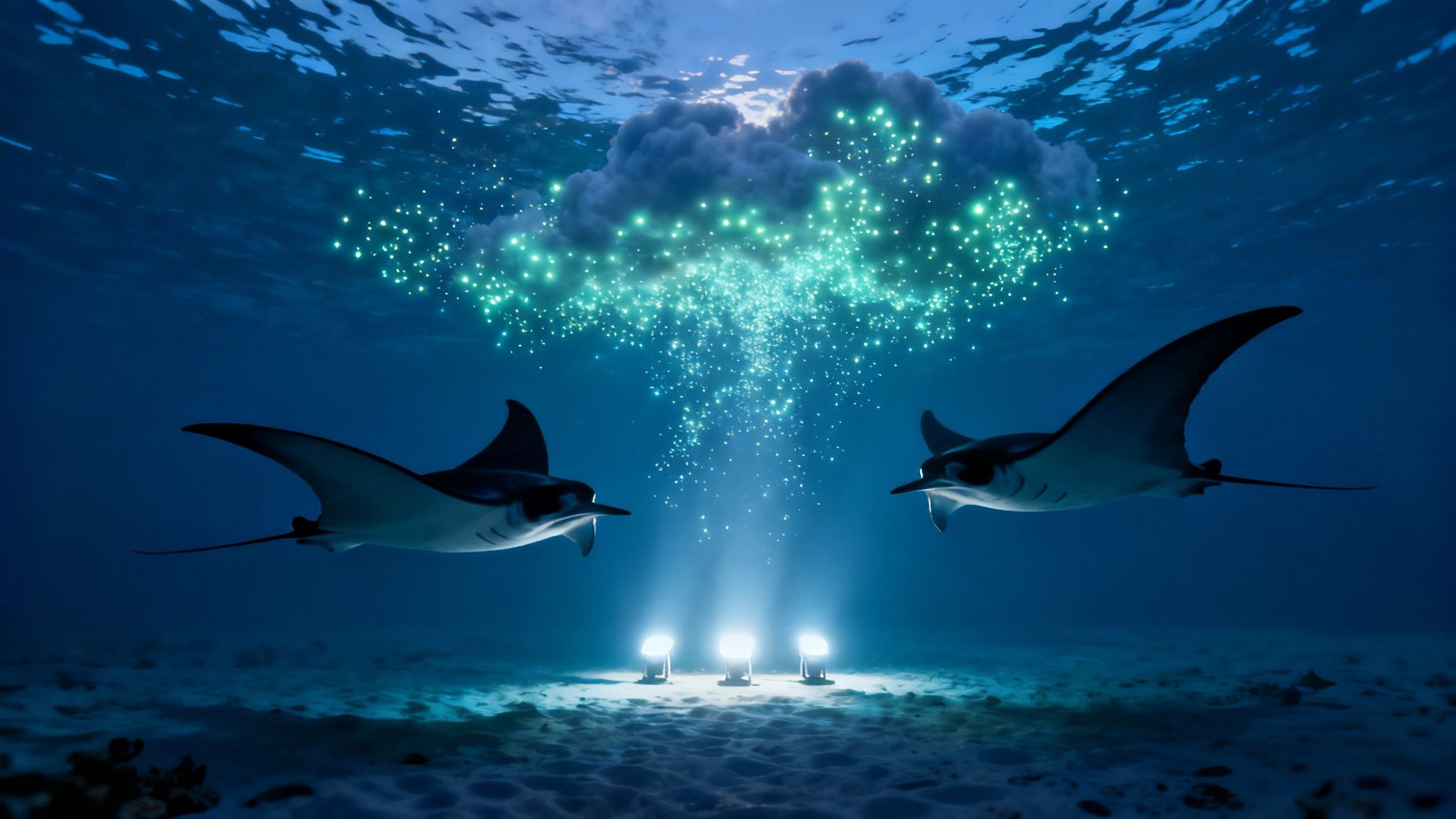
So, what is it about the Kona coast that makes it the undisputed best place on the planet for manta ray encounters? It’s not just random luck. It turns out we’ve unintentionally created the perfect dinner invitation for these gentle giants, and it all comes down to two simple things: light and food.
For decades, the lights from hotels and homes along the coast have attracted swarms of phytoplankton—the tiny, drifting organisms that are a manta ray’s favorite meal. As filter feeders, the mantas learned that the nightly glow meant an easy, reliable buffet.
It wasn't long before local dive operators caught on. They figured out they could concentrate the action by setting up powerful, eco-friendly lights on the seafloor. This simple trick turns the plankton-rich waters into an irresistible, all-you-can-eat feast that mantas just can’t pass up. What was once a lucky encounter is now a nightly spectacle.
Kona’s Premier Manta Ray "Restaurants"
This brilliant light-and-plankton strategy has led to two legendary dive sites, affectionately known by locals as "manta restaurants." While each spot has its own unique vibe, they both deliver an absolutely incredible show.
-
Manta Village (Kaukalaelae Point): Just south of Kailua-Kona, this is the original night dive location that started it all. It’s close to shore and sits in relatively shallow water—about 25-40 feet—making it perfect for both divers and snorkelers. The energy here is amazing, famous for its consistent manta visits and spectacular feeding frenzies.
-
Manta Heaven (Garden Eel Cove): A bit further north, near the Kona airport, this site offers a different kind of magic. As you might guess from the name, it's home to a huge colony of garden eels, which adds to the scenery. The underwater landscape is unique, and it regularly attracts massive congregations of mantas. It truly is heaven.
The consistency of these sites is what really sets Kona apart. The success rate for seeing mantas is astonishing, with about 85-90% of dives getting a front-row seat to the action. That incredible reliability, plus the warm, clear water, has cemented the Big Island’s reputation as the ultimate manta destination. You can dive deeper into some of the manta ray statistics and facts that make this experience so special.
This nightly gathering isn’t just about food; it’s a social event. Divers often witness mantas interacting, chasing each other playfully through the light beams in a silent, graceful ballet.
Choosing an operator like Kona Honu Divers ensures you're part of a well-managed and ethical experience at these premier sites. With expert guides who know the mantas and their behaviors, you’re not just an observer—you’re participating in a genuine conservation success story.
Their commitment to responsible tourism helps protect this incredible ecosystem, ensuring the Kona coast remains a manta magnet for generations to come. When you’re ready for an adventure you’ll never forget, book one of the world-famous manta ray dive tours and see the magic for yourself.
What the Manta Ray Night Dive Is Really Like
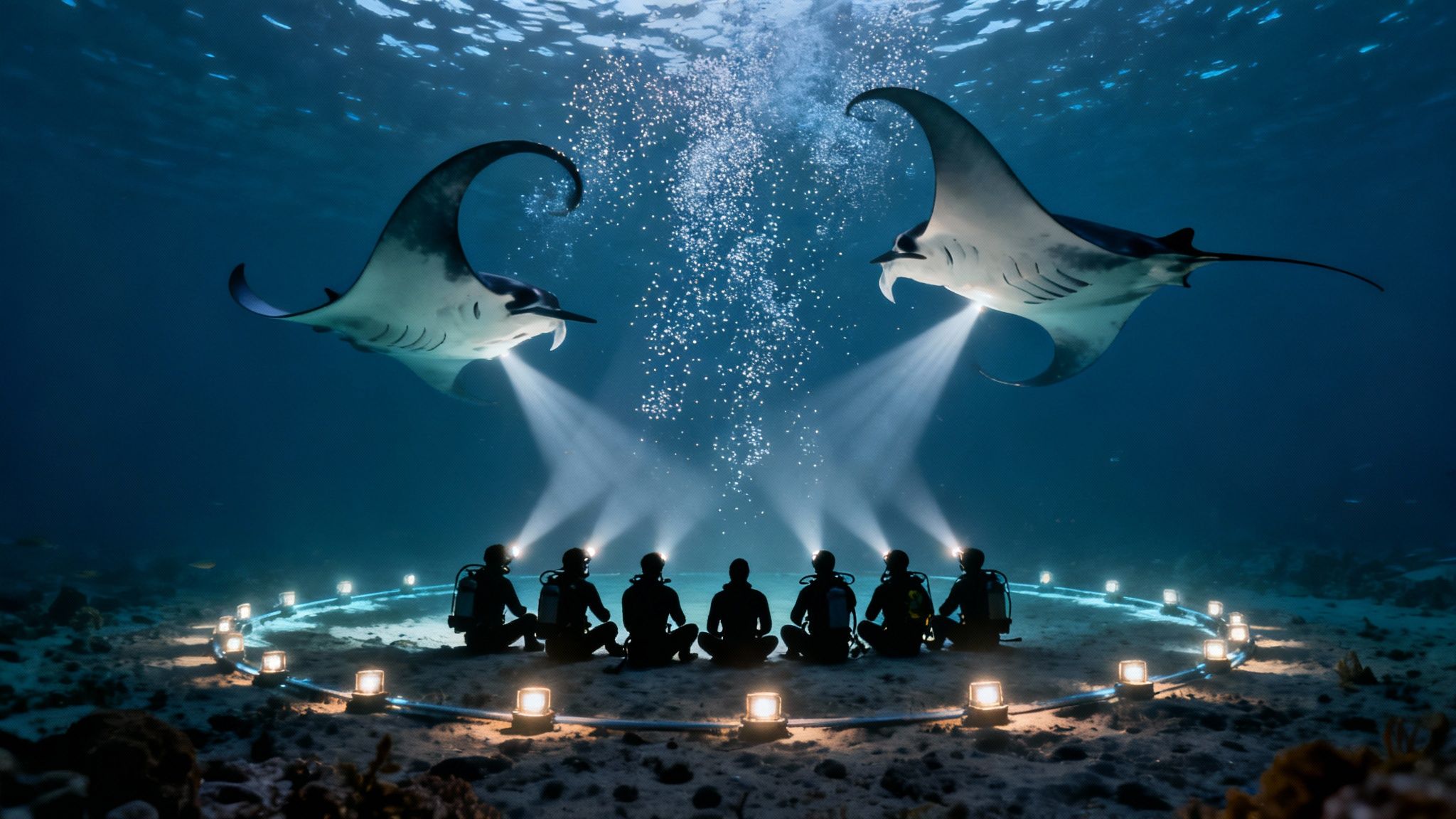
Picture this: you slip into the dark, warm ocean just as the last hints of sunset disappear from the surface. Down below, a collection of powerful lights has turned a patch of the seafloor into an underwater stage, and the show is about to begin.
You and the other divers find your spots on the sandy bottom, usually at a pretty mellow depth of around 35 feet (10 meters). On your guide's signal, everyone points their dive lights straight up. The beams slice through the darkness, and almost like magic, tiny plankton start to appear, swarming in the light like a cloud of living stardust.
This shimmering plankton cloud is basically a giant dinner bell. And soon, the main attraction arrives.
The Silent Ballet Begins
Out of the deep blue, the giant manta rays glide in. Some of these gentle giants have wingspans wider than a car, yet they move with impossible grace. They begin a silent, mesmerizing ballet, swooping and barrel-rolling just inches above your head to scoop up the dense clouds of plankton. It's a feeling that’s hard to describe—simultaneously thrilling and incredibly peaceful.
The sheer size and elegance of these creatures will take your breath away. You’re not just an observer watching from a distance; you're right there, kneeling on the ocean floor as they dance in the water just above. This unique, bottom-up view is what makes the manta ray dive so special, giving you an unparalleled look at their huge mouths and intricate gills as they feed. If you want a more detailed breakdown of what to expect, our guide covers the entire Kona manta dive experience.
Divers vs. Snorkelers: A Tale of Two Perspectives
Both divers and snorkelers get a fantastic show, but the experience is completely different depending on your vantage point. Choosing what’s right for you really just boils down to the kind of encounter you’re hoping for.
- For Divers: This is total immersion. You’re settled on the ocean floor, looking straight up as these massive creatures glide directly over you. It gives you a sense of scale and closeness that’s tough to beat. You can even feel the subtle push of water from their powerful wings.
- For Snorkelers: You get the bird's-eye view. Snorkelers hold onto a large floating light board that shines down into the water. The mantas come right up to the surface to feed, doing their barrel rolls just beneath you. It’s an equally incredible perspective, kind of like watching the ballet from the best seats in the house.
No matter which you choose, the feeling is the same: pure awe. You're a guest at one of nature’s most incredible spectacles, and it’s an encounter that will stick with you long after you've dried off.
Both options give you a front-row seat. The only decision is whether you want to be fully submerged in their world or watch the grand performance from the surface.
How to Choose an Exceptional Manta Ray Tour
Alright, let's talk about the single most important decision you'll make for this trip: picking the right tour operator. With so many boats heading out each night, it can be tough to know who to trust. A truly exceptional tour isn't just about getting you in the water; it's about doing it safely, ethically, and in a way that feels personal, not like you're just another number in a crowd.
The best operators live and breathe conservation. They understand that we are guests in the mantas' world. This means they'll give you a thorough briefing on the golden rules of passive observation: no touching, no chasing, and staying put in your spot. These aren't just suggestions—they protect the mantas' delicate skin and ensure they keep coming back night after night.
What to Look for in a Tour Operator
When you start comparing companies, a few key things separate the good from the truly unforgettable. Here’s what I always tell people to look for:
- Small Group Sizes: Imagine a quiet, personal encounter versus a chaotic free-for-all. Operators who limit their group sizes give you a much better view and a more intimate, controlled experience with these gentle giants.
- Manta Ray Green List Certification: This is a big one. Keep an eye out for operators on the Manta Ray Green List. This certification is your seal of approval, showing the company is committed to sustainable and responsible manta tourism.
- Experienced and Knowledgeable Crew: A great crew makes all the difference. You want passionate marine naturalists who can tell you about manta behavior, point out individuals they know by name, and answer every curious question you have. They turn a cool dive into a genuine learning experience.
Choosing a conservation-first operator like Kona Honu Divers really matters. Their commitment to sustainable practices sets the gold standard for responsible tourism on the Big Island, ensuring this incredible spectacle is around for generations of humans and mantas to come.
Want to see what fellow divers are saying? Check out some recent reviews below.
Booking Your Adventure in Advance
The secret is definitely out. Roughly 80,000 people come to see the mantas every single year, so booking ahead is absolutely critical, especially if you're traveling during peak season. You can learn more about the scale of this amazing attraction by reading about Big Island manta ray dive tourism.
Ready to claim your spot for this bucket-list adventure? You can explore our world-famous manta ray dive tours and secure your front-row seat to the underwater ballet.
Spotting Manta Rays During the Day
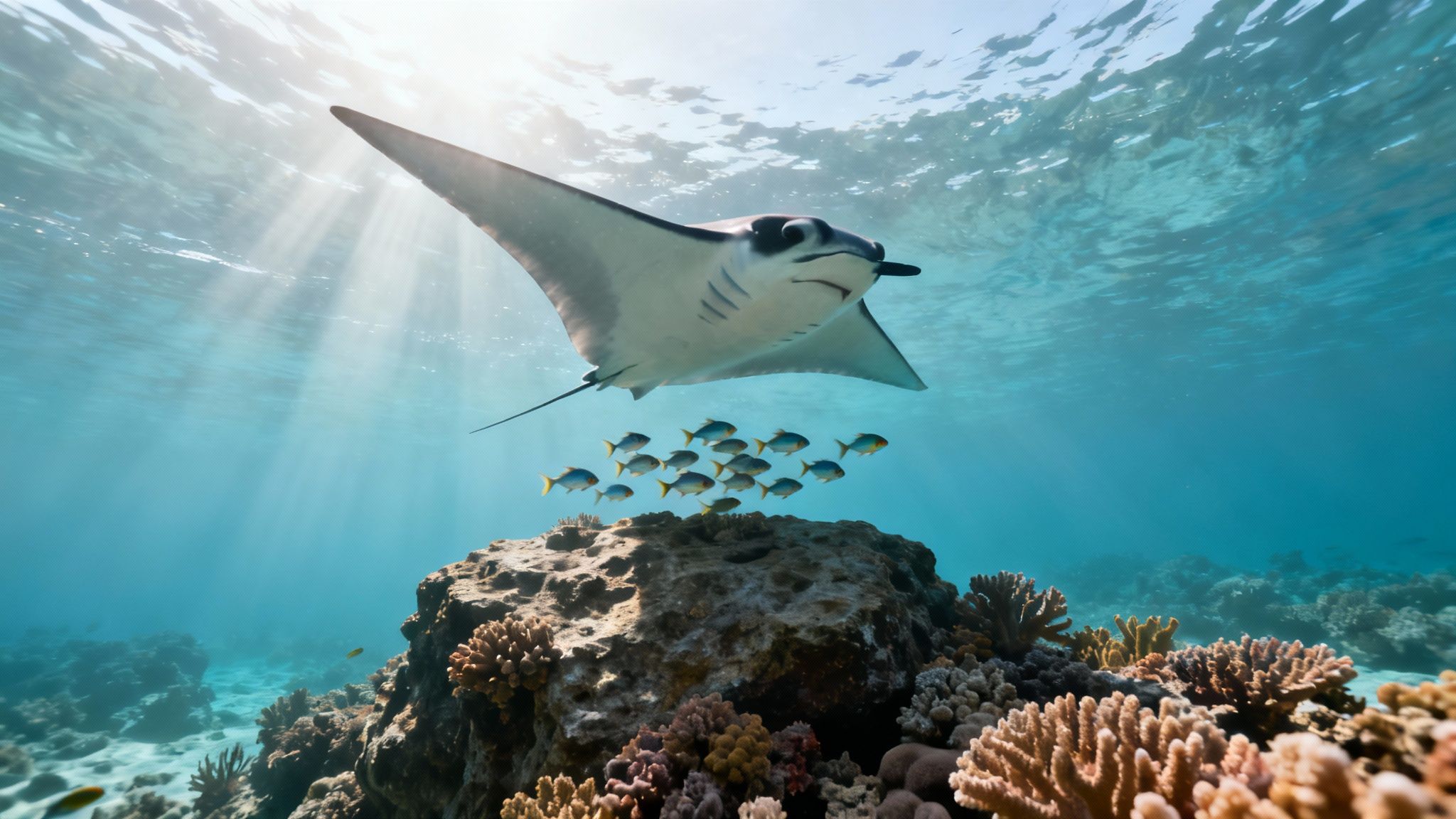
While everyone talks about the famous night dive, a common question I hear is, "Can we see manta rays during the day on the Big Island?" The short answer is yes, you absolutely can. But it’s a totally different ballgame—one that relies a lot more on luck than the near-certainty of the night dive.
Daytime encounters are special because they're so unpredictable. Unlike the nightly feeding frenzy where the mantas show up for dinner, seeing them under the sun usually happens at what we call "cleaning stations." These are specific spots on the reef where mantas come to get a spa treatment from small fish, like the Hawaiian cleaner wrasse, which nibble parasites off their skin. Bumping into one of these moments is pure magic, but it's a rare treat.
If you're dreaming of that classic Kona experience—with giant mantas swooping inches over your head in a graceful ballet—the night dive is really the only way to go. Think of a daytime sighting as a wonderful, unexpected bonus.
The Spectacular World of Daytime Diving in Kona
Even if you don't spot a manta, the daytime scuba diving Kona, Hawaii, is nothing short of world-class. The underwater landscape, carved out by ancient volcanoes, is a stunning playground that sets the stage perfectly for the main event after sunset. It's like seeing an incredible opening act before the headliner comes on.
Kona's reefs are bursting with life during the day. The visibility is often phenomenal, sometimes clearing 100 feet, so you can soak in every detail of the vibrant ecosystem.
Here’s a glimpse of what’s waiting for you:
- Lava Tubes and Arches: You can explore dramatic underwater architecture left behind by old lava flows. These swim-throughs and caverns are always buzzing with marine life.
- Vibrant Coral Reefs: The reefs here are healthy and colorful, home to an incredible diversity of fish like butterflyfish, triggerfish, and huge schools of tangs.
- Encounters with Other Giants: While mantas are a lucky find, it's very common to swim alongside Hawaiian green sea turtles (honu). You'll also likely see pods of spinner dolphins from the boat and find whitetip reef sharks resting on the sand.
Honestly, daytime diving in Kona is an amazing adventure all on its own. It's the perfect way to explore a completely different side of the Big Island's underwater world before you head out for the unforgettable manta show after dark.
Ready to explore Kona's sunlit reefs? Our Kona diving tours offer incredible adventures around the clock, showcasing the best of the Big Island's underwater paradise.
How to Be a Good Guest in the Manta’s World
The whole reason Kona has this world-famous manta ray encounter is built on one simple idea: respect. For these magical encounters to continue for generations, everyone in the water—from divers to snorkelers—needs to be on the same page. Following a few simple rules isn't just about protecting the mantas; it actually makes your experience a whole lot better.
Think of it this way: you’re a visitor in their underwater dining room. The golden rule is to be a polite guest, which means practicing passive observation. No touching, no chasing, and definitely no getting in their way while they're trying to eat. Just find your spot and enjoy the show.
Hands Off: The Critical Reason You Can't Touch a Manta Ray
It’s completely natural to feel an urge to reach out and touch these gentle giants as they glide inches away from you. But it's absolutely critical that you don't. Manta rays have a special mucus coating on their skin that acts like their immune system, protecting them from nasty bacteria and infections in the water.
When you touch them, you wipe off that protective slime, leaving them exposed and vulnerable to disease. The best thing you can do is stay calm and still, whether you're on the seafloor or holding onto a float at the surface. This lets the mantas take the lead.
Interestingly enough, this hands-off approach often leads to the most incredible encounters. The mantas are naturally curious, and they're far more likely to get up close and personal with observers who are calm and predictable. For a more comprehensive look at being a great underwater citizen, it's worth reviewing the core principles of responsible and considerate diver etiquette.
The best encounters happen when we become part of the environment, not an active participant in the show. Let them come to you; their curiosity is the real magic.
Of course, your personal safety is just as important. All reputable tour operators have strict safety protocols, but it never hurts to be prepared. For anyone who spends a lot of time on the water, understanding the importance of paddle board life jackets offers some great general insights into water safety equipment.
To keep things simple, here’s a quick guide to what you should and shouldn't do during your dive or snorkel.
Manta Ray Interaction Do's and Don'ts
| Do | Don't |
|---|---|
| Stay in one spot, either on the sand or at the surface. | Chase or swim after the mantas. Let them move freely. |
| Shine your light straight up to attract their food (plankton). | Shine your light directly into a manta's eyes or mouth. |
| Let the mantas approach you on their own terms. | Touch, pet, or try to ride a manta ray. Ever. |
| Stay close to your guide and follow their instructions. | Float above the mantas or block their path to the light. |
Ultimately, these guidelines are in place to protect the animals we're all here to see. By following them, you help ensure Kona's manta rays continue to thrive and enchant visitors for years to come.
Your Manta Ray Dive Questions Answered
Even after learning all the details, you probably have a few questions floating around. Let's tackle some of the most common ones we hear from people planning their own manta ray adventure.
What Is the Best Time of Year to See Manta Rays in Kona?
This is the best part: you can see manta rays in Kona all year round!
Unlike a lot of marine wildlife that follows seasonal migrations, the manta population here is resident. They stick around because their food source—plankton—is consistently available. This means your chances for an incredible encounter are just as good in January as they are in July.
Do I Need to Be a Certified Scuba Diver?
Not at all. While scuba diving offers an amazing perspective from the seafloor looking up, snorkeling is an equally breathtaking way to see the show. It's also far more accessible for families and non-divers.
Snorkelers hang onto a large, custom-made light board on the surface. These lights attract the plankton, and the mantas swim right up to the surface to feed, giving you a stunning, up-close view from above.
How Deep Is the Manta Ray Night Dive?
The manta ray night dive is surprisingly shallow, which is great news for divers of all experience levels.
You'll spend most of your time in a designated viewing area at a depth of about 25 to 40 feet (8 to 12 meters). Divers settle on the sandy bottom, so there's no need to worry about tricky navigation—you just get to relax and enjoy the spectacle.
When you're gearing up for an incredible trip like this, it’s always a good idea to think about safety. You might want to look into specialized travel insurance for adventure sports for that extra peace of mind. After all, a safe adventure is the best kind of adventure.
At Kona Honu Divers, we're all about giving you a safe, respectful, and truly unforgettable front-row seat to one of nature’s greatest underwater ballets. Ready to see the magic for yourself? Check out our world-famous manta ray dive tours and book your spot today.