
Absolutely. Seeing manta rays while diving off the Big Island isn't just possible—it's one of the most reliable and magical marine encounters on the planet. The famous Kona manta ray dive is more than just a dive; it’s an underwater ballet, and you have a front-row seat.
Kona’s World-Famous Manta Ray Night Dive
The Kona coast has earned its global reputation for one primary reason: its unbelievable manta ray night dives. The setup is genius in its simplicity. Dive operators place powerful underwater lights on the ocean floor, which attract swarms of plankton—the manta's favorite meal.
Picture this: you descend into the dark, calm ocean, find a spot on the sandy bottom, and then simply look up. Within minutes, giant, graceful creatures with wingspans easily exceeding 12 feet begin to glide, swoop, and barrel roll just inches above you. This isn't a once-in-a-while thing; it happens almost every single night.
A Predictable Encounter Like No Other
Most wildlife tours are a gamble, relying heavily on luck and timing. This is different. Kona’s manta population is residential, meaning the same individuals live here all year. They’ve grown accustomed to the routine, recognizing that the divers' lights signal an easy, all-you-can-eat plankton buffet.
The success rate is astonishingly high, consistently ranging from 85% to over 95%, depending on the night and conditions. At the two main sites, Manta Village and Manta Heaven, sightings happen on 90-95% of all tours. It’s about as close to a guaranteed wildlife spectacle as you can get.
This isn't just a dive where you hope to see mantas. You're showing up for their regularly scheduled dinner time, and they know to expect you. It’s this reliability that has made the Big Island the world’s top destination for manta ray encounters.
For those planning a trip, here's a quick rundown of what to expect.
Kona Manta Ray Dive at a Glance
| Aspect | Details |
|---|---|
| Success Rate | 90-95% chance of sightings at primary locations. |
| Best Time to Go | Year-round, as the local manta population is non-migratory. |
| Experience Level | Open to everyone! Options are available for certified divers, first-time divers, and snorkelers. |
| Manta Size | Wingspans can reach over 12 feet. |
| Key Dive Sites | "Manta Village" (Keauhou Bay) and "Manta Heaven" (near the airport). |
| What You Do | Divers rest on the sandy bottom, and snorkelers hold onto a floating board, shining lights down to attract plankton and mantas. |
| Safety | The experience is highly regulated and safe. Mantas are gentle giants with no stingers. |
Ultimately, booking with a seasoned, reputable operator is the key to a safe and breathtaking adventure. Dive charters like the Kona manta ray night dive are designed to give everyone—from experienced divers to first-time snorkelers—a chance to witness this incredible event.
If you’re ready to see it for yourself, the mantas are waiting.
Why Kona is a Global Hotspot for Manta Ray Encounters
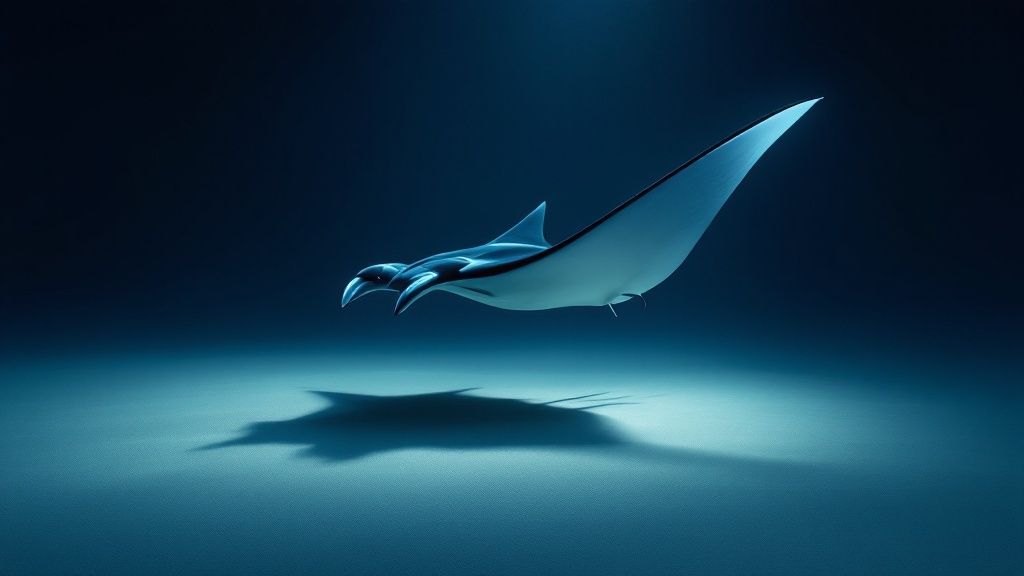
What makes Kona the unofficial manta ray capital of the world? It’s not just luck; it's a truly unique ecological story. The secret sauce is Kona’s resident population of reef manta rays (Mobula alfredi). Unlike their migratory cousins, these mantas stick around the coastline all year.
This created a rare opportunity for a fascinating, almost symbiotic relationship to form between the mantas and the local dive community. It all started decades ago when a hotel aimed its lights into the ocean, attracting plankton. The plankton, in turn, drew in the hungry mantas. It didn't take long for dive operators to realize they could create this effect on purpose.
Today, we replicate this by setting up powerful, eco-friendly underwater lights that act like a massive dinner bell. The mantas have learned that when the divers show up, a plankton buffet is about to be served. It's this learned behavior that brings them back to the same dive sites, night after night.
A Beautifully Understood Phenomenon
This isn't some random wildlife sighting; it's a well-documented natural spectacle. Scientists and conservationists have been studying Kona's mantas for years, and we've learned a ton. Many of our local rays are so familiar they even have names, and some have been tracked for decades, giving us incredible insights into their lives.
The nightly manta dive is so much more than just a tourist attraction; it’s a living laboratory. Each dive adds to our understanding of these gentle giants and reinforces why respectful, sustainable interaction is so critical.
A major research effort between 2009 and 2014 meticulously documented manta sightings along the Kona Coast. This study confirmed the high predictability of the mantas showing up at key sites, turning a magical experience into one backed by solid science. This dependable behavior makes it easier to figure out the best time of year to see manta rays in Kona.
The result is a stunningly reliable event you can practically count on seeing. It’s the perfect blend of wild nature and predictable science, making the Big Island the number one destination for anyone dreaming of diving with manta rays.
Choosing Between the Top Manta Ray Dive Sites
When you're planning a manta ray night dive on the Big Island, you’ll quickly hear about two legendary spots. While both are fantastic, they offer distinctly different vibes. Knowing the trade-offs is the key to picking the perfect underwater stage for your adventure.
The two go-to sites are Manta Heaven (also called Garden Eel Cove) up north by the airport, and Manta Village down south near Keauhou Bay. Really, your decision boils down to a simple question: do you want to see the biggest possible group of mantas, or would you prefer a more personal experience with fewer people?
Manta Heaven (North Site)
Manta Heaven lives up to its name—it's known for attracting huge congregations of manta rays. Something about the seafloor here creates the perfect feeding frenzy, drawing in more of these gentle giants than anywhere else. It’s a truly jaw-dropping spectacle.
The trade-off? Its reputation means it's often the busier spot, with multiple boats and dive groups all sharing the same space.
Manta Village (South Site)
If a quieter, more intimate encounter is what you're after, Manta Village is your spot. Just a quick boat ride from Keauhou Bay, this location generally has fewer boats, which many divers find more relaxing.
While you might see a smaller number of mantas compared to its northern counterpart, the experience is just as breathtaking. The encounters feel incredibly personal and up-close.
Manta Heaven vs Manta Village Showdown
To help you decide, here’s a quick side-by-side look at the two primary manta ray dive sites. Think about what matters most for your ideal dive experience.
| Feature | Manta Heaven (North) | Manta Village (South) |
|---|---|---|
| Typical Manta Count | Higher average (11 per night) | Lower average (4 per night) |
| Crowd Levels | Can be very busy | Generally quieter, fewer boats |
| Atmosphere | High-energy, spectacular show | Intimate, personal encounter |
| Location | Near Kona Airport | Near Keauhou Bay |
Ultimately, there’s no wrong choice—both sites offer a world-class experience. It's simply a matter of preference. One study highlighted that Manta Heaven averages around 11 mantas per night, while Manta Village sees about four. Do you go for the big show with a bigger crowd, or the smaller gathering with more breathing room?
Either way, you're in for an unforgettable night. You can explore more about the dive sites Kona Honu Divers will take you to when you dive the Big Island of Hawaii to get a better feel for the underwater world that awaits.
What to Expect During Your Manta Ray Night Dive
So, what's the deal with seeing manta rays on the Big Island? Let me tell you, it's not just possible—it's one of the most organized and breathtaking wildlife encounters you can have. The whole adventure kicks off with a boat trip along the gorgeous Kona coast, perfectly timed to catch one of those unforgettable Hawaiian sunsets. General scuba diving on the Big Island is amazing, but this experience is truly unique.
On the way to the dive site, the crew will walk you through a detailed pre-dive briefing. Pay close attention here, because this is where they explain the "underwater campfire." The guides will cover how to interact with the mantas passively and safely, hammering home the golden rule: observe only, never touch. This is non-negotiable, as touching a manta ray can damage the delicate mucous layer that protects it from infection.
The Main Event Underwater
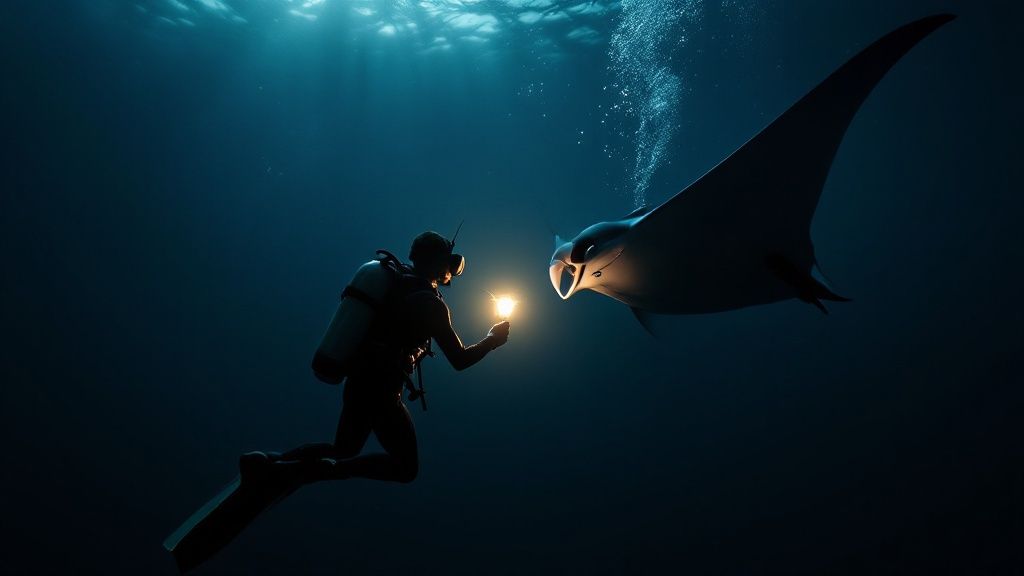
After gearing up and slipping into the dark ocean, you'll descend to a sandy patch on the seafloor, usually about 30-40 feet down. The water is a pleasant 75°F (24°C) on average, and a wetsuit will keep you comfortable. Your group will get settled in a semi-circle around a powerful central light source, which creates a glowing stage that attracts swarms of plankton.
And then, the magic happens. The first silhouette appears out of the blackness, a massive manta ray gliding into the light. Before you know it, more join in, performing an incredible, silent ballet just inches above your head. You'll literally feel the water move as they swoop down and do barrel rolls, their giant mouths wide open to filter the plankton. It's a surreal and deeply moving experience.
The feeling is almost impossible to put into words. You're not just watching from a distance; for a short time, you’re completely immersed in their world. Having a creature of that size and grace so close is something that will stick with you forever.
The dive itself usually lasts about 40-50 minutes, which gives you ample time to be mesmerized by the show. Going with a top-notch operator like Kona Honu Divers makes all the difference, as their expert team knows exactly how to make this encounter safe and unforgettable for everyone.
Booking Your Manta Ray Dive With Kona Honu Divers
Choosing the right dive operator is probably the single most important decision you'll make for your manta ray experience. It’s not just about getting in the water; it's about doing so with a crew that puts the well-being of the mantas first, ensuring a safe and truly spectacular encounter for everyone.
This is where a company like Kona Honu Divers really shines. Their reputation in the community is built on a deep respect for marine life and a serious commitment to sustainable tourism. Their guides aren't just there to lead a tour—they live and breathe this stuff, and they genuinely understand manta behavior.
The Premier Manta Ray Tour
One of the best options on their menu, especially for mixed groups, is the 2-Tank Manta Dive & Snorkel trip. This setup is brilliant because it lets certified divers get down on the ocean floor while their snorkeler friends and family watch the show from the surface. Nobody gets left out.
It's the whole package that makes the difference. You get a thorough briefing from experts who know these animals, top-notch gear, and even a warm shower on the boat afterward.
Choosing a tour isn't just about seeing the mantas—it's about supporting an operation that actively protects them. An experienced crew ensures the encounter is safe for you and sustainable for the rays, guaranteeing this natural wonder continues for years to come.
The proof is in the feedback from fellow divers. Year after year, the reviews highlight their professionalism and the magic of the experience they create.
Ready to see the manta ballet for yourself? Locking in your spot is easy.
Your Kona Manta Ray Questions, Answered
Even after you've done your research, it's totally normal to have a few questions buzzing around your head before you commit to a big adventure like this. Getting those lingering doubts sorted out is the best way to feel confident and ready to dive in.
Let’s go over some of the most common questions we hear from divers and snorkelers getting ready for their first manta encounter.
When Is the Best Time of Year to See Manta Rays in Kona?
Here’s the great news: there really isn't a bad time! Manta rays can be seen in Kona year-round.
This is because Kona's manta population is residential—they stick around the island instead of migrating. Sighting success rates consistently hover above an incredible 90%, regardless of the season. While the water might be a few degrees warmer from April to October, the encounters are just as magical in the cooler winter months.
Is the Manta Ray Night Dive Dangerous?
When you go with a professional, safety-conscious operator like Kona Honu Divers, the manta ray night dive is considered extremely safe. Manta rays themselves are incredibly gentle. They're often called "gentle giants" for a reason—they have no stingers, no barbs, and no teeth.
The safety procedures are all about standard night diving protocols. Your guides will give you a detailed briefing, and the dive sites are well-established and relatively shallow (usually 30-40 feet). This creates a controlled, predictable, and secure environment for everyone in the water.
Do I Need to Be a Certified Diver to See the Manta Rays?
If you want to scuba dive with the mantas, yes, you'll need to be at least an open water certified diver. But you absolutely do not need a certification to experience the show!
Most tour operators, including Kona Honu Divers, offer a fantastic snorkeling option. Snorkelers float on the surface, holding onto a custom light board, and watch the mantas feed just a few feet below them. It makes the entire experience accessible to almost anyone.
The manta ray night dive is an incredible experience for certified divers, but the snorkeling option ensures no one misses out on the magic. It’s an adventure designed for everyone to enjoy.
What Happens If We Don't See Any Manta Rays on Our Tour?
This is a very fair question. While sightings are remarkably consistent, we are dealing with wild animals, and their appearance can never be 100% guaranteed.
Because of this, reputable operators often have a "manta guarantee." Kona Honu Divers, for example, will often let you try again on another night for free (standby basis) if no mantas show up on your tour. It’s always smart to ask about the specific policy when you book your trip.
Now that we've cleared that up, you're one step closer to an unforgettable night. Booking with an experienced crew is the key to having the best and safest encounter possible.