
So, you're trying to decide between snorkeling and diving with manta rays? It's a great question, and honestly, there's no wrong answer. The best choice really comes down to the kind of experience you want to have.
Think of it this way: Snorkeling gives you a spectacular, top-down view that's accessible to just about everyone, while scuba diving immerses you completely in their world, offering an eye-to-eye encounter from the ocean floor.
Answering the Big Question: Snorkeling vs. Diving with Mantas
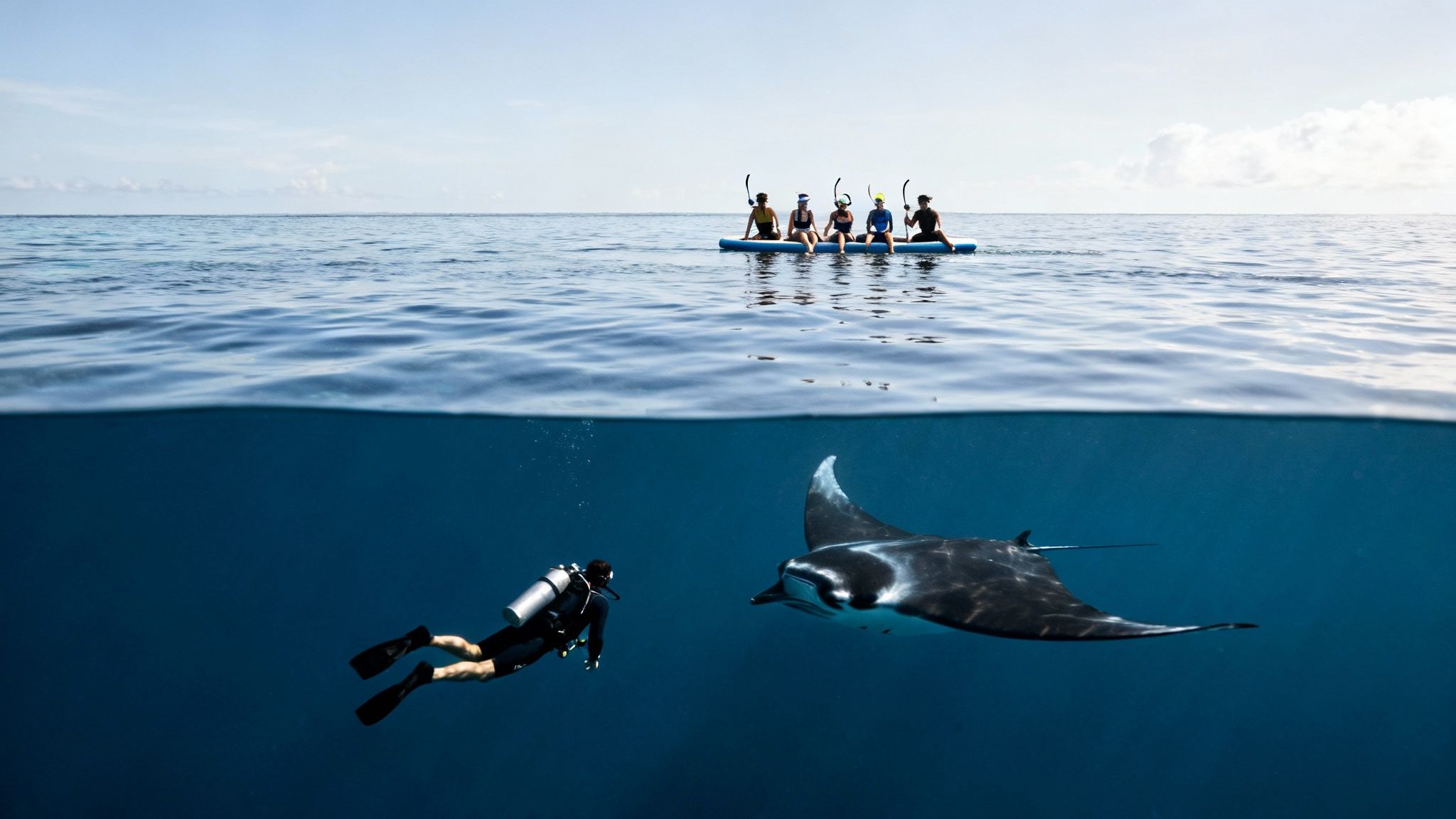
Picking your manta ray adventure in Kona is half the fun. Both options give you an incredible, front-row seat to one of nature's best shows, but the perspectives are worlds apart. Your final decision will likely boil down to a few key things: your comfort level in the water, whether you're a certified diver, and the specific viewpoint you're dreaming of.
The Snorkeler's View: Floating in a Manta Ballroom
Snorkeling is, without a doubt, the easiest way to get in on the action. You'll be floating comfortably at the surface, holding onto a specially designed light board. This board shines powerful lights into the water below, attracting the plankton that manta rays love to eat.
From this bird's-eye view, you get to watch the mantas glide, swoop, and perform their famous barrel rolls just feet beneath you. It’s an amazing choice for families, first-timers, or anyone who isn't a certified diver but still wants a breathtaking encounter.
The Diver's Perspective: An Underwater Theater
For certified divers, the experience is totally different. Instead of looking down, you're looking up. Divers descend to a sandy bottom, usually around 30-40 feet, and settle in for the show.
From the ocean floor, you see the massive, graceful silhouettes of the mantas soaring directly overhead against the glow of the surface lights. It’s a powerful, humbling, and deeply immersive experience. Before you book, it's worth understanding the specifics of whether you can scuba dive with manta rays on this particular tour.
Snorkeling vs. Diving with Manta Rays At a Glance
Still on the fence? This quick comparison table breaks down the fundamental differences between the two manta ray encounters.
| Factor | Snorkeling | Scuba Diving |
|---|---|---|
| Perspective | Top-down view from the surface | Bottom-up view from the ocean floor |
| Proximity | Mantas swim just inches below you | Mantas glide directly overhead |
| Certification | Not required | Scuba certification is mandatory |
| Accessibility | Open to almost all ages and abilities | Limited to certified divers |
| Equipment | Mask, snorkel, fins, wetsuit | Full scuba gear (tank, BCD, regulator) |
In the end, it doesn’t matter if you choose a snorkel or a tank—you're going to witness something magical. The most important thing is picking the adventure that perfectly matches your comfort, your skills, and your vision for an unforgettable night with Kona's gentle giants.
What the Manta Ray Snorkeling Experience Is Really Like
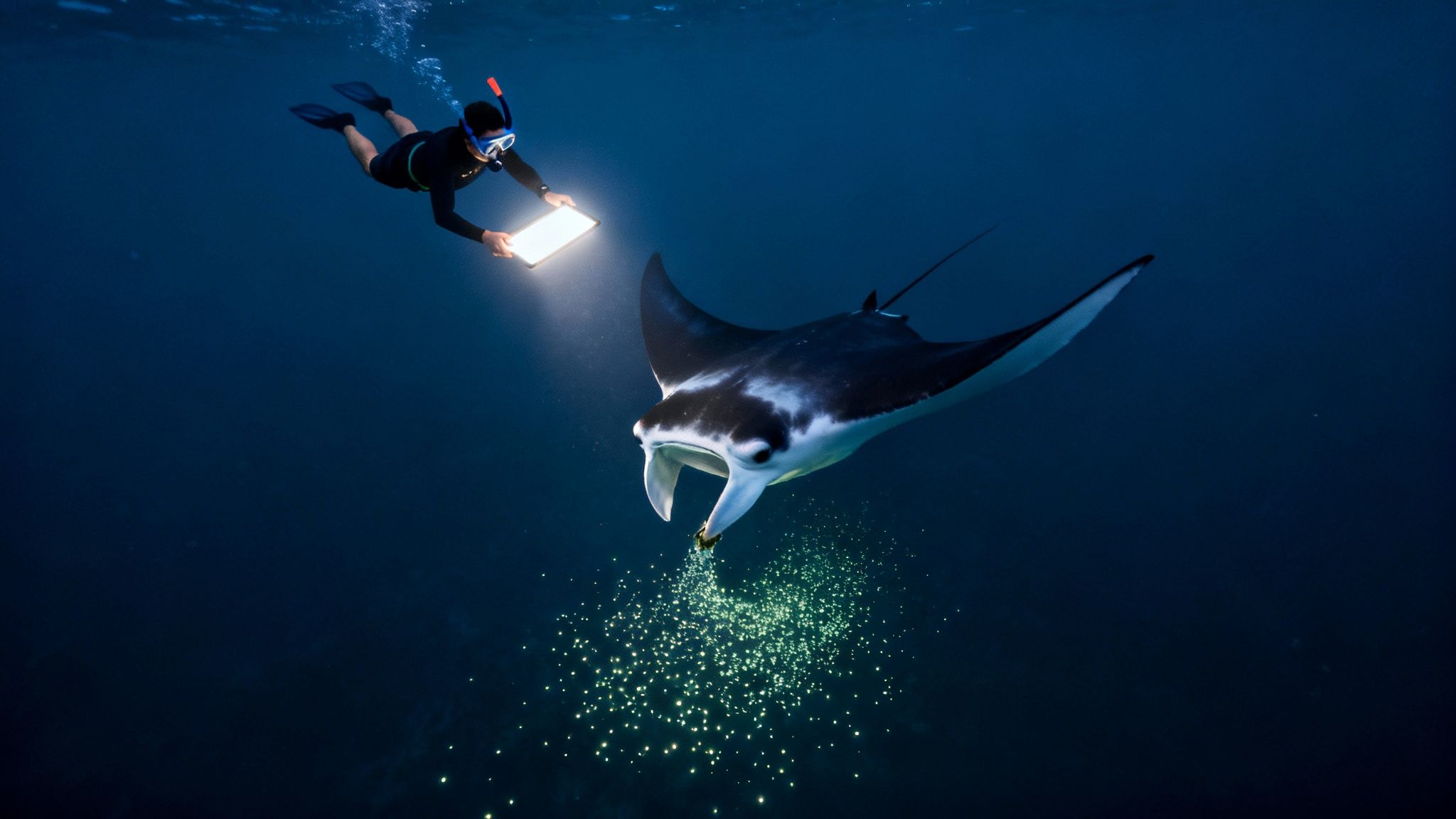
Picture this: you’re floating on the surface of the Pacific after sunset, the sky full of stars. You're holding onto a specially designed light board that beams a bright column of light down into the dark water, attracting clouds of tiny plankton—the manta rays’ favorite food.
You and the other snorkelers are essentially setting the table for an underwater feast. This vantage point gives you a breathtaking, top-down view of the entire feeding frenzy as it unfolds right below you.
From your spot on the surface, you get to watch an incredible underwater ballet. Giant manta rays, some with wingspans stretching over 10 feet, emerge from the dark. They glide into the light, performing graceful somersaults and barrel rolls to scoop up mouthfuls of plankton, often coming within inches of your mask.
Getting this close without needing any complex equipment is what makes the experience so special. It's a straightforward, low-stress adventure that nearly anyone can enjoy.
An Accessible Adventure for All
One of the best things about snorkeling with manta rays is how easy it is to do. You don't need any special certifications or diving experience. As long as you're comfortable in the water, you're good to go.
This makes it a fantastic activity for:
- Families with kids looking to create an unforgettable wildlife memory together.
- Groups of friends or couples where some people are stronger swimmers than others.
- Anyone without a scuba certification who still wants to experience Kona's most famous attraction.
Tour operators provide everything you need, like wetsuits to keep you warm and help you float. The whole experience is pretty passive; you just hold onto the light board and watch the show, making it a very relaxed and secure way to see these gentle giants.
In Kona, Hawaii, snorkeling with manta rays is a massive draw, attracting around 80,000 people every year. The sighting success rate is consistently between 80% and 90%, so you have a fantastic chance of seeing these magnificent creatures on a night tour.
Snorkeling gives you a unique and wide-angle perspective on the mantas' feeding behavior, all from a safe and comfortable spot on the surface. To learn more about what makes this one of the world's greatest wildlife encounters, take a look at our guide to the best manta snorkel tours on the Big Island.
The Scuba Diver’s View: Manta Rays from Below
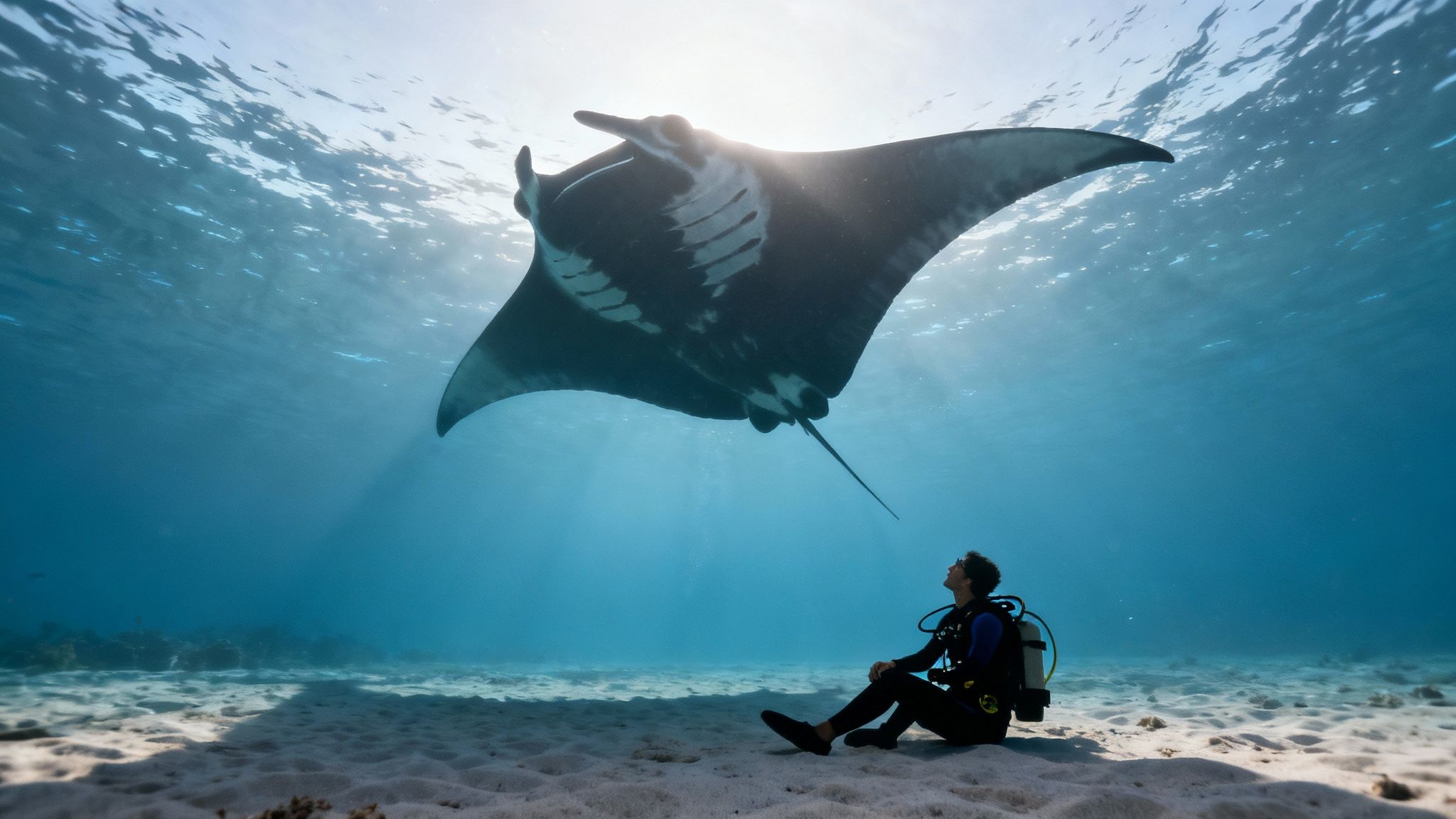
If you're a certified scuba diver, experiencing the manta ray ballet is an entirely different world. While snorkelers get a fantastic bird's-eye view, divers have a front-row seat to the main event, watching the spectacle unfold from the ocean floor. It’s the difference between watching a parade from a balcony and being in the parade itself.
The dive usually starts with a gentle descent to a sandy patch of seabed, somewhere around 30 to 40 feet deep. Once you’re settled on the bottom with your group, you become part of the scenery. Instead of looking down into the darkness, you're looking up toward the light, waiting for the show to begin.
A Truly Immersive Underwater Show
From this perspective, the size and elegance of the mantas are just breathtaking. They glide silently overhead, their huge wingspans momentarily eclipsing the dive lights from the surface. It’s a powerful, humbling experience that puts you right in their world, on their terms.
Being this close allows you to see all the little details you’d otherwise miss. You can clearly see their gills working as they filter plankton from the water and the gentle, deliberate movements of their cephalic fins scooping food toward their mouths. It's a quiet, almost meditative encounter that sticks with you long after you surface.
Countless divers point to Kona Honu Divers for crafting these kinds of unforgettable moments, and they've built a solid reputation for running safe, professional, and absolutely magical manta dives.
The Diver Difference: Certification and Group Size
Of course, unlike snorkeling, you'll need a scuba certification to join a manta ray dive. This single requirement changes the entire dynamic of the tour, often for the better.
For starters, dive groups are almost always smaller and more organized than the snorkel tours. Operators have to follow strict guide-to-diver ratios, which means you get more personalized attention and a much safer, more managed experience.
Because every diver is certified and settled on the seafloor, the whole environment is calmer and less chaotic. This lack of commotion often makes the mantas more comfortable, allowing them to swim closer and interact more naturally.
The smaller group size also creates a more respectful atmosphere. Everyone on that dive has put in the time and training to get certified, and that shared experience usually translates into a greater appreciation for the animals and the ocean. If you’re a certified diver, the Kona manta ray dive tour is, without a doubt, the most profound way to witness this spectacle.
Snorkeling vs. Diving with Mantas: Which is Right for You?
Deciding between snorkeling and diving with manta rays comes down to more than just how you breathe. It's about the kind of experience you want. Are you looking for a breathtaking overhead spectacle or a deeply immersive, eye-to-eye encounter? Each offers a completely different way to witness these magnificent animals.
Let’s walk through the key differences to help you figure out which adventure is the perfect fit for your trip.
Perspective: From Above or Eye-to-Eye?
The biggest difference is your viewpoint. As a snorkeler, you get a stunning bird’s-eye view. Floating on the surface, you look down into a beautifully lit underwater stage. You'll watch the mantas glide and barrel-roll just feet below you, giving you a full view of their incredible "ballet."
Diving, on the other hand, puts you right in their world. You’ll be settled on the ocean floor, looking up. It’s a completely different feeling to see the enormous, graceful silhouettes of manta rays soaring directly over your head. You're not just an observer; you're part of the scenery, and the sheer scale of the animals from this perspective is truly humbling.
Skills and Certification: Who Can Go?
This is where the line is drawn for many people. Snorkeling is incredibly accessible. If you're comfortable in the water and know how to use a mask and snorkel, you're good to go. There’s no certification required, which makes it a fantastic option for families, couples, and groups with mixed experience levels.
Scuba diving is a different story. It’s strictly for certified divers who have completed, at a minimum, an Open Water Diver course. The training is essential, as it ensures you know how to safely manage your gear and handle yourself while breathing underwater. This requirement naturally creates a smaller, more experienced group.
Cost and Gear: What’s the Investment?
From a budget standpoint, snorkeling is the clear winner. The tours are less expensive, and the gear is simple: a mask, snorkel, fins, and maybe a wetsuit, all of which are typically included in the price of your ticket.
Diving is a bigger investment. The tours cost more because they involve highly specialized equipment—tanks, buoyancy control devices (BCDs), regulators—and require more intensive supervision. While you'll pay more, that price reflects a more controlled, in-depth experience that many dedicated divers feel is worth every penny.
Comfort and Crowds: What’s the Vibe?
Snorkeling is a pretty low-key activity. You'll usually hold onto a large, stable light board and float on the surface, so there's not much swimming involved. Because it’s so easy to join, these groups can get quite large.
When you're diving, you'll be stationary on the seabed for the whole show, focused on managing your buoyancy. Thanks to the strict certification rules and safety standards, dive groups are almost always smaller and more tightly managed.
It's no secret that these encounters are popular. In a survey of visitors in Hawaii, 82% of people felt crowded by other snorkelers, while 69% felt crowded by other divers. This really drives home how important it is to pick a tour operator that actively limits its group sizes. A smaller group isn't just better for you; it's better for the mantas. You can dive deeper into the research on manta ray tourism to see the full picture.
So, how to choose? If you want an easy, accessible way to see the whole incredible show from above, snorkeling is perfect. If you're a certified diver craving a more profound, intimate connection with the mantas in their own element, then diving is the unforgettable experience you're looking for.
Detailed Comparison Snorkeling vs Diving with Manta Rays
To make things even clearer, here’s a quick-glance table breaking down the two experiences. Use this to weigh what matters most to you on your adventure.
| Feature | Snorkeling with Manta Rays | Diving with Manta Rays |
|---|---|---|
| Perspective | Bird's-eye view, looking down from the surface. | Immersive, eye-level view from the ocean floor. |
| Experience Level | Beginner-friendly; no certification needed. | Requires a valid scuba diving certification (e.g., Open Water). |
| Proximity | Very close, often just feet away as they feed near the surface. | Intimate encounters as mantas glide directly overhead. |
| Equipment | Basic: mask, snorkel, fins. | Full scuba gear: tank, BCD, regulators, etc. |
| Cost | More affordable. | More expensive due to gear and smaller group sizes. |
| Group Size | Typically larger groups. | Smaller, more controlled groups. |
| Physical Effort | Low; mostly floating with a light board. | Low during the encounter, but requires gear management. |
| Best For | Families, non-certified individuals, and budget travelers. | Certified divers seeking a more profound, immersive experience. |
Ultimately, both options offer a magical opportunity to see manta rays. Your decision just comes down to the kind of magic you want to experience.
How to Choose Your Perfect Manta Ray Adventure
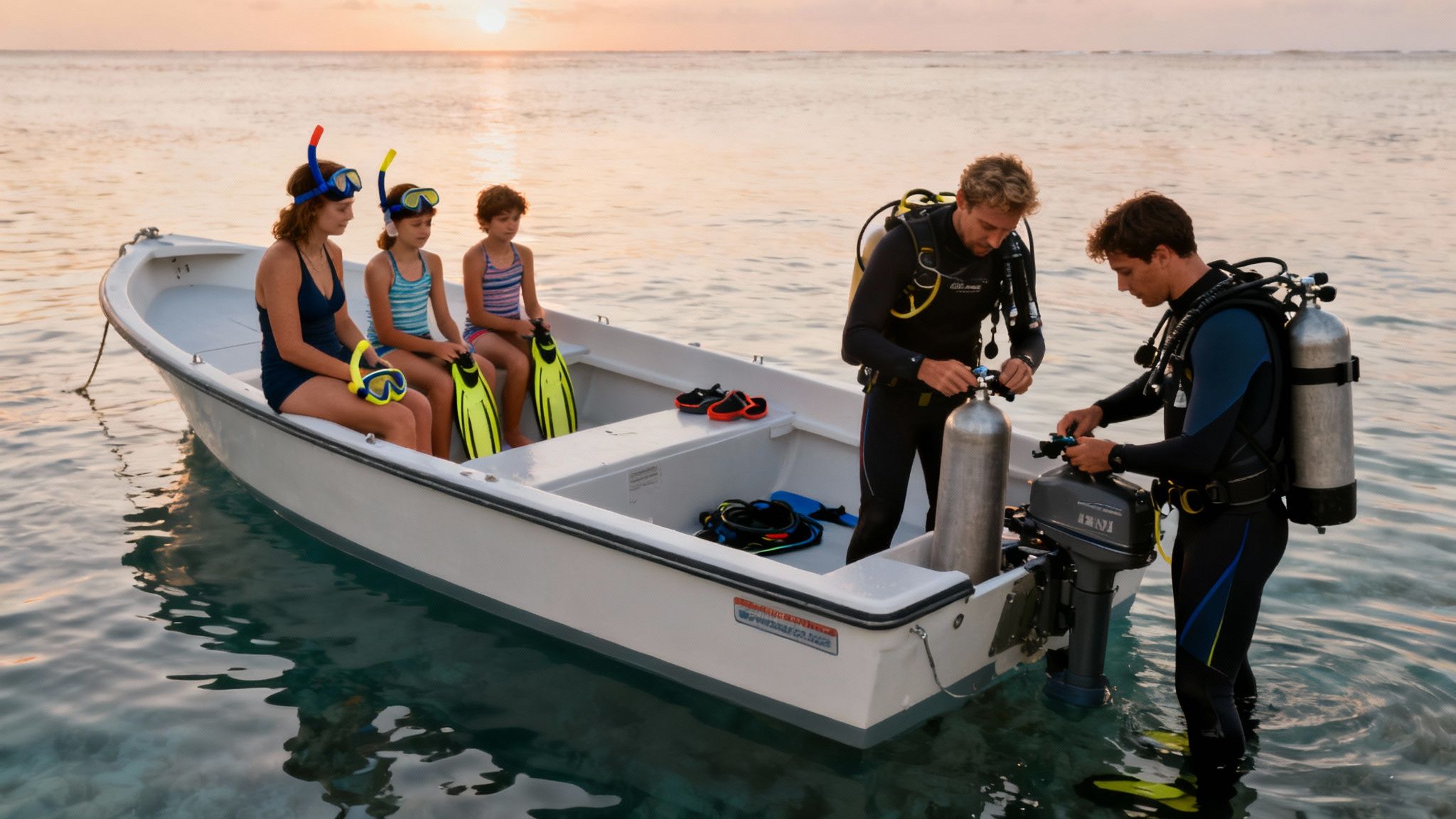
So, what's it going to be—snorkeling or diving? Picking the right manta ray encounter really boils down to your comfort level in the water, who you're traveling with, and the kind of experience you’re hoping for.
If you’re traveling with family, especially with kids, or have folks in your group who aren't certified divers (or even strong swimmers), the decision is pretty straightforward. Snorkeling is your best bet. It’s an easy, low-stress way for absolutely everyone to share in the magic from the surface.
But for certified divers? It’s a whole different ballgame. If you’re craving a deep, truly immersive connection with these animals, nothing beats the dive. There's a certain kind of awe that comes from settling on the ocean floor and watching these gentle giants glide just feet above your head. It’s a perspective snorkelers just can't get.
Accommodating Mixed Groups and Making an Ethical Choice
What happens if your crew is a mix of divers and snorkelers? No need to split up the party. Top-tier operators like Kona Honu Divers run trips that cater to both activities on the same boat. This way, the divers can head to the bottom while the snorkelers enjoy the view from above, and everyone gets to experience the spectacle.
No matter which adventure you pick, the most important decision you'll make is choosing a responsible tour operator. This is a hugely popular activity, so it’s critical to go with a company that follows sustainable, Manta Ray Green practices. These guidelines are all about protecting the rays and making sure we don't disrupt their natural feeding patterns.
Your choice of operator directly impacts the health of Kona's manta ray population. By selecting a tour that prioritizes animal welfare over cramming boats, you contribute to the long-term sustainability of this world-famous encounter. A well-managed tour is safer for you and healthier for the rays.
When you're ready to book an unforgettable and ethically run trip, you can learn more about the Kona manta ray dive tour and save your spot.
Your Manta Encounter Questions, Answered
Choosing between snorkeling or scuba diving with manta rays usually brings up a few last-minute questions. To make sure you feel totally ready for this incredible experience, I've put together some straight-to-the-point answers to the questions we get all the time.
Is It Safe to Be in the Water with Manta Rays at Night?
Absolutely. Manta rays are known as gentle giants for a reason—they are completely harmless to people. As filter feeders, their only interest is the tiny plankton that swarm around the lights. They don't have teeth, stingers, or barbs.
Every reputable operator in Kona follows strict safety rules and adheres to the Manta Ray Green standards, creating a safe and respectful encounter for everyone. You'll always have experienced guides in the water with you, making sure all the rules are followed, like the all-important "no touching" policy. To put your mind completely at ease, you can learn all about whether manta rays can sting you in our detailed guide.
Do I Need to Be a Strong Swimmer for the Snorkel Tour?
You don't need to be a competitive swimmer, but you do need to be comfortable in the ocean. During a snorkel tour, you’ll hold onto a large, stable floatation board the entire time. This board not only shines the light that attracts the plankton but also acts as your personal support raft.
Plus, you'll be wearing a wetsuit, which gives you extra buoyancy and helps you float with very little effort. If you’re still a bit nervous, most companies are happy to provide pool noodles for even more support. The whole experience is incredibly low-energy since you're mostly just floating and watching the magic happen below you.
Can Children Participate in a Manta Ray Tour?
Yes, kids can definitely come along, but which tour they can join depends on their age and the tour operator's rules.
- For snorkeling, the minimum age is usually around 7 years old. The main thing is that the child feels comfortable being in the ocean after dark.
- For scuba diving, the rules are stricter. A Junior Open Water Diver certification is required, and the minimum age for that is typically 10-12 years old.
It's always a good idea to double-check the age and skill requirements with your chosen operator, like Kona Honu Divers, before you book. This way, you can be sure everyone in your family can safely enjoy the adventure.
People often ask about the physical effort involved. While diving does require certification, the manta dive itself is very relaxed. You just settle down on the sandy bottom and watch the show, making it one of the least strenuous dives you'll ever do.
What Happens if We Don’t See Any Manta Rays?
It's important to remember that we're dealing with wild animals, and nature can be unpredictable. While the sighting rate in Kona is incredibly high—often over 85%—their appearance is never a 100% guarantee. On very rare nights, the mantas just don't show up.
Because of this, most top-tier tour companies have a "manta guarantee." If you don't see a manta on your trip, they'll often let you come back another night for free, depending on availability. It’s a good idea to confirm this policy when you book. Booking your manta tour early in your vacation gives you more flexibility to take them up on that offer if you need to.