
So, you're trying to decide whether to snorkel or dive with manta rays. The truth is, the right choice really boils down to your personal comfort in the water and the kind of encounter you’re dreaming of.
Snorkeling gives you an incredible top-down view that’s accessible to just about anyone. But if you’re a certified diver, diving offers a completely different bottom-up perspective as you watch these gentle giants glide right over your head. Either way, you're in for an unforgettable experience.
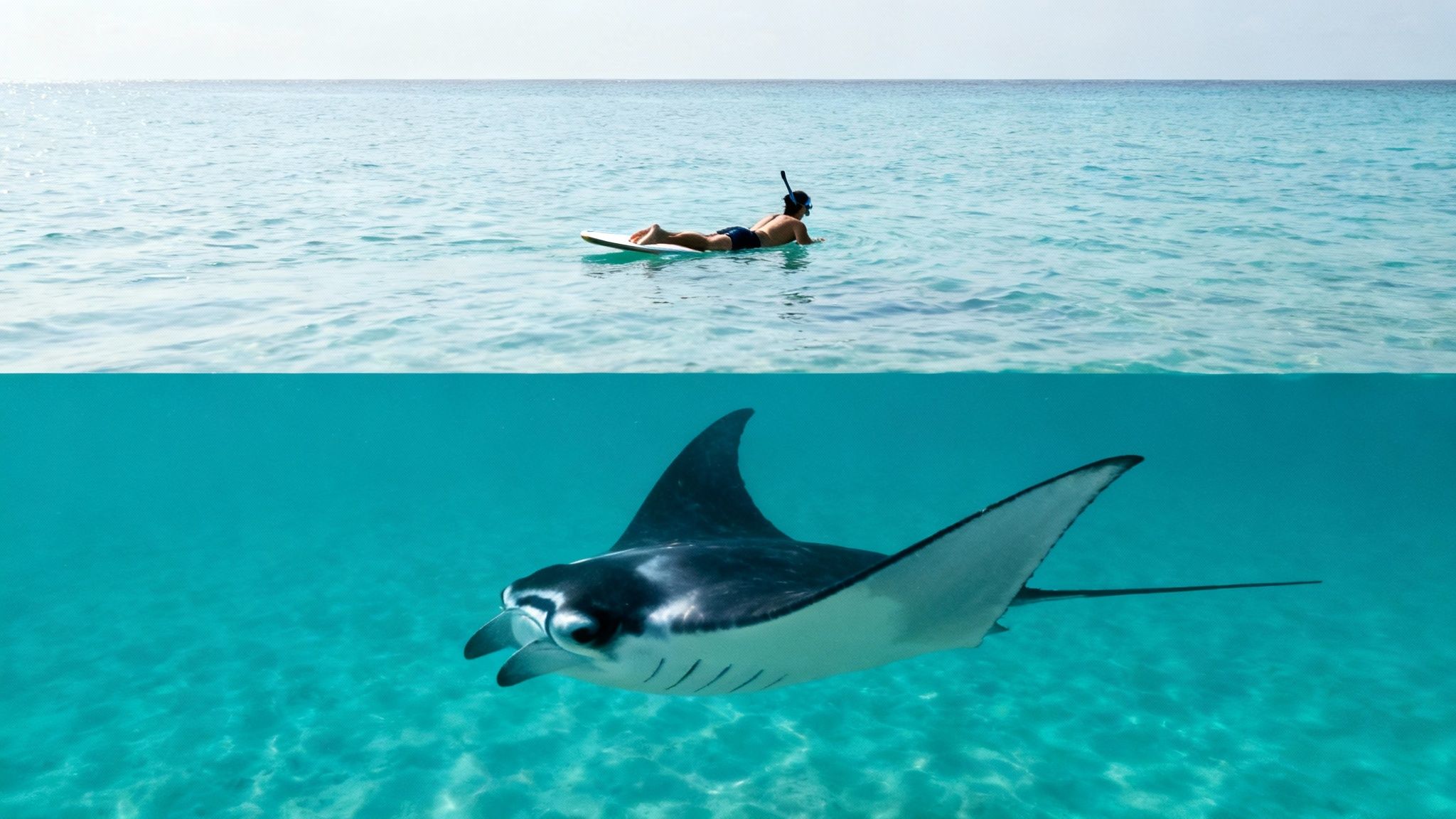
Snorkeling: The Bird's-Eye View
Snorkeling is, by far, the most accessible way to see the mantas. It's a fantastic option for families, people who aren't strong swimmers, or anyone who doesn't have a dive certification.
You'll float on the surface, usually holding onto a custom-made light board. These boards shine down into the water, attracting the plankton that mantas love to eat. From there, you just watch as they feed right below you. People often call it an "underwater ballet," and they're not wrong.
Diving: An Immersive Encounter
Diving, on the other hand, is a much more immersive experience, but it’s reserved for certified divers. You'll descend to the sandy ocean floor, typically around 30-40 feet, and watch the show from below.
From this vantage point, you get a true sense of the sheer size and grace of the manta rays. They perform effortless barrel rolls just feet above your head. It's a peaceful, almost meditative feeling, surrounded by nothing but the quiet hum of the ocean.
To help you figure out which adventure fits you best, I've put together a quick breakdown of the key differences.
Quick Comparison: Snorkeling vs. Diving With Manta Rays
This table cuts straight to the chase, outlining what you can expect from each activity.
| Factor | Snorkeling | Diving |
|---|---|---|
| Certification | None needed. | Open Water certification is a must. |
| Perspective | Top-down view from the surface. | Bottom-up view from the ocean floor. |
| Physical Effort | Very little; you just hold onto a float. | Minimal; you're mostly stationary. |
| Gear | Mask, snorkel, fins, and a wetsuit. | Full scuba setup is required. |
| Best For | Families, non-divers, and all ages. | Certified divers looking for total immersion. |
| Proximity | Incredibly close as mantas feed near the surface. | Extremely close as they glide right overhead. |
Ultimately, both options get you incredibly close to these amazing animals. Your decision just depends on how you want to see them and what qualifications you have.
Why Kona Is a World-Class Manta Ray Destination
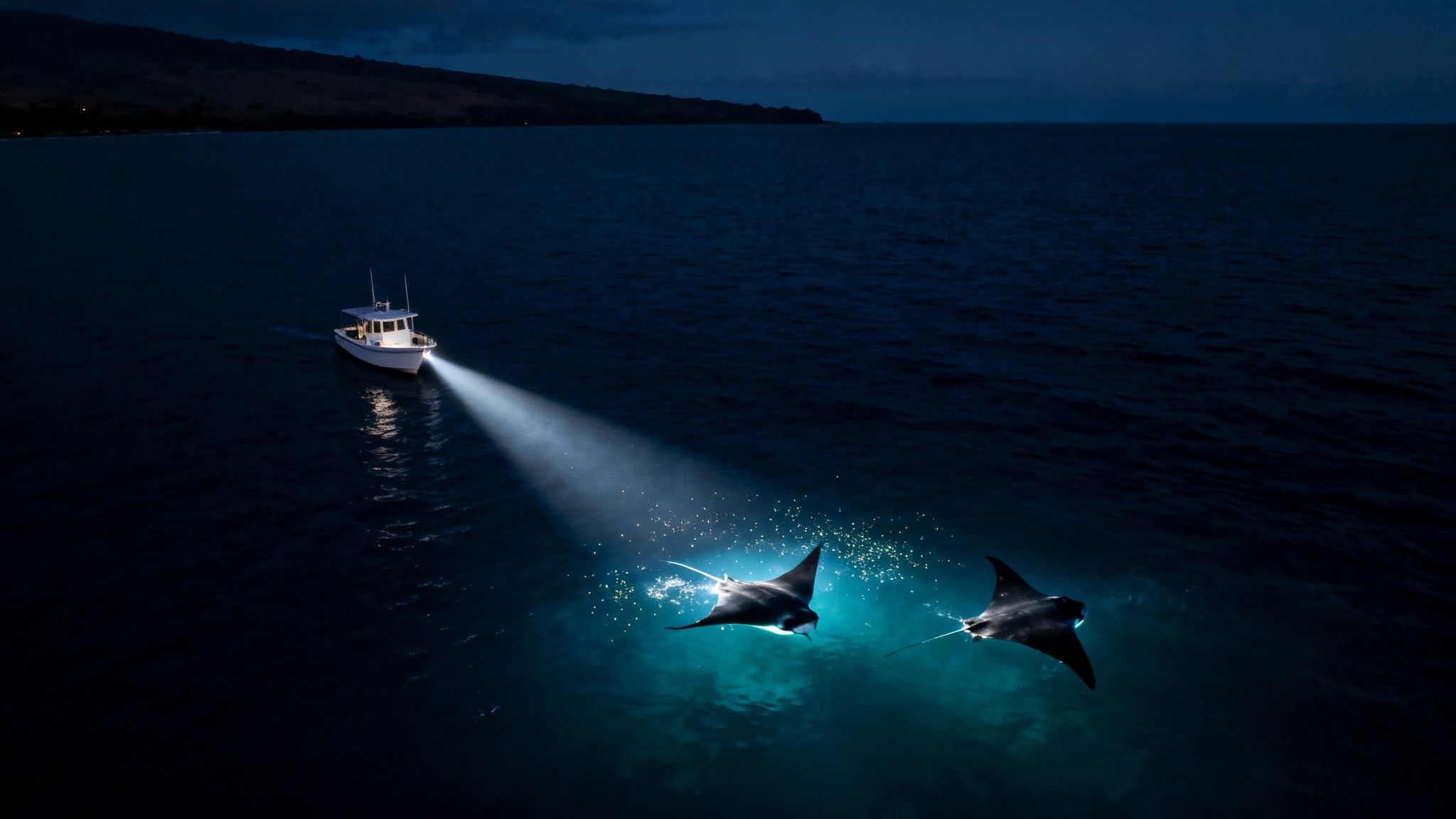
When you talk about seeing manta rays, Kona, Hawaii isn't just another spot on the map—it’s the place. What makes it so special is the nightly "manta ray ballet," a spectacular feeding event that happens with such regularity you can practically set your watch by it.
This incredible phenomenon started by accident decades ago. A local hotel pointed its lights at the ocean, which drew in plankton, and the ever-intelligent mantas quickly figured out it was an all-you-can-eat buffet. Now, local tour operators have refined this into an art form, using powerful underwater lights to create a beacon that draws in dozens of these gentle giants every single night.
This reliability is why the conversation in Kona is rarely about if you'll see mantas. Instead, it’s about how you want to see them: from the surface, or down below.
You're Almost Guaranteed a Sighting
Kona's reputation is built on consistency. We're talking an 85-95% success rate for seeing mantas on night tours, which is just about unheard of anywhere else in the world. On a typical evening, it’s common to be surrounded by 4 to 11 different manta rays, some with wingspans stretching over 12 feet.
The magic of Kona isn't just luck. It's the result of decades spent understanding manta behavior and building a sustainable relationship between tourism and the local marine life.
Operators like Kona Honu Divers have been at the forefront, helping to establish the gold standard for manta encounters worldwide. They’ve spent years perfecting an experience that’s not only a massive thrill for guests but is also safe and respectful of the resident manta population. It’s this deep commitment that keeps the spectacle alive. For a closer look at what this tour involves, check out the full Kona manta dive experience.
The Kona Advantage
So, what’s Kona’s secret sauce? A few key things come together to create these perfect conditions:
- A Resident Population: Kona has a large, year-round community of reef manta rays that don’t migrate. They’re here to stay.
- Calm Waters: The Big Island's leeward coast is sheltered from the rough winds and currents, making for a much more comfortable night out on the water.
- Established Feeding Sites: Locations like "Manta Village" and "Manta Heaven" are well-known manta hotspots, where the animals show up reliably night after night.
Understanding what makes Kona tick helps you appreciate just how special these tours are. This incredible consistency is what lets you focus on choosing the perfect adventure for you. You can get all the details on our manta ray dive and snorkel tour page.
Comparing The Snorkel And Dive Experiences
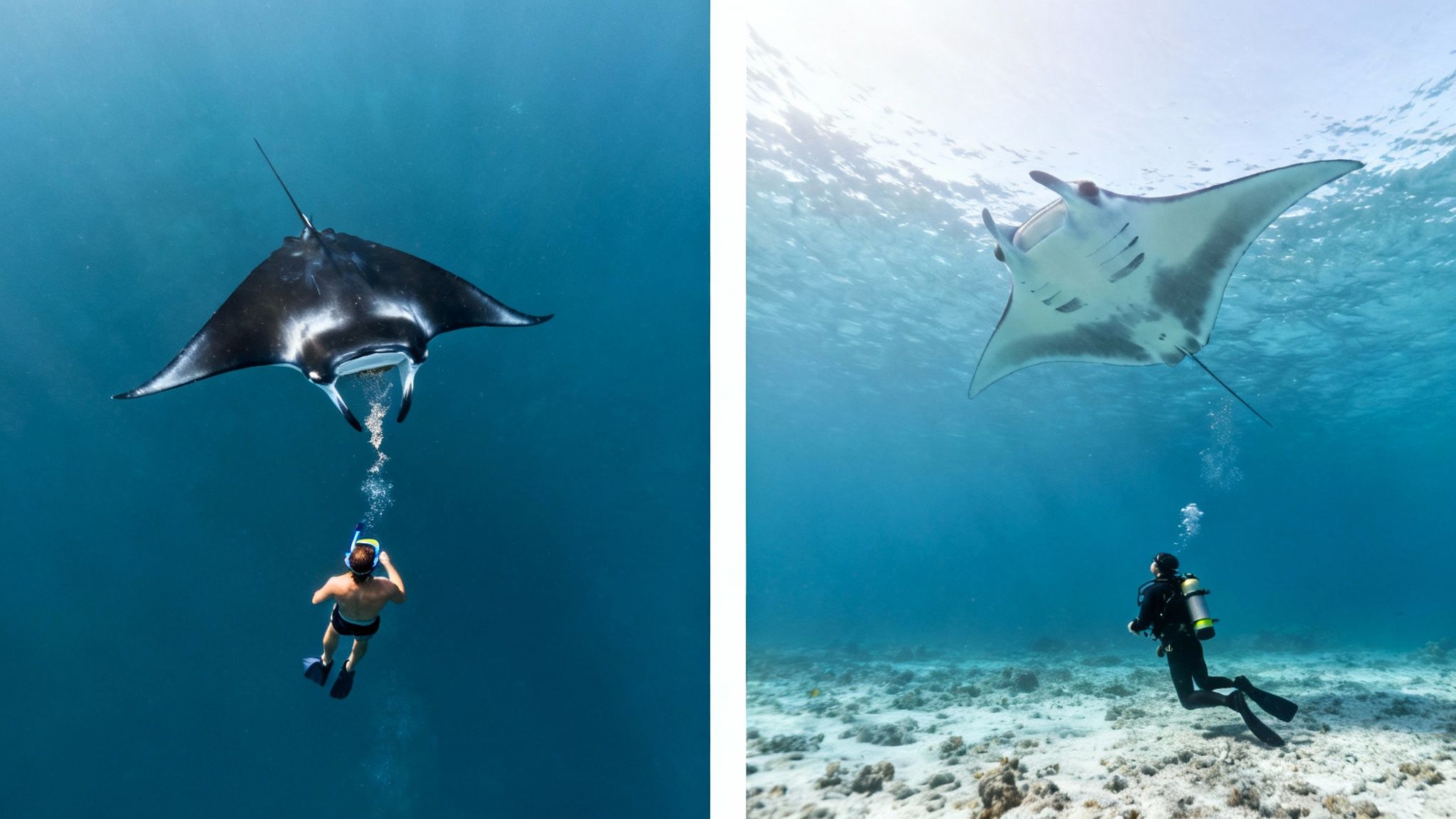
So, what's the better way to see manta rays: snorkeling or diving? Truthfully, there’s no single right answer. It really comes down to the kind of experience you're looking for. Both put you right in the middle of the action, but they offer two completely different ways to witness the magic.
Let's break down the key differences—from your physical point of view to the skills required—so you can decide which underwater adventure is the perfect fit for you.
Viewing Perspective
The biggest distinction between the two is your vantage point. It’s the difference between watching a show from the balcony versus being on stage with the performers.
As a snorkeler, you get an incredible top-down view. You'll float comfortably on the surface, holding onto a custom light board that illuminates the water below. From there, you get to watch the mantas perform their mesmerizing ballet, barrel-rolling through the plankton just a few feet beneath you. It’s an amazing spectacle.
Divers, on the other hand, get a totally immersive, bottom-up perspective. After a short descent, you’ll settle on the sandy ocean floor, about 30-40 feet deep. Looking up, you'll see these gentle giants gliding gracefully overhead, their massive wingspans silhouetted against the lights from above.
Snorkeling feels like having a private, front-row seat to an underwater light show. Diving makes you feel like you're part of their world, observing them in their natural theater from the ocean floor.
Physical Requirements And Accessibility
This is often the deciding factor for many people. Snorkeling is incredibly accessible and requires no prior experience. If you're comfortable in the water and can hold onto a flotation board, you're good to go. This makes it a fantastic option for families and just about anyone who wants to see the mantas without a certification.
Diving with mantas has a higher barrier to entry. You absolutely must be a certified scuba diver. The night dive environment requires a solid understanding of buoyancy control and comfort with your gear. If you want to know more about the specifics, our guide explains in detail what's involved when you scuba dive with manta rays.
Equipment And Cost
Your choice also affects your wallet and how much gear you'll be wearing. Snorkeling is the simpler, more budget-friendly route. Tour operators provide everything you need: a mask, snorkel, fins, and a wetsuit to keep you warm.
Diving, by its nature, is more involved. It requires a full set of scuba equipment—a BCD, regulator, tank, weights, and dive computer. While you can always rent gear, the specialized equipment and required expertise mean the overall cost for a dive tour is typically higher than a snorkel trip.
Proximity To The Mantas
Everyone wants to know: which one gets you closer? The answer might surprise you—both get you incredibly close. It's just a different kind of "close."
Divers sit on the ocean floor as the mantas swoop down, sometimes passing just inches over their heads. But the snorkelers aren't left out. The light boards they hold onto attract the plankton, drawing the mantas right up to the surface to feed. It's common for them to get just as close to the snorkelers as they do to the divers below.
No matter which you choose, you're in for an unforgettable, up-close encounter.
To help you weigh the options, here's a more detailed breakdown comparing the two experiences side-by-side.
Detailed Breakdown Snorkeling vs Diving With Mantas
| Feature | Snorkeling with Manta Rays | Diving with Manta Rays |
|---|---|---|
| Perspective | Top-down view from the surface. | Bottom-up view from the ocean floor. |
| Proximity | Mantas come right up to the light board, often inches away. | Mantas glide directly overhead, just a few feet away. |
| Certification | None required. Basic swimming ability is helpful. | Open Water Diver certification is mandatory. |
| Experience Level | Beginner-friendly; great for all ages and families. | Best for confident divers comfortable with night diving. |
| Depth | At the surface (0 feet). | On the seafloor, around 30-40 feet deep. |
| Duration in Water | Typically 45-50 minutes of in-water time. | Typically 40-45 minutes, limited by air consumption. |
| Cost | Generally more affordable. | Higher cost due to gear and certification requirements. |
| Best For | Families, non-certified individuals, and those who prefer a more relaxed, surface-level view of the action. | Certified divers who want a fully immersive experience and to feel part of the underwater environment. |
Ultimately, whether you're floating on the surface or sitting on the seabed, witnessing Kona's manta rays is a profound experience you'll never forget.
How Your Choice Impacts Manta Ray Behavior
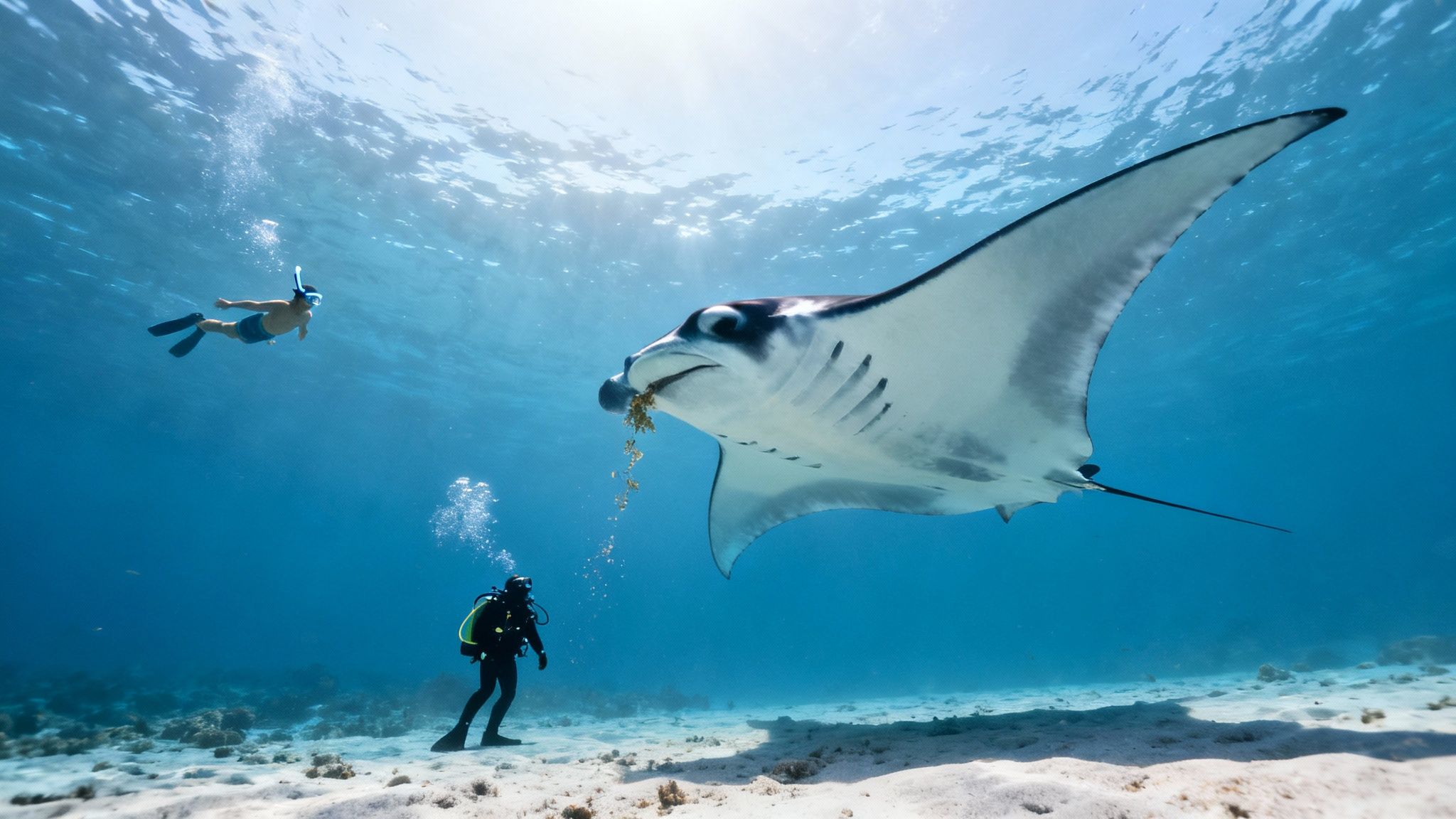
Any genuinely incredible encounter with manta rays has to be a responsible one. The real secret to protecting these amazing animals is passive observation—a golden rule that holds true whether you’re on the surface with a snorkel or deep below with a tank. You want to blend into the background, not become the main event.
Snorkelers who float quietly on the surface and divers who settle calmly on the ocean floor can both get spectacular, up-close views without causing any harm. The trouble starts when people get excited and start chasing the mantas. This kind of behavior can seriously disrupt their feeding and cause a lot of stress. In their world, your actions matter more than you think.
Minimizing Disturbance for a Better Encounter
At the heart of every great interaction is letting the mantas run the show. When we're calm and predictable, their natural curiosity often takes over, and they're far more likely to come in for a closer look. Sudden, jerky movements or actively swimming toward them can make them see you as a threat, and they'll bolt.
It’s not just a hunch; scientific research backs this up. One study showed that manta rays had shorter evasion times and were more attracted to passive observers—like snorkelers and stationary divers. When they encountered more active divers, however, their movements became more directional and less erratic, which is a clear sign of disturbance. You can dive into the full research on manta ray interactions to see the data for yourself.
The best encounters happen when we remember we are guests in their home. By remaining still and predictable, we allow the mantas to feel safe, often resulting in closer and more prolonged interactions.
This is exactly why picking a reputable tour operator who cares about conservation is non-negotiable. Look for companies that are "Manta Ray Green Listed." It's a high standard that means they stick to strict, ethical guidelines to protect the animals.
The rules are simple but absolutely critical:
- No Touching: Never, ever touch a manta ray. It strips away their protective mucous coating and makes them susceptible to nasty infections.
- Keep Your Distance: Let the mantas come to you. Don't chase them or swim directly at them.
- Stay in Your Zone: If you're snorkeling, stay on the surface. If you're diving, stay on or near the seafloor.
Following these guidelines is the only way we can ensure Kona's manta ray population thrives for years to come. To brush up on your underwater manners, take a look at these principles for responsible and considerate diver etiquette. Your choices directly contribute to the protection of these magnificent creatures.
Navigating Crowds For The Best Experience
Let's be real: Kona's manta ray encounters are world-famous, so you're not going to have the place to yourself. You'll be sharing this incredible moment with plenty of other ocean lovers, and that’s part of the experience. The key is figuring out which kind of crowd you prefer, because that can be a deciding factor between snorkeling and diving.
Snorkeling is super accessible, which means the groups on the surface are almost always larger. This creates a really high-energy, almost party-like atmosphere. Everyone is buzzing with excitement, pointing and gasping as the mantas perform their underwater ballet just below. It's a shared, communal spectacle.
Scuba Diving And Smaller Groups
Scuba diving, on the other hand, is a different story. The very nature of diving—with its certification requirements and safety protocols—means groups are smaller and more managed. This leads to a much more serene and intimate experience down on the ocean floor.
With fewer people around, the encounter feels more personal. You're settled in your spot, completely focused on the giant, graceful shadows gliding overhead. You get to just watch, without the constant motion and chatter of a big group on the surface. For many divers, this quieter, more personal connection is exactly what they're looking for.
Now, the feeling of being "crowded" is subjective, but it's a common theme in Kona. A study involving 444 people on manta tours found that 82% felt crowded by snorkelers, and 69% felt crowded by scuba divers. Interestingly, while people said they'd prefer no more than 32 divers at a site, the study also noted that 77% of the time, the number of snorkelers exceeded what people felt was comfortable. You can dive deeper into these crowding perceptions in manta ray tourism if you're curious.
When you choose your tour, it’s all about setting the right expectations. Snorkeling is a thrilling, shared spectacle from above, while diving offers a more peaceful, personal observation from the seabed.
Ultimately, you can't go wrong either way—it’s an unforgettable adventure. Your choice simply boils down to whether you thrive on the lively energy of a big group or prefer the quiet intimacy of a smaller one.
Choosing Your Perfect Manta Ray Adventure
So, we’ve looked at everything from the view you'll get to how many people you'll be with. Now for the big question: which one is right for you? Honestly, the "best" way to see manta rays really depends on you—your comfort level in the water, who you're traveling with, and what kind of memory you want to create.
Both snorkeling and diving in Kona offer a front-row seat to one of nature's most incredible shows. To help you decide, let's break it down into some simple, real-world scenarios.
Choose Snorkeling If…
You're traveling with your family, especially with kids or folks who aren't strong swimmers. Snorkeling is incredibly accessible; you don't need any special certification, and you can just float on the surface while the action happens below. It's a fantastic way to see the "manta ballet" from above.
This is also your best bet if you love a lively, social vibe. You’ll be sharing the oohs and aahs with a boat full of excited people as the mantas swoop and feed right under you. The energy is contagious, and it's an almost guaranteed thrill for anyone who can float.
Bottom Line: Go for snorkeling if you want an easy, high-energy experience that’s perfect for families, first-timers, and anyone looking for a breathtaking view from the surface. The success rate is incredibly high.
Choose Diving If…
For certified scuba divers, the night dive is a whole other level of amazing. You should definitely choose diving if you're after a truly immersive, face-to-face encounter. Imagine sitting peacefully on the ocean floor, literally in the mantas' world, as they glide like silent giants just a few feet over your head.
This is also the right call if you prefer a quieter, more personal experience. Dive groups are almost always smaller, which creates a calm, focused environment away from the commotion on the surface. It’s a serene, almost meditative way to connect with these stunning animals.
No matter which adventure you pick, you’re in for an unforgettable night.
Your Top Manta Ray Tour Questions Answered
Thinking about a manta ray tour in Kona? You've probably got a few questions. Let's walk through some of the most common ones we hear from people trying to decide between snorkeling and diving.
When Is The Best Time Of Year To See Manta Rays In Kona?
Honestly, any time is a great time. The manta rays here in Kona are homebodies; they stick around year-round and don't migrate.
Every night, tour boats head out and use powerful lights to draw in plankton, the mantas' favorite meal. The mantas know the routine and show up for their nightly buffet, so you can count on a fantastic experience no matter which month you visit.
Do I Need Any Experience To Snorkel With Manta Rays?
Not at all. If you're comfortable in the water, you're good to go. The tour operators provide everything you'll need.
They'll give you a full safety briefing and set you up with gear, including a flotation board to hold onto. You just float on the surface and watch the show from above.
How Close Will I Get To The Manta Rays?
You'll be amazed at how close they come. Manta rays are incredibly graceful and curious, often gliding just inches away from snorkelers and divers as they feed. It’s a breathtaking sight.
That said, every reputable tour enforces a strict no-touching policy. It’s crucial to remember that touching a manta can strip off its protective slime coat, which makes it susceptible to nasty infections. So, look, but don't touch!
What Should I Bring On A Manta Ray Tour?
Keep it simple. The essentials are a towel and a swimsuit—it's easiest to just wear it under your clothes to the boat. I’d also strongly recommend a warm jacket or sweatshirt for the ride back to shore; it can get surprisingly chilly out on the water after sunset.
Most tours have you covered with all the gear, plus snacks and water. It's always smart to double-check what's included when you book. Checking out the different diving tours in Kona, Hawaii can give you a solid idea of what to expect from a typical operator.