
So, you're ready to see manta rays up close. The big question is: should you snorkel or scuba dive? It really boils down to one thing—do you want an amazing view from the surface, or do you want to be completely immersed in their underwater world?
Snorkeling is incredibly accessible, making it a fantastic choice for almost everyone, including families. Scuba diving, however, puts you right on their level for a powerful, eye-to-eye encounter that many divers describe as one of the best moments of their lives.
Comparing the Two Manta Ray Experiences
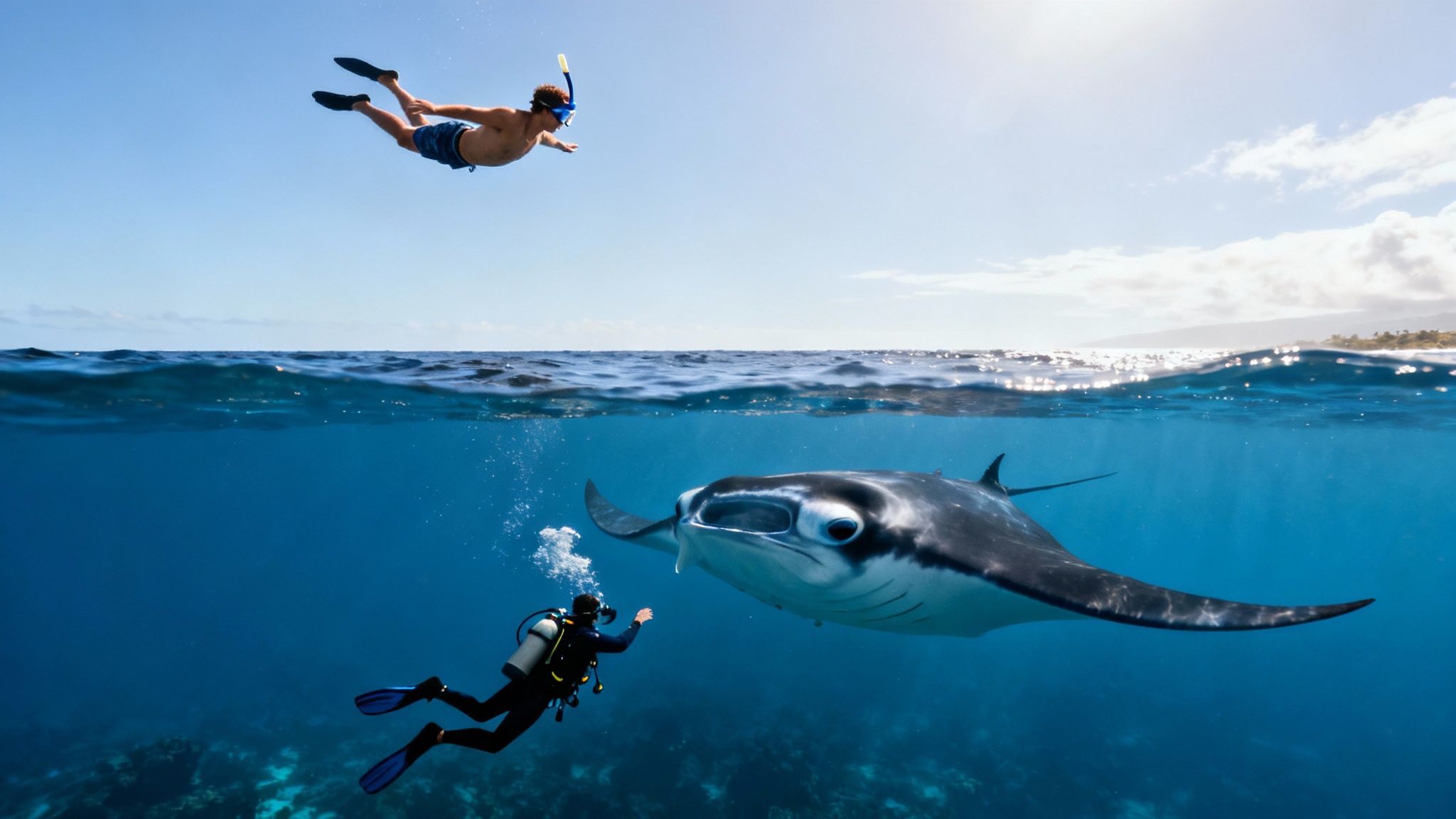
Deciding how you want to witness Kona’s famous manta ray ballet is the first real step in planning your adventure. Each option gives you a completely unique perspective on these magnificent creatures.
If you choose to snorkel, you'll get a stunning bird's-eye view. You float at the surface, typically holding onto a specially designed light board. These lights attract the plankton, and the mantas swim up from the depths to feed, often just a few feet below you. It’s an easy, low-stress way to see the show without needing any special training or certifications.
Scuba diving, on the other hand, is a much more profound experience. As a certified diver, you get to descend to the ocean floor, find a spot on the sand, and watch the show from below. From this vantage point, you can truly appreciate their massive size as they glide just inches above your head. You're not just watching; you're part of their world.
Quick Comparison: Snorkeling vs. Diving with Manta Rays
To help you figure out which experience fits you best, I've put together a simple table that highlights the key differences.
| Factor | Snorkeling | Scuba Diving |
|---|---|---|
| Certification | None needed | Open Water Diver certification required |
| Perspective | Top-down view from the surface | Bottom-up, fully immersive view |
| Accessibility | Great for all ages and swim abilities | Requires dive training and comfort in the water |
| Immersion | You're watching the action from above | You are in the action on the ocean floor |
| Equipment | Simple gear: mask, snorkel, fins | Full scuba setup, including tank and BCD |
No matter which you choose, you’re in for an incredible encounter. The best option really depends on your personal comfort in the water, whether you have a dive certification, and what kind of memory you’re hoping to make.
The Snorkeler’s View from the Surface
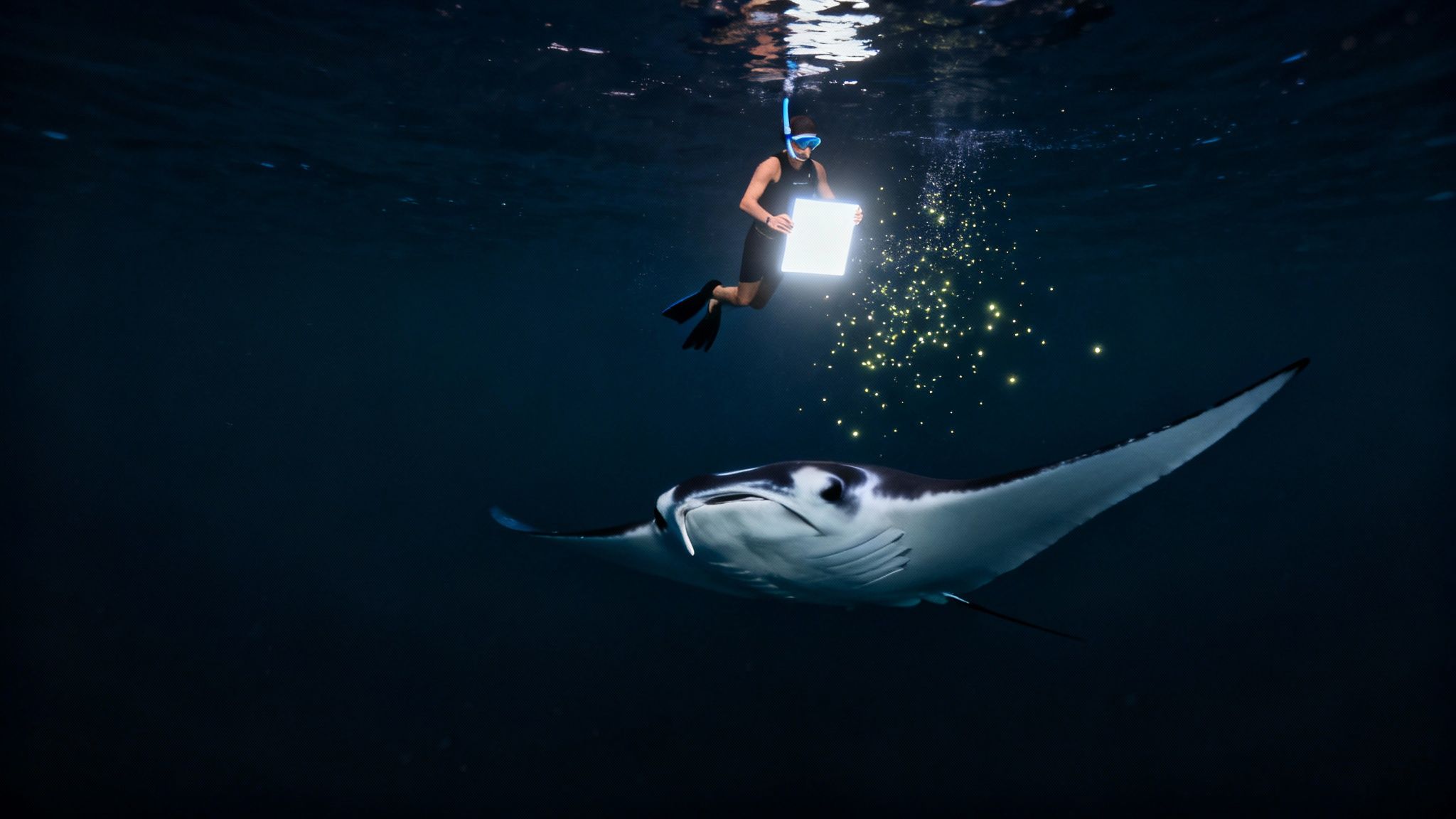
Picture yourself floating on the calm, dark surface of the ocean. You’re holding onto a specially designed light board, its powerful beams cutting through the night and lighting up the water like a stage. This is where the magic begins.
The light acts as a magnet for plankton, drawing in clouds of these tiny organisms. For the giant manta rays that live here, this is a dinner bell. They rise from the deep to feast, turning the water just below you into an underwater ballet.
You’ll be watching as these gentle giants, with wingspans that can stretch over 12 feet, perform graceful somersaults and barrel rolls. They glide and swoop right beneath you, often just inches away, scooping up the plankton. From the surface, you get a perfect, top-down view of the whole mesmerizing spectacle.
Why Choose Snorkeling?
The biggest draw for snorkeling is just how easy it is to do. There are no certification requirements, so you don't need any special training to get in the water. This makes it an ideal choice for families, first-timers, or anyone who isn't quite ready to commit to scuba diving. It's also typically a more budget-friendly option.
Here’s why it’s so popular:
- No Experience Needed: As long as you're comfortable in the water, you're good to go.
- Family-Friendly: It's an incredible adventure you can share with kids and adults of all ages.
- Incredible Views: You're positioned directly above the action, giving you a unique and expansive perspective.
The top-down view allows you to appreciate the full scale of the feeding frenzy as multiple mantas glide in and out of the light. It's a breathtaking panorama you can't get from any other angle.
Of course, this accessibility means snorkeling can get crowded. Because anyone can do it, tour groups on the surface can get quite large. A study on visitor experiences in Hawaii found that 82% of people felt crowded by other snorkelers at popular manta ray sites. While many visitors felt the ideal group size was around 52 people, some tours can pack in more.
Even so, the experience from the surface is an absolutely unforgettable way to see one of nature's greatest shows. If you want a deeper dive into what to expect, check out our guide on the best manta snorkel on the Big Island.
The Diver’s Immersive Underwater Encounter
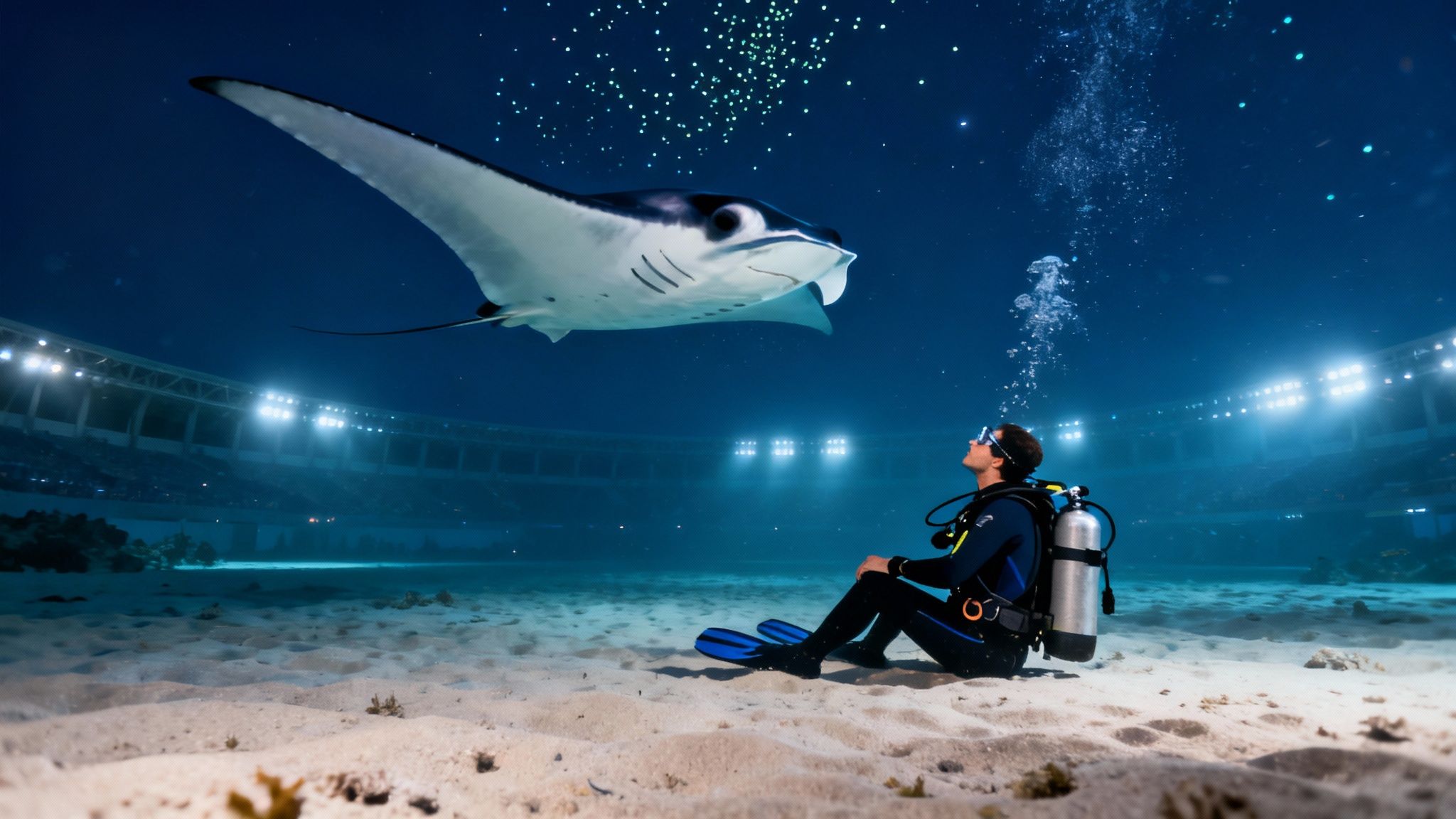
If you're already a certified scuba diver, the choice is pretty clear. Diving with manta rays isn't just an activity; it’s an entirely different world. You leave the bobbing waves behind to become a quiet guest in their underwater theater.
Instead of looking down from the surface, you'll descend to the sandy seafloor and look up. It’s from this amazing vantage point that you witness their beautiful, silent ballet as they glide just inches over your head. This isn't just watching; it's a powerful, eye-level experience that makes you feel like you truly belong there with them.
You’re not just a spectator; you have a front-row seat. The sense of scale is just breathtaking when a manta with a wingspan of over 12 feet gracefully blocks out the surface lights above you.
A Truly Submersive Experience
The biggest draw for diving is that feeling of total immersion. With none of the commotion from the surface, the whole encounter feels much more peaceful and intimate. Divers often find it’s a calmer, less crowded experience on the bottom, allowing for a genuine connection with these incredible animals.
The Kona coast is famous for its manta ray night dive, and for good reason. Operators here see an incredible sighting success rate, often over 85-90%. These dives are kept shallow, which means you get plenty of bottom time to soak in the whole spectacle.
Of course, you'll need to be a certified diver and feel comfortable diving at night. Good buoyancy control is absolutely essential—you need to stay put on the ocean floor without kicking up sand or disturbing the mantas. Our complete guide explains more about if you can scuba dive with manta rays. For anyone ready to take the plunge, the payoff is an underwater memory that you'll carry with you for a lifetime.
How to Choose Your Manta Ray Adventure
So, you're ready to see the famous Kona manta rays. The big question is: snorkel or scuba dive? Both are incredible, but they offer vastly different experiences. Your choice really boils down to your comfort level in the water, your budget, and what kind of encounter you’re hoping for.
Let's break it down to help you pick the perfect adventure.
Skill and Accessibility
This is probably the biggest deciding factor. Snorkeling is open to just about everyone. If you can swim and are comfortable in the ocean, you’re good to go—no special training or certifications needed. It’s the ideal choice for families, especially those with younger kids.
Scuba diving, on the other hand, is a more involved experience. To join the famous manta ray night dive, you'll need at least an Open Water Diver certification. Good buoyancy control is also key, as you'll be positioned on the ocean floor, watching the show from below.
The View from Above vs. The View from Below
The experience itself is fundamentally different. When you snorkel, you'll hold onto a custom light board that attracts plankton, and you'll watch the mantas feed from the surface. It's like having a front-row seat to an underwater ballet, a stunning top-down view of the entire spectacle.
Diving puts you right in the middle of the action.
As a diver, you're not just watching the show—you are part of it. Kneeling on the ocean floor, you get an awe-inspiring, bottom-up perspective as these gentle giants glide just inches above your head.
The feeling of a 1,000-pound animal gracefully soaring over you is something you’ll never forget. Divers often get a more intimate, less crowded view since groups are typically smaller and you're away from the hustle on the surface.
To make the choice even clearer, here’s a quick rundown of the main differences.
Detailed Feature Comparison Snorkeling vs. Diving for Manta Rays
This table breaks down everything you need to consider, from the gear you'll need to the kind of photos you can expect to get.
| Consideration | Snorkeling | Scuba Diving |
|---|---|---|
| Required Skill Level | Basic swimming ability. | Open Water certification minimum. |
| Average Cost | Lower price point. | Higher price point. |
| Proximity to Mantas | View from the surface (5-15 feet away). | Very close (1-5 feet away). |
| Perspective | Top-down, panoramic view. | Bottom-up, immersive view. |
| Crowd Levels | Can be crowded on the surface. | Smaller, more intimate groups. |
| Best For | Families, non-certified individuals, budget travelers. | Certified divers, thrill-seekers, photographers. |
Ultimately, choosing between snorkeling and diving is about personal preference. Both will give you an amazing memory of Kona's manta rays.
So, What's the Right Call for You?
Let’s put this into a couple of real-world scenarios.
- You're on a family vacation with kids and grandparents, and no one is a certified diver. Snorkeling is your best bet, hands down. It's a fantastic way for everyone to share in the magic together, safely and easily.
- You and your partner are certified divers looking for a bucket-list adventure. The manta ray night dive tour is the only answer. The sheer proximity to the mantas and the immersive feeling of being on the ocean floor make it an experience you'll be talking about for years to come.
Whether you choose to float on the surface or kneel on the seafloor, you're in for an unforgettable night.
Finding the Best Manta Ray Tour in Kona
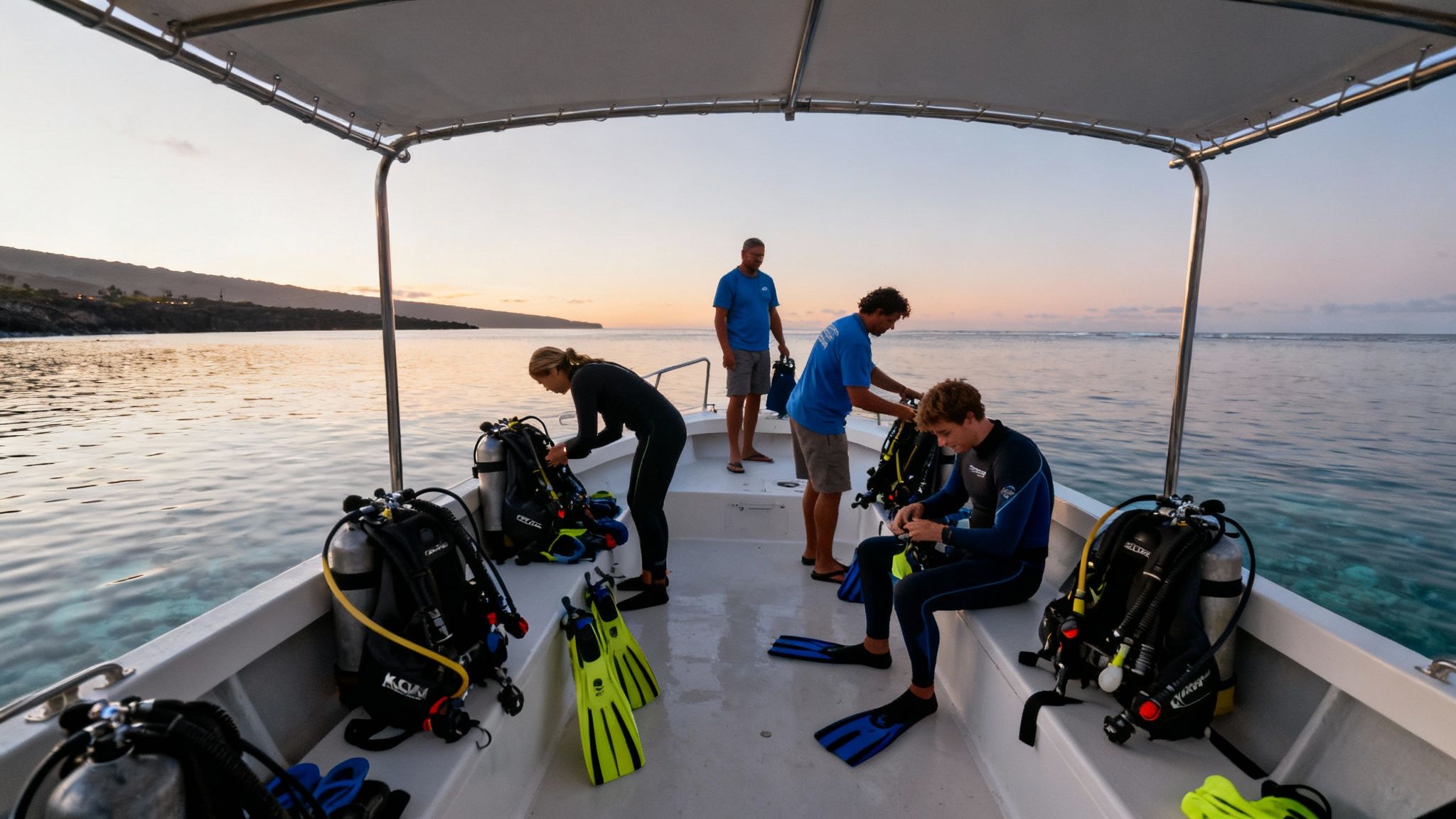
So, you’ve weighed the pros and cons of snorkeling versus scuba diving. Now comes the most important decision you'll make: picking the right tour operator. The quality of your guide and crew can make or break your entire experience, impacting everything from your safety and enjoyment to the ethical treatment of the mantas.
Simply put, not all manta tour companies in Kona are the same. A great operator does more than just take you to a spot and turn on the lights; they act as guardians of the ocean. Look for companies that follow established guidelines for responsible wildlife viewing. Their practices ensure the manta rays remain safe and unstressed, which is vital for preserving this incredible natural wonder for future generations.
Why Your Choice of Operator Matters
The best tours almost always have one thing in common: small group sizes. Fewer people in the water translates to a much more intimate and relaxed experience for you, and it’s far less disruptive for the mantas. You get clearer views, better photo ops, and a real chance to connect with what you're seeing.
Manta ray tourism is a big deal, bringing over 80,000 visitors each year to places like the Big Island. With that many people flocking to see them, it’s crucial to support companies that manage these encounters sustainably.
Choosing an operator committed to education and conservation turns a simple excursion into a truly meaningful adventure. You'll walk away with a much deeper appreciation for these gentle giants and the fragile ecosystem they call home.
If you’re looking for a world-class experience, Kona Honu Divers is a fantastic choice. They have a stellar reputation for safety, an incredibly knowledgeable crew, and a genuine commitment to manta conservation. They offer top-notch tours for both snorkelers and divers, and their customer reviews consistently reflect their dedication.
By choosing your guide carefully, you’re not just booking a tour—you’re investing in a responsible and unforgettable memory. You can get more tips in our guide on where is the best place to dive with manta rays.
Your Manta Ray Tour Questions, Answered
Planning a manta ray trip in Kona often brings up a few questions. Let's tackle some of the most common ones so you can feel fully prepared for this incredible adventure.
Do I need to be a great swimmer to snorkel with mantas?
Not at all. While you should be comfortable in the water, you're not actually swimming around. You'll be holding onto a large, stable light board that floats on the surface.
Most tour operators, including us, provide extra flotation like pool noodles or life vests. This setup makes the experience very secure and accessible, even if you’re not a confident swimmer.
Is the night dive scary if I'm a new diver?
It's a common concern, but the Kona manta ray dive is famous for being one of the safest and most comfortable night dives you can do. The site is a shallow, protected bay, so you don't have to worry about strong currents.
You’ll be kneeling or sitting on the sandy bottom the whole time, and the powerful dive lights illuminate the area like a stadium. It’s a very controlled and surprisingly calm environment, perfect for easing into night diving.
Can our group of snorkelers and divers go on the same boat?
Yes, absolutely! This is one of the best parts of the Kona manta experience. Reputable operators like Kona Honu Divers are set up to host both snorkelers and divers on the same boat.
It’s the ideal solution for families or groups with mixed experience levels. Everyone gets to be part of the magic together, just from a different perspective.
When is the best time of year to see manta rays in Kona?
Here's the great news: any time is a good time! Kona's manta ray population doesn't migrate, so they're here 365 days a year.
Sighting success rates stay consistently high no matter the season. You can book your trip for January or July and have an equally fantastic chance of a breathtaking encounter.
No matter how you choose to see them, you're in for a night you'll never forget.
Ready for your own manta ray adventure? At Kona Honu Divers, we run world-class tours that are safe, educational, and simply unforgettable. Explore our Manta Ray Dive and Snorkel tours and book your spot today!