
Here's the thing: the biggest difference is your point of view. With snorkeling, you get an incredible bird's-eye view of the manta ray feeding frenzy from the surface. It's super accessible, making it a fantastic choice for families or anyone who isn't a certified diver.
Scuba diving, on the other hand, puts you right on the ocean floor for a truly immersive, eye-to-eye encounter with these gentle giants. The right choice for you really boils down to whether you prefer easy access or want to be fully submerged in the action.
Comparing Manta Ray Snorkeling and Diving
Choosing how you want to meet manta rays is the first big decision you'll make for this bucket-list adventure. While both snorkeling and diving serve up amazing views, they are fundamentally different experiences.
Snorkeling is the most straightforward option. If you can swim, you can snorkel, which lets you watch the whole spectacle unfold from the surface. Diving requires certification, but it rewards you with a completely different perspective from the bottom looking up.
Here in Kona, Hawaii, you're almost guaranteed a spectacular show either way. The local manta ray night encounters have an 85% to over 95% success rate for sightings, and it all happens in a relatively shallow 30 to 40 feet of water. It's this incredible reliability that brings around 80,000 people here every year, solidifying the Big Island’s reputation as one of the best places on Earth for manta encounters. You can learn more about Kona's famous manta ray night dive to see what makes it so special.
Let's break down all the details to help you pick the adventure that’s the perfect fit for your comfort level, budget, and what you want to get out of the experience.
Snorkeling vs. Diving A Quick Comparison
For a quick look at how these two amazing experiences stack up, this table cuts right to the chase. It’s a great way to get an at-a-glance summary of the key differences and help guide your decision.
| Factor | Snorkeling | Scuba Diving |
|---|---|---|
| Certification | Not required | Open Water Diver or equivalent |
| Perspective | Top-down, looking from the surface | Bottom-up, eye-level from the seafloor |
| Experience | Floating on the surface, holding a light board | Resting stationary on the ocean floor |
| Accessibility | Ideal for families, kids, and non-divers | Limited to certified divers |
| Cost | Generally more affordable | Higher cost due to gear and expertise |
| Proximity | Mantas often swim inches from the surface | Mantas glide directly overhead |
Ultimately, whether you're floating on the surface or sitting on the sand below, you're in for an unforgettable night. Both options offer a front-row seat to one of nature's most graceful ballets.
The Snorkeler’s View: A Surface Spectacle
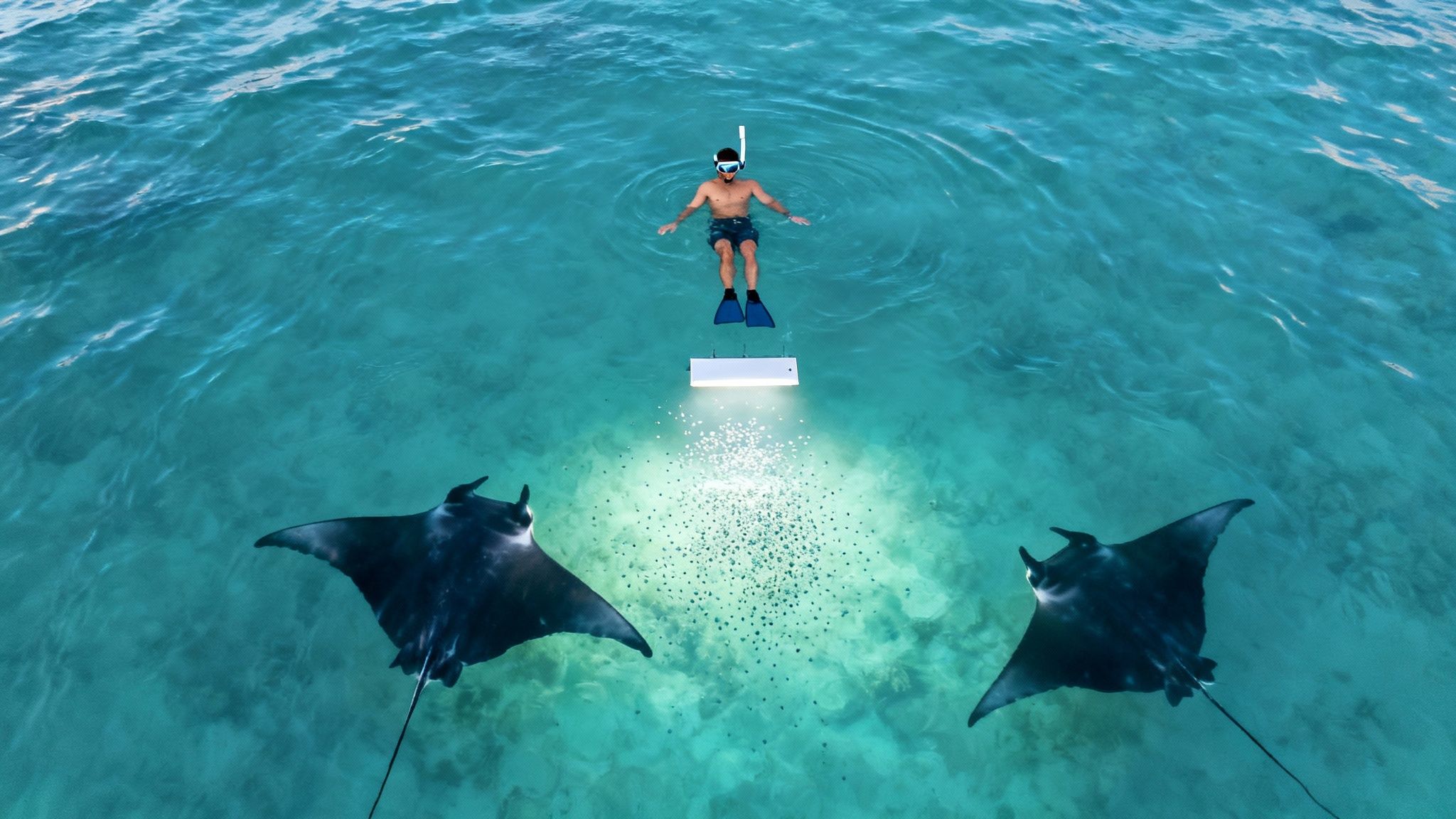
There’s something truly magical about floating on the ocean's surface at night, watching the show unfold below. When you snorkel with manta rays, you hold onto a specially designed light board. Its powerful beams cut through the darkness, attracting a massive cloud of plankton—the mantas' favorite meal.
This setup creates a front-row seat to one of nature's greatest performances. You get a stunning top-down view as these gentle giants glide right up to the surface, their huge wingspans on full display. Watching them perform graceful barrel rolls just inches beneath you, mouths agape, is a perspective you just can’t get anywhere else. It’s an unforgettable way to appreciate their sheer size and elegance.
An Accessible Adventure for Everyone
One of the best things about snorkeling with mantas is that almost anyone can do it. You don't need certifications or special training, just a basic comfort level in the water. Tour operators provide all the necessary gear, making it a hassle-free and inclusive experience from start to finish.
Snorkeling is the perfect choice for families, first-timers, or anyone who isn't a certified diver. It allows everyone to share in the wonder of the experience without any of the technical demands of scuba.
After a quick safety briefing, you'll enter the water and hold onto a large, stable light board that keeps you afloat. This means you can simply relax and focus completely on the incredible ballet happening below, without worrying about a thing. It’s this combination of ease and spectacle that makes it one of the best ways to see manta rays on the Big Island. You get a world-class wildlife encounter with minimal stress and maximum awe.
The Diver’s View: An Immersive Underwater Ballet
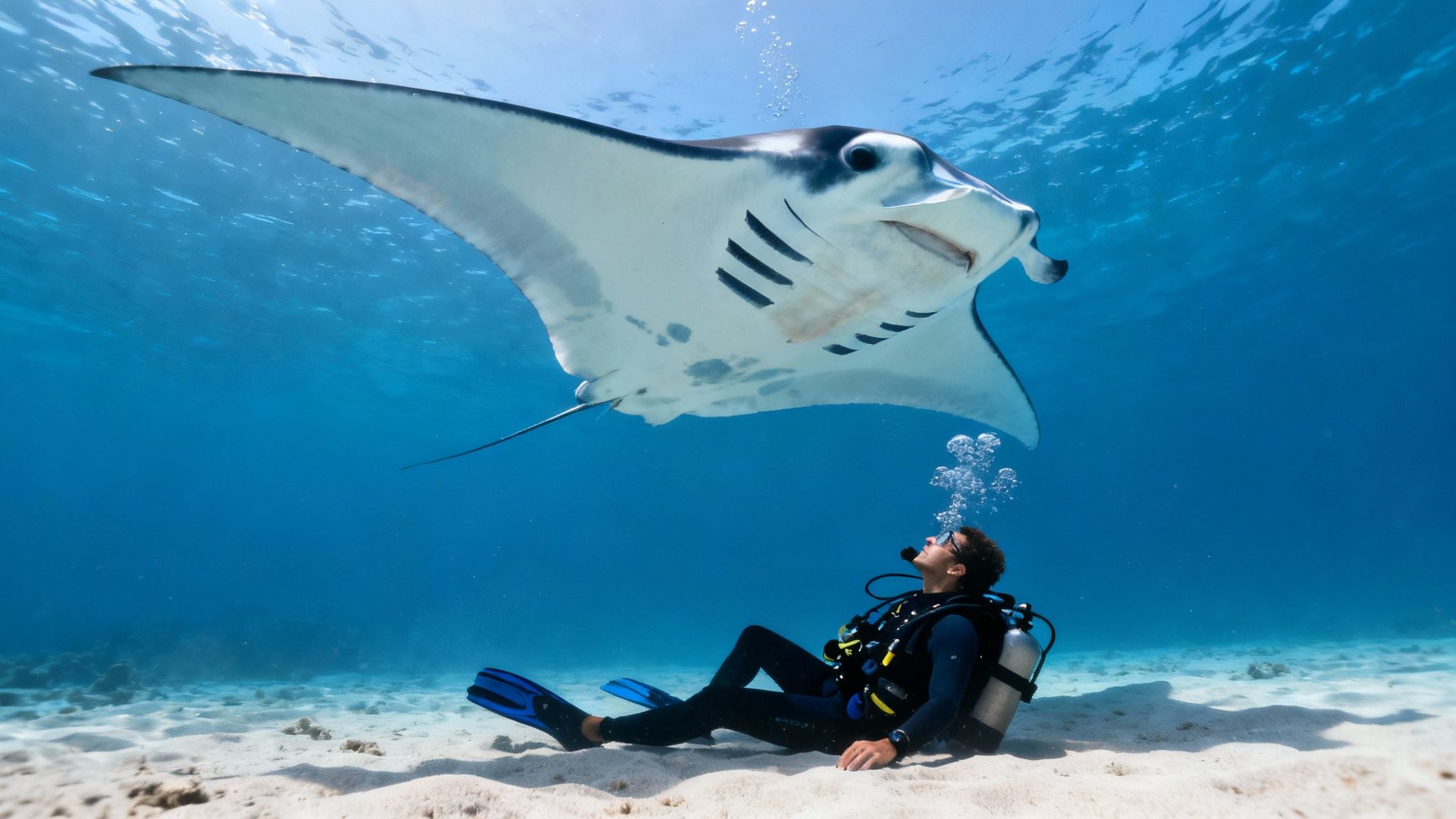
For anyone who's already a certified diver, getting in the water with mantas is a completely different world from what snorkelers see. You’re not just watching from above; you get to descend into their world and become a quiet guest on the ocean floor, right in the middle of their silent, underwater ballet.
The Kona Manta Ray Night Dive takes a beautiful sight and turns it into a profound, eye-level encounter. From down there, you can see everything—the intricate details of their gills filtering plankton, the unique spot patterns on their bellies that are like fingerprints. When they glide just feet above your head, lit up by the lights, the feeling is simply awe-inspiring.
The Requirements for an Underwater Seat
Unlike hopping in with a snorkel, scuba diving with manta rays means you'll need at least an Open Water Diver certification. This training is essential because it gives you the skills to manage your buoyancy, keep an eye on your air supply, and stay calm and still in the dark.
Safety is everything on a night dive, of course. Your guide will walk you through a detailed briefing covering hand signals, emergency procedures, and how to position yourself on the sandy bottom without disturbing the environment. You’ll also need solid gear, especially a reliable dive light for navigation and getting a good look at all the marine life. Our guide explains in detail if you can you scuba dive with manta rays and what to expect on your first trip.
Being on the ocean floor removes the distraction of staying afloat, allowing for a longer, more meditative encounter. You're not just a spectator; you are fully present in their world.
This up-close, sustained encounter lets you see behaviors and interactions you’d almost certainly miss from the surface. If you're drawn to the idea of diving, you might want to look into other general scuba diving activities as well. It’s less about watching a feeding frenzy and more about connecting with these incredibly intelligent, graceful animals. For many divers, it’s a true bucket-list moment.
So, Snorkel or Dive? Making the Right Choice
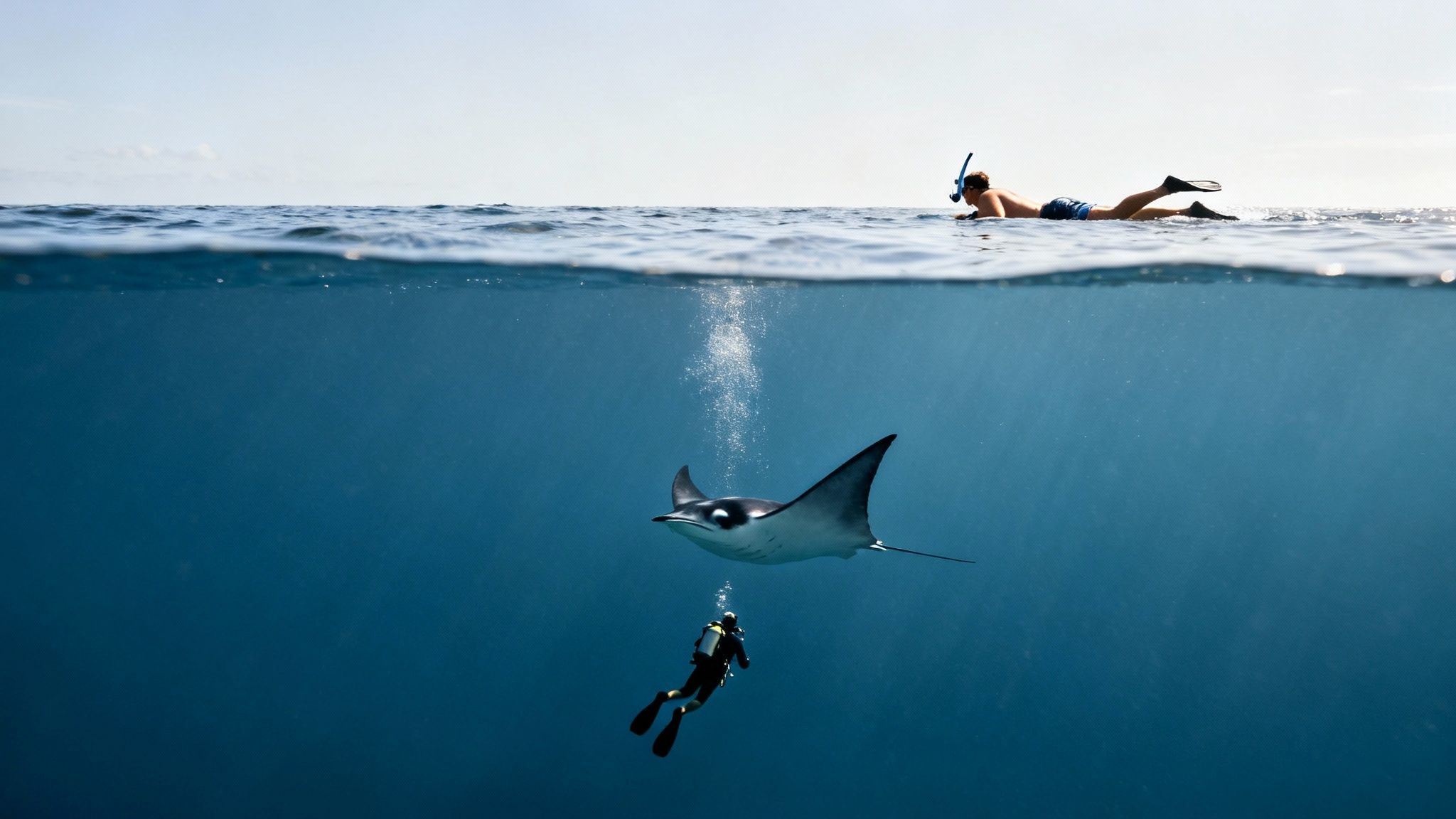
So, how do you choose? Both snorkeling and diving offer a front-row seat to one of nature's most incredible shows, but the experience is fundamentally different for each. It really boils down to your personal comfort in the water, your budget, and who you’re traveling with. Let’s walk through the practicalities so you can decide what’s best for you.
The biggest hurdle, and the first thing to consider, is skill level. Snorkeling is as easy as it gets. If you can swim and are comfortable putting your face in the water, you're pretty much good to go. Diving, on the other hand, is a whole different ball game and requires a proper scuba certification. That means you’ll need to complete training to understand the gear, safety procedures, and physics of being underwater.
Cost and Physical Demands
Money is always a factor, and there’s a clear difference here. Scuba diving is almost always the more expensive option. You're paying for specialized equipment rentals, highly trained guides, and usually smaller, more intimate group sizes. Snorkeling tours are much more budget-friendly and still deliver an absolutely breathtaking view.
Then there's the physical side of things. Snorkelers typically float gently on the surface, often holding onto a large, illuminated board that attracts plankton. It’s a very relaxed, low-effort activity. Divers have to manage heavy tanks and gear, carefully control their buoyancy, and often kneel or sit still on the ocean floor. It’s not necessarily strenuous, but it definitely requires more physical awareness and mental focus.
Ultimately, this choice is about what kind of memory you want to create. Do you want the effortless, panoramic view from the surface that snorkeling provides, or do you crave that deeper, fully submerged connection you can only get from diving?
Group Size and Crowds
Who you're with can make the decision for you. Snorkeling is a fantastic option for families or groups with varying ages and swimming abilities—everyone can join in the fun together.
But there's a trade-off. Because it's so accessible, snorkeling tours can get crowded. A 2018 survey in Hawaii found that 82% of participants felt the experience was crowded by other snorkelers, while only 69% said the same about scuba divers. This isn't surprising, as snorkeling boats can often accommodate more people. If you want to dive deeper into how people perceive these tours, you can read the full research about these manta viewing experiences and see the data for yourself.
Choosing a Responsible Manta Tour Operator
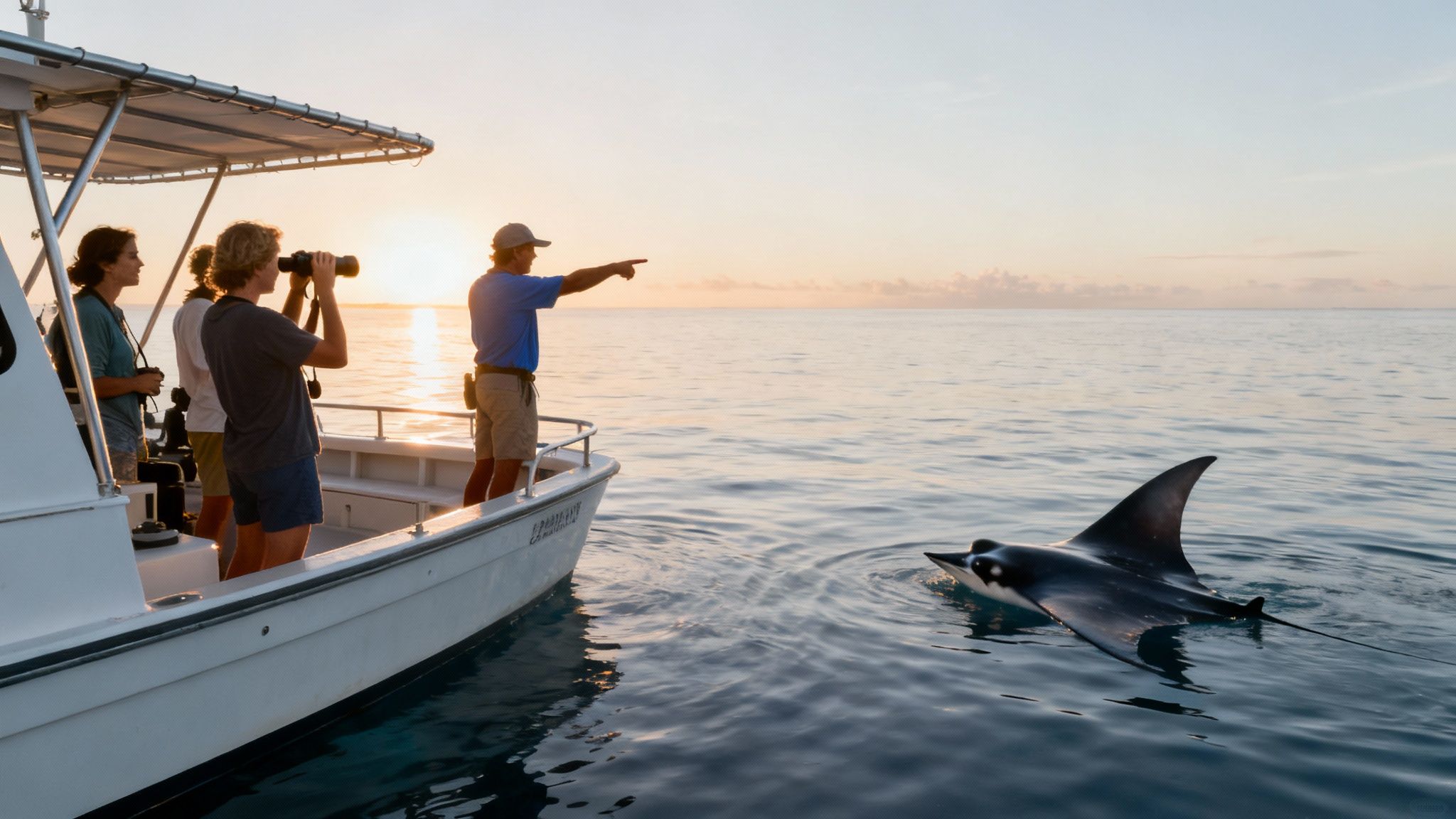
Whether you end up snorkeling or diving, the single most important decision you'll make is picking the right tour operator. The future of Kona’s incredible manta ray population hinges on sustainable tourism—practices that put the well-being of these animals first, no exceptions.
Great tour companies are built on a foundation of passive observation. This is a strict code of conduct: no touching, no chasing, and never blocking a manta’s path. Your guides should give you a crystal-clear briefing on these rules before you even hit the water, making sure every single person knows how to be a respectful guest in the mantas' home.
Identifying Ethical Operators
The best outfits often hold special certifications. Look for operators on the Manta Ray Green List, a designation that recognizes companies deeply committed to conservation and education. These are the businesses that train their staff to protect marine life and actively contribute to research, turning your amazing trip into something that helps the ecosystem.
This shifts the whole question from "Is snorkeling or diving better?" to "How can I make sure my presence is a positive one?" For a deeper dive into vetting local companies, our guide on how to choose a Kona dive shop has more great tips.
Choosing a certified, responsible operator ensures your incredible experience contributes positively to the conservation of these magnificent animals, protecting them for generations to come.
It's not just a nice idea; it's backed by science. Studies have shown that manta rays react differently to us based on our behavior. They often show evasive swimming patterns when approached by hands-on, active swimmers. In contrast, they are far more relaxed around passive observers. You can discover more insights about these behavioral findings to see just how vital this approach is.
Kona Honu Divers is proud to be a Manta Ray Green List operator. We're fully committed to providing safe, sustainable, and unforgettable manta ray encounters.
Frequently Asked Questions
We've walked through the big picture of snorkeling versus diving with manta rays, but a few specific questions might still be floating around in your mind. Let's clear those up so you can feel completely confident about booking your trip.
Will I See Mantas Just as Well if I Snorkel?
You absolutely will. The whole reason this experience works is that manta rays come right to the surface to feed on plankton, which is drawn to the lights on your snorkel board. This means snorkelers get an incredible top-down view of the action.
It's not uncommon for mantas to glide within inches of you while doing their famous barrel rolls. While divers get a different perspective from below, snorkelers are arguably in the best seat in the house, watching the feeding frenzy unfold right in front of them.
How Strong of a Swimmer Do I Need to Be to Snorkel?
If you're comfortable in the water and have basic swimming abilities, you're good to go. Tour companies like Kona Honu Divers provide all the gear you need to feel secure, including wetsuits for buoyancy.
Plus, you'll be holding onto a large, very stable light board the entire time. It's less about active swimming and more about floating comfortably while you take in the show, making it a great, low-effort activity for almost everyone.
Is Diving with Manta Rays at Night Dangerous?
It's a common concern, but with a reputable, certified dive operator, the manta ray night dive is an incredibly safe and managed experience. Before anyone even touches the water, your divemasters will give a detailed briefing covering all the safety protocols and hand signals.
These are shallow, familiar dive sites for the guides, and you'll be with your group the entire time. As a certified diver, you already have the training to manage your gear and buoyancy, which is all you need to relax and enjoy one of the most magical dives of your life.
Can My Group Snorkel and Dive on the Same Boat?
Yes, and this is a huge plus for families or groups with mixed interests and certifications. Many Kona operators run trips that accommodate both snorkelers and certified divers on the same boat, so everyone can share the adventure.
On these tours, the divers will descend with their guide to the "campfire" on the ocean floor, while the snorkelers stay up top with their own guide. It’s the perfect setup, allowing everyone to witness the same incredible manta spectacle from their own unique vantage point.